

There’s something deeply satisfying about walking into the kitchen with a craving for a hearty, home-cooked dinner and knowing you can make something special without spending all evening at the stove. Venison sausage is perfect for those nights. It has a rich, savory flavor, and when paired with a silky mustard cream sauce, it turns simple ingredients into serious comfort food.
I make this kind of skillet dinner when I want something cozy but don’t want a mountain of dishes afterward. The sausages brown beautifully, the onions become sweet and tender, and the creamy sauce picks up all those flavorful bits stuck to the pan. Serve it with mashed potatoes, rice, or crusty bread for an easy dinner everyone can dig into.
Prep & Cook Time
| Details | Time / Amount |
|---|---|
| Prep Time | 10 minutes |
| Cook Time | 25 minutes |
| Total Time | 35 minutes |
| Servings | 4 |
This is an ideal weeknight recipe because most of the work happens in one skillet. Have your ingredients measured before you start—the sauce comes together quickly once the sausages are browned.
What Equipment Do You Need?
You don’t need any specialty equipment for this venison sausage recipe.
- Large heavy skillet – Cast iron or stainless steel works especially well for browning.
- Kitchen tongs – For safely turning the sausages.
- Sharp knife – For slicing the onion, garlic, and parsley.
- Cutting board
- Measuring cups and spoons
- Wooden spoon or silicone spatula
- Instant-read meat thermometer – Highly recommended for checking the sausages safely and accurately.
Ingredients
For the Venison Sausage Skillet
- 1 lb (450 g) venison sausages, about 4–6 sausages
- 1 tablespoon olive oil
- 1 medium yellow onion, thinly sliced
- 2 garlic cloves, finely minced
- 1 cup (240 ml) low-sodium beef stock
- **3/4 cup (180 ml) heavy cream
- 1 tablespoon Dijon mustard
- 1 teaspoon Worcestershire sauce
- 1/2 teaspoon dried thyme
- 1/4 teaspoon freshly ground black pepper
- 1/4 teaspoon smoked paprika
- Salt, to taste
- 1 tablespoon chopped fresh parsley, for finishing
Optional for Serving
- Creamy mashed potatoes
- Steamed green beans
- Roasted vegetables
- Cooked rice
- Crusty bread
Why Each Ingredient Matters
Venison sausages: Venison provides the deep, slightly earthy flavor at the heart of this dish. Because venison is naturally lean, sausage is an especially approachable way to cook it, as added fat in the sausage helps keep the meat juicy.
Olive oil: A little oil helps the sausage casings brown evenly and prevents sticking, particularly if you’re using a stainless-steel skillet.
Onion: Slowly cooking onion develops natural sweetness. That sweetness balances the stronger flavor of venison and gives the sauce more depth.
Garlic: Garlic brings aromatic warmth without overwhelming the meat. Add it after the onions have softened so it doesn’t burn.
Beef stock: Stock loosens the flavorful browned bits from the bottom of the skillet. Those little caramelized bits are worth keeping—they add tremendous savory flavor to the sauce.
Heavy cream: This creates the velvety texture promised in the recipe. Its higher fat content also makes the sauce less likely to split than lower-fat milk.
Dijon mustard: Dijon adds gentle acidity and sharpness. It cuts through the richness of the cream and complements game meat beautifully.
Worcestershire sauce: A small amount contributes savory umami and makes the sauce taste as though it has been simmering much longer.
Thyme: Earthy herbs work naturally with venison. Thyme is noticeable without stealing attention from the sausage.
Smoked paprika: Just a pinch provides warmth and subtle smokiness.
Parsley: Fresh parsley wakes up an otherwise rich dish with color and freshness.
Step-by-Step Instructions
Step 1: Brown the Venison Sausages
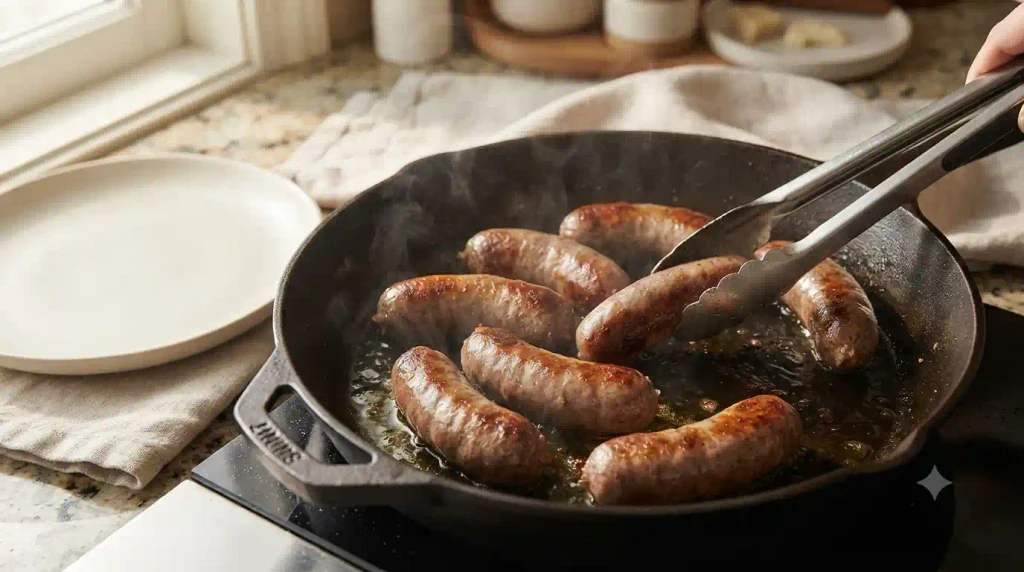
Remove the sausages from the refrigerator while you prepare the other ingredients.
Heat 1 tablespoon olive oil in a large skillet over medium heat. Once the oil is shimmering, carefully place the venison sausages in the skillet.
Cook for approximately 6–8 minutes, turning regularly, until the outsides are nicely browned.
You aren’t necessarily trying to cook the sausages completely at this stage. You’re developing color and flavor first.
Transfer the browned sausages to a clean plate.
Chef’s tip: Don’t constantly move the sausages around. Giving each side a little uninterrupted contact with the hot skillet creates much better browning.
Step 2: Soften the Onion and Garlic
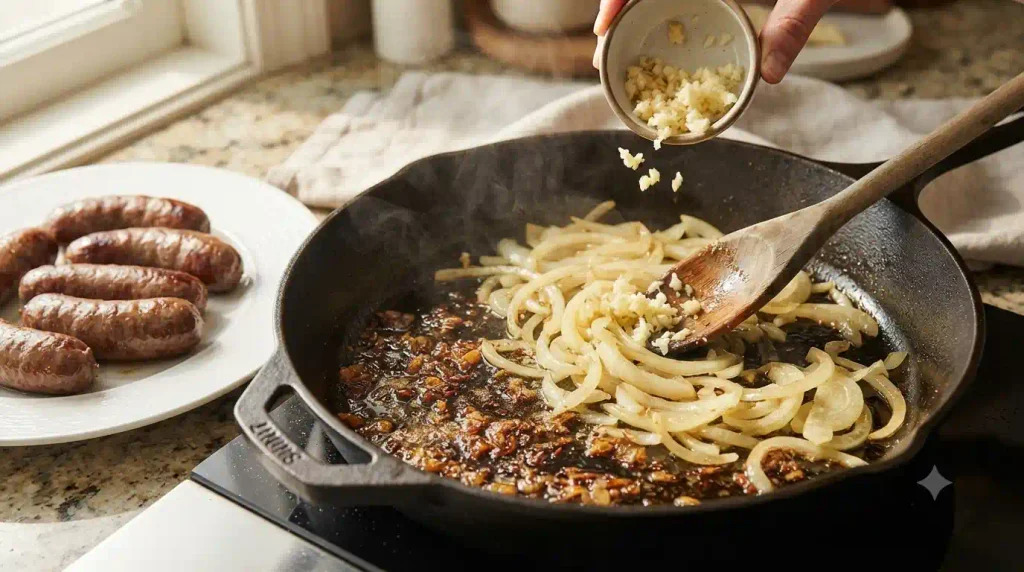
Keep the skillet over medium to medium-low heat.
Add the sliced onion to the fat remaining in the pan. If the skillet looks completely dry, add another teaspoon of olive oil.
Cook the onion for 4–5 minutes, stirring occasionally, until softened and lightly golden.
Add the minced garlic and cook for another 30–60 seconds.
You’ll know it’s ready when the garlic smells fragrant. Don’t let it become dark brown, as burnt garlic can make the finished sauce bitter.
Step 3: Deglaze the Skillet
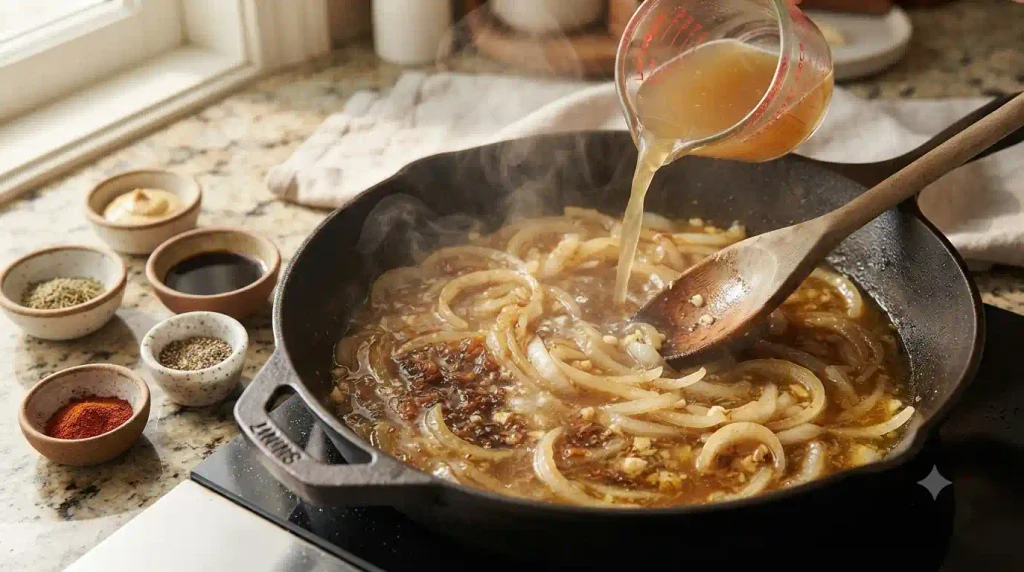
Pour 1 cup beef stock into the skillet.
Using a wooden spoon, gently scrape the bottom of the pan to loosen the browned pieces left behind by the sausages and onions.
Stir in:
- 1 tablespoon Dijon mustard
- 1 teaspoon Worcestershire sauce
- 1/2 teaspoon dried thyme
- 1/4 teaspoon black pepper
- 1/4 teaspoon smoked paprika
Bring the mixture to a gentle simmer and cook for about 2–3 minutes.
This brief reduction concentrates the savory flavors before the cream goes in.
Step 4: Make the Velvety Cream Sauce
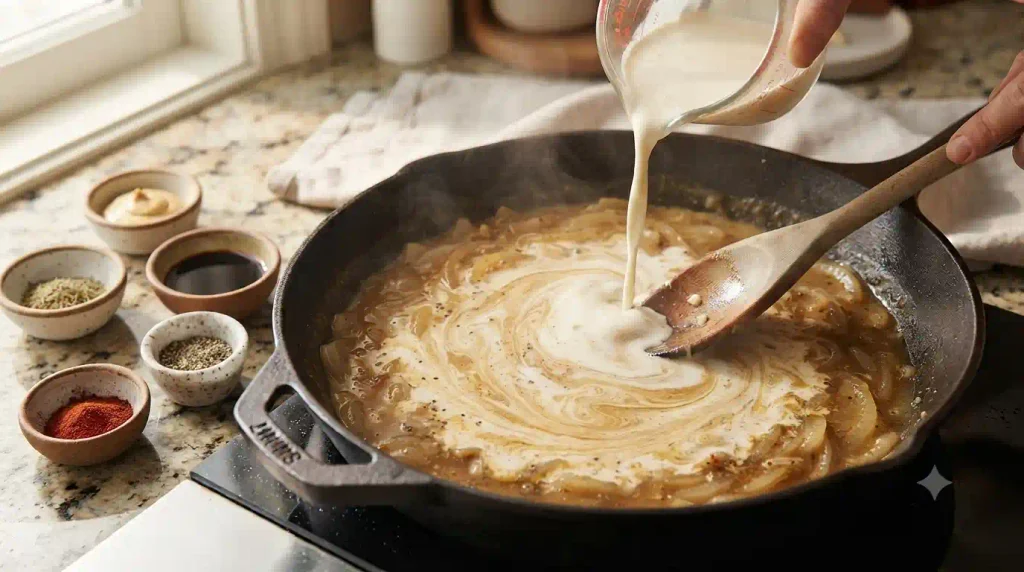
Reduce the heat to low.
Slowly pour in 3/4 cup heavy cream, stirring as you pour.
Let the sauce simmer gently for approximately 2–3 minutes. Avoid a hard boil once the cream has been added. Aggressive boiling can reduce the sauce too quickly and may affect its smooth texture.
The sauce will still look fairly loose at this point. That’s normal—it will continue thickening as the sausages finish cooking.
Taste the sauce before adding extra salt. Both sausages and stock can already contain plenty of seasoning.
Step 5: Finish Cooking the Sausages

Return the browned venison sausages to the skillet and nestle them into the sauce.
Reduce the heat to medium-low, cover loosely, and cook for approximately 7–10 minutes, turning the sausages once so they cook evenly.
Cooking time can vary considerably depending on the thickness and formulation of your sausages.
For food safety, check the internal temperature with a clean instant-read thermometer inserted into the center of a sausage. If your venison sausage contains ground venison or other ground meats, cook it to the safe internal temperature appropriate for its ingredients; 160°F (71°C) is a common minimum for ground venison/beef-style sausages, while sausages containing poultry require 165°F (74°C).
Don’t judge doneness by color alone.
Step 6: Finish the Sauce and Serve
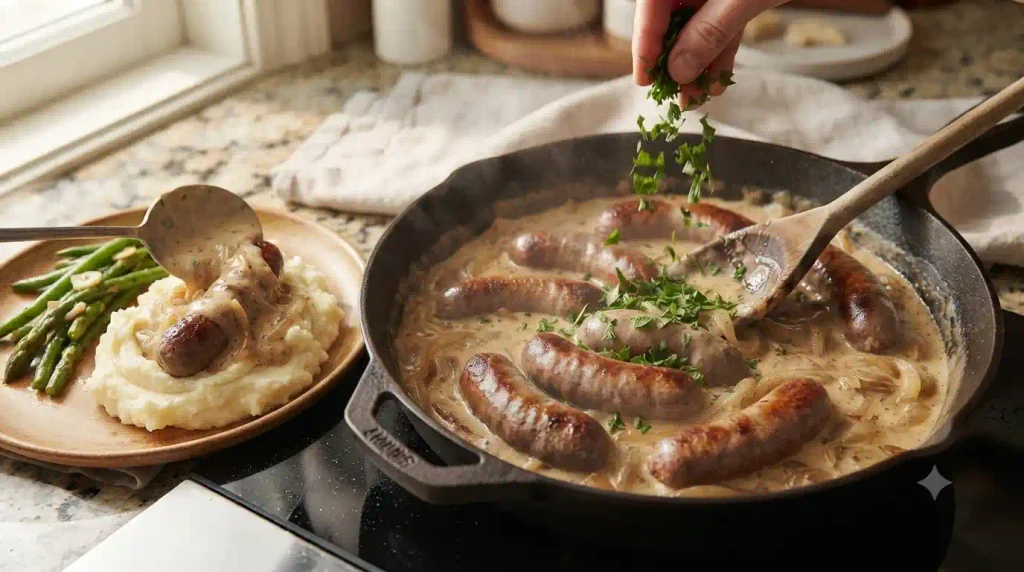
Once the sausages are safely cooked, check the consistency of your sauce.
If it’s too thin, remove the sausages temporarily and simmer the sauce gently for another 1–3 minutes.
If it becomes thicker than you’d like, stir in a splash of beef stock.
Taste and adjust the salt, pepper, or Dijon mustard as needed.
Sprinkle with fresh parsley and serve immediately.
For maximum comfort-food appeal, spoon the sausages and plenty of that creamy onion sauce over hot mashed potatoes. Trust me—the sauce disappearing into the potatoes is half the reason to make this dinner.
Health Benefits
Venison can be a nutrient-dense meat choice, although the exact nutritional profile of venison sausage varies considerably depending on how it is made.
High-quality protein: Venison provides complete protein containing essential amino acids. Protein supports muscle maintenance, recovery, and normal body functions.
Iron: Venison naturally provides iron, an essential mineral involved in normal red blood cell and oxygen transport functions.
Vitamin B12: Meat is naturally a source of vitamin B12, which supports normal nervous-system function and red blood cell formation.
Zinc: Venison also provides zinc, an important nutrient involved in immune function and many normal cellular processes.
There is an important distinction between plain venison and venison sausage, though. Sausages may contain added pork or beef fat and can be relatively high in sodium and saturated fat.
For a lighter dinner, choose a leaner venison sausage where available, use a reduced-sodium stock, serve a slightly smaller portion of sauce, and add plenty of vegetables alongside it.
Nutrition Information (Per Serving)
The following values are approximate because venison sausage recipes and brands vary widely in their meat-to-fat ratios.
| Nutrient | Approximate Amount |
|---|---|
| Calories | 520 kcal |
| Protein | 27 g |
| Fat | 41 g |
| Carbohydrates | 10 g |
These estimates cover the sausage and cream sauce and do not include mashed potatoes, rice, bread, or other side dishes.
If you’re tracking nutrition closely, calculate the recipe using the nutrition label from your particular sausage and cream products.
Pro Tips & Variations
Get a Proper Sear
Pat very moist sausages dry before putting them into the skillet. Moisture encourages steaming rather than browning.
And resist overcrowding the pan. Those browned edges are where much of the flavor starts.
Keep the Sauce Gentle
Once you’ve added the heavy cream, maintain a gentle simmer rather than a furious boil.
If the sauce gets too thick, don’t panic. A tablespoon or two of stock can bring it right back.
Add Mushrooms
For an even more savory dinner, add 8 oz (225 g) sliced cremini or chestnut mushrooms after the onions.
Cook until their released moisture evaporates and the mushrooms begin to brown, then continue with the recipe.
Make It Lighter
Replace part of the heavy cream with additional stock. The finished sauce won’t be quite as luxurious, but it will still have plenty of flavor.
Half-and-half or single cream can also work, although lower-fat dairy needs gentler heat to reduce the risk of splitting.
Add Some Heat
Add 1/4–1/2 teaspoon red pepper flakes with the garlic.
It’s especially good if your venison sausages are mild.
Try Fresh Herbs
Fresh thyme, rosemary, or sage all pair well with game meat.
Rosemary is powerful, so use it sparingly—about 1/2 teaspoon finely chopped fresh rosemary is plenty.
Make It Dairy-Free
Use a full-fat unsweetened cooking cream alternative suitable for savory sauces.
Keep in mind that coconut-based alternatives can introduce noticeable coconut flavor, so a neutral plant-based cooking cream is preferable.
What Should You Serve With Venison Sausage?
For a balanced plate, pair the sausages with one comforting starch and a generous vegetable side.
Good combinations include:
- Mashed potatoes and green beans
- Roasted potatoes and broccoli
- Rice and sautéed spinach
- Creamy polenta and roasted carrots
- Crusty bread and a crisp green salad
How Much Does It Cost to Make?
Prices vary significantly by location, season, supermarket, and whether the venison is farmed, wild, locally sourced, or specialty butcher meat.
Here’s a rough estimate using typical US grocery pricing.
| Ingredient | Estimated Cost |
|---|---|
| 1 lb venison sausage | $9.00–$14.00 |
| Heavy cream | $2.00 |
| Beef stock | $1.00 |
| Onion + garlic | $1.00 |
| Dijon + Worcestershire | $0.75 |
| Herbs, spices + oil | $0.75 |
| Estimated Total | $14.50–$19.50 |
For four servings, that’s roughly $3.60–$4.90 per serving, excluding optional side dishes.
Venison will usually be the biggest expense. If you already have oil, mustard, spices, and stock in your kitchen, your actual out-of-pocket cost can be lower.
Frequently Asked Questions
How do you cook venison sausage so it isn’t dry?
Avoid blasting venison sausage over high heat until it’s completely cooked. Brown it first over moderate heat, then finish cooking it more gently in the sauce.
Because venison itself is lean, overcooking can produce a firmer, drier texture. Using an instant-read thermometer is much more reliable than guessing based on cooking time.
What flavors go well with venison sausage?
Venison works beautifully with earthy, savory, slightly sharp flavors.
Some of the best pairings include thyme, rosemary, sage, mustard, garlic, onion, mushrooms, juniper, black pepper, red wine, berries, and root vegetables.
For this recipe, Dijon mustard and thyme provide enough contrast to balance the rich cream without hiding the venison flavor.
Can I make creamy venison sausage ahead of time?
Yes. Let leftovers cool promptly, transfer them to an airtight container, and refrigerate them.
For best texture, reheat gently in a covered skillet over low heat. Add a small splash of stock or water if the sauce has thickened in the refrigerator.
Avoid repeatedly cooling and reheating leftovers.
Can I freeze venison sausage in cream sauce?
You can, although cream-based sauces sometimes separate slightly after freezing and thawing.
For the best results, cool the cooked dish promptly and freeze it in a suitable airtight container. Thaw safely in the refrigerator, then reheat gently.
If the sauce looks slightly separated, stir it well while warming and add a small splash of stock or cream to help restore its consistency.
Final Thoughts
This Velvety Venison Sausage Recipe for an Easy Dinner hits that sweet spot between comforting and surprisingly simple. You get deeply browned sausages, sweet onions, aromatic garlic, and a creamy Dijon sauce—all from one skillet in about 35 minutes.
Don’t worry about making the sauce restaurant-perfect. Home cooking is allowed to look homemade. Focus on getting good color on the sausages, keeping the cream at a gentle simmer, and checking the meat safely with a thermometer.
Pile everything over buttery mashed potatoes, add something green on the side, and dinner is ready. Once you’ve scraped that last spoonful of mustard cream sauce from the skillet, you’ll understand why this one deserves a place in the weeknight rotation.