

There’s something deeply satisfying about the smell of sweet, garlicky pork sizzling in a pan, especially when you’re craving a proper Filipino-style breakfast at home. Pork tocino delivers that irresistible mix of savoury, tangy, and caramelised flavours. The tricky part is the sugar: one distracted minute can turn that glossy coating from beautifully sticky to bitter and burnt.
This recipe uses a simple water-first cooking method that gives the pork time to cook through before the marinade starts caramelising. It’s practical for a busy home kitchen, requires no specialist equipment, and gives you tender pork with those gorgeous sticky edges—without leaving a black layer of sugar welded to your frying pan.
Prep & Cook Time
| Detail | Time / Amount |
|---|---|
| Prep Time | 15 minutes |
| Marinating Time | 8 hours or overnight |
| Cook Time | 20 minutes |
| Total Active Time | 35 minutes |
| Total Time Including Marinating | 8 hours 35 minutes |
| Servings | 4 |
Chef’s note: Overnight marinating gives the pork the deepest flavour, but 4 hours will still produce tasty tocino when you’re short on time.
What Equipment Do You Need?
You don’t need any specialist Filipino cookware for homemade tocino. A few everyday kitchen tools will do the job:
- Large mixing bowl
- Measuring cups and spoons
- Sharp chef’s knife
- Cutting board
- Large non-stick or well-seasoned skillet
- Tongs
- Wooden spoon or silicone spatula
- Airtight container or zip-top food bag
- Instant-read meat thermometer, recommended
A wide skillet is particularly useful because overcrowded pork tends to steam instead of developing those sticky caramelised edges.
Ingredients
For the Pork Tocino
- 1½ pounds (680 g) boneless pork shoulder, sliced about ¼-inch (6 mm) thick
- ⅓ cup (67 g) light brown sugar, packed
- ¼ cup (60 ml) pineapple juice
- 3 tablespoons soy sauce
- 1 tablespoon rice vinegar
- 5 garlic cloves, finely minced or grated
- 1 teaspoon kosher salt
- ½ teaspoon freshly ground black pepper
- ½ teaspoon sweet paprika
- ¼ teaspoon annatto powder, optional, for traditional reddish-orange colour
For Cooking
- ½ cup (120 ml) water, plus a little extra if necessary
- 1 tablespoon neutral cooking oil, such as avocado, canola, or vegetable oil
Optional for Serving
- Steamed or garlic fried rice
- Fried eggs
- Sliced tomatoes
- Sliced cucumber
Why Each Ingredient Matters
Pork shoulder: This cut contains enough fat and connective tissue to stay juicy during cooking. Very lean pork can become dry before the outside develops the characteristic tocino glaze.
Brown sugar: Sugar provides tocino’s signature sweetness and eventually caramelises into that shiny, slightly sticky coating. Brown sugar also contributes subtle molasses notes.
Pineapple juice: It brings sweetness and acidity while complementing pork beautifully. Pineapple also contains bromelain, an enzyme that can tenderise meat. This is one reason not to marinate thin pork slices for several days—the texture can eventually become too soft.
Soy sauce: This supplies saltiness, savoury umami, and deeper colour. It balances the fairly generous amount of sugar rather than letting the finished pork taste like candy.
Rice vinegar: A little acidity cuts through both the pork fat and sweetness. It makes the finished dish taste brighter without turning it noticeably sour.
Garlic: Tocino needs that aromatic savoury backbone. Fresh garlic tastes fuller and more rounded after marinating and cooking.
Paprika and annatto: Paprika provides gentle warmth and colour. Annatto is optional but helps create the recognisable red-orange appearance without relying on artificial red food colouring.
Water: This is the secret to controlling the sugar. Instead of immediately frying sugar-coated raw pork over direct heat, water lets the meat cook gently first. As it evaporates, the temperature rises and the sugars can caramelise later.
Neutral oil: Only a small amount is needed toward the end. Pork shoulder will usually release some of its own fat as it cooks.
Step-by-Step Instructions
Step 1: Slice the Pork
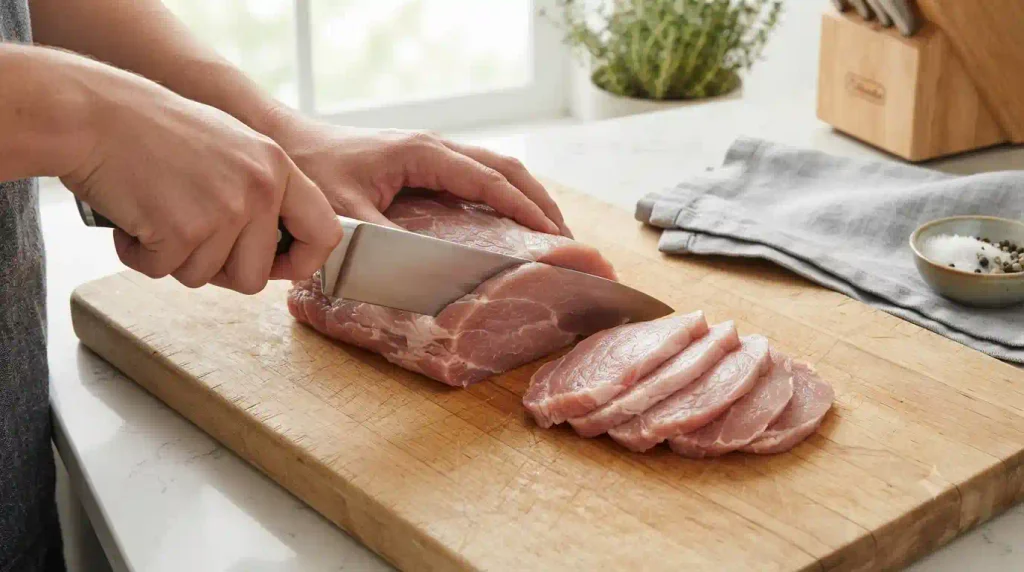
For easier slicing, place the pork shoulder in the freezer for 20–30 minutes. You’re not trying to freeze it solid; you simply want it slightly firm.
Cut the pork against the grain into slices roughly ¼ inch (6 mm) thick.
Try to keep the slices reasonably similar in thickness. If some pieces are paper-thin while others are chunky, the thin pieces may caramelise before the thicker ones are properly cooked.
Wash your hands, knife, cutting board, and any surfaces that contacted raw pork before preparing other foods.
Step 2: Make the Tocino Marinade
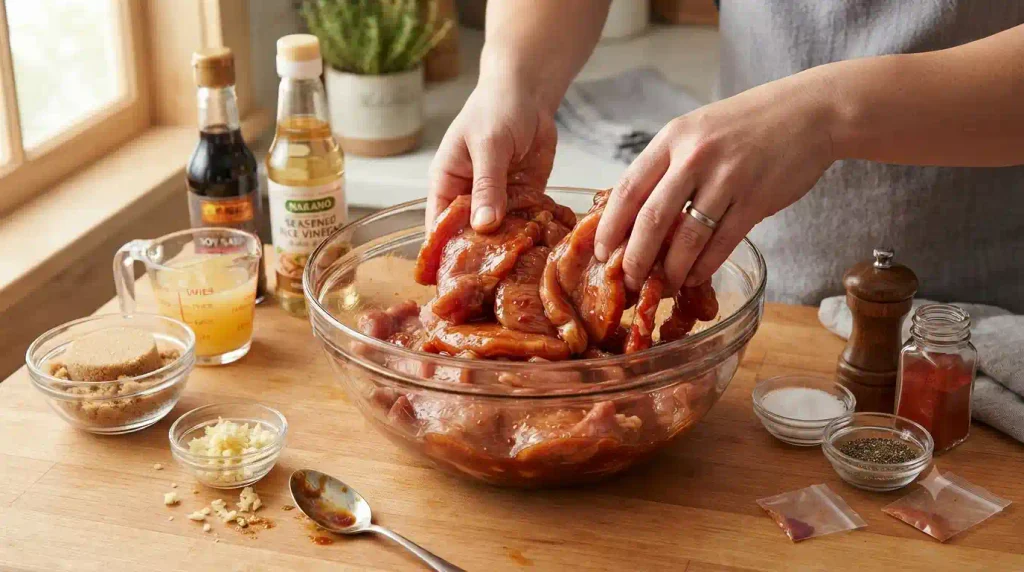
In a large bowl, combine:
- Brown sugar
- Pineapple juice
- Soy sauce
- Rice vinegar
- Garlic
- Salt
- Black pepper
- Paprika
- Annatto powder, if using
Stir until most of the brown sugar has dissolved.
Add the pork and toss thoroughly, making sure every slice gets coated. Using clean hands is often the easiest way to work the marinade between overlapping pieces.
The mixture should look quite wet and sugary at this point. That’s exactly what you want.
Step 3: Marinate the Pork
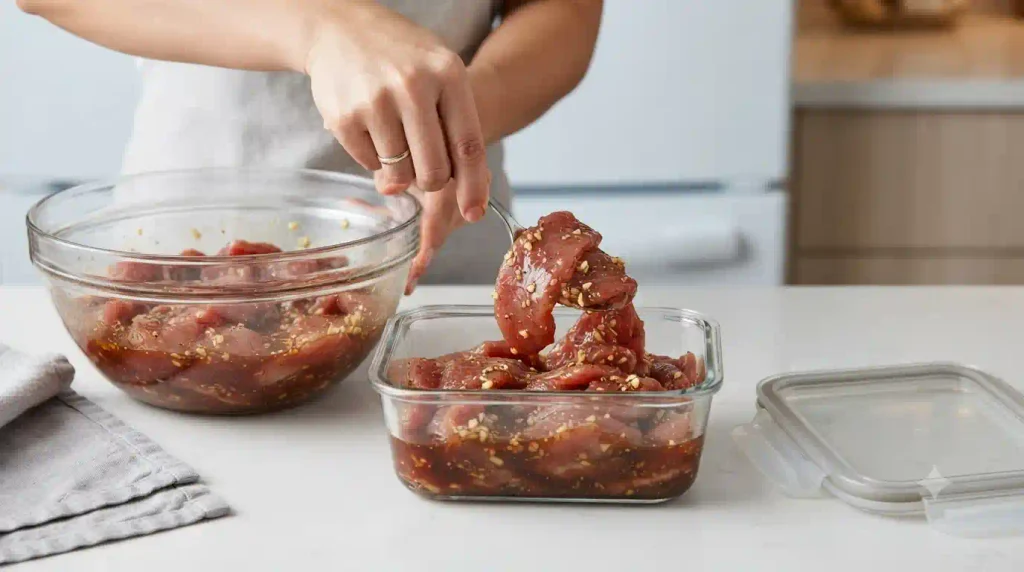
Transfer the pork and marinade to an airtight container or food-safe zip-top bag.
Refrigerate for at least 4 hours, preferably 8 hours or overnight.
Keep raw marinating pork refrigerated at 40°F/4°C or below. Never leave it marinating on the kitchen counter.
When you’re ready to cook, take out only the amount you plan to prepare.
Step 4: Cook With Water First
Here’s the step that prevents the most common tocino disaster.
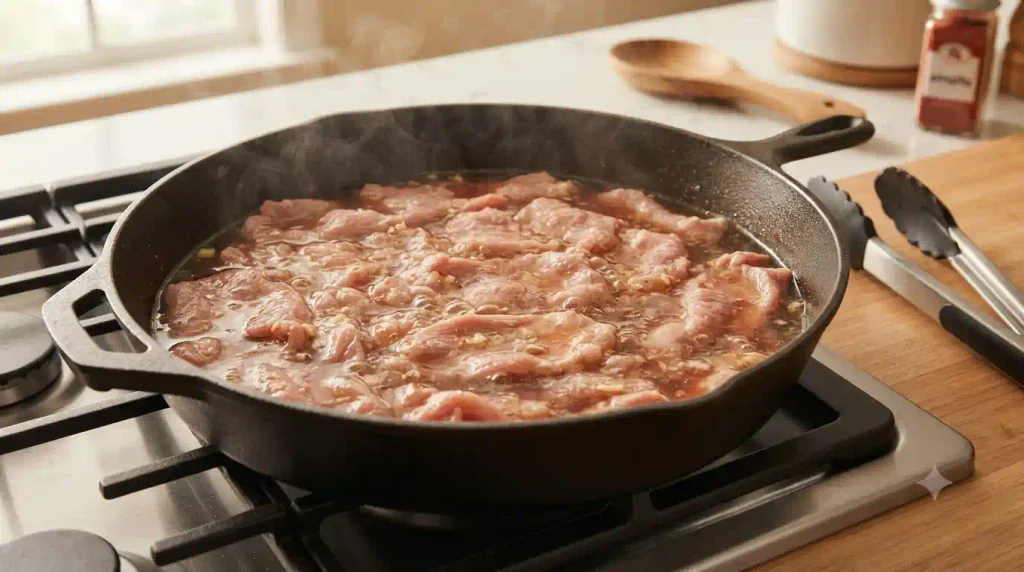
Place the marinated pork in a large skillet while the pan is still cool. Pour in ½ cup (120 ml) water and add enough marinade to lightly coat the meat.
Arrange the slices in a relatively even layer.
Bring the liquid to a gentle simmer over medium heat, then reduce to medium-low if it starts boiling aggressively.
Cook for approximately 10–12 minutes, turning the pork occasionally.
At first, it may look like you’re boiling rather than frying the pork. That is intentional.
The water keeps the pan temperature relatively controlled while the meat begins cooking. If the liquid disappears before the pork is nearly cooked, add another tablespoon or two of water.
Step 5: Reduce and Caramelise Slowly
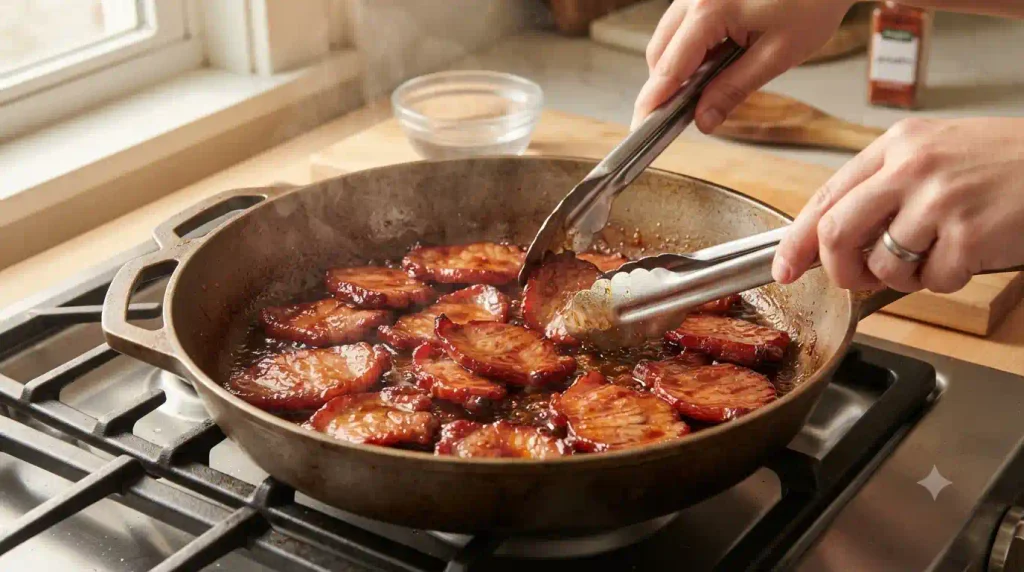
Once most of the water has evaporated, you’ll notice a big change. The liquid becomes thicker, shinier, and increasingly syrupy.
Reduce the heat to medium-low or low.
Add 1 tablespoon neutral oil if the pan looks dry.
Continue cooking for about 5–7 minutes, turning the slices frequently with tongs.
Watch carefully now. Sugar behaves very differently once the excess water disappears. The glaze can go from amber and glossy to burnt surprisingly quickly.
If the pan starts smoking or the glaze darkens too aggressively, immediately lower the heat and add 1–2 tablespoons water.
You want deep reddish-brown, sticky edges—not black ones.
Step 6: Check, Rest, and Serve
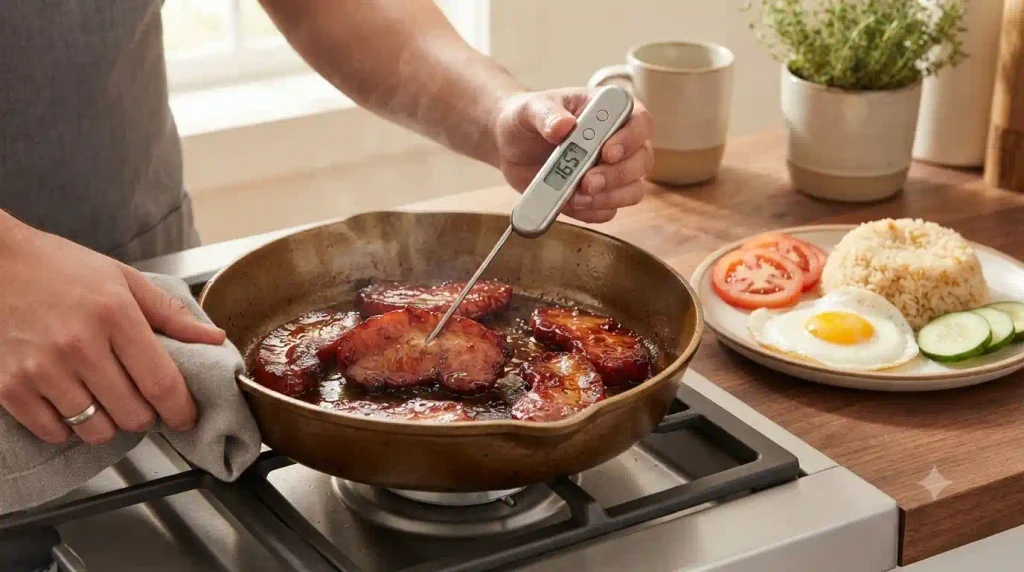
Cook until the pork is properly cooked and beautifully glazed. For food safety, whole-cut pork should reach at least 145°F (63°C) internally, followed by a 3-minute rest.
Remove the pork from the skillet before the remaining sugar burns. Let it rest for about 3 minutes.
Serve hot with steamed rice or garlic fried rice, a fried egg, and fresh tomato or cucumber.
That sweet-savoury pork against warm rice is hard to beat, especially when a runny egg yolk joins the situation.
Health Benefits
Pork tocino is an indulgent, sugar-forward dish, but it still provides useful nutrients.
High-quality protein: Pork supplies complete protein containing all nine essential amino acids. Protein contributes to muscle maintenance and helps make meals satisfying.
B vitamins: Pork is particularly known for nutrients such as thiamine (vitamin B1), along with other B vitamins involved in normal energy metabolism.
Iron and zinc: Pork contributes minerals including iron and zinc, which support several normal functions in the body.
Garlic: Fresh garlic provides flavour with very few calories, allowing us to build savouriness without simply adding more sugar or fat.
Easy portion control: Tocino has a strong flavour, so a moderate serving can go a long way when paired with rice and plenty of vegetables.
Keep in mind that tocino contains added sugar and sodium, largely from brown sugar and soy sauce. If those are dietary concerns for you, enjoy a smaller portion and pair it with vegetables, fresh fruit, or other less-salty foods.
Nutrition Information (Per Serving)
Approximate nutrition will vary according to the pork cut, how much marinade remains in the pan, and the specific soy sauce used.
| Nutrient | Approximate Amount |
|---|---|
| Calories | 440 kcal |
| Protein | 30 g |
| Fat | 25 g |
| Carbohydrates | 24 g |
Serving estimate: Based on approximately ¼ of the cooked recipe, excluding rice, eggs, and optional sides.
Pro Tips & Variations
1. Never start with a screaming-hot skillet.
This is probably the single most useful tocino tip. A hot pan attacks the sugar before the raw pork has enough time to cook.
2. Water first, caramelisation second.
Simmering the pork with water gives you much more control. Once the water evaporates, lower the heat and concentrate on developing colour.
3. Don’t walk away during the final few minutes.
I’ve made the mistake of trying to tidy the kitchen while sugary meat was caramelising. It rarely ends well. Once that sauce becomes syrupy, stay near the stove.
4. Cook in batches when necessary.
If your skillet is small, divide the pork into two batches. Crowding traps moisture and makes browning inconsistent.
5. Want it less sweet?
Reduce the brown sugar to ¼ cup (50 g). The finished pork won’t be quite as sticky, but you’ll still get a pleasant sweet-savoury balance.
6. Want a stronger tang?
Increase the rice vinegar by 1–2 teaspoons.
7. No pineapple juice?
Orange juice makes a convenient substitute, although the flavour and tenderising effect will differ.
8. Prefer chicken?
The same flavour profile works with boneless chicken thighs. Cooking time will need adjusting according to thickness, and poultry should reach 165°F (74°C) internally.
9. Make it garlickier.
Garlic lovers can comfortably increase the recipe to 6–7 cloves.
10. Don’t reuse raw marinade carelessly.
Marinade that has contacted raw pork must be thoroughly cooked before it is used as a sauce. Never spoon uncooked leftover marinade over finished tocino.
How Much Does It Cost to Make?
Prices vary considerably by region, supermarket, and pork prices, but this is a reasonable US-style home-cooking estimate.
| Ingredient | Estimated Cost |
|---|---|
| 1½ lb pork shoulder | $6.00–$8.00 |
| Brown sugar | $0.30 |
| Pineapple juice | $0.60 |
| Soy sauce | $0.40 |
| Rice vinegar | $0.15 |
| Fresh garlic | $0.40 |
| Seasonings | $0.25 |
| Cooking oil | $0.15 |
| Estimated Total | $8.25–$10.25 |
| Approx. Cost Per Serving | $2.05–$2.55 |
Rice, eggs, and vegetables will add to the total, but even with simple sides this can remain an economical family meal.
Frequently Asked Questions
Why does my pork tocino always burn?
Sugar is usually the culprit. If heavily marinated pork goes directly into a very hot, relatively dry skillet, the sugar can burn before the pork finishes cooking.
Start with water in the pan, simmer the pork gently, and let the liquid evaporate. Only then should you allow the remaining marinade to caramelise over lower heat.
How do you cook tocino without burning the sugar?
Use a two-stage method: simmer first, caramelise second.
Cook the pork with about ½ cup water until the meat is nearly done and most of the water has evaporated. Lower the heat as the sauce becomes syrupy, then turn the pork frequently until sticky and browned.
If the sugar starts darkening too quickly, add a splash of water. It can loosen the glaze and give you a little breathing room.
How long should pork tocino marinate?
Aim for 8 hours or overnight for a well-developed flavour. If you’re making dinner on the same day, about 4 hours can still work.
Because this recipe contains pineapple juice, extremely long marinating isn’t necessarily better. The enzymes in fresh pineapple products can eventually soften meat excessively.
Can I freeze homemade pork tocino?
Yes. Tocino is excellent for meal prep.
Freeze the raw marinated pork in a freezer-safe bag or container, leaving as little excess air as practical. For best quality, use it within roughly 2–3 months.
Thaw frozen pork safely in the refrigerator rather than leaving it on the counter. Once thawed, cook it using the same water-first method.
Final Thoughts
Homemade Filipino pork tocino doesn’t need to involve burnt sugar, clouds of smoke, or a frying pan you’ll be soaking until tomorrow. The trick is simple: give the pork time to cook with water before asking the sugar to caramelise.
Keep the final heat gentle, turn the slices frequently, and trust what you see in the pan. When that marinade becomes glossy and the edges turn deep reddish-brown, you’re there.
Serve it hot with rice and eggs, and don’t worry if a few sticky caramelised bits mysteriously disappear before the plates reach the table. That’s part of cooking tocino at home.