

There’s something deeply satisfying about putting a pot on the stove and letting bold spices, garlic, and vinegar slowly turn a simple cut of pork into a rich, comforting dinner. Pork vindaloo is especially good for those evenings when you’re craving something warming and spicy but want real flavour rather than relying on a jar or premixed curry powder.
This version builds its flavour the traditional way: whole and ground spices, plenty of garlic, ginger, and vinegar. The result is tangy, aromatic, pleasantly fiery, and beautifully savoury. It does take a little patience, especially during marinating and slow simmering, but most of that time is hands-off. Your kitchen will smell incredible long before dinner reaches the table.
Authentic Pork Vindaloo Recipe Without Curry Powder
This homemade pork vindaloo skips commercial curry powder completely. Instead, the distinctive flavour comes from individual spices, vinegar, aromatics, and slow cooking. It is inspired by Goan-style vindaloo, where acidity and spices are central to the dish.
The pork is marinated before cooking so the seasoning has time to penetrate the meat. A gentle simmer then transforms the marinade into a glossy, intensely flavoured sauce.
Prep & Cook Time
| Details | Time / Amount |
|---|---|
| Prep Time | 20 minutes |
| Marinating Time | 2–8 hours |
| Cook Time | 1 hour 15 minutes |
| Total Active + Cooking Time | About 1 hour 35 minutes |
| Total Including Minimum Marinating | About 3 hours 35 minutes |
| Servings | 6 |
Chef’s note: If you can marinate the pork overnight, even better. The flavour becomes deeper and more evenly seasoned.
What Equipment Do You Need?
You don’t need specialist curry-making equipment. A normal home kitchen has almost everything required.
- Large mixing bowl
- Measuring cups and spoons
- Sharp chef’s knife
- Cutting board
- Large heavy-bottomed saucepan or Dutch oven
- Wooden spoon or silicone spatula
- Small frying pan for toasting spices
- Spice grinder or mortar and pestle
- Airtight container or bowl with a cover for marinating
- Instant-read meat thermometer, recommended
A heavy Dutch oven is particularly useful because it distributes heat evenly and helps prevent the spice mixture from catching on the bottom.
Ingredients
For the Pork and Marinade
- 2 lb (900 g) boneless pork shoulder, cut into 1½-inch chunks
- 6 garlic cloves, finely grated or minced
- 1½ tablespoons fresh ginger, finely grated
- ¼ cup (60 ml) red wine vinegar
- 1 tablespoon apple cider vinegar
- 1 teaspoon fine sea salt
- 1 teaspoon ground turmeric
For the Vindaloo Spice Blend
- 2 teaspoons cumin seeds
- 2 teaspoons coriander seeds
- 1 teaspoon black peppercorns
- 1 teaspoon brown or black mustard seeds
- 4 whole cloves
- 1-inch cinnamon stick
- 4–6 dried red chillies, stems removed
- 1 teaspoon paprika, preferably sweet or Kashmiri-style chilli powder for colour
For Cooking
- 2 tablespoons neutral cooking oil
- 1 large yellow onion, finely chopped
- 1 teaspoon brown sugar, optional
- 1 cup (240 ml) water, plus more if necessary
- ½ teaspoon salt, or to taste
For Serving
- Steamed basmati rice
- Fresh coriander/cilantro, optional
Why Each Ingredient Matters
Pork shoulder: This is my preferred cut for vindaloo. It contains enough intramuscular fat and connective tissue to stay succulent during the longer cooking time. Lean pork loin can become dry before the sauce develops properly.
Vinegar: Acidity is one of vindaloo’s defining characteristics. Vinegar cuts through the richness of pork while giving the sauce its unmistakable sharpness. It also helps flavour the surface of the meat during marinating.
Garlic and ginger: These provide the aromatic backbone. Garlic adds savoury depth, while ginger contributes warmth and a fresh bite.
Dried red chillies: Vindaloo should have noticeable heat, but it doesn’t have to be painfully hot. Dried chillies provide both flavour and warmth. Removing some seeds can make the finished curry gentler.
Cumin and coriander: Toasted cumin is earthy and nutty, while coriander seed has a lighter, slightly citrusy character. Together they create complexity without needing commercial curry powder.
Mustard seeds: Their sharp, slightly pungent flavour works particularly well with vinegar and pork.
Black pepper: Pepper brings a different kind of heat from chilli—warmer, earthier, and more aromatic.
Cloves and cinnamon: You only need small amounts. They bring warmth and sweetness to the background without turning the vindaloo into a heavily perfumed curry.
Turmeric: Adds earthiness and the familiar warm golden-red colour.
Onion: Slowly cooking the onion creates natural sweetness and body in the sauce.
Brown sugar: This is optional and isn’t meant to make the curry sweet. A teaspoon can soften particularly sharp vinegar and aggressive chilli heat.
Step-by-Step Instructions
Step 1: Toast and Grind the Spices

Place a small dry frying pan over medium-low heat.
Add the cumin seeds, coriander seeds, black peppercorns, mustard seeds, cloves, cinnamon, and dried red chillies.
Toast for 1–2 minutes, moving the spices frequently.
You’ll know they’re ready when they become noticeably fragrant. Don’t wait until they turn very dark. Burnt spices can make an entire pot of curry unpleasantly bitter.
Remove them from the heat and let them cool for several minutes.
Transfer to a spice grinder or mortar and pestle and grind into a relatively fine powder.
Stir in the paprika.
Step 2: Marinate the Pork
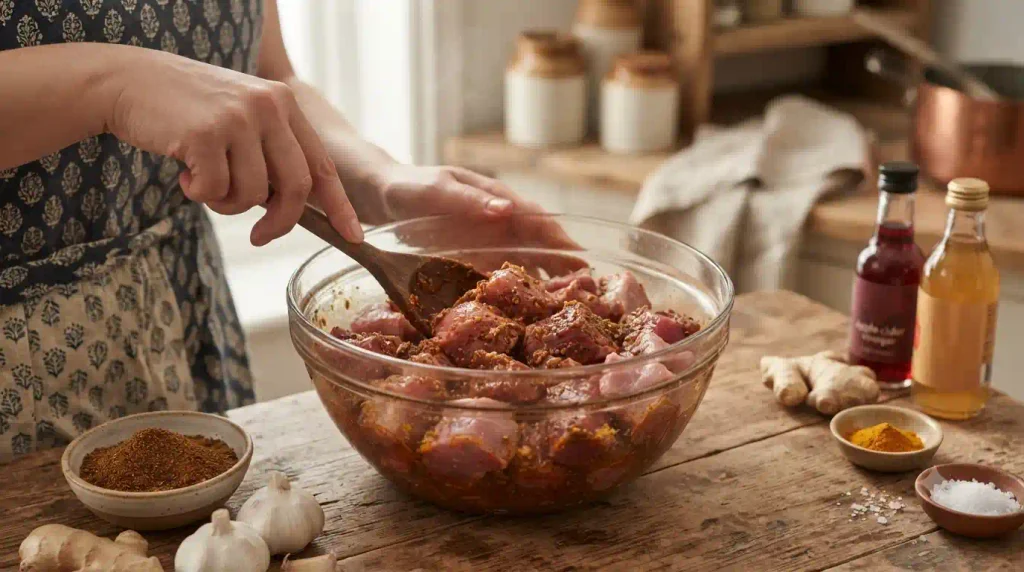
Put the pork chunks into a large bowl.
Add:
- Ground toasted spice mixture
- Garlic
- Ginger
- Red wine vinegar
- Apple cider vinegar
- Turmeric
- 1 teaspoon salt
Mix thoroughly until every piece of pork is coated.
Cover and refrigerate for at least 2 hours, preferably 6–8 hours or overnight.
Don’t marinate raw pork on the counter. Keep it refrigerated at 40°F/4°C or below, and wash your hands, knife, cutting board, and any surfaces that have contacted the raw meat.
Step 3: Build the Onion Base
Take the marinated pork from the refrigerator while you prepare the onions.
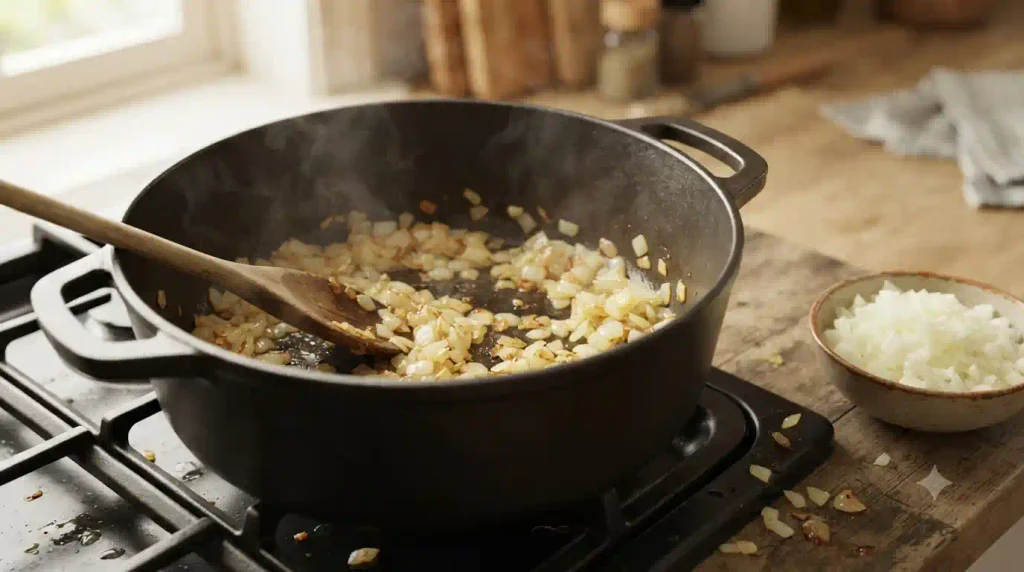
Heat 2 tablespoons oil in a large Dutch oven or heavy saucepan over medium heat.
Add the chopped onion.
Cook for approximately 8–10 minutes, stirring regularly, until soft and golden around the edges.
Don’t rush this part. Properly cooked onions add sweetness that balances the vinegar naturally.
If the bottom starts getting too dark, reduce the heat rather than pouring in extra oil.
Step 4: Add and Brown the Marinated Pork
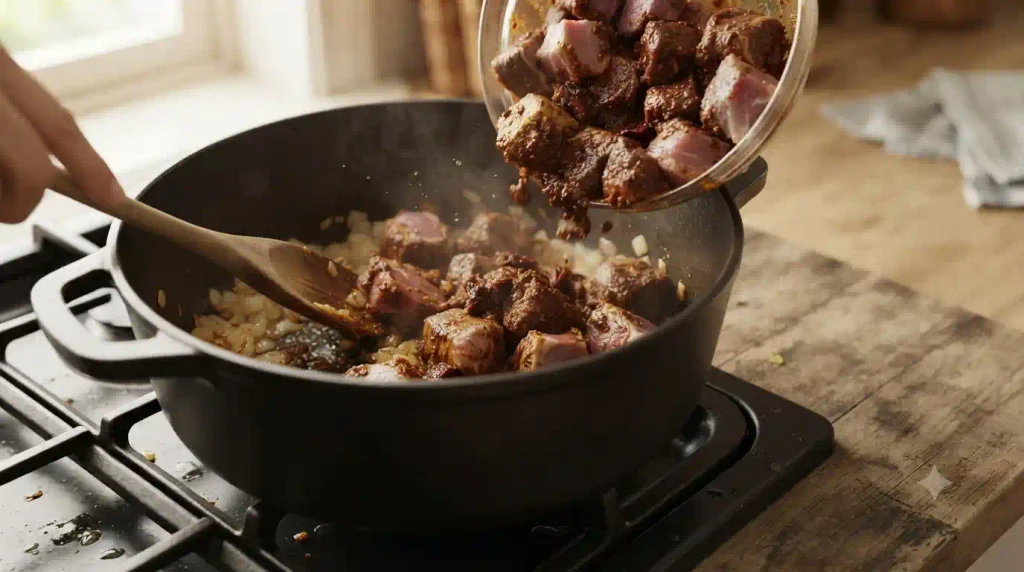
Add the pork and all of its marinade to the onions.
Increase the heat slightly to medium-high.
Cook for 6–8 minutes, turning the pork occasionally.
You aren’t trying to cook the meat completely at this stage. The goal is to develop flavour and gently cook the spices.
The mixture may initially look a little wet and messy. That’s normal. As moisture evaporates, the spices will cling more closely to the pork.
Keep stirring near the bottom because ground spices can scorch surprisingly quickly.
Step 5: Slowly Simmer the Vindaloo
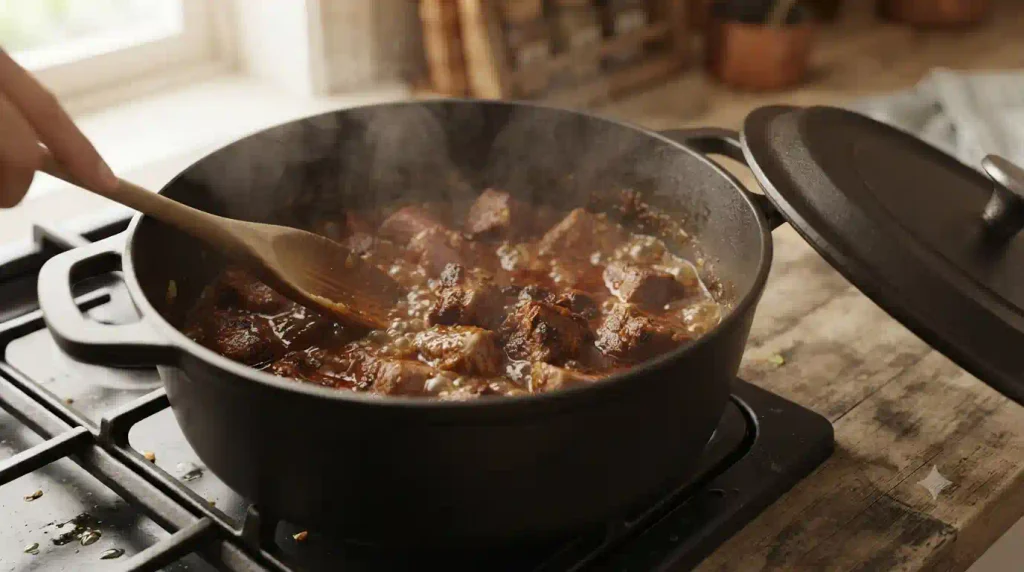
Pour in 1 cup (240 ml) water and stir thoroughly, scraping up any browned spice and onion from the bottom of the pot.
Bring everything to a gentle simmer.
Reduce the heat to low, partially cover the pot, and cook for approximately 50–60 minutes.
Stir every 10–15 minutes.
If the sauce becomes too thick before the pork is tender, add a splash of hot water.
The pork is ready when it is fork-tender and the sauce has reduced considerably. For food safety, whole cuts of pork need to reach at least 145°F/63°C followed by a 3-minute rest, although pork shoulder cooked for a dish like this is typically taken considerably further so its connective tissue softens and the meat becomes tender.
Step 6: Balance the Sauce and Serve
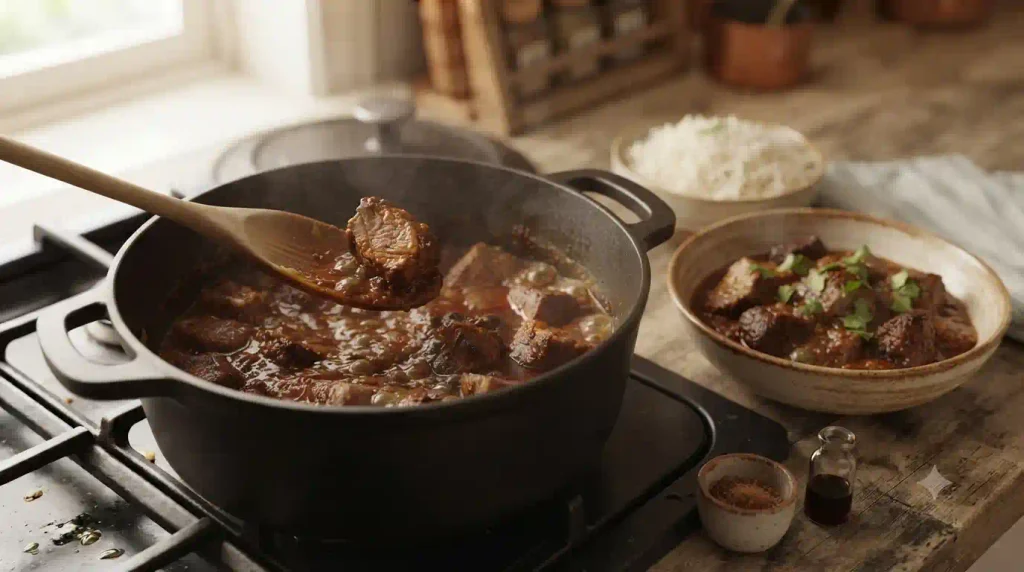
Remove the lid and simmer for another 5–10 minutes if you want a thicker sauce.
Taste carefully.
Add the remaining salt only if needed.
If the vinegar tastes unusually sharp, stir in up to 1 teaspoon brown sugar. Don’t automatically add it—the finished vindaloo should retain a lively acidic edge rather than taste sweet.
If you want additional acidity, add a small splash of vinegar at the end.
Let the curry rest off the heat for 5–10 minutes before serving.
Spoon it over hot basmati rice and finish with coriander/cilantro if you enjoy it.
And don’t be surprised if tomorrow’s leftovers taste even better.
Health Benefits
Pork vindaloo is rich and satisfying, but it can still contribute useful nutrients to a balanced diet.
High-quality protein: Pork provides complete protein containing all nine essential amino acids. Protein supports muscle maintenance and helps make a meal satisfying.
B vitamins: Pork is particularly notable for thiamine (vitamin B1) and also supplies other B vitamins involved in normal energy metabolism.
Iron and zinc: Pork contributes minerals including iron and zinc. Zinc plays roles in normal immune function and wound healing.
Garlic: Garlic contains sulfur-containing compounds and adds plenty of flavour without requiring large amounts of sugar.
Ginger: Fresh ginger contributes aromatic compounds such as gingerols and gives the dish significant flavour for very few calories.
Spices: Using individual spices creates complexity without relying on heavily salted premixed sauces.
Keep in mind that vindaloo can contain a fair amount of fat depending on the pork shoulder you buy. Trim large pieces of visible exterior fat if you’d prefer a lighter serving.
Nutrition Information (Per Serving)
Approximate values based on 6 servings, before rice or other accompaniments:
| Nutrient | Approximate Amount |
|---|---|
| Calories | 390 kcal |
| Protein | 31 g |
| Fat | 25 g |
| Carbohydrates | 9 g |
Nutrition values are estimates. Pork fat content, oil absorption, ingredient brands, trimming, and serving size can change the final numbers considerably.
Adding 1 cup of cooked rice will substantially increase the calories and carbohydrates in the complete meal.
Pro Tips & Variations
1. Use pork shoulder rather than pork loin.
Shoulder is forgiving. The fat and collagen help the meat remain succulent during slow cooking.
2. Toast the spices gently.
A minute or two makes an enormous difference, but high heat can burn small spices before you realise what’s happening.
3. Control the chilli rather than eliminating it.
For a milder vindaloo, use fewer dried chillies and remove their seeds. For more heat, increase the chillies gradually.
4. Don’t eliminate the vinegar.
You can reduce it slightly if you dislike strongly acidic food, but vinegar is fundamental to vindaloo’s flavour profile.
5. Make it one day ahead.
This is one of those dishes I actually like better after a night in the refrigerator. The spices settle into the sauce and the flavours become more cohesive.
6. Don’t drown the pork in water.
Add enough liquid for a controlled simmer. Too much creates a thin, diluted sauce that takes ages to reduce.
7. Adjust consistency at the end.
Vindaloo doesn’t need to be swimming in gravy. I prefer a reduced sauce that coats the pork and leaves just enough for the rice.
Easy Variations
Milder pork vindaloo:
Use 2–3 dried chillies and sweet paprika.
Extra-hot vindaloo:
Increase the dried chillies or add a small amount of cayenne pepper.
Chicken vindaloo:
Replace pork shoulder with boneless chicken thighs. The cooking time will be considerably shorter, so cook according to the chicken rather than following the pork timing.
Lower-fat version:
Trim excess visible fat from the pork shoulder and skim rendered fat from the surface before serving.
Thicker sauce:
Cook uncovered during the final 10–15 minutes.
More tangy:
Finish the curry with 1–2 teaspoons vinegar, tasting after each addition.
How Much Does It Cost to Make?
Prices vary considerably between supermarkets, regions, and countries, but this is a reasonable rough estimate for a US home kitchen.
| Ingredient Group | Estimated Cost |
|---|---|
| 2 lb pork shoulder | $7–$10 |
| Onion, garlic and ginger | $2–$3 |
| Vinegar | $0.50–$1 |
| Whole and ground spices | $1.50–$3 |
| Oil and seasonings | $0.50–$1 |
| Estimated Recipe Total | $11.50–$18 |
| Estimated Cost Per Serving | $1.90–$3 |
Rice may add roughly another $0.30–$0.75 per serving, depending on the type and brand you buy.
If you already keep cumin, coriander, peppercorns, cloves, cinnamon, and chilli in your spice cupboard, the actual out-of-pocket cost can be noticeably lower.
Frequently Asked Questions
Can I make pork vindaloo without curry powder?
Absolutely. In fact, you don’t need commercial curry powder to create the characteristic flavour of this dish. This recipe builds its spice profile from cumin, coriander, mustard seeds, black pepper, cloves, cinnamon, chilli, and turmeric.
Using individual spices also gives you much more control over the heat, aroma, and overall balance.
What is the best cut of pork for vindaloo?
Boneless pork shoulder is an excellent choice.
It contains enough fat and connective tissue to remain tender during slow cooking. Pork loin and tenderloin are much leaner and can become dry if they’re cooked for the same length of time.
Why does vindaloo contain vinegar?
Vinegar is central to the dish’s distinctive tangy character and historical Portuguese-Goan influence.
It also balances the richness of pork and carries the garlic and spice flavours through the sauce. Vindaloo should have a noticeable acidic note, so don’t expect it to taste like a creamy curry.
Is pork vindaloo very spicy?
It can be, but you control the heat at home.
For moderate heat, start with 3–4 dried red chillies. For a hotter curry, use 5–6 or add a little cayenne. For a gentler version, reduce the number of chillies and use paprika to maintain colour and flavour.
Remember that chilli varieties vary dramatically in heat, so tasting and adjusting is more reliable than simply counting peppers.
Final Thoughts
Making pork vindaloo from individual spices takes a little more effort than opening a jar, but that’s exactly where the character of this dish comes from. Toasting the spices, marinating the pork, and patiently simmering the sauce create layers of flavour that curry powder alone can’t easily reproduce.
Don’t worry about making every stage look restaurant-perfect. My stovetop usually has a few spice splashes around it by the time vindaloo is finished, too. Concentrate on three things: don’t burn your spices, give the pork enough time to become tender, and balance the vinegar at the end.
Serve it with fluffy basmati rice, give that rich sauce somewhere to go, and enjoy the kind of dinner that’s worth having leftovers for.