

If the smell of something sweet, smoky, and savory bubbling away on the stove makes everyone wander into the kitchen, this sticky pork and beans recipe is exactly that kind of meal. It turns simple canned beans and pork into a glossy, comforting dinner with very little fuss. It is ideal when you are craving proper home-cooked flavor but do not want to soak beans overnight or spend hours watching a pot.
I make dishes like this when the kitchen is busy and dinner needs to be forgiving. Canned beans handle the shortcut beautifully, while browned pork, barbecue sauce, mustard, and a little brown sugar create a rich sauce that tastes far more involved than it really is.
Prep & Cook Time
| Details | Time / Amount |
|---|---|
| Prep Time | 15 minutes |
| Cook Time | 35 minutes |
| Total Time | 50 minutes |
| Servings | 6 |
This recipe makes 6 generous servings and reheats particularly well, so leftovers are worth keeping.
What Equipment Do You Need?
You do not need any specialist equipment. A large heavy-bottomed skillet, sauté pan, or Dutch oven works perfectly.
- Large skillet or Dutch oven
- Sharp chef’s knife
- Cutting board
- Measuring cups and spoons
- Wooden spoon or silicone spatula
- Can opener
- Colander or fine-mesh strainer
- Small mixing bowl
Chef’s note: A wide pan is particularly useful because it gives the pork room to brown rather than steam.
Ingredients
For the sticky pork and beans, you will need:
- 1½ lb (680 g) boneless pork shoulder, cut into 1-inch cubes
- 2 cans (15 oz/425 g each) cannellini or navy beans, drained and rinsed
- 1 tablespoon olive oil
- 1 medium yellow onion, finely diced
- 3 garlic cloves, minced
- ½ cup (120 ml) barbecue sauce
- ¼ cup (60 ml) ketchup
- 2 tablespoons packed brown sugar
- 1 tablespoon Worcestershire sauce
- 1 tablespoon apple cider vinegar
- 2 teaspoons Dijon mustard
- 1 teaspoon smoked paprika
- ½ teaspoon ground cumin
- ½ teaspoon freshly ground black pepper
- ¼ teaspoon salt, plus more if needed
- ½ cup (120 ml) low-sodium chicken stock
- 2 tablespoons chopped fresh parsley or green onions, optional, for serving
Important: Barbecue sauce, Worcestershire sauce, stock, and canned beans can all contain salt, so season lightly at first. You can always add more at the end.
Why Each Ingredient Matters
Good sticky pork and beans is all about balancing fat, sweetness, acidity, smoke, and salt.
| Ingredient | Why It Matters |
|---|---|
| Pork shoulder | Contains enough fat and connective tissue to stay juicy while developing deep savory flavor. |
| Canned beans | Add creamy texture, plant protein, and fiber without the soaking and lengthy cooking required for dried beans. |
| Onion | Softens and becomes naturally sweet, forming the savory foundation of the sauce. |
| Garlic | Adds aromatic depth and balances the sweetness. |
| Barbecue sauce | Provides the main smoky, sweet, tangy character. |
| Ketchup | Adds tomato flavor, acidity, sweetness, and body. |
| Brown sugar | Encourages a glossy, sticky finish and gives the sauce caramel-like notes. |
| Worcestershire sauce | Adds savory umami and complexity. |
| Apple cider vinegar | Cuts through the richness of the pork and prevents the sauce from tasting overly sweet. |
| Dijon mustard | Adds gentle sharpness and helps round out the sweet barbecue flavors. |
| Smoked paprika | Creates smoky character without requiring a smoker. |
| Cumin | Gives the sauce a subtle earthy warmth. |
| Chicken stock | Provides enough moisture for the pork to cook while the sauce reduces. |
The vinegar may seem like a small addition, but don’t skip it. A sticky sauce needs acidity; otherwise, brown sugar and barbecue sauce can become cloying after a few bites.
Step-by-Step Instructions
Step 1: Prepare and Season the Pork
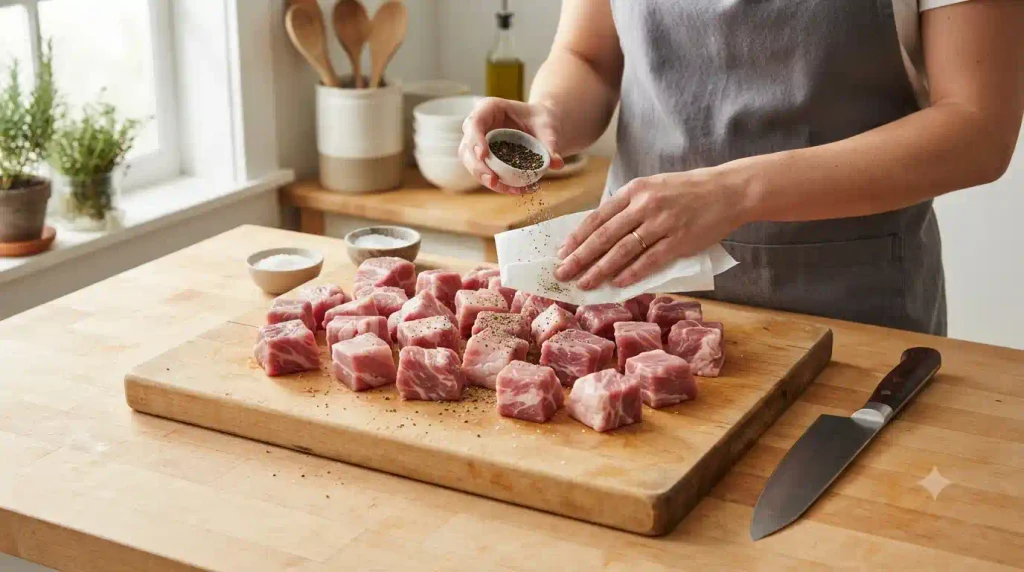
Pat the 1½ lb (680 g) pork shoulder dry with paper towels, then cut it into roughly 1-inch cubes.
Season with the black pepper and a light sprinkle of the measured salt.
Drying the pork matters. Wet meat creates steam in the pan, while a dry surface browns much more effectively.
Wash your hands, knife, cutting board, and any surfaces that have touched raw pork before handling ready-to-eat ingredients.
Step 2: Brown the Pork

Heat 1 tablespoon olive oil in a large skillet or Dutch oven over medium-high heat.
Add the pork in a single layer. If your pan is small, brown it in two batches rather than crowding everything together.
Cook for approximately 6–8 minutes, turning occasionally, until several sides develop a deep golden-brown crust.
The pork does not need to be fully cooked at this point.
Transfer the browned pieces to a clean plate.
Those browned bits stuck to the bottom of the pan are valuable—they will dissolve into the sauce and provide plenty of flavor.
Step 3: Build the Flavor Base
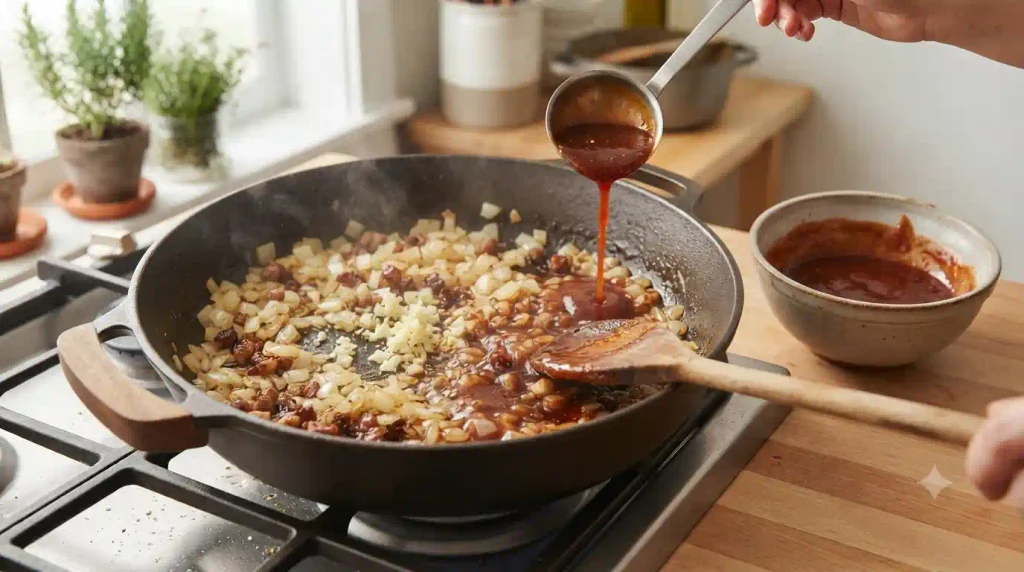
Reduce the heat to medium.
Add the diced onion to the same pan and cook for 4–5 minutes, stirring occasionally, until softened.
Add the minced garlic and cook for another 30–60 seconds.
Do not let the garlic burn. Once you can smell it clearly, you are ready for the next ingredients.
In a small bowl, combine:
- Barbecue sauce
- Ketchup
- Brown sugar
- Worcestershire sauce
- Apple cider vinegar
- Dijon mustard
- Smoked paprika
- Cumin
Pour this mixture into the pan and stir well, scraping the browned pork bits from the bottom.
Step 4: Simmer the Pork
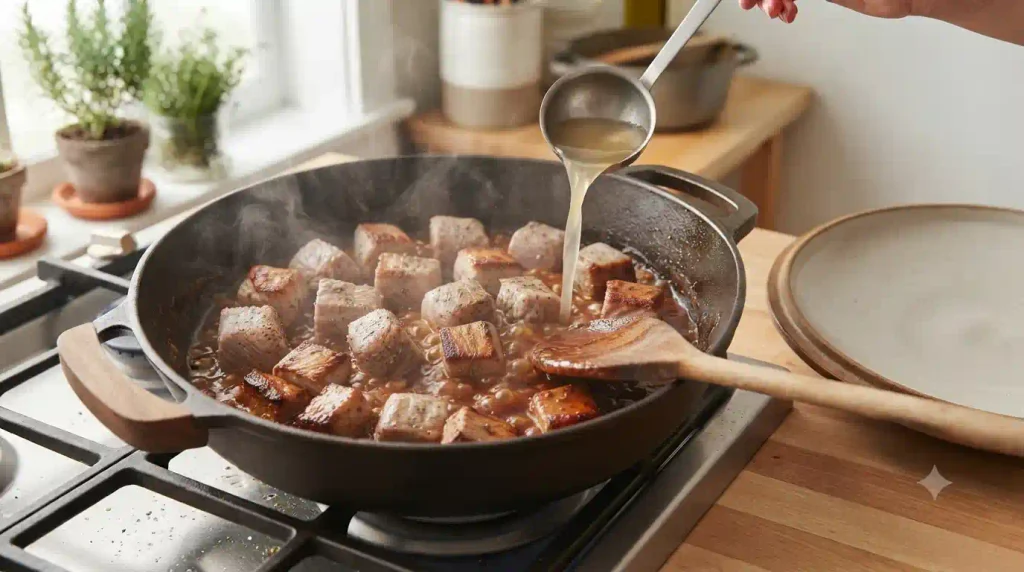
Return the browned pork and any juices from the plate to the pan.
Pour in ½ cup chicken stock and stir.
Bring everything to a gentle simmer, then reduce the heat to medium-low. Cover loosely and cook for approximately 15–18 minutes, stirring occasionally.
Avoid a hard boil. Gentle cooking helps keep the pork tender while allowing the sauce to develop.
Step 5: Add the Canned Beans
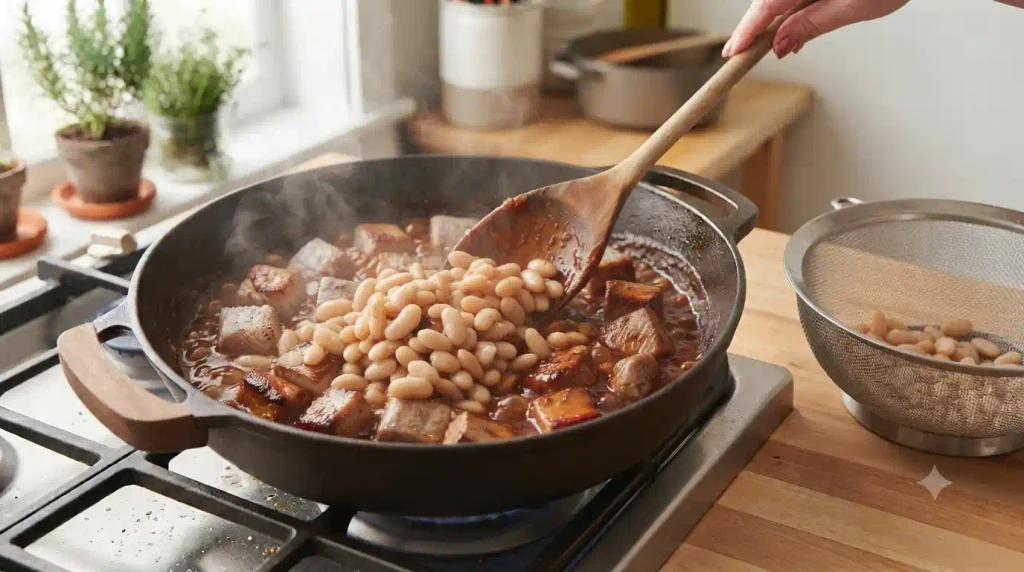
Drain and rinse both cans of beans.
Add them to the pork mixture and fold them in gently so they do not become mashed.
Simmer uncovered for another 8–10 minutes.
As the liquid evaporates, the sauce should become darker, shinier, and noticeably thicker.
If it gets too thick before the pork is ready, add a tablespoon or two of stock. If it still looks watery, give it another few minutes uncovered.
For food safety, pork should reach at least 145°F (63°C) internally followed by a 3-minute rest, although pork shoulder is often cooked beyond that point for a more tender texture.
Step 6: Make It Sticky and Serve
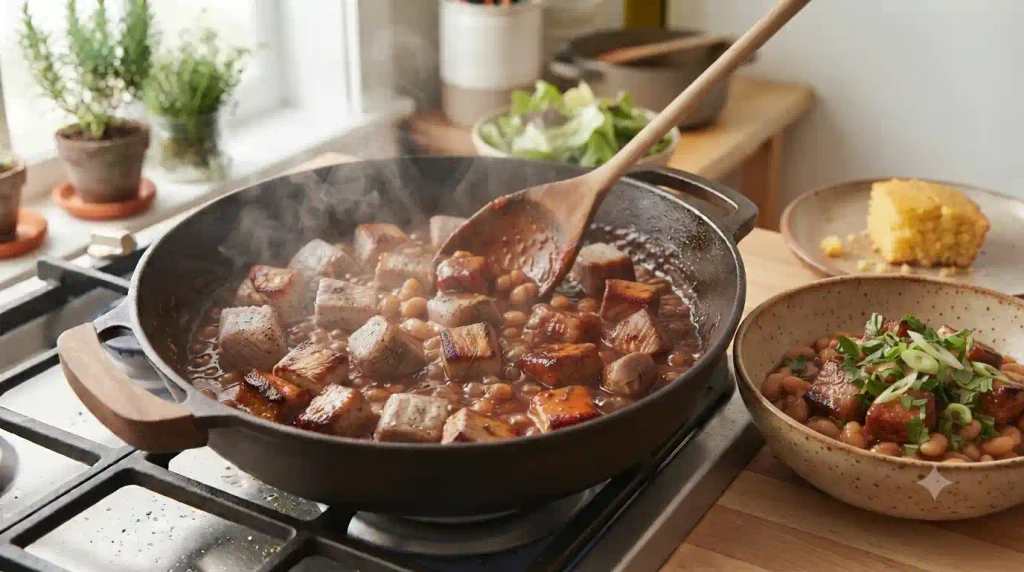
Turn the heat down and let the mixture bubble gently for another 2–4 minutes, stirring frequently.
You are looking for a sauce that coats the pork and beans rather than collecting like soup at the bottom of the pan.
Taste before adding additional salt.
Remove from the heat and let the dish stand for about 5 minutes. The sauce will continue to thicken slightly as it rests.
Finish with chopped parsley or green onions if desired.
Serve warm with cornbread, baked potatoes, steamed rice, mashed potatoes, coleslaw, or a crisp green salad.
Health Benefits
Despite its comfort-food personality, this meal contains several useful nutrients.
Beans are the nutritional workhorse. They provide plant protein and dietary fiber, which can help make the meal satisfying. Beans also contribute minerals such as iron, magnesium, and potassium.
Pork provides high-quality protein along with several B vitamins and minerals. Choosing pork shoulder does increase the fat content compared with leaner cuts, but its richer texture is particularly well suited to this style of recipe.
Using canned beans is perfectly reasonable nutritionally. Draining and rinsing them can remove some of the sodium from the canning liquid.
There is added sugar in barbecue sauce, ketchup, and brown sugar, so this is best viewed as a balanced comfort meal rather than a low-sugar recipe. You can reduce the brown sugar if your barbecue sauce is already quite sweet.
Pairing a moderate portion with vegetables or salad makes the plate more balanced.
Nutrition Information (Per Serving)
Approximate nutrition for 1 of 6 servings:
| Nutrient | Approximate Amount |
|---|---|
| Calories | 480 kcal |
| Protein | 32 g |
| Fat | 20 g |
| Carbohydrates | 44 g |
Nutrition note: These figures are estimates. Actual nutrition will vary considerably according to the pork, beans, barbecue sauce, ketchup, stock, and serving size you use.
Pro Tips & Variations
Brown the pork properly. This is probably the single biggest difference between an average pot of pork and beans and a really flavorful one. Give the cubes some breathing room and resist constantly moving them around.
Rinse your canned beans. The thick liquid inside the can can make the finished sauce muddy and unnecessarily salty. Drain and rinse the beans unless your particular brand specifically suits the recipe.
Adjust sweetness at the end. Barbecue sauces vary enormously. If yours is very sweet, start with only 1 tablespoon brown sugar, then taste.
For a smokier version: Add ¼ teaspoon liquid smoke or an extra ½ teaspoon smoked paprika.
For some heat: Add cayenne pepper, crushed red pepper flakes, diced jalapeño, or 1–2 teaspoons hot sauce.
For extra vegetables: Cook diced bell pepper with the onion. Corn can also be stirred in with the beans.
For a leaner variation: Pork loin can be substituted, but it cooks faster and can dry out. Reduce the simmering time and monitor it closely.
For different beans: Navy, cannellini, pinto, or great northern beans all work. A combination is also good.
For less sugar: Choose a lower-sugar barbecue sauce and reduce or omit the brown sugar. The finished sauce will be less sticky but still flavorful.
For an oven-baked finish: Once everything is combined, transfer an oven-safe pan to a 375°F (190°C) oven and cook until the sauce is bubbling and thickened.
How Much Does It Cost to Make?
Using typical U.S. supermarket pricing, a rough estimate might look like this:
| Ingredient | Estimated Cost |
|---|---|
| Pork shoulder | $6.00–$8.00 |
| 2 cans beans | $2.00–$3.00 |
| Onion and garlic | $1.00–$1.50 |
| Barbecue sauce and ketchup | $1.50–$2.00 |
| Mustard, Worcestershire & vinegar | $0.75–$1.25 |
| Spices, oil & stock | $0.75–$1.25 |
| Estimated Total | $12.00–$17.00 |
| Approx. Cost Per Serving | $2.00–$2.85 |
Prices vary by location, brand, and package size, but canned beans help keep this a relatively budget-friendly pork dinner.
Buying pork shoulder when it is on sale and freezing it in recipe-sized portions can bring the cost down further.
Frequently Asked Questions
Can I use canned beans instead of dried beans for pork and beans?
Absolutely. Canned beans are ideal for a quick pork and beans recipe because they have already been fully cooked. Drain and rinse them, then add them toward the end of cooking.
Adding them too early can cause softer varieties to break apart while the pork cooks.
How do I make pork and beans thicker and stickier?
The easiest method is uncovered reduction.
Once the beans have been added, simmer the mixture without a lid so excess water can evaporate. Stir more frequently as the sauce thickens because the sugars can catch on the bottom of the pan.
Avoid adding lots of cornstarch. A naturally reduced barbecue-style sauce usually gives this recipe a better texture and flavor.
What kind of pork is best for pork and beans?
Boneless pork shoulder is my first choice. Its fat and connective tissue provide richer flavor and a juicy texture.
Pork loin or tenderloin can work when you want something leaner, but those cuts should not be simmered as long because they can become dry.
Can I make sticky pork and beans ahead of time?
Yes. In fact, the flavor can be even better the next day.
Cool leftovers promptly and refrigerate them in a covered container. As general food-safety guidance, cooked leftovers should be refrigerated within 2 hours and used within 3–4 days.
Reheat gently on the stove or in the microwave until thoroughly hot. Add a splash of stock or water if the refrigerated sauce has become too thick.
Final Thoughts
Sticky pork and beans proves that a couple of cans from the pantry can still become a genuinely satisfying homemade dinner. Browning the pork builds the savory foundation, while barbecue sauce, brown sugar, mustard, and vinegar give you that irresistible sweet, smoky, tangy, sticky finish.
Better still, the recipe is forgiving. Make it hotter, smokier, less sweet, or load it with extra vegetables depending on what your family enjoys. Serve it with warm cornbread or a simple salad, put the pan straight on the table, and don’t be surprised if everyone goes back for another spoonful.