

If you love the sizzle of a good stir-fry but keep ending up with pale, watery pork, you’re in good company. A quick pork stir-fry sounds simple, yet a crowded pan can turn beautifully sliced meat into something closer to steamed pork. When dinner cravings hit, you want juicy meat, crisp vegetables, and that savoury, glossy sauce clinging to every bite.
This recipe uses a few restaurant-style techniques that work in an ordinary home kitchen. Thin slicing, a light marinade, high heat, and cooking in batches help the pork brown instead of releasing a puddle of liquid. The result is tender, flavour-packed pork with plenty of fresh crunch.
Prep & Cook Time
| Details | Time / Amount |
|---|---|
| Prep Time | 20 minutes |
| Marinating Time | 15 minutes |
| Cook Time | 10 minutes |
| Total Time | 45 minutes |
| Servings | 4 |
What Equipment Do You Need?
You don’t need restaurant equipment to make a great stir-fry. A large surface area and strong heat matter more than fancy tools.
- Large wok or 12-inch skillet – enough room for the pork to sear rather than steam.
- Sharp chef’s knife – essential for thin, even pork slices.
- Cutting board – use a clean board for vegetables after handling raw pork.
- 2 medium bowls – one for marinating and one for mixing the sauce.
- Measuring spoons and cups
- Tongs or a wok spatula
- Paper towels – surprisingly important for controlling excess moisture.
Ingredients
For the Pork
- 1 lb (450 g) boneless pork loin or pork tenderloin, thinly sliced against the grain
- 1 tablespoon low-sodium soy sauce
- 1 tablespoon cornstarch
- 1 teaspoon neutral cooking oil
- 1/4 teaspoon ground white or black pepper
For the Stir-Fry Sauce
- 3 tablespoons low-sodium soy sauce
- 1 tablespoon oyster sauce
- 1 tablespoon rice vinegar
- 2 teaspoons brown sugar or honey
- 1 teaspoon toasted sesame oil
- 1 teaspoon cornstarch
- 2 tablespoons water
Vegetables and Aromatics
- 1 red bell pepper, thinly sliced
- 1 medium yellow onion, sliced
- 2 cups broccoli florets, cut small
- 3 garlic cloves, finely minced
- 1 tablespoon fresh ginger, finely grated
- 2 green onions, sliced
For Cooking
- 2 tablespoons avocado, canola, or another high-heat neutral oil, divided
Why Each Ingredient Matters
Pork loin or tenderloin: Both cuts are naturally lean and cook quickly. Cutting the meat thinly against the grain shortens the muscle fibres, making each bite easier to chew.
Cornstarch: This is one of the most useful stir-fry ingredients. The small amount in the marinade creates a light coating around the pork, helping protect its moisture during high-heat cooking. It also helps the sauce cling to the meat.
Soy sauce: Provides saltiness, savoury depth, and umami. Using a lower-sodium variety gives you more control over seasoning.
Oyster sauce: Adds a rich, slightly sweet savoury character that makes the finished sauce taste fuller without requiring a long list of ingredients.
Rice vinegar: A little acidity cuts through the salty-sweet sauce and keeps the finished dish from tasting heavy.
Brown sugar or honey: This isn’t intended to make the stir-fry noticeably sweet. A small amount balances the soy and vinegar while helping create a glossy sauce.
Sesame oil: Adds its distinctive toasted, nutty aroma. Because its flavour is strong, one teaspoon is plenty.
Broccoli, bell pepper, and onion: These provide colour, crunch, fibre, and natural sweetness. More importantly, their different textures keep the meal interesting.
Garlic and ginger: These aromatics hit the hot pan near the end so their fresh fragrance isn’t lost during a long cooking time.
High-heat oil: Stir-frying needs a cooking fat that can handle a properly heated pan. Save strongly flavoured extra-virgin olive oil for another meal.
Step-by-Step Instructions
Step 1: Slice and Marinate the Pork
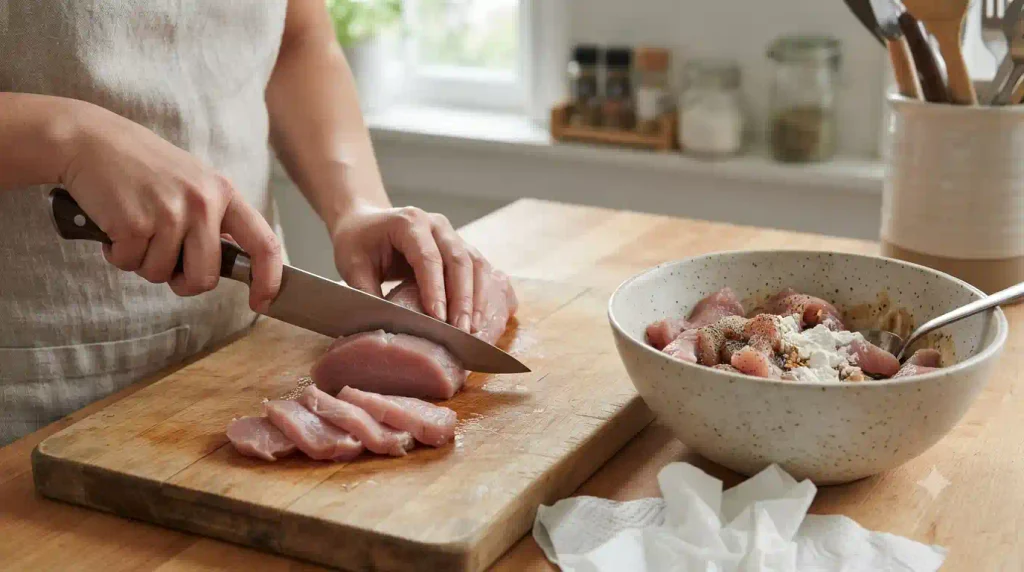
For easier slicing, place the pork in the freezer for about 15–20 minutes first. You don’t want it frozen solid—just firm enough that your knife can make clean, thin cuts.
Slice the pork approximately 1/8 to 1/4 inch thick, cutting across the grain.
Place it in a bowl with 1 tablespoon soy sauce, 1 tablespoon cornstarch, 1 teaspoon neutral oil, and pepper. Toss until every piece has a thin coating.
Leave it for 15 minutes while you prepare everything else.
Because you’re working with raw pork, wash your hands, knife, cutting board, and any surfaces it touches with hot, soapy water before using them for ready-to-eat ingredients.
Step 2: Make the Sauce and Prep Everything
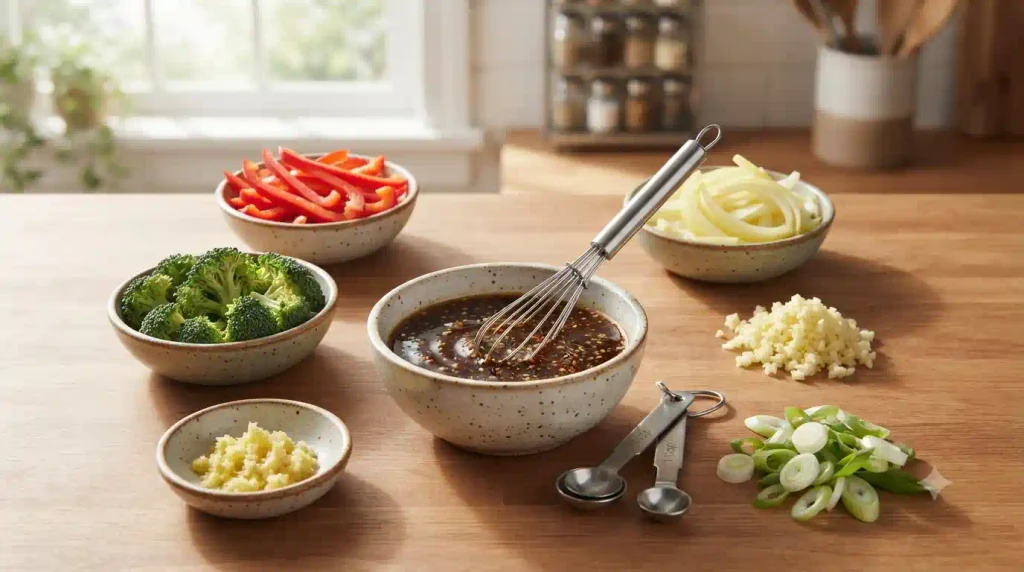
In a small bowl, whisk together:
- 3 tablespoons soy sauce
- 1 tablespoon oyster sauce
- 1 tablespoon rice vinegar
- 2 teaspoons brown sugar or honey
- 1 teaspoon sesame oil
- 1 teaspoon cornstarch
- 2 tablespoons water
Whisk until the cornstarch has dissolved.
Now slice your bell pepper and onion, prepare the broccoli, and mince the garlic and ginger.
Have everything beside the stove before you start cooking. Stir-frying moves quickly. Once the wok is hot, there isn’t time to start hunting through the fridge for the ginger you forgot.
Step 3: Get the Pan Properly Hot
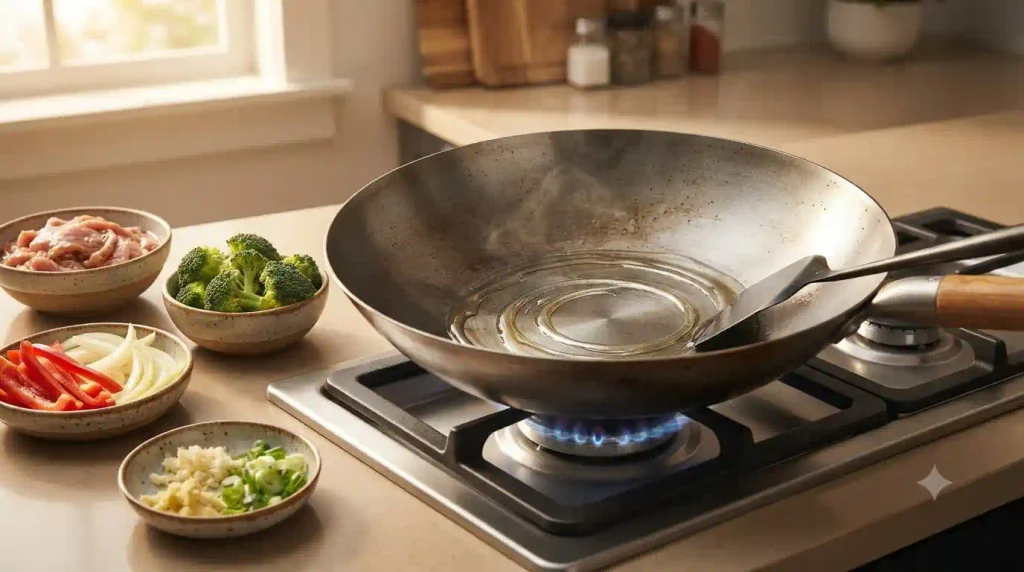
Place a large wok or heavy skillet over medium-high to high heat.
Let it heat for roughly 1–2 minutes, depending on your cookware and stove. Add 1 tablespoon oil and swirl it around the cooking surface.
The oil should become fluid and shimmer, but don’t deliberately heat it until it’s heavily smoking.
Here’s the rule that makes the biggest difference: don’t crowd the pan.
If your skillet isn’t large enough to hold the pork in a loose single layer, cook it in two batches.
Step 4: Sear the Pork Without Steaming It
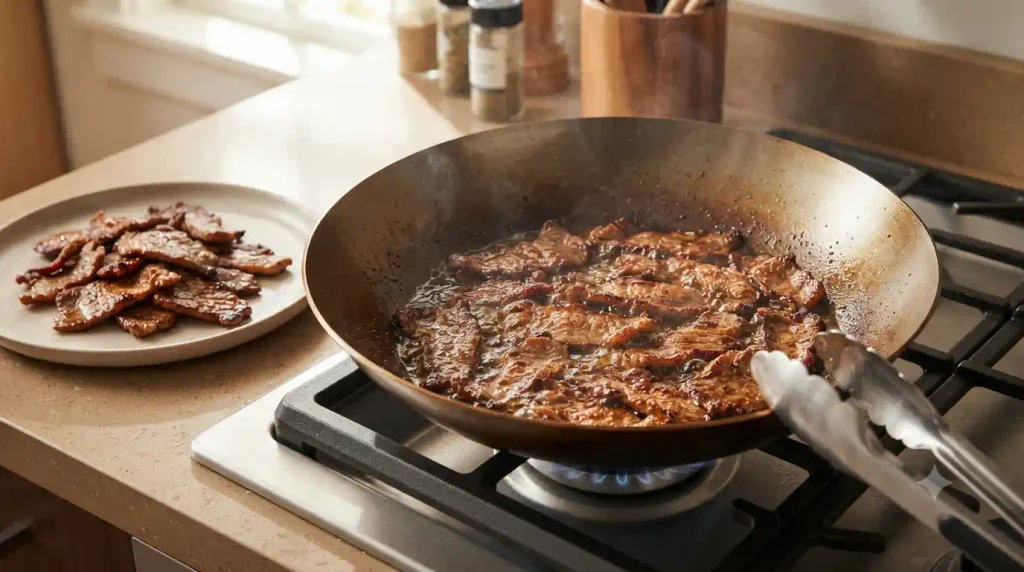
Add half of the pork in a single layer.
Here’s where home cooks often get impatient: don’t immediately stir it.
Give the pork approximately 45–60 seconds of uninterrupted contact with the hot pan. That direct heat helps the surface brown.
Flip or toss the pieces and cook for roughly another 1–2 minutes, until browned and nearly cooked through. Transfer them to a clean plate.
Add a little of the remaining oil if necessary and repeat with the second batch.
Avoid pouring accumulated raw marinade into the finished stir-fry unless it will be thoroughly cooked.
Step 5: Stir-Fry the Vegetables and Aromatics
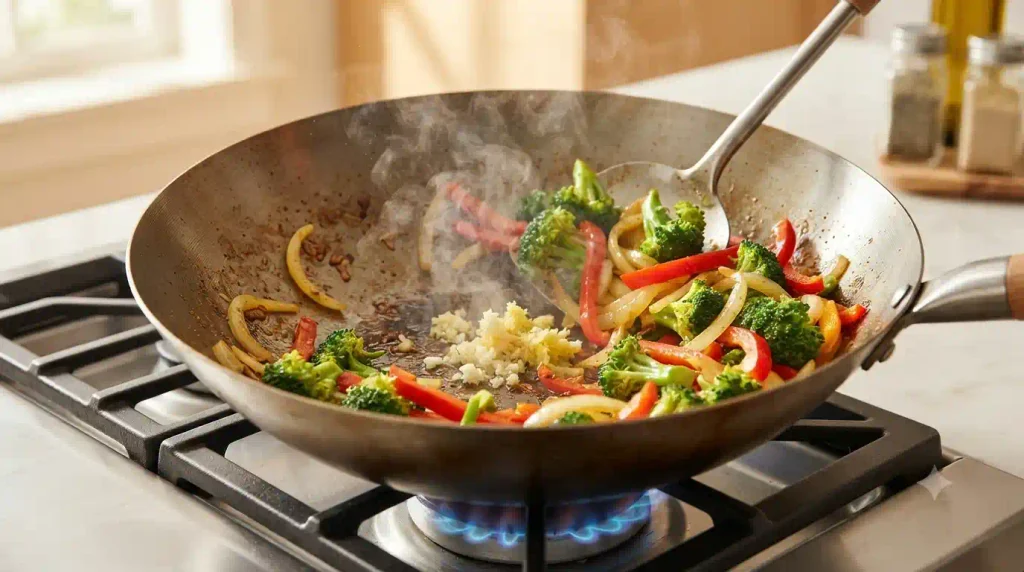
Add the remaining oil to the same pan.
Start with the broccoli and onion. Stir-fry for about 2 minutes. Add the bell pepper and continue cooking for another 1–2 minutes.
You want vegetables that are hot and cooked but still have some bite. Limp vegetables can make an otherwise excellent stir-fry feel heavy.
Add the garlic and ginger. Stir continuously for approximately 30 seconds, just until fragrant.
Garlic burns surprisingly fast in a very hot wok, so don’t wander away at this point.
Step 6: Bring Everything Together
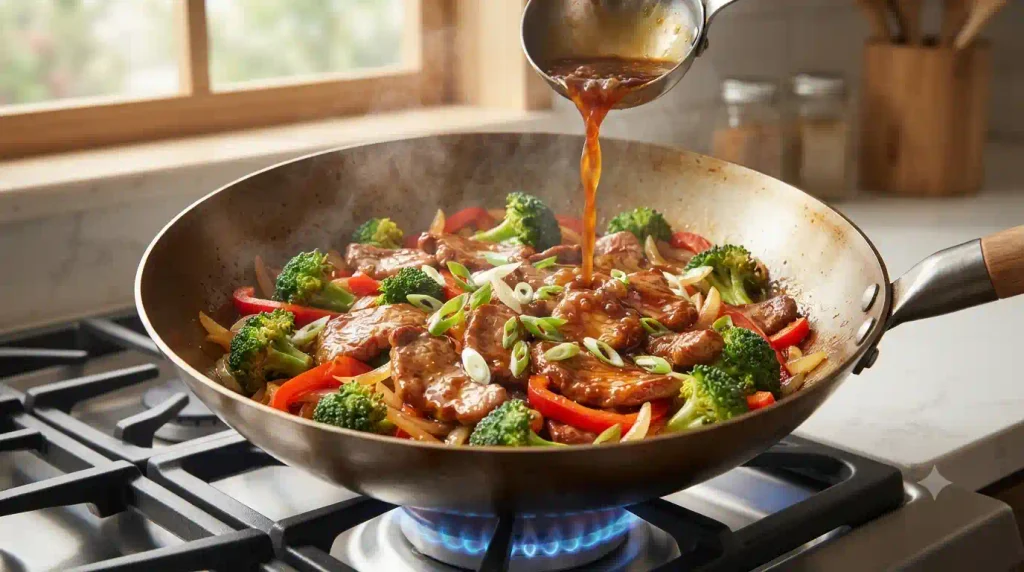
Give the prepared sauce another quick whisk because the cornstarch will naturally settle at the bottom.
Return the pork and any juices on the clean cooked-pork plate to the pan. Pour in the sauce.
Toss everything together over high heat for approximately 1–2 minutes, until the sauce bubbles, thickens slightly, and coats the pork and vegetables.
Check that the pork is safely cooked. For whole cuts of pork, USDA guidance uses a minimum internal temperature of 145°F (63°C), followed by at least a 3-minute rest. Thin stir-fry pieces can be awkward to check individually, so make sure they’re fully cooked while avoiding unnecessary extra cooking.
Finish with the sliced green onions and serve immediately.
Health Benefits
This stir-fry can make a well-balanced dinner, particularly when paired with a sensible portion of brown rice or another whole grain.
Pork provides high-quality protein, which contributes to muscle maintenance and helps make a meal satisfying. Pork also supplies nutrients including B vitamins, zinc, and selenium.
The vegetables bring their own advantages. Broccoli contributes fibre, vitamin C, vitamin K, and folate, while red bell pepper is particularly rich in vitamin C and provides carotenoid pigments.
Using a quick stir-fry method also means the vegetables don’t need to spend a long time cooking.
The main nutritional consideration is sodium, largely from soy and oyster sauces. Choosing reduced-sodium soy sauce and avoiding unnecessary extra salt can help keep it more manageable.
Remember that a recipe can be nutritious without needing to be labelled a “health food.” Portion size, your overall diet, and what you serve alongside it matter too.
Nutrition Information (Per Serving)
The following figures are estimates for one-quarter of the stir-fry and can change depending on the exact pork cut, sauces, brands, and amount of oil retained during cooking.
| Nutrient | Approximate Amount |
|---|---|
| Calories | 340 kcal |
| Protein | 31 g |
| Fat | 16 g |
| Carbohydrates | 18 g |
Rice, noodles, or other side dishes are not included in these estimates.
Pro Tips & Variations
Dry pork is your friend—before cooking, that is. If your sliced meat seems particularly wet, gently blot excess surface moisture before adding the marinade. Water has to evaporate before meaningful browning can occur.
Cook in batches. This is the single most reliable fix for steamed stir-fry meat. A mountain of cold pork drops the pan temperature and releases moisture faster than it can evaporate.
Slice against the grain. Look for the direction of the muscle fibres and cut across them. This simple knife technique can noticeably improve tenderness.
Don’t constantly stir. Despite the name “stir-fry,” meat benefits from a brief period of uninterrupted contact with the pan.
Try chicken instead. Thinly sliced boneless chicken breast or thigh works with the same flavour profile, although cooking times and safe internal temperatures differ.
Change the vegetables. Snow peas, sugar snap peas, mushrooms, baby corn, carrots, courgette/zucchini, or bok choy can all work.
Make it spicy. Add 1–2 teaspoons chilli-garlic sauce, sambal oelek, or your preferred chilli sauce to the stir-fry sauce.
Prefer extra sauce? Increase the sauce ingredients proportionally rather than simply adding water, which can dilute the flavour.
Using a nonstick skillet? Follow the cookware manufacturer’s heat recommendations. Don’t subject a pan designed for moderate temperatures to extreme wok-style heat.
How Much Does It Cost to Make?
Prices vary considerably by supermarket, region, season, and brand, but this is a reasonable rough estimate for US shoppers.
| Ingredient Group | Estimated Cost |
|---|---|
| 1 lb pork | $5.00–$7.00 |
| Fresh vegetables | $3.50–$5.00 |
| Garlic, ginger & green onions | $1.00–$2.00 |
| Sauce ingredients used | $1.50–$2.50 |
| Oil & seasonings | $0.50–$1.00 |
| Estimated Total | $11.50–$17.50 |
| Approx. Cost Per Serving | $2.90–$4.40 |
If soy sauce, sesame oil, cornstarch, and rice vinegar are already pantry staples, your actual out-of-pocket cost for tonight’s dinner may be considerably lower.
Frequently Asked Questions
Why does my pork steam instead of brown in a stir-fry?
Usually, too much meat is in the pan at once. Pork releases moisture as it cooks. If the pan becomes crowded or its temperature drops too far, that moisture can’t evaporate quickly enough. Instead of browning against a hot surface, the meat cooks in trapped steam.
Use a large pan, preheat it thoroughly, and cook the pork in batches.
How do Chinese restaurants make stir-fry pork so tender?
One common technique is often called velveting. Meat receives a light coating or marinade that may contain starch and other ingredients before rapid cooking.
This recipe uses a simple home-friendly version with cornstarch, soy sauce, and oil. Thinly slicing the pork against the grain and avoiding overcooking are equally important.
What is the best cut of pork for stir-fry?
Pork tenderloin and boneless pork loin are excellent choices because they’re lean and easy to slice.
Pork shoulder can also produce delicious results, but it contains more connective tissue and fat, so how it’s sliced and cooked becomes especially important.
Can I make pork stir-fry ahead of time?
Yes, but stir-fry is at its best immediately after cooking.
You can save time by preparing the sauce and chopping the vegetables earlier. Keep raw pork refrigerated and separate from ready-to-eat foods.
Store cooked leftovers promptly in a covered container in the refrigerator. When reheating leftovers, heat them thoroughly; USDA guidance recommends 165°F (74°C) for leftovers.
Final Thoughts
A tender pork stir-fry isn’t about owning a restaurant wok or mastering complicated techniques. Heat, space, timing, and moisture control do most of the work.
Get the pan hot, resist overcrowding it, give the pork a chance to sear, and have every ingredient ready before cooking begins. Once you get that rhythm down, this is the kind of flexible weeknight recipe you’ll be able to make without constantly checking the instructions.
Serve it steaming hot over rice or noodles, and don’t worry about the slightly messy stove afterward. A few sauce splatters are often the sign that dinner actually got cooked.