

There’s something deeply satisfying about putting a few simple ingredients into the slow cooker and coming back hours later to a kitchen filled with the smell of a proper home-cooked meal. When the craving hits for rich, savory pork with meat that practically slips off the bone, pork hocks are an affordable cut that deserves far more attention.
This slow cooker pork hocks recipe turns that humble cut into sticky, tender meat with a glossy, deeply flavored sauce. The long, gentle cooking time softens the connective tissue while garlic, onion, soy sauce, honey, and apple cider vinegar create a sweet-savory glaze. It’s hearty comfort food with very little hands-on work.
Prep & Cook Time
| Detail | Time / Amount |
|---|---|
| Prep Time | 20 minutes |
| Cook Time | 7–8 hours on LOW |
| Sauce Finishing Time | 10–15 minutes |
| Total Time | About 8 hours 30 minutes |
| Servings | 4 |
Cooking on LOW is my preferred method here. Pork hocks contain plenty of connective tissue, and gentle cooking gives that collagen time to soften while keeping the meat succulent.
What Equipment Do You Need?
You don’t need any specialist equipment. Keep it simple:
- 6-quart slow cooker
- Large skillet
- Kitchen tongs
- Sharp knife
- Cutting board
- Measuring cups and spoons
- Small mixing bowl
- Whisk or fork
- Small saucepan
- Ladle
- Meat thermometer
A skillet is technically optional, but I strongly recommend using one. Browning the pork first adds a deeper roasted flavor that the slow cooker alone cannot quite reproduce.
Ingredients
For 4 servings, you will need:
- 4 pork hocks, about 3–4 pounds total
- 1 tablespoon olive oil
- 1 teaspoon kosher salt, or to taste
- 1/2 teaspoon freshly ground black pepper
- 1 teaspoon smoked paprika
- 1 large yellow onion, sliced
- 5 garlic cloves, minced
- 1 cup low-sodium chicken stock
- 1/3 cup low-sodium soy sauce
- 1/4 cup honey
- 2 tablespoons brown sugar
- 2 tablespoons apple cider vinegar
- 1 tablespoon Worcestershire sauce
- 1 teaspoon Dijon mustard
- 1/2 teaspoon dried thyme
- 1/2 teaspoon crushed red pepper flakes, optional
- 1 bay leaf
For thickening the sticky sauce:
- 1 tablespoon cornstarch
- 2 tablespoons cold water
For serving, optional:
- Chopped fresh parsley or green onions
- Mashed potatoes
- Steamed rice
- Roasted or steamed vegetables
Important: Pork hocks vary considerably in size and saltiness. If yours are smoked or cured rather than fresh, reduce the added salt and check the package before seasoning.
Why Each Ingredient Matters
Pork hocks: Pork hocks contain bone, meat, fat, skin, and collagen-rich connective tissue. Slow, moist cooking converts much of that collagen into gelatin, which contributes to the silky texture of the cooking liquid and gives properly cooked hocks their characteristic tenderness.
Olive oil: A small amount helps the pork brown evenly in the skillet. Browning creates complex roasted flavors through the Maillard reaction.
Salt and black pepper: These provide the basic seasoning. Because soy sauce and Worcestershire sauce already contribute sodium, it’s better to start conservatively with salt.
Smoked paprika: Adds warm color and a gentle smoky note without making the dish particularly spicy.
Onion and garlic: These aromatics soften during the long cooking process and create the savory foundation of the sauce.
Chicken stock: Provides moisture for braising and gives the sauce more body and flavor than water.
Soy sauce: Brings saltiness, color, and plenty of savory umami character.
Honey and brown sugar: This combination gives the finished sauce its sweet, sticky quality. Sugar also helps the reduced sauce become beautifully glossy.
Apple cider vinegar: Pork hocks are naturally rich. Vinegar supplies acidity that cuts through that richness and prevents the sauce from tasting overly sweet or heavy.
Worcestershire sauce: Adds another layer of savory, tangy complexity.
Dijon mustard: Its gentle sharpness balances the honey and fatty pork without making the finished dish taste strongly of mustard.
Thyme and bay leaf: Both work quietly in the background, adding an earthy herbal note.
Cornstarch: Thickens the cooking liquid quickly so you get a sauce that clings to the pork rather than running straight onto the plate.
Step-by-Step Instructions
Step 1: Prepare and Season the Pork Hocks
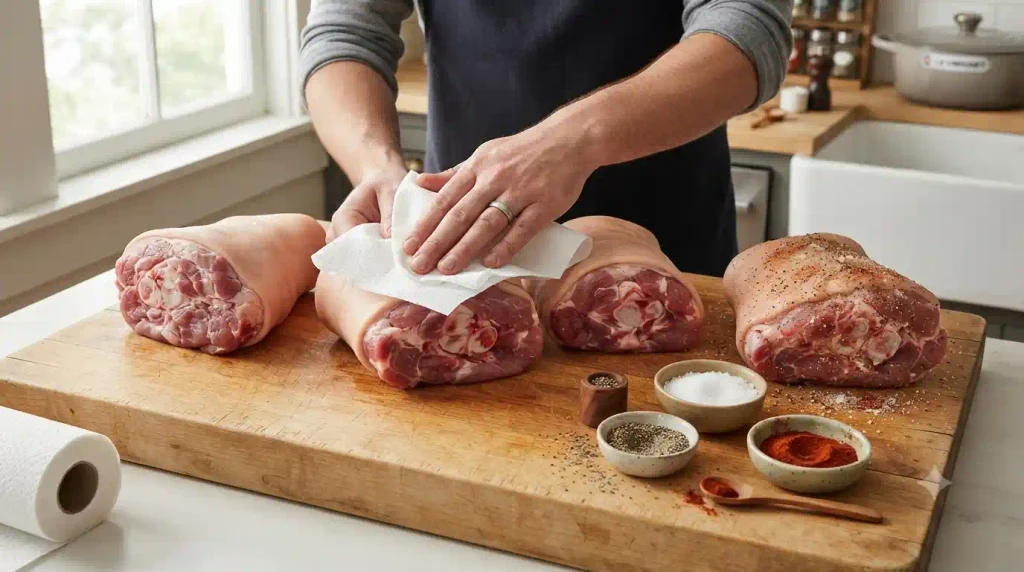
Pat the pork hocks thoroughly dry with paper towels. This small step makes a real difference when browning because wet meat tends to steam instead of sear.
Season them all over with salt, black pepper, and smoked paprika.
If you’re working with smoked or cured pork hocks, check how salty they are before adding the full teaspoon of salt. Some packaged hocks are already heavily seasoned.
Wash your hands, knife, board, and any surfaces that have contacted raw pork before handling ready-to-eat ingredients.
Step 2: Brown the Pork

Heat 1 tablespoon olive oil in a large skillet over medium-high heat.
When the oil is hot, carefully add the pork hocks. Brown them for roughly 2–3 minutes per side, turning with tongs until several surfaces have developed a deep golden-brown color.
You aren’t trying to cook the meat through at this point.
Transfer the browned hocks to your slow cooker.
Don’t panic if there are dark brown bits stuck to your skillet. Those little browned pieces are packed with flavor—as long as they aren’t burned.
Step 3: Build the Slow Cooker Sauce

Place the sliced onion and minced garlic around the pork.
In a bowl, whisk together:
- 1 cup chicken stock
- 1/3 cup soy sauce
- 1/4 cup honey
- 2 tablespoons brown sugar
- 2 tablespoons apple cider vinegar
- 1 tablespoon Worcestershire sauce
- 1 teaspoon Dijon mustard
- 1/2 teaspoon dried thyme
- 1/2 teaspoon red pepper flakes, if using
Pour this mixture over and around the pork hocks.
Add the bay leaf.
The hocks don’t need to be completely submerged. A slow cooker traps moisture, and the pork will also release juices as it cooks.
Step 4: Slow Cook Until Tender
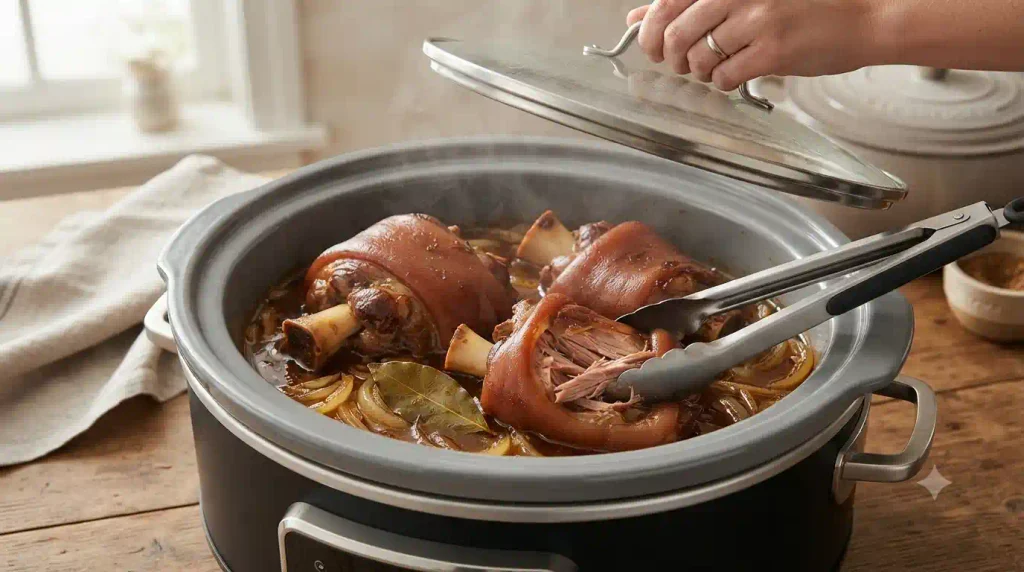
Cover the slow cooker and cook on LOW for 7–8 hours.
Try not to keep lifting the lid to check them. Every peek releases heat and can extend the cooking time.
The pork is ready when it is very tender and pulls away from the bone easily.
For food safety, whole cuts of pork need to reach a safe minimum internal temperature, but this collagen-rich cut needs considerably more cooking to achieve the tender texture we’re after. Use tenderness—not merely the minimum safe temperature—as your signal that the hocks are finished.
Depending on their size, especially large pork hocks may need a little longer.
Step 5: Reduce the Sauce Until Sticky
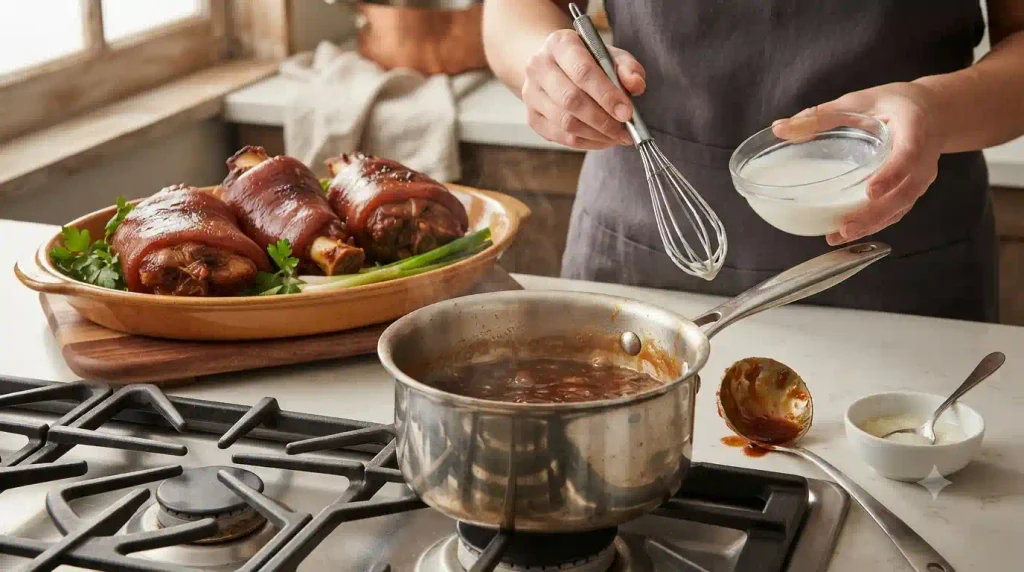
Carefully transfer the tender pork hocks to a platter and loosely cover them to keep warm.
Discard the bay leaf.
Skim excess surface fat from the slow cooker liquid if necessary. Pour approximately 2 cups of the cooking liquid into a small saucepan.
Bring it to a gentle simmer over medium heat.
Mix 1 tablespoon cornstarch with 2 tablespoons cold water until completely smooth. Slowly whisk the slurry into the simmering sauce.
Cook for 3–5 minutes, stirring frequently, until the sauce becomes thick, glossy, and able to coat the back of a spoon.
Taste before adding extra salt. The sauce becomes saltier as it reduces.
Step 6: Glaze and Serve
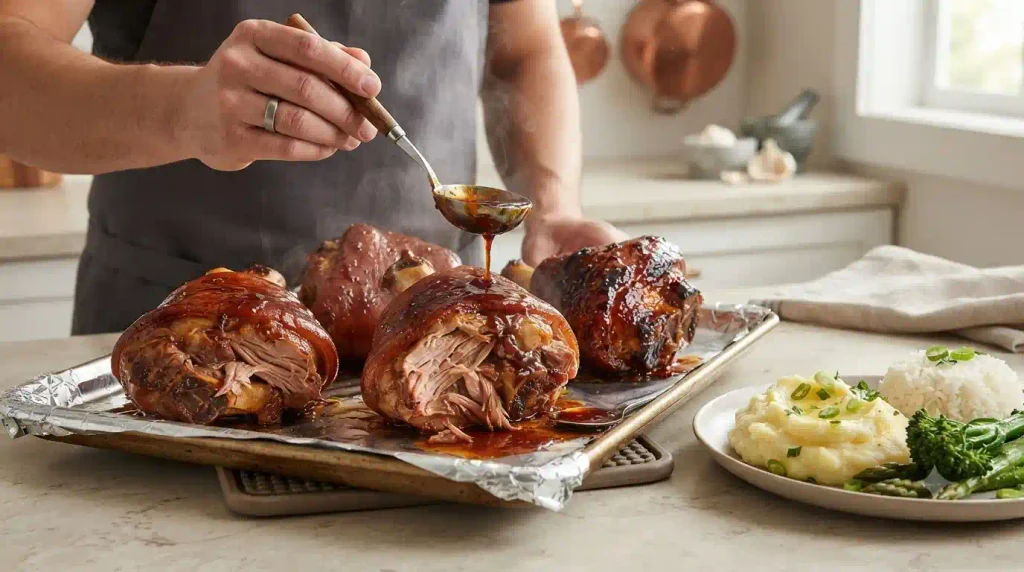
Spoon or brush the hot sticky sauce generously over the pork hocks.
For an extra glossy finish, place the glazed hocks on a foil-lined baking tray and broil for 2–4 minutes, watching them constantly. The honey and sugar can go from caramelized to burned surprisingly fast, so don’t walk away from the oven.
Finish with chopped parsley or green onions.
Serve immediately with mashed potatoes, rice, creamy polenta, or vegetables and spoon a little extra sauce over everything.
The best part is when you barely touch the pork with a fork and the tender meat begins pulling away from the bone.
Health Benefits
Pork hocks are rich comfort food, so portion size matters, but they can still contribute valuable nutrients to a balanced diet.
High-quality protein: Pork supplies complete protein containing the essential amino acids your body needs to maintain and repair tissue.
B vitamins: Pork naturally provides several B vitamins, particularly thiamine (vitamin B1), which plays an important role in normal energy metabolism.
Minerals: Pork can contribute minerals including selenium, zinc, phosphorus, and iron.
Collagen-rich connective tissue: Hocks contain a substantial amount of connective tissue. Long cooking converts collagen into gelatin, giving the finished dish its characteristic silky texture.
Garlic and onions: These aromatics add plenty of flavor, meaning you don’t need to rely entirely on extra fat for a satisfying dish.
Keep in mind that pork hocks can be relatively high in fat and sodium, especially when smoked or cured. Choosing low-sodium stock and soy sauce and serving the pork alongside vegetables can make the overall plate more balanced.
Nutrition Information (Per Serving)
The following values are approximate because pork hocks differ greatly in size and in their proportions of bone, skin, fat, and edible meat.
| Nutrient | Approximate Amount |
|---|---|
| Calories | 610 kcal |
| Protein | 42 g |
| Fat | 37 g |
| Carbohydrates | 28 g |
These estimates assume the recipe makes four servings and that some rendered fat and cooking sauce remain uneaten. Side dishes are not included.
If nutrition numbers are important for a medical or dietary reason, calculate them using the exact pork hocks, brands, quantities, and edible portions you use.
Pro Tips & Variations
Brown the hocks first. You can technically put everything straight into the slow cooker, but those extra few minutes at the stove create noticeably richer flavor.
Choose LOW when possible. The longer, gentler cook gives collagen-rich pork hocks plenty of time to become tender.
Don’t drown the meat. You aren’t making soup. The pork releases liquid as it cooks, so the initial sauce doesn’t need to cover every inch of the hocks.
Control the salt carefully. Soy sauce, Worcestershire sauce, stock, and cured pork can all contain significant sodium. Use low-sodium versions where possible and season again only after tasting the finished sauce.
Want it sweeter? Add another tablespoon of honey to the finished sauce.
Prefer more heat? Increase the red pepper flakes or stir a little hot sauce into the glaze.
For a smoky version: Use smoked pork hocks and reduce or omit the smoked paprika. Smoked hocks may also cook somewhat differently depending on how they were cured.
For a deeper sauce: Replace 1/4 cup of the chicken stock with apple juice for subtle fruity sweetness.
No honey? Maple syrup works well and creates a slightly deeper flavor.
Don’t have cornstarch? Simply simmer the cooking liquid longer until naturally reduced. It won’t have exactly the same texture, but it will still taste excellent.
Want crispier skin? Transfer the cooked hocks to a baking tray, glaze them, and briefly broil. Keep a close eye on them because the sugary glaze burns quickly.
What to Serve With Pork Hocks
Rich pork needs something alongside it to catch that sticky sauce and balance the meal. Try:
- Creamy mashed potatoes
- Steamed white or brown rice
- Buttered cabbage
- Roasted carrots
- Green beans
- Creamy polenta
- Braised greens
- Crusty bread
- Simple coleslaw
My favorite combination is mashed potatoes and a green vegetable. The potatoes soak up that glossy sauce while the vegetables cut through the richness.
How Much Does It Cost to Make?
Prices vary by supermarket, butcher, season, and region, but pork hocks are generally considered a budget-friendly cut.
Here’s a rough estimate using typical U.S. grocery pricing:
| Ingredient | Estimated Cost |
|---|---|
| Pork hocks, 3–4 lb | $8.00–$12.00 |
| Onion + garlic | $1.25 |
| Chicken stock | $1.00 |
| Soy sauce | $0.75 |
| Honey + brown sugar | $1.25 |
| Vinegar, mustard + Worcestershire | $0.75 |
| Seasonings + cornstarch | $0.50 |
| Estimated Total | $13.50–$17.50 |
That works out to approximately $3.40–$4.40 per serving for four portions, excluding side dishes.
Buying larger packages from a butcher or warehouse store may bring the cost down further.
Frequently Asked Questions
How long do pork hocks take in a slow cooker?
Fresh pork hocks generally need around 7–8 hours on LOW to become very tender. Large hocks may need longer. They’re done when the meat pulls away from the bone easily and the connective tissue has softened.
Avoid relying on cooking time alone because slow cookers vary in temperature and pork hocks can differ considerably in size.
Do pork hocks need to be covered with liquid in a slow cooker?
No. They don’t need to be completely submerged.
The slow cooker traps steam while the pork, onion, and other ingredients release additional liquid during cooking. Adding too much stock at the beginning can leave you with a thin, diluted sauce.
Should I brown pork hocks before slow cooking?
You don’t have to, but browning is worth the effort.
Searing creates roasted flavors on the outside of the pork through the Maillard reaction. Those flavors eventually work their way into the cooking liquid and make the finished sauce taste richer.
If you’re short on time, you can skip browning and still produce tender pork.
Can I make slow cooker pork hocks ahead of time?
Yes. In fact, this is a useful dish to prepare ahead because chilling makes excess fat easier to remove.
Cool leftovers promptly and refrigerate them in a shallow, covered container. Reheat the pork and sauce thoroughly before serving. For best quality, use refrigerated cooked pork within 3–4 days.
You can also freeze cooled pork and sauce in airtight freezer-safe containers. Thaw overnight in the refrigerator before reheating.
Final Thoughts
Slow cooker pork hocks prove that inexpensive cuts can produce seriously satisfying food when they’re given enough time. The combination of slow cooking, collagen-rich pork, savory aromatics, and a sweet-tangy glaze transforms a humble ingredient into meat that’s sticky, rich, and beautifully tender.
Don’t rush the process. Brown the pork, let the slow cooker handle the hard work, and take those extra few minutes to reduce the cooking juices into a proper glossy sauce.
Serve it with something simple that can soak up every drop. Once that fork-tender pork starts falling away from the bone, you’ll understand exactly why this old-fashioned cut still deserves a place in the home kitchen.