

That first crack of a crab shell, followed by buttery, spicy juices running over your fingers, is exactly why a good crab boil is worth making at home. The frustrating part is when all that seasoning stays in the pot or slides off the shell. A well-balanced seasoning blend should cling to the crab, perfume the cooking liquid, and leave plenty of flavor behind for every bite.
This homemade blend solves that problem with layered spices, aromatic garlic and onion, citrusy notes, and just enough heat. It works beautifully for crab legs, whole crabs, shrimp, corn, potatoes, and mixed seafood boils. You can also control the salt and spice instead of relying on a one-note packaged mix.
Shell-Clinging Crab Boil Seasoning Recipe That Keeps Flavor
This recipe makes enough seasoning for one generous seafood boil serving about 6 people, or roughly ¾ cup seasoning blend. The key is combining fine powdered spices with a little brown sugar and using part of the seasoning in a buttery finishing sauce. That final coating is what helps the flavor stay on those slippery shells.
Prep & Cook Time
| Detail | Time / Amount |
|---|---|
| Prep Time | 10 minutes |
| Cook Time | 20–25 minutes |
| Total Time | 30–35 minutes |
| Servings | 6 |
| Seasoning Yield | About ¾ cup |
The cooking time assumes you are using the seasoning for a typical crab boil with pre-cooked crab legs, potatoes, corn, and sausage. If you’re cooking live or raw crab, cooking times will vary by species and size.
What Equipment Do You Need?
Nothing fancy is required. I usually make this with the same basic tools already sitting around my kitchen:
- Large stockpot with lid
- Large mixing bowl
- Measuring spoons and cups
- Small whisk or fork
- Fine grater or zester
- Slotted spoon or kitchen spider
- Small saucepan
- Tongs
- Large serving platter or seafood tray
A stockpot large enough to leave some breathing room is important. An overcrowded pot cools quickly when seafood is added and makes everything harder to cook evenly.
Ingredients
For the Crab Boil Seasoning
- 3 tablespoons smoked paprika
- 2 tablespoons sweet paprika
- 1½ tablespoons garlic powder
- 1½ tablespoons onion powder
- 1 tablespoon fine sea salt
- 2 teaspoons ground black pepper
- 2 teaspoons cayenne pepper
- 2 teaspoons dried oregano
- 2 teaspoons dried thyme
- 1½ teaspoons mustard powder
- 1 teaspoon celery seed, finely crushed
- 1 teaspoon ground coriander
- 1 teaspoon brown sugar
- ½ teaspoon ground allspice
For the Shell-Clinging Butter Finish
- 6 tablespoons unsalted butter
- 2 tablespoons prepared crab boil seasoning
- 4 garlic cloves, finely minced
- 1 tablespoon fresh lemon juice
- 1 teaspoon finely grated lemon zest
- 2 tablespoons seafood cooking liquid
For a Complete Crab Boil
- 2 pounds cooked king or snow crab legs
- 1 pound baby potatoes
- 3 ears corn, each cut into 3 pieces
- 12 ounces smoked sausage, sliced into thick pieces
- 1 lemon, halved
- 2 tablespoons crab boil seasoning for the cooking liquid
Why Each Ingredient Matters
Paprika forms the backbone of this blend. Sweet paprika contributes colour and mild pepper flavour, while smoked paprika brings the slightly smoky character associated with a hearty seafood boil.
Garlic and onion powder are especially useful here because their fine texture disperses evenly. Unlike large dried pieces, the powders become part of the buttery coating and stick to the shells.
Cayenne pepper provides clean heat without changing the basic seafood flavour. Two teaspoons gives the blend a noticeable kick, but you can easily reduce it.
Mustard powder adds sharpness and complexity. It cuts through rich butter and sausage while complementing crab’s natural sweetness.
Celery seed supplies that unmistakable seafood-seasoning character. Crushing the seeds before adding them releases more of their aromatic oils.
Coriander and allspice aren’t meant to dominate. Small quantities add citrusy warmth and give the seasoning more depth.
Brown sugar balances salt, acidity, and chile heat. It also helps the finishing mixture lightly grab the shells, but we’re using only a teaspoon so the crab doesn’t taste sweet.
Lemon juice and zest brighten the rich butter. Zest is particularly useful because its aromatic oils provide citrus flavour without watering down the sauce.
Butter is the secret behind the shell-clinging finish. Fat carries spice aromas extremely well and gives powdered seasonings something to adhere to.
Step-by-Step Instructions
Step 1: Mix the Seasoning
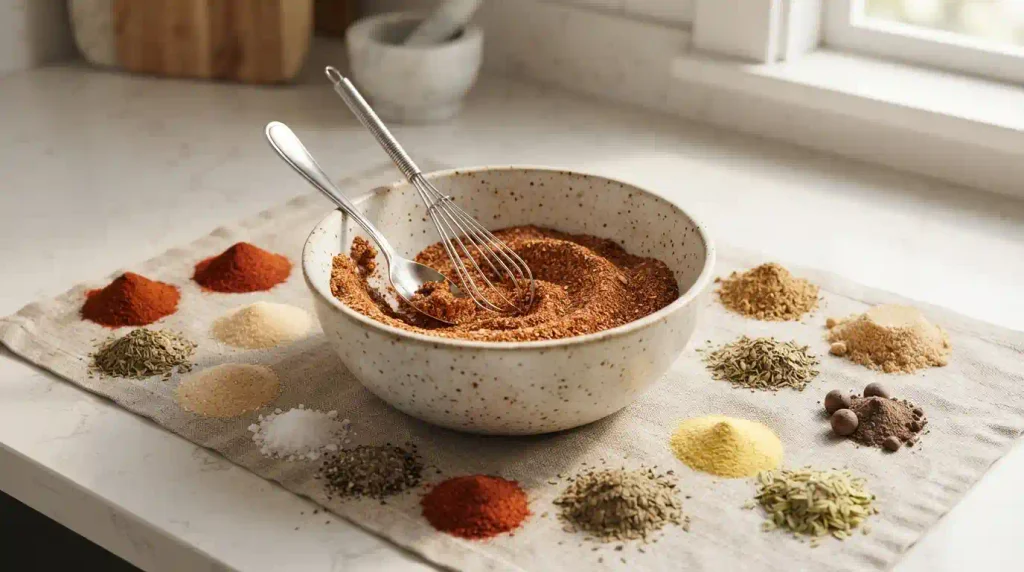
Add the smoked paprika, sweet paprika, garlic powder, onion powder, salt, black pepper, cayenne, oregano, thyme, mustard powder, crushed celery seed, coriander, brown sugar, and allspice to a bowl.
Whisk thoroughly for 30–45 seconds.
Pay attention to the brown sugar and garlic powder. They sometimes hide in little clumps at the bottom of my bowl, so I crush those against the side with the back of a spoon.
The finished seasoning should be uniformly reddish-brown with no obvious streaks.
Step 2: Start the Potatoes
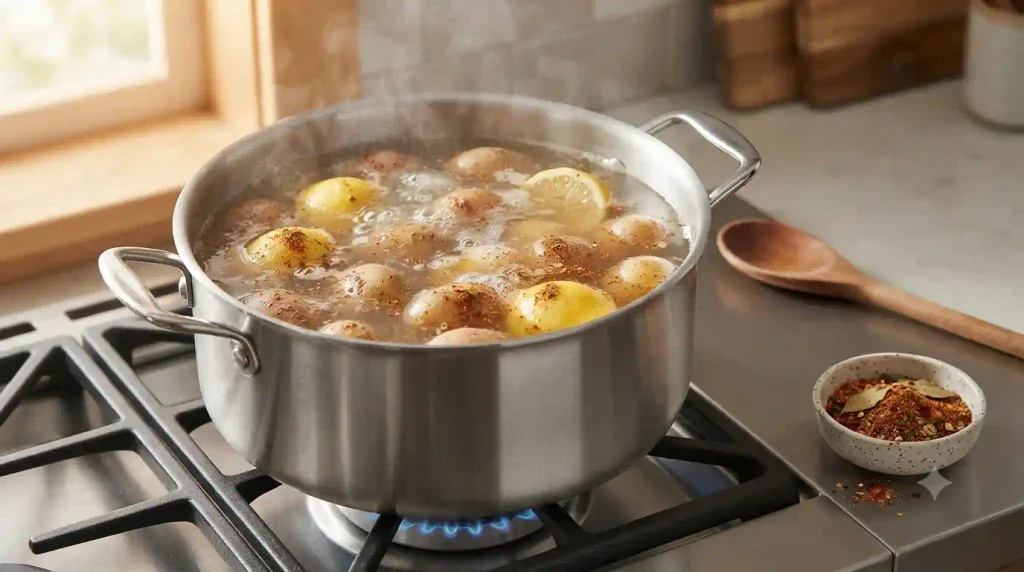
Fill a large stockpot with enough water to comfortably cover the ingredients without bringing the water dangerously close to the rim.
Add:
- 2 tablespoons prepared seasoning
- 2 lemon halves
- 1 pound baby potatoes
Bring to a rolling boil, then reduce slightly and cook the potatoes for about 10 minutes.
They should be starting to soften but shouldn’t yet be completely tender.
Be careful when working around a large pot of boiling water. Add ingredients gently rather than dropping them into the pot, which can splash hot liquid onto your hands.
Step 3: Add the Corn and Sausage
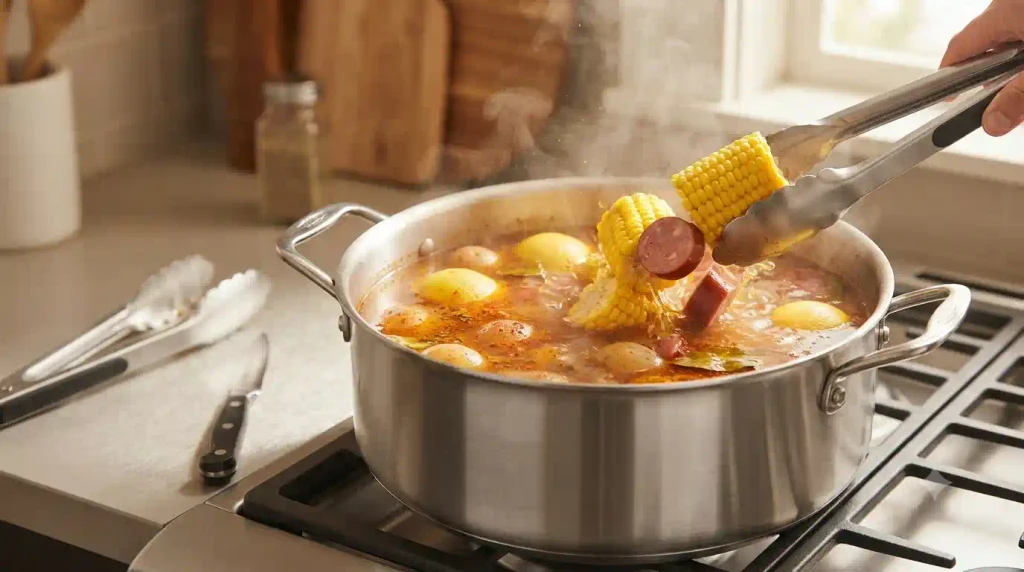
Add the corn and sliced smoked sausage.
Cook for another 5–7 minutes, or until the potatoes can almost be pierced easily with a small knife.
Taste a potato if necessary. It should be tender around the outside with just a little resistance toward the centre.
Don’t cook everything until completely soft yet because the crab still needs time to heat through.
Step 4: Add the Crab
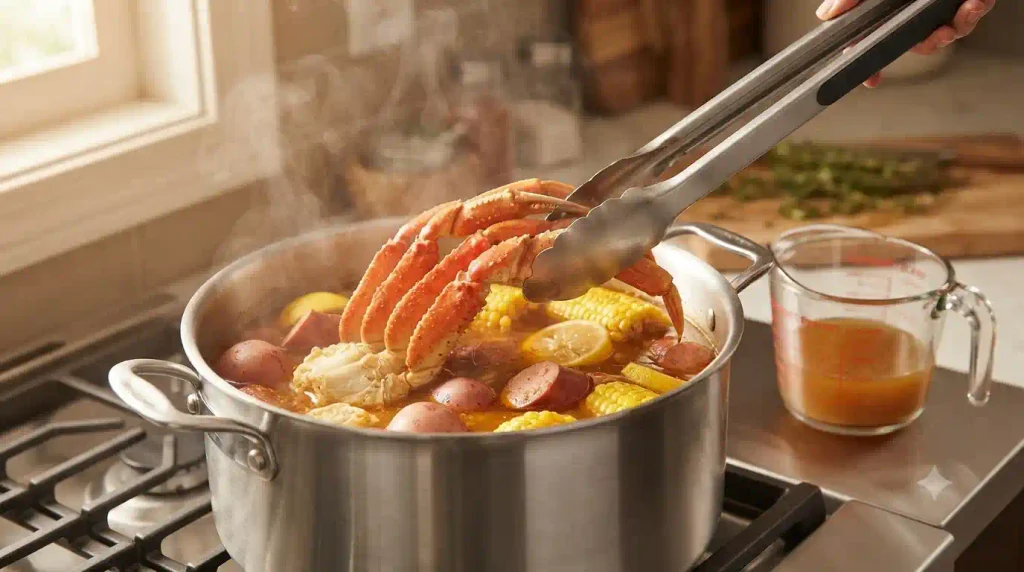
Gently lower the pre-cooked crab legs into the seasoned liquid.
Cover the pot and cook for approximately 4–6 minutes, just until the crab is thoroughly heated.
Most crab legs sold frozen in US supermarkets are already cooked, so you’re reheating rather than cooking them from raw. Leaving them boiling for too long can make that lovely crab meat dry and rubbery.
For food safety, if you’re starting with raw crab, follow cooking guidance appropriate to the specific crab species and size rather than using this reheating time.
Drain the seafood well, reserving about ½ cup cooking liquid before discarding the rest.
Step 5: Make the Shell-Clinging Seasoning Butter
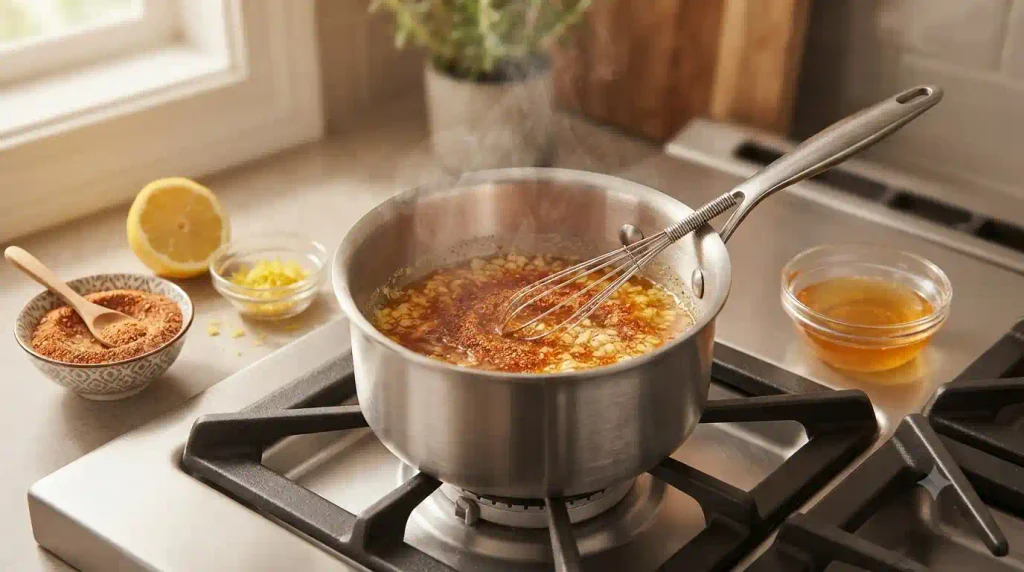
Melt 6 tablespoons unsalted butter in a small saucepan over medium-low heat.
Add the minced garlic and cook gently for about 30–60 seconds, until fragrant. Don’t let it brown heavily.
Stir in:
- 2 tablespoons seasoning blend
- 1 tablespoon lemon juice
- 1 teaspoon lemon zest
- 2 tablespoons reserved cooking liquid
Whisk for about 30 seconds.
You want a loose, glossy, heavily seasoned butter—not a watery sauce.
If it looks separated, don’t panic. Give it a vigorous whisk and remove it from direct heat. The spices will naturally thicken the coating slightly.
Step 6: Coat and Serve
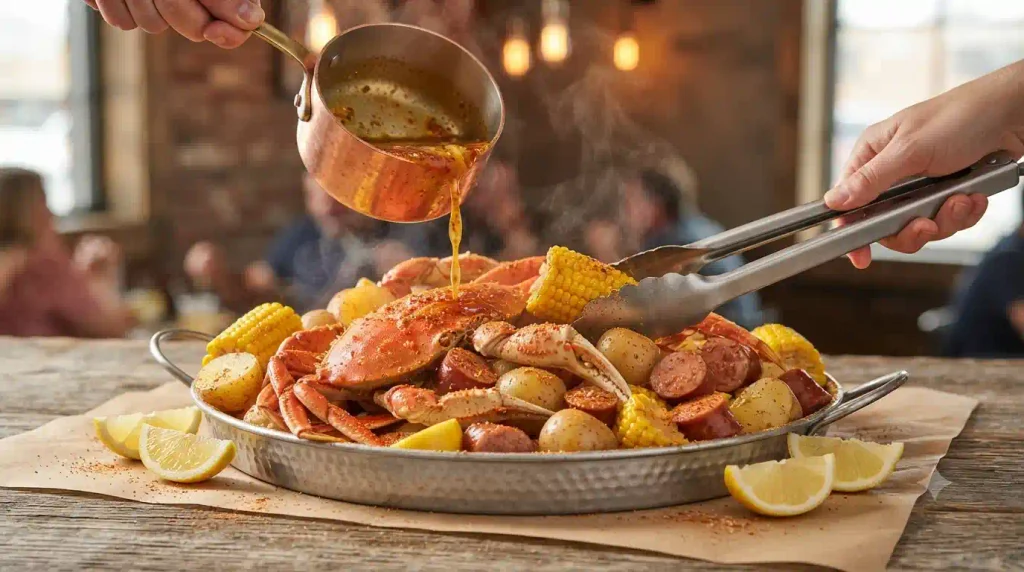
Transfer the drained crab, corn, potatoes, and sausage to a large bowl or serving tray while everything is still hot.
Pour the warm seasoned butter over the top.
Use sturdy tongs to toss everything gently until the shells develop a visible coating of spices.
Let the seafood rest for 2–3 minutes before serving. This small step matters. Instead of immediately running off, the seasoned butter settles into the textured surface of the shells.
Finish with fresh lemon wedges and, if you enjoy extra heat, a light dusting of the remaining dry seasoning.
Serve immediately with crab crackers, plenty of napkins, and a bowl for discarded shells. This is supposed to be messy food—that’s half the fun.
Health Benefits
Crab itself can be a nutrient-dense protein choice. It provides high-quality protein along with nutrients such as vitamin B12, selenium, zinc, and other minerals, although exact amounts vary between crab species.
The seasoning also gets much of its intensity from herbs and spices rather than relying entirely on salt. Garlic, paprika, oregano, thyme, and black pepper add considerable flavour for relatively few calories.
Using unsalted butter gives you more control over sodium. If you’re watching salt intake, reduce the sea salt in the seasoning and allow lemon, garlic, herbs, and cayenne to carry more of the flavour.
Keep in mind that seafood boils can become fairly high in sodium, particularly when smoked sausage is included. Portion size matters, and people following medically prescribed sodium restrictions should adjust the recipe to suit their healthcare professional’s advice.
Nutrition Information (Per Serving)
Approximate values for 1 of 6 servings of the complete crab boil, including crab, sausage, vegetables, and a share of the butter sauce:
| Nutrient | Approximate Amount |
|---|---|
| Calories | 510 kcal |
| Protein | 35 g |
| Fat | 27 g |
| Carbohydrates | 34 g |
These figures are estimates. Actual nutrition will vary significantly depending on the type of crab, sausage brand, portion size, amount of sauce consumed, and how much seasoning remains in the cooking liquid.
Pro Tips & Variations
Use finely ground spices. This makes a surprisingly big difference. Coarse herbs and spices tend to fall off smooth crab shells, while fine powders integrate more effectively into melted butter.
Season twice instead of dumping everything into the water. The cooking liquid flavours potatoes, corn, sausage, and seafood, but much of that seasoning gets discarded with the water. Reserve plenty of seasoning for the finishing butter.
Drain before coating. If the crab comes straight from the pot dripping wet, that excess water dilutes your butter mixture. Give everything a minute to drain first.
For a milder family-friendly version: reduce cayenne to ½ teaspoon.
For an extra-spicy boil: increase cayenne to 1 tablespoon and add ½ teaspoon crushed red pepper flakes to the butter.
For extra garlic flavour: increase fresh garlic in the finishing butter from four to six cloves.
For a dairy-free version: replace butter with a neutral-tasting plant-based butter suitable for cooking. The flavour won’t be identical, but the fat will still help carry and hold the spices.
For shrimp: use the same seasoning, but don’t cook shrimp for the same amount of time as crab legs. Add them near the end and cook only until opaque and properly cooked through.
For stronger lemon flavour: add zest rather than lots of additional juice. Too much lemon juice can thin your butter coating.
Make-Ahead Tip
You can prepare the dry seasoning well ahead of time.
Store it in a clean, completely dry, airtight spice jar away from direct sunlight, steam, and heat. For the brightest aroma, I prefer making smaller batches and using them within a few months.
Don’t store seasoning that has come into contact with raw seafood.
How Much Does It Cost to Make?
Prices vary substantially by region, season, crab variety, and supermarket, but here’s a practical US grocery estimate for planning purposes.
| Ingredient | Estimated Cost Used |
|---|---|
| Crab legs, 2 lb | $25–$40 |
| Smoked sausage | $4–$6 |
| Baby potatoes | $2–$3 |
| Corn | $2–$4 |
| Butter | $1–$2 |
| Lemon & garlic | $1–$2 |
| Herbs & spices used | $2–$4 |
| Estimated Total | $37–$61 |
| Approx. Cost Per Serving | $6.15–$10.15 |
The crab is obviously the big variable. Buying frozen crab legs when they’re on promotion can cut the total dramatically.
The dry seasoning itself is inexpensive once your spice cupboard is stocked, and making your own lets you adjust salt and heat without buying another specialty blend.
Frequently Asked Questions
How do you get crab boil seasoning to stick to crab legs?
Drain the cooked crab thoroughly, then toss it while hot with seasoned melted butter. Dry seasoning sprinkled directly onto wet shells tends to wash away or collect unevenly. Butter acts as a flavour carrier and helps finely powdered spices coat the shell.
Another useful trick is to let the coated crab sit for 2–3 minutes before serving.
Should I put crab boil seasoning in the water or on the seafood?
Both works best.
Seasoning the cooking liquid flavours potatoes, corn, sausage, and the outside of the seafood. However, putting all your spices into several litres of water wastes much of their intensity when the liquid is drained.
Use a moderate amount in the cooking water and reserve a stronger portion for the finishing butter.
How can I make crab boil seasoning less spicy?
Reduce the cayenne from 2 teaspoons to ½–1 teaspoon. Don’t remove the paprika, garlic, onion, mustard, celery seed, or herbs. Those ingredients create flavour rather than simply heat.
You can always put extra cayenne or hot sauce on the table for anyone who wants more fire.
Can I make crab boil seasoning ahead of time?
Yes. Mix only the dry ingredients and keep them in an airtight container in a cool, dark, dry cupboard.
Make the garlic-butter component fresh when you’re ready to cook. Keeping moisture out of your dry spice blend helps preserve its quality and prevents clumping.
Final Thoughts
A memorable crab boil isn’t about making the seasoning unbearably salty or hot. It’s about layering flavour where it actually stays.
Season the cooking liquid enough to flavour the whole pot, then let that garlicky, lemony spice butter do the heavy lifting at the end. You’ll get juicy crab, flavourful vegetables, and shells coated with the seasoning everyone reaches back for.
And don’t worry about keeping dinner neat. Put down some paper, grab the crab crackers, bring extra napkins, and enjoy the mess. A great seafood boil should leave the table looking like something delicious happened there.