

There’s something especially comforting about pulling a golden, savoury pie from the oven when you’re craving something rich and satisfying. Crab pie feels a little luxurious, yet it doesn’t need restaurant-level skills. The trick is getting plenty of sweet crab flavour without ending up with a filling that tastes like scrambled eggs baked inside pastry.
After making seafood pies in a busy home kitchen, I’ve found that gentle seasoning, enough dairy, and moderate oven heat make all the difference. This version has a creamy, tender filling, flaky crust, and bright hints of lemon and herbs. It works beautifully for brunch, lunch, or a relaxed dinner, and most of the preparation can be finished before the oven even heats up.
Rich Crab Pie Recipe That Never Turns Eggy
This crab pie is built around crab meat rather than eggs. The eggs simply hold everything together, while cream cheese, milk, lemon, Old Bay seasoning, and fresh herbs create a creamy filling that lets the seafood stay front and centre.
Prep & Cook Time
| Detail | Time / Amount |
|---|---|
| Prep Time | 20 minutes |
| Cook Time | 40–45 minutes |
| Resting Time | 10 minutes |
| Total Time | 70–75 minutes |
| Servings | 8 slices |
The short resting period is worth it. Cutting the pie immediately can cause the hot filling to spill out, while 10 minutes gives it time to settle into neat, creamy slices.
What Equipment Do You Need?
You don’t need specialist seafood equipment for this recipe. A basic home kitchen setup works perfectly.
- 9-inch (23 cm) pie dish
- Large mixing bowl
- Medium mixing bowl
- Whisk
- Silicone spatula or wooden spoon
- Measuring cups and spoons
- Fine grater or zester
- Cutting board
- Sharp knife
- Baking sheet
- Wire cooling rack
Chef’s tip: Place the pie dish on a baking sheet before it goes into the oven. It makes transferring the hot pie much easier and catches any filling that happens to bubble over.
Ingredients
For the Crab Pie
- 1 unbaked 9-inch pie crust, homemade or refrigerated
- 12 oz (340 g) lump crab meat, picked over for shell pieces
- 4 oz (113 g) full-fat cream cheese, softened
- 2 large eggs
- 3/4 cup (180 ml) whole milk
- 1/4 cup (60 ml) heavy cream
- 1/2 cup (50 g) finely grated Parmesan cheese
- 1/3 cup (50 g) finely diced shallot
- 1 tablespoon unsalted butter
- 1 tablespoon fresh lemon juice
- 1 teaspoon finely grated lemon zest
- 1 teaspoon Old Bay seasoning
- 1 teaspoon Dijon mustard
- 1/2 teaspoon Worcestershire sauce
- 1/4 teaspoon garlic powder
- 1/4 teaspoon freshly ground black pepper
- 1/4 teaspoon salt, or to taste
- 2 tablespoons chopped fresh parsley
- 1 tablespoon chopped fresh chives
Optional Garnish
- Fresh parsley or chives
- Lemon wedges
- A small pinch of Old Bay seasoning
Why Each Ingredient Matters
Lump crab meat: Crab is the star, so using a generous amount keeps this pie tasting like seafood rather than an egg-based quiche. Lump crab also gives you those lovely tender pieces throughout each slice.
Eggs: Two eggs provide just enough protein to set the filling. Using too many eggs is one of the main reasons seafood pies can become firm, rubbery, or noticeably “eggy.”
Whole milk and heavy cream: Dairy dilutes the egg mixture and creates a softer, creamier set. Heavy cream adds richness without requiring extra eggs.
Cream cheese: This is one of my favourite tricks. It gives the filling body, creaminess, and gentle tang while helping reduce the need for additional egg.
Parmesan: Parmesan provides salty, savoury depth. A modest amount is enough because we don’t want cheese overpowering delicate crab.
Shallot: Shallot brings gentle sweetness and aromatic flavour without the aggressive bite that raw onion can have.
Butter: Briefly cooking the shallot in butter softens its flavour and removes excess rawness before it enters the filling.
Lemon juice and zest: Crab loves acidity. Lemon cuts through the rich dairy and makes the seafood taste fresher.
Dijon mustard: A small spoonful adds tang and complexity without making the filling taste strongly of mustard.
Old Bay seasoning: This classic seafood seasoning adds warmth and savoury character. It can be salty, so taste your crab before adding extra salt.
Worcestershire sauce: Just a little adds umami and rounds out the savoury flavours.
Parsley and chives: Fresh herbs brighten a filling that could otherwise feel quite heavy.
Pie crust: The crisp, buttery pastry provides contrast against the soft crab filling.
Step-by-Step Instructions
Step 1: Prepare the Oven and Crust
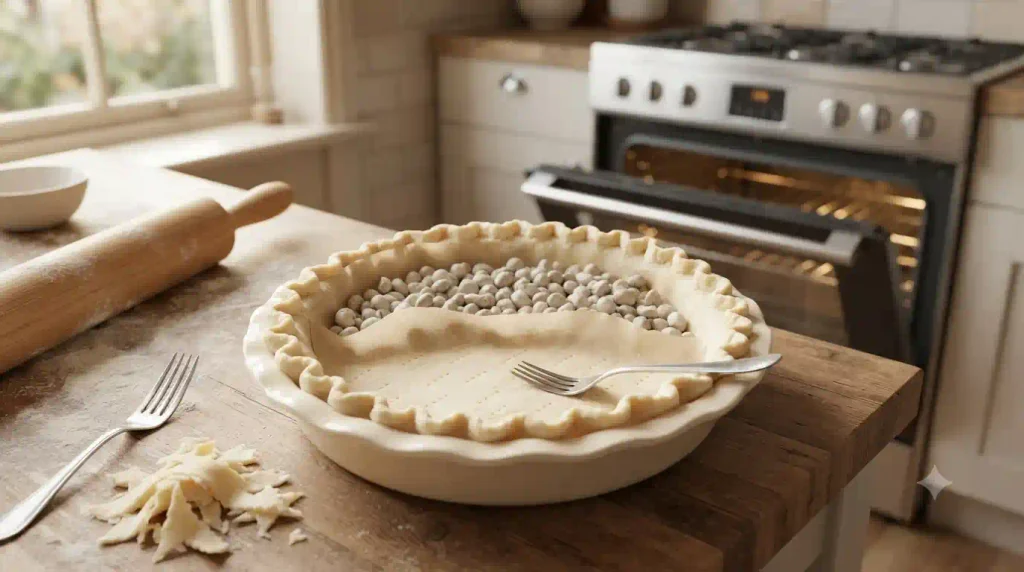
Preheat your oven to 375°F (190°C).
Fit the unbaked pie crust into a 9-inch pie dish. Gently press it against the bottom and sides without stretching the pastry. Trim or crimp the edges as desired.
Prick the bottom lightly with a fork. Line the crust with parchment paper and fill it with pie weights or dried beans.
Blind-bake for 10 minutes. Carefully remove the parchment and weights, then bake for another 3–4 minutes.
The crust doesn’t need to become deeply golden yet. You’re simply giving it a head start so the bottom doesn’t turn soggy once the creamy filling goes in.
Be careful when removing pie weights—they’ll be extremely hot.
Step 2: Cook the Shallot
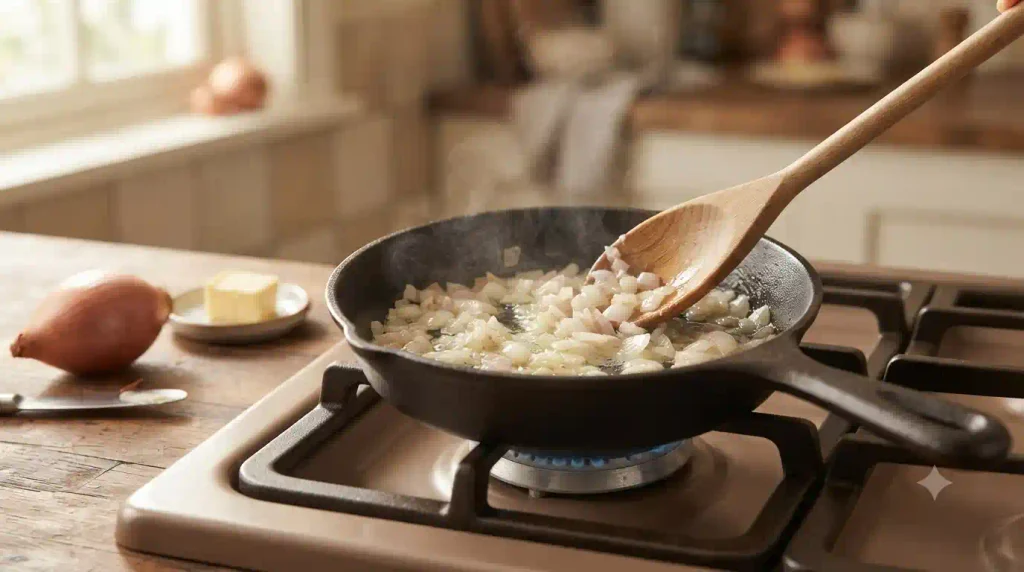
While the crust is baking, melt 1 tablespoon butter in a small skillet over medium-low heat.
Add the finely diced shallot and cook for approximately 3–4 minutes, stirring occasionally.
You’re looking for soft and translucent shallot, not dark brown pieces.
Remove the pan from the heat and let the shallot cool for a few minutes.
This tiny step makes a surprisingly big difference. Raw onion flavour can dominate delicate crab, while gently cooked shallot becomes sweet and mellow.
Step 3: Make the Creamy Base
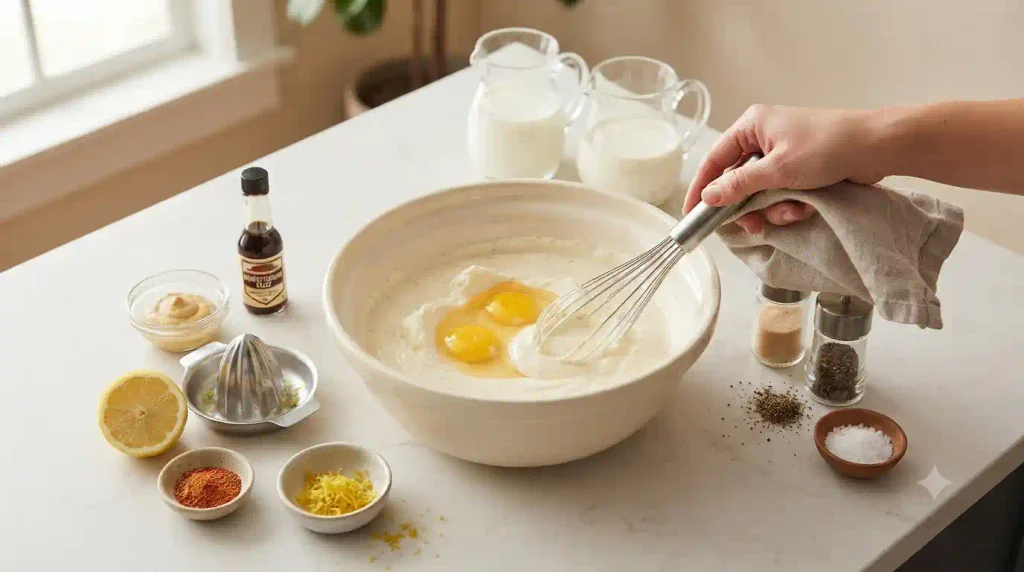
Place the softened cream cheese in a large mixing bowl and whisk until relatively smooth.
Add the 2 eggs and whisk gently until combined.
Gradually whisk in the whole milk and heavy cream. Add the Dijon mustard, Worcestershire sauce, lemon juice, lemon zest, Old Bay, garlic powder, black pepper, and salt.
Don’t beat the mixture aggressively. You’re not trying to whip air into the eggs.
A few tiny cream cheese specks aren’t a disaster. Overworking everything isn’t necessary.
Step 4: Fold in the Crab
First, check the crab meat carefully for any remaining bits of shell.
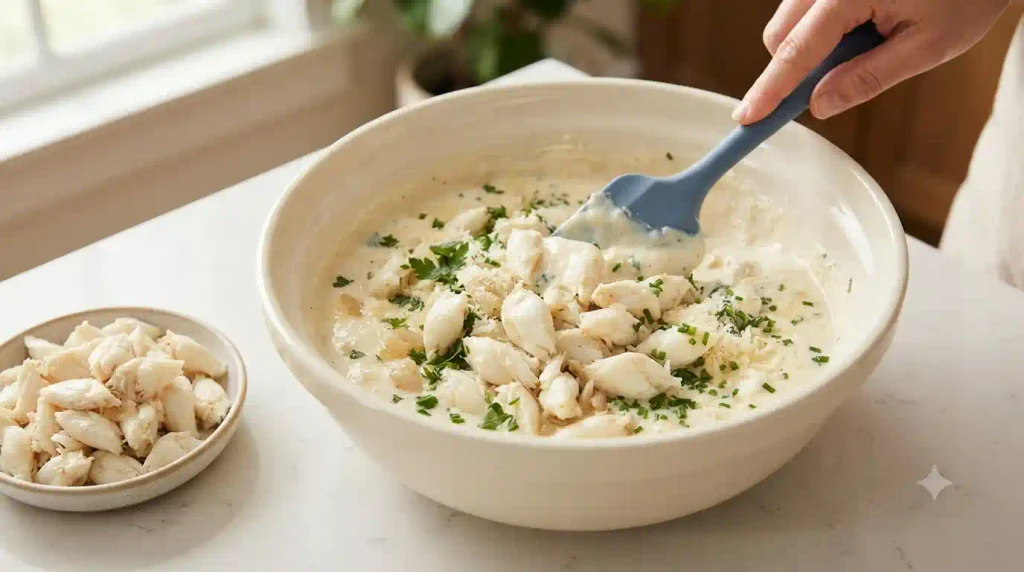
Add the crab, Parmesan, cooked shallot, parsley, and chives to the creamy mixture.
Use a spatula to fold everything together gently.
Try not to break up those beautiful pieces of lump crab. They’re one of the best parts of the finished pie.
Taste for seasoning only if your crab product is already fully cooked and safe to eat. Otherwise, don’t taste a mixture containing raw egg. Adjust salt cautiously because both crab and Old Bay can already contain plenty.
Step 5: Fill and Bake
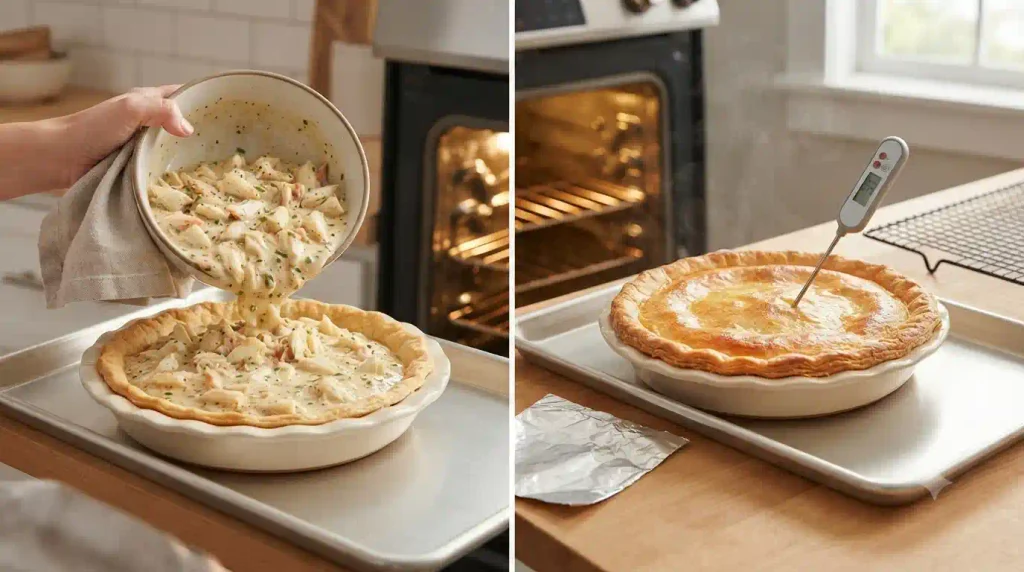
Place the partially baked crust on a baking sheet.
Pour the crab mixture carefully into the crust and distribute the crab pieces evenly.
Bake at 375°F (190°C) for 35–40 minutes.
The pie is ready when the outer portion looks set but the very centre still has a slight wobble when the pan is gently nudged.
Don’t wait until the centre becomes completely hard in the oven. Residual heat continues cooking the filling after you remove it.
For food safety, an instant-read thermometer inserted near the centre should reach at least 160°F (71°C) because the filling contains eggs.
If the crust edges brown too quickly, loosely shield them with foil.
Step 6: Rest, Slice and Serve
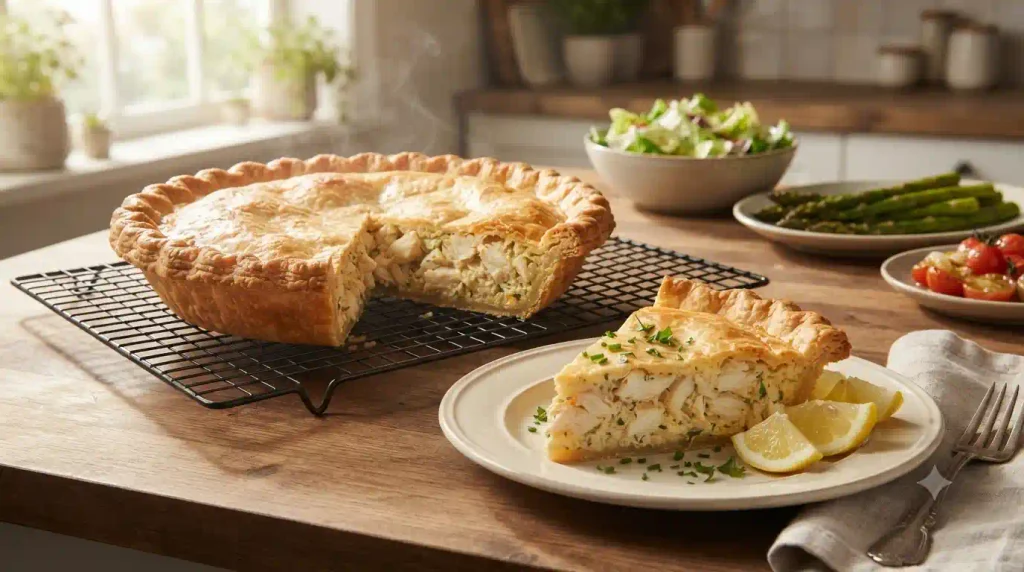
Transfer the pie to a wire rack and let it rest for at least 10 minutes.
This is where patience pays off. Straight from the oven, the custard is delicate. Resting allows it to finish setting without becoming dry.
Slice the pie into 8 wedges.
Finish with chopped chives or parsley and serve with fresh lemon wedges.
The result should be creamy and tender rather than rubbery, with unmistakable pieces of crab in every bite.
For a complete meal, pair it with a crisp green salad, roasted asparagus, green beans, or lightly dressed tomatoes.
Health Benefits
Crab pie is definitely a rich dish, but its star ingredient offers valuable nutrients.
Crab provides high-quality protein. Protein supports muscle maintenance and helps make a meal more satisfying.
Crab contains vitamin B12. Seafood can be an excellent dietary source of B12, a vitamin involved in healthy red blood cell formation and normal nervous-system function.
Seafood provides useful minerals. Depending on the crab variety, it can contribute nutrients such as selenium, zinc, and phosphorus.
Eggs add protein and micronutrients. Because this recipe uses only two eggs across eight servings, they provide structure without dominating the dish.
Fresh herbs and lemon add flavour without much additional fat or sugar. They’re an easy way to make a rich dish taste lively.
That said, this is still a cream-and-pastry-based recipe. Parmesan, seasoning blends, and some packaged crab products may also contain considerable sodium. Enjoy it as part of an overall balanced diet, particularly if you need to monitor saturated fat or sodium.
Anyone with a shellfish allergy should not eat this dish.
Nutrition Information (Per Serving)
Approximate values based on 1 of 8 slices:
| Nutrient | Approximate Amount |
|---|---|
| Calories | 310 kcal |
| Protein | 16 g |
| Fat | 21 g |
| Carbohydrates | 15 g |
Nutrition note: These figures are estimates. Actual nutrition will vary with the crab meat, pastry, dairy, Parmesan, and brands you use.
Pro Tips & Variations
How to Guarantee a Creamy, Non-Eggy Crab Pie
1. Don’t add extra eggs.
Two large eggs are enough for this amount of filling. More egg creates a firmer custard and makes the egg flavour increasingly noticeable.
2. Don’t overbake it.
This may be even more important than the egg ratio. Remove the pie while the centre still gives a gentle wobble.
3. Use good crab.
For a special occasion, lump or jumbo lump crab meat gives the most impressive texture. Backfin crab is a more economical alternative.
4. Drain crab thoroughly.
Excess liquid can water down your custard and contribute to a soggy crust. Gently blot unusually wet crab with paper towel.
5. Blind-bake the pastry.
It creates a barrier against the wet filling and gives the bottom crust a much better chance of staying crisp.
6. Keep the seasoning balanced.
Crab has a naturally delicate sweetness. You should taste crab first, not garlic, mustard, cheese, or Old Bay.
Easy Variations
Crustless Crab Pie:
Grease the pie dish well and bake the filling without pastry. Begin checking for doneness a little earlier.
Crab and Shrimp Pie:
Replace about 4 oz (113 g) of crab with chopped cooked shrimp.
Spicy Crab Pie:
Add 1/8–1/4 teaspoon cayenne pepper or a few drops of hot sauce.
Cheddar Crab Pie:
Replace Parmesan with a mild or medium sharp cheddar. Avoid adding too much, or the crab flavour can disappear.
Fresh Herb Version:
Add a little fresh dill or tarragon. Both work beautifully with crab, but use them sparingly.
Gluten-Free Option:
Use a trusted gluten-free pie crust and check that your Worcestershire sauce and seasoning blend meet your dietary requirements.
Can I Make It Ahead?
Yes. You can blind-bake the crust and prepare the other components ahead of time, keeping perishable ingredients refrigerated at 40°F (4°C) or below.
For the best pastry texture, assemble the filling and crust shortly before baking.
Cooked crab pie can be refrigerated in a covered container for up to 3–4 days. Refrigerate leftovers within 2 hours of serving.
For reheating, place individual slices in a 300°F (150°C) oven until thoroughly hot. Gentle reheating helps preserve the creamy texture better than blasting it with high heat.
How Much Does It Cost to Make?
Crab prices vary considerably by season, location, variety, and whether you’re buying fresh, refrigerated, canned, or pasteurised meat. For a US supermarket, this is a reasonable rough estimate:
| Ingredient | Estimated Cost |
|---|---|
| 12 oz lump crab meat | $15–$22 |
| Pie crust | $3–$5 |
| Cream cheese | $1–$2 |
| Eggs | $0.50–$1 |
| Milk and heavy cream | $1–$2 |
| Parmesan | $1.50–$2.50 |
| Shallot, lemon and herbs | $2–$4 |
| Seasonings and butter | $1–$2 |
| Estimated Total | $25–$40 |
| Approximate Cost Per Serving | $3.10–$5.00 |
The crab is clearly the biggest expense. For a more budget-friendly pie, use backfin or claw meat instead of premium jumbo lump crab.
UK cooks can use white crab meat, double cream in place of heavy cream, and a standard shortcrust pastry case. Prices will naturally differ between supermarkets and fishmongers.
Frequently Asked Questions
Why does my crab pie taste too eggy?
Usually, there are two culprits: too many eggs or too much cooking.
A crab pie needs enough egg to bind the filling, but it shouldn’t rely on eggs for most of its volume. This recipe balances two eggs with milk, cream, and cream cheese so the custard stays soft and the crab remains the dominant flavour.
Overbaking can also make the egg proteins tighten too much, producing a firmer texture and stronger cooked-egg character.
Should I use fresh, canned, or refrigerated crab meat?
All can work, but good-quality lump crab meat gives the nicest appearance and texture.
If using canned crab, drain it extremely well. Pick through any crab meat carefully because tiny pieces of shell occasionally remain.
Avoid imitation crab if you’re aiming for the classic flavour and texture of a rich crab pie.
How do I know when crab pie is finished baking?
Look at the centre rather than relying only on the clock.
The edges should be set, while the centre should have a small jiggle when you gently move the pie dish. It shouldn’t look watery.
Because this filling contains egg, cook it to a safe internal temperature of at least 160°F (71°C).
Then let the pie rest for about 10 minutes before slicing.
Can you freeze crab pie?
Yes, although the texture is generally best when freshly baked.
Let the cooked pie cool, portion it, wrap the pieces securely, and freeze them in an airtight freezer-safe container. For best quality, use within about 1–2 months.
Thaw overnight in the refrigerator rather than leaving seafood at room temperature. Reheat gently in the oven until thoroughly hot.
Final Thoughts
A great crab pie shouldn’t make you wonder where the crab went. It should taste unmistakably of sweet, delicate seafood, wrapped in a creamy filling with just enough lemon, herbs, and seasoning to make every bite interesting.
The biggest secrets are wonderfully simple: use plenty of crab, keep the egg ratio low, blind-bake the crust, and don’t overcook the filling. Don’t panic when the centre still has a tiny wobble as it leaves the oven—that gentle finish is exactly what helps produce a tender pie instead of an eggy, rubbery one.
Serve it warm with a crisp salad and lemon wedges, and you’ve got the kind of homemade meal that feels special without turning your kitchen upside down.