

That familiar breakfast craving can turn an ordinary morning into something worth slowing down for. A skillet of homemade sausage brings the kind of savoury aroma that gets everyone into the kitchen before you have even called them. Better yet, making it yourself means you choose the meat, seasonings, salt level, and quality—no mystery ingredients hiding in the mix.
This recipe gives you juicy, well-seasoned breakfast sausage with crisp golden edges and a tender centre. It is simple enough for a weekday meal but tastes special enough for a weekend brunch. Make the patties fresh, prep them ahead, or freeze a batch for busy mornings.
Prep & Cook Time
| Recipe Detail | Time / Amount |
|---|---|
| Prep Time | 10 minutes |
| Resting Time | 15 minutes |
| Cook Time | 10–12 minutes |
| Total Time | 35–37 minutes |
| Servings | 8 |
| Yield | About 16 small patties |
What Equipment Do You Need?
You do not need a sausage grinder or any specialist equipment for this recipe.
- Large mixing bowl
- Measuring spoons
- Measuring tablespoon
- Large cast-iron or non-stick skillet
- Spatula or tongs
- Small plate or baking sheet for shaped patties
- Instant-read meat thermometer
- Parchment paper, optional for freezing
Ingredients
- 1 lb (450 g) ground pork, preferably around 80–85% lean
- 1 teaspoon kosher salt
- 1 teaspoon dried rubbed sage
- 1 teaspoon dried thyme
- 1 teaspoon freshly ground black pepper
- ½ teaspoon garlic powder
- ½ teaspoon onion powder
- ½ teaspoon smoked or sweet paprika
- ¼ teaspoon crushed red pepper flakes, optional
- ⅛ teaspoon ground nutmeg
- 1 tablespoon pure maple syrup
- 1 tablespoon cold water
- 1 teaspoon neutral cooking oil, only if your pan needs it
Why Each Ingredient Matters
Ground pork: Pork naturally contains enough fat to keep breakfast sausage moist and tender. Very lean meat can produce dry, firm patties, which is why an 80–85% lean blend works particularly well.
Sage and thyme: These herbs create that instantly recognisable breakfast-sausage flavour. Sage is earthy and savoury, while thyme gives the mixture a fresher herbal note.
Salt: Salt does more than season the pork. It also helps meat proteins bind together, giving the finished sausage a cohesive but juicy texture.
Black pepper and red pepper flakes: Pepper provides gentle warmth without overwhelming the herbs. Red pepper flakes are optional but excellent when you want a little morning kick.
Garlic and onion powder: Powders disperse evenly through ground meat without introducing chunks of raw onion or garlic that could cook unevenly.
Paprika: It adds mild sweetness, colour, and extra savoury depth. Smoked paprika creates a slightly bolder sausage.
Nutmeg: You should not distinctly taste it. A tiny pinch rounds out the pork and herbs with subtle warmth.
Maple syrup: This provides just enough sweetness to balance the salt and savoury herbs. It also encourages attractive browning in the skillet.
Cold water: A small amount helps distribute the seasoning and keeps the sausage mixture easier to work with.
Step-by-Step Instructions
Step 1: Mix the Seasonings
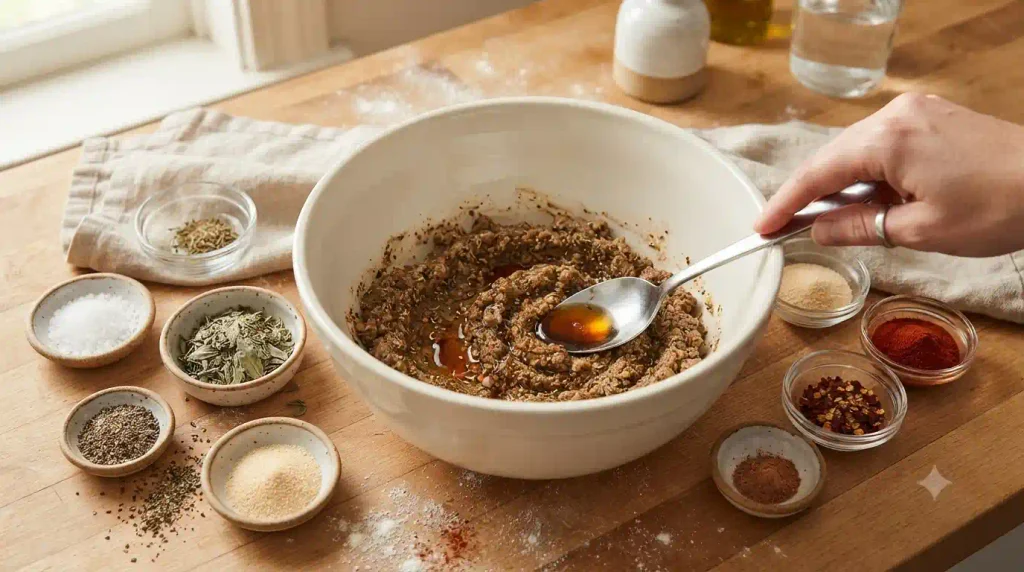
In a large bowl, combine the salt, sage, thyme, black pepper, garlic powder, onion powder, paprika, red pepper flakes, and nutmeg.
Mixing the dry seasonings first is a small step that makes a noticeable difference. It prevents one sausage patty from getting a pocket of sage while another gets almost none.
Stir in the maple syrup and cold water.
Step 2: Season the Pork
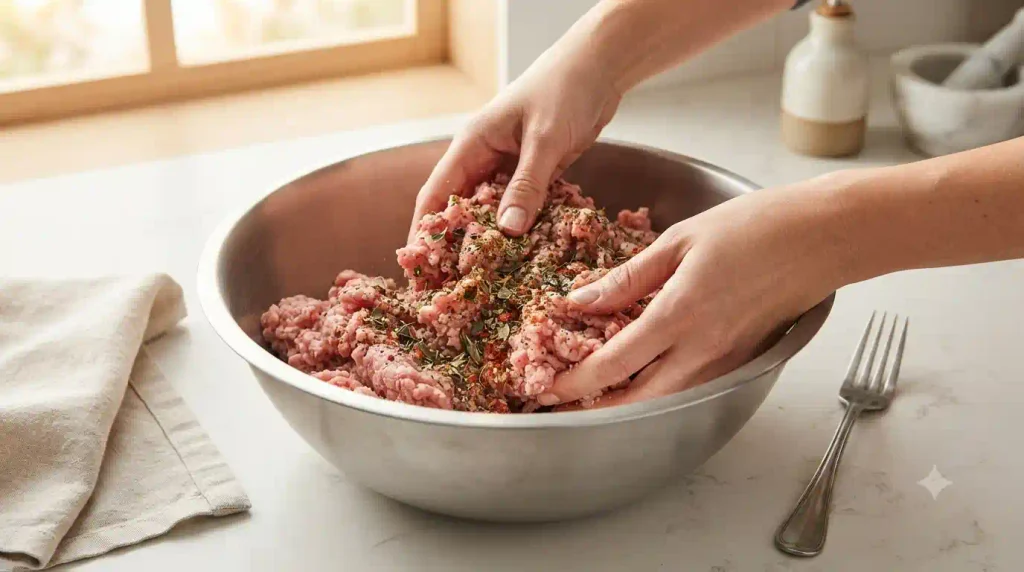
Add the cold ground pork to the bowl.
Using clean hands or a sturdy fork, gently work the seasonings into the pork until evenly distributed.
Avoid squeezing and kneading the meat as though you were making bread dough. Overworking ground pork can make cooked sausage dense and rubbery.
The mixture may feel slightly sticky when properly combined. That’s normal.
Food safety note: Raw pork can carry harmful bacteria. Wash your hands thoroughly with soap and hot water after handling it, and clean any utensils or surfaces that contacted the raw meat.
Step 3: Shape and Rest the Patties

Divide the mixture into approximately 16 portions, roughly 1 ounce (28 g) each.
Gently roll each portion into a ball and flatten it into a patty about 2½ inches (6 cm) wide.
Make the centres slightly thinner than the edges. Sausage patties tend to contract and puff as they cook, so this helps them stay relatively flat.
Place the patties on a clean plate and refrigerate for 15 minutes.
This short rest allows the flavours to mingle and makes the soft patties easier to transfer into the skillet.
Step 4: Brown the First Side

Place a large skillet over medium heat.
If you are using well-marbled pork and a seasoned cast-iron or good non-stick skillet, you may not need additional oil. Otherwise, add about 1 teaspoon oil.
Arrange the patties in a single layer without crowding them. Work in batches if necessary.
Cook for approximately 3–4 minutes on the first side.
Resist the temptation to keep moving them around. Leaving the patties alone gives them time to develop those deeply savoury, golden-brown edges.
Step 5: Flip and Finish Cooking

Flip each patty and cook for another 3–4 minutes, adjusting the heat if they are browning too quickly.
Because maple syrup promotes caramelisation, the outside can colour before the centre is fully cooked. Medium heat is much safer than blasting them over high heat.
Check the thickest patty with an instant-read thermometer.
Ground pork should reach a safe internal temperature of 160°F (71°C).
Never rely on colour alone to determine whether ground pork is safely cooked.
Step 6: Rest and Serve
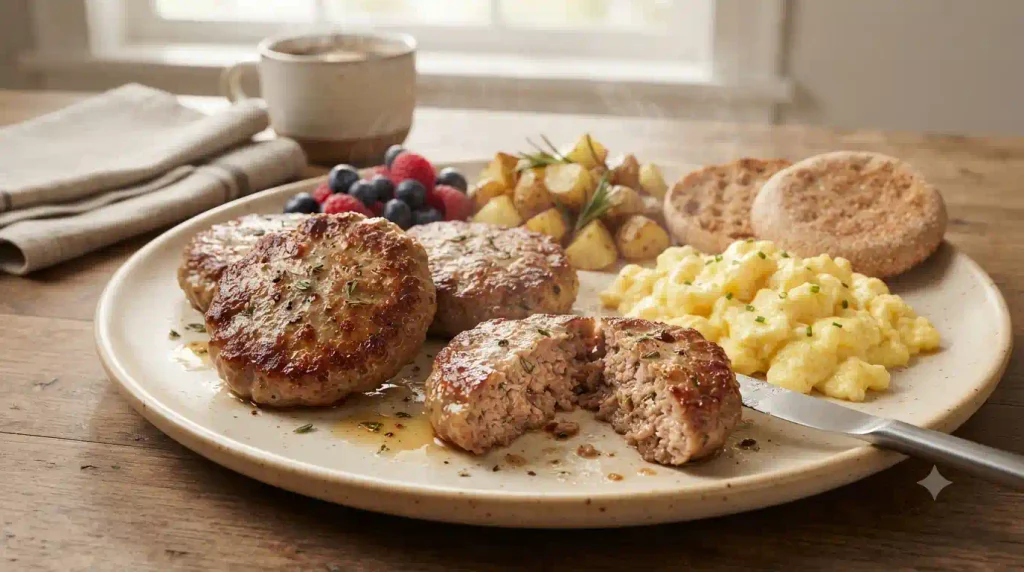
Transfer the cooked sausage patties to a clean plate and let them rest for 2–3 minutes.
That brief pause allows the hot juices to settle instead of immediately running onto your plate.
Serve warm alongside scrambled or fried eggs, whole-grain toast, roasted potatoes, pancakes, fruit, or whatever makes breakfast feel complete.
For a breakfast sandwich, tuck a patty into a toasted English muffin with egg and cheese.
Health Benefits
Homemade breakfast sausage is still a rich meat dish, so portion size matters, but preparing it yourself offers some useful nutritional advantages.
High-quality protein: Pork provides complete protein containing all nine essential amino acids. Protein supports muscle maintenance and also helps make breakfast more satisfying.
B vitamins: Pork naturally provides several B vitamins, particularly thiamine (vitamin B1), which plays an important role in converting food into usable energy.
Minerals: Pork contributes nutrients including selenium, zinc, and phosphorus.
Control over ingredients: One of the biggest benefits of homemade sausage is knowing exactly what went into it. You can adjust the salt, sweetness, fat level, and seasonings to suit your household.
Pair two patties with eggs, vegetables, fruit, or whole grains rather than making sausage the entire meal. That creates a more balanced breakfast with additional fibre and micronutrients.
Nutrition Information (Per Serving)
Approximate nutrition for 1 serving (2 small patties):
| Nutrient | Approximate Amount |
|---|---|
| Calories | 170 kcal |
| Protein | 11 g |
| Fat | 13 g |
| Carbohydrates | 2 g |
Note: Nutrition is an estimate. Exact values vary significantly depending on the fat percentage of your ground pork, brand of ingredients, patty size, and amount of cooking fat used.
Pro Tips & Variations
Keep everything cold. Cold pork is easier to handle and helps the fat remain distributed throughout the mixture instead of becoming greasy while you shape it.
Cook a tiny tester first. Before shaping the whole batch, fry a teaspoon-sized piece of sausage. Taste it once fully cooked. You can then adjust the sage, pepper, salt, or heat before committing to all 16 patties.
Don’t flatten patties while cooking. Pressing them aggressively with your spatula squeezes moisture and rendered fat into the skillet—the very things helping keep your sausage juicy.
For sweeter maple sausage: Increase the maple syrup to 2 tablespoons. Watch the skillet carefully because additional sugar means faster browning.
For spicy sausage: Increase the crushed red pepper to ½ teaspoon, or add a pinch of cayenne.
For a stronger herb flavour: Add another ½ teaspoon sage.
For turkey breakfast sausage: Substitute ground turkey for pork. Choose turkey with some fat rather than ultra-lean breast meat, which can become dry. Ground poultry should reach 165°F (74°C) internally.
For lower sodium: Reduce the kosher salt slightly rather than eliminating it completely. Herbs, garlic, black pepper, and paprika can help compensate for some of the lost flavour.
Make-ahead option: Mix and shape the patties the night before, cover tightly, refrigerate, and cook them the following morning.
Freezer option: Place uncooked patties between pieces of parchment paper and freeze until firm. Transfer them to an airtight freezer-safe container or bag. Thaw safely in the refrigerator before cooking.
How Much Does It Cost to Make?
Prices vary by supermarket, region, brand, and season, but homemade sausage can be quite economical because most of the seasonings are pantry staples.
| Ingredient | Estimated US Cost |
|---|---|
| Ground pork, 1 lb | $4.00–$6.00 |
| Herbs and spices | $0.60–$1.00 |
| Maple syrup | $0.20–$0.40 |
| Oil and other basics | $0.10–$0.20 |
| Estimated Total | $4.90–$7.60 |
| Approx. Cost Per Serving | $0.61–$0.95 |
Buying ground pork when it is on sale and keeping dried herbs in your pantry can push the cost toward the lower end of that range.
Frequently Asked Questions
Can I make homemade breakfast sausage ahead of time?
Yes. Shape the raw sausage into patties, cover them tightly, and refrigerate promptly. For longer storage, freeze the patties with parchment between them so you can separate individual portions easily.
For food safety, don’t leave raw sausage sitting at room temperature while preparing the rest of breakfast.
Why is my homemade breakfast sausage dry?
The most common culprit is pork that is too lean. Overcooking and overworking the meat can also produce dry, tough patties.
Use ground pork with enough fat for moisture, mix only until the seasonings are evenly incorporated, and use a thermometer rather than cooking the patties longer “just to be safe.”
Can I freeze homemade breakfast sausage?
Absolutely. Both raw and cooked patties can be frozen.
For convenient breakfasts, cook the sausage first, cool it promptly, portion it, and freeze. Thaw in the refrigerator and reheat thoroughly before serving.
What gives breakfast sausage its classic flavour?
Sage is the signature ingredient, but it works best as part of a blend. Thyme, black pepper, garlic, onion, and a touch of nutmeg give the pork its familiar savoury breakfast character.
Maple syrup isn’t essential, but a small amount creates a particularly tasty sweet-and-savoury balance.
Final Thoughts
Homemade breakfast sausage doesn’t require complicated equipment or a long ingredient list. Good ground pork, a handful of pantry seasonings, and careful skillet cooking are enough to make patties that are juicy inside and beautifully browned outside.
Once you’ve made a batch, adjust the seasoning to make it your own. More sage, less sweetness, extra pepper, or a little chilli can completely change the personality of the sausage. And when that first skillet starts sizzling on a Saturday morning, don’t be surprised if everyone suddenly appears in the kitchen.