

There’s something deeply satisfying about making a comforting pasta dinner at home, especially when the kitchen starts smelling of garlic, herbs, and sizzling Italian sausage. Ravioli feels like restaurant food, but it doesn’t need to be fussy. The biggest frustration is watching those beautiful little pasta parcels split open in the pot and lose their filling.
This Italian sausage ravioli recipe is designed to help prevent exactly that. The filling is rich but not overly wet, the pasta is sealed carefully, and the ravioli are cooked at a gentle simmer rather than a violent boil. Add a simple garlic butter sauce, and you have a cosy, impressive dinner that’s completely manageable on a weeknight.
Prep & Cook Time
| Detail | Time / Amount |
|---|---|
| Prep Time | 35 minutes |
| Cook Time | 25 minutes |
| Total Time | 1 hour |
| Servings | 4 |
Yield: Approximately 24 medium ravioli, depending on the size of your cutter.
What Equipment Do You Need?
You don’t need a professional pasta kitchen to make good ravioli. A few basic tools will do the job:
- Large skillet
- Large pot
- Mixing bowl
- Wooden spoon or silicone spatula
- Rolling pin or pasta machine
- Sharp knife, pizza wheel, or ravioli cutter
- Fork
- Slotted spoon or spider strainer
- Measuring cups and spoons
- Baking sheet or large tray
- Parchment paper
- Pastry brush or clean fingertip for sealing
A pasta machine makes thin, even sheets easier, but a rolling pin works perfectly well with a little patience.
Ingredients
For the Pasta Dough
- 2 cups (250 g) all-purpose flour, plus extra for dusting
- 3 large eggs, room temperature
- 1 teaspoon olive oil
- 1/2 teaspoon fine salt
For the Italian Sausage Filling
- 8 oz (225 g) Italian sausage, casings removed
- 3/4 cup (185 g) whole-milk ricotta cheese
- 1/3 cup (30 g) finely grated Parmesan cheese
- 1 small garlic clove, minced
- 1 tablespoon finely chopped fresh parsley
- 1/2 teaspoon Italian seasoning
- 1/4 teaspoon freshly ground black pepper
- Pinch of salt, if needed
For the Garlic Butter Sauce
- 3 tablespoons unsalted butter
- 2 garlic cloves, finely minced
- 1 tablespoon chopped fresh parsley
- 2 tablespoons grated Parmesan
- 1/4 teaspoon freshly ground black pepper
Optional for serving:
- Extra Parmesan
- Red pepper flakes
- Fresh basil or parsley
Why Each Ingredient Matters
All-purpose flour provides enough gluten-forming protein to create pasta that is flexible yet strong enough to hold the sausage filling. The dough should be thin, but it still needs enough structure to survive cooking.
Eggs provide moisture, richness, colour, protein, and structure. They help turn ordinary flour into an elastic pasta dough.
Olive oil makes the dough slightly more supple and easier to work with, especially when rolling it by hand.
Italian sausage provides most of the savoury character. Pork sausage usually contains fat and seasonings that create a juicy, flavour-packed filling without requiring a long ingredient list.
Ricotta softens the sausage filling and gives each ravioli a creamy centre. The important trick is moisture control. If your ricotta looks watery, drain it first.
Parmesan adds saltiness, umami, and nuttiness. It also helps bind some of the moisture in the filling.
Garlic and Italian seasoning reinforce the classic Italian-inspired flavours without overwhelming the sausage.
Butter creates a silky sauce that coats the ravioli without drowning them. A heavy sauce can hide the flavour you worked so hard to put inside the pasta.
Step-by-Step Instructions
Step 1: Make and Rest the Pasta Dough
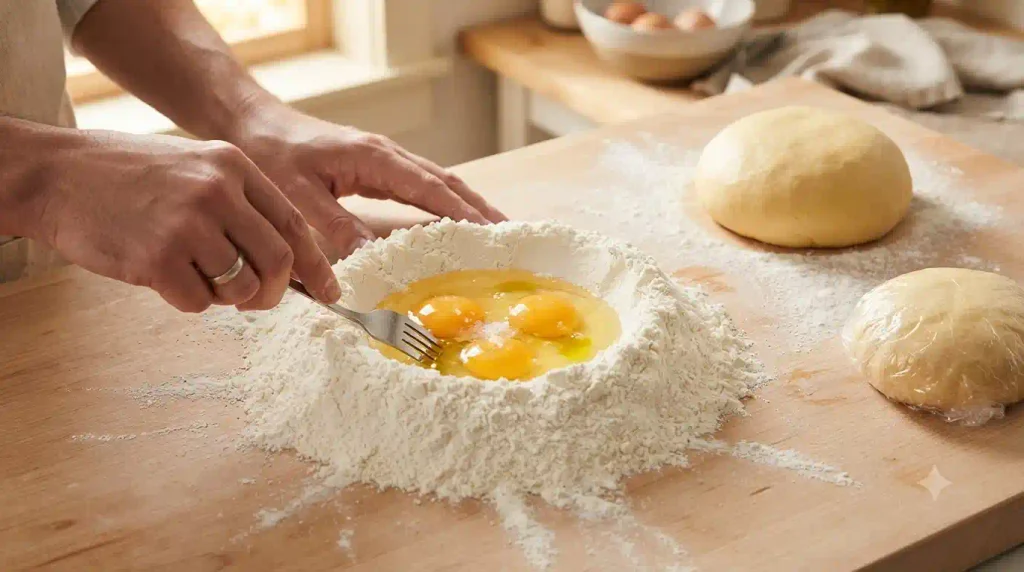
Place 2 cups flour on a clean work surface or in a wide mixing bowl. Make a well in the centre.
Crack the 3 eggs into the well. Add the olive oil and salt.
Beat the eggs gently with a fork, gradually pulling flour from the sides into the liquid. Once the mixture becomes too thick for the fork, begin working it together with your hands.
Knead for about 8–10 minutes, until the dough feels smooth and elastic. It may look rough and shaggy during the first few minutes. That’s normal.
If it feels extremely sticky, dust it lightly with flour. Avoid dumping in lots of extra flour because an overly dry dough can be difficult to seal.
Shape the dough into a ball, wrap it tightly, and let it rest at room temperature for 30 minutes.
Resting is important. It allows the flour to hydrate and the gluten to relax, making the dough much easier to roll without constantly springing back.
Step 2: Cook the Italian Sausage Filling
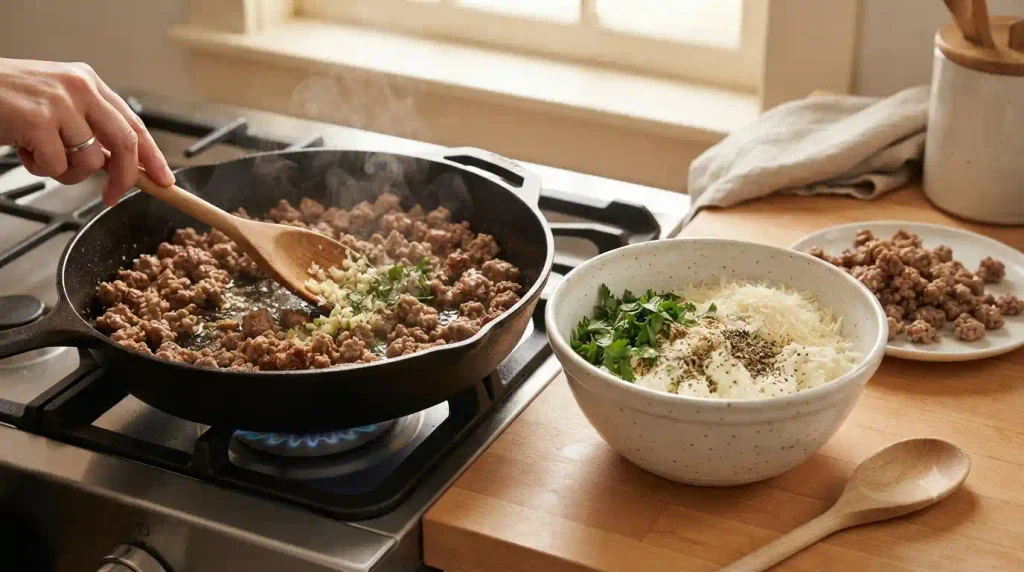
While the dough rests, heat a skillet over medium heat.
Add the Italian sausage and cook for approximately 6–8 minutes, breaking it into very small crumbles with a wooden spoon.
The sausage should be completely cooked through with no pink remaining. For food safety, ground pork sausage should reach 160°F (71°C) internally.
Add the minced garlic during the final 30–60 seconds and stir until fragrant.
Transfer the sausage to a plate and allow it to cool. If there is a lot of rendered grease in the skillet, leave that excess fat behind.
Once cooled, combine the sausage with:
- Ricotta
- Parmesan
- Parsley
- Italian seasoning
- Black pepper
Taste only after the sausage is fully cooked, then adjust the salt if necessary.
The filling should be moist enough to hold together but not watery. Excess moisture is one of the easiest ways to weaken homemade ravioli.
Step 3: Roll the Pasta Thinly
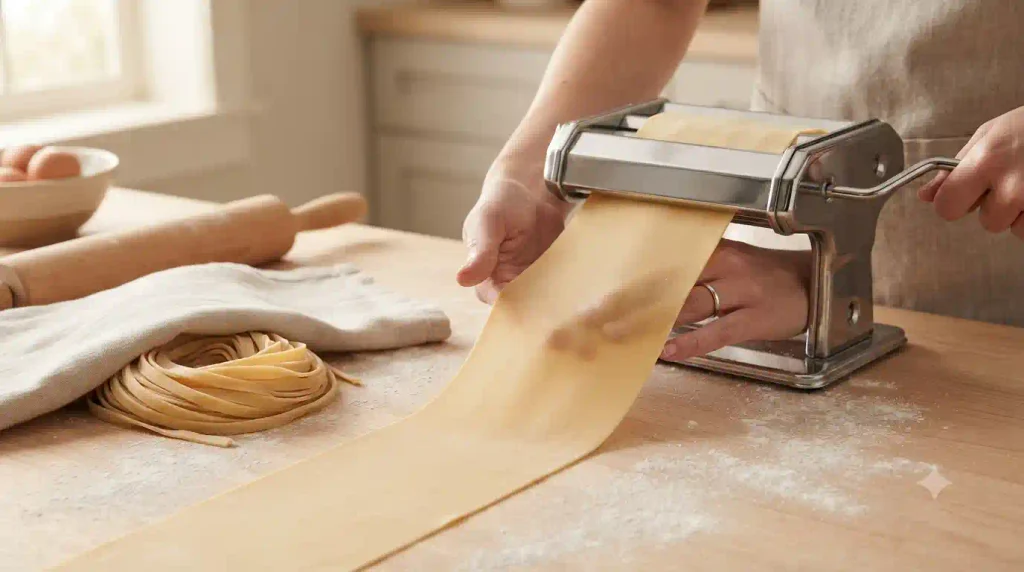
Divide the rested dough into 4 pieces. Keep the pieces you aren’t using covered so they don’t dry out.
Flatten one portion slightly.
If using a pasta machine, begin with the widest setting and pass the dough through. Fold it and repeat a few times before gradually reducing the thickness.
Continue until you have a thin, smooth sheet approximately 1/16 inch (1.5 mm) thick.
Using a rolling pin? Roll from the centre outward, rotating the dough regularly. Dust the work surface only when necessary to prevent sticking.
You should be able to see the faint outline of your hand through properly rolled pasta.
Avoid making the dough paper-thin. A slightly sturdier sheet is more forgiving for sausage ravioli and less likely to tear during cooking.
Step 4: Fill and Seal the Ravioli
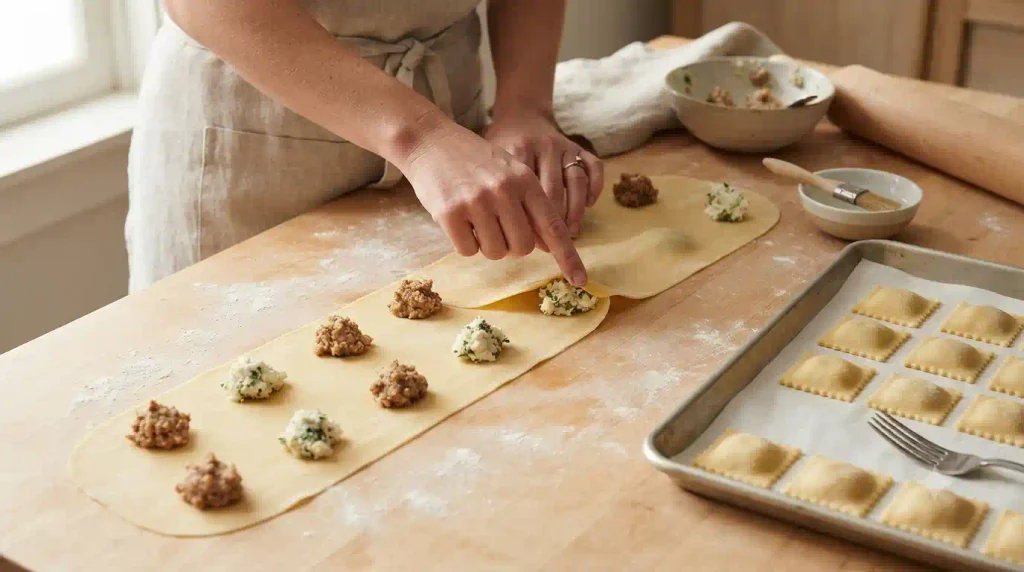
Place one pasta sheet on a lightly floured surface.
Spoon approximately 1 to 1 1/2 teaspoons of filling onto the sheet, leaving about 1 1/2–2 inches between each mound.
This is where restraint pays off. Overstuffed ravioli may look generous, but they’re much harder to seal.
Lightly brush around the filling with water.
Lay another pasta sheet over the top.
Starting close to each mound of filling, gently press outward with your fingertips to remove trapped air before sealing the edges firmly.
Air pockets matter. Trapped air expands as ravioli cook and can increase the chance of splitting.
Cut individual ravioli with a ravioli cutter, pastry wheel, or sharp knife.
Press around each edge again. If you’re unsure about the seal, gently crimp the edges with a fork without piercing the centre.
Place finished ravioli on a lightly floured or parchment-lined tray in a single layer.
Don’t stack fresh ravioli. They can stick together surprisingly quickly.
Step 5: Cook the Ravioli Without Bursting
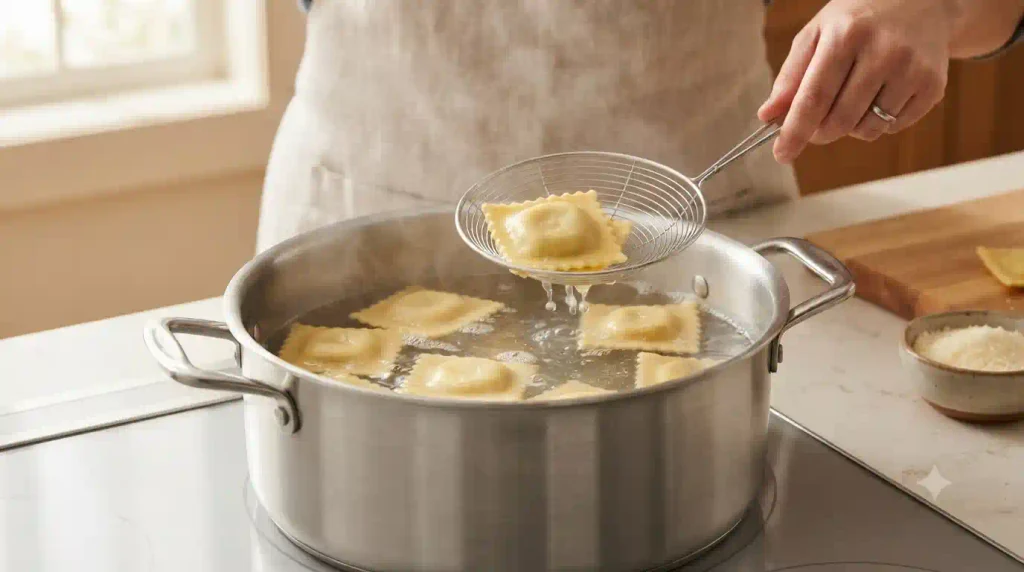
Bring a large pot of generously salted water to a boil.
Once boiling, reduce the heat to maintain a gentle simmer before adding the ravioli.
This is one of the most important steps in the entire recipe.
A violent rolling boil can throw delicate ravioli against one another and the sides of the pot, increasing the risk of torn seams.
Cook the ravioli in batches so the pot isn’t overcrowded.
Gently lower them into the simmering water and cook for approximately 3–5 minutes, depending on the thickness of your pasta.
Fresh ravioli often float toward the surface as they cook, but floating alone isn’t a perfect indicator of doneness.
Remove one and taste the pasta edge if you’re uncertain.
Use a slotted spoon or spider strainer to lift cooked ravioli from the water instead of aggressively pouring the entire pot through a colander.
Step 6: Make the Garlic Butter Sauce and Serve
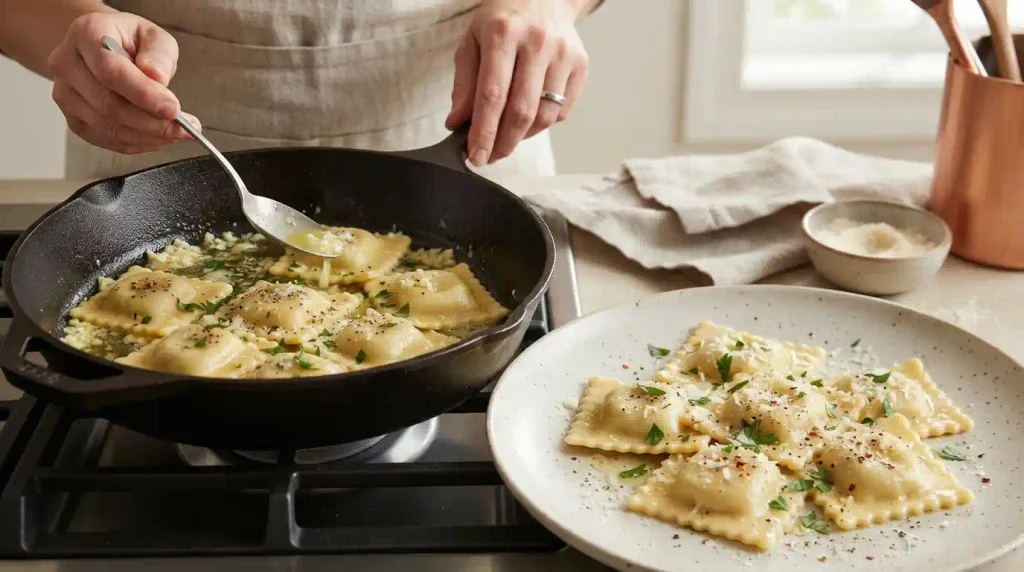
While the ravioli cook, melt 3 tablespoons butter in a large skillet over medium-low heat.
Add the minced garlic and cook for approximately 30–60 seconds until fragrant. Don’t let the garlic burn; browned garlic can quickly become bitter.
Add the cooked ravioli directly to the skillet.
Spoon the garlic butter gently over the pasta. If the sauce needs loosening, add 1–2 tablespoons of pasta water.
Sprinkle with parsley, Parmesan, and black pepper.
Rather than vigorously stirring, gently shake the pan or turn the ravioli carefully with a spoon. Fresh pasta is more delicate than dried pasta.
Serve immediately with extra Parmesan and red pepper flakes if you enjoy a little heat.
Health Benefits
Italian sausage ravioli is certainly comfort food, but it also provides useful nutrients when enjoyed as part of a balanced meal.
Protein: Eggs, sausage, ricotta, and Parmesan all contribute protein. Protein supports muscle maintenance and helps make a meal more satisfying.
Calcium: Ricotta and Parmesan provide calcium, which supports healthy bones and teeth.
B vitamins: Pork, eggs, and dairy supply several B vitamins involved in normal energy metabolism.
Iron and zinc: Pork sausage contributes minerals including iron and zinc, which play roles in normal immune function and oxygen transport.
For a more balanced plate, serve the ravioli with roasted vegetables, sautéed greens, or a crisp salad.
Italian sausage and Parmesan can contain significant sodium and saturated fat, so portion size matters. You can also choose leaner sausage or reduce the Parmesan if that better suits your dietary needs.
Nutrition Information (Per Serving)
Approximate values will vary according to the sausage, ricotta, Parmesan, ravioli size, and exact amount of sauce consumed.
| Nutrient | Approximate Amount |
|---|---|
| Calories | 650 kcal |
| Protein | 30 g |
| Fat | 35 g |
| Carbohydrates | 53 g |
Nutrition note: These figures are estimates rather than medical dietary calculations. Check the labels of your specific ingredients when precise nutrition information is important.
Pro Tips & Variations
Chef Tips for Ravioli That Stay Sealed
- Drain wet ricotta. Place watery ricotta in a fine-mesh strainer before mixing the filling.
- Cool the sausage completely. Hot filling creates steam and can soften the pasta.
- Don’t overfill. Around 1–1 1/2 teaspoons is plenty for medium ravioli.
- Remove air pockets. Press from the filling outward before sealing.
- Keep unused dough covered. Pasta exposed to air develops a dry skin that becomes difficult to seal.
- Don’t use excessive flour between layers. Flour around the edges can stop the pasta sheets from bonding properly.
- Use water sparingly. You need only enough to make the edges slightly tacky.
- Simmer instead of aggressively boiling. Gentle movement protects delicate seams.
- Cook in batches. Overcrowding makes ravioli collide and stick together.
- Lift instead of draining roughly. A spider strainer or slotted spoon is your friend.
Spicy Sausage Ravioli
Use hot Italian sausage instead of mild sausage. Finish with red pepper flakes for additional heat.
Spinach and Sausage Ravioli
Mix approximately 1/2 cup finely chopped cooked spinach into the filling.
Squeeze the spinach very well first. Extra water can make ravioli difficult to seal.
Sausage and Mozzarella Ravioli
Replace part of the ricotta with low-moisture mozzarella for a slightly cheesier, stretchier filling.
Tomato Sauce Variation
Skip the garlic butter and serve your ravioli with warm marinara sauce.
Keep the sauce relatively light so the sausage filling remains the star.
Brown Butter and Sage
Let the butter cook until the milk solids become lightly golden and smell nutty. Add several fresh sage leaves and cook briefly until fragrant.
Watch the pan carefully. Brown butter can go from beautifully nutty to burnt surprisingly fast.
Store-Bought Pasta Sheet Shortcut
Fresh lasagne sheets can occasionally work as a shortcut if they’re thin and flexible enough to fold and seal.
It won’t have exactly the same texture as homemade pasta, but it can turn ravioli into a much faster weekend project.
How Much Does It Cost to Make?
Prices vary by supermarket, brand, region, and season, but homemade ravioli can still be considerably cheaper than ordering a similar pasta dish at a restaurant.
Approximate US Cost
| Ingredient | Estimated Cost Used |
|---|---|
| Flour | $0.40 |
| Eggs | $1.25 |
| Italian sausage | $3.00 |
| Ricotta | $2.00 |
| Parmesan | $1.50 |
| Butter | $0.75 |
| Garlic | $0.25 |
| Herbs & seasonings | $0.60 |
| Estimated Total | $9.75 |
That works out to roughly $2.45 per serving for four servings.
If you already keep flour, butter, garlic, and seasonings in your kitchen, the immediate grocery cost may feel even lower.
For UK cooks, ingredient prices will naturally differ, but the same recipe can be made with standard plain flour, eggs, Italian-style pork sausages, ricotta, Parmesan, and butter available from most major supermarkets.
Frequently Asked Questions
Why do my homemade ravioli burst while cooking?
The most common causes are overfilling, trapped air, weak seals, overly wet filling, pasta rolled too thin, or water boiling too aggressively.
Press excess air from around the filling before sealing and cook ravioli at a controlled simmer.
Also check every ravioli before it goes into the pot. A tiny opening at the edge can become much larger during cooking.
Should I boil or simmer fresh ravioli?
Bring your water to a boil first, then reduce it to a gentle simmer before adding delicate homemade ravioli.
You need enough movement and heat to cook the pasta, but not so much turbulence that the ravioli are repeatedly knocked against one another.
Can I make Italian sausage ravioli ahead of time?
Yes.
For short-term preparation, arrange the uncooked ravioli in one layer on a well-floured or parchment-lined tray, cover them, refrigerate, and cook as soon as practical.
For longer storage, freezing is the better option.
Freeze uncooked ravioli in a single layer on a baking sheet until firm. Transfer them to a freezer-safe container or bag afterward.
Cook frozen ravioli directly from frozen rather than thawing them first. Thawing can make the pasta sticky and fragile.
How do I know when fresh ravioli are cooked?
Fresh homemade ravioli generally take around 3–5 minutes, although thicker pasta may require slightly longer.
Ravioli commonly rise toward the surface as they cook, but don’t depend entirely on floating. The pasta should be tender while retaining a slight bite.
If you’re making a large batch, cook one test ravioli first. That small test can save an entire tray from being overcooked.
Final Thoughts
Homemade Italian sausage ravioli sounds ambitious until you break it into simple jobs: make the dough, prepare a fairly dry filling, roll, fill, seal, and gently cook.
The secret to ravioli that doesn’t burst isn’t a complicated restaurant trick. Don’t overfill it, remove trapped air, seal the edges carefully, and keep the cooking water at a gentle simmer. Those small details make a huge difference.
Your first few ravioli might look a little rustic, and that’s perfectly fine. Homemade pasta doesn’t need factory-perfect edges to taste wonderful. Once you cut into that tender pasta and find a warm, savoury sausage and ricotta centre still safely inside, the extra effort feels well worth it.