

There are days when a seafood craving hits, but buying fresh crab—or spending an hour in the kitchen—just isn’t happening. That’s where imitation crab earns its spot in the fridge. With the right seasonings and a quick skillet technique, this affordable ingredient can become buttery, savory, and surprisingly close to the flavor of a restaurant-style crab dish.
I make this when I want something warm and satisfying without creating a sink full of dishes. The trick is not to drown the crab in seasoning. A little butter, lemon, garlic, and Old Bay-style seasoning bring out its natural sweetness. From fridge to plate, you can genuinely have dinner ready in about 10 minutes.
Prep & Cook Time
| Recipe Detail | Time / Amount |
|---|---|
| Prep Time | 4 minutes |
| Cook Time | 6 minutes |
| Total Time | 10 minutes |
| Servings | 4 |
This recipe makes approximately 4 light servings. For a heartier main meal, especially when serving without rice, pasta, or vegetables, plan on slightly larger portions.
What Equipment Do You Need?
You don’t need any special seafood equipment for this recipe. A few everyday kitchen tools will do the job:
- Large nonstick or stainless-steel skillet
- Cutting board
- Sharp knife
- Measuring spoons
- Wooden spoon or silicone spatula
- Small bowl
- Lemon juicer, optional
A wide skillet is especially useful because it lets the crab pieces sit in a single layer rather than steam in a crowded pan.
Ingredients
- 1 pound (450 g) imitation crab meat, flake or leg style
- 2 tablespoons unsalted butter
- 2 cloves garlic, finely minced
- 1 tablespoon fresh lemon juice
- 1 teaspoon Old Bay seasoning or similar seafood seasoning
- ¼ teaspoon smoked paprika
- ⅛ teaspoon freshly ground black pepper
- 1 tablespoon finely chopped fresh parsley
- 1 teaspoon lemon zest, optional
- Lemon wedges, for serving
Optional for extra richness: Add 1 teaspoon extra-virgin olive oil along with the butter.
Imitation crab is already seasoned and typically contains a fair amount of sodium, so I don’t automatically add salt. Taste the finished dish first—you may find it doesn’t need any.
Why Each Ingredient Matters
Good cooking isn’t always about using more ingredients. It’s about understanding what each ingredient is doing.
Imitation crab: Usually made primarily from surimi, a processed fish paste commonly produced from mild white fish such as Alaska pollock. Its slightly sweet flavor makes it a surprisingly versatile substitute for crab in quick recipes.
Butter: Adds the richness we associate with classic crab dishes. It also carries the garlic and spice flavors across every piece.
Garlic: Fresh garlic provides a savory backbone that keeps the dish from tasting overly sweet. Since minced garlic can burn quickly, it only needs a short time in the pan.
Fresh lemon juice: Seafood and acidity are natural partners. Lemon brightens the buttery sauce and balances the sweetness of imitation crab.
Old Bay seasoning: A small amount gives the dish that familiar seafood-boil character. It contains plenty of flavor already, so there’s no need to get heavy-handed.
Smoked paprika: Adds mild smokiness, warmth, and attractive color without overwhelming the delicate seafood flavor.
Black pepper: Provides gentle heat and balances the sweet and buttery notes.
Parsley: Fresh parsley gives the finished dish a clean, herbaceous finish and adds freshness after cooking.
Lemon zest: This optional addition intensifies the citrus aroma without adding more acidity.
Step-by-Step Instructions
Step 1: Prepare the Imitation Crab
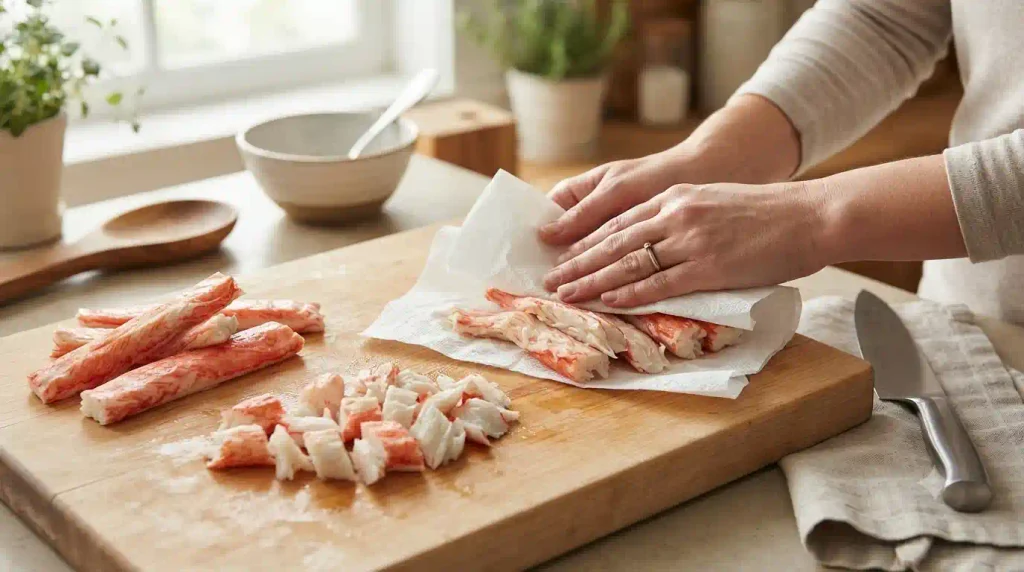
Remove the imitation crab from its packaging and gently pat it dry with paper towels.
If you’re using crab sticks or leg-style pieces, slice them into approximately 2-inch pieces or gently pull them apart into chunky flakes.
Don’t shred them too finely. Larger pieces give the finished dish a more substantial, crab-like texture.
Step 2: Make the Quick Seasoning Mix
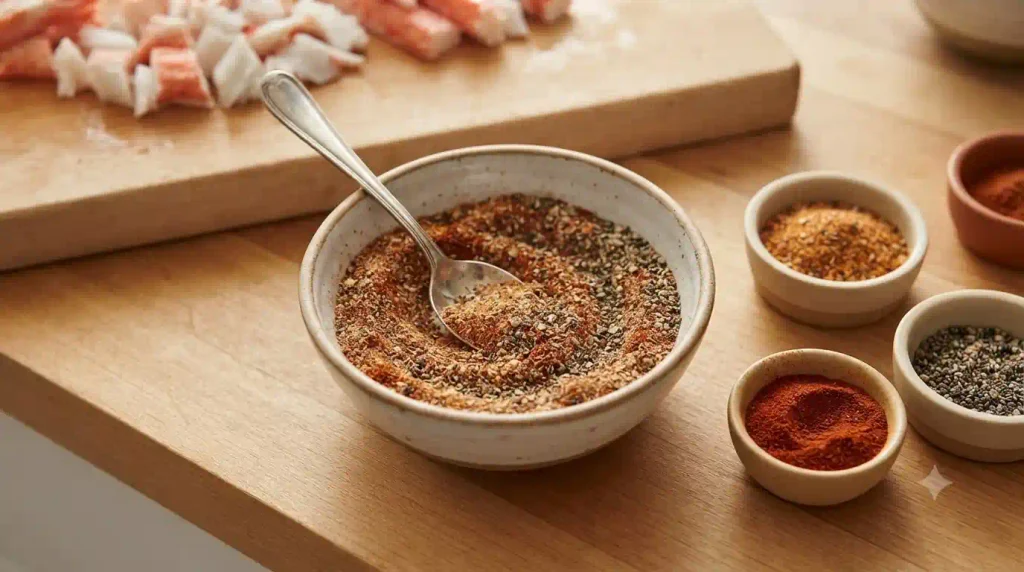
In a small bowl, combine:
- 1 teaspoon Old Bay seasoning
- ¼ teaspoon smoked paprika
- ⅛ teaspoon black pepper
Mix them together before they go into the skillet.
It sounds like a tiny step, but it prevents one section of crab from getting all the paprika while another gets none.
Step 3: Melt the Butter and Cook the Garlic
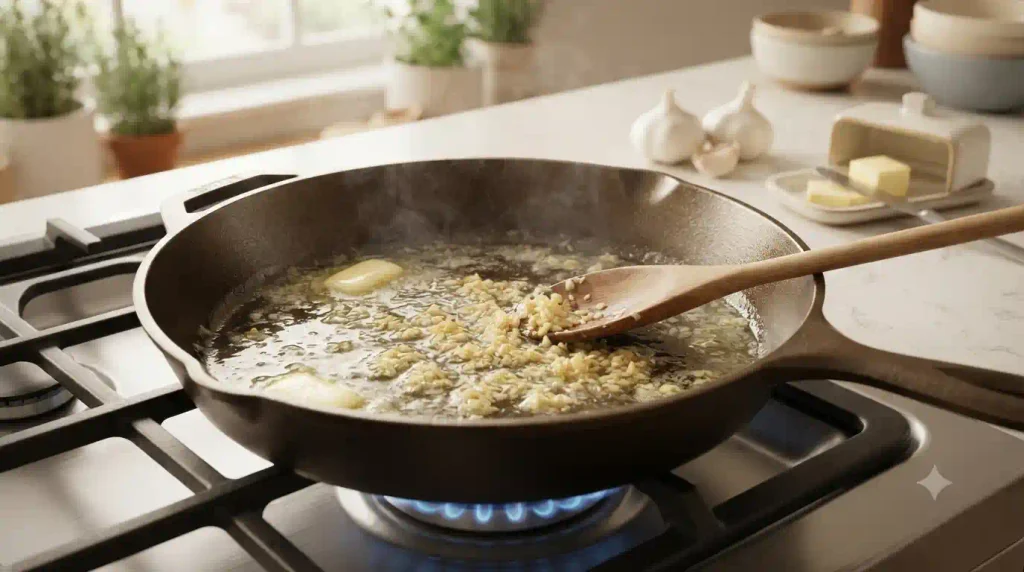
Place a large skillet over medium heat.
Add 2 tablespoons butter and allow it to melt completely. If using the optional olive oil, add it now.
Add the minced garlic and cook for approximately 20–30 seconds, stirring constantly.
As soon as you can smell the garlic, you’re ready for the next step. Don’t let it turn dark brown—burnt garlic can make the entire dish bitter.
Step 4: Add and Season the Crab
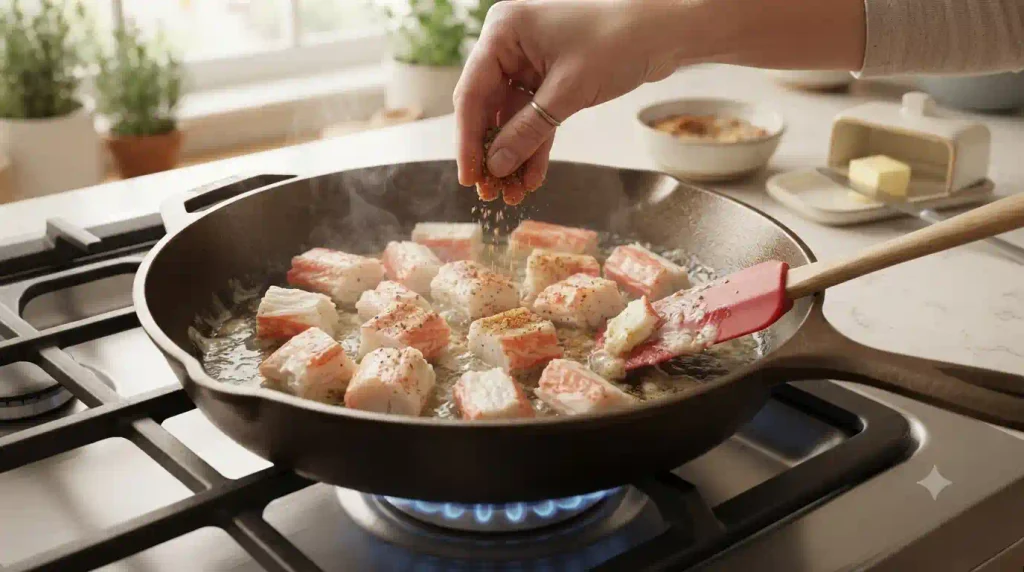
Add the imitation crab to the skillet and spread the pieces into an even layer.
Sprinkle the prepared seasoning mixture evenly over the top.
Gently toss or turn the crab so the butter and seasonings coat the pieces without breaking them apart too much.
Cook for approximately 2 minutes.
Step 5: Add Lemon and Finish Cooking
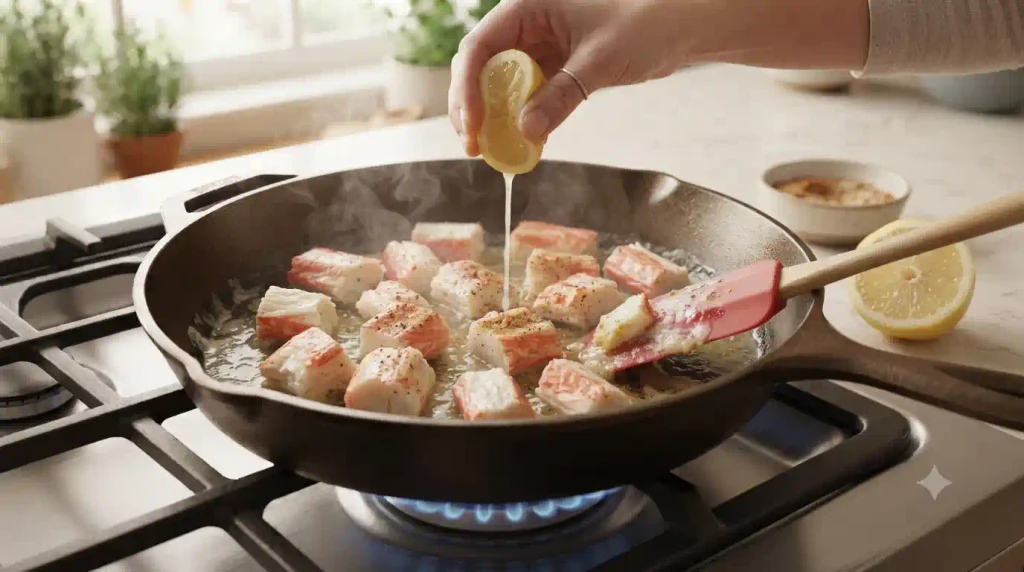
Drizzle 1 tablespoon fresh lemon juice over the crab.
Gently toss again and continue cooking for another 2–3 minutes, just until everything is heated through and a few edges begin to develop a little color.
Avoid aggressive stirring. Imitation crab can fall apart quickly once it’s warm.
It’s also already cooked during processing, so you’re essentially reheating and flavoring it rather than cooking raw seafood.
Step 6: Finish and Serve
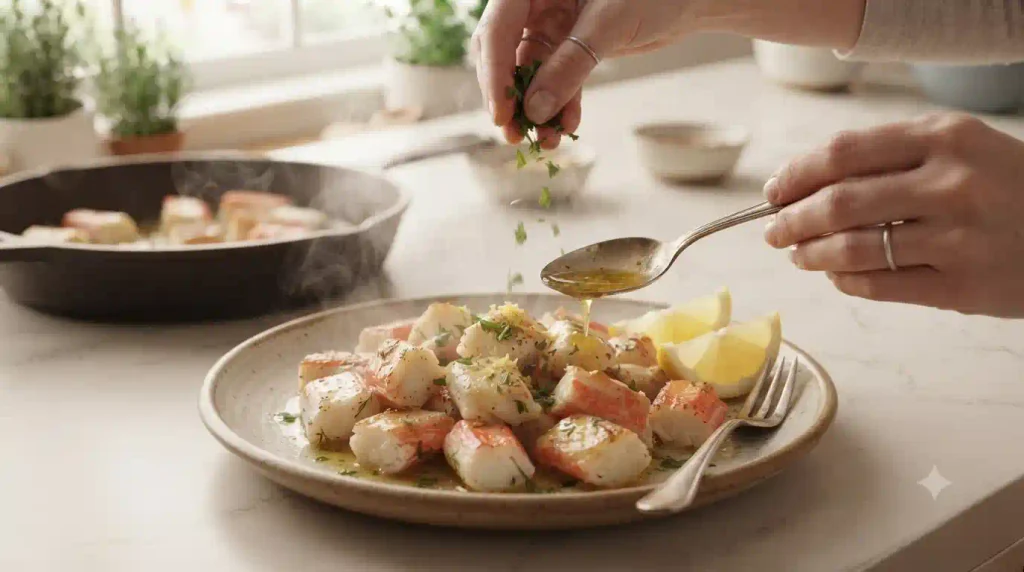
Turn off the heat.
Sprinkle the crab with 1 tablespoon chopped parsley and the optional 1 teaspoon lemon zest.
Taste before adding any extra salt.
Serve immediately with fresh lemon wedges.
I love spooning the buttery juices left in the skillet over the crab right before serving—that little bit at the bottom of the pan has a ridiculous amount of flavor.
Health Benefits
While imitation crab doesn’t have exactly the same nutritional profile as fresh crab, it can still fit into a balanced diet.
Provides protein: Surimi is made from fish, so imitation crab provides protein that can help support muscle maintenance and make meals more satisfying.
Relatively low in fat: Imitation crab itself is generally low in fat. Most of the fat in this particular recipe comes from the butter.
Portion-friendly: Pairing the crab with vegetables, salad, brown rice, or another whole grain can turn it into a more balanced meal without requiring a huge serving.
Garlic and herbs add flavor without much sodium: Fresh garlic, parsley, lemon juice, and lemon zest help create bold flavor without relying entirely on salt.
There is one important nutritional consideration: imitation crab can be relatively high in sodium and carbohydrates compared with real crab, depending on the brand.
Check the nutrition label if you’re monitoring sodium intake.
People with food allergies should also read the ingredient label carefully. Imitation crab can contain fish, wheat, egg, soy, or other allergens, and some products may contain crab or other shellfish-derived flavorings.
Nutrition Information (Per Serving)
Nutrition will vary depending on the brand of imitation crab and butter used.
| Nutrient | Approximate Amount |
|---|---|
| Calories | 190 kcal |
| Protein | 8 g |
| Fat | 7 g |
| Carbohydrates | 22 g |
Note: These values are estimates. For medically necessary dietary tracking, calculate nutrition using the exact product labels and quantities you use.
Pro Tips & Variations
Don’t overcook it. This is the biggest mistake I see with imitation crab. It’s already cooked, so prolonged skillet time can make the texture rubbery or dry.
Pat the crab dry. Excess moisture makes it steam instead of picking up those lightly golden edges.
Use fresh lemon. Bottled lemon juice works in a pinch, but fresh lemon gives this simple recipe a noticeably cleaner flavor.
Keep the heat moderate. Butter and minced garlic can burn quickly over high heat.
Make it spicy: Add ⅛–¼ teaspoon cayenne pepper or a few drops of your favorite hot sauce.
Make it Cajun-style: Replace the Old Bay with Cajun seasoning. Start with a small amount because many blends are salty.
Make garlic butter crab pasta: Toss the finished crab with hot linguine or spaghetti and a splash of reserved pasta water.
Make crab rice bowls: Serve it over steamed jasmine rice with cucumber, avocado, scallions, and a light drizzle of spicy mayo.
Make it creamy: Reduce the butter slightly and stir in 2 tablespoons cream cheese after lowering the heat.
Add vegetables: Sauté sliced bell pepper, zucchini, asparagus, or spinach before adding the crab.
For a more natural crab-like presentation: Buy chunk or leg-style imitation crab rather than finely shredded products. Keeping the pieces large makes a noticeable difference in both appearance and texture.
How Much Does It Cost to Make?
Imitation crab is one reason this recipe works so well for budget-conscious seafood lovers.
Prices vary significantly by brand, store, season, and location, but here’s a reasonable U.S. grocery-store estimate:
| Ingredient | Estimated Cost Used |
|---|---|
| 1 lb imitation crab | $4.00–$7.00 |
| Butter | $0.40–$0.60 |
| Garlic | $0.15–$0.30 |
| Lemon | $0.50–$0.90 |
| Seafood seasoning & paprika | $0.15–$0.30 |
| Parsley | $0.30–$0.60 |
| Estimated Total | $5.50–$9.70 |
That works out to roughly $1.40–$2.45 per serving for four servings, before adding side dishes.
If you already have butter, garlic, dried spices, and parsley at home, your actual shopping cost may be even lower.
Frequently Asked Questions
Can you cook imitation crab in a frying pan?
Yes. Pan-heating is one of my favorite ways to prepare imitation crab because it’s fast and gives you much more flavor than simply eating it cold.
Use medium heat with a little butter or oil and heat the crab only until warmed through. Because commercially produced imitation crab is generally precooked, it doesn’t require the cooking time you’d give raw seafood.
How do you make imitation crab taste more like real crab?
Focus on seasonings traditionally paired with real crab rather than trying to hide the imitation crab itself.
Butter, fresh lemon, garlic, seafood seasoning, black pepper, and fresh herbs create a classic seafood flavor profile. Keeping the crab in larger chunks also improves the eating experience.
Most importantly, don’t overcook it. A soft, juicy texture feels much closer to crab than dry, rubbery pieces.
Can you eat imitation crab without cooking it?
Most packaged imitation crab sold ready-to-eat is already fully cooked and can generally be eaten straight from the package.
Always check the manufacturer’s package instructions, though, because products can differ.
Once opened, keep imitation crab refrigerated and follow the package’s storage and use-by instructions. Don’t leave seafood-based foods sitting at room temperature for extended periods.
What should I serve with imitation crab?
This recipe is incredibly flexible.
For a quick dinner, try it with:
- Steamed white or brown rice
- Garlic noodles
- Pasta
- Roasted potatoes
- Steamed broccoli
- Asparagus
- Green salad
- Coleslaw
- Crusty bread
- Corn on the cob
For something lighter, I like serving the warm crab over a crisp salad with cucumber, avocado, tomatoes, and lemon.
Final Thoughts
You don’t need expensive fresh crab or a complicated seafood recipe to put something satisfying on the table.
This 10-minute imitation crab recipe works because it keeps things simple: buttery garlic, bright lemon, warm seafood seasoning, and just enough skillet time to bring everything together.
Keep the crab pieces chunky, resist the urge to overcook them, and taste before reaching for the salt shaker. Serve it over rice for an easy weeknight dinner, toss it into pasta, or eat it straight from the skillet with a squeeze of lemon.
Sometimes the recipes that save dinner aren’t the complicated ones—they’re the ones you can make in 10 minutes with ingredients already waiting in the fridge.