

There’s something deeply satisfying about pulling a beautifully browned pork roast from the oven, especially when the kitchen smells of garlic, rosemary, and thyme. A crown roast looks like the kind of centerpiece you would order at a restaurant, but it is surprisingly manageable at home. And when that craving for juicy, savory pork hits, this recipe makes the extra effort completely worthwhile.
The real challenge is keeping such an impressive cut tender instead of accidentally drying it out. I’ve kept the method practical: a simple herb rub, sensible oven temperatures, and a meat thermometer do most of the work. You get crisp, flavorful edges and succulent pork inside without complicated chef tricks.
Prep & Cook Time
This recipe is designed around a 7–8 pound pork crown roast, which is a great size for a family holiday meal or dinner party.
| Details | Time / Amount |
|---|---|
| Prep Time | 25 minutes |
| Cook Time | 2–2½ hours |
| Resting Time | 20 minutes |
| Total Time | About 3 hours 15 minutes |
| Servings | 8–10 |
| Oven Temperature | 450°F initially, then 325°F |
| Target Internal Temperature | 145°F after resting |
Important: Cooking time is only a guideline. Crown roasts vary in size and shape, so internal temperature—not the clock—is the safest and most reliable way to determine doneness.
What Equipment Do You Need?
You don’t need restaurant equipment to make a gorgeous crown roast. A few everyday kitchen tools will do the job.
- Large roasting pan
- Roasting rack
- Sharp chef’s knife
- Small mixing bowl
- Measuring spoons
- Pastry brush or clean hands for applying the rub
- Instant-read or probe meat thermometer
- Aluminum foil
- Cutting board
- Carving knife
- Kitchen twine, if the roast isn’t already tied by your butcher
A digital meat thermometer is the most important tool here. Large pork roasts can look perfectly browned outside while still needing additional time in the center.
Ingredients
For the Pork Crown Roast
- 1 pork crown roast, 7–8 pounds (3.2–3.6 kg)
- 3 tablespoons olive oil
- 5 garlic cloves, finely minced
- 1½ tablespoons fresh rosemary, finely chopped
- 1 tablespoon fresh thyme leaves
- 2 teaspoons kosher salt
- 1½ teaspoons freshly ground black pepper
- 1 teaspoon onion powder
- 1 teaspoon Dijon mustard
- 1 teaspoon smoked paprika
- 1 teaspoon lemon zest
For the Roasting Pan
- 1 large yellow onion, roughly chopped
- 2 carrots, roughly chopped
- 2 celery stalks, roughly chopped
- 1 cup low-sodium chicken stock
Optional for Serving
- Fresh rosemary sprigs
- Roasted potatoes
- Apples or pears
- Homemade gravy
- Roasted seasonal vegetables
Why Each Ingredient Matters
A crown roast doesn’t need a long list of fancy ingredients. The trick is choosing seasonings that complement the pork instead of covering its natural flavor.
| Ingredient | Why It Matters |
|---|---|
| Pork crown roast | The rib bones create the dramatic crown shape while the loin meat provides tender, lean slices. |
| Olive oil | Helps seasonings stick and encourages even browning on the exterior. |
| Garlic | Adds deep savory flavor that becomes sweeter and mellower as it roasts. |
| Rosemary | Its piney aroma pairs especially well with rich roasted pork. |
| Thyme | Adds earthy flavor without overpowering the meat. |
| Kosher salt | Seasons the pork and helps create a flavorful exterior. |
| Black pepper | Adds gentle heat and balances the richness of the pork. |
| Dijon mustard | Adds acidity and subtle sharpness while helping the herb mixture cling to the roast. |
| Smoked paprika | Adds warm color and a mild smoky note. |
| Lemon zest | Brightens the herb mixture and keeps the roast from tasting overly heavy. |
| Onion, carrot & celery | Form an aromatic base underneath the pork and flavor the pan juices. |
| Chicken stock | Adds moisture to the roasting pan and creates flavorful drippings for gravy. |
The combination of fat, salt, herbs, acidity, and aromatics is deliberately balanced. You want the pork itself to remain the star.
Step-by-Step Instructions
Step 1: Prepare the Crown Roast
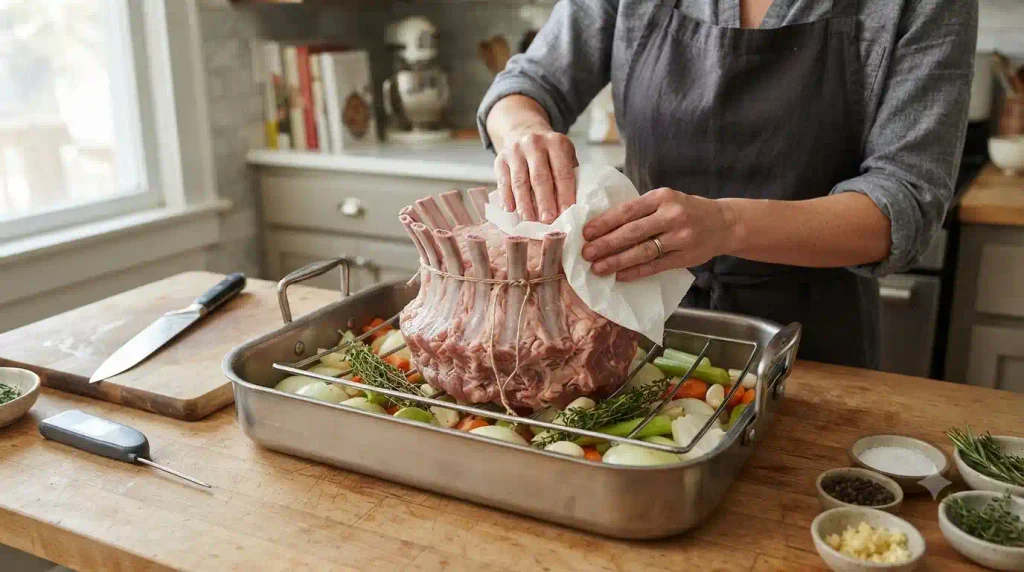
Remove the pork crown roast from the refrigerator about 30–45 minutes before roasting. This takes some of the chill off the exterior and helps it cook more evenly.
Preheat your oven to 450°F (230°C).
Pat the pork thoroughly dry with paper towels. Don’t skip this little step. A wet surface steams instead of browning, while a dry surface develops that gorgeous roasted crust.
If your butcher has already formed and tied the crown, leave the twine in place.
Place the chopped onion, carrots, and celery in the bottom of a large roasting pan. Set a roasting rack over the vegetables and position the crown roast on top.
Step 2: Make and Apply the Herb Rub

In a small bowl, combine:
- Olive oil
- Minced garlic
- Rosemary
- Thyme
- Kosher salt
- Black pepper
- Onion powder
- Dijon mustard
- Smoked paprika
- Lemon zest
Mix until you have a thick, fragrant paste.
Rub the mixture generously over the outside and inside surfaces of the pork, working it into the spaces between the ribs where practical.
Don’t worry if a few herbs fall into the roasting pan. They will only make the pan juices taste better.
For the best presentation, loosely cover the exposed rib tips with small pieces of aluminum foil. This prevents them from becoming excessively dark during the long roasting time.
Step 3: Start With High Heat
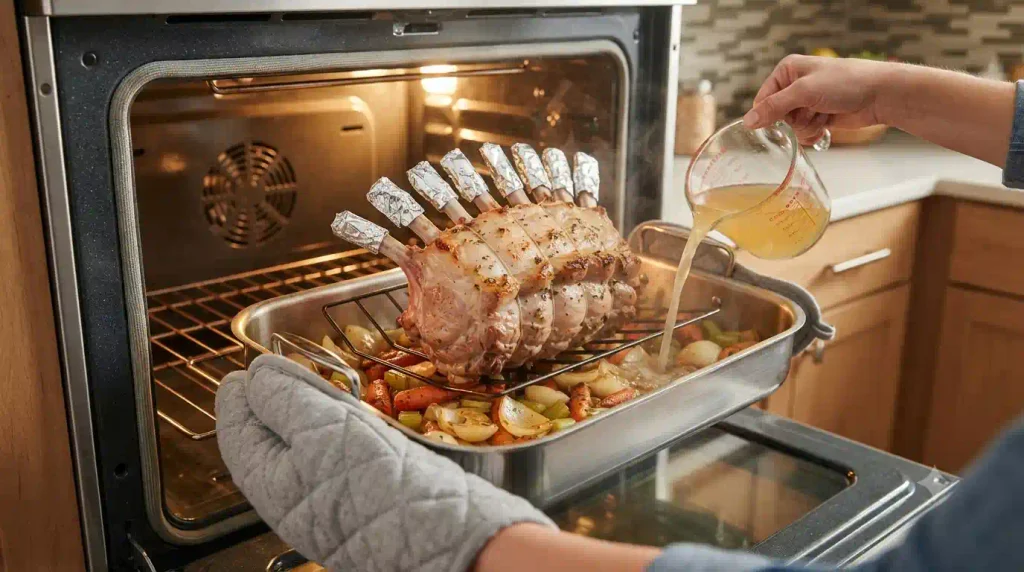
Place the crown roast in the preheated 450°F oven.
Roast for 15 minutes.
This initial blast of heat encourages browning and starts developing a flavorful exterior.
After 15 minutes, reduce the oven temperature to 325°F (165°C) without removing the roast.
Carefully pour 1 cup low-sodium chicken stock into the bottom of the roasting pan. Pour around the roast rather than directly over it so you don’t wash away that beautiful herb coating.
Remember that the pan and oven are extremely hot at this stage. Use dry oven mitts and keep your face away from the burst of steam when opening the oven.
Step 4: Roast Until Juicy and Tender
Continue roasting at 325°F until the pork is nearly cooked through.
A 7–8 pound crown roast will commonly need another 1¾–2¼ hours, but don’t depend entirely on cooking time.
Start checking the temperature earlier than you think you need to.
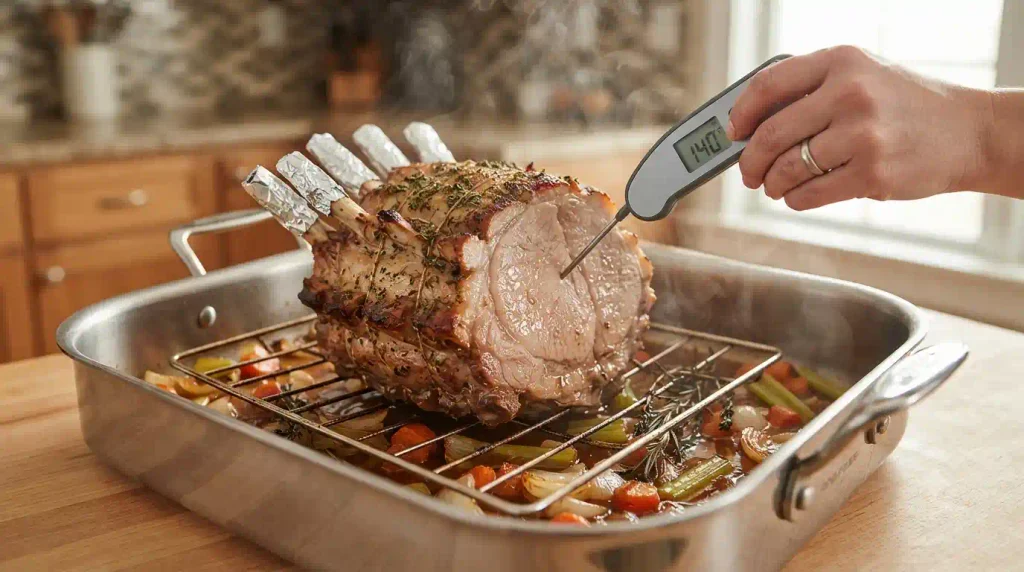
Insert an instant-read thermometer into the thickest meaty portion of the roast, keeping the probe away from the bone.
For juicy pork, begin checking when the center reaches around 135–140°F (57–60°C).
Remove the roast when it is around 140–142°F (60–61°C) if you expect several degrees of carryover cooking during the rest. The pork should reach the USDA-recommended minimum safe temperature of 145°F (63°C) followed by at least a 3-minute rest.
If your roast hasn’t reached a safe temperature, return it to the oven and check again shortly.
Step 5: Rest Before Carving
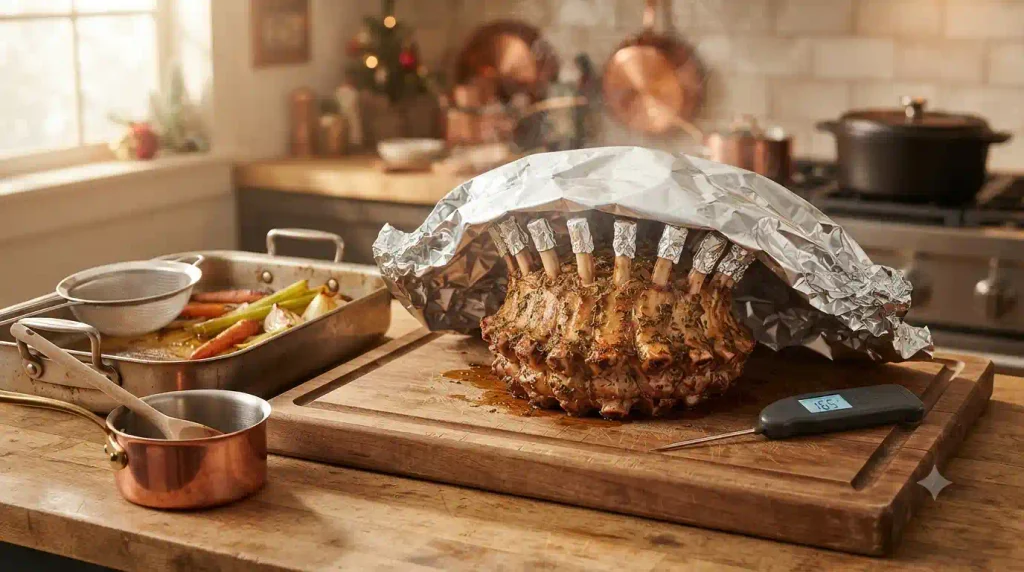
Transfer the finished crown roast to a large cutting board or serving platter.
Loosely tent it with aluminum foil and allow it to rest for at least 15–20 minutes.
This isn’t wasted time.
When meat cooks, its juices are driven toward the center. Resting gives those juices time to redistribute. Carving immediately can leave you with a cutting board covered in juice that should have stayed inside your pork.
While the roast rests, you can strain the flavorful liquid from the roasting pan and use it as the base for gravy.
Check that the pork has reached 145°F (63°C) before serving.
Step 6: Carve and Serve
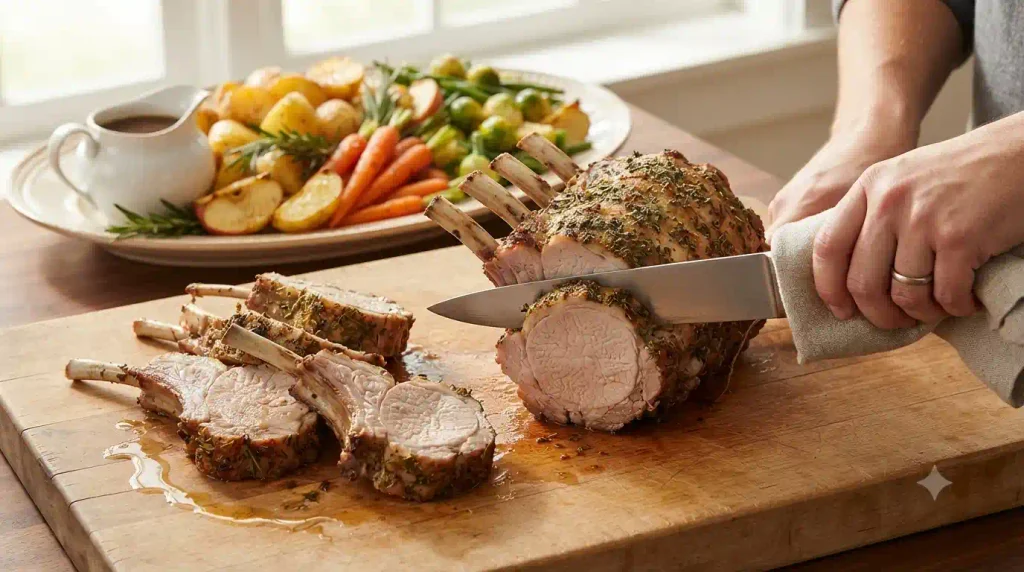
Remove the aluminum foil from the rib tips and carefully cut away the kitchen twine.
For neat portions, locate the spaces between the rib bones.
Using a sharp carving knife, slice downward between each rib to create individual pork chops.
Arrange them on a warm platter and spoon a little pan juice or gravy around the meat rather than drowning the crispy exterior.
Serve immediately with roasted potatoes, vegetables, apples, stuffing, or your favorite holiday sides.
And don’t stress if every chop isn’t identical. Crown roasts aren’t perfectly symmetrical. A slightly rustic platter piled with juicy pork and roasted vegetables looks wonderfully inviting on a real dinner table.
Health Benefits
Pork crown roast is certainly an indulgent centerpiece, but it also provides several valuable nutrients.
High in Protein
Pork is an excellent source of complete protein. Protein supports muscle maintenance, tissue repair, and normal body functions.
Provides B Vitamins
Pork naturally contains several B vitamins, particularly thiamin (vitamin B1), as well as B6 and B12. These nutrients play important roles in energy metabolism and nervous-system function.
Source of Important Minerals
Pork provides minerals such as:
- Zinc
- Selenium
- Phosphorus
- Iron
Herbs Add Flavor Without Heavy Sauces
Rosemary, thyme, garlic, and lemon zest provide plenty of aroma and flavor without requiring sugary glazes or large amounts of butter.
Easy to Pair With Vegetables
A crown roast works particularly well with roasted carrots, Brussels sprouts, green beans, squash, or a fresh salad. Loading the rest of the plate with vegetables can make the overall meal more balanced.
Nutrition note: Crown roast can contain a significant amount of fat depending on the cut and how much exterior fat is eaten. Trimming excess visible fat and watching portion size can reduce the overall calorie and saturated-fat content.
Nutrition Information (Per Serving)
Approximate nutrition based on the pork and herb seasoning, assuming 10 servings. Exact values will vary according to roast size, trimming, ingredients, and the amount of pan juices consumed.
| Nutrient | Approximate Amount |
|---|---|
| Calories | 490 kcal |
| Protein | 51 g |
| Fat | 30 g |
| Carbohydrates | 3 g |
These numbers should be treated as estimates rather than medical dietary values.
Pro Tips & Variations
Use a Meat Thermometer
If you remember only one thing from this recipe, make it this:
Cook pork according to internal temperature, not just minutes per pound.
Ovens run differently. Roast shapes differ. Even two crown roasts of the same weight may finish at different times.
Ask Your Butcher to Prepare the Crown
Creating the actual crown shape at home can be awkward.
Ask your butcher to:
- French the rib bones
- Form the crown
- Tie it securely
Then all you need to do is season and roast it.
Don’t Skip the Rest
Give the roast 15–20 minutes before carving. Cutting immediately can cause valuable juices to escape.
Protect the Bones
Those exposed rib bones can darken faster than the pork. Small foil caps help keep them attractive.
Try an Apple-Herb Version
Replace the lemon zest with finely grated apple and add ½ teaspoon ground sage to the seasoning mixture.
Pork and apple are classics for a reason.
Make It More Garlicky
Increase the garlic from five cloves to 7–8 cloves if your family loves roasted garlic.
Add a Touch of Sweetness
Mix 1 tablespoon maple syrup or honey into the Dijon-herb rub.
Keep the amount modest. Sugar browns quickly, particularly during the initial high-temperature roasting stage.
Try Different Herbs
Fresh sage, parsley, or marjoram can replace some of the rosemary and thyme.
Prepare the Seasoning Ahead
Mix the herb rub the night before and refrigerate it in a covered container.
You can also season the pork ahead of time and refrigerate it uncovered overnight. This gives the salt more time to season the meat and helps dry the exterior for better browning.
Keep raw pork refrigerated at 40°F (4°C) or below, and thoroughly wash your hands, knife, board, and any surfaces that contact raw meat.
How Much Does It Cost to Make?
Crown roast is usually a special-occasion cut, so it costs more than an everyday pork dinner. Prices vary significantly depending on region, butcher, season, and whether the pork is conventional, heritage, or organic.
Here’s a reasonable US-style estimate:
| Ingredient | Estimated Cost |
|---|---|
| 7–8 lb pork crown roast | $40–$65 |
| Fresh herbs | $3–$5 |
| Garlic | $0.75 |
| Olive oil & seasonings | $1.50 |
| Dijon mustard | $0.50 |
| Lemon | $0.75 |
| Onion, carrots & celery | $3–$4 |
| Chicken stock | $1–$2 |
| Estimated Total | $50–$80 |
| Approx. Cost Per Serving | $5–$8 |
For UK cooks, butcher and supermarket pricing will naturally differ, but buying the roast in advance rather than immediately before Christmas or another major holiday can sometimes provide better value.
Remember that a crown roast is meant to be a centerpiece. Compared with serving individual restaurant-style pork chops to a large group, cooking one impressive roast at home can still be surprisingly economical.
Frequently Asked Questions
What temperature should a pork crown roast be cooked to?
Cook whole-muscle pork to a safe internal temperature of 145°F (63°C) and allow it to rest for at least 3 minutes before eating.
For a large crown roast, carryover cooking can raise the temperature several degrees while the meat rests. That’s why checking the temperature before the pork becomes overcooked is important.
Always insert your thermometer into the thickest part of the meat and avoid touching the bone.
How long does it take to cook a pork crown roast?
For a 7–8 pound crown roast, expect roughly 2–2½ hours of oven cooking with this method.
However, roast weight, shape, starting temperature, bone structure, and individual oven performance all affect cooking time.
Internal temperature is more reliable than cooking time.
Start checking early so you’re not forced to rescue an overcooked roast.
How do you keep a crown roast of pork from drying out?
Three things make the biggest difference:
- Don’t overcook it. Use a digital meat thermometer.
- Rest it before carving. Give it 15–20 minutes.
- Avoid repeatedly opening the oven. Every peek releases heat and can increase cooking time.
Pork loin is naturally lean, so taking it far beyond its ideal temperature can quickly turn succulent slices into dry ones.
Can I prepare pork crown roast the night before?
Yes.
You can prepare the herb rub and season the roast the night before. Place the seasoned pork on a tray or roasting rack and refrigerate it.
An uncovered overnight rest in the refrigerator can actually help dry the surface, encouraging better browning the next day.
Keep the raw pork properly refrigerated and away from ready-to-eat foods to prevent cross-contamination.
Before cooking, remove it from the refrigerator for around 30–45 minutes while you prepare your oven and other ingredients. Don’t leave raw meat sitting at room temperature for extended periods.
Final Thoughts
A pork crown roast has serious dinner-table drama, but the cooking method doesn’t need to be dramatic at all. Good seasoning, controlled heat, a reliable thermometer, and enough resting time are the real secrets.
Don’t chase an exact cooking time and don’t panic if your roast needs another 10 or 15 minutes. Let the internal temperature guide you. Once you’ve carved through that crisp herb-coated exterior and seen the juicy pork inside, you’ll understand why this roast earns its place at holiday dinners and special celebrations.
Serve it proudly, bring the platter to the table, and enjoy the fact that something this impressive came straight out of your own kitchen.