

If you love smoky sausage, bold Cajun-style spices, and one-pot dinners that fill the kitchen with an incredible savoury aroma, this jambalaya is made for you. It’s the kind of meal I reach for when I’m craving something hearty but don’t want a sink full of dishes afterward. Every spoonful brings juicy sausage, tender rice, vegetables, and plenty of warming spice.
The best part is how approachable it is for a weeknight cook. Everything builds in one pot, so the rice absorbs the sausage drippings, stock, tomatoes, and seasonings as it cooks. The result is deeply flavoured without complicated techniques—just a little chopping, stirring, and patience while the pot does the work.
Prep & Cook Time
| Details | Time / Amount |
|---|---|
| Prep Time | 15 minutes |
| Cook Time | 35 minutes |
| Total Time | 50 minutes |
| Servings | 6 |
This recipe makes 6 generous servings, making it a practical choice for family dinner or meal prep.
What Equipment Do You Need?
You don’t need specialised equipment. A heavy-bottomed pot helps distribute heat evenly and reduces the chance of scorching the rice.
- Large Dutch oven or heavy-bottomed pot with a lid
- Sharp chef’s knife
- Cutting board
- Wooden spoon or silicone spatula
- Measuring cups and spoons
- Fine-mesh strainer for rinsing rice
- Ladle or large serving spoon
Ingredients
- 1 tablespoon olive oil
- 14 oz (400 g) smoked sausage or andouille sausage, sliced into ¼-inch rounds
- 1 medium yellow onion, diced
- 1 green bell pepper, diced
- 2 celery stalks, diced
- 3 garlic cloves, minced
- 1½ cups (about 280 g) long-grain white rice, rinsed and drained
- 1 can (14.5 oz/411 g) diced tomatoes, with juices
- 3 cups (720 ml) low-sodium chicken stock
- 1 tablespoon tomato paste
- 2 teaspoons Cajun seasoning
- 1 teaspoon smoked paprika
- ½ teaspoon dried thyme
- ½ teaspoon dried oregano
- ¼ teaspoon cayenne pepper, optional
- 1 bay leaf
- ½ teaspoon freshly ground black pepper
- Salt, as needed
- 2 green onions, thinly sliced
- 2 tablespoons chopped fresh parsley
- Lemon wedges, optional, for serving
Chef’s note: Cajun seasoning and smoked sausage can both contain plenty of salt. Taste the jambalaya toward the end before adding extra salt.
Why Each Ingredient Matters
| Ingredient | Why It Matters |
|---|---|
| Smoked sausage | Supplies fat, savoury flavour, smoke, and those browned edges sausage lovers crave. |
| Onion, celery & bell pepper | This aromatic combination creates the flavour foundation of the dish. |
| Garlic | Adds another layer of savoury aroma without overpowering the sausage. |
| Long-grain rice | Absorbs the seasoned cooking liquid while staying relatively separate and fluffy. |
| Chicken stock | Gives the rice substantially more flavour than water alone. |
| Diced tomatoes | Bring acidity, moisture, colour, and gentle sweetness. |
| Tomato paste | Concentrates the tomato flavour and adds richness. |
| Cajun seasoning | Provides the characteristic mixture of herbs, pepper, garlic, and spices. |
| Smoked paprika | Reinforces the smoky character of the sausage. |
| Thyme & oregano | Add earthy herbal notes that balance the richer ingredients. |
| Cayenne | Provides controllable heat without changing the texture. |
| Green onions & parsley | Freshen the finished jambalaya and add colour. |
| Lemon | A small squeeze of acidity can brighten a particularly rich bowl. |
Browning the sausage is especially important. As its surface hits the hot pot, browning reactions create flavours you simply won’t get by dropping sausage straight into liquid. Those tasty browned bits left on the bottom also become part of the sauce.
Step-by-Step Instructions
Step 1: Brown the Sausage
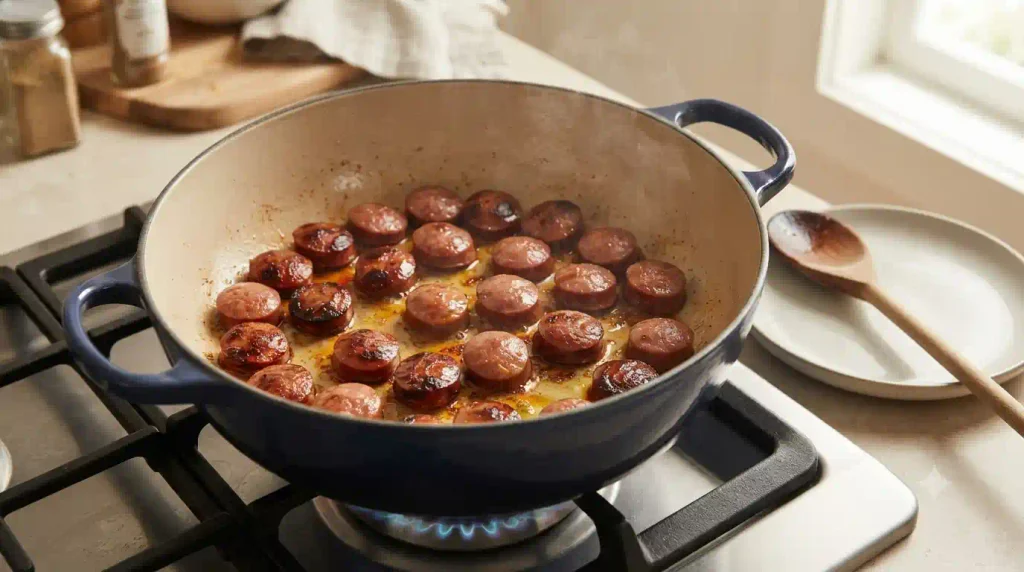
Heat 1 tablespoon olive oil in a large Dutch oven over medium-high heat.
Add the sliced sausage in a relatively even layer. Cook for 4–5 minutes, turning occasionally, until the edges develop a deep golden-brown colour.
Don’t constantly stir it. Giving the sausage a little uninterrupted contact with the hot pan creates better browning.
Transfer the sausage to a clean plate using a slotted spoon. Leave the flavourful rendered fat in the pot.
Step 2: Build the Vegetable Base
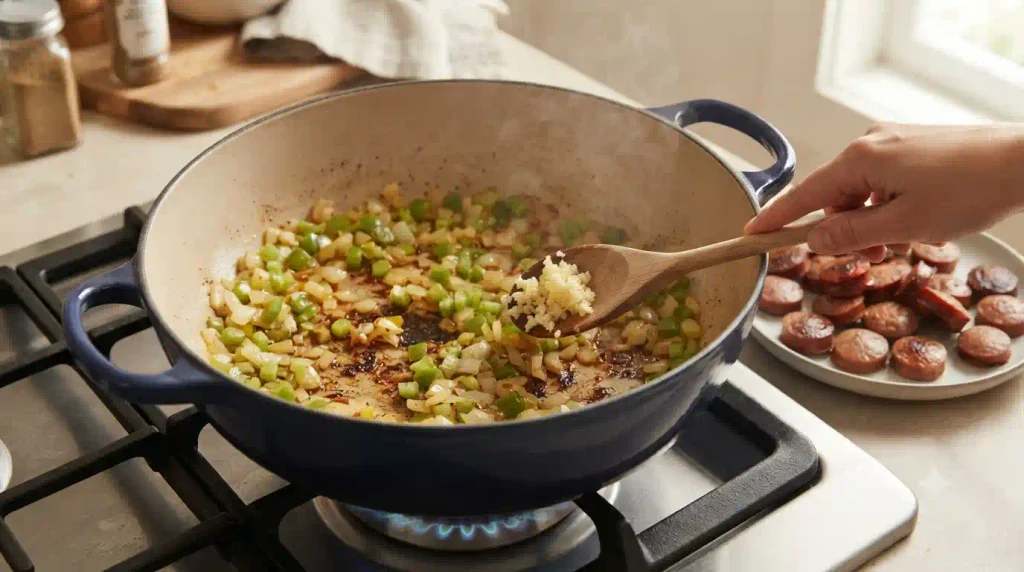
Reduce the heat to medium.
Add the diced onion, green bell pepper, and celery to the same pot. Cook for 5–6 minutes, stirring occasionally, until the onion becomes translucent and the vegetables begin to soften.
Add the minced garlic and cook for another 30–60 seconds.
You’ll know it’s ready when the garlic smells fragrant. Don’t let it turn dark brown because burnt garlic can make the whole pot taste bitter.
Step 3: Toast the Rice and Seasonings
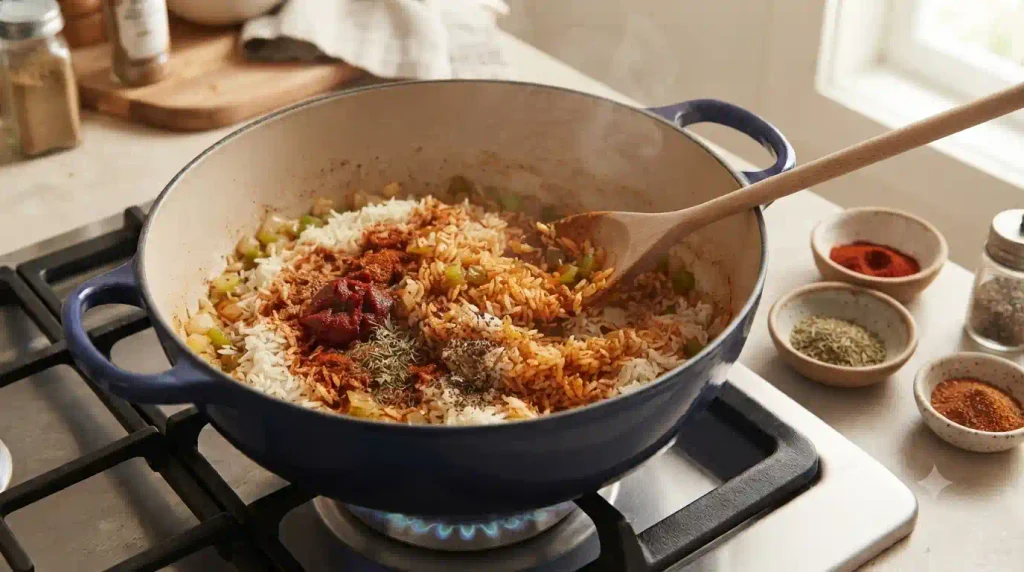
Stir in the tomato paste, Cajun seasoning, smoked paprika, thyme, oregano, cayenne, and black pepper.
Cook for about 30 seconds, stirring continuously.
Add the rinsed, well-drained rice and stir for another 1–2 minutes, coating the grains in the seasoned vegetable mixture.
This quick toasting step helps develop a slightly nuttier flavour and ensures the seasoning gets distributed throughout the pot.
Step 4: Add the Liquid and Sausage
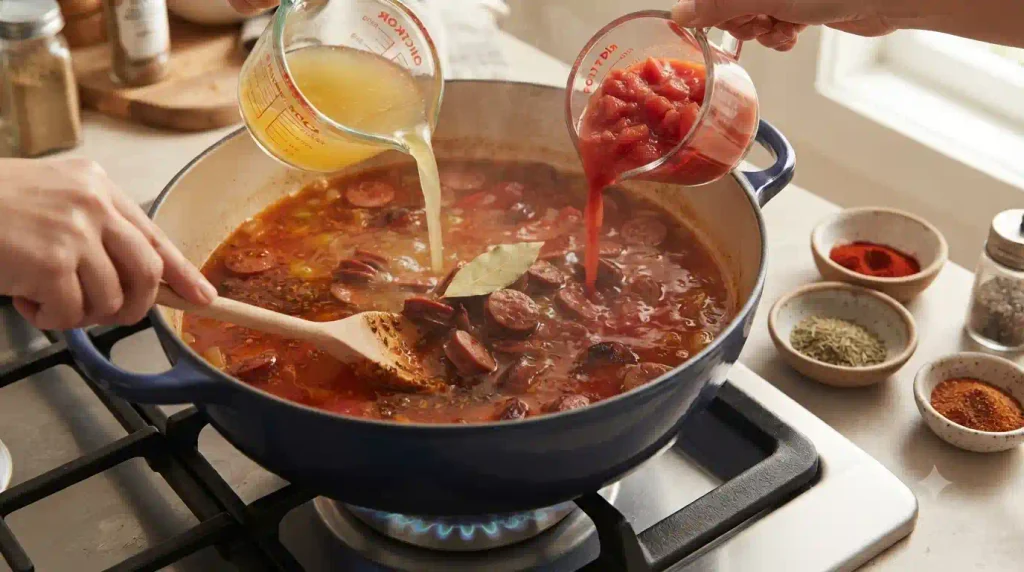
Pour in the diced tomatoes with their juices and 3 cups chicken stock.
Use your spoon to scrape the bottom of the pot. Don’t leave those browned sausage bits behind—they’re packed with flavour.
Return the browned sausage to the pot and add the bay leaf.
Stir everything once and bring the mixture to a gentle boil.
Step 5: Simmer Until the Rice Is Tender
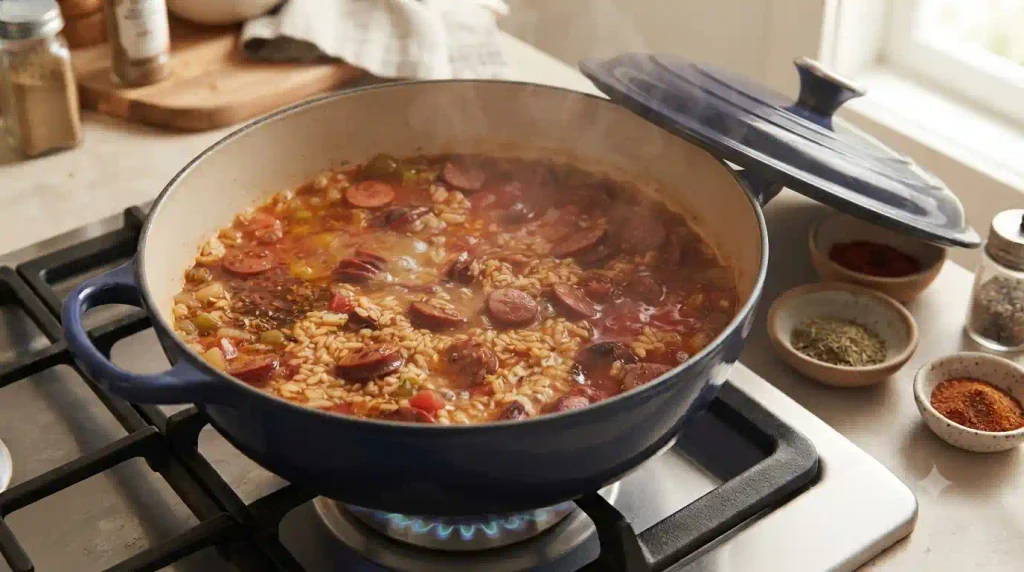
Once boiling, reduce the heat to low and cover the pot tightly.
Cook for approximately 20–22 minutes, or until the rice is tender and most of the liquid has been absorbed.
Try not to keep lifting the lid or stirring the rice. Every peek releases steam, while frequent stirring can encourage the rice to become sticky.
If the rice is still slightly firm when the liquid is nearly gone, add a few tablespoons of hot stock or water, cover, and cook for another couple of minutes.
Step 6: Rest, Fluff, and Finish
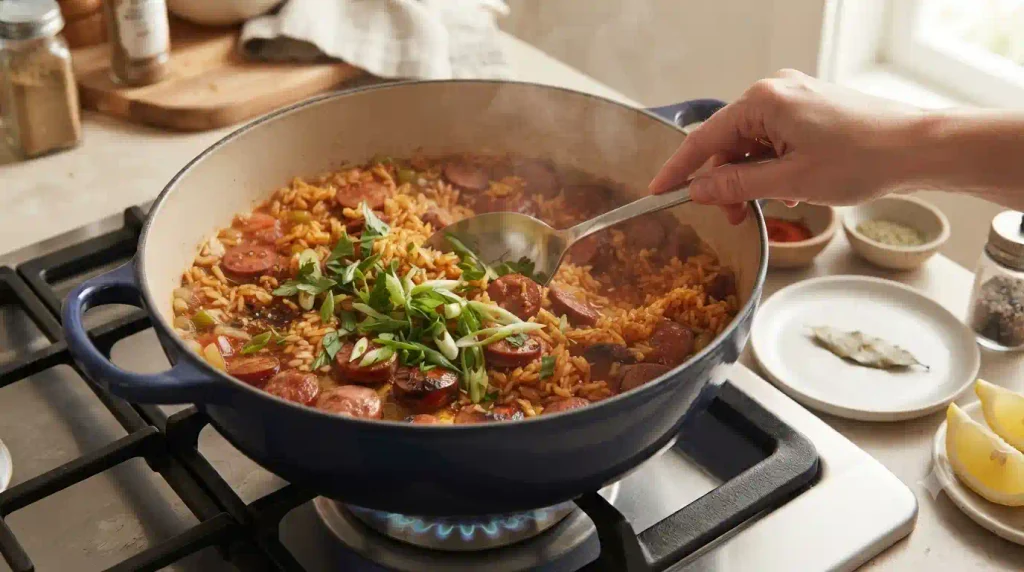
Remove the pot from the heat and discard the bay leaf.
Keep the jambalaya covered for 5 minutes. That short rest lets trapped steam finish the rice and helps the texture settle.
Gently fluff everything with a fork or spoon. Fold in most of the green onions and parsley, reserving some for the top.
Taste before adding salt.
Serve hot with the remaining herbs and, if you like, a squeeze of fresh lemon.
Food safety note: If you’re using a sausage that is sold raw rather than fully cooked, cook it thoroughly according to its package instructions and safe internal-temperature guidance before serving.
Health Benefits
Jambalaya is comfort food, but it can still contribute useful nutrients when served in sensible portions.
Protein: Sausage contributes protein, which supports muscle maintenance and helps make the meal satisfying.
Vegetables: Onion, celery, bell pepper, tomatoes, garlic, and herbs provide a variety of micronutrients and plant compounds.
Carbohydrates: Rice supplies carbohydrates, your body’s primary readily available energy source.
Tomatoes: Tomatoes provide vitamin C, potassium, and carotenoids such as lycopene.
Bell pepper: Green bell pepper contributes vitamin C while adding bulk without many calories.
One nutritional consideration is sodium and saturated fat. Sausage, stock, and Cajun seasoning can all contribute significant sodium. Choosing lower-sodium stock and comparing sausage labels are easy ways to keep it more moderate.
Nutrition Information (Per Serving)
The following figures are estimates because sausage brands, stock, and serving sizes vary considerably.
| Nutrient | Approximate Amount |
|---|---|
| Calories | 470 kcal |
| Protein | 18 g |
| Fat | 21 g |
| Carbohydrates | 51 g |
For precise nutrition information, calculate the recipe using the exact sausage, stock, rice, and other products you use.
Pro Tips & Variations
- Brown your sausage properly. Colour equals flavour. Avoid overcrowding the pot; brown it in two batches if necessary.
- Use andouille for extra character. Its smoky, spicy flavour works beautifully in jambalaya. Kielbasa or another good-quality smoked sausage gives you a milder version.
- Control the heat yourself. Cajun seasoning varies dramatically between brands. Start conservatively with cayenne and increase it after tasting.
- Rinse the rice. A quick rinse removes loose surface starch and can help prevent an overly sticky result.
- Don’t stir constantly after covering. Jambalaya isn’t risotto. Let the rice gently steam and absorb the seasoned liquid.
- Add chicken. Brown bite-size pieces of boneless chicken before cooking the vegetables for an even heartier jambalaya.
- Add shrimp near the end. Stir peeled raw shrimp into the nearly cooked jambalaya and cook only until opaque and safely cooked through. Overcooking makes shrimp rubbery.
- Want more vegetables? Add diced red pepper, okra, or zucchini. Be mindful that vegetables with high water content can alter the rice-to-liquid balance.
- Make it less spicy. Skip the cayenne and choose mild smoked sausage.
- Want serious heat? Use spicy andouille and add extra cayenne or hot sauce at the table.
One little home-kitchen rule helps here: don’t panic over the rice too early. It can look surprisingly wet halfway through cooking, then absorb a lot of liquid during the final few minutes and resting period.
How Much Does It Cost to Make?
Using typical mainstream US supermarket pricing, here’s a rough estimate. Actual prices vary considerably by region, brand, season, and where you shop.
| Ingredient Group | Estimated Cost |
|---|---|
| Smoked/andouille sausage | $5.00–$7.00 |
| Rice | $0.75–$1.25 |
| Onion, pepper & celery | $2.50–$3.50 |
| Tomatoes & tomato paste | $1.50–$2.25 |
| Chicken stock | $1.50–$2.50 |
| Garlic, herbs & green onions | $1.25–$2.00 |
| Oil & seasonings used | $0.75–$1.25 |
| Estimated Total | $13.25–$19.75 |
For six servings, that’s roughly $2.20–$3.30 per serving.
If you already keep rice, spices, oil, and stock in your pantry, your out-of-pocket cost can be noticeably lower.
Frequently Asked Questions
What is the best sausage for jambalaya?
Andouille sausage is an excellent choice when you want bold, smoky, spicy flavour. Smoked pork sausage or kielbasa also works well and can be easier to find. Pick a sausage you genuinely enjoy because its flavour spreads throughout the entire dish.
Should jambalaya rice be cooked separately?
For this recipe, no. Cooking the rice directly in the seasoned stock allows it to absorb flavour from the sausage, vegetables, tomatoes, and spices. That’s a big part of what makes this one-pot method so satisfying.
Why did my jambalaya rice turn mushy?
Too much liquid, excessive stirring, or cooking the rice for too long are common causes. Measure your rice and liquid carefully, keep the pot at a gentle simmer, and resist repeatedly stirring once you’ve covered it.
Can I make sausage jambalaya ahead of time?
Yes. Cool leftovers promptly and refrigerate them in a shallow, airtight container. Reheat only the portion you need until steaming hot throughout, following appropriate food-safety guidance for your location.
Rice needs particular care because improper cooling and storage can allow harmful bacteria to grow. Don’t leave cooked jambalaya sitting at room temperature for extended periods.
Final Thoughts
A good sausage jambalaya doesn’t need to be complicated. Give the sausage enough time to brown, build flavour with the vegetables and spices, and then let the rice quietly do its job.
What comes out of the pot is smoky, savoury, filling, and wonderfully comforting. Serve it straight from the Dutch oven, scatter some fresh green onion over the top, and don’t be surprised when someone heads back for another spoonful.
For sausage lovers especially, this is one of those one-pot dinners worth keeping in the regular rotation.