

There’s something deeply satisfying about twirling a fork through silky linguine, especially when the sauce is glossy enough to cling to every strand. When a seafood craving hits, crab pasta feels special without demanding hours in the kitchen. The combination of sweet crab, sizzling garlic, lemon, and good olive oil turns a handful of simple ingredients into serious comfort food.
This is the kind of pasta I make when I want dinner to feel restaurant-worthy but still realistic for a busy home kitchen. The secret isn’t heavy cream. It’s starchy pasta water, gentle heat, and a little patience while tossing. Those three things create an emulsified sauce that stays shiny rather than pooling at the bottom of the bowl.
Prep & Cook Time
| Details | Time / Amount |
|---|---|
| Prep Time | 10 minutes |
| Cook Time | 15 minutes |
| Total Time | 25 minutes |
| Servings | 4 |
This recipe moves quickly once the pasta hits the water, so have the garlic chopped, lemon ready, and crab drained before you begin.
What Equipment Do You Need?
You don’t need specialist seafood equipment for this recipe. A few everyday kitchen tools will do the job:
- Large pot for boiling pasta
- Large deep skillet or sauté pan
- Colander or pasta tongs
- Sharp knife
- Cutting board
- Fine grater or microplane for lemon zest
- Measuring cups and spoons
- Wooden spoon or silicone spatula
- Ladle or heatproof measuring cup for pasta water
Chef’s tip: A wide skillet makes tossing the linguine much easier and gives the pasta enough room to emulsify with the sauce.
Ingredients
For 4 servings, you’ll need:
- 12 oz (340 g) linguine
- 8 oz (225 g) cooked crab meat, picked over for shell fragments
- 3 tablespoons extra-virgin olive oil
- 1 tablespoon unsalted butter
- 5 garlic cloves, thinly sliced or finely minced
- ¼ teaspoon red pepper flakes, or more to taste
- ½ cup (120 ml) reserved pasta water, plus extra as needed
- 1 teaspoon finely grated lemon zest
- 2 tablespoons fresh lemon juice
- ¼ cup finely chopped fresh parsley
- ½ teaspoon fine sea salt, plus more for pasta water
- ¼ teaspoon freshly ground black pepper
Optional for serving:
- Extra parsley
- Extra lemon wedges
- Freshly cracked black pepper
- A light drizzle of extra-virgin olive oil
Why Each Ingredient Matters
Linguine: Its long, flat shape gives the sauce plenty of surface area to grab onto. Spaghetti works too, but linguine is especially good with delicate seafood sauces.
Crab meat: Crab provides naturally sweet, slightly briny flavor and plenty of protein. Use good-quality cooked crab because it’s the star of the dish.
Extra-virgin olive oil: This forms the foundation of the sauce. When combined with starchy pasta water, it creates the silky emulsion we’re after.
Butter: Just one tablespoon rounds out the garlic and seafood flavors while helping the finished pasta taste richer.
Garlic: Five cloves might look generous, but garlic mellows considerably when gently cooked in oil. Avoid browning it heavily, or the sauce can taste bitter.
Pasta water: This is arguably the most important ingredient for texture. Starch released by the linguine helps water and fat come together into a sauce rather than separating.
Lemon: Lemon zest supplies fragrant citrus oils, while the juice adds acidity. That brightness keeps crab and butter from tasting heavy.
Red pepper flakes: A small amount gives gentle background heat without overwhelming the crab.
Parsley: Fresh parsley adds freshness and a subtle grassy note that balances the rich sauce.
Step-by-Step Instructions
Step 1: Prepare the Crab and Aromatics
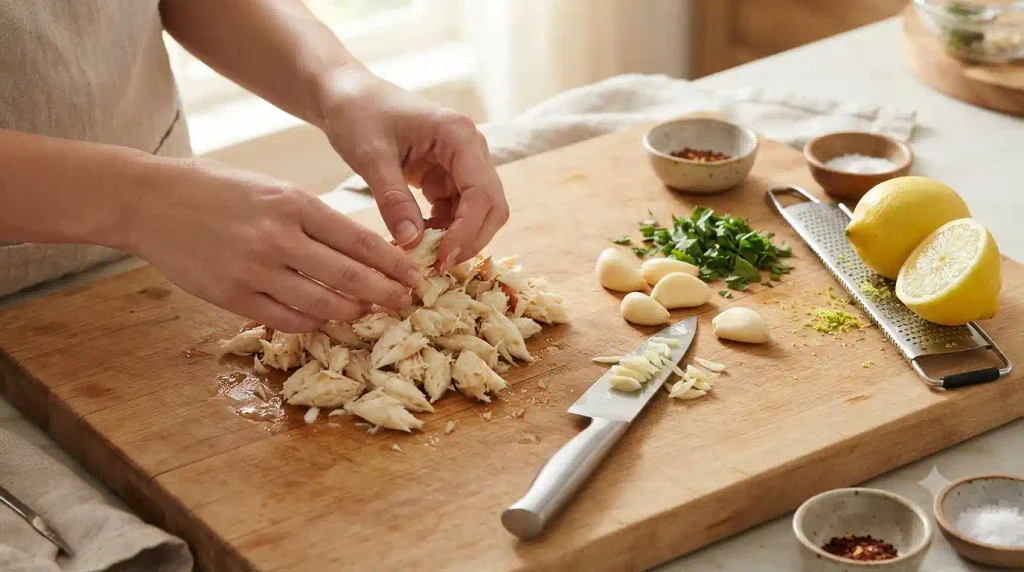
Bring the crab meat to cool room temperature while you prepare everything else. Carefully run your fingers through it and remove any small pieces of shell or cartilage.
Slice or mince the garlic, chop the parsley, zest the lemon, and then juice it. Keep everything close to the stove.
Because crab meat is already cooked, don’t leave it sitting at room temperature for an extended period. Keep it refrigerated until shortly before cooking.
Step 2: Cook the Linguine
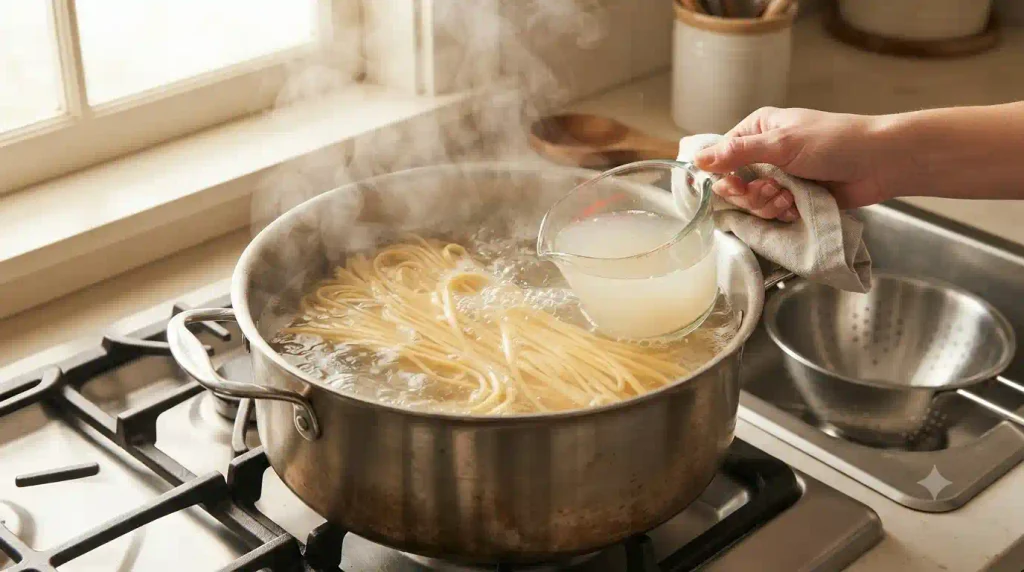
Bring a large pot of generously salted water to a rolling boil.
Add 12 oz linguine and cook according to the package directions until just shy of al dente—usually about a minute less than the recommended cooking time.
Before draining, carefully scoop out at least 1 cup of pasta water. You may not need all of it, but having extra is much better than realizing you poured your sauce-making secret down the drain.
Drain the pasta. Do not rinse it. The starch coating the noodles helps the sauce cling.
Step 3: Build the Garlic Base
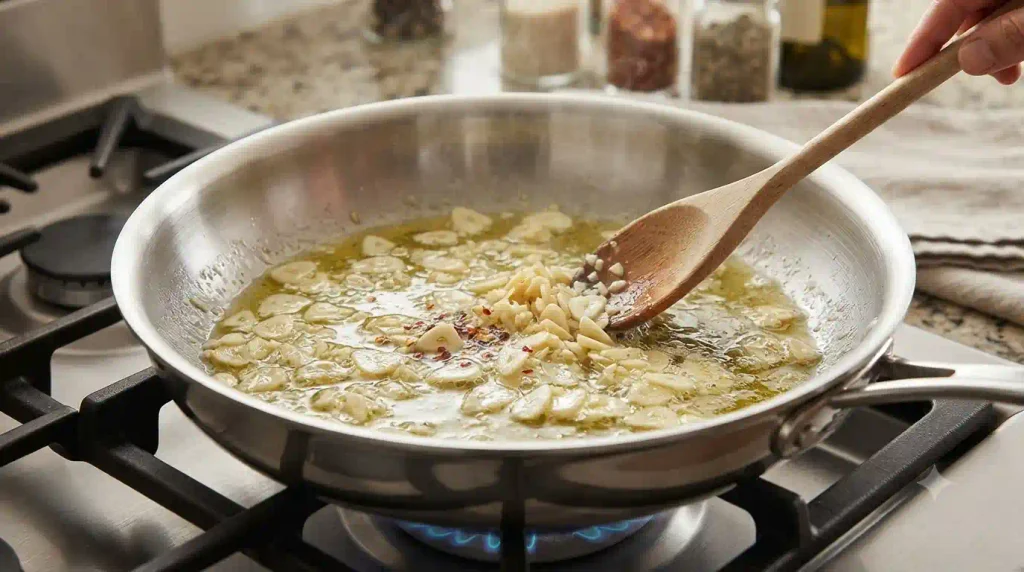
While the pasta cooks, place a large skillet over medium-low heat.
Add the olive oil and butter. Once the butter has melted, add the garlic and red pepper flakes.
Cook gently for about 60–90 seconds, stirring frequently.
You’re looking for fragrant, softened garlic with perhaps the faintest hint of gold around the edges—not deeply browned garlic. If it starts coloring quickly, lower the heat.
Step 4: Create the Glossy Sauce
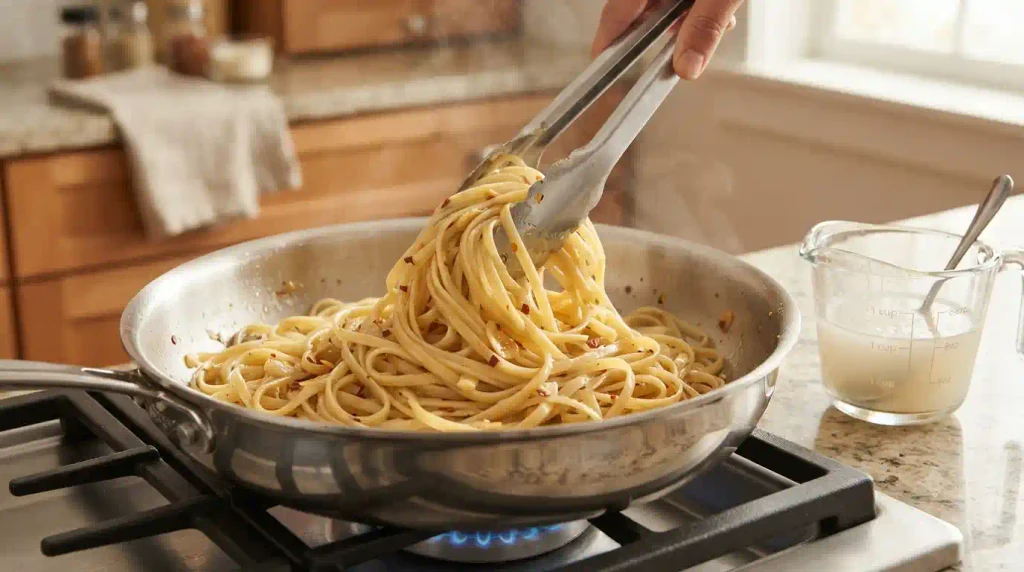
Pour approximately ⅓ cup reserved pasta water into the garlic mixture.
Add the drained linguine and increase the heat to medium.
Using tongs, continuously toss the pasta through the oil and starchy water for 1–2 minutes.
At first, the skillet may look a little watery. Keep tossing. The starch from the pasta gradually helps the water, olive oil, and butter emulsify.
When it’s working, you’ll notice the liquid transforming into a thin, shiny sauce that coats the linguine rather than sitting underneath it.
Step 5: Fold in the Crab
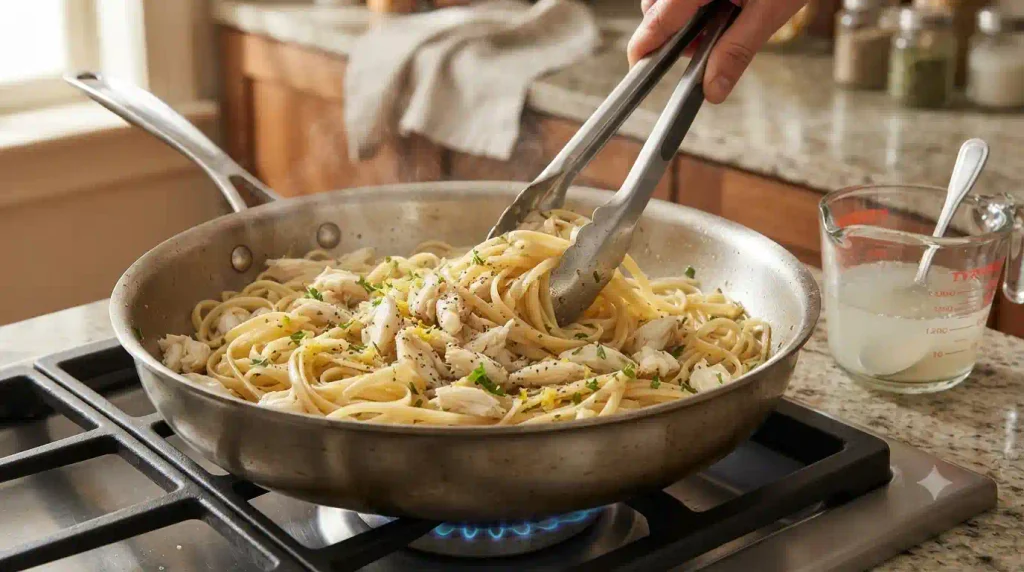
Reduce the heat to low.
Add the crab meat, lemon zest, black pepper, and most of the parsley. Toss very gently for about 1 minute, just until the crab is warmed through.
Avoid aggressively stirring or cooking the crab for several minutes. It’s already cooked, and excessive heat can make its delicate texture dry or stringy.
Add another splash of pasta water if the linguine looks tight or sticky.
Step 6: Finish With Lemon and Serve
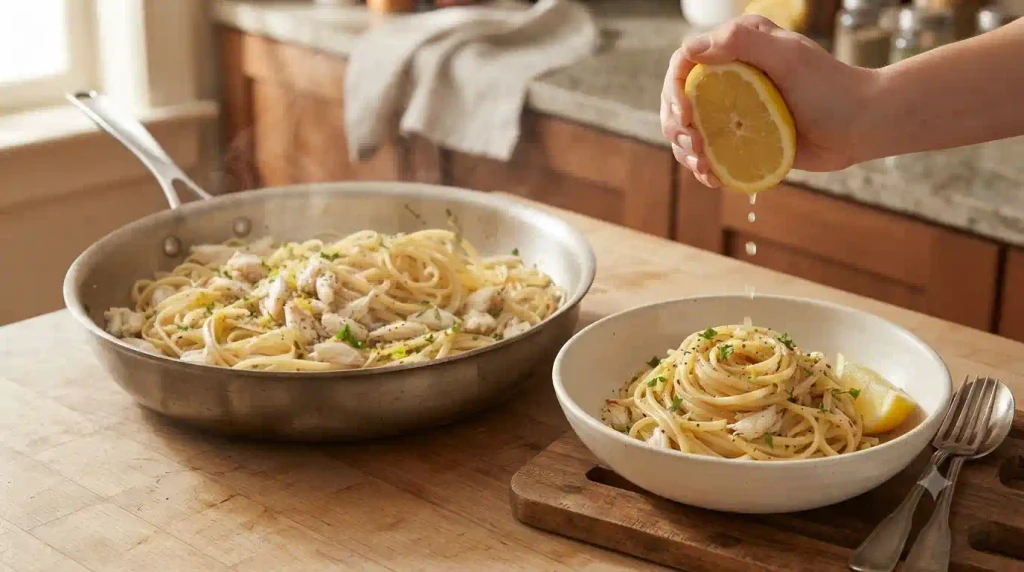
Turn off the heat before adding 2 tablespoons fresh lemon juice.
Toss again until everything looks glossy.
Taste before adding the final salt because crab meat can already contain a fair amount of sodium.
The finished sauce should lightly coat every strand without leaving an oily puddle underneath. If it’s too thick, toss in pasta water 1 tablespoon at a time. If it’s too loose, toss over low heat for another 20–30 seconds.
Divide among four warm bowls. Finish with parsley, black pepper, lemon, or a tiny drizzle of olive oil and serve immediately.
Health Benefits
Crab linguine is indulgent enough to feel special, but it also offers some useful nutrients.
- Crab provides protein, which supports muscle maintenance and helps make the meal satisfying.
- Crab naturally supplies nutrients including vitamin B12, selenium, and zinc.
- Extra-virgin olive oil is rich in monounsaturated fats.
- Garlic contains sulfur-containing plant compounds and brings plenty of flavor without needing a heavy sauce.
- Parsley and lemon add freshness and small amounts of micronutrients while allowing you to build flavor without relying solely on salt.
- Pasta supplies carbohydrates, making this a substantial meal rather than a light seafood appetizer.
For a more balanced plate, serve a moderate portion of linguine alongside a large green salad, roasted asparagus, broccoli, or zucchini.
Nutrition Information (Per Serving)
Approximate nutrition based on four servings:
| Nutrient | Approx. Amount |
|---|---|
| Calories | 500 kcal |
| Protein | 24 g |
| Fat | 18 g |
| Carbohydrates | 61 g |
Note: Nutrition is an estimate. Actual values vary considerably depending on the crab, pasta brand, exact amount of oil consumed, and serving size.
Pro Tips & Variations
Save more pasta water than you think you’ll need. Half a cup may make the sauce, but keeping a full cup gives you insurance. Pasta continues absorbing liquid as it sits.
Undercook the linguine slightly. Letting it finish in the skillet gives the pasta time to absorb flavor without becoming mushy.
Keep the garlic gentle. Dark brown garlic isn’t a sign of extra flavor here. It can introduce bitterness that fights against delicate crab.
Add lemon juice off the heat. You’ll preserve more of its fresh, bright character.
Don’t drown the pasta in sauce. This isn’t supposed to resemble a cream sauce. A proper emulsified sauce creates a thin, glossy film around each strand.
For extra heat: Increase the red pepper flakes to ½ teaspoon.
For extra richness: Finish with another teaspoon of butter while tossing.
For more seafood: Add cooked shrimp alongside the crab. If starting with raw shrimp, cook it safely and separately before incorporating it into the finished pasta.
No linguine? Spaghetti, bucatini, or fettuccine can all work.
Want more vegetables? Add wilted spinach, asparagus tips, peas, or halved cherry tomatoes.
Using canned crab? Drain it very thoroughly and choose lump crab meat when your budget allows. The flavor and texture tend to be better.
How Much Does It Cost to Make?
Prices vary significantly by location and season, and fresh crab can make this dish considerably more expensive. For a typical US supermarket shop, a rough estimate might look like this:
| Ingredient Used | Estimated Cost |
|---|---|
| Linguine | $1.50–$2.00 |
| Crab meat | $10.00–$16.00 |
| Olive oil + butter | $1.00–$1.50 |
| Garlic | $0.50 |
| Lemon | $0.75–$1.00 |
| Parsley | $0.75–$1.00 |
| Seasonings | $0.25–$0.50 |
| Estimated Total | $14.75–$22.50 |
| Approx. Cost Per Serving | $3.70–$5.65 |
The crab is responsible for most of the cost. Using good-quality canned or refrigerated crab when it’s on sale can make this a much more affordable seafood dinner.
Frequently Asked Questions
How do you make crab linguine sauce stick to the pasta?
The key is starchy pasta water plus vigorous tossing. Adding pasta water to olive oil and butter and then tossing the linguine helps create an emulsion.
Don’t rinse your cooked pasta. You want that surface starch.
Also, avoid adding a huge amount of water at once. Start with roughly ⅓ cup, toss thoroughly, and add more in small splashes until the sauce becomes silky.
Can I use canned crab meat for crab linguine?
Yes. Good-quality canned crab is a practical option and can make the recipe significantly cheaper.
Drain it extremely well and check carefully for shell fragments. Add it near the end because canned crab is already cooked and only needs reheating.
Why is my crab pasta dry?
The most common culprit is insufficient pasta water.
The sauce can look perfect in the skillet and then tighten rapidly because hot pasta continues absorbing moisture.
Keep reserved pasta water nearby until serving. If your linguine becomes dry, add 1–2 tablespoons at a time and toss until the glossy texture returns.
Can I make crab linguine ahead of time?
It’s best eaten immediately.
Refrigerated pasta absorbs its sauce, so reheated crab linguine won’t have quite the same silky texture. If you have leftovers, refrigerate them promptly in a covered container and reheat gently until properly heated through, adding a splash of water if needed.
For the best texture, make the garlic base ahead if necessary but cook and finish the pasta shortly before serving.
Final Thoughts
Garlicky crab linguine proves you don’t need cream or a complicated restaurant technique to create luxurious seafood pasta at home. Good crab, gently cooked garlic, starchy pasta water, olive oil, butter, and fresh lemon do most of the work.
Pay particular attention to the final toss. Give the pasta a minute to emulsify instead of immediately adding more oil or butter. Once you see that shiny sauce hugging the linguine, you’ve nailed the technique.
Serve it while it’s hot, pass around a few lemon wedges, and don’t worry if there’s a little garlic oil splattered around the stove. That’s usually what a genuinely good pasta night looks like.