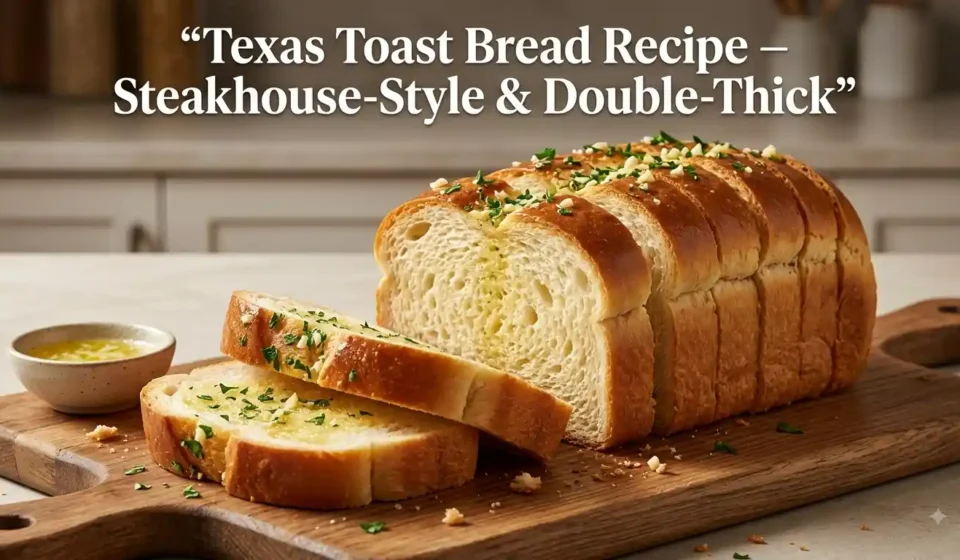

There’s something deeply satisfying about making bread at home, especially when you’re craving those thick, buttery slices served alongside a juicy steak. The smell of warm yeast, toasted butter, and fresh bread filling the kitchen makes even an ordinary dinner feel special. This Texas Toast Bread Recipe delivers that steakhouse-style experience with a soft, tender center and a sturdy, double-thick crumb that is perfect for garlic toast, sandwiches, French toast, or simply eating warm from the oven.
You don’t need fancy baking equipment or professional skills to make it. The dough is forgiving, and once you learn how it should feel, the process becomes surprisingly easy. Keep your hands lightly floured, resist adding too much extra flour, and give the dough enough time to rise. That patience is what creates those beautifully thick, fluffy slices.
Texas Toast Bread Recipe – Steakhouse-Style & Double-Thick
This homemade Texas toast bread is soft inside, lightly golden outside, and sliced extra thick for that classic steakhouse feel. The loaf makes excellent garlic bread because the sturdy crumb can hold plenty of melted butter without falling apart.
Prep & Cook Time
| Recipe Detail | Amount |
|---|---|
| Prep Time | 20 minutes |
| Rise Time | 1 hour 30 minutes |
| Cook Time | 25–30 minutes |
| Total Time | About 2 hours 20 minutes |
| Servings | 8 thick slices |
| Difficulty | Easy–Intermediate |
| Best For | Garlic toast, steak dinners, sandwiches, French toast |
What Equipment Do You Need?
You can make this bread with basic kitchen equipment:
- Large mixing bowl
- Measuring cups and spoons
- Wooden spoon or silicone spatula
- Stand mixer with dough hook, optional
- Clean kitchen towel
- 9 × 5-inch loaf pan
- Pastry brush
- Cooling rack
- Serrated bread knife
Chef’s note: A stand mixer makes kneading easier, but your hands work perfectly well. In fact, hand-kneading is a great way to learn what properly developed dough should feel like.
Ingredients
For the Bread
- ¾ cup (180 ml) warm whole milk, about 105–110°F
- 2¼ teaspoons (1 packet) active dry yeast
- 2 tablespoons granulated sugar
- 3 tablespoons unsalted butter, melted and slightly cooled
- 1 large egg, room temperature
- 1 teaspoon fine salt
- 3 cups (360 g) all-purpose flour, plus a little more if needed
For the Steakhouse-Style Butter Topping
- 3 tablespoons unsalted butter, softened
- 1 tablespoon finely chopped fresh parsley
- 1 small garlic clove, finely grated, optional
- Pinch of salt
Why Each Ingredient Matters
- Whole milk: Adds richness and helps create a soft, tender crumb. Milk also encourages better browning than water alone.
- Yeast: Produces carbon dioxide during fermentation, which gives the loaf its airy structure.
- Sugar: Gives the yeast a little fuel while adding a subtle sweetness that balances savory toppings.
- Butter: Makes the bread tender and rich while adding that unmistakable steakhouse flavor.
- Egg: Adds richness, structure, and color to the finished loaf.
- Salt: Controls yeast activity and keeps the bread from tasting flat.
- All-purpose flour: Provides the gluten structure needed for a tall, sturdy loaf that can be sliced thick.
- Garlic and parsley: Turn the finished bread into an easy steakhouse-style garlic toast.
Step-by-Step Instructions
Step 1: Activate the Yeast
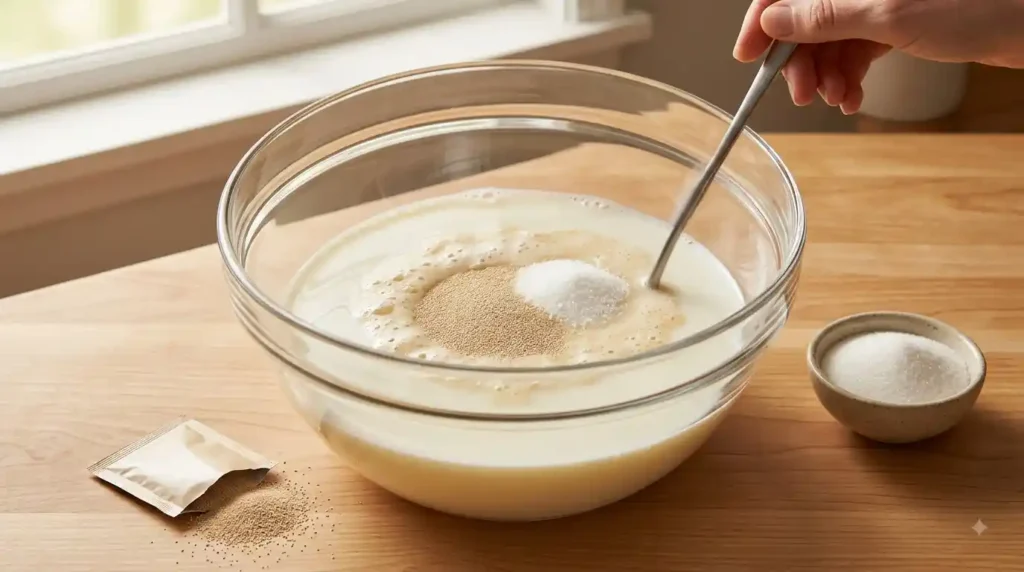
Warm the milk until it feels comfortably warm, not hot. Aim for around 105–110°F.
Pour the milk into a large mixing bowl and stir in the sugar and yeast. Let it stand for 5–10 minutes.
The mixture should become slightly foamy. If nothing happens, your yeast may be old or the milk may have been too hot or too cold. Don’t rush past this step because active yeast is essential for a good rise.
Step 2: Make the Dough
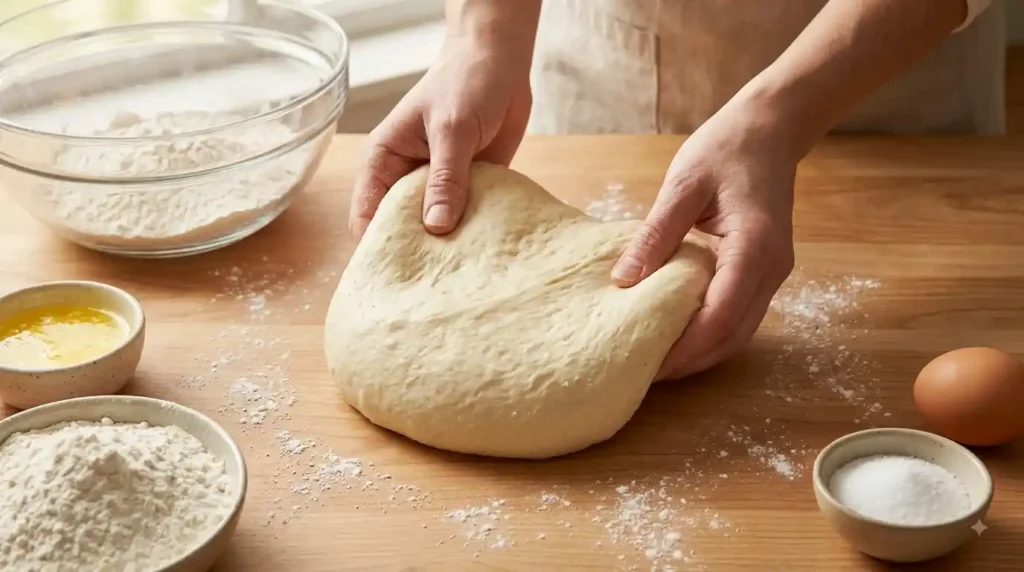
Add the melted butter, egg, and salt to the yeast mixture. Stir until combined.
Add most of the flour and mix until a shaggy dough forms. Add the remaining flour gradually.
Knead for approximately 8–10 minutes by hand, or 5–7 minutes with a stand mixer using the dough hook.
The finished dough should feel soft, smooth, and slightly tacky, but it shouldn’t stick heavily to your fingers.
Important: Don’t keep dumping flour into the bowl just because the dough feels sticky. Too much flour is one of the easiest ways to end up with dense homemade bread.
Step 3: Let the Dough Rise
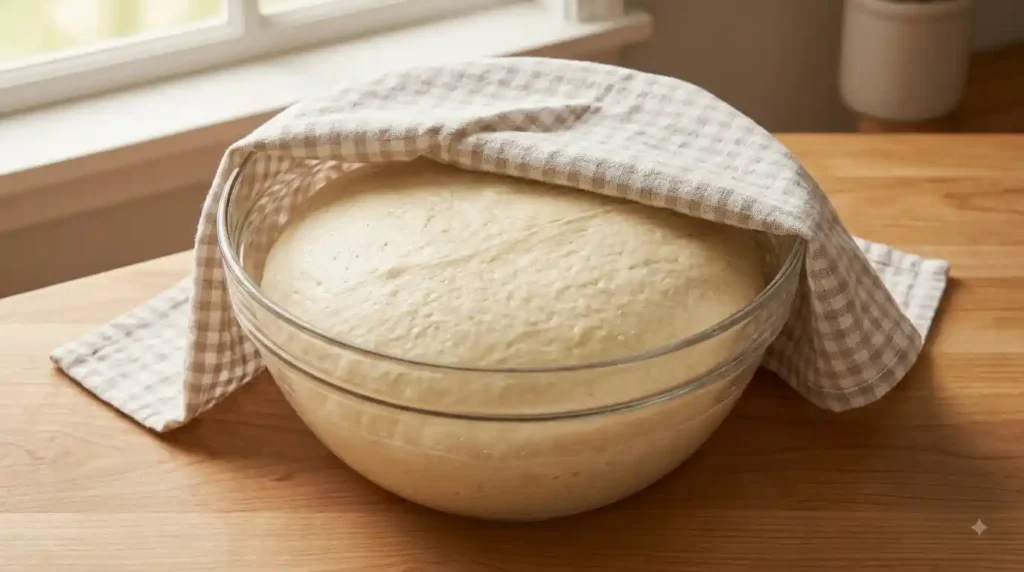
Shape the dough into a ball and place it in a lightly greased bowl.
Cover with a clean kitchen towel or plastic wrap and place it somewhere warm and draft-free.
Let it rise for approximately 60–75 minutes, or until it has roughly doubled in size.
A warm kitchen works beautifully. If your house is chilly, place the covered bowl inside an oven that is turned off with only the oven light on.
Step 4: Shape the Double-Thick Loaf
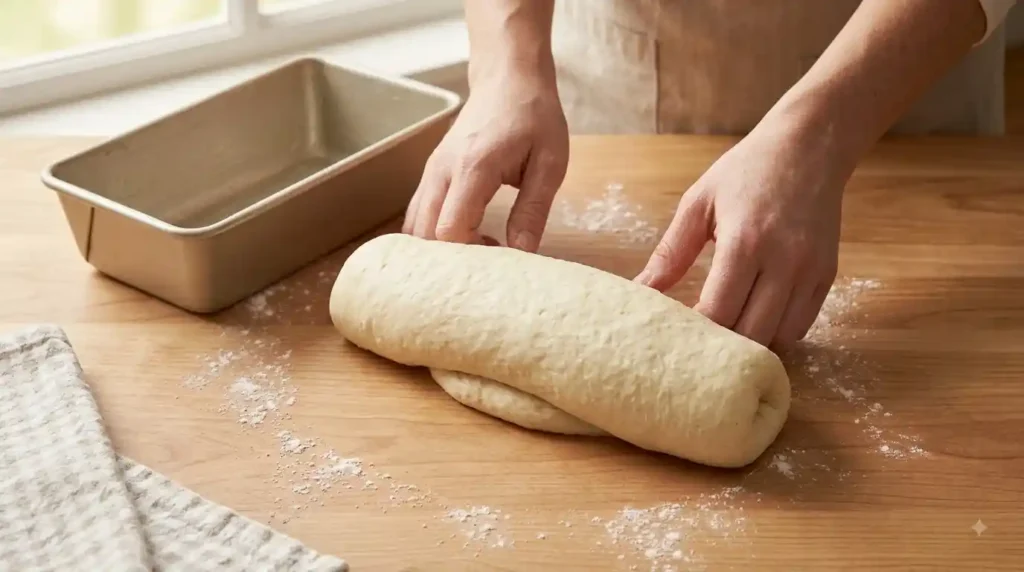
Lightly grease a 9 × 5-inch loaf pan.
Gently press the air out of the risen dough and transfer it to a lightly floured surface. Shape it into a rectangle roughly the length of your loaf pan.
Roll it tightly into a log, pinching the seam closed underneath.
Place the dough seam-side down in the prepared pan. Cover it again and let it rise for 30–40 minutes, until the dough rises noticeably above the rim.
Don’t worry if it doesn’t look perfectly smooth. Homemade bread has character, and most small imperfections disappear during baking.
Step 5: Bake Until Golden
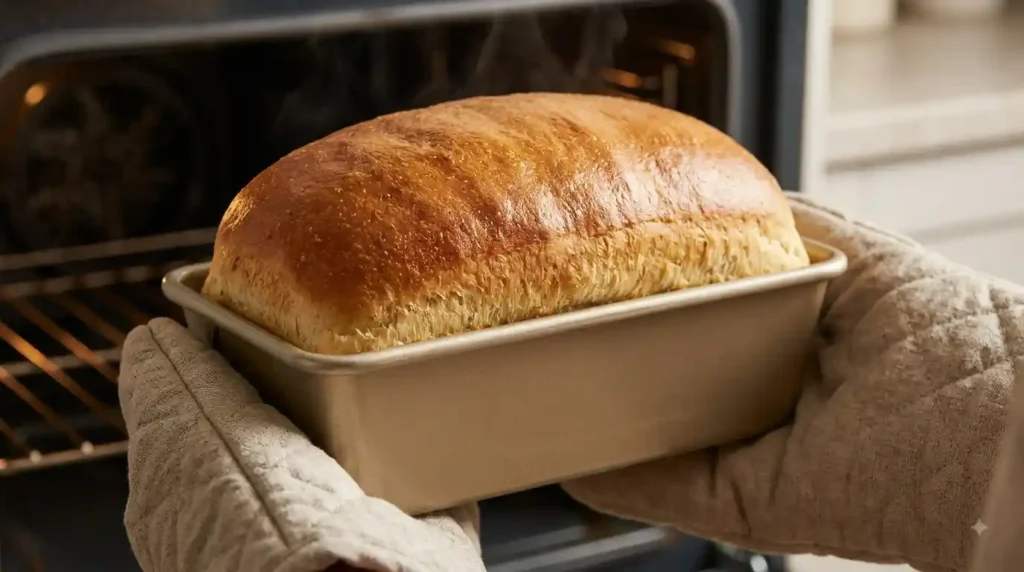
Preheat your oven to 350°F (175°C).
Bake the loaf for 25–30 minutes, until the top is golden brown and the bread sounds slightly hollow when tapped.
If the top begins browning too quickly, loosely tent it with aluminum foil during the final part of baking.
For food safety and consistent results, allow the loaf to bake fully rather than relying only on appearance. If using an instant-read thermometer, the center should generally reach around 190–200°F for a fully baked enriched loaf.
Remove the pan carefully—the metal will be extremely hot.
Step 6: Add the Steakhouse Butter & Cool
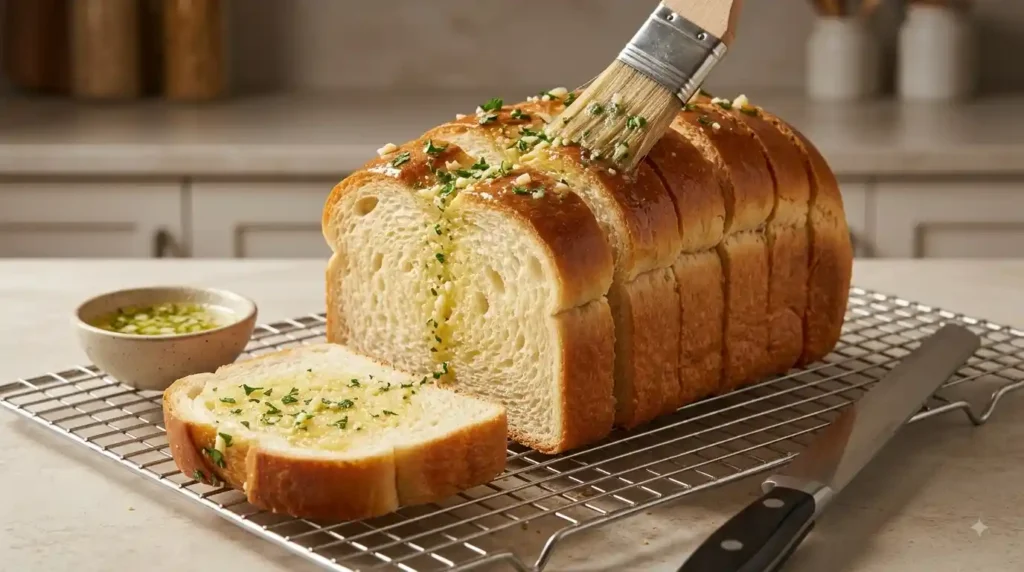
While the bread is still warm, combine the softened butter, parsley, garlic, and a pinch of salt.
Brush the mixture generously over the warm loaf.
Let the bread cool in the pan for about 10 minutes, then transfer it to a cooling rack.
For the cleanest slices, allow it to cool further before cutting with a serrated knife. For true Texas toast, slice it about 1 inch thick.
If you’re making garlic toast, brush individual slices with more garlic butter and toast them under the broiler for a few minutes until the edges are golden and crisp.
Never leave bread unattended under the broiler. It can go from golden to burnt very quickly.
Health Benefits
This bread is definitely a comfort food, but several ingredients contribute useful nutrients:
- Eggs provide protein and nutrients such as choline and vitamin B12.
- Milk contributes protein and calcium.
- Butter provides fat-soluble vitamins in small amounts.
- Flour provides carbohydrates, which are the body’s main source of readily available energy.
- Parsley adds a small amount of vitamin K and antioxidants.
- Homemade bread also lets you control the amount of salt, sugar, and fat compared with some packaged options.
Keep in mind that Texas toast is still a calorie-dense bread, especially when generously buttered. Enjoying it alongside protein and vegetables makes it easier to build a balanced meal.
Nutrition Information (Per Serving)
Approximate values based on 1 of 8 slices, before adding additional garlic butter.
| Nutrient | Approximate Amount |
|---|---|
| Calories | 225 kcal |
| Protein | 6 g |
| Fat | 7 g |
| Carbohydrates | 34 g |
Nutrition can vary depending on the exact flour, milk, butter, slice size, and toppings used.
Pro Tips & Variations
For Extra-Thick Texas Toast
Use a 9 × 5-inch loaf pan rather than a larger pan. The narrower pan helps the dough rise upward, creating taller slices.
For Softer Bread
Don’t overbake it. Once the loaf is nicely golden and the center is cooked, remove it from the oven.
For Better Yeast Activity
Use warm milk rather than hot milk. Temperatures that are too high can damage or kill the yeast.
For Crispy Garlic Toast
Slice the cooled loaf about 1 inch thick, spread generously with garlic butter, and broil until the edges are crisp and golden.
For Cheesy Texas Toast
Add shredded mozzarella, Monterey Jack, or cheddar over the garlic butter before broiling.
For a Sweeter Version
Increase the sugar to 3 tablespoons and skip the garlic topping. The bread becomes excellent for French toast.
For a More Rustic Loaf
Replace up to ½ cup of the all-purpose flour with whole-wheat flour. The result will be slightly denser and nuttier.
Chef’s Biggest Tip
Don’t add flour until the dough feels dry just because it is slightly sticky. A soft dough produces a softer loaf. Give it a proper knead first.
How Much Does It Cost to Make?
Prices vary by location and brand, but this homemade loaf is generally inexpensive compared with buying specialty steakhouse-style bread.
| Ingredient | Estimated Cost |
|---|---|
| Flour | $0.45 |
| Milk | $0.35 |
| Butter | $0.70 |
| Egg | $0.30 |
| Yeast | $0.45 |
| Sugar & salt | $0.10 |
| Garlic & parsley | $0.40 |
| Estimated total | $2.75 |
That works out to roughly $0.34 per thick slice, before accounting for optional toppings or electricity.
If you already keep flour, butter, sugar, salt, and yeast in your pantry, this is an especially budget-friendly way to make a restaurant-style side at home.
Frequently Asked Questions
What makes Texas toast different from regular bread?
Texas toast is typically much thicker than standard sandwich bread, often around ¾ to 1 inch thick. Its substantial crumb makes it ideal for buttering and grilling or turning into garlic toast.
Why is my homemade Texas toast bread dense?
Dense bread usually comes from too much flour, inactive yeast, insufficient rising time, or under-kneading. The dough should become soft and elastic after kneading, and it should visibly expand during both rises.
Can I make Texas toast bread ahead of time?
Yes. Bake the loaf a day ahead, let it cool completely, wrap it tightly, and keep it at room temperature. Slice and toast it when you’re ready to serve.
For longer storage, wrap the cooled loaf well and freeze it for up to about 3 months. Thaw at room temperature before slicing.
Can I use this bread for garlic toast?
Absolutely. That’s one of the best uses for it. Slice the loaf thickly, brush both sides or the top generously with garlic butter, then bake or broil until golden and crisp around the edges.
Final Thoughts
A good loaf of Texas toast bread doesn’t need to be complicated. The secret is simple: soft dough, enough rising time, a properly sized loaf pan, and patience while it bakes. Once you pull that tall, golden loaf from the oven and brush it with buttery garlic goodness, you’ll understand why thick-cut Texas toast is such a beloved steakhouse side.
Serve it beside grilled steak, burgers, barbecue, pasta, soup, or a simple weeknight dinner. And don’t be surprised if everyone reaches for a second slice—this is exactly the kind of homemade bread that tends to disappear while it’s still warm.