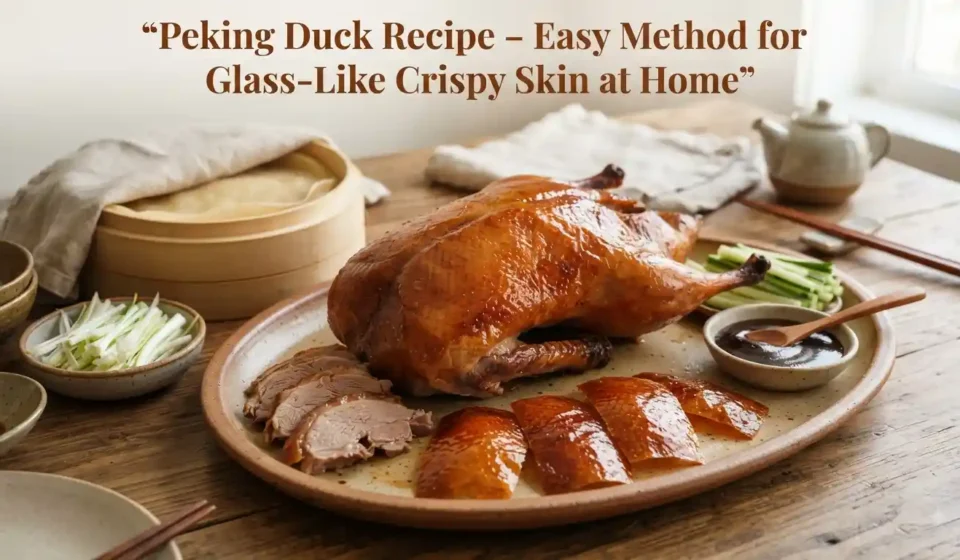

There is something deeply satisfying about making a restaurant-style roast at home. When that craving for crackly skin, juicy duck, and sweet-savory flavor hits, this Peking duck recipe gives you a practical way to make it happen without needing a professional kitchen. The process takes some planning, but most of the work is simply letting the duck dry properly.
The secret is not complicated equipment or fancy cooking tricks. It is dry skin, a thin glaze, and controlled roasting. Your kitchen may get a little messy, and the duck needs plenty of fridge time, but that patience pays off. When you hear that first crisp crackle as you slice the skin, you will understand why this classic Chinese dish is so special.
Peking Duck Recipe – Easy Method for Glass-Like Crispy Skin at Home
This home-friendly method focuses on the most important part of Peking duck: thin, blisteringly crisp skin while keeping the meat tender and juicy. Traditional Peking duck can involve air-drying and specialized ovens, but a standard home oven can produce excellent results with the right preparation.
Prep & Cook Time
| Task | Time |
|---|---|
| Active prep | 35 minutes |
| Drying time | 12–24 hours |
| Cook time | 1 hour 30 minutes–2 hours |
| Resting time | 15–20 minutes |
| Total time | About 14–26 hours |
| Servings | 4–6 |
Important: The long total time mostly comes from drying the duck. Do not rush this stage. Moisture on the skin is one of the biggest enemies of crispness.
What Equipment Do You Need?
You do not need a restaurant-style roasting setup. A few basic tools are enough:
- Large wire rack
- Rimmed baking sheet or roasting pan
- Large pot for blanching
- Tongs
- Small saucepan
- Pastry brush
- Sharp carving knife
- Meat thermometer
- Paper towels
- Refrigerator space for uncovered drying
- Aluminum foil
- Kitchen twine, optional
A wire rack is especially useful because it allows air to circulate around the entire duck rather than leaving the bottom sitting in moisture.
Ingredients
For the Duck
- 1 whole duck, about 5–6 lb (2.3–2.7 kg), preferably air-chilled
- 1 tablespoon kosher salt
- 1 teaspoon Chinese five-spice powder
- 4 thin slices fresh ginger
- 4 green onions, cut into large pieces
- 2 cloves garlic, lightly crushed
For the Crispy-Skin Glaze
- 3 tablespoons maltose syrup
- 3 tablespoons hot water
- 2 tablespoons Chinese rice vinegar
- 1 tablespoon honey
- 1 teaspoon dark soy sauce, optional for color
If maltose is difficult to find, use honey as a substitute. The result will still be delicious, although maltose gives the skin a particularly glossy finish.
For Serving
- 12–16 Mandarin pancakes or thin Chinese pancakes
- ½ cup hoisin sauce
- 1 bunch green onions, cut into thin matchsticks
- 1 cucumber, cut into thin matchsticks
Why Each Ingredient Matters
Whole duck: Duck naturally has a generous layer of fat beneath the skin. As it roasts, that fat renders and helps create the classic crisp texture.
Salt: A small amount of salt seasons the meat and helps draw some surface moisture away from the skin.
Maltose: This is one of the traditional ingredients used to create Peking duck’s glossy, deeply browned exterior. Its thick consistency helps the glaze cling to the skin.
Rice vinegar: Vinegar is a key part of the glaze because its acidity helps balance the sweetness while supporting a dry, crisp surface.
Honey: Adds sweetness and encourages beautiful browning. Use it sparingly because sugars can darken quickly at high heat.
Chinese five-spice: Ginger, green onion, and five-spice add aromatic depth without overpowering the duck.
Hoisin sauce: Its sweet, salty, savory flavor works naturally with rich duck meat.
Cucumber and green onion: Their fresh crunch cuts through the richness of the duck and makes each pancake feel lighter.
Step-by-Step Instructions
Step 1: Prepare and Blanch the Duck
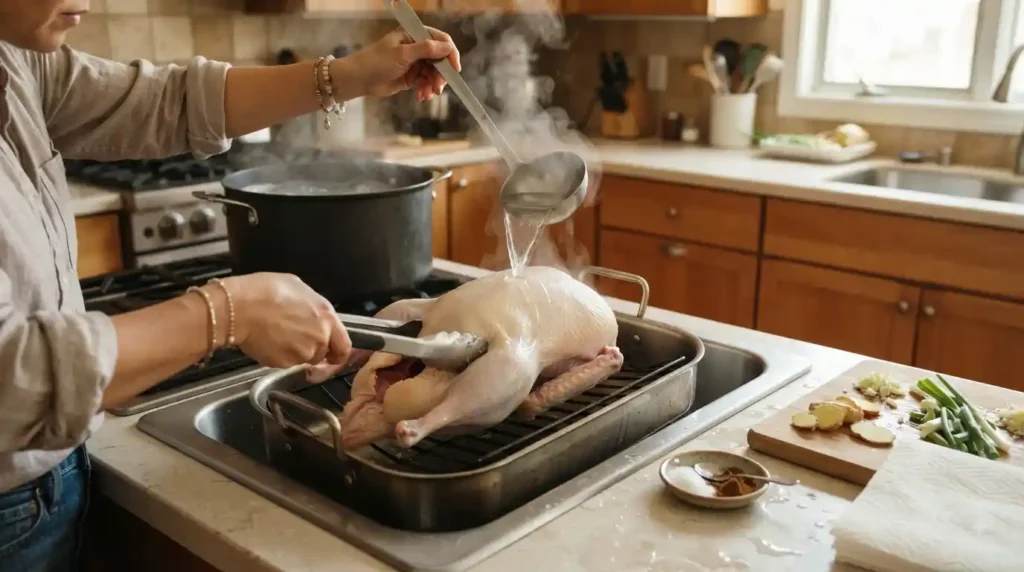
Remove the duck from its packaging and take out the giblets if they are included. Trim away any large pieces of excess fat around the cavity.
Pat the duck thoroughly dry with paper towels.
Bring a large pot of water to a boil. Using sturdy tongs, carefully hold the duck over the pot and ladle or pour boiling water over the skin, turning it as needed.
You want the skin to tighten and become noticeably smoother.
Do not leave the duck submerged for an extended period. The goal is to tighten the skin, not cook the meat.
Pat the duck completely dry again.
Rub the cavity with the salt and five-spice powder. Place the ginger, green onion, and garlic inside.
Food safety note: Keep raw duck separate from ready-to-eat foods, wash your hands after handling it, and sanitize any surfaces that come into contact with raw poultry.
Step 2: Dry the Skin Thoroughly
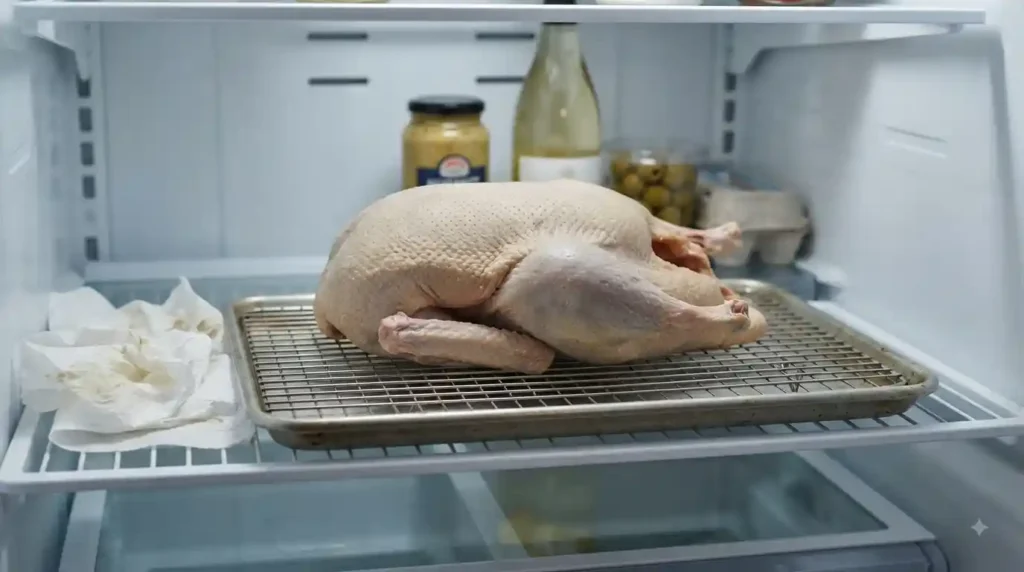
Place the duck breast-side up on a wire rack set over a rimmed baking sheet.
Refrigerate it uncovered for at least 12 hours, preferably 18–24 hours.
This is the step that many home cooks want to skip. Don’t.
The skin should feel dry and slightly leathery rather than wet or tacky. That dry surface gives you a much better chance of achieving the delicate, crisp texture associated with Peking duck.
If you see moisture collecting on the duck during the first few hours, gently pat it dry with a clean paper towel.
Keep the refrigerator at 40°F (4°C) or below.
Step 3: Make and Apply the Glaze
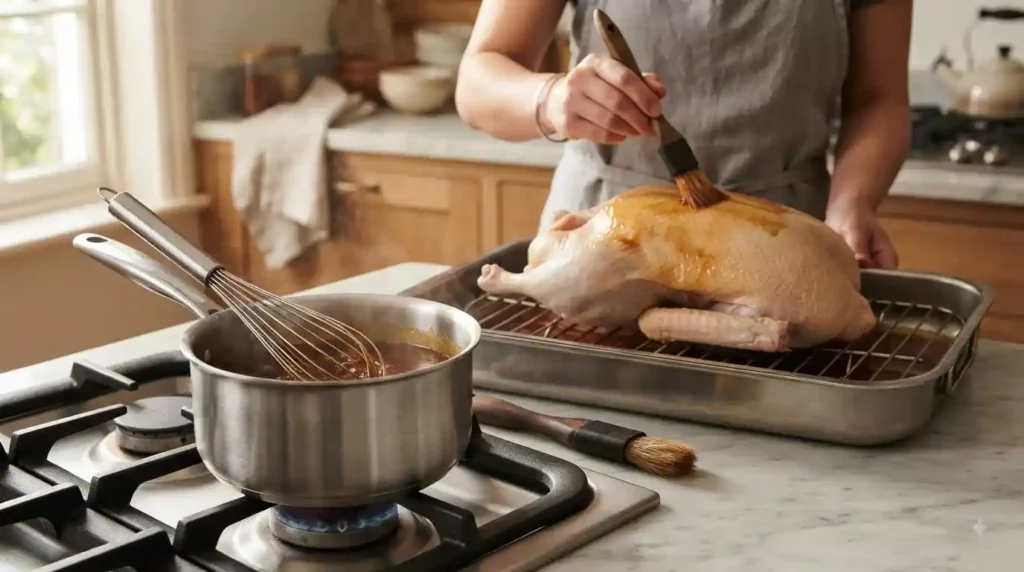
About 30 minutes before roasting, prepare the glaze.
Add the maltose, hot water, rice vinegar, honey, and optional dark soy sauce to a small saucepan.
Warm gently while whisking until the maltose dissolves and the mixture becomes smooth.
Let it cool slightly.
Brush a very thin layer over the entire duck.
Do not soak the skin with glaze. Thick layers of sugary glaze can burn before the duck finishes cooking.
Let the glazed duck sit uncovered for about 20–30 minutes so the surface can become slightly tacky.
Step 4: Start Roasting
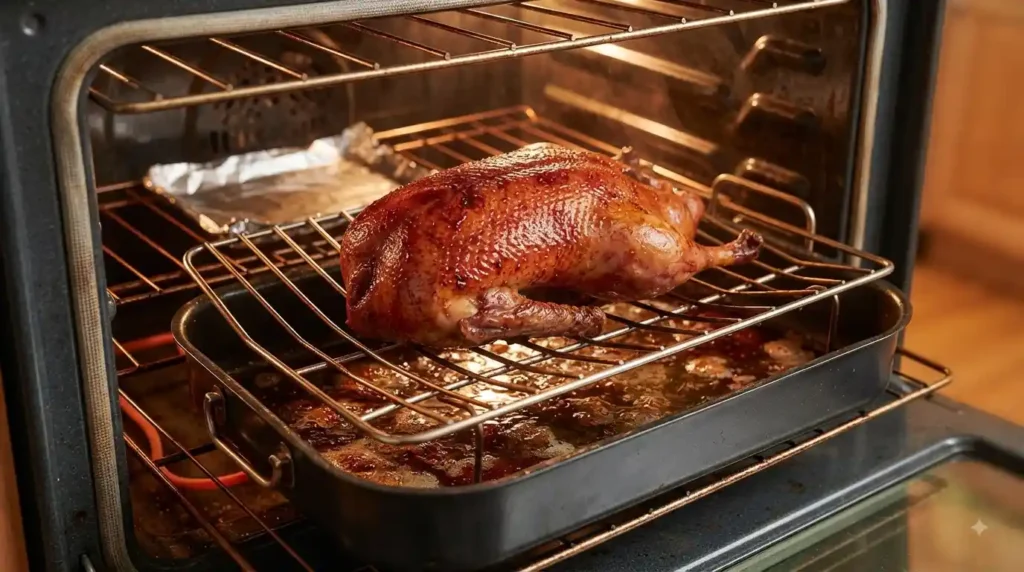
Preheat your oven to 350°F (175°C).
Place the duck breast-side up on the wire rack over a roasting pan. Make sure the duck is elevated so the rendered fat can drip away.
Roast for approximately 60–75 minutes.
If the skin begins becoming too dark, loosely cover the darkest areas with foil. Do not wrap the entire duck tightly, because trapped steam will soften the skin.
A good roasting pan can collect a surprising amount of duck fat. Let it cool before carefully transferring the fat to a heatproof container if you want to save it for roasted potatoes or other cooking.
Step 5: Crisp the Skin
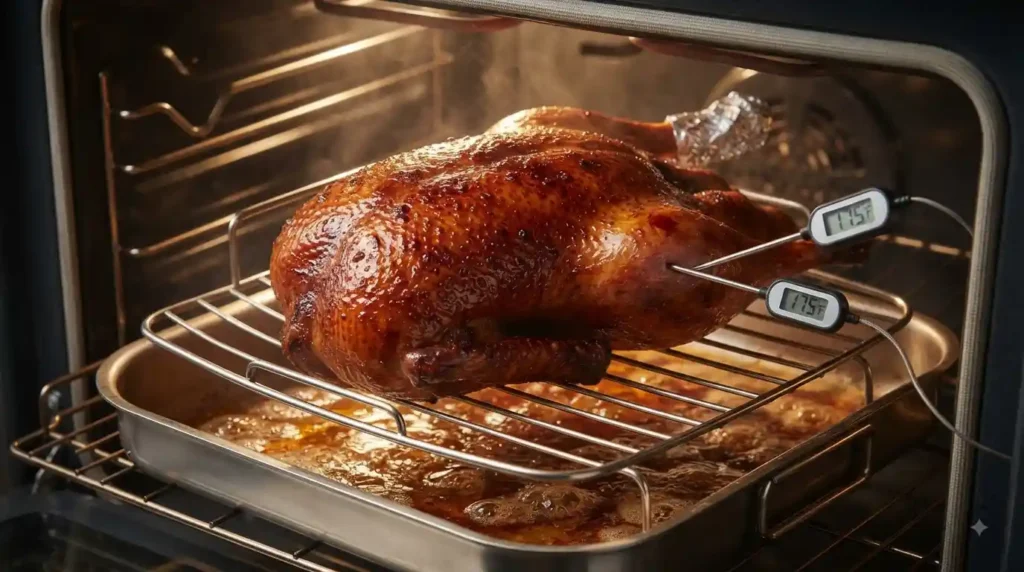
Increase the oven temperature to 425°F (220°C).
Continue roasting for approximately 20–30 minutes, watching closely.
The skin should become deep golden brown, glossy, and crisp.
Because ovens vary, use your eyes and a thermometer rather than relying only on the clock. The thickest part of the meat should reach a safe internal temperature of 165°F (74°C).
Avoid repeatedly opening the oven door. Every opening releases heat and can slow the final crisping stage.
Chef’s tip: If the skin looks perfect before the meat reaches temperature, loosely shield the skin with foil and continue cooking until the duck reaches the appropriate internal temperature.
Step 6: Rest, Carve, and Serve
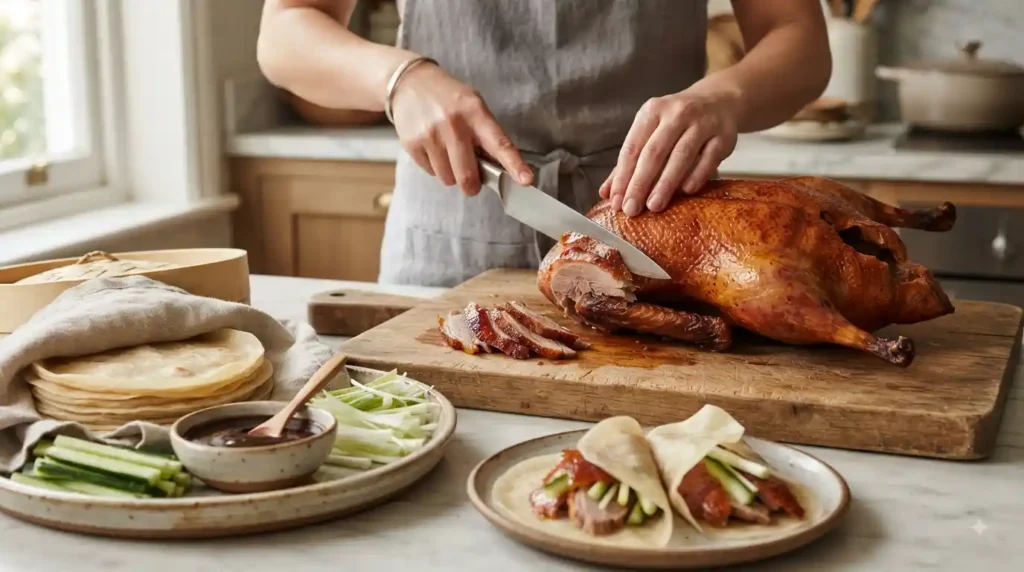
Remove the duck from the oven and let it rest for 15–20 minutes.
Do not immediately start hacking into it. Resting allows the juices to settle and makes carving much easier.
For the classic presentation, carefully separate the crisp skin from the meat in thin pieces. Slice some meat thinly as well.
Warm your Mandarin pancakes according to their package instructions.
Serve the duck with:
- Warm pancakes
- Hoisin sauce
- Thinly sliced cucumber
- Green onion strips
Spread a little hoisin sauce on a pancake, add a piece of crispy duck skin and meat, then finish with cucumber and green onion. Fold it up and enjoy immediately.
Health Benefits
Peking duck is an indulgent dish, but it also provides useful nutrients.
- High-quality protein: Duck supplies protein needed for muscle maintenance and everyday body functions.
- Iron: Duck contains iron, which supports normal oxygen transport in the body.
- Vitamin B12: Duck provides vitamin B12, an important nutrient for red blood cell formation and nervous-system function.
- Zinc: Duck contributes zinc, which plays a role in immune function and wound healing.
- Fresh vegetables: Cucumber and green onions add hydration, fiber, vitamins, and freshness to the meal.
That said, duck skin is naturally high in fat, so portion size matters. For a lighter meal, serve more cucumber and green onion and use a modest amount of hoisin sauce.
Nutrition Information (Per Serving)
Nutrition varies depending on how much skin, meat, sauce, and pancake each person eats. The following is a reasonable estimate for one serving with duck, pancake, vegetables, and sauce.
| Nutrient | Approximate Amount |
|---|---|
| Calories | 520 kcal |
| Protein | 31 g |
| Fat | 29 g |
| Carbohydrates | 35 g |
Note: These figures are estimates, not laboratory measurements. Removing some duck skin or using less sauce will significantly change the calories and fat.
Pro Tips & Variations
For Extra-Crispy Skin
Dry the duck longer. If your refrigerator allows it, 18–24 hours of uncovered drying is ideal.
Keep the glaze thin. A thin coating gives you shine without creating a sticky, burnt crust.
Use a rack. The duck should never sit directly in its rendered fat.
Do not crowd the oven. Good hot-air circulation helps the skin brown evenly.
Watch the final 15 minutes. The difference between beautifully browned skin and burnt sugar can happen quickly.
If You Can’t Find Maltose
Replace the maltose with 2½ tablespoons honey. The skin will still brown nicely, although the finish may be slightly different.
Want Less Fat?
You can remove some skin and visible fat after roasting. However, if your goal is authentic Peking duck texture, the skin is a major part of the dish.
No Mandarin Pancakes?
Use thin flour tortillas as a practical substitute. They will not be traditional, but they work when you want an easy weeknight version.
Want More Aromatic Duck?
Add a few thin slices of orange peel or a small piece of star anise to the cavity. Keep the quantity modest so the aromatics do not overpower the duck.
Don’t Skip the Thermometer
Duck can look beautifully browned before the center is fully cooked. A reliable instant-read thermometer is much safer than guessing.
How Much Does It Cost to Make?
Prices vary considerably by location and duck size, but this is a reasonable U.S. home-cooking estimate.
| Ingredient | Estimated Cost |
|---|---|
| 5–6 lb whole duck | $25–$35 |
| Maltose, honey & vinegar | $3–$5 |
| Hoisin sauce | $2–$4 |
| Mandarin pancakes | $3–$5 |
| Cucumber & green onion | $2–$4 |
| Ginger, garlic & seasonings | $1–$2 |
| Estimated total | $36–$55 |
| Approx. cost per serving for 4–6 | $6–$14 |
The cost can be lower if you already have pantry ingredients such as vinegar, honey, five-spice, hoisin sauce, and soy sauce.
Frequently Asked Questions
How do you get Peking duck skin crispy at home?
The biggest factor is drying the skin thoroughly before roasting. Blanching the skin, refrigerating the uncovered duck overnight, applying a thin glaze, and roasting on a rack all help remove moisture and encourage crisping.
Can I make Peking duck without hanging it?
Yes. A wire rack over a baking sheet is a practical home alternative. It allows air to circulate around the duck and keeps the bird elevated above the rendered fat.
How long should I dry a duck before making Peking duck?
For the best texture, dry the uncovered duck in the refrigerator for 12–24 hours. Longer drying can be useful, provided the duck is kept properly refrigerated and handled safely.
Can I use honey instead of maltose for Peking duck?
Yes. Honey is an accessible substitute and produces good browning. Maltose is thicker and is traditionally used for a particularly glossy, crisp finish, but honey works well for home cooks.
Final Thoughts
Making Peking duck at home is a little project, but it is absolutely worth the extra planning. The real trick is not rushing the drying stage. Give the skin time to lose its moisture, keep the glaze thin, and use a thermometer to take the guesswork out of roasting.
Don’t worry if your first duck isn’t perfectly restaurant-shaped. Home cooking is rarely that tidy—and that is part of the fun. What matters is that gorgeous crisp skin, tender meat, warm pancakes, and a table full of people reaching for one more bite.