

There’s something deeply satisfying about cooking a dish that fills the kitchen with a rich, savory aroma before it even reaches the table. When a craving hits for something sticky, salty, slightly sweet, and seriously comforting, pork binagoongan is exactly the kind of meal that makes staying home for dinner feel like the better choice.
This version turns the Filipino classic into a glossy, sticky pork dish while keeping the unmistakable savory depth of bagoong alamang. Tender pork belly, tomatoes, garlic, vinegar, and shrimp paste cook down into a bold sauce with just enough sweetness to round out the salty, tangy flavors. Add hot rice, and dinner becomes very hard to resist.
Sticky Pork Binagoongan Recipe – Perfectly Balanced Flavor
This Sticky Pork Binagoongan Recipe is all about balance. Bagoong brings powerful savory flavor, vinegar cuts through the richness of the pork, tomatoes add freshness and acidity, while brown sugar creates that irresistible sticky finish.
The key is patience. Give the pork enough time to become tender, then reduce the sauce slowly rather than blasting it over high heat. You want the sauce clinging to each piece of pork—not burned onto the bottom of your pan.
Prep & Cook Time
| Recipe Detail | Time / Amount |
|---|---|
| Prep Time | 15 minutes |
| Cook Time | 50 minutes |
| Total Time | 1 hour 5 minutes |
| Servings | 6 |
What Equipment Do You Need?
You don’t need specialty equipment for this recipe. A few everyday kitchen tools will do the job:
- Large deep skillet, sauté pan, or Dutch oven
- Sharp chef’s knife
- Cutting board
- Wooden spoon or silicone spatula
- Measuring cups and spoons
- Small bowl
- Serving spoon
A heavy-bottomed pan is particularly useful because it distributes heat more evenly when the sauce becomes thick and sticky.
Ingredients
For approximately 6 servings, you’ll need:
- 2 lb (900 g) pork belly, cut into 1-inch pieces
- 1 tablespoon neutral cooking oil, if needed
- 1 medium yellow onion, finely chopped
- 5 garlic cloves, minced
- 2 medium ripe tomatoes, diced
- ⅓ cup (80 g) bagoong alamang (sautéed shrimp paste)
- ¼ cup (60 ml) cane vinegar or white vinegar
- 1 cup (240 ml) water
- 2 tablespoons brown sugar
- 1 tablespoon soy sauce
- 1 small red chilli, sliced, optional
- ½ teaspoon freshly ground black pepper
- 1 teaspoon fresh lime or calamansi juice, optional
- Steamed jasmine rice, for serving
Important: Different brands of bagoong can vary dramatically in saltiness and sweetness. Taste your shrimp paste before adding extra salty ingredients.
Why Each Ingredient Matters
| Ingredient | What It Does |
|---|---|
| Pork belly | Provides tender meat and rendered fat that carries the bold flavors of the sauce. |
| Bagoong alamang | The backbone of the dish, bringing concentrated saltiness and deep umami. |
| Tomatoes | Add acidity, natural sweetness, and moisture while softening the intensity of the shrimp paste. |
| Garlic | Adds aromatic warmth and savory depth. |
| Onion | Becomes naturally sweeter as it cooks and builds the sauce’s flavor base. |
| Vinegar | Cuts through pork belly’s richness and provides the characteristic tang associated with many Filipino dishes. |
| Brown sugar | Balances salt and acidity while helping create the sticky glaze. |
| Soy sauce | Adds color and another layer of savory flavor. |
| Chilli | Provides optional heat that contrasts nicely with the sweet, rich sauce. |
| Black pepper | Adds gentle warmth without overpowering the bagoong. |
| Calamansi/lime | A final splash can brighten a particularly rich batch. |
The most important relationship here is between fat, salt, sweetness, and acidity. Pork belly and bagoong are powerful ingredients, so vinegar, tomatoes, and a controlled amount of sugar prevent the finished dish from tasting overwhelmingly rich or salty.
Step-by-Step Instructions
Step 1: Prepare and Brown the Pork

Pat the pork belly dry with paper towels and cut it into roughly 1-inch pieces. Keeping the pieces similar in size helps them cook evenly.
Place a large heavy skillet or Dutch oven over medium heat. Add the pork in a single layer.
Pork belly normally releases plenty of its own fat, so you may not need oil. If you’re using particularly lean pork, add about 1 tablespoon neutral oil.
Cook for 8–10 minutes, turning occasionally, until several sides develop a golden-brown crust.
Don’t crowd the pan. If necessary, brown the pork in two batches.
Transfer the browned pork to a plate. Carefully leave about 2 tablespoons of rendered fat in the pan and discard excess fat safely once cooled.
Step 2: Build the Aromatic Base
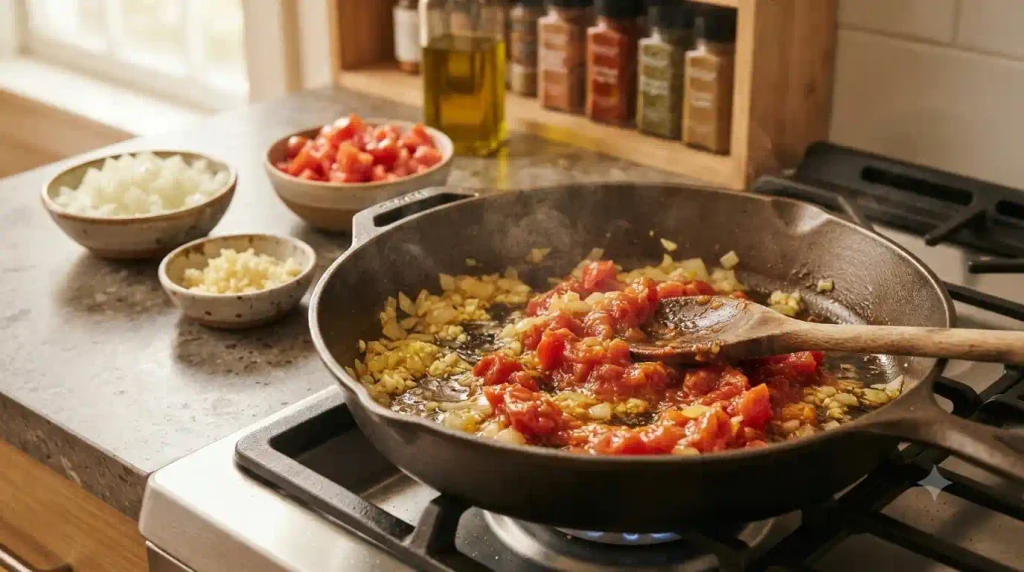
Reduce the heat to medium-low.
Add the chopped onion to the remaining pork fat and cook for about 3 minutes, stirring regularly.
Add the garlic and cook for another 30–60 seconds.
Garlic burns quickly, so keep it moving. You’re looking for fragrant garlic, not dark brown garlic.
Add the diced tomatoes and cook for 4–5 minutes, pressing them gently with your spoon as they soften.
The mixture should become juicy and almost jammy.
Step 3: Cook the Bagoong
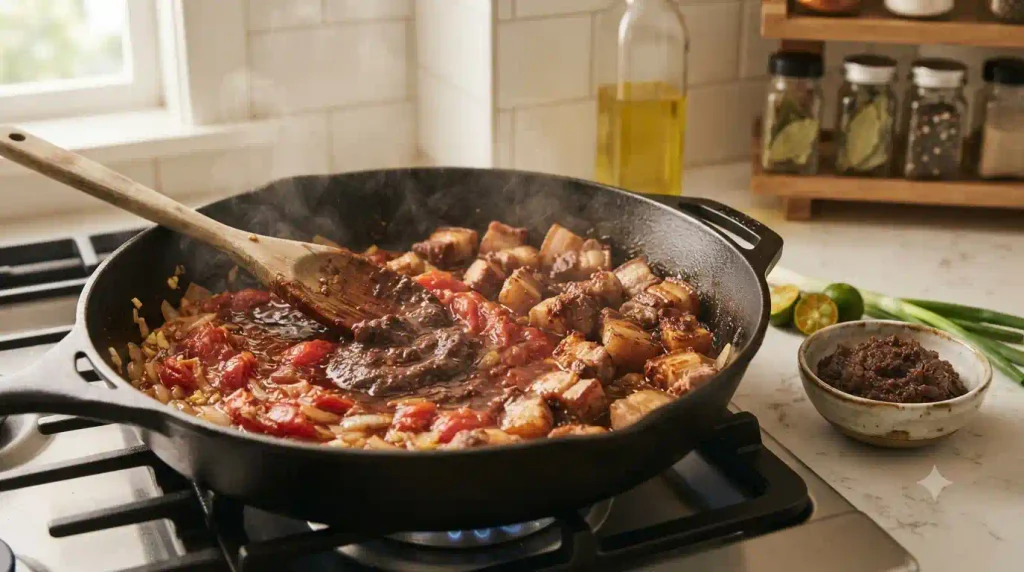
Add ⅓ cup bagoong alamang to the tomato mixture.
Cook for approximately 2 minutes, stirring continuously.
Briefly cooking the shrimp paste with the aromatics helps its strong flavor blend into the sauce rather than tasting separate from the other ingredients.
Return the browned pork and any collected juices to the pan.
Stir thoroughly so every piece gets coated.
Step 4: Simmer Until Tender
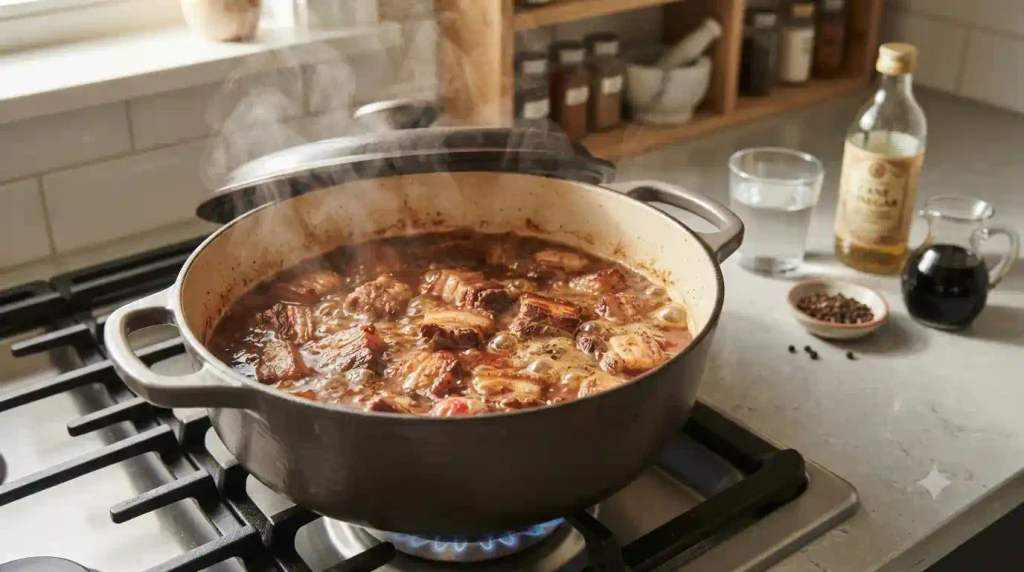
Pour in:
- ¼ cup vinegar
- 1 cup water
- 1 tablespoon soy sauce
- ½ teaspoon black pepper
Bring the mixture to a gentle simmer.
Once you’ve added the vinegar, allow it to simmer for about 1–2 minutes before aggressively stirring it. This helps soften the vinegar’s sharp raw aroma.
Cover the pan partially and reduce the heat to low.
Simmer for approximately 25–30 minutes, stirring occasionally, until the pork is tender.
If the pan becomes dry before the pork is tender, add water 2–3 tablespoons at a time.
For food safety, pork should reach at least 145°F (63°C) internally followed by a short rest, although pork belly in this dish is cooked considerably longer to achieve a tender texture.
Step 5: Create the Sticky Glaze
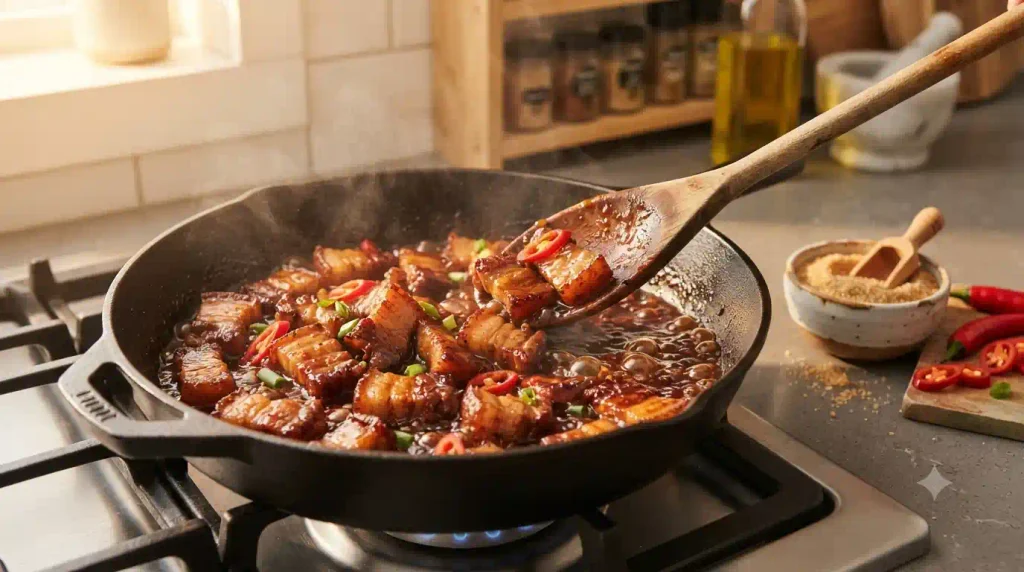
Once the pork is tender, remove the lid.
Add 2 tablespoons brown sugar and the sliced chilli, if using.
Increase the heat slightly to medium-low or medium and cook uncovered for another 8–12 minutes.
Stir increasingly often as the liquid evaporates.
You’ll notice the sauce transform from thin and watery to dark, glossy, and sticky.
Don’t walk away during these last few minutes. Sugar and rendered pork fat can go from beautifully caramelized to scorched surprisingly quickly.
The sauce is ready when it coats the pork instead of pooling heavily underneath it.
Step 6: Taste, Balance, and Serve
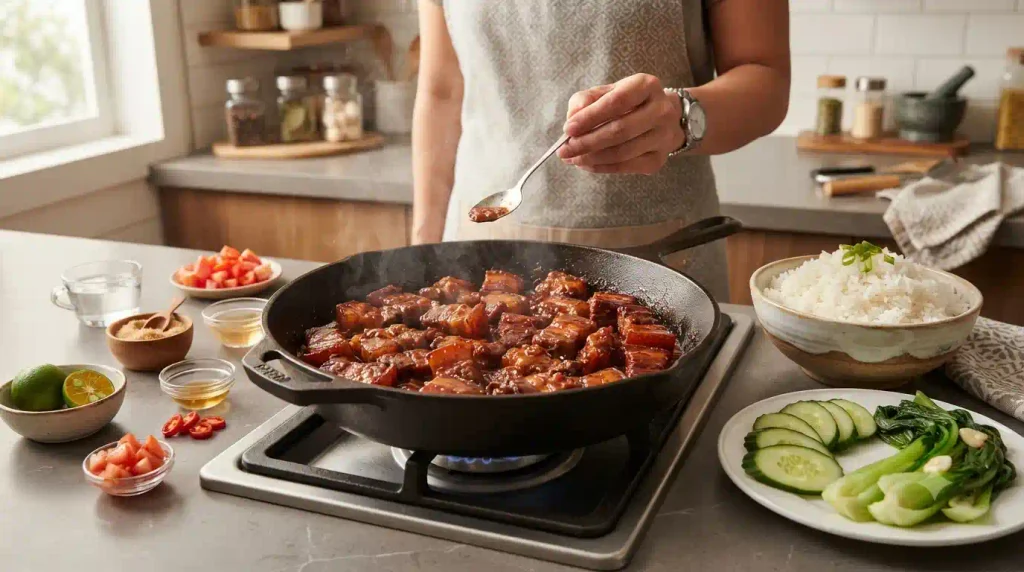
Reduce the heat to low and taste a small spoonful of sauce.
This final adjustment is important because bagoong brands vary.
If the sauce tastes:
- Too salty: Add a splash of water and a little more tomato.
- Too sour: Add ½–1 teaspoon brown sugar.
- Too sweet: Add a small splash of vinegar.
- Too rich: Add 1 teaspoon calamansi or lime juice.
- Not spicy enough: Add sliced chilli.
Turn off the heat and allow the pork to sit for about 5 minutes.
Serve hot over steamed jasmine rice. A side of cucumber, steamed vegetables, or lightly sautéed greens provides a refreshing contrast to the rich pork.
Health Benefits
Pork binagoongan is an indulgent dish, particularly when prepared with pork belly, but it still provides several useful nutrients.
Protein: Pork supplies complete protein containing essential amino acids needed for normal muscle maintenance and tissue repair.
B vitamins: Pork naturally contains several B vitamins, including thiamine (vitamin B1), which helps the body release energy from food.
Garlic and onions: These aromatics contain naturally occurring plant compounds while contributing substantial flavor without requiring additional fat.
Tomatoes: Tomatoes provide vitamin C, potassium, and lycopene, a carotenoid antioxidant.
There are also two nutritional points worth keeping in mind. Pork belly is high in fat, and shrimp paste and soy sauce can make this dish high in sodium.
For a lighter everyday version, replace some or all of the pork belly with pork shoulder, use a little less bagoong, and serve a moderate portion alongside vegetables and rice.
Nutrition Information (Per Serving)
The following values are approximate because pork belly fat content and bagoong brands vary considerably.
| Nutrient | Approx. Amount |
|---|---|
| Calories | 540 kcal |
| Protein | 24 g |
| Fat | 44 g |
| Carbohydrates | 12 g |
Note: Rice is not included in these estimates. Exact nutrition will change depending on the specific pork, shrimp paste, soy sauce, sugar, and portion size used.
Pro Tips & Variations
1. Brown the pork properly.
Those golden edges aren’t just for looks. Browning creates deeper roasted flavors that make the finished sauce taste much more developed.
2. Don’t season with salt at the beginning.
Bagoong and soy sauce already contain plenty of sodium. Taste the completed sauce before deciding whether it needs anything salty.
3. Control the heat during reduction.
Once brown sugar goes into the pan, moderate heat is your friend. Very high heat can burn the sugars before the sauce reaches the right consistency.
4. Let tomatoes cook down properly.
If you can still see lots of firm raw tomato pieces when adding the bagoong, give them another couple of minutes. Soft tomatoes blend naturally into the sauce.
5. Make it leaner with pork shoulder.
Substitute 2 lb pork shoulder for pork belly. The finished dish won’t be quite as rich, but it will still be tender and flavorful.
6. Make it hotter.
Add extra red chilli or a sliced bird’s-eye chilli during the final reduction.
7. Add eggplant.
Fried or sautéed eggplant is excellent with binagoongan because it absorbs the savory sauce beautifully.
8. Don’t over-reduce it.
Remember that the sauce thickens slightly as it cools. Stop cooking when it’s glossy and coating the pork rather than waiting until the pan looks completely dry.
9. Adjust sugar to your bagoong.
Some commercial sautéed shrimp pastes already contain sugar. If yours tastes sweet straight from the jar, start with 1 tablespoon brown sugar, then adjust at the end.
Easy Ingredient Swaps
| Original Ingredient | Substitute |
|---|---|
| Pork belly | Pork shoulder |
| Cane vinegar | White vinegar |
| Calamansi | Fresh lime |
| Brown sugar | Light brown sugar or coconut sugar |
| Fresh red chilli | Chilli flakes |
| Jasmine rice | Long-grain rice or brown rice |
How Much Does It Cost to Make?
Prices vary significantly by location and store, especially for pork and imported Filipino ingredients. For a US household, this is a reasonable rough estimate:
| Ingredient | Estimated Cost |
|---|---|
| Pork belly | $9.00–$13.00 |
| Bagoong alamang | $1.50–$2.50 |
| Onion, garlic & tomatoes | $2.00–$3.00 |
| Vinegar, soy sauce & sugar | $0.75–$1.25 |
| Chilli, lime & seasonings | $0.75–$1.50 |
| Estimated Recipe Total | $14.00–$21.00 |
| Approx. Cost Per Serving | $2.35–$3.50 |
Pantry staples will obviously lower the amount you actually spend at the grocery store.
For UK cooks, pork belly and bagoong are readily found in many larger supermarkets and Asian or Filipino grocery shops, though the final cost will depend heavily on whether the shrimp paste is imported.
Frequently Asked Questions
What is pork binagoongan made of?
Traditional pork binagoongan is a Filipino dish centered around pork and bagoong alamang, or fermented shrimp paste. Recipes vary by household, but garlic, onion, tomatoes, vinegar, chillies, and sometimes sugar are commonly used to balance the intense savory flavor.
This sticky version uses brown sugar and a final reduction to create a glossy sauce that clings to the pork.
Why is my pork binagoongan too salty?
The most likely culprit is the bagoong. Salt levels vary considerably between brands, and adding soy sauce or additional salt can push the dish too far.
Add a little water and chopped tomato, simmer briefly, then taste again. A small amount of sugar can soften the perception of saltiness, but don’t add so much that the dish becomes dessert-sweet.
Next time, start with slightly less bagoong and adjust toward the end.
Can I make pork binagoongan ahead of time?
Yes. In fact, many strongly flavored braised dishes taste even better the following day.
Allow leftovers to cool, transfer them to an airtight container, and refrigerate promptly. Use refrigerated leftovers within about 3–4 days.
Reheat thoroughly until steaming hot throughout. If the refrigerated sauce has become very thick, add a tablespoon or two of water before reheating.
What should I serve with sticky pork binagoongan?
Steamed jasmine rice is the classic choice because it absorbs the intensely flavored sauce.
For balance, add something fresh or lightly cooked alongside it. Good options include:
- Sliced cucumber
- Steamed green beans
- Bok choy
- Sautéed leafy greens
- Eggplant
- Fresh tomatoes
- Calamansi or lime wedges
Fresh vegetables are especially welcome here because the pork itself is wonderfully rich.
Final Thoughts
Sticky Pork Binagoongan is the kind of dinner that rewards a little patience at the stove. Let the pork brown, give the tomatoes time to soften, and don’t rush that final sauce reduction. Those small details are what turn a handful of bold ingredients into tender pork coated in a beautifully balanced, glossy glaze.
Most importantly, taste before making the final adjustment. Bagoong varies from jar to jar, so your own palate is the best finishing tool in the kitchen. Serve it with plenty of warm rice, something fresh and crunchy on the side, and don’t be surprised when everyone starts spooning the extra sauce from the pan.