

There’s something deeply satisfying about making a Louisiana classic in your own kitchen, especially when the craving hits for something smoky, savory, and packed with Cajun flavor. Homemade boudin may sound like a weekend project, but the process is surprisingly approachable. A pot will get messy, the kitchen will smell incredible, and tasting the warm filling before stuffing the sausage is one of the best parts.
Traditional Louisiana boudin combines tender pork, rice, aromatics, herbs, and Cajun spices inside a sausage casing. The secret is keeping the filling moist rather than dry or crumbly. This version stays close to classic boudin while using ingredients that are easy to find in American and UK supermarkets.
Easy Authentic Louisiana Boudin Sausage Recipe
This homemade boudin has a tender, juicy pork-and-rice filling with onion, celery, garlic, green pepper, fresh herbs, and just enough Cajun heat. Serve it warm from the casing, grill it for a lightly smoky finish, or use the filling to make boudin balls.
Prep & Cook Time
| Details | Time / Amount |
|---|---|
| Prep Time | 30 minutes |
| Cook Time | 1 hour 30 minutes |
| Stuffing Time | 20–30 minutes |
| Total Time | About 2 hours 30 minutes |
| Servings | 10 |
| Yield | About 4–5 lb boudin |
What Equipment Do You Need?
You don’t need a professional sausage kitchen. A few reliable tools will do the job:
- Large Dutch oven or heavy-bottomed pot
- Sharp chef’s knife
- Cutting board
- Measuring cups and spoons
- Fine-mesh strainer or colander
- Large mixing bowl
- Meat grinder with a coarse grinding plate
- Sausage stuffer or sausage-stuffing attachment
- Large spoon or silicone spatula
- Kitchen thermometer
- Kitchen scissors
- Large saucepan for warming the finished links
No meat grinder? A food processor can work in short pulses. Just don’t puree the pork. Boudin should have a soft but noticeable texture rather than becoming a smooth paste.
Ingredients
For the Pork
- 2½ lb (1.13 kg) boneless pork shoulder, cut into 1½-inch chunks
- ½ lb (225 g) pork liver, trimmed and cut into chunks
- 1 large yellow onion, roughly chopped
- 2 celery stalks, roughly chopped
- 1 medium green bell pepper, roughly chopped
- 5 garlic cloves, smashed
- 2 bay leaves
- 1½ teaspoons kosher salt
- 1 teaspoon freshly ground black pepper
- ½ teaspoon cayenne pepper, or to taste
- 1 teaspoon paprika
- 1 teaspoon dried thyme
- 4 cups (950 ml) water or low-sodium chicken stock
For the Boudin Filling
- 4 cups cooked long-grain white rice, cooled slightly
- ½ cup finely sliced green onions
- ½ cup chopped fresh flat-leaf parsley
- 1–2 teaspoons Cajun seasoning, adjusted to taste
- ½–1 cup reserved pork cooking liquid, as needed
- Salt and black pepper, to taste
For Stuffing
- 10–12 feet natural hog casings, rinsed and soaked according to package instructions
Food safety note: Raw pork and liver should be kept refrigerated until you’re ready to cook them. Wash your hands, knife, cutting board, and any surfaces that contact raw meat with hot, soapy water.
Why Each Ingredient Matters
| Ingredient | Why It Matters |
|---|---|
| Pork shoulder | Provides rich pork flavor and enough fat to keep the filling moist. |
| Pork liver | Gives traditional Louisiana boudin its distinctive savory, earthy depth. |
| White rice | Absorbs flavorful juices and creates boudin’s characteristic soft texture. |
| Onion | Adds sweetness and savory depth as it cooks with the pork. |
| Celery | Brings an earthy freshness and forms part of the classic Cajun aromatic base. |
| Green bell pepper | Adds a mild vegetal flavor essential to the Cajun “holy trinity.” |
| Garlic | Adds aromatic depth without overpowering the pork. |
| Cayenne | Provides the familiar Louisiana-style heat. |
| Paprika | Adds warm pepper flavor and a little color. |
| Thyme | Gives the meat mixture an herbal background note. |
| Green onions | Bring freshness and a mild onion bite to the cooked filling. |
| Parsley | Brightens a filling that would otherwise be very rich. |
| Cooking liquid | One of the keys to juicy boudin. It moistens the rice while carrying concentrated pork flavor throughout the filling. |
| Natural hog casings | Give homemade boudin its traditional sausage shape and characteristic bite. |
Boudin is different from many sausages because rice is a major part of the filling. You aren’t aiming for a dense, springy sausage texture. Good boudin should be moist, tender, and almost creamy while still retaining some texture.
Step-by-Step Instructions
Step 1: Prepare the Pork and Aromatics
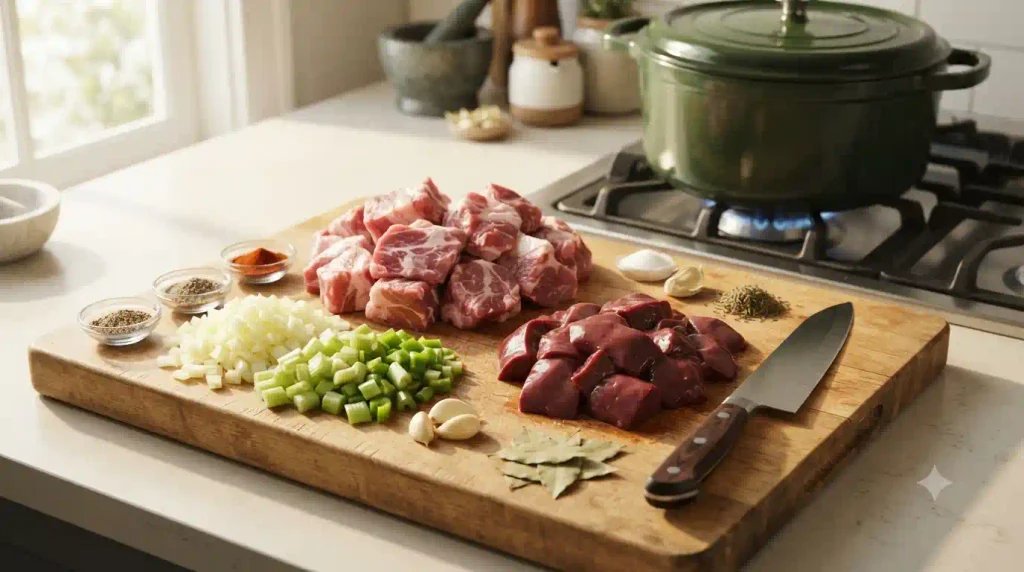
Trim away any very tough connective tissue from the pork shoulder, but don’t remove all the fat. That fat contributes flavor and prevents dry boudin.
Cut the pork shoulder and liver into manageable chunks.
Place the pork shoulder, liver, onion, celery, green bell pepper, garlic, bay leaves, salt, black pepper, cayenne, paprika, and thyme into a large Dutch oven.
Pour in 4 cups water or chicken stock. The liquid doesn’t need to completely drown the meat.
Bring everything to a gentle boil, then immediately reduce the heat.
Step 2: Simmer Until the Pork Is Tender
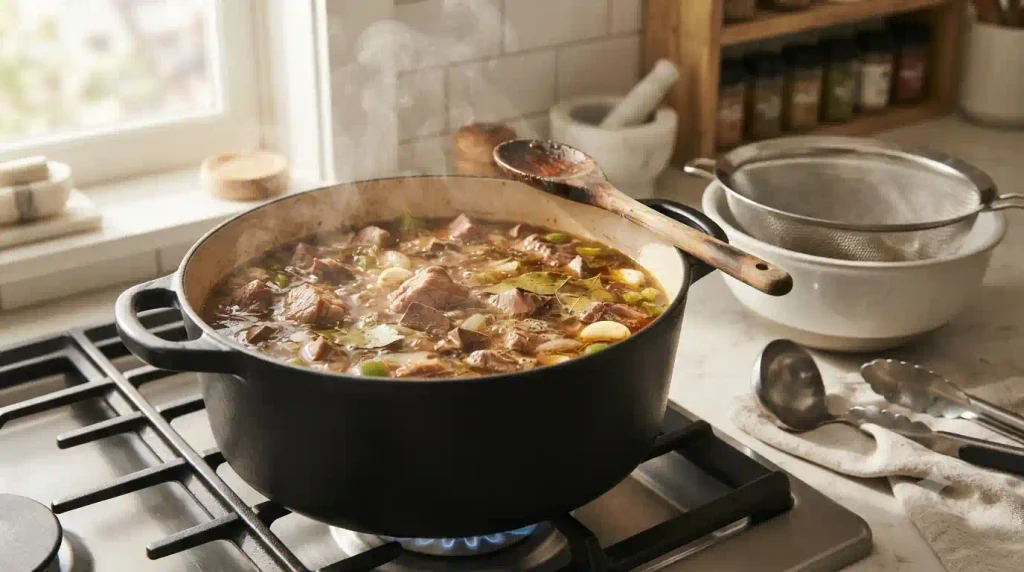
Cover the pot partially and maintain a gentle simmer for approximately 60–75 minutes, stirring occasionally.
The pork should become very tender and register at least 145°F (63°C) internally, while the liver should be thoroughly cooked. For this recipe, the pork will normally cook well beyond its minimum safe temperature because we’re intentionally making it tender enough to grind.
Avoid a violent boil. A steady simmer gives you tender meat and a better-tasting cooking liquid.
Remove the pot from the heat.
Discard the bay leaves.
Strain the mixture, saving at least 2 cups of the cooking liquid. Don’t pour it down the sink—you may need it to get that classic moist boudin texture.
Let the meat cool enough to handle safely.
Step 3: Grind the Pork Mixture
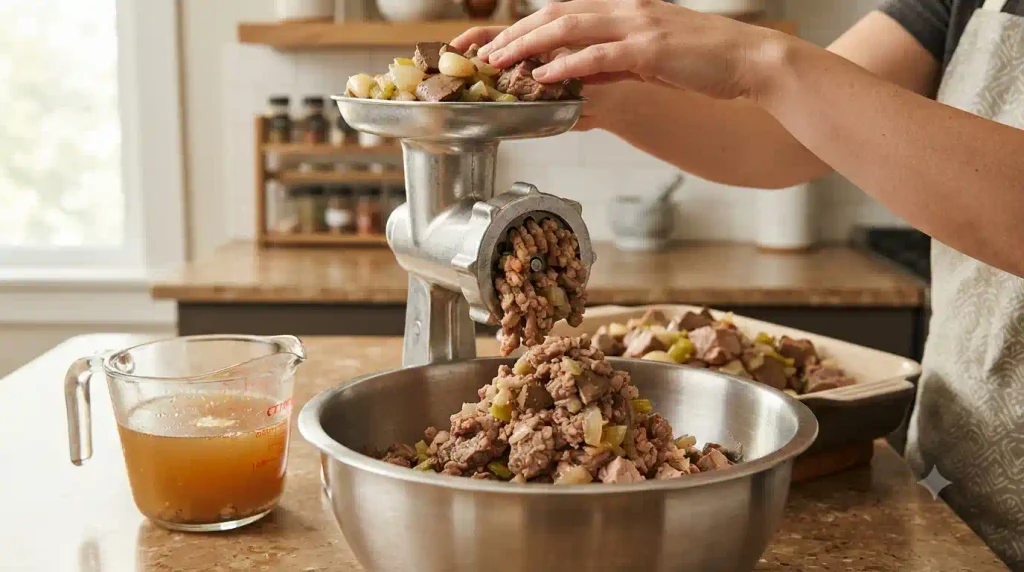
Pass the cooked pork, liver, vegetables, and garlic through the coarse plate of a meat grinder.
If using a food processor, work in small batches. Pulse several times until finely chopped.
Don’t turn it into pâté. Some texture is important.
Transfer everything to a large mixing bowl.
You’ll probably notice a few uneven pieces at this point. That’s perfectly fine. Homemade boudin should feel rustic rather than factory-smooth.
Step 4: Mix the Boudin Filling
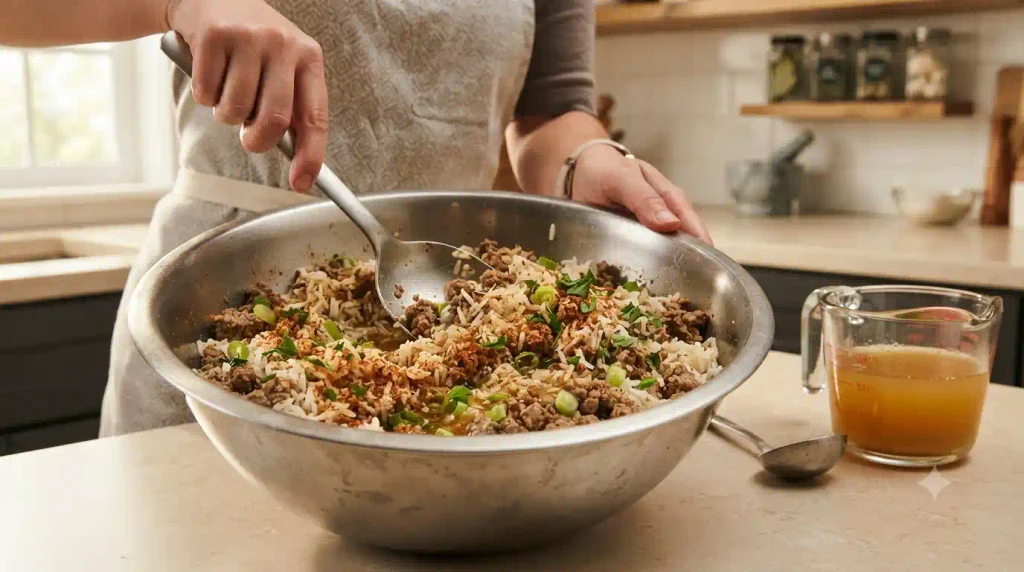
Add the 4 cups cooked rice, green onions, parsley, and 1 teaspoon Cajun seasoning to the ground pork.
Mix thoroughly.
Gradually stir in ½ cup reserved cooking liquid.
Check the consistency. Add additional cooking liquid a few tablespoons at a time until the filling is moist and cohesive.
The mixture should hold together when squeezed but shouldn’t be watery.
Taste and adjust the salt, pepper, cayenne, or Cajun seasoning.
Because the meat is already fully cooked, this is your opportunity to fine-tune the seasoning before stuffing.
One important tip: season a little more boldly than you think you need to. Rice softens salt and spice, so an under-seasoned meat mixture can become bland once everything is combined.
Step 5: Stuff the Sausage Casings
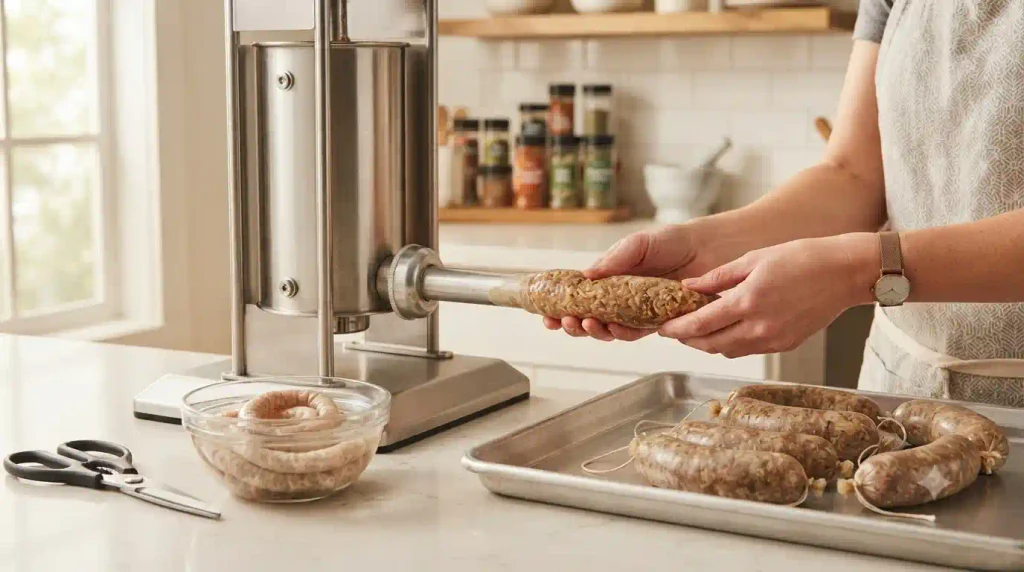
Rinse the soaked hog casings thoroughly and run cool water through the inside.
Fit a casing onto the sausage stuffer nozzle, leaving several inches hanging from the end.
Fill the stuffer with your boudin mixture.
Slowly stuff the casing, supporting it with one hand as it fills.
Don’t pack it extremely tightly. Boudin filling is softer than conventional sausage meat, and an overfilled casing can burst.
Twist or tie the sausage into approximately 5–6 inch links.
Continue until all the filling has been used.
Prick obvious air pockets carefully with a clean sausage pricker or fine needle.
Step 6: Warm and Serve the Boudin
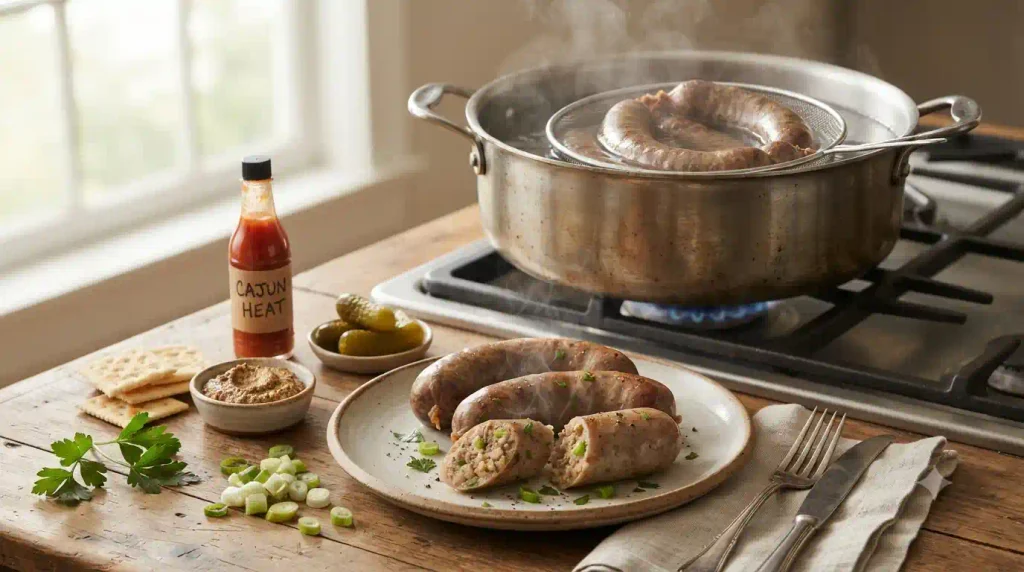
Because the filling is already cooked, you only need to heat the stuffed boudin thoroughly before serving.
For traditional gently heated boudin, bring a pot of water to approximately 170–180°F (77–82°C). Don’t let it reach a rolling boil.
Add the links and warm for approximately 10–15 minutes, or until the center reaches 165°F (74°C).
You can also grill the links over medium-low heat until heated through and lightly browned. Turn them carefully because boudin casings can split more easily than firm sausages.
Serve immediately with crackers, mustard, hot sauce, or your favorite Cajun sides.
And yes, eating the filling straight from the casing is perfectly acceptable—that’s how plenty of boudin lovers enjoy it.
Health Benefits
Boudin is comfort food rather than a low-calorie dish, but several ingredients provide useful nutrients.
- Pork provides protein, which supports muscle maintenance and helps make the meal satisfying.
- Pork liver is nutrient-dense and naturally contains iron, vitamin B12, vitamin A, folate, and other micronutrients.
- Bell peppers provide vitamin C and plant compounds.
- Onions, garlic, celery, parsley, and green onions add flavor along with small amounts of vitamins, minerals, and phytonutrients.
- Rice provides carbohydrates, giving the body an accessible source of energy.
A note about liver: because liver is exceptionally high in preformed vitamin A, very large or frequent portions aren’t suitable for everyone. Pregnant people are commonly advised to avoid liver and liver products because of their high vitamin A content; follow your clinician or local health authority’s guidance.
Boudin can also contain substantial sodium and saturated fat, so portion size matters if either is something you’re watching.
Nutrition Information (Per Serving)
Approximate nutrition for 1 of 10 servings:
| Nutrient | Approximate Amount |
|---|---|
| Calories | 390 kcal |
| Protein | 26 g |
| Fat | 20 g |
| Carbohydrates | 27 g |
| Fiber | 1–2 g |
| Sodium | Varies by seasoning |
Note: These numbers are estimates. Actual nutrition varies significantly depending on the fat content of your pork, the amount of cooking liquid retained, casing size, stock, and Cajun seasoning used.
Pro Tips & Variations
1. Don’t Let the Filling Get Dry
Dry boudin is one of the easiest mistakes to make.
Rice absorbs moisture while the mixture rests. Keep some of the pork cooking liquid nearby and add enough to create a juicy, cohesive filling.
2. Taste Before Stuffing
This is a major advantage of boudin—the filling is cooked before it goes into the casing.
Taste it.
Need salt? Add it.
Want more Cajun kick? Add cayenne or Cajun seasoning.
Once you’ve stuffed 20 links, adjusting the seasoning becomes much harder.
3. Don’t Overstuff the Casings
Leave a little flexibility in each link. Stuffing too tightly increases the chance of splitting during heating or grilling.
4. Make Boudin Without Casings
Don’t own a sausage stuffer?
Skip the casings entirely.
Serve the warm pork-and-rice mixture as boudin dressing, or chill it and turn it into boudin balls.
5. Make Boudin Balls
Chill the prepared filling until firm.
Roll it into balls, coat them in seasoned flour, beaten egg, and breadcrumbs, then fry until crisp and hot in the center.
It’s a great way to use leftover filling.
6. Adjust the Liver
Traditional recipes vary considerably.
If you’re new to liver, reduce it slightly for a milder flavor. If you already love authentic, earthy boudin, keep the full amount.
7. Make It Spicier
Add:
- Extra cayenne
- Louisiana-style hot sauce
- More Cajun seasoning
- Finely minced fresh jalapeño
Add heat gradually. You can always put hot sauce on the finished sausage, but you can’t take cayenne back out.
8. Grill Carefully
Grilled boudin is fantastic because the casing develops a little color and smoky flavor.
Keep the heat moderate. High heat can split the casing before the middle becomes properly hot.
9. Don’t Throw Away the Cooking Broth
That cloudy, deeply savory liquid is packed with pork and aromatic flavor.
Besides moistening the filling, leftovers can be frozen and used in rice, gravy, beans, gumbo, or soup.
How Much Does It Cost to Make?
Prices vary by location and supermarket, but here’s a realistic rough estimate for a batch in the United States.
| Ingredient | Estimated Cost |
|---|---|
| Pork shoulder | $8–$12 |
| Pork liver | $2–$4 |
| Rice | $1–$2 |
| Onion, celery & bell pepper | $3–$5 |
| Garlic & herbs | $2–$3 |
| Seasonings | $1–$2 |
| Hog casings | $3–$5 |
| Estimated Total | $20–$33 |
For approximately 10 generous servings, that works out to roughly $2.00–$3.30 per serving.
If you already have rice, herbs, and Cajun spices in the pantry, your actual cost can be lower.
UK prices will differ, and pork liver may be easier to find than natural sausage casings in some supermarkets. A local butcher is often a good place to ask for casings.
Frequently Asked Questions
What is Louisiana boudin made of?
Traditional Louisiana boudin blanc typically contains cooked pork, pork liver, rice, onions or other aromatics, green onions, parsley, and Cajun seasonings. The mixture is usually stuffed into natural pork casings.
Recipes vary from one Louisiana family, butcher shop, and region to another, which is part of boudin’s charm.
Do you eat the casing on boudin sausage?
Natural hog casings are edible.
Some people bite directly into the link, while others squeeze the soft filling from the casing and eat only the filling. Both approaches work.
If you grill your boudin until the casing becomes lightly browned, it can develop a pleasant snap.
How do you keep homemade boudin from becoming dry?
The most important trick is reserved cooking liquid.
After mixing the pork with rice, gradually add broth until the filling is soft and moist. Remember that rice continues absorbing moisture as it sits.
Also avoid choosing extremely lean pork. Pork shoulder’s fat contributes significantly to the proper texture.
Can you freeze homemade boudin?
Yes.
Cool freshly prepared boudin promptly, then refrigerate it in an airtight container if you’re eating it soon. For longer storage, wrap individual links well and freeze them in freezer-safe bags or containers.
For best quality, use frozen homemade boudin within about 2–3 months.
Thaw frozen links safely in the refrigerator rather than leaving them on the counter. Reheat cooked boudin until the center reaches 165°F (74°C).
Final Thoughts
Homemade Louisiana boudin is the kind of recipe that looks complicated until you’ve made your first batch. Once the pork has simmered, the rest is mostly grinding, seasoning, mixing, and stuffing.
The biggest secrets are simple: use flavorful pork, don’t skip the aromatics, season the rice generously, and keep that filling moist. Don’t worry if your first links aren’t perfectly even. A slightly crooked homemade sausage filled with juicy, peppery pork and rice still tastes fantastic.
Serve your boudin hot with crackers, mustard, pickles, or Louisiana-style hot sauce, and save any extra filling for boudin balls. Once you learn the basic method, it’s easy to adjust the heat and seasoning until you’ve created your own house version.