

There’s something especially satisfying about pulling a bubbling tray of buttery seafood from the oven. When the craving for restaurant-style crab hits, you don’t need a huge stockpot or a complicated seafood boil. Baked snow crab legs are one of those dinners that look impressive on the table but require surprisingly little hands-on work.
This recipe coats sweet, tender snow crab in garlicky melted butter, fresh lemon, and simple seasonings before a quick trip through a hot oven. The butter slips into the shells as they bake, while the lemon keeps every bite bright rather than heavy. Grab plenty of napkins, because cracking shells and getting a little buttery is part of the fun.
Snow Crab Legs Recipe – Baked in Garlic Butter
This easy baked snow crab legs recipe turns pre-cooked crab clusters into a rich, juicy seafood dinner with very little prep. The key is warming rather than aggressively cooking the crab. Most frozen snow crab legs sold in supermarkets are already cooked, so too much oven time can make the delicate meat dry and rubbery.
Prep & Cook Time
| Details | Time / Amount |
|---|---|
| Prep Time | 10 minutes |
| Cook Time | 15 minutes |
| Total Time | 25 minutes |
| Servings | 4 |
| Oven Temperature | 400°F / 200°C |
What Equipment Do You Need?
You don’t need specialized seafood equipment for this recipe. A few everyday kitchen tools will do the job:
- Large rimmed baking sheet or shallow baking dish
- Aluminum foil
- Small saucepan or microwave-safe bowl
- Measuring spoons
- Sharp chef’s knife
- Cutting board
- Pastry brush or spoon
- Citrus juicer or handheld lemon squeezer
- Kitchen tongs
- Seafood crackers or kitchen shears for serving
Kitchen tip: A rimmed baking sheet is important because melted garlic butter can run as the crab heats. Nobody wants hot butter dripping onto the bottom of the oven.
Ingredients
For the Snow Crab Legs
- 2 pounds snow crab leg clusters, thawed if frozen
- ½ cup (1 stick / 113 g) unsalted butter
- 5 garlic cloves, finely minced
- 2 tablespoons fresh lemon juice
- 1 teaspoon Old Bay seasoning
- ½ teaspoon smoked paprika
- ¼ teaspoon freshly ground black pepper
- ⅛ teaspoon red pepper flakes, optional
- 2 tablespoons fresh parsley, finely chopped
- 1 lemon, cut into wedges for serving
Optional for Serving
- Extra melted butter
- Chopped fresh parsley
- Lemon wedges
- Crusty bread
A note about salt: Snow crab naturally contains sodium, and seafood seasoning often contains added salt. Taste before adding any extra.
Why Each Ingredient Matters
Snow crab legs: Snow crab has naturally sweet, delicate meat. Because commercially sold clusters are commonly pre-cooked, they mainly need gentle reheating.
Unsalted butter: Butter carries the garlic and spices into every little opening in the shell. Using unsalted butter also gives you more control over the final sodium level.
Fresh garlic: Garlic becomes mellow and aromatic when warmed in butter. Five cloves may look generous, but crab can handle bold garlic flavor beautifully.
Lemon juice: Seafood and acidity are natural partners. Lemon cuts through the richness of the butter and makes the crab’s sweetness taste brighter.
Old Bay seasoning: This classic seafood seasoning brings savory, peppery and gently spicy notes without requiring a long list of individual spices.
Smoked paprika: Paprika adds warm color and a subtle smoky background without overpowering the crab.
Black pepper: A small amount gives the butter sauce gentle warmth.
Red pepper flakes: These are optional, but a pinch adds enough heat to balance the richness without turning the recipe genuinely spicy.
Fresh parsley: Parsley adds freshness, color and a clean herbal finish after all that butter.
Step-by-Step Instructions
Step 1: Thaw and Prepare the Crab Legs
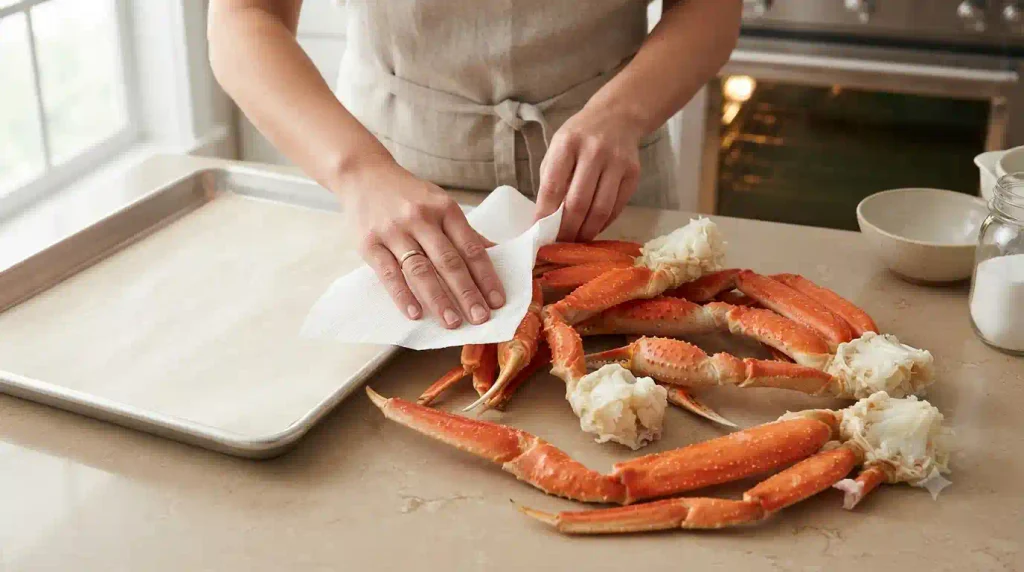
If your snow crab legs are frozen, thaw them in the refrigerator overnight. For a quicker method, place the sealed crab under cold running water until thawed.
Do not leave frozen seafood sitting at room temperature for extended periods.
Preheat your oven to 400°F (200°C).
Pat the crab clusters gently with paper towels to remove excess surface moisture. Arrange them in a single layer on a large rimmed baking sheet or baking dish.
If some clusters are particularly large, separate them at the joints so everything fits comfortably.
Step 2: Make the Garlic Butter
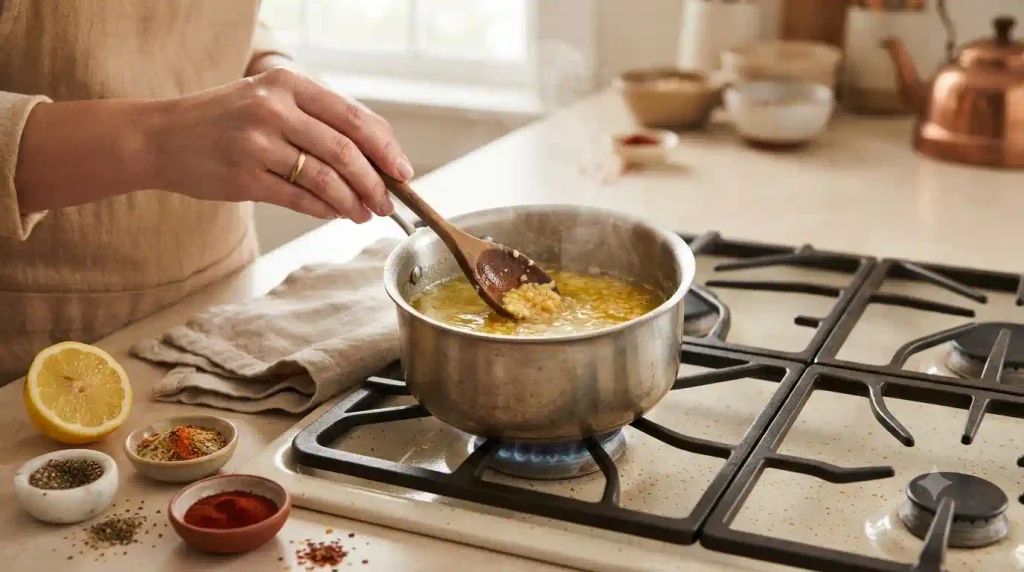
Place ½ cup butter in a small saucepan over low heat.
Once melted, add the minced garlic and cook gently for about 30–60 seconds, stirring frequently.
You want the garlic fragrant, not browned. Burnt garlic becomes bitter quickly.
Remove the saucepan from the heat and stir in:
- 2 tablespoons lemon juice
- 1 teaspoon Old Bay seasoning
- ½ teaspoon smoked paprika
- ¼ teaspoon black pepper
- ⅛ teaspoon red pepper flakes, if using
The sauce should smell intensely garlicky and buttery at this stage—that’s exactly what you want.
Step 3: Coat the Snow Crab Legs
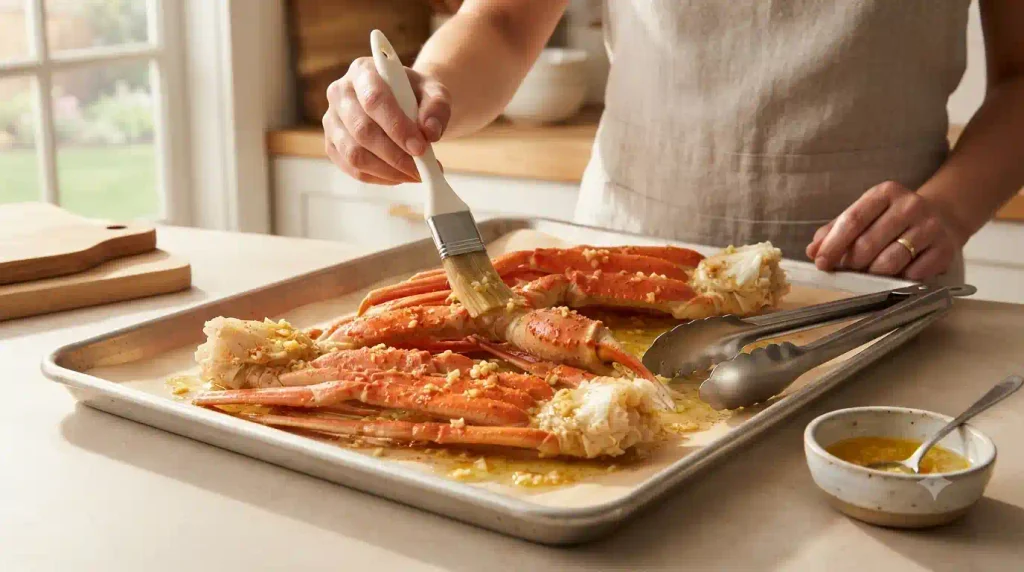
Spoon or brush approximately two-thirds of the garlic butter generously over the crab clusters.
Turn the clusters with kitchen tongs and coat the other side as well.
Don’t worry if the butter doesn’t completely penetrate the shells. As the crab heats, the warm seasoned butter will collect around the joints and openings.
Reserve the remaining garlic butter for finishing.
Step 4: Cover and Bake
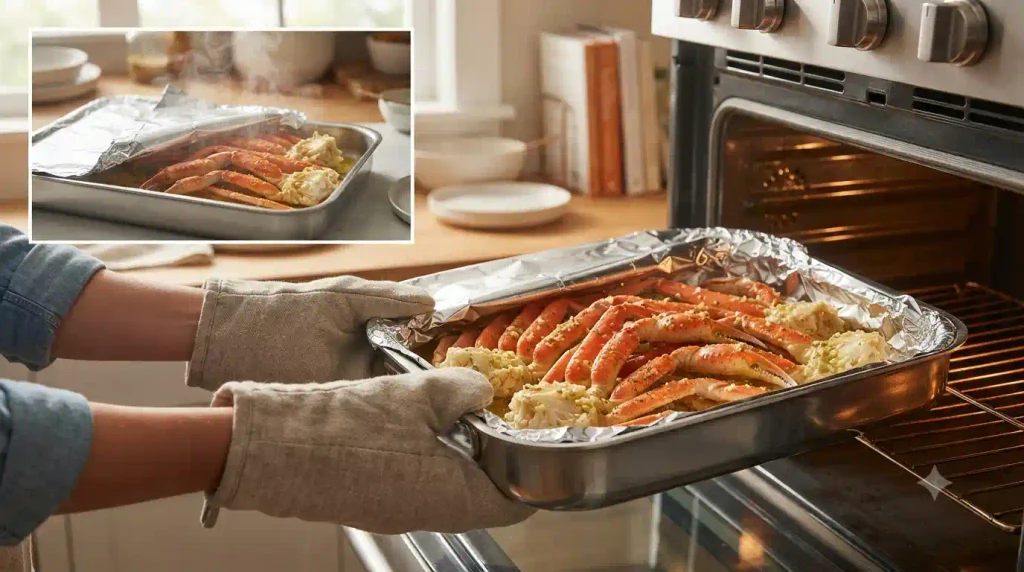
Cover the baking dish tightly with aluminum foil.
Bake at 400°F (200°C) for about 12 minutes.
Covering the crab is one of my favorite tricks here. It traps steam inside the pan, helping the crab warm gently instead of drying out.
Remember that most supermarket snow crab has already been cooked. The goal is simply to get the meat thoroughly hot while preserving its tender texture.
Use oven mitts when removing the pan—the baking sheet and escaping steam will be very hot.
Step 5: Finish Uncovered
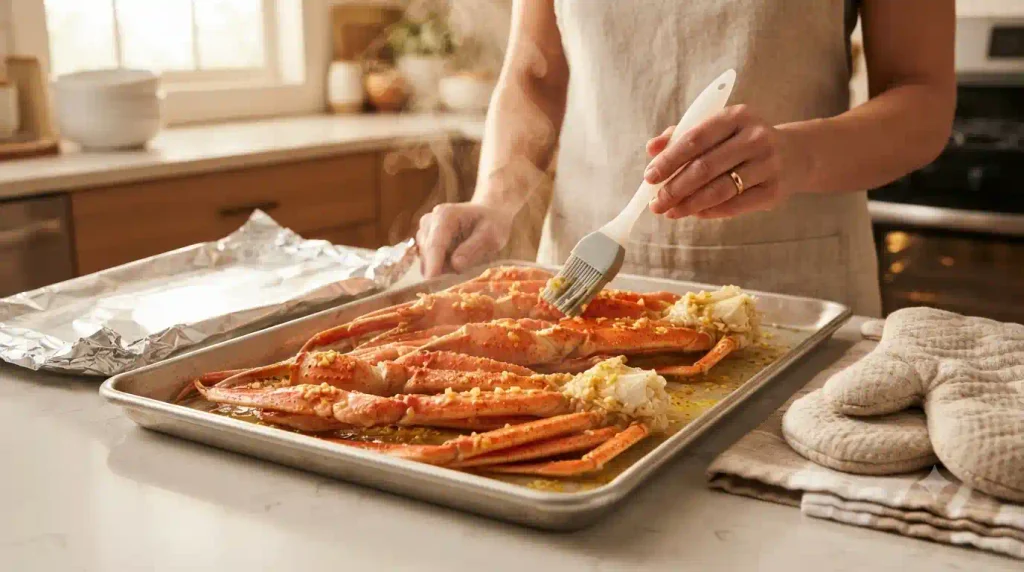
Carefully remove the foil, keeping your face and hands away from the escaping steam.
Brush the crab with the remaining garlic butter.
Return it to the oven uncovered for another 2–3 minutes, just until everything is piping hot and beautifully glossy.
Avoid leaving it in longer simply to get more color. Crab meat can go from tender to dry surprisingly fast.
Step 6: Garnish and Serve
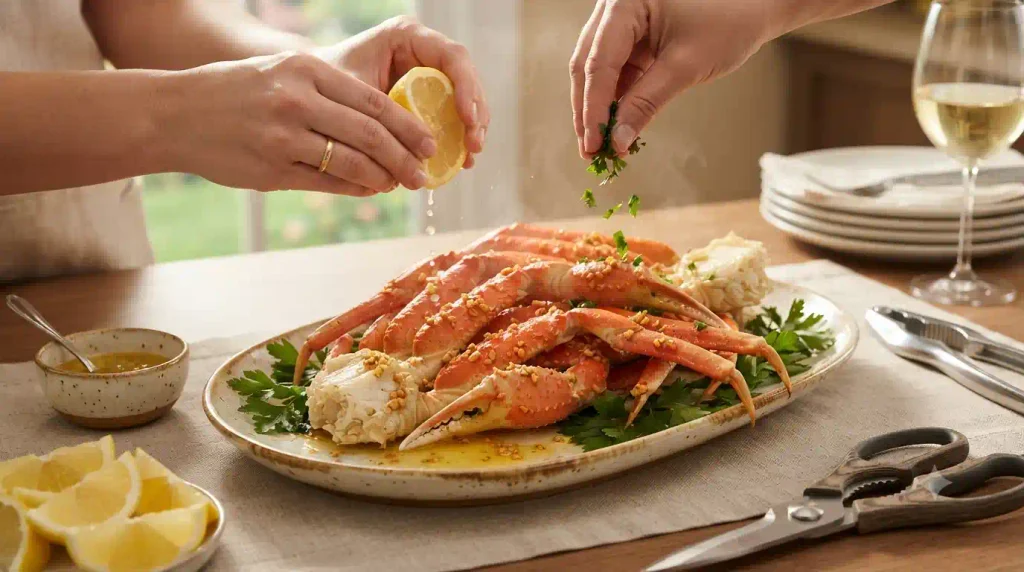
Remove the crab legs from the oven and immediately sprinkle them with 2 tablespoons chopped parsley.
Squeeze a little fresh lemon juice over the top.
Transfer the clusters to a serving platter and serve hot with:
- Lemon wedges
- Extra melted butter
- Seafood crackers
- Plenty of napkins
Kitchen shears make stubborn shells much easier to handle. Cut carefully along the shell rather than trying to force it apart with a knife.
Health Benefits
Snow crab isn’t just delicious—it also provides several valuable nutrients.
High in Protein
Crab provides high-quality protein that helps support muscle maintenance, tissue repair and normal body functions.
Provides Vitamin B12
Shellfish can be a useful source of vitamin B12, a nutrient involved in healthy red blood cell formation and normal nervous-system function.
Contains Important Minerals
Crab supplies minerals including selenium and zinc. These nutrients play roles in immune function and normal cellular processes.
Naturally Low in Carbohydrates
Crab itself contains very little carbohydrate, making this a naturally lower-carb main dish.
What About the Butter?
Butter makes this dish richer in calories and saturated fat. If you want a lighter version, use ¼–⅓ cup butter instead of ½ cup and increase the lemon juice slightly.
Crab can also be fairly high in sodium, particularly when combined with seafood seasoning. If you’re watching sodium intake, choose a lower-sodium seasoning and avoid adding extra salt.
Nutrition Information (Per Serving)
The following values are approximate and will vary depending on the crab brand, how much butter sauce is actually consumed, and the exact portion size.
| Nutrient | Approximate Amount |
|---|---|
| Calories | 390 kcal |
| Protein | 31 g |
| Fat | 28 g |
| Carbohydrates | 3 g |
Nutrition note: Because much of the butter may remain in the baking dish or shells, actual intake can differ significantly from calculated recipe values.
Pro Tips & Variations
1. Don’t Overcook the Crab
This is the most important rule.
Most frozen snow crab legs have already been cooked before freezing. You’re reheating them, not cooking raw crab from scratch.
Once the meat is thoroughly heated, serve it.
2. Thaw Before Baking for the Best Texture
You can heat frozen clusters, but thawed crab warms more evenly. It also makes it easier for the garlic butter to reach the spaces between the shells.
3. Add the Garlic Gently
Keep your heat low when preparing garlic butter. Garlic burns faster than many home cooks expect, and browned garlic can turn bitter.
4. Try Cajun Garlic Butter
Replace the Old Bay with 1 teaspoon Cajun seasoning.
Check the seasoning’s salt content first because some blends are quite salty.
5. Make It Spicier
Increase the red pepper flakes to ½ teaspoon, or add a few dashes of your favorite hot sauce to the melted butter.
6. Try Lemon-Herb Butter
For a brighter version, add:
- 1 teaspoon lemon zest
- 1 tablespoon chopped chives
- 1 tablespoon parsley
This works especially well for spring and summer dinners.
7. Make a Lighter Garlic-Lemon Version
Reduce the butter to ¼ cup and combine it with 2 tablespoons extra-virgin olive oil.
You’ll still get plenty of richness with slightly less butter.
8. Add Parmesan Carefully
For a richer variation, sprinkle a small amount of finely grated Parmesan over the clusters during the final uncovered minutes.
Use it lightly. Crab has a delicate sweetness that can easily disappear under too much cheese.
9. Serve With Something That Catches the Butter
Garlic butter inevitably ends up in the bottom of the dish. Crusty bread is perfect for soaking it up.
For a complete seafood dinner, pair the crab with roasted potatoes, corn on the cob, asparagus, green beans, rice or a crisp green salad.
How Much Does It Cost to Make?
Snow crab is the biggest expense, and its price can vary considerably depending on season, region and whether you’re buying fresh or frozen seafood.
For a typical U.S. supermarket shop:
| Ingredient | Estimated Cost |
|---|---|
| 2 lb snow crab legs | $24–$36 |
| Butter | $1.50–$2.50 |
| Fresh garlic | $0.50–$1 |
| Lemon | $0.75–$1.50 |
| Seasonings | $0.50–$1 |
| Fresh parsley | $0.75–$1.50 |
| Estimated Total | $28–$43 |
| Approx. Cost Per Serving | $7–$11 |
Prices vary significantly by location and season, so treat these numbers as a rough planning estimate rather than a fixed cost.
Buying frozen crab clusters when they’re on sale is usually the easiest way to bring the price down.
Frequently Asked Questions
Do you need to thaw snow crab legs before baking?
Thawing is recommended because the crab warms faster and more evenly. The easiest method is to thaw frozen clusters overnight in the refrigerator. If you’re short on time, keep them sealed and thaw them under cold running water.
How long should you bake snow crab legs?
For thawed, pre-cooked snow crab legs, about 12–15 minutes at 400°F (200°C) is generally enough to heat them thoroughly. Large or unusually cold clusters may need slightly longer. Avoid unnecessarily prolonged baking because the delicate meat can dry out.
How do you know when snow crab legs are done?
Pre-cooked snow crab legs are ready when the meat is thoroughly heated and steaming hot when opened. The aroma should be sweet and briny rather than strongly fishy. Since commercially sold crab is often already cooked, you’re mainly checking that it has reheated completely.
Can I bake snow crab legs from frozen?
Yes, but they’ll take longer and may heat less evenly. Covering the baking dish helps trap steam. For the most predictable results, thaw them first. If cooking directly from frozen, allow additional time and check that the crab is heated thoroughly before serving.
Final Thoughts
Baked snow crab legs prove that an impressive seafood dinner doesn’t need to be complicated. A handful of ingredients, one baking dish and about 25 minutes are enough to put buttery, garlicky crab on the table.
The biggest secret is restraint: don’t overcook the crab. Warm it gently, be generous with the garlic butter, finish with fresh lemon, and serve it while it’s hot. And don’t worry about making a mess while cracking the shells—that’s half the fun of crab night.