

There’s something deeply satisfying about a pot of pork slowly bubbling away in the kitchen. The kind of cooking that fills the house with a rich, savory smell and makes everyone wonder when dinner will be ready. If you’re craving something hearty, comforting, and packed with flavor, pork trotters are worth the time.
This pork trotters recipe turns an inexpensive cut into something incredibly tender, sticky, and luxurious. The meat becomes soft enough to pull away from the bone, while the savory-sweet braising sauce clings to every bite. It’s the sort of meal that feels special without requiring fancy equipment or complicated techniques.
Prep & Cook Time
| Detail | Time |
|---|---|
| Prep Time | 20 minutes |
| Cook Time | 2 hours 30 minutes |
| Total Time | 2 hours 50 minutes |
| Servings | 4 |
| Cooking Method | Stovetop braise |
Difficulty: Easy to moderate
The long, gentle cooking time is the secret here. Pork trotters contain plenty of collagen and connective tissue, which slowly breaks down during braising and gives the finished dish its rich, silky texture.
What Equipment Do You Need?
You only need a few basic kitchen tools:
- Large heavy-bottomed pot or Dutch oven with a lid
- Sharp chef’s knife
- Cutting board
- Kitchen tongs
- Wooden spoon
- Small bowl for mixing the sauce
- Measuring spoons and cups
- Paper towels for drying the pork
A Dutch oven works especially well because it holds steady heat and gives the trotters plenty of room to simmer without crowding.
Ingredients
For the Pork Trotters
- 3 lb (1.35 kg) pork trotters, cleaned and split if possible
- 1 tablespoon vegetable oil
- 1 medium yellow onion, sliced
- 5 cloves garlic, minced
- 1-inch piece fresh ginger, sliced
- 2 green onions, roughly chopped
- 2 cups chicken stock
- 1 cup water
- ½ cup low-sodium soy sauce
- ¼ cup dark soy sauce
- ⅓ cup brown sugar
- 2 tablespoons rice vinegar
- 2 tablespoons Shaoxing wine or dry sherry
- 1 tablespoon hoisin sauce
- 1 teaspoon toasted sesame oil
- 1 teaspoon five-spice powder
- ½ teaspoon freshly ground black pepper
- 2 star anise
- 1 cinnamon stick
- 2 dried red chilies, optional
- 1 bay leaf
For Finishing
- 1 tablespoon honey
- 1 tablespoon water
- 2 green onions, thinly sliced
- 1 teaspoon toasted sesame seeds
Optional Serving Ideas
- Steamed jasmine rice
- Egg noodles
- Stir-fried bok choy
- Steamed broccoli
- Pickled vegetables
- Cucumber salad
Tip: If your butcher can split the trotters lengthwise, ask for that. The exposed bone and connective tissue help release more flavor and gelatin into the braising liquid.
Why Each Ingredient Matters
- Pork trotters: This is the star of the recipe. They are rich in collagen, connective tissue, and skin, which become wonderfully gelatinous during slow cooking.
- Soy sauce: Adds salt and deep umami flavor.
- Dark soy sauce: Gives the sauce its darker color and a richer, slightly sweeter character.
- Brown sugar: Balances the saltiness while helping create that glossy, sticky finish.
- Rice vinegar: A little acidity keeps the sauce from tasting heavy.
- Shaoxing wine: Adds depth and rounds out the savory flavors.
- Hoisin sauce: Brings sweetness, spice, and extra umami.
- Garlic and ginger: These aromatics cut through the richness of the pork and give the braise a fragrant backbone.
- Star anise and cinnamon: Add warm, aromatic notes without overpowering the pork.
- Five-spice powder: A small amount adds complexity and that distinctive Chinese-inspired flavor.
- Chicken stock: Provides a flavorful liquid base for the braise.
- Honey: Helps create the shiny, sticky coating during the final stage.
- Sesame oil: A tiny amount at the end adds nutty aroma. Don’t overdo it.
Step-by-Step Instructions
Step 1: Clean and Prepare the Pork Trotters
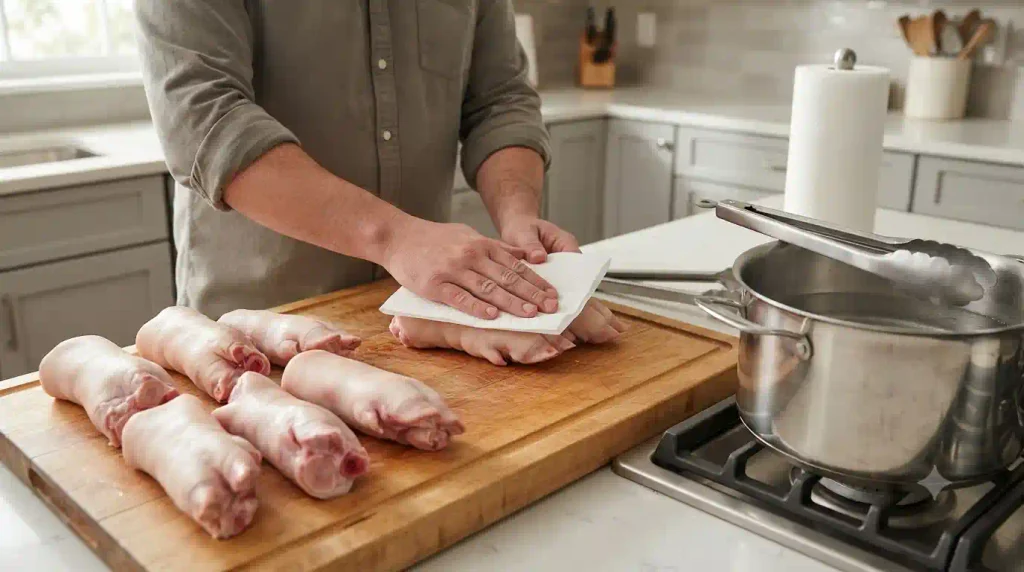
Rinse the pork trotters under cool running water and pat them thoroughly dry with paper towels.
If they have any stray hairs, remove them carefully with clean kitchen tweezers or ask your butcher to clean them beforehand.
For an extra-clean tasting broth, place the trotters in a large pot, cover them with water, and bring to a boil. Boil for 5 minutes, then drain and rinse the pork.
This quick blanching step removes excess impurities and gives you a cleaner braising sauce.
Food safety tip: Keep raw pork separate from ready-to-eat foods, and wash your hands, cutting board, and utensils thoroughly after handling it.
Step 2: Brown the Trotters and Aromatics
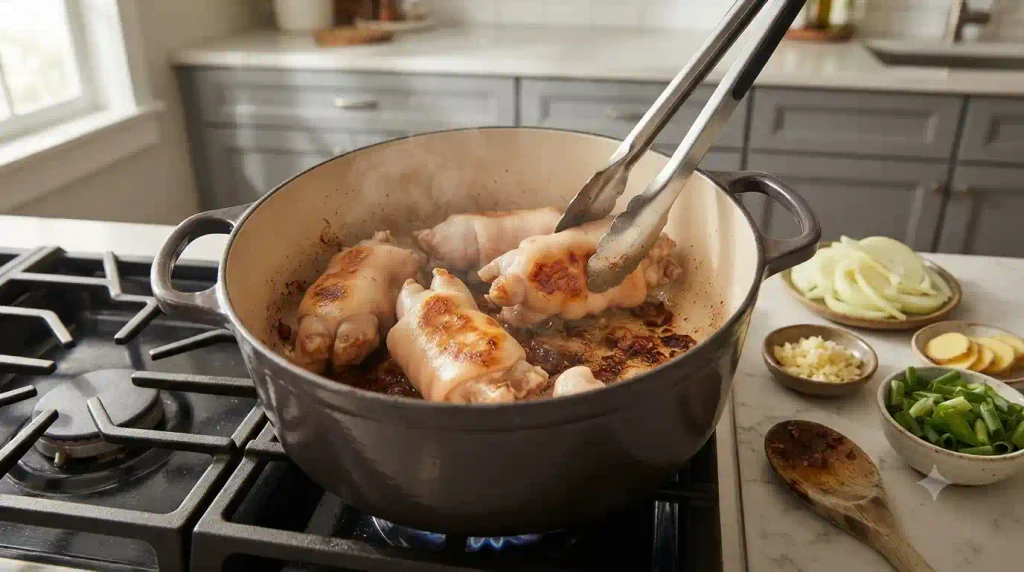
Heat 1 tablespoon vegetable oil in a large heavy-bottomed pot over medium-high heat.
Add the cleaned pork trotters in batches if necessary. Brown them for about 3–4 minutes per side, turning with tongs.
You don’t need to brown every surface perfectly. Just aim for some golden-brown color.
Remove the pork and set it aside.
Add the sliced onion, garlic, ginger, and green onions to the same pot. Cook for 2–3 minutes, stirring often, until fragrant.
Don’t worry if a few browned bits stick to the bottom. Those little bits are packed with flavor and will loosen when the liquid goes in.
Step 3: Build the Braising Sauce
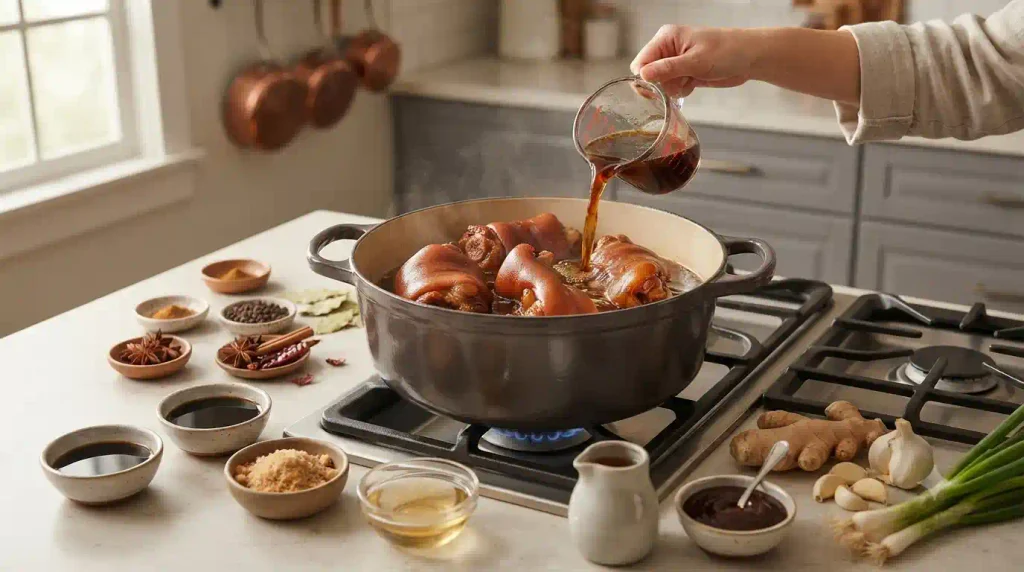
Return the pork trotters to the pot.
Add:
- 2 cups chicken stock
- 1 cup water
- ½ cup soy sauce
- ¼ cup dark soy sauce
- ⅓ cup brown sugar
- 2 tablespoons rice vinegar
- 2 tablespoons Shaoxing wine
- 1 tablespoon hoisin sauce
- 1 teaspoon sesame oil
- 1 teaspoon five-spice powder
- ½ teaspoon black pepper
- 2 star anise
- 1 cinnamon stick
- 2 dried chilies, if using
- 1 bay leaf
Stir gently to combine.
The liquid should come roughly halfway to two-thirds of the way up the pork. You don’t need to completely submerge the trotters.
Bring everything to a gentle boil.
Step 4: Slowly Braise Until Tender
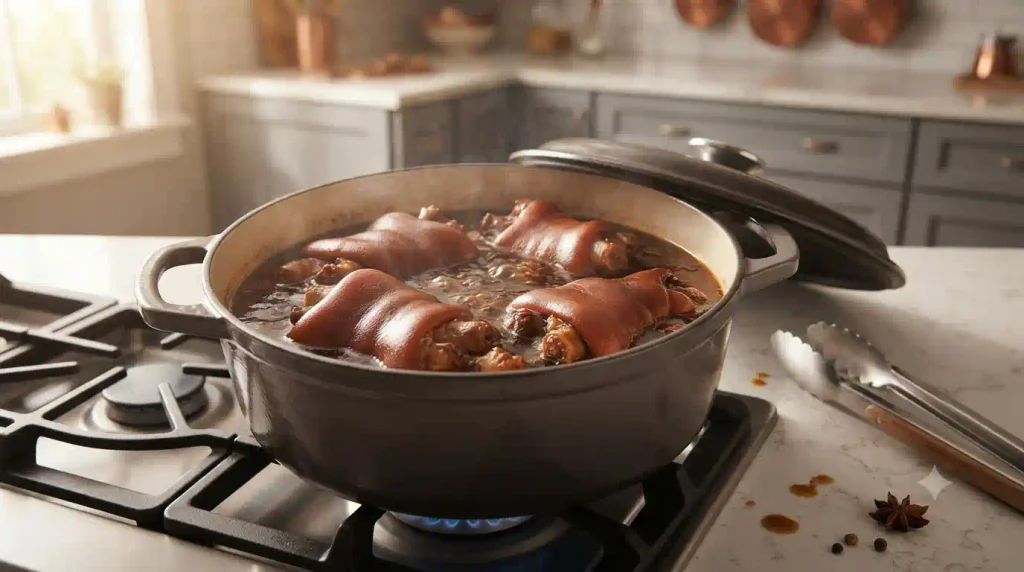
Once the liquid begins bubbling, reduce the heat to low and cover the pot.
Let the pork gently simmer for 2 to 2½ hours, turning the trotters every 30–40 minutes.
Keep an eye on the pot. You want a gentle simmer, not a vigorous boil.
The trotters are ready when the skin looks plump and glossy and the meat and connective tissue are extremely tender. A fork should slide into the meat with very little resistance.
If the liquid is evaporating too quickly, add a splash of hot water or stock.
Chef’s tip: Low and slow is the whole game here. A hard boil can make the outside of the pork tough before the connective tissue has had time to properly break down.
Step 5: Reduce and Create the Sticky Glaze
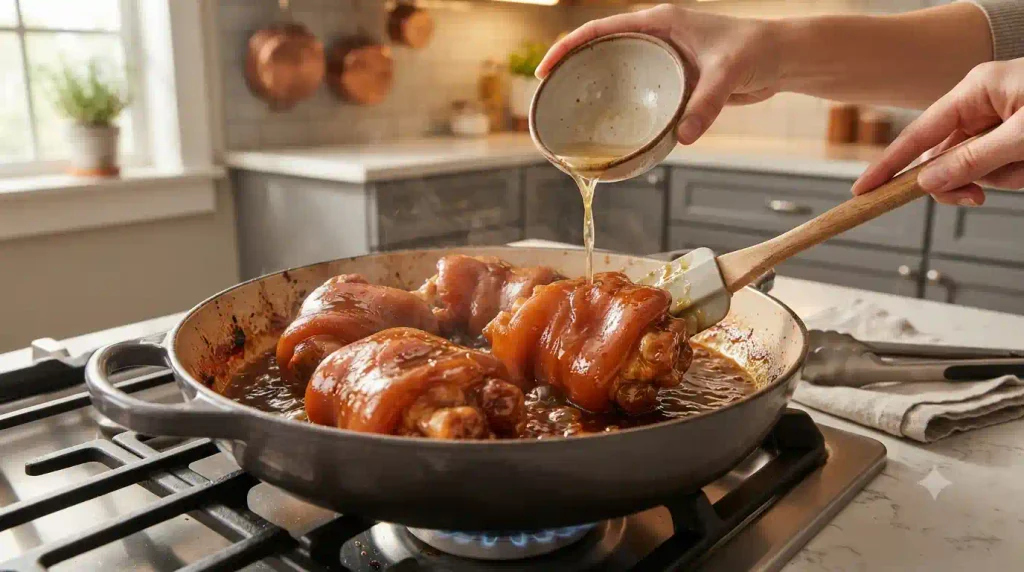
Once the trotters are tender, carefully transfer them to a plate.
Remove the star anise, cinnamon stick, bay leaf, and any large pieces of ginger.
Turn the heat to medium and simmer the braising liquid uncovered for 10–15 minutes, or until it reduces and becomes noticeably thicker.
Mix 1 tablespoon honey with 1 tablespoon water, then stir it into the reduced sauce.
Return the pork trotters to the pot and gently turn them through the glaze.
Cook for another 3–5 minutes, spooning the sauce over the pork until the skin becomes shiny and sticky.
If the sauce tastes too salty, add a small splash of water and a little extra rice vinegar. If it needs more sweetness, add another teaspoon of honey.
Step 6: Garnish and Serve
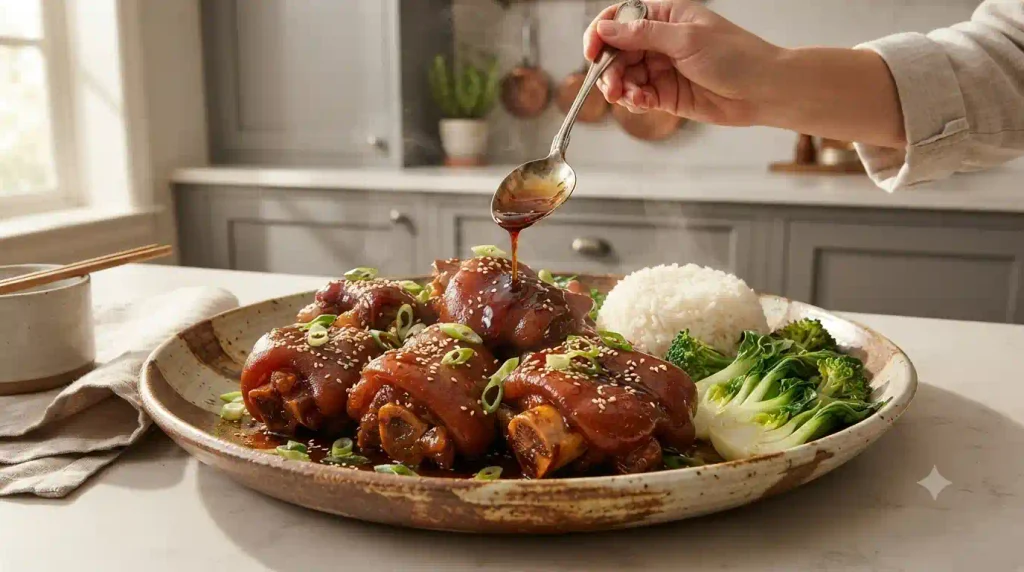
Turn off the heat and let the pork rest for 5–10 minutes.
Transfer the sticky pork trotters to a serving platter and spoon plenty of the glossy sauce over the top.
Finish with sliced green onions and toasted sesame seeds.
Serve immediately with steamed jasmine rice, noodles, or simple vegetables.
Be careful when eating because the bones can become very hot during braising.
Health Benefits
Pork trotters aren’t exactly a low-fat food, but they can still fit into a balanced diet when served with vegetables and sensible portions.
- Protein: Pork provides protein that supports muscle maintenance and normal body functions.
- Collagen-rich connective tissue: Slow-cooked pork skin and connective tissue are naturally rich in collagen-derived gelatin.
- Iron: Pork contributes iron, which is important for healthy red blood cell production.
- Zinc: Pork contains zinc, a mineral involved in immune function and metabolism.
- B vitamins: Pork provides several B vitamins that help the body convert food into energy.
- Ginger and garlic: These aromatic ingredients add flavor while contributing small amounts of beneficial plant compounds.
- Green vegetables: Serving the trotters with bok choy, broccoli, or another vegetable adds fiber, vitamins, and minerals to the meal.
Because trotters can be quite rich, pair them with steamed vegetables and rice rather than a very heavy side dish.
Nutrition Information (Per Serving)
Approximate values based on 4 servings and will vary depending on the size of the trotters, amount of skin and fat, and how much sauce is consumed.
| Nutrient | Approximate Amount |
|---|---|
| Calories | 520 kcal |
| Protein | 39 g |
| Fat | 31 g |
| Carbohydrates | 20 g |
The sauce contributes a significant portion of the carbohydrates and sodium, so using low-sodium soy sauce can help keep the overall salt level more moderate.
Pro Tips & Variations
For the Most Tender Pork
Don’t rush the braise. Pork trotters need time for collagen and connective tissue to soften. If they’re still chewy after two hours, keep cooking them gently.
For a Cleaner Sauce
Blanching the trotters before braising is worth the extra few minutes. It removes impurities and gives the final sauce a cleaner appearance.
For Extra Sticky Skin
After the braising liquid has reduced, spoon the thick sauce over the trotters repeatedly for several minutes. The natural gelatin and reduced sugars will create a beautiful glossy coating.
For a Less Sweet Version
Reduce the brown sugar to ¼ cup and skip the honey at the end. Add an extra teaspoon of rice vinegar for balance.
For More Heat
Add ½–1 teaspoon crushed red pepper flakes or another dried chili to the braising liquid.
For a Deeper Flavor
Brown the pork thoroughly before adding the liquid. Don’t overcrowd the pot, or the trotters will steam instead of developing flavorful browned edges.
Make It Ahead
Pork trotters often taste even better the next day. Cool the cooked pork and sauce promptly, refrigerate in a covered container, and remove any solidified excess fat from the surface before reheating.
Reheat gently on the stovetop until the pork reaches 165°F (74°C) throughout.
How Much Does It Cost to Make?
Prices vary significantly by location and butcher, but pork trotters are usually one of the more economical pork cuts.
| Ingredient | Estimated Cost |
|---|---|
| 3 lb pork trotters | $8–$12 |
| Soy sauces | $1.50 |
| Aromatics | $2 |
| Chicken stock | $1.50 |
| Sugar, vinegar & wine | $2 |
| Spices | $1 |
| Honey & garnish | $1.50 |
| Estimated Total | $17.50–$21.50 |
That works out to approximately $4.40–$5.40 per serving for four servings, not including optional rice or vegetables.
The exact cost will depend on your local butcher, supermarket, and whether you already have pantry staples such as soy sauce and spices.
Frequently Asked Questions
Are pork trotters the same as pig feet?
Yes. Pork trotters are commonly referred to as pig feet or pig’s feet. The terminology varies by country and butcher. They contain skin, connective tissue, bones, and relatively little traditional muscle meat.
How long does it take to cook pork trotters?
For this recipe, allow about 2 to 2½ hours of gentle braising after preparation. Larger trotters or particularly tough cuts may need additional time. They’re done when the skin and connective tissue are very tender and easily pierced with a fork.
Why are my pork trotters still tough?
They probably need more cooking time. Pork trotters contain a lot of collagen and connective tissue, which needs prolonged gentle heat to break down. Keep the pot covered and maintain a low simmer until they become tender.
Can I make pork trotters in a slow cooker?
Yes. After blanching and browning the pork, transfer everything to a slow cooker and cook on LOW for about 7–8 hours, or until very tender. Reduce the braising liquid separately on the stovetop afterward to make the sticky glaze.
Final Thoughts
A good pork trotters recipe isn’t about complicated cooking. It’s about giving an inexpensive cut enough time to become something truly special. Keep the heat gentle, let the collagen slowly break down, and don’t rush the final reduction.
Serve those glossy, sticky trotters over fluffy rice with something fresh and green on the side, and you’ve got the kind of comforting meal that makes all those hours of slow cooking worthwhile. Take your time, trust the process, and let the sauce do the talking.