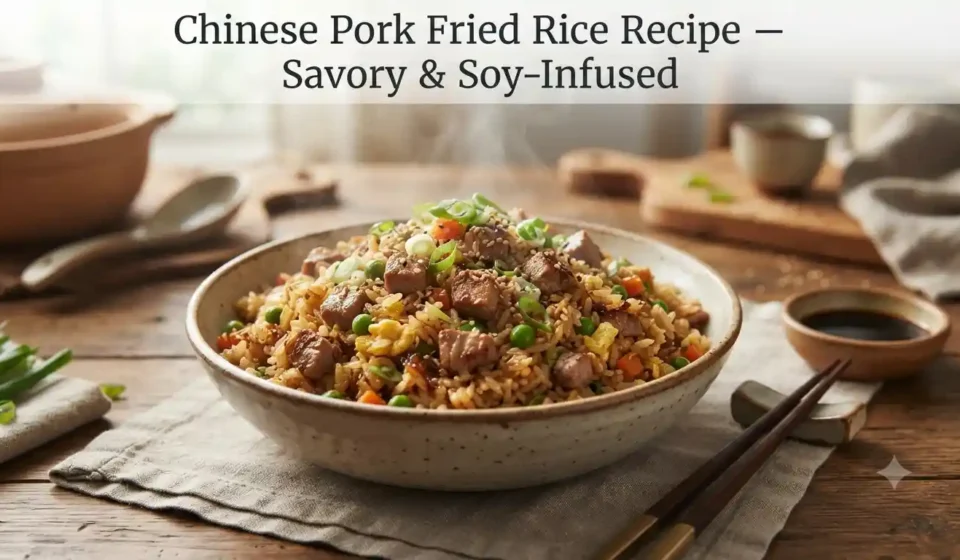

When the craving for takeout hits but you’d rather make dinner at home, this Chinese pork fried rice is exactly the kind of recipe to keep in your back pocket. It’s savory, fragrant, filling, and surprisingly quick once everything is chopped and ready. The combination of tender pork, fluffy rice, vegetables, egg, and soy sauce makes every bite satisfying without requiring a long list of fancy ingredients.
The best part is how forgiving fried rice can be in a real home kitchen. Have leftover rice from yesterday? Perfect. A few extra vegetables in the fridge? Toss them in. I’ve found that the biggest secret is simply keeping the pan hot and avoiding overcrowding it. Once your ingredients are prepped, dinner comes together fast, and the kitchen smells better than any delivery app ever could.
Chinese Pork Fried Rice Recipe – Savory & Soy-Infused
This easy pork fried rice uses cold cooked rice, ground or finely chopped pork, eggs, vegetables, aromatics, and savory soy-based seasoning. It’s ideal for a quick weeknight dinner and makes excellent use of leftovers.
The recipe serves 4 people and works especially well with day-old jasmine or long-grain white rice.
Prep & Cook Time
| Details | Time |
|---|---|
| Prep Time | 15 minutes |
| Cook Time | 15 minutes |
| Total Time | 30 minutes |
| Servings | 4 |
| Difficulty | Easy |
Best rice: Cold, cooked rice that has been refrigerated overnight gives the best fried-rice texture.
What Equipment Do You Need?
You only need a few basic kitchen tools:
- Large wok or heavy skillet
- Sharp chef’s knife
- Cutting board
- Wooden spoon or spatula
- Small bowl for whisking eggs
- Measuring spoons
- Measuring cups
- Large plate or bowl for holding cooked ingredients
A wok is wonderful because its shape makes tossing easy, but don’t worry if you only have a large skillet. A wide, heavy pan works very well at home.
Ingredients
For the Fried Rice
- 3 cups cooked and chilled jasmine or long-grain white rice
- 8 oz (225 g) ground pork or finely chopped boneless pork
- 2 large eggs
- 1 cup frozen peas and carrots, thawed
- ½ cup finely diced yellow onion
- 2 cloves garlic, minced
- 1 teaspoon fresh ginger, finely grated
- 2 green onions, thinly sliced
- 2 tablespoons neutral cooking oil, divided
- 2 tablespoons low-sodium soy sauce
- 1 tablespoon oyster sauce
- 1 teaspoon toasted sesame oil
- ½ teaspoon white pepper
- ¼ teaspoon salt, or to taste
Optional Garnishes
- Extra sliced green onions
- Toasted sesame seeds
- A small drizzle of chili oil
- Thinly sliced fresh red chili
Important: If your cooked rice is freshly made, spread it on a baking sheet and refrigerate it until thoroughly chilled. Hot, moist rice tends to steam in the pan instead of frying.
Why Each Ingredient Matters
- Cold cooked rice: Chilled rice has less surface moisture, so the individual grains stay separate instead of turning mushy.
- Pork: Adds protein, richness, and savory flavor. Ground pork distributes easily throughout the rice.
- Eggs: Bring richness and a soft texture while adding additional protein.
- Soy sauce: Supplies salt and deep umami flavor. Low-sodium soy sauce gives you more control over the final seasoning.
- Oyster sauce: Adds a concentrated savory-sweet note that makes fried rice taste more rounded.
- Garlic and ginger: These aromatics build the fragrant foundation of the dish.
- Onion: Adds gentle sweetness and texture as it cooks.
- Peas and carrots: Add color, mild sweetness, fiber, and a pleasant contrast to the savory pork.
- Sesame oil: A little goes a long way. Adding it near the end preserves its toasted aroma.
- White pepper: Gives the dish a classic peppery warmth without overpowering the other flavors.
- Green onions: Add a fresh, slightly sharp finish that balances the richer ingredients.
Step-by-Step Instructions
Step 1: Prepare the Rice and Ingredients
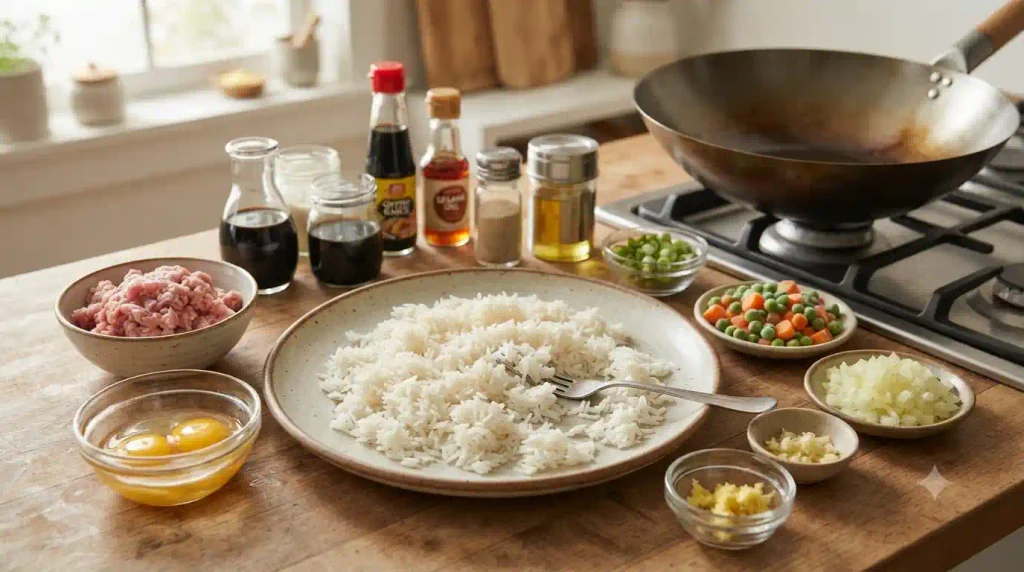
Break up any large clumps in your cold cooked rice with your fingers or a fork.
Whisk the eggs in a small bowl. Have the pork, vegetables, garlic, ginger, sauces, and seasonings measured and ready beside the stove.
This is one recipe where mise en place really matters. Once the pan gets hot, the cooking moves quickly.
Step 2: Cook the Pork
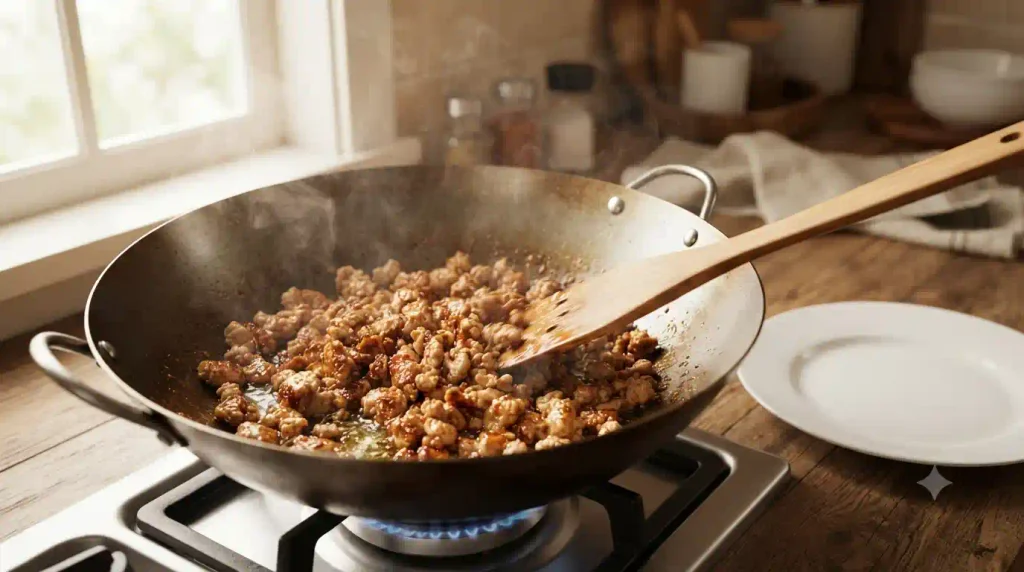
Heat 1 tablespoon of oil in a large wok or skillet over medium-high to high heat.
Add the pork and spread it into an even layer. Let it cook for about 1–2 minutes before stirring so it gets a little browning.
Break it into small pieces and continue cooking for approximately 4–5 minutes, or until completely cooked through with no pink center remaining.
Transfer the pork to a clean plate.
Food safety tip: Ground pork should be cooked thoroughly. If you use a food thermometer, cook ground pork to 160°F (71°C).
Step 3: Cook the Aromatics and Vegetables
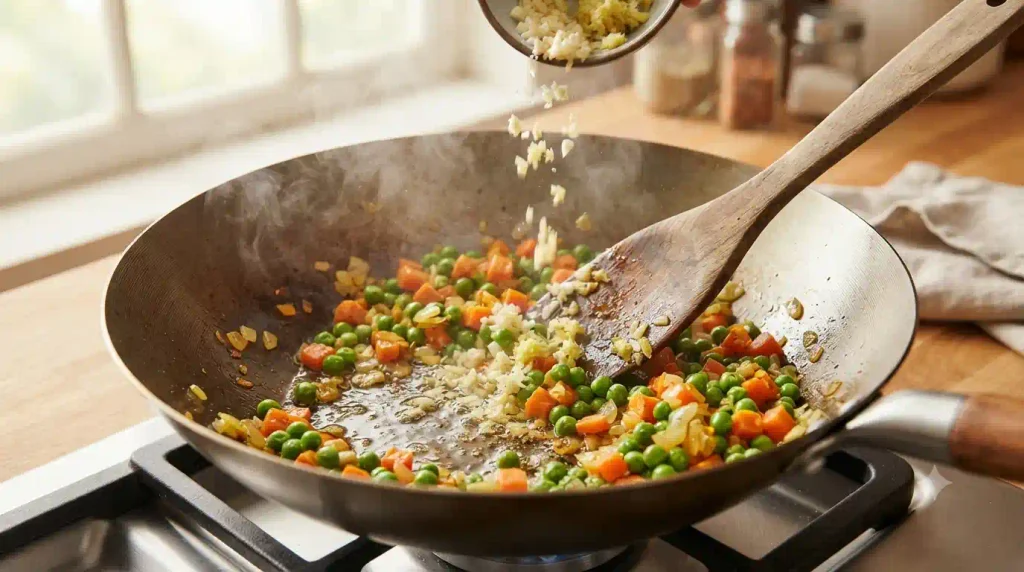
Add the remaining 1 tablespoon oil to the same pan.
Add the diced onion, peas, and carrots. Stir-fry for about 2 minutes.
Add the minced garlic and grated ginger. Cook for another 30–45 seconds, stirring constantly.
Don’t walk away here. Garlic can go from beautifully fragrant to burnt surprisingly fast.
Step 4: Scramble the Eggs
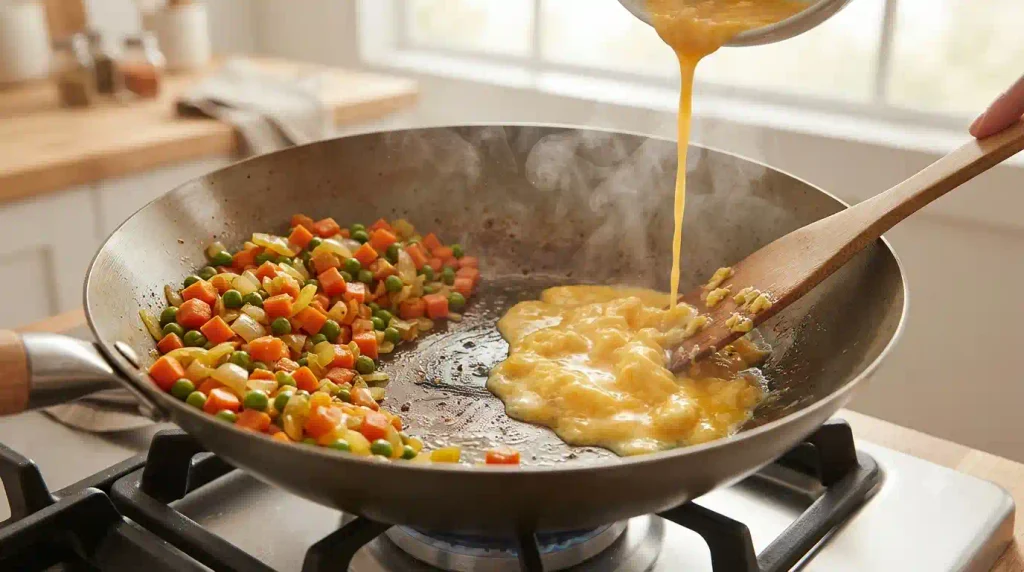
Push the vegetables toward one side of the pan.
Pour the beaten eggs into the open space. Let them sit for several seconds, then gently scramble until they are just cooked.
Break the eggs into small pieces with your spatula.
Keeping the eggs slightly soft at this stage is helpful because they’ll warm through again when everything is combined.
Step 5: Fry the Rice and Combine Everything
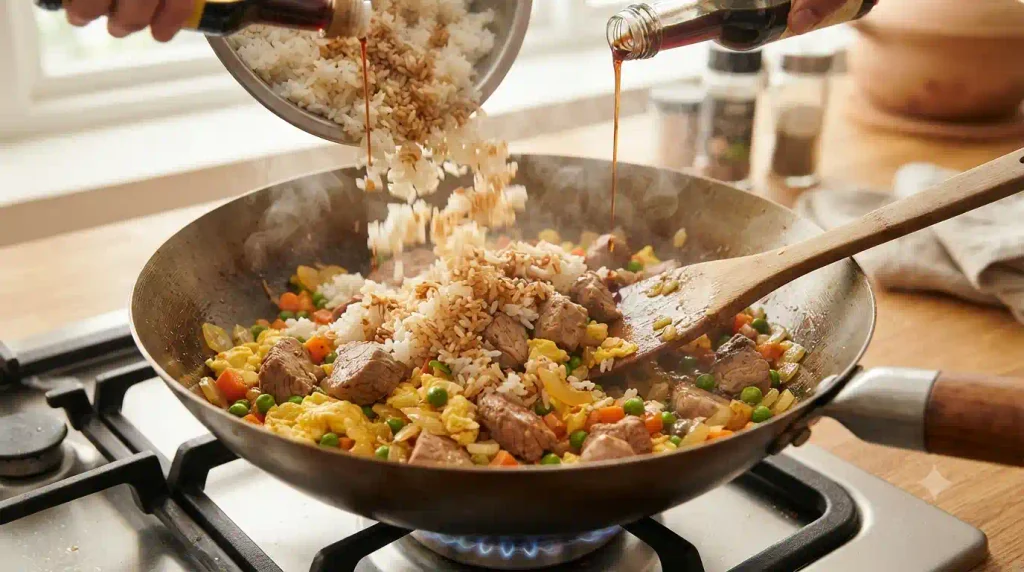
Add the chilled rice to the pan.
Increase the heat if necessary and toss or stir-fry for 2–3 minutes, pressing down gently on larger rice clumps with your spatula.
Return the cooked pork to the pan.
Add:
- 2 tablespoons soy sauce
- 1 tablespoon oyster sauce
- ½ teaspoon white pepper
Toss everything thoroughly so the seasoning is distributed throughout the rice.
Cook for another 2–3 minutes, allowing the rice to become hot and slightly toasted in spots.
Step 6: Finish and Serve
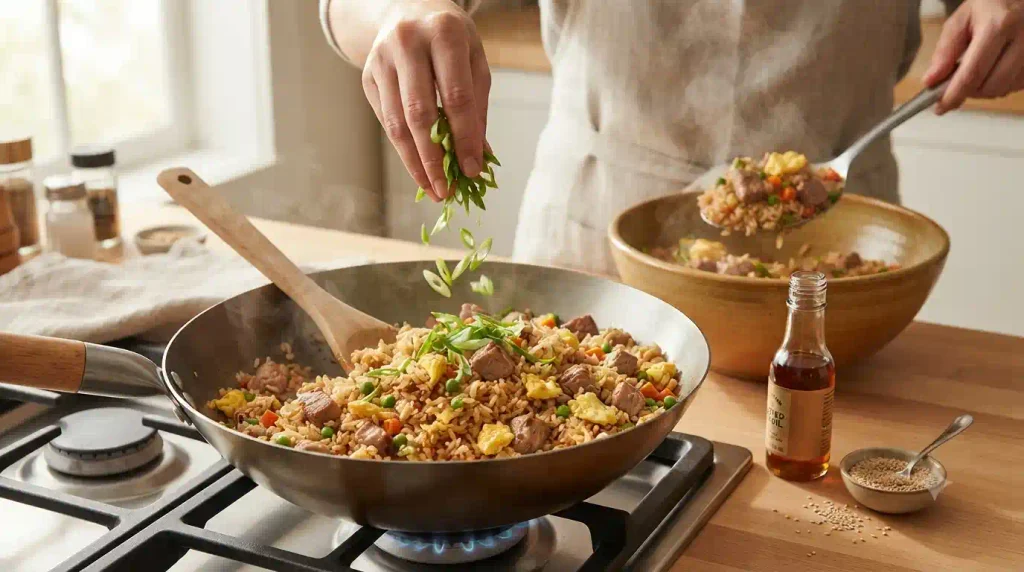
Turn off the heat and stir in the 1 teaspoon sesame oil and sliced green onions.
Taste before adding additional salt because soy sauce and oyster sauce are already salty.
Serve immediately while hot.
For extra flavor, finish each serving with a few sliced green onions, sesame seeds, or a small drizzle of chili oil.
Health Benefits
This pork fried rice can be a balanced meal when served with a reasonable portion.
- Pork provides protein, which supports muscle maintenance and helps keep you satisfied.
- Eggs contribute protein, choline, vitamin B12, and other nutrients.
- Peas and carrots add fiber and micronutrients while providing natural sweetness.
- Ginger and garlic contribute plant compounds and lots of flavor without needing excessive sauce.
- Using low-sodium soy sauce can help reduce the overall sodium compared with using regular soy sauce.
- Cooking with a modest amount of oil keeps the dish flavorful without making it excessively greasy.
For an even more vegetable-forward version, increase the vegetables to 1½–2 cups and slightly reduce the rice.
Nutrition Information (Per Serving)
Approximate values based on 4 servings:
| Nutrient | Per Serving |
|---|---|
| Calories | ~475 kcal |
| Protein | ~24 g |
| Fat | ~18 g |
| Carbohydrates | ~53 g |
Nutrition values are estimates and can vary depending on the pork’s fat content, rice variety, oil used, and exact brands of sauces.
Pro Tips & Variations
For Better Fried Rice
- Use cold rice. This is the single biggest texture tip.
- Don’t overcrowd the pan. A crowded pan traps steam and can make the rice soft.
- Cook over high heat, but keep the ingredients moving once they begin browning.
- Prep everything before cooking. You won’t have time to chop vegetables once the wok is hot.
- Season gradually. Different soy sauces have different salt levels.
- Add sesame oil at the end. High heat can dull its delicate toasted flavor.
- Let the pork brown. A little caramelization adds much more flavor than simply stirring constantly.
Easy Ingredient Swaps
No ground pork?
Use finely diced pork tenderloin, leftover cooked pork, or chopped pork loin.
Want more vegetables?
Try diced bell pepper, corn, broccoli, cabbage, mushrooms, or bean sprouts.
No jasmine rice?
Long-grain white rice works beautifully. Brown rice can also be used, although the texture will be heartier.
Want spicy fried rice?
Add chili crisp, chili oil, crushed red pepper, or thinly sliced fresh chili.
Want a lighter version?
Increase the vegetables, use lean pork, reduce the oil slightly, and choose low-sodium sauces.
Want extra restaurant-style flavor?
A small amount of toasted sesame oil and oyster sauce makes a noticeable difference.
How Much Does It Cost to Make?
Prices vary by location and brand, but this is generally a budget-friendly meal, especially when you have leftover rice available.
| Ingredient | Estimated Cost |
|---|---|
| Pork, 8 oz | $2.50–$3.50 |
| Rice, 3 cups cooked | $0.75–$1.25 |
| Eggs | $0.50–$0.80 |
| Peas & carrots | $0.75–$1.25 |
| Onion, garlic & ginger | $0.50–$0.80 |
| Soy & oyster sauce | $0.50–$0.75 |
| Green onions & seasonings | $0.50–$0.75 |
| Oil | $0.20–$0.40 |
| Estimated Total | $6.20–$9.50 |
That works out to roughly $1.55–$2.40 per serving, depending on local grocery prices and what you already have in your pantry.
Frequently Asked Questions
Can I make pork fried rice with fresh rice?
Yes, but cold leftover rice is better. Fresh rice contains more moisture and can become sticky when stir-fried. If you need to use fresh rice, spread it in a thin layer on a baking sheet and chill it thoroughly before cooking.
What kind of rice is best for Chinese pork fried rice?
Jasmine rice or another long-grain white rice works very well. The grains stay relatively separate after cooking, giving you the classic fried-rice texture.
Can I use leftover cooked pork?
Absolutely. Chopped leftover pork is a great shortcut. Add it during the final few minutes just to heat it through rather than cooking it from scratch again.
Why is my fried rice mushy?
The most common reasons are using warm, freshly cooked rice, overcrowding the pan, or adding too much sauce. Use chilled rice, a large hot pan, and measure the sauces carefully.
Final Thoughts
Good fried rice doesn’t need to be complicated. With cold leftover rice, a little pork, a couple of eggs, and a few everyday sauces, you can turn simple ingredients into a deeply savory dinner in about 30 minutes.
Keep your pan hot, prep everything before you start, and don’t be afraid of a little browning on the rice. Those tiny toasted edges are where so much of the flavor comes from. Once you make this Chinese pork fried rice at home, you may find yourself deliberately cooking extra rice just so you can make it again the next day.