

There’s something irresistible about hearing food sizzle in the kitchen, especially when you’re craving something crisp, savory, and a little special. Crab beignets hit that sweet spot beautifully. They have a delicate golden shell, a soft seafood-packed center, and enough richness to feel restaurant-worthy without being heavy or unpleasantly oily.
The trick is getting that crisp exterior without letting the beignets soak up excess oil. A cold, properly balanced batter and steady frying temperature make all the difference. This version uses plenty of lump crab meat, fresh herbs, lemon, and gentle seasoning, so every bite tastes like crab rather than fried batter. It’s surprisingly manageable at home.
Prep & Cook Time
| Detail | Time / Amount |
|---|---|
| Prep Time | 20 minutes |
| Chilling Time | 20 minutes |
| Cook Time | 15 minutes |
| Total Time | 55 minutes |
| Servings | 6 |
| Yield | About 18 small beignets |
What Equipment Do You Need?
You don’t need restaurant equipment to make great crab beignets. A few basic kitchen tools will do the job.
- Large mixing bowl – for preparing the crab mixture.
- Small mixing bowl – useful for combining the dry ingredients.
- Whisk – helps distribute the baking powder and seasonings evenly.
- Rubber spatula or wooden spoon – for gently folding the crab into the batter.
- Deep, heavy-bottomed saucepan or Dutch oven – maintains a steady frying temperature better than a thin pan.
- Deep-fry or instant-read thermometer – especially helpful for keeping the oil near 350°F (175°C).
- Small cookie scoop or two teaspoons – makes evenly sized beignets.
- Slotted spoon or spider strainer – for safely removing them from hot oil.
- Wire cooling rack and baking sheet – lets excess oil drain without making the bottoms soggy.
Ingredients
For the Crab Beignets
- 1 lb (450 g) lump crab meat, picked over for shells
- 1 cup (125 g) all-purpose flour
- 2 teaspoons baking powder
- ½ teaspoon fine sea salt
- ¼ teaspoon freshly ground black pepper
- ¼ teaspoon cayenne pepper, optional
- ½ teaspoon Old Bay seasoning
- 2 large eggs
- ½ cup (120 ml) whole milk
- 2 tablespoons mayonnaise
- 1 teaspoon Dijon mustard
- 1 teaspoon Worcestershire sauce
- 1 teaspoon finely grated lemon zest
- 1 tablespoon fresh lemon juice
- 2 tablespoons finely sliced green onions
- 2 tablespoons chopped fresh parsley
- 1 tablespoon finely chopped chives
- 1 small garlic clove, finely grated or minced
- Neutral high-heat oil, such as canola, vegetable, or peanut oil, for frying
For Serving
- Fresh lemon wedges
- Chopped parsley or chives, optional
- Remoulade, garlic aioli, or lemony yogurt sauce, optional
Why Each Ingredient Matters
| Ingredient | Why It Matters |
|---|---|
| Lump crab meat | Provides sweet, delicate seafood flavor and tender chunks throughout each beignet. |
| All-purpose flour | Creates enough structure to hold the beignets together without making them dense. |
| Baking powder | Produces tiny air pockets as the batter cooks, giving the exterior a lighter texture. |
| Eggs | Bind the ingredients while adding richness and structure. |
| Whole milk | Hydrates the flour and helps create a tender interior. |
| Mayonnaise | Adds moisture and richness without requiring lots of additional fat in the batter. |
| Dijon mustard | Adds gentle acidity and sharpness that complements sweet crab. |
| Worcestershire sauce | Brings savory depth and umami without overwhelming the seafood. |
| Lemon juice and zest | Bright acidity balances the richness of fried food and lifts the crab flavor. |
| Green onions | Add a mild onion flavor without dominating the delicate crab. |
| Parsley and chives | Bring freshness and color to the filling. |
| Garlic | Adds a subtle savory backbone. |
| Old Bay | Gives the beignets classic seafood seasoning with warm, aromatic spice. |
| High-heat frying oil | Properly heated oil quickly sets the exterior, which helps prevent greasy beignets. |
One important point: “zero-grease” refers to the eating experience rather than literally containing zero oil. These are fried beignets, so they will absorb a small amount of oil. The goal is a crisp, clean-tasting crust instead of a greasy one.
Step-by-Step Instructions
Step 1: Prepare the Crab
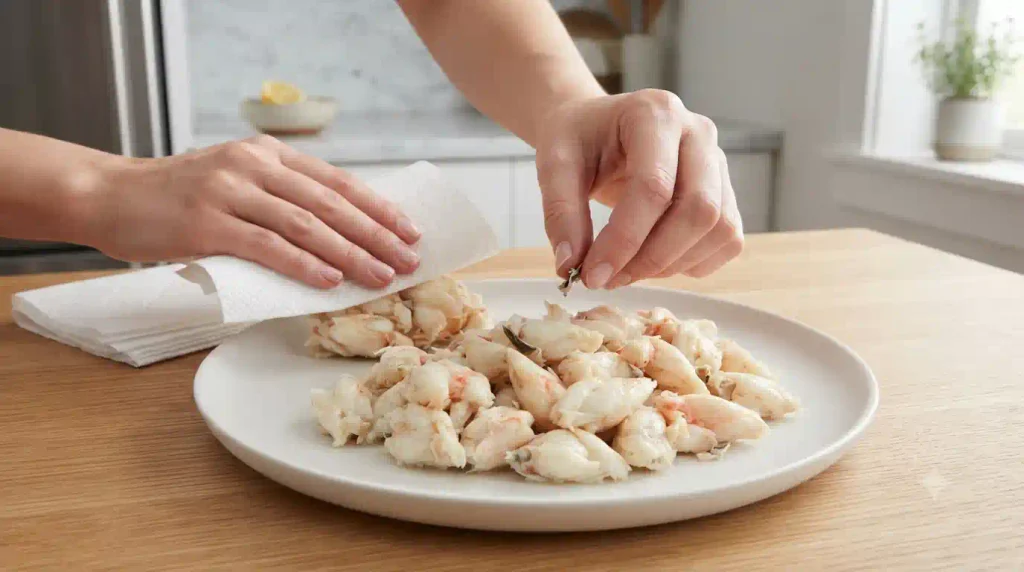
Place the 1 lb lump crab meat on a plate or shallow bowl and gently pick through it with clean fingers.
Remove any bits of shell or cartilage you find. Try not to break apart those beautiful lumps of crab more than necessary.
Pat particularly wet crab meat gently with paper towels. Excess moisture can thin the batter and make the beignets harder to fry.
Keep the prepared crab refrigerated while you make the batter. Seafood shouldn’t sit unnecessarily at room temperature.
Step 2: Mix the Dry and Wet Ingredients
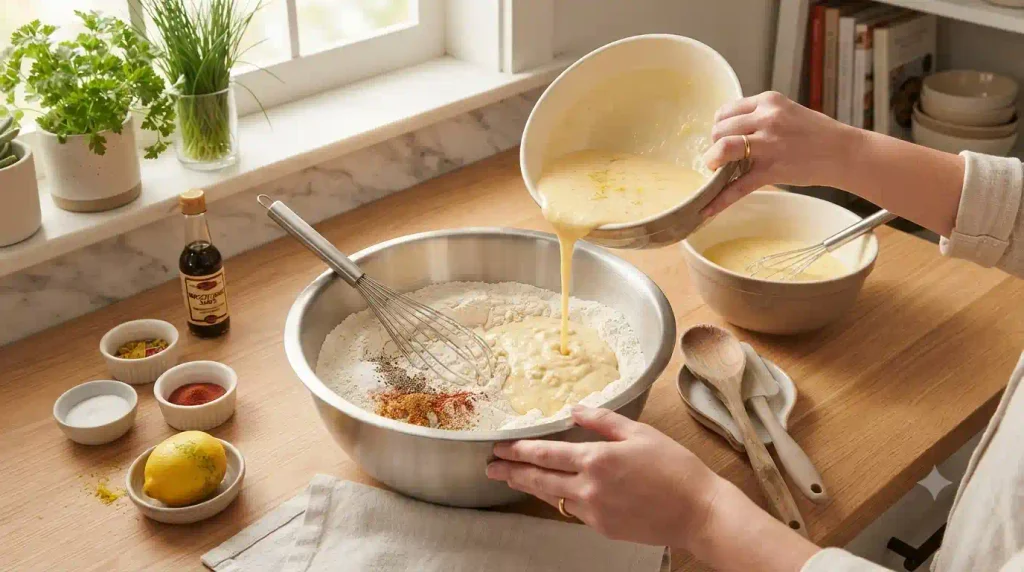
In a large bowl, whisk together:
- 1 cup all-purpose flour
- 2 teaspoons baking powder
- ½ teaspoon salt
- ¼ teaspoon black pepper
- ¼ teaspoon cayenne, if using
- ½ teaspoon Old Bay seasoning
In a separate bowl, whisk the eggs, milk, mayonnaise, Dijon mustard, Worcestershire sauce, lemon zest, and lemon juice until smooth.
Pour the wet mixture into the flour mixture.
Stir only until the flour is mostly incorporated.
Don’t worry if the batter isn’t perfectly smooth. A little lumpiness is fine. Overmixing develops gluten and can turn light beignets into chewy little dough balls.
Step 3: Fold in the Crab and Herbs
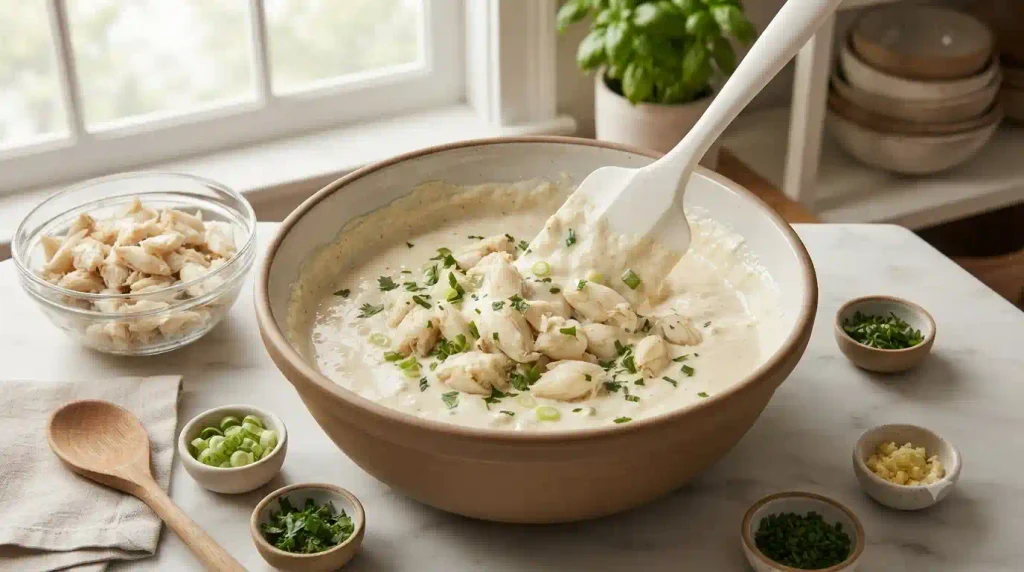
Add the prepared crab, green onions, parsley, chives, and garlic.
Using a rubber spatula, fold everything together gently.
You want visible pieces of crab in the finished beignets, so resist the urge to stir aggressively.
The mixture should be thick enough to hold on a spoon. If it seems unusually loose because your crab contained extra moisture, add 1 tablespoon of flour.
Cover the bowl and refrigerate for about 20 minutes.
This short chill makes the batter easier to portion and helps the beignets hold together once they hit the oil.
Step 4: Heat the Oil Correctly
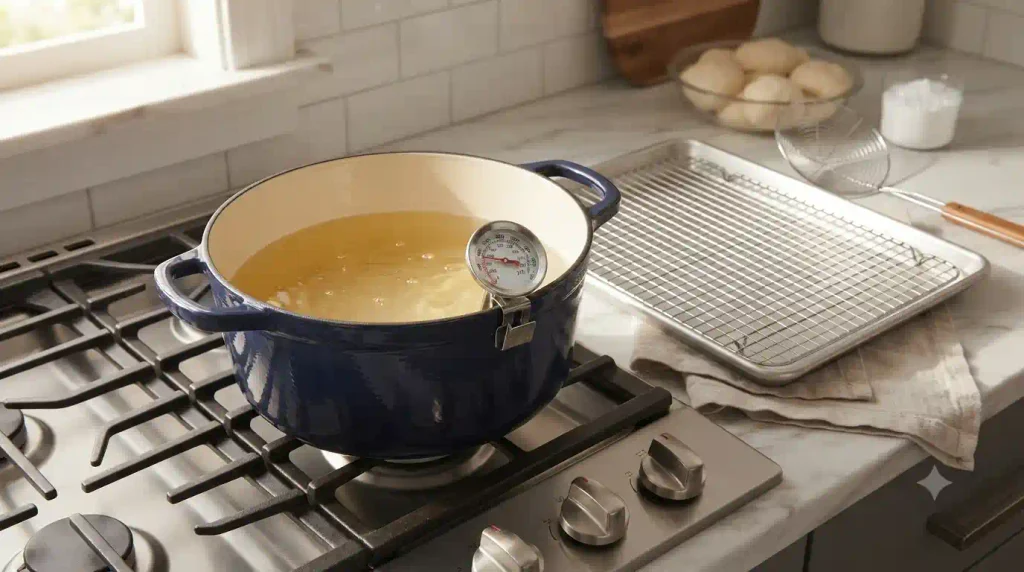
Pour approximately 2 inches (5 cm) of neutral oil into a heavy-bottomed saucepan or Dutch oven.
Heat the oil over medium heat until it reaches 350°F (175°C).
This temperature is one of the biggest secrets to crisp, non-greasy beignets.
If the oil is too cool, the batter sits in the fat before developing its crust and absorbs more oil. If the oil is excessively hot, the outside can brown before the center is properly cooked.
Place a wire cooling rack over a baking sheet nearby.
Safety note: Never fill your pot more than halfway with oil. Hot oil expands and bubbles when food is added. Keep children and pets away from the stove, and never add wet utensils or water to hot oil.
Step 5: Fry in Small Batches
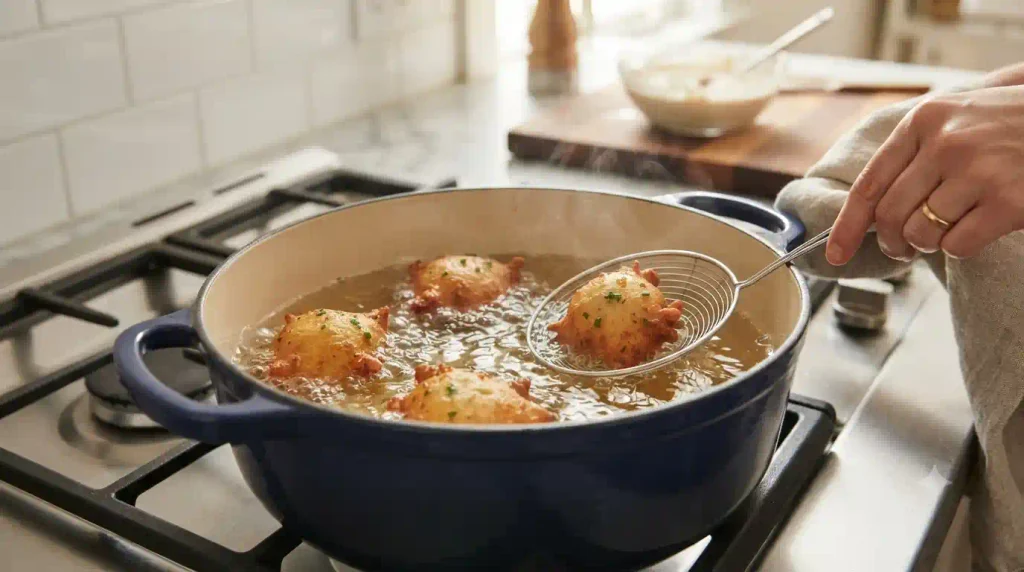
Use a small cookie scoop or two teaspoons to carefully lower approximately 1½-tablespoon portions of batter into the oil.
Don’t overcrowd the pot.
Depending on the size of your pan, fry about 4–5 beignets at a time.
Cook for approximately 2–3 minutes, turning occasionally, until the outside is evenly golden brown and crisp.
Keep an eye on the thermometer between batches. Adding cold batter naturally lowers the oil temperature. Give the oil time to return to around 350°F before adding the next batch.
The center should be hot and properly set. If checking with a food thermometer, aim for 165°F (74°C) in the center because the batter contains egg.
Step 6: Drain and Serve Immediately

Remove the golden beignets using a spider strainer or slotted spoon.
Let them hover over the pot for a few seconds so excess oil can drip away, then transfer them to the wire rack rather than piling them onto a plate.
That little detail matters. A rack allows steam to escape from underneath, keeping the crust crisp.
Give them 2–3 minutes to cool slightly, then serve while warm with fresh lemon wedges and your favorite dipping sauce.
For an extra-fresh finish, scatter a little chopped parsley or chives over the top just before serving.
Health Benefits
Crab beignets are an indulgent appetizer, but the star ingredient brings some worthwhile nutrition to the table.
Crab is naturally protein-rich. Protein contributes to muscle maintenance and helps make a serving more satisfying.
Crab can also provide valuable micronutrients, including vitamin B12, selenium, zinc, and phosphorus, although exact amounts depend on the type of crab used.
Fresh parsley, chives, green onions, garlic, and lemon add flavor with very little additional energy. Using these ingredients generously also means you don’t need to rely entirely on salt for flavor.
This recipe also uses a high proportion of crab relative to batter. That gives you more seafood in every bite rather than a flour-heavy fritter.
Still, these are fried beignets, so portion size matters if you’re watching overall fat or calorie intake. For a lighter meal, serve a few beignets alongside a crisp green salad, slaw, or roasted vegetables.
Nutrition Information (Per Serving)
Approximate nutrition based on 6 servings, excluding dipping sauces. Actual values vary depending on the crab, frying oil absorption, and exact portion size.
| Nutrient | Approximate Amount |
|---|---|
| Calories | 290 kcal |
| Protein | 20 g |
| Fat | 15 g |
| Carbohydrates | 19 g |
Nutrition note: Fried-food nutrition is always an estimate because the amount of oil absorbed during cooking can vary significantly with frying temperature, batter consistency, cooking time, and draining method.
Pro Tips & Variations
Chef Tips for Extra-Crispy Beignets
- Keep the crab cold. A chilled mixture is easier to portion and holds together better.
- Don’t overmix. Stir the batter just enough to combine the ingredients.
- Use a thermometer. Maintaining roughly 350°F (175°C) oil is far more reliable than guessing.
- Fry small batches. Crowding the pan causes the oil temperature to drop quickly.
- Drain on a rack. Paper towels can trap steam underneath hot fried food. A wire rack keeps air circulating.
- Don’t make oversized beignets. Small portions cook through before the exterior becomes too dark.
- Use good crab. Because crab is the main flavor, high-quality lump crab meat makes a noticeable difference.
- Taste your crab before adding extra salt. Packaged crab and seafood seasoning can already contain plenty of sodium.
Air-Fryer Variation
These won’t have exactly the same shell as deep-fried beignets, but an air fryer can produce a lighter alternative.
Shape small portions, lightly coat or spray the exterior with cooking oil, and air-fry at approximately 375°F (190°C) until browned and cooked through.
The exact cooking time depends on the air fryer and size of the beignets, so check them early.
Spicy Crab Beignets
Add:
- ½ finely chopped jalapeño
- An extra pinch of cayenne
- A few drops of your favorite hot sauce
Keep the heat restrained enough that you can still taste the crab.
Cajun-Style Variation
Increase the Cajun or Creole seasoning slightly and add finely diced red bell pepper and celery.
If your seasoning blend contains salt, reduce the separate salt in the batter.
Gluten-Free Variation
Use a reliable 1:1 gluten-free all-purpose flour blend in place of regular flour.
Different blends absorb liquid differently, so add the milk gradually if necessary.
Herb Variation
No chives?
Use additional green onion or parsley instead. Fresh dill also pairs beautifully with crab and lemon.
How Much Does It Cost to Make?
Crab is the major expense, so the total price varies considerably by location, season, and whether you buy fresh or refrigerated crab.
Here is a rough US grocery-cost estimate:
| Ingredient Group | Estimated Cost |
|---|---|
| 1 lb lump crab meat | $18–$30 |
| Flour, baking powder & seasonings | $1–$2 |
| Eggs & milk | $1.50–$2.50 |
| Mayonnaise, mustard & Worcestershire | $1–$2 |
| Lemon, herbs, garlic & green onions | $3–$5 |
| Estimated frying oil used/absorbed | $2–$4 |
| Estimated Total | $26.50–$45.50 |
| Approximate Cost Per Serving | $4.40–$7.60 |
Buying crab when it’s on promotion can make a big difference. You can also use good-quality refrigerated crab rather than premium jumbo lump crab if you’re trying to keep the recipe affordable.
Don’t use imitation crab expecting the same result. It has a sweeter, more processed flavor and a very different texture.
Frequently Asked Questions
Why are my crab beignets greasy?
The most common cause is oil that isn’t hot enough.
Aim for approximately 350°F (175°C). When batter enters properly heated oil, the exterior starts setting quickly. If the temperature drops significantly, the beignets can absorb more oil before a crust develops.
Overcrowding the pan is another common culprit because several cold portions added simultaneously can dramatically lower the oil temperature.
Can I make crab beignet batter ahead of time?
You can prepare the mixture several hours ahead, cover it tightly, and refrigerate it until you’re ready to cook.
Because the recipe contains seafood and raw egg, keep the mixture refrigerated at 40°F (4°C) or below and don’t leave it sitting on the counter.
For the best texture, I prefer making and frying the mixture the same day.
How do I keep crab beignets crispy?
Drain freshly fried beignets on a wire rack, not in a pile and not in a covered container.
If you’re making several batches, keep finished beignets warm on a rack set over a baking sheet in a 200°F (95°C) oven.
Don’t cover them with foil. Trapped steam quickly softens that lovely crust.
Can you reheat crab beignets?
Yes. Skip the microwave if crispness matters.
Arrange refrigerated beignets on a baking sheet and reheat at about 375°F (190°C) until hot and crisp. An air fryer also works very well.
For food safety, refrigerate leftovers promptly in a sealed container and reheat them thoroughly before serving.
Final Thoughts
Great crab beignets aren’t about complicated restaurant tricks. They’re about good crab, a light hand with the batter, and properly heated oil.
Keep your mixture cold, preserve those lovely pieces of lump crab, fry in small batches, and let each batch drain on a rack. You’ll get beautifully golden beignets with a crisp exterior and tender, crab-packed middle—without that unpleasant greasy finish.
Serve them hot with lemon and a simple dipping sauce, and don’t be surprised when the first batch disappears while you’re still standing at the stove. That’s usually what happens in my kitchen.