
There’s something deeply satisfying about pulling a bubbling pasta bake from the oven, especially when the craving calls for something creamy, cheesy, and a little luxurious. Crab manicotti hits that sweet spot between comforting Italian-American food and seafood-night indulgence. It looks impressive enough for guests, but the actual prep is very manageable in a normal home kitchen.
The key is protecting the crab’s delicate texture and naturally sweet flavour. Crab meat is already cooked, so aggressive mixing or prolonged heat can make it dry and stringy. This recipe folds the crab gently into a creamy ricotta filling, surrounds it with sauce, and bakes only until everything is hot and beautifully melted.
Prep & Cook Time
| Details | Time / Amount |
|---|---|
| Prep Time | 25 minutes |
| Cook Time | 30 minutes |
| Total Time | 55 minutes |
| Servings | 6 |
| Serving Size | About 2 stuffed manicotti shells |
What Equipment Do You Need?
You don’t need restaurant equipment for this one. A few everyday kitchen tools will do the job:
- Large pot for boiling pasta
- Colander
- Large mixing bowl
- Medium saucepan
- Wooden spoon or silicone spatula
- Measuring cups and spoons
- 9 × 13-inch baking dish
- Piping bag or large zip-top bag
- Aluminum foil
- Cheese grater, if using block Parmesan or mozzarella
A piping bag makes filling manicotti much less frustrating. If you don’t have one, spoon the filling into a zip-top bag and snip off one corner.
Ingredients
For the Crab Filling
- 12 manicotti shells
- 12 oz (340 g) lump crab meat, cooked and carefully picked over for shell fragments
- 15 oz (425 g) whole-milk ricotta cheese
- 1 cup (100 g) shredded mozzarella cheese
- ½ cup (50 g) finely grated Parmesan cheese
- 1 large egg
- 2 tablespoons chopped fresh parsley
- 1 teaspoon fresh lemon zest
- 1 tablespoon fresh lemon juice
- 1 small garlic clove, finely grated or minced
- ½ teaspoon kosher salt
- ¼ teaspoon freshly ground black pepper
- ⅛ teaspoon red pepper flakes, optional
For the Cream Sauce
- 2 tablespoons unsalted butter
- 2 tablespoons all-purpose flour
- 2 cups (480 ml) whole milk, slightly warmed
- ½ cup (120 ml) heavy cream
- ½ cup (50 g) grated Parmesan cheese
- ¼ teaspoon kosher salt
- ¼ teaspoon black pepper
- Pinch of ground nutmeg
For the Top
- ¾ cup (75 g) shredded mozzarella
- ¼ cup (25 g) grated Parmesan
- 1 tablespoon chopped fresh parsley
- Lemon wedges, for serving
Why Each Ingredient Matters
| Ingredient | Why It Matters |
|---|---|
| Lump crab meat | Provides delicate sweetness and tender chunks. Gentle handling keeps those prized pieces intact. |
| Ricotta | Creates a creamy filling without overwhelming the crab. Whole-milk ricotta gives the best texture. |
| Mozzarella | Adds moisture, mild dairy flavour, and that irresistible melted-cheese finish. |
| Parmesan | Brings salty, savoury depth, so the filling tastes rich rather than simply creamy. |
| Egg | Lightly binds the ricotta mixture so it stays inside the pasta after slicing. |
| Lemon zest & juice | Acidity cuts through the dairy richness and makes the crab taste brighter. |
| Garlic | Adds aromatic flavour, but using only a little prevents it from dominating the seafood. |
| Butter & flour | Form a roux that thickens the sauce and helps it cling to the manicotti. |
| Milk & cream | Give the sauce a silky consistency without making it excessively heavy. |
| Nutmeg | A tiny pinch rounds out creamy dairy sauces. You shouldn’t distinctly taste nutmeg. |
| Parsley | Adds freshness and colour to balance the cheese and cream. |
One important detail: the crab is the star, not just another filling ingredient. Avoid piling in strong seasonings that hide its naturally sweet flavour.
Step-by-Step Instructions
Step 1: Cook the Manicotti
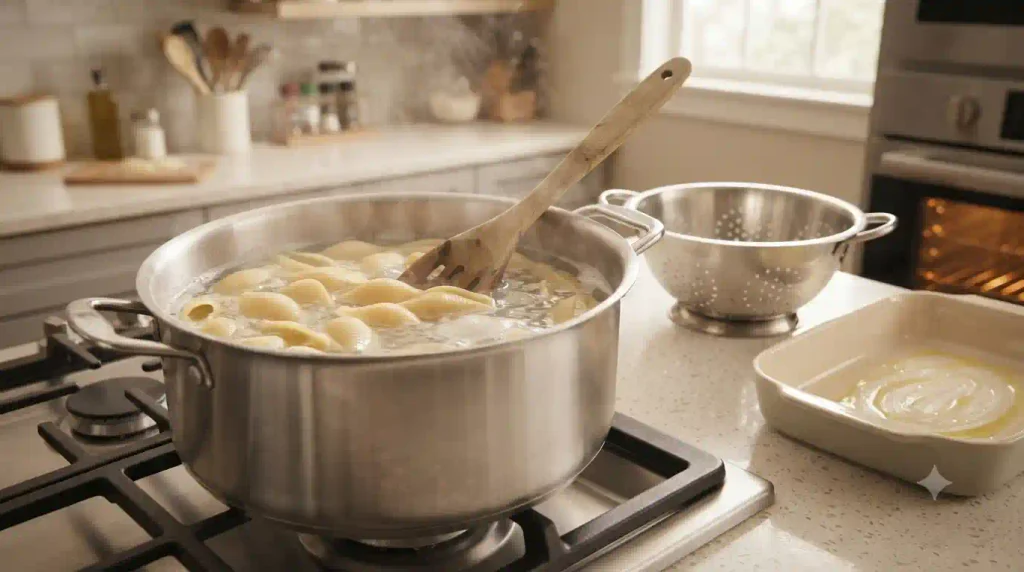
Bring a large pot of well-salted water to a boil. Add the manicotti and cook it 2–3 minutes less than the package directions, so the shells remain quite firm.
They will continue cooking in the oven, and slightly undercooked pasta is much easier to stuff without tearing.
Drain carefully and arrange the shells separately on a lightly oiled tray or clean plate. Let them cool until comfortable to handle.
Preheat your oven to 375°F (190°C).
Step 2: Make the Cream Sauce
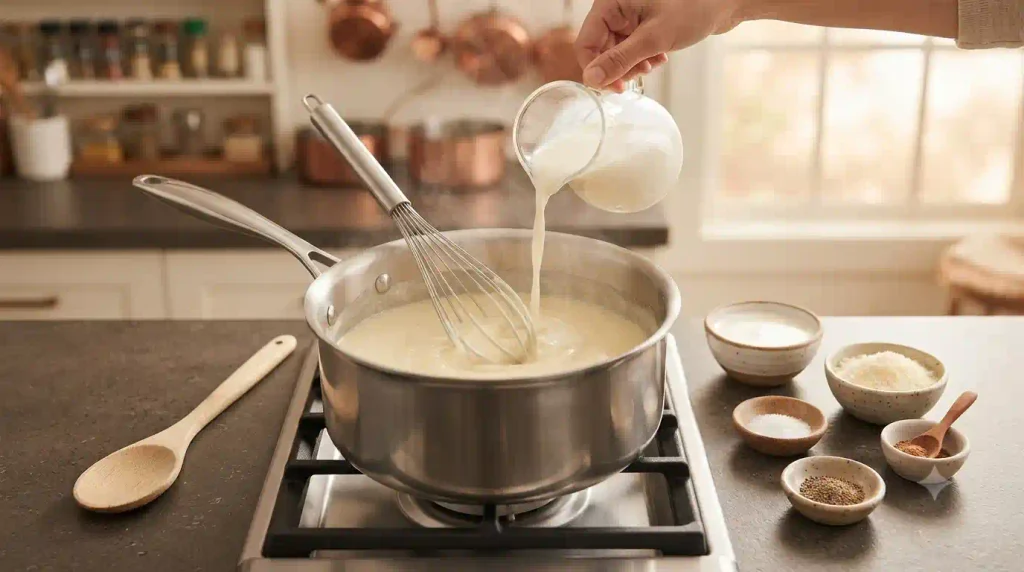
Melt 2 tablespoons butter in a saucepan over medium heat.
Add 2 tablespoons flour and whisk continuously for about 1 minute. You want to cook away the raw flour taste without browning the mixture.
Gradually whisk in the warm milk. Adding it slowly helps prevent lumps.
Pour in the heavy cream and continue cooking for 3–5 minutes, stirring regularly, until the sauce lightly coats the back of a spoon.
Reduce the heat and stir in:
- ½ cup Parmesan
- ¼ teaspoon salt
- ¼ teaspoon black pepper
- A small pinch of nutmeg
Remove from the heat. The sauce may look slightly loose at this stage—that’s useful because it will thicken further in the oven.
Step 3: Prepare the Crab Filling
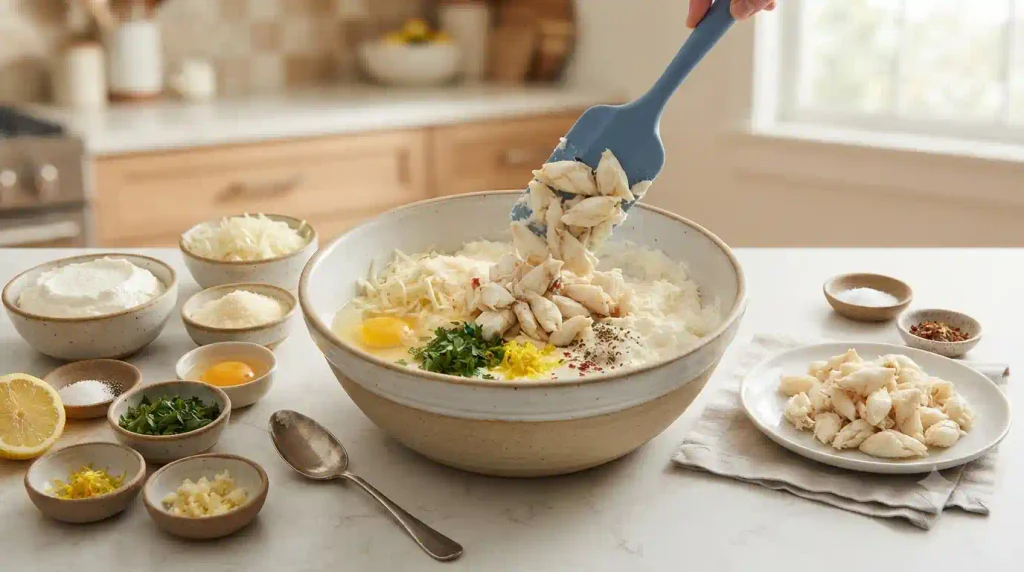
In a large bowl, combine the ricotta, 1 cup mozzarella, ½ cup Parmesan, egg, parsley, lemon zest, lemon juice, garlic, salt, pepper, and optional red pepper flakes.
Mix only until combined.
Now add the crab meat.
Using a silicone spatula, gently fold the crab into the ricotta mixture. Don’t aggressively stir it. You want visible pieces of crab remaining throughout the filling.
Before adding the crab, check it carefully with clean fingers for any stray pieces of shell.
Step 4: Fill the Manicotti
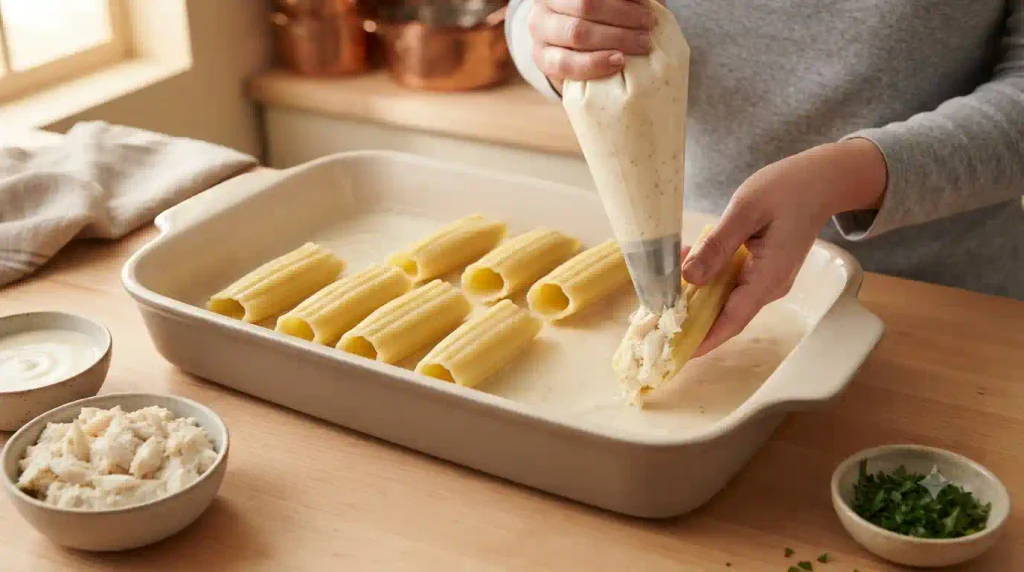
Spread approximately 1 cup of cream sauce across the bottom of a 9 × 13-inch baking dish.
Transfer the crab mixture to a piping bag or large zip-top bag. Cut an opening wide enough that larger crab pieces can pass through without being crushed.
Pipe filling into both ends of each manicotti shell until comfortably full.
Don’t pack the pasta too tightly. Overstuffed shells are more likely to split while baking.
Arrange all the filled shells in a single layer over the sauce.
Step 5: Sauce and Bake
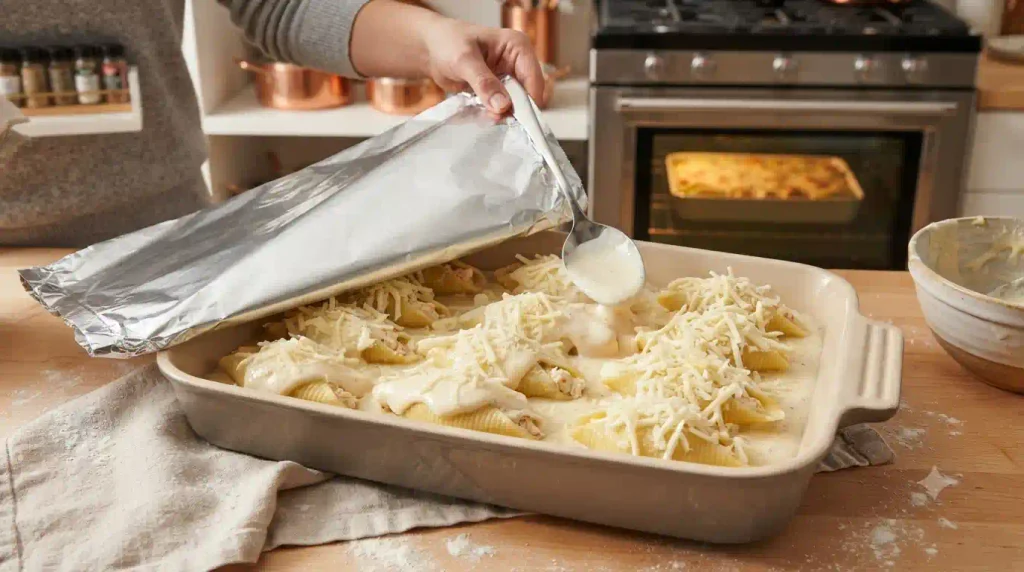
Spoon the remaining cream sauce evenly over the manicotti.
Sprinkle the top with:
- ¾ cup mozzarella
- ¼ cup Parmesan
Cover the baking dish loosely with foil.
Bake at 375°F (190°C) for 20 minutes.
Remove the foil and bake for another 7–10 minutes, just until the sauce is bubbling and the cheese has melted.
Because the crab is already cooked, the goal is simply to heat the filling thoroughly rather than repeatedly cook the seafood. For food safety, the casserole should reach 165°F (74°C) in the centre.
Step 6: Rest, Garnish, and Serve
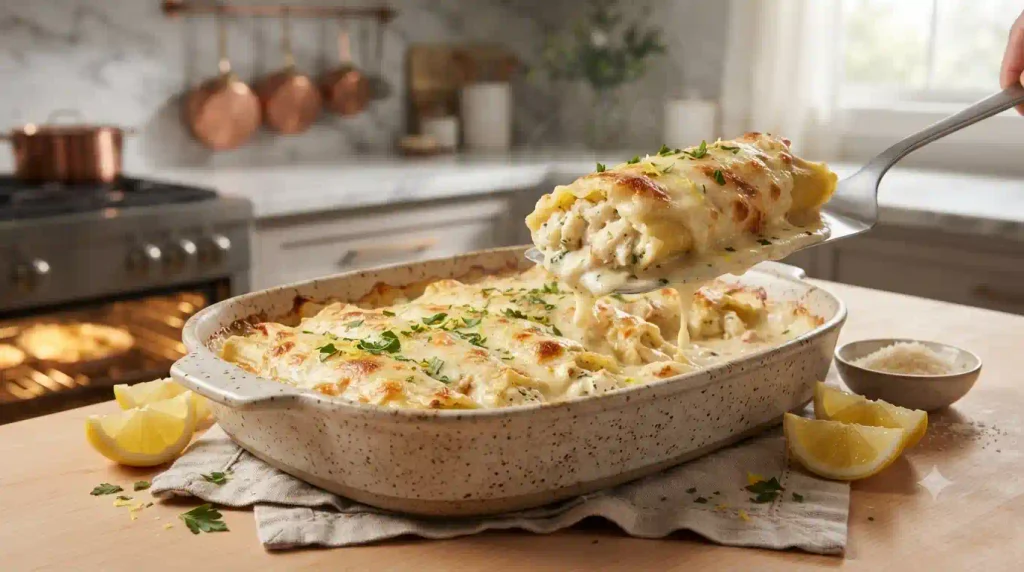
Take the manicotti out of the oven and let it rest for 5–10 minutes.
This short rest matters. Straight from the oven, the sauce is extremely hot and loose. Give it a few minutes and it settles around the pasta beautifully.
Scatter fresh parsley over the top and serve with lemon wedges.
A small squeeze of fresh lemon immediately before eating cuts through the cream and makes the crab flavour pop.
Health Benefits
Crab manicotti is definitely comfort food, but it also brings some useful nutrients to the table.
- Crab provides high-quality protein, which supports muscle maintenance and normal tissue repair.
- Crab naturally supplies nutrients such as vitamin B12, selenium, zinc, and copper.
- Ricotta, Parmesan, and mozzarella provide calcium and protein.
- Using fresh parsley and lemon adds flavour without relying entirely on extra salt.
- The combination of pasta, protein, and fat makes this a filling main course.
Because crab, Parmesan, and other cheeses can contribute significant sodium, taste the filling and sauce carefully before adding extra salt.
Nutrition Information (Per Serving)
The following values are estimates based on 6 servings. Exact nutrition will vary with the brands and crab meat used.
| Nutrient | Approximate Amount |
|---|---|
| Calories | 620 kcal |
| Protein | 38 g |
| Fat | 34 g |
| Carbohydrates | 43 g |
For a lighter dinner, serve one manicotti alongside a large green salad or roasted vegetables rather than reducing the crab filling itself.
Pro Tips & Variations
1. Don’t overcook the crab.
This is the biggest rule. Cooked crab needs gentle reheating. Long, uncovered baking can turn those beautiful tender pieces dry and stringy.
2. Buy good lump crab when possible.
Lump crab provides larger pieces and a more luxurious texture. Claw meat works too, but it has a stronger seafood flavour.
3. Drain wet ricotta.
If your ricotta has visible liquid sitting in the container, drain it briefly. Excess moisture can make the filling watery.
4. Keep your pasta slightly underdone.
Fully cooking manicotti before baking often results in overly soft pasta or torn shells.
5. Don’t rinse cooked pasta aggressively.
Instead, drain it and keep the shells separated while they cool.
6. Try a crab-and-shrimp version.
Replace about half the crab with cooked, finely chopped shrimp.
7. Add spinach.
Fold approximately ½ cup of cooked, thoroughly squeezed dry spinach into the ricotta mixture.
8. Want a brighter sauce?
Add another teaspoon of lemon zest to the finished cream sauce after removing it from the heat.
9. Prefer tomato sauce?
A mild marinara can replace the cream sauce. Choose one without excessive garlic or chilli so it doesn’t overpower the crab.
10. Broil carefully for extra colour.
If the cheese hasn’t browned enough, broil it briefly at the end. Stay beside the oven—Parmesan can go from golden to burnt remarkably quickly.
How Much Does It Cost to Make?
Crab is the main expense, so prices can vary considerably depending on season, location, and whether you use fresh, refrigerated, or canned crab.
For a typical US supermarket shop:
| Ingredient Group | Estimated Cost |
|---|---|
| Lump crab meat | $15–$22 |
| Manicotti pasta | $2–$4 |
| Ricotta | $3–$5 |
| Mozzarella | $3–$4 |
| Parmesan | $3–$5 |
| Milk & cream | $2–$4 |
| Egg, butter & flour | $1–$2 |
| Lemon, garlic & parsley | $2–$3 |
| Estimated Total | $31–$49 |
| Approx. Cost Per Serving | $5.15–$8.15 |
Using good-quality canned or refrigerated crab when it’s on sale can reduce the cost considerably without sacrificing the creamy, seafood-forward character of the dish.
Frequently Asked Questions
Can I make crab manicotti ahead of time?
Yes. Assemble the manicotti, cover the baking dish tightly, and refrigerate it for up to 24 hours before baking.
If you’re baking it directly from the refrigerator, it may need a few additional minutes in the oven. Make sure the centre reaches 165°F (74°C) before serving.
How do I keep crab from becoming tough in manicotti?
Use already-cooked crab meat, fold it gently into the filling, and avoid unnecessarily long baking. Covering the dish during most of the baking time also reduces moisture loss.
The casserole only needs enough oven time to cook the egg-containing filling safely, finish the pasta, melt the cheese, and heat everything through.
Can I use canned crab meat?
Absolutely. Good-quality canned crab is a convenient option.
Drain it extremely well and pick through it before adding it to the filling. Avoid heavily stirring or squeezing the crab, since that destroys its texture.
What should I serve with crab manicotti?
Because the pasta is already rich, lighter sides work especially well. Try a crisp green salad with lemon vinaigrette, roasted asparagus, steamed green beans, broccoli, or garlic-roasted vegetables.
Crusty bread is delicious for catching leftover sauce, although the pasta already provides plenty of carbohydrates.
Final Thoughts
Crab manicotti feels special without requiring restaurant-level technique. The secret isn’t adding more cream, cheese, or seasoning—it’s knowing when to leave the crab alone. Gentle folding, moderate heat, and a relatively short bake preserve those sweet, tender pieces.
Take your time while stuffing the shells, don’t worry if one or two tear, and let the finished casserole rest before serving. Bring the bubbling dish straight to the table with fresh parsley and lemon wedges, and you’ve got a comforting seafood dinner worthy of a weekend gathering, holiday meal, or simply a night when ordinary pasta won’t quite do.