

There’s something deeply satisfying about making ravioli at home. Maybe it’s the flour on the counter, the anticipation of cutting into fresh pasta, or simply the craving for a restaurant-style seafood dinner without leaving the house. When crab is involved, you want that sweet, delicate flavor to be the star—not buried under a heavy cheese filling.
This version skips ricotta completely and packs each ravioli with seasoned crab meat instead. A little cream cheese helps bind the filling without making it cheese-heavy, while lemon, herbs, and Parmesan sharpen the seafood flavor. Finished with a quick lemon-butter sauce, these ravioli feel special enough for date night but are still manageable in a normal home kitchen.
Prep & Cook Time
| Recipe Detail | Amount |
|---|---|
| Prep Time | 45 minutes |
| Cook Time | 15 minutes |
| Total Time | 1 hour |
| Servings | 4 |
| Yield | About 24 ravioli |
What Equipment Do You Need?
You don’t need restaurant equipment to make good ravioli. A pasta machine makes rolling easier, but a rolling pin works perfectly well with a little patience.
- Large mixing bowl
- Small mixing bowl
- Fork or whisk
- Measuring cups and spoons
- Clean work surface or large cutting board
- Rolling pin or pasta machine
- Ravioli cutter, pastry wheel, or sharp knife
- Large pot
- Large skillet
- Slotted spoon or spider strainer
- Microplane or fine grater
- Kitchen towel or parchment-lined tray
Ingredients
For the Fresh Pasta
- 2 cups (250 g) all-purpose flour, plus extra for dusting
- 3 large eggs
- 1 teaspoon olive oil
- ½ teaspoon fine sea salt
For the Crab Filling
- 8 oz (225 g) cooked lump crab meat, carefully picked over for shell
- 2 oz (55 g) cream cheese, softened
- ¼ cup (20 g) finely grated Parmesan cheese
- 1 tablespoon fresh lemon juice
- 1 teaspoon finely grated lemon zest
- 1 tablespoon finely chopped fresh chives
- 1 tablespoon finely chopped fresh parsley
- 1 small garlic clove, finely grated
- ¼ teaspoon Old Bay seasoning
- ⅛ teaspoon freshly ground black pepper
- Pinch of salt, if needed
For the Lemon-Butter Sauce
- 4 tablespoons (56 g) unsalted butter
- 1 small garlic clove, minced
- 2 tablespoons fresh lemon juice
- ¼ cup (60 ml) reserved pasta cooking water
- 2 tablespoons finely grated Parmesan
- 1 tablespoon chopped parsley
- Freshly ground black pepper, to taste
Why Each Ingredient Matters
| Ingredient | Why It Matters |
|---|---|
| Crab meat | Provides the sweet, delicate seafood flavor and makes this a genuinely crab-forward ravioli. |
| Flour | Creates the gluten structure needed for pasta that can stretch thinly without tearing. |
| Eggs | Add moisture, richness, color, and structure to homemade pasta dough. |
| Olive oil | Makes the dough slightly more supple and easier to work with. |
| Cream cheese | Acts mainly as a binder, keeping the crab filling together without relying on ricotta. |
| Parmesan | Adds saltiness and umami, strengthening the savory notes of the crab. |
| Lemon | Acidity balances the butter, cheese, and natural richness of crab. |
| Fresh herbs | Chives and parsley add freshness without overpowering delicate seafood. |
| Garlic | Adds savory depth. A small amount is enough because too much can dominate crab. |
| Old Bay | Gives the filling gentle warmth and classic seafood seasoning. |
| Butter | Creates a silky sauce that coats the pasta without hiding the filling. |
| Pasta water | Its starch helps butter and lemon juice come together into a smoother sauce. |
The big rule here is restraint. Crab has a subtle sweetness. Strong garlic, excessive Parmesan, or too much seasoning can quickly turn expensive crab into background flavor.
Step-by-Step Instructions
Step 1: Make and Rest the Pasta Dough
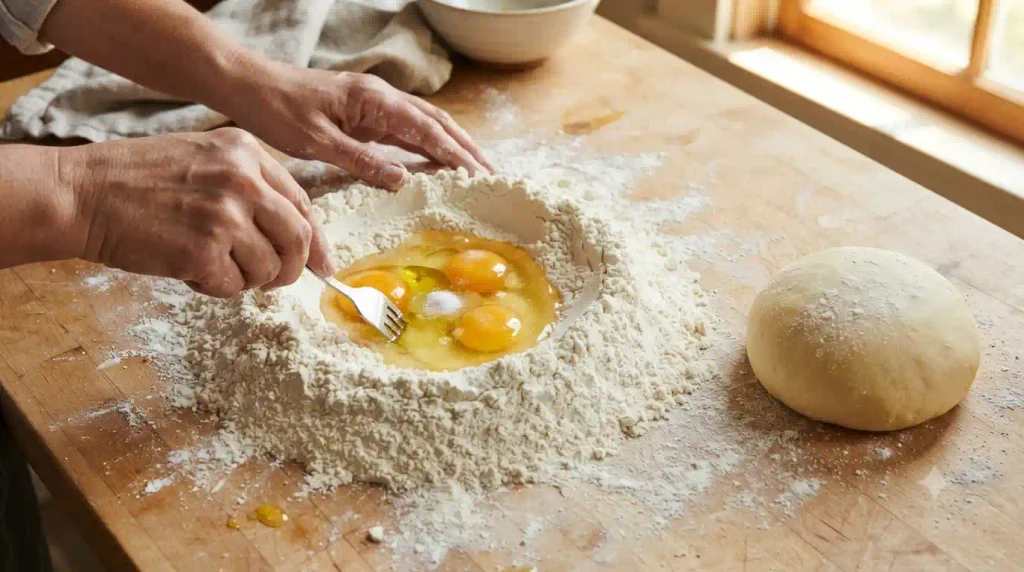
Place 2 cups flour on a clean work surface and make a wide well in the center.
Crack the 3 eggs into the well. Add the olive oil and salt. Beat the eggs gently with a fork, gradually drawing flour from the inner edges into the eggs.
Once the mixture becomes too thick for the fork, use your hands to bring everything together.
Knead for about 8–10 minutes. The dough should become smooth, firm, and elastic. If it feels very sticky, dust your hands with a little flour rather than dumping lots of extra flour into the dough.
Wrap tightly and let it rest at room temperature for 30 minutes.
Don’t skip the rest. It relaxes the gluten, which makes the dough considerably easier to roll thinly.
Step 2: Prepare the Crab Filling
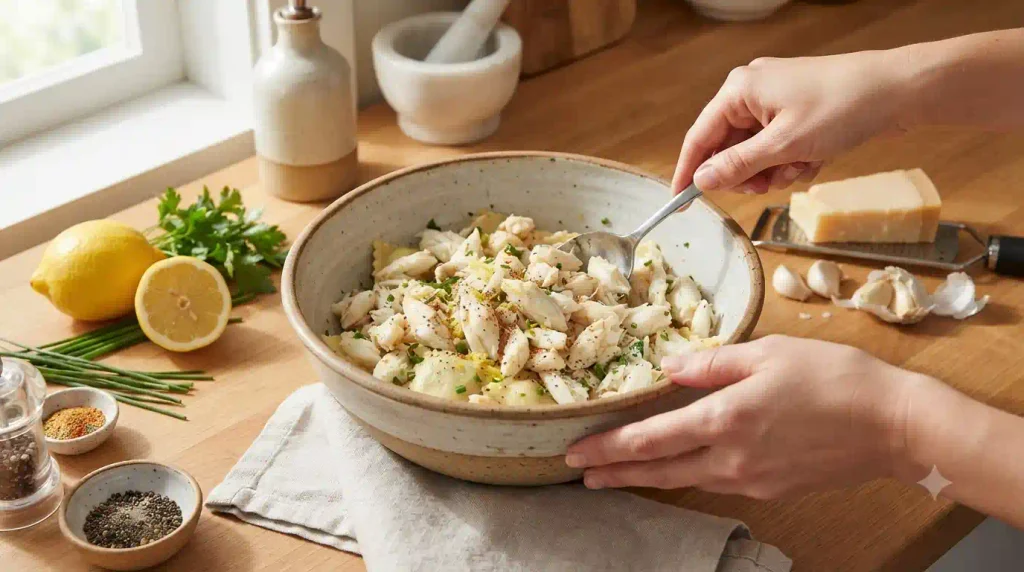
While the dough rests, inspect the crab carefully with clean fingers and remove any pieces of shell or cartilage.
Place the crab in a bowl with:
- Cream cheese
- Parmesan
- Lemon juice
- Lemon zest
- Chives
- Parsley
- Garlic
- Old Bay
- Black pepper
Fold everything together gently.
You want to see recognizable pieces of crab rather than a completely mashed filling.
Taste for salt only if you’re using ready-to-eat cooked crab. Crab, Parmesan, and Old Bay already contain salt, so additional seasoning may not be necessary.
Cover and refrigerate while you roll the pasta.
Food safety note: Keep crab refrigerated at 40°F/4°C or colder until needed, and don’t leave seafood sitting on the counter while you work on the pasta.
Step 3: Roll the Pasta Thinly
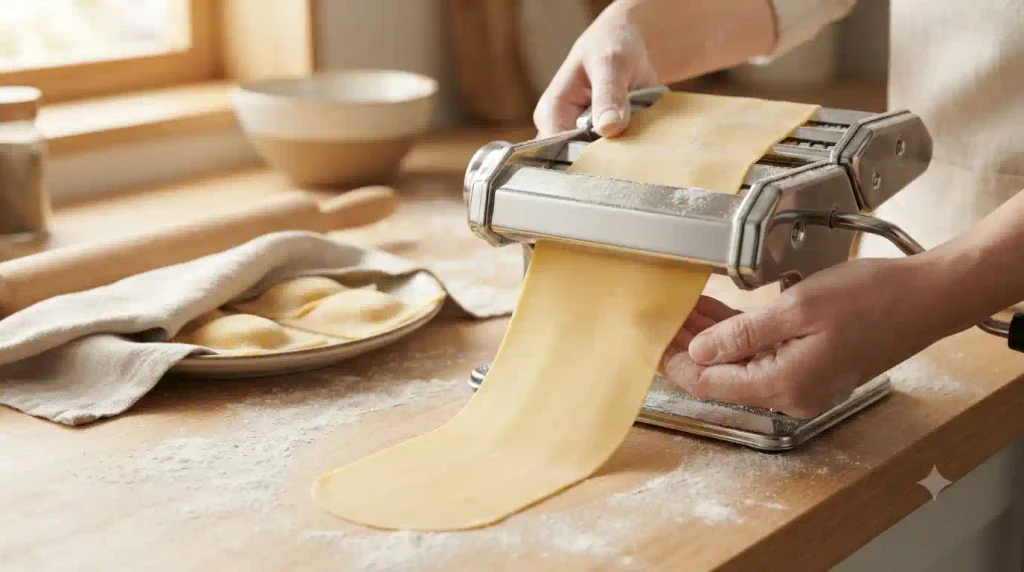
Divide the rested dough into 4 pieces. Keep the pieces you’re not using covered so they don’t dry out.
Flatten one piece into a rectangle and lightly dust it with flour.
If using a pasta machine, begin at the widest setting. Pass the dough through, fold it, and roll again. Gradually move through thinner settings until the pasta is roughly 1 mm thick and slightly translucent.
With a rolling pin, roll from the center outward, rotating the dough regularly.
The sheet needs to be thin, but don’t chase paper-thin perfection. Pasta that is too thin can split when filled.
Step 4: Fill and Seal the Ravioli
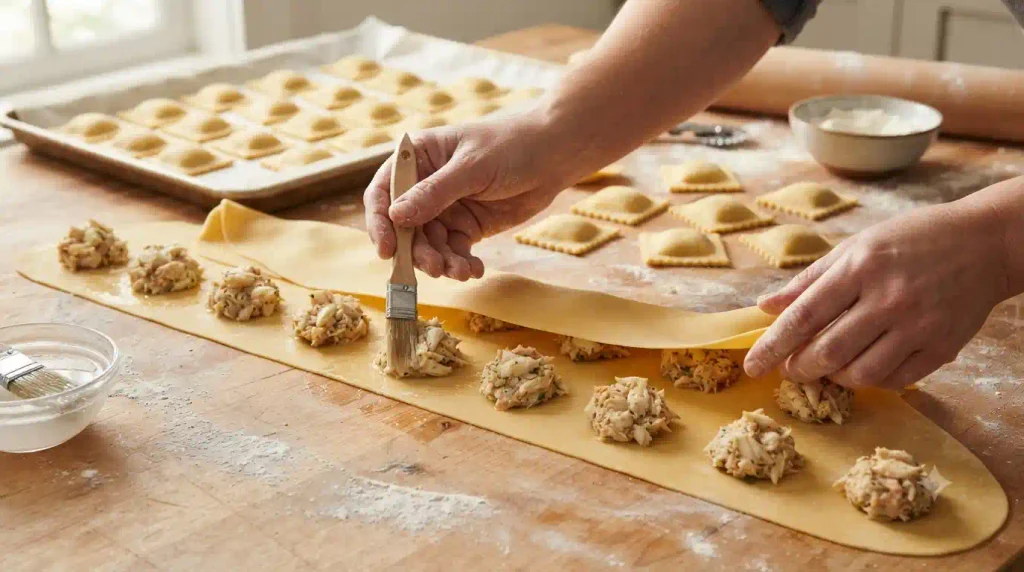
Lay one pasta sheet on a lightly floured surface.
Place approximately 1 generous teaspoon of crab filling at evenly spaced intervals, leaving roughly 1½–2 inches between portions.
Lightly brush around the filling with water.
Place another pasta sheet over the top. Starting close to each mound, gently press outward with your fingertips to push out trapped air.
This little detail matters. Large air pockets expand during cooking and can cause ravioli to burst.
Press the pasta firmly around each mound, then cut into individual ravioli using a ravioli cutter, pastry wheel, or knife.
Transfer them to a lightly floured or parchment-lined tray. Don’t stack fresh ravioli on top of one another.
Repeat with the remaining dough and filling.
Step 5: Cook the Ravioli
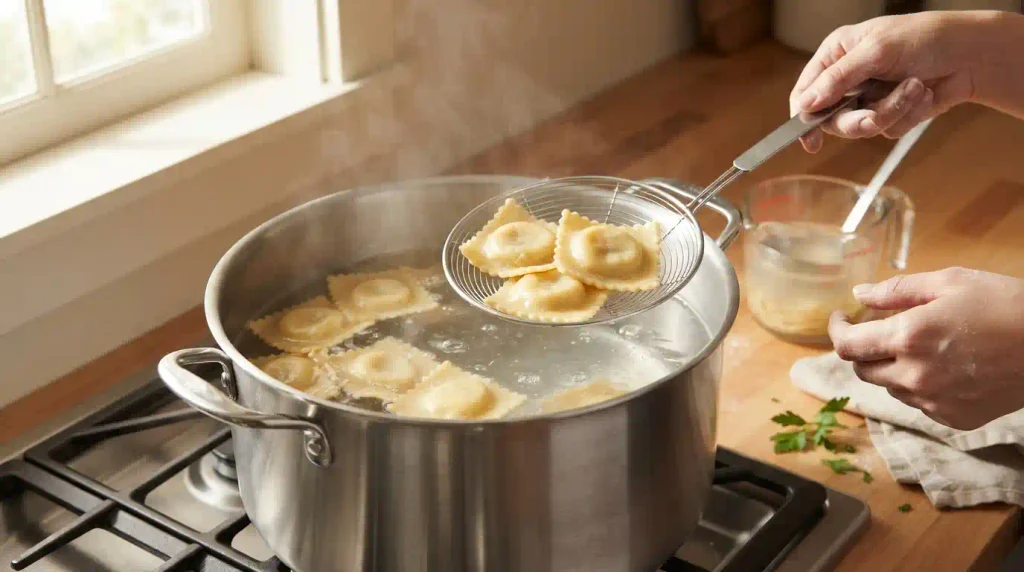
Bring a large pot of water to a gentle boil and season it with salt.
Avoid an aggressive rolling boil. Homemade ravioli are more delicate than dried pasta and can knock against one another and split.
Cook the ravioli in batches for approximately 3–4 minutes, depending on pasta thickness.
Fresh ravioli often float when they’re close to ready, but floating alone isn’t a perfect doneness test. Taste a small piece of pasta from the edge if you’re unsure.
Before draining, reserve at least ¼ cup pasta water.
Lift the ravioli carefully with a slotted spoon rather than dumping the entire pot into a colander.
Step 6: Make the Lemon-Butter Sauce and Serve
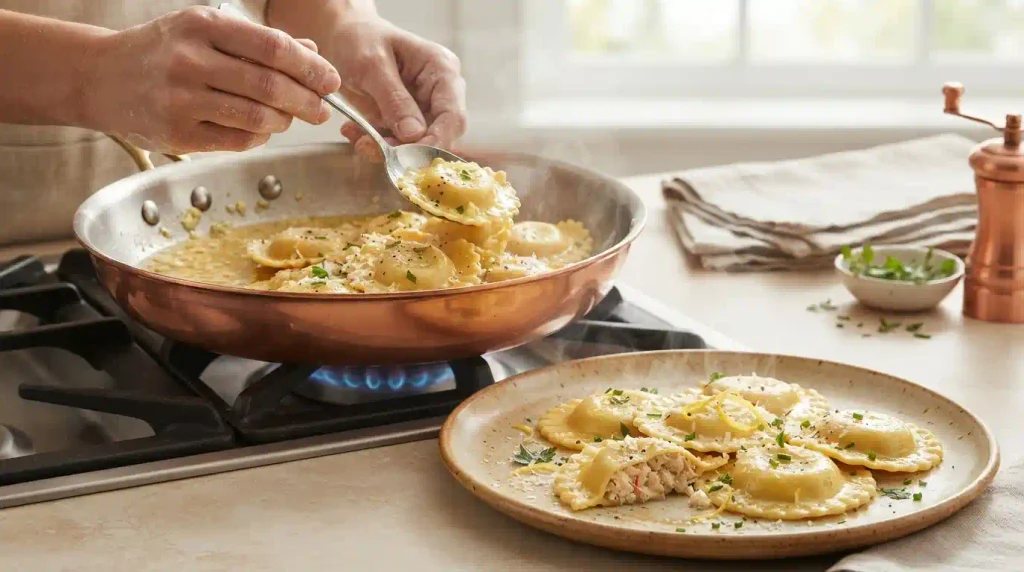
While the ravioli cook, melt the butter in a large skillet over medium-low heat.
Add the minced garlic and cook for about 30 seconds, just until fragrant. Don’t let it brown.
Add the lemon juice and 2 tablespoons pasta water. Swirl the skillet until the sauce looks glossy and lightly emulsified.
Add the cooked ravioli directly to the skillet. Gently spoon the butter sauce over them instead of aggressively stirring.
Add Parmesan and another splash of pasta water if the sauce looks tight.
Finish with parsley and freshly ground black pepper.
Serve immediately with a little lemon zest or extra chives on top.
The finished dish should taste primarily of crab, followed by fresh lemon and buttery pasta—not cheese.
Health Benefits
Crab ravioli is certainly an indulgent meal, but it also brings useful nutrients to the table.
Crab is protein-rich. It provides high-quality animal protein that supports muscle maintenance and helps make the meal satisfying.
Seafood provides vitamin B12. Crab can be a valuable source of vitamin B12, which contributes to normal red blood cell formation and nervous-system function.
Crab contains important minerals. Depending on the species, crab can provide selenium, zinc, copper, and phosphorus.
Eggs add extra nutrition. Fresh egg pasta contributes additional protein along with nutrients such as choline and vitamin B12.
Fresh herbs and lemon add flavor without needing lots of salt. That’s particularly useful here because crab, Parmesan, and seafood seasoning can already contribute significant sodium.
This is still a butter-and-pasta dish, so portion size matters if you’re monitoring calories, saturated fat, or sodium.
Nutrition Information (Per Serving)
These values are estimates and will vary according to the exact crab, flour, cheese, butter, portion size, and how much sauce is served.
| Nutrient | Approximate Amount |
|---|---|
| Calories | 560 kcal |
| Protein | 28 g |
| Fat | 27 g |
| Carbohydrates | 51 g |
Note: Nutrition figures are approximate rather than laboratory-tested values. Packaged crab and Parmesan can also vary considerably in sodium.
Pro Tips & Variations
Buy good crab. Because crab is the main filling, quality makes a noticeable difference. Lump crab meat gives you those satisfying pieces inside each ravioli.
Check for shells twice. Even good packaged crab can contain tiny shell fragments. I usually spread it onto a plate and run my fingers through it before mixing.
Don’t pulverize the filling. Fold rather than vigorously stir. Keeping some crab pieces intact gives the ravioli a meatier texture.
Keep the filling relatively dry. Watery filling makes ravioli harder to seal. If your crab is packed in liquid, drain it thoroughly and gently pat away excess moisture.
Don’t overfill. This is the annoying lesson almost everyone learns during their first homemade ravioli session. More filling sounds better until half your ravioli burst in the pot. A generous teaspoon is plenty.
Seal out the air. Work from the filling toward the edges when pressing the pasta together.
Try mascarpone instead of cream cheese. It creates a softer, slightly richer filling while remaining ricotta-free.
Want absolutely no soft cheese? Replace the cream cheese with roughly 2–3 tablespoons of finely crushed buttery crackers or fresh breadcrumbs and add 1 tablespoon mayonnaise or a beaten egg yolk as needed for binding.
Add heat. A small pinch of red pepper flakes or cayenne works beautifully with crab and lemon.
Change the sauce. Brown butter with sage gives the ravioli a nuttier flavor. A light white-wine butter sauce is another excellent option.
Don’t drown the ravioli. A heavy cream sauce can overpower the crab. Light butter, lemon, white wine, or herb sauces are better partners.
How Much Does It Cost to Make?
Crab is responsible for most of the cost, so prices can vary significantly by location, season, and crab variety.
Here’s a reasonable estimate using typical US grocery pricing:
| Ingredient Group | Estimated Cost |
|---|---|
| 8 oz lump crab meat | $12–$18 |
| Flour + eggs | $2–$3 |
| Cream cheese + Parmesan | $2–$3 |
| Butter | $1–$2 |
| Lemon, garlic + herbs | $2–$3 |
| Seasonings + olive oil | $0.50–$1 |
| Estimated Total | $19.50–$30 |
| Approx. Cost Per Serving | $4.90–$7.50 |
Using claw meat instead of premium lump crab can reduce the cost considerably while still delivering plenty of crab flavor.
Frequently Asked Questions
Can you make crab ravioli without ricotta?
Absolutely. Ricotta isn’t necessary for crab ravioli. Cream cheese, mascarpone, breadcrumbs, egg yolk, or a small amount of mayonnaise can help bind crab while allowing the seafood to remain the dominant flavor.
For this recipe, only 2 ounces of cream cheese are used with 8 ounces of crab, so you’re getting a crab-heavy filling rather than cheese ravioli flavored with crab.
What sauce goes best with crab ravioli?
A simple lemon-butter sauce is one of the best choices because its acidity and richness complement sweet crab without overwhelming it.
Other good options include brown butter, garlic-herb butter, light white-wine sauce, or a delicate tomato-butter sauce. Avoid extremely heavy or strongly seasoned sauces if you want to taste the crab.
Can I make crab ravioli ahead of time?
Yes. Arrange uncooked ravioli in a single layer on a parchment-lined tray, cover, and refrigerate for a short period before cooking.
For longer storage, freezing is usually better. Freeze the ravioli in a single layer until firm, then transfer them to a freezer-safe container or bag.
Cook frozen ravioli straight from frozen rather than thawing them first, adding a little extra cooking time as needed.
Why does homemade ravioli burst while cooking?
The usual causes are overfilling, trapped air, poorly sealed edges, pasta rolled too thin, or violently boiling water.
Press air away from the filling before sealing and cook ravioli at a controlled gentle boil. If an edge doesn’t look completely sealed before it reaches the pot, pinch it again—it’s much easier to fix on the counter than rescue crab filling from boiling water.
Final Thoughts
Homemade crab ravioli takes a little more effort than opening a box of pasta, but that’s part of what makes it special. Once you get into the rhythm of rolling, filling, and cutting, the process becomes surprisingly relaxing—even when your counter looks like it has been hit by a small flour storm.
Keep the pasta thin, the filling generous but manageable, and the sauce simple. The reward is tender fresh ravioli with plenty of real crab in every bite and no ricotta competing for attention. Serve it straight from the skillet while the lemon butter is glossy, and you’ve got a seafood dinner worthy of a special occasion.