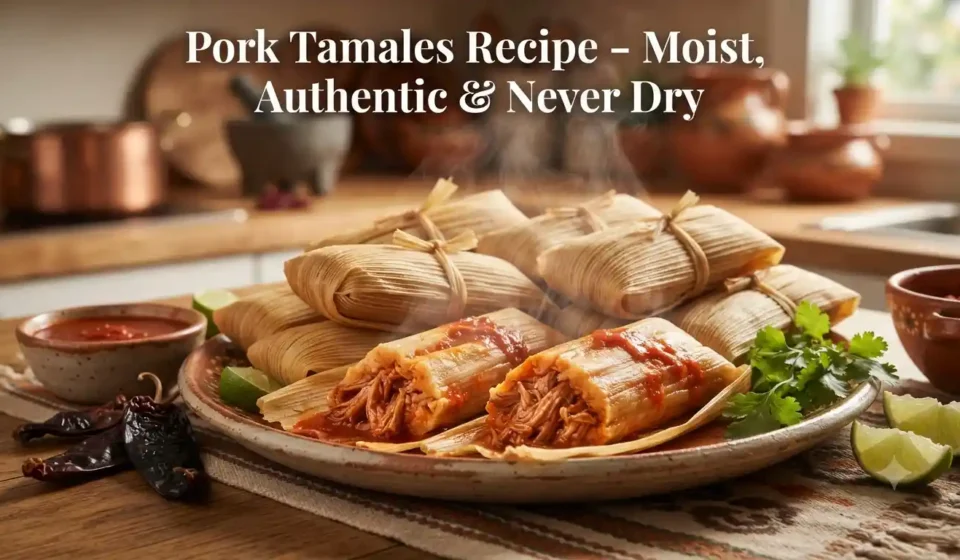

There’s something deeply satisfying about making tamales at home. The smell of slow-cooked pork, toasted chiles, and warm corn masa filling the kitchen is enough to make everyone wander in asking when dinner will be ready. And if you’ve ever craved a really good pork tamale—tender, saucy, and moist rather than dry—you know the homemade version is worth the effort.
Tamales do take a little time, but most of it is simple, hands-on cooking rather than complicated technique. The secret is keeping both the pork filling and masa well seasoned and properly hydrated. This recipe walks you through each stage so even first-time tamale makers can get soft, fluffy masa wrapped around juicy shredded pork.
Prep & Cook Time
| Detail | Time / Amount |
|---|---|
| Prep Time | 45 minutes |
| Cook Time | 3 hours 15 minutes |
| Assembly Time | 40 minutes |
| Total Time | About 4 hours 40 minutes |
| Servings | 8 servings |
| Yield | About 24 tamales |
Planning tip: Tamales are ideal for weekend cooking because the pork can be prepared a day ahead. Chilled pork is also easier to shred and assemble into the masa.
What Equipment Do You Need?
You don’t need specialty restaurant equipment, but a few basic tools make the process much easier.
- Large Dutch oven or heavy-bottomed pot
- Large mixing bowl
- Medium saucepan
- Blender
- Electric hand mixer or stand mixer
- Large steamer pot with steamer basket
- Tongs
- Cutting board
- Sharp knife
- Measuring cups and spoons
- Two forks for shredding pork
- Rubber spatula or large spoon
- Kitchen towel
No tamale steamer? A deep stockpot fitted with a steamer basket works perfectly well. The important thing is keeping the tamales above the simmering water.
Ingredients
For the Pork Filling
- 2 ½ pounds boneless pork shoulder, trimmed and cut into large chunks
- 1 tablespoon vegetable oil
- 1 medium yellow onion, quartered
- 4 garlic cloves, peeled
- 1 teaspoon kosher salt
- ½ teaspoon black pepper
- 1 teaspoon ground cumin
- 1 teaspoon dried Mexican oregano
- 1 bay leaf
- 4 cups low-sodium chicken broth, or enough to mostly cover the pork
For the Red Chile Sauce
- 5 dried guajillo chiles, stems and seeds removed
- 2 dried ancho chiles, stems and seeds removed
- 2 garlic cloves
- ½ teaspoon ground cumin
- ½ teaspoon dried Mexican oregano
- ¼ teaspoon black pepper
- ½ teaspoon kosher salt, plus more to taste
- 1 ½ cups pork cooking broth, divided as needed
For the Masa
- 4 cups masa harina for tamales
- 2 teaspoons baking powder
- 1 ½ teaspoons kosher salt
- 1 cup lard, softened
- 3 to 3 ½ cups warm pork cooking broth
- ½ cup prepared red chile sauce
For Assembly
- About 30 dried corn husks
- Hot water for soaking
You may not use every husk, but having extras is useful because some will inevitably be too small or torn.
Why Each Ingredient Matters
Pork shoulder: This is one of the best cuts for tamales because its connective tissue and marbled fat soften during slow cooking. Lean pork can become dry, while shoulder stays succulent enough to withstand steaming.
Masa harina: Masa harina is corn treated through nixtamalization before being dried and ground. It provides the characteristic corn flavor and tender texture of tamales. Regular cornmeal is not a direct substitute.
Lard: Traditional tamale masa relies on fat for tenderness. Whipping softened lard before adding the masa helps create a lighter texture instead of a dense, heavy shell.
Pork broth: Don’t throw away that cooking liquid. It contains gelatin, pork flavor, aromatics, and seasoning. Using it in the masa adds far more flavor than plain water.
Guajillo chiles: Guajillos contribute bright red color and a mildly fruity, earthy chile flavor without making the filling overwhelmingly hot.
Ancho chiles: Anchos bring deeper, slightly sweet and smoky notes that round out the sharper guajillo flavor.
Baking powder: A small amount provides extra lift so the steamed masa feels softer and less compact.
Mexican oregano: Its citrusy, earthy character works particularly well with pork and dried chiles.
Corn husks: The husks aren’t eaten, but they serve as natural wrappers that hold the tamales together while allowing steam to cook the masa gently.
Step-by-Step Instructions
Step 1: Cook the Pork Until Fork-Tender
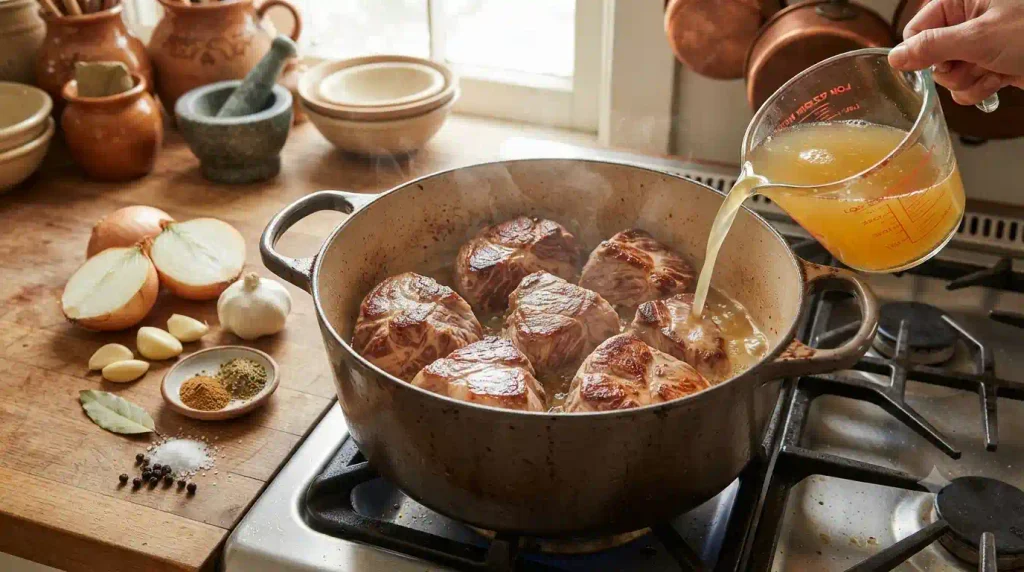
Pat the pork shoulder dry with paper towels and season it with the salt and black pepper.
Heat 1 tablespoon vegetable oil in a Dutch oven over medium-high heat. Brown the pork in batches, giving each piece enough room to develop some color. Don’t crowd the pan or the pork will steam rather than brown.
Return all the pork to the pot. Add the onion, garlic, cumin, oregano, bay leaf, and chicken broth.
Bring everything just to a boil, then reduce the heat to low. Cover and gently simmer for approximately 2 to 2 ½ hours, or until the pork pulls apart easily with a fork.
For food safety, pork should reach a safe internal temperature, but shoulder benefits from cooking well beyond the minimum because higher temperatures allow its connective tissue to soften.
Remove the pork and reserve the cooking broth. Discard the bay leaf.
Once the meat is cool enough to handle, shred it using two forks.
Kitchen note: If you’re tugging hard at the meat, give it more time. Properly cooked pork shoulder practically falls apart.
Step 2: Make the Red Chile Sauce
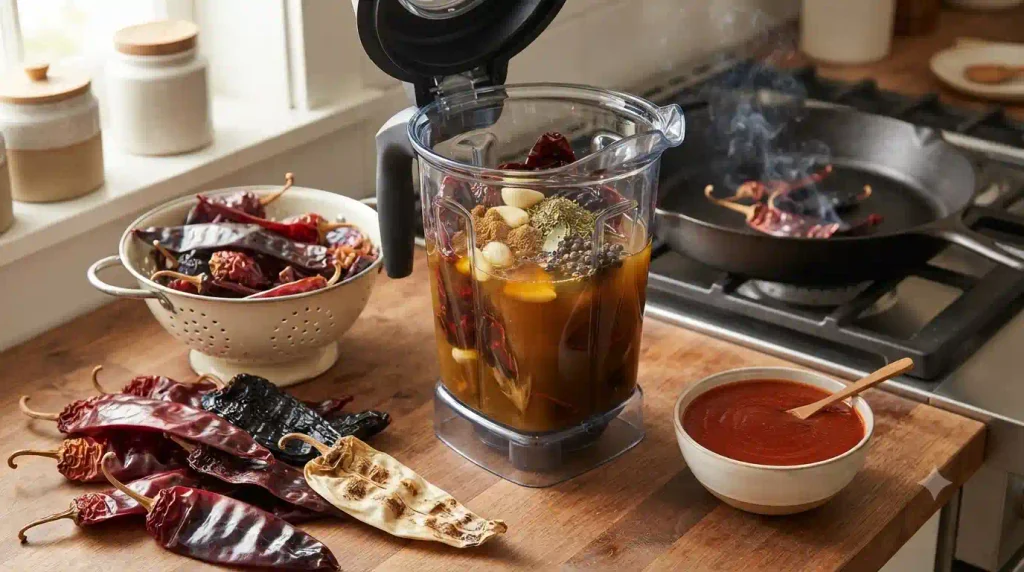
While the pork cools, place the dried guajillo and ancho chiles in a dry skillet over medium-low heat.
Toast them for roughly 15–30 seconds per side, just until fragrant. Don’t let them burn; scorched dried chiles can make an entire sauce unpleasantly bitter.
Transfer the chiles to a bowl and cover them with very hot water. Let them soften for approximately 20 minutes.
Drain the chiles and transfer them to a blender with:
- Garlic
- Cumin
- Mexican oregano
- Black pepper
- Salt
- 1 cup reserved pork broth
Blend until completely smooth, adding additional broth if necessary.
For an especially silky sauce, pour it through a fine-mesh strainer.
Step 3: Season the Pork and Prepare the Husks
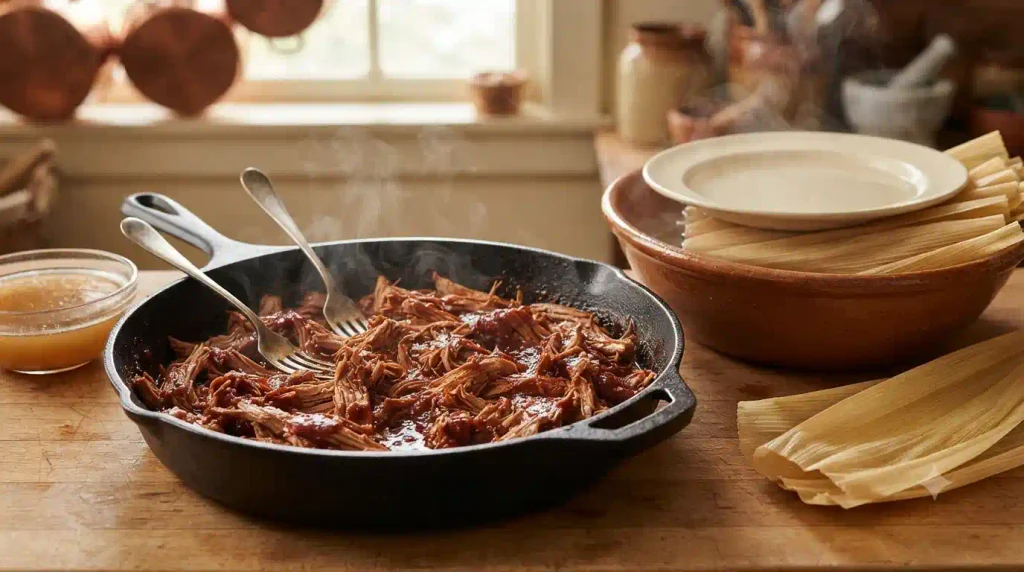
Place the shredded pork in a saucepan or skillet and stir in approximately 1 to 1 ½ cups red chile sauce.
Add a splash of reserved broth if necessary. Simmer over medium-low heat for 10–15 minutes, stirring occasionally.
The finished filling should look juicy and glossy rather than watery.
Taste it before assembling your tamales. The filling should taste slightly more strongly seasoned than you might expect because the masa will mellow its flavor.
Meanwhile, place the corn husks in a large bowl or clean sink and cover them completely with very hot water.
Place a plate over the husks to keep them submerged and soak for approximately 30 minutes, or until soft and flexible.
Rinse them briefly and pat them dry.
Step 4: Whip the Masa Until Soft and Spreadable
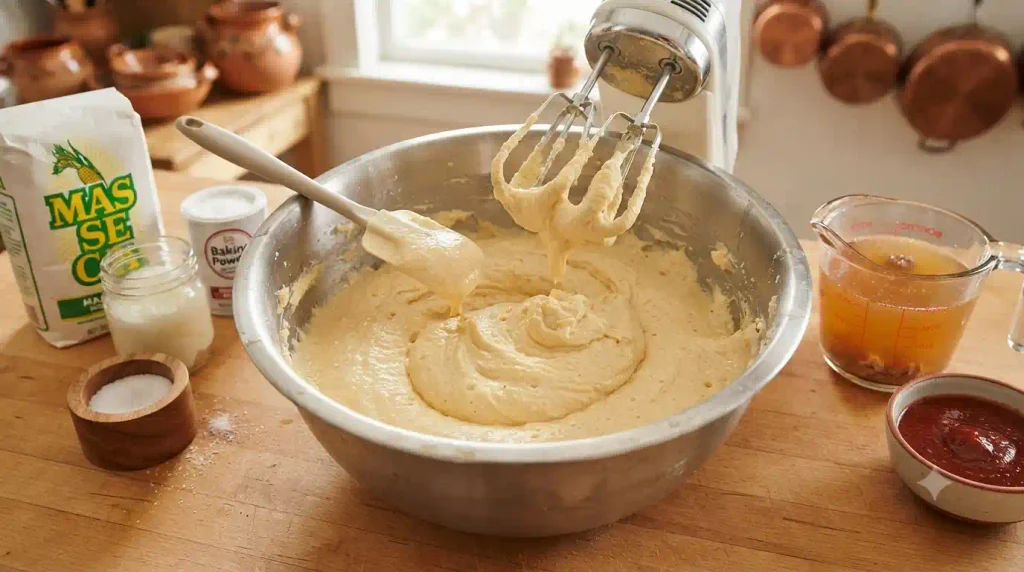
In a bowl, whisk together:
- 4 cups masa harina
- 2 teaspoons baking powder
- 1 ½ teaspoons kosher salt
In a separate large mixing bowl, beat the softened lard for approximately 3–4 minutes, until noticeably lighter and fluffy.
Gradually beat the dry masa mixture into the lard.
Begin adding warm pork broth about ½ cup at a time, mixing after each addition. Stir in ½ cup red chile sauce.
Continue beating until the masa resembles thick, creamy hummus or very soft peanut butter. You should be able to spread it over a corn husk without it cracking.
You may need slightly more or less broth depending on your masa harina.
This is one of the biggest secrets to moist tamales: don’t make the masa too stiff. Dry-looking masa before steaming usually becomes an even drier tamale afterward.
Step 5: Fill and Fold the Tamales
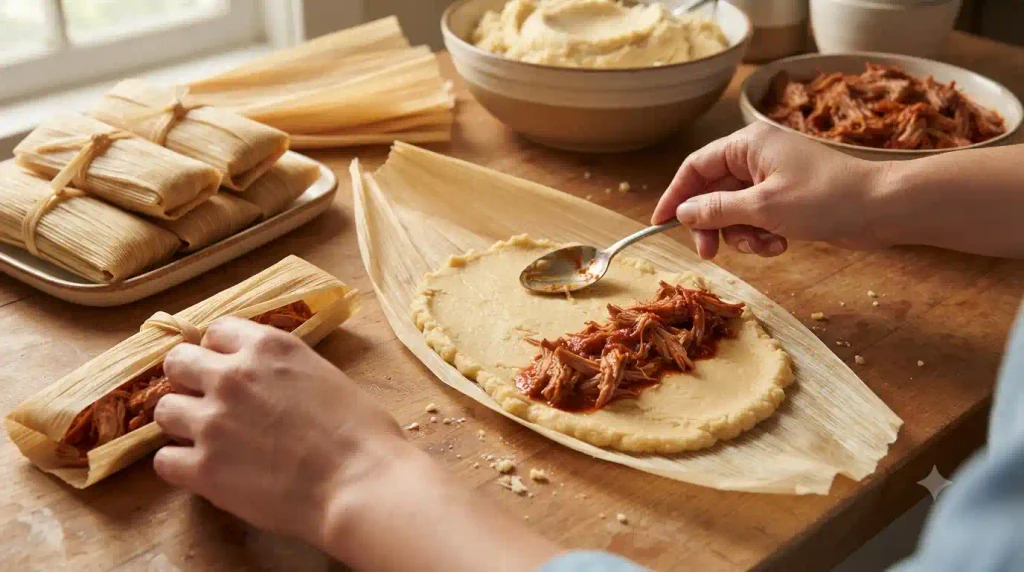
Lay one softened corn husk on your work surface with the wide end facing you.
Spread approximately ¼ cup masa over the wider upper portion of the husk, creating a layer around ¼ inch thick. Leave a border around the sides.
Spoon approximately 1 ½–2 tablespoons pork filling down the center.
Avoid overfilling. I know that extra spoonful of pork is tempting, but overloaded tamales are much harder to close and can split during steaming.
Bring one long side of the husk toward the center, followed by the other side so the masa surrounds the filling.
Fold the narrow bottom end upward.
Repeat with the remaining husks, masa, and pork.
If a husk tears, simply overlap it with another husk rather than trying to force it closed.
Step 6: Steam Until the Masa Releases Cleanly
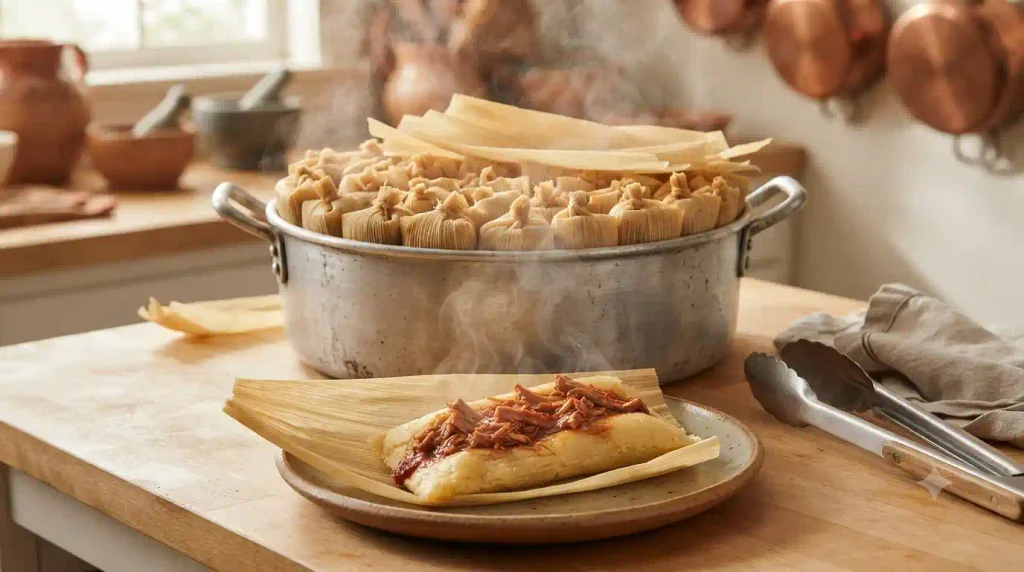
Fill the bottom of your steamer with water, making sure the water sits below the steamer basket.
Arrange the tamales upright with their open ends facing upward. Don’t pack them so tightly that steam cannot circulate.
Cover the top with a few spare corn husks or a clean kitchen towel, then cover the pot with its lid.
Bring the water to a simmer and steam the tamales for approximately 60–75 minutes.
Check the water level periodically. Add hot water when necessary so the pot never boils dry. Be careful when lifting the lid because escaping steam can cause serious burns.
To test, remove one tamale and let it rest for several minutes. Carefully open the husk.
The tamale is ready when the masa feels firm yet tender and pulls away cleanly from the corn husk.
If it sticks heavily, steam the batch for another 10–15 minutes.
Once cooked, let the tamales rest for approximately 15 minutes before serving. This resting period helps the masa finish setting.
Health Benefits
Pork tamales are hearty comfort food, but they also provide several useful nutrients.
- High-quality protein: Pork supplies complete protein containing all essential amino acids.
- B vitamins: Pork is particularly known for thiamine (vitamin B1), which supports normal energy metabolism.
- Iron and zinc: Pork contributes minerals involved in normal immune and cellular function.
- Corn-based carbohydrates: Masa provides carbohydrates that make tamales satisfying and energy-rich.
- Chile compounds: Dried red chiles provide carotenoid pigments and other plant compounds.
- Portion-friendly: Individually wrapped tamales make serving sizes easier to manage.
That said, tamales can be relatively high in calories, fat, and sodium depending on the amount of lard, filling, broth, and salt used. Pairing them with beans, salsa, grilled vegetables, cabbage slaw, or a fresh salad creates a more balanced meal.
Nutrition Information (Per Serving)
Approximate nutrition for 3 tamales per serving:
| Nutrient | Approximate Amount |
|---|---|
| Calories | 620 kcal |
| Protein | 31 g |
| Fat | 32 g |
| Carbohydrates | 53 g |
Note: Nutrition values are estimates. Exact numbers vary according to pork trimming, brands of masa harina and broth, the amount of filling per tamale, and the amount of lard used.
Pro Tips & Variations
Chef Tips for Moist Tamales
1. Don’t use an ultra-lean pork cut.
Pork shoulder’s fat and collagen help create the juicy filling we’re after.
2. Save the pork broth.
Using flavorful broth instead of water in your masa makes a surprisingly big difference.
3. Keep the filling moist.
Shredded pork should be coated generously in chile sauce before it goes into the tamales.
4. Don’t make stiff masa.
The masa should spread easily. If it crumbles or drags across the husk, beat in another splash of warm broth.
5. Whip the fat properly.
Giving the lard several minutes with the mixer helps incorporate air and produces lighter masa.
6. Don’t overfill.
More filling isn’t always better. Too much makes the tamales difficult to fold and encourages leaking.
7. Maintain gentle steam.
You want continuous steam rather than an aggressive boil.
8. Rest before judging the texture.
A tamale straight from the steamer can seem softer and stickier than one that has rested for 10–15 minutes.
Easy Variations
Chicken tamales: Replace the pork with shredded chicken thighs.
Spicier tamales: Add 1–2 dried árbol chiles to the red sauce.
Milder tamales: Use only guajillo chiles and leave out hotter varieties.
Vegetable shortening option: You can substitute shortening for lard. The texture and traditional flavor will change slightly, but the technique remains similar.
Cheese variation: Add a small strip of melting cheese alongside the pork.
Extra-saucy pork: Reserve additional chile sauce and serve it over the cooked tamales rather than overfilling them.
Make-Ahead Tip
Prepare the pork and chile sauce 1–2 days ahead and refrigerate them promptly in covered containers. When you’re ready to make tamales, warm the reserved broth before mixing your masa.
This turns tamale day into a much more manageable project.
How Much Does It Cost to Make?
Prices vary considerably by supermarket and region, but homemade tamales can be economical when made as a larger batch.
| Ingredient | Estimated Cost (USD) |
|---|---|
| Pork shoulder | $9–$13 |
| Masa harina | $3–$4 |
| Lard | $2–$3 |
| Dried chiles | $3–$5 |
| Corn husks | $3–$4 |
| Onion and garlic | $1–$2 |
| Broth, spices and seasonings | $2–$4 |
| Estimated Total | $23–$35 |
For approximately 24 tamales, that’s roughly $0.95–$1.45 per tamale, depending on local ingredient prices and what you already have in your pantry.
Buying pork shoulder on sale or purchasing dried chiles and masa harina in larger packages can bring the cost down further.
Frequently Asked Questions
Why are my pork tamales dry?
Dry tamales usually come from masa that didn’t contain enough liquid or fat, an overly dry filling, or excessive steaming.
Your masa should be soft and easily spreadable before assembly. Keep the shredded pork coated with chile sauce, and don’t steam the tamales far beyond the point where the masa releases cleanly from the husk.
How long should pork tamales steam?
A batch of medium homemade tamales generally needs around 60–75 minutes of steady steaming.
Size, filling quantity, steamer temperature, and how tightly the pot is packed can change the cooking time. Rather than relying only on the clock, test one tamale. After a short rest, properly cooked masa should separate readily from its husk.
Can you make pork tamales ahead of time?
Yes. Tamales are excellent make-ahead food.
Cooked tamales can be cooled and refrigerated in an airtight container for around 3–4 days. Reheat them thoroughly until piping hot throughout.
You can also freeze cooled tamales for longer storage. Keep the corn husks on them, place the tamales in freezer-safe packaging, remove excess air, and freeze.
What is the secret to fluffy tamale masa?
Three things make the biggest difference: properly whipped fat, enough warm broth, and avoiding overly stiff masa.
Beat the softened lard until light before gradually incorporating the masa harina mixture. Then add enough broth to produce a soft, easily spreadable consistency.
Don’t panic if your masa doesn’t pass the popular “float test.” It’s a useful traditional indicator in some kitchens, but texture and proper steaming are more reliable measures of whether your tamales will succeed.
Final Thoughts
Great pork tamales aren’t about rushing through a complicated recipe. They’re about getting a few important details right: tender pork, flavorful chile sauce, properly hydrated masa, and gentle steaming.
Your first couple of tamales might look a little wonky—I still consider that part of homemade tamale day. By the third or fourth, folding becomes almost automatic. Give the finished batch a few minutes to rest, unwrap one while it’s still warm, and you’ll see why the extra effort pays off.
Soft masa, juicy chile-coated pork, and that unmistakable corn-husk aroma make these tamales worth every minute.