

There’s something deeply satisfying about hearing pork steaks sizzle the second they hit a hot skillet. When you’re craving a hearty dinner but don’t want to spend hours in the kitchen, this garlic butter pork steak is exactly the kind of meal that hits the spot. It’s rich, savory, and simple enough for a busy weeknight.
The secret is a good sear followed by gentle cooking in garlicky, herb-infused butter. You get beautifully browned edges while the inside stays juicy and tender. Best of all, everything comes together in one skillet, so you’re not left staring at a mountain of dishes afterward.
Pork Steak Recipe – Garlic Butter, Juicy & Tender
This easy pork steak recipe uses thick-cut pork shoulder steaks, a simple savory seasoning, and a garlic-herb butter baste. The result is a satisfying main dish that works just as well with mashed potatoes and gravy as it does with roasted vegetables or a crisp green salad.
Prep & Cook Time
| Details | Time / Amount |
|---|---|
| Prep Time | 10 minutes |
| Cook Time | 20–25 minutes |
| Resting Time | 5 minutes |
| Total Time | 35–40 minutes |
| Servings | 4 |
Cooking time can vary depending on the thickness of your pork steaks. A meat thermometer is much more reliable than judging doneness by color alone.
What Equipment Do You Need?
You don’t need fancy equipment for juicy pork steaks. A few everyday kitchen tools will do the job.
- Large cast-iron or heavy-bottomed skillet – Holds heat well and creates a flavorful brown crust.
- Kitchen tongs – Makes flipping the steaks easy without piercing the meat.
- Small bowl – For mixing the seasoning.
- Measuring spoons – Helpful for keeping the seasoning balanced.
- Instant-read meat thermometer – The easiest way to avoid overcooked pork.
- Spoon – For basting the steaks with garlic butter.
- Cutting board or plate – For resting the cooked pork before serving.
- Paper towels – Drying the surface of the meat helps it brown properly.
Ingredients
For 4 servings, you’ll need:
- 4 pork shoulder steaks, about 6–8 oz (170–225 g) each and roughly ¾–1 inch thick
- 1 tablespoon olive oil
- 1 teaspoon kosher salt
- 1 teaspoon smoked paprika
- ¾ teaspoon freshly ground black pepper
- ½ teaspoon garlic powder
- ½ teaspoon onion powder
- ½ teaspoon dried thyme
- 3 tablespoons unsalted butter
- 4 garlic cloves, finely minced
- 2 sprigs fresh rosemary
- 2 sprigs fresh thyme
- 1 tablespoon fresh lemon juice
- 1 tablespoon chopped fresh parsley, for serving
Optional for serving:
- Lemon wedges
- Mashed potatoes
- Roasted potatoes
- Green beans
- Steamed broccoli
- Garden salad
Why Each Ingredient Matters
A short ingredient list can still produce big flavor when every ingredient has a purpose.
| Ingredient | Why It Matters |
|---|---|
| Pork shoulder steak | Naturally flavorful with intramuscular fat and connective tissue that contribute richness and moisture. |
| Olive oil | Helps transfer heat evenly and encourages browning during the initial sear. |
| Kosher salt | Seasons the meat throughout and enhances its natural pork flavor. |
| Smoked paprika | Gives the crust warm color and a subtle smoky note. |
| Black pepper | Adds gentle heat and balances the richness of the butter. |
| Garlic powder | Provides an even layer of savory garlic flavor without burning during the initial sear. |
| Onion powder | Adds background sweetness and savory depth. |
| Thyme | Its earthy flavor pairs especially well with pork. |
| Butter | Adds richness and helps carry the flavors of the garlic and fresh herbs across the meat. |
| Fresh garlic | Becomes fragrant and slightly sweet when gently cooked in butter. |
| Rosemary | Adds a piney, aromatic note that cuts through the richness of pork shoulder. |
| Lemon juice | A little acidity brightens the finished dish and balances the butter. |
| Parsley | Adds freshness and color immediately before serving. |
One small detail makes a noticeable difference here: garlic powder seasons the pork before searing, while fresh garlic goes into the butter later. Putting minced garlic into a screaming-hot skillet at the beginning can leave you with bitter, burnt garlic before the pork is finished.
Step-by-Step Instructions
Step 1: Dry and Season the Pork Steaks
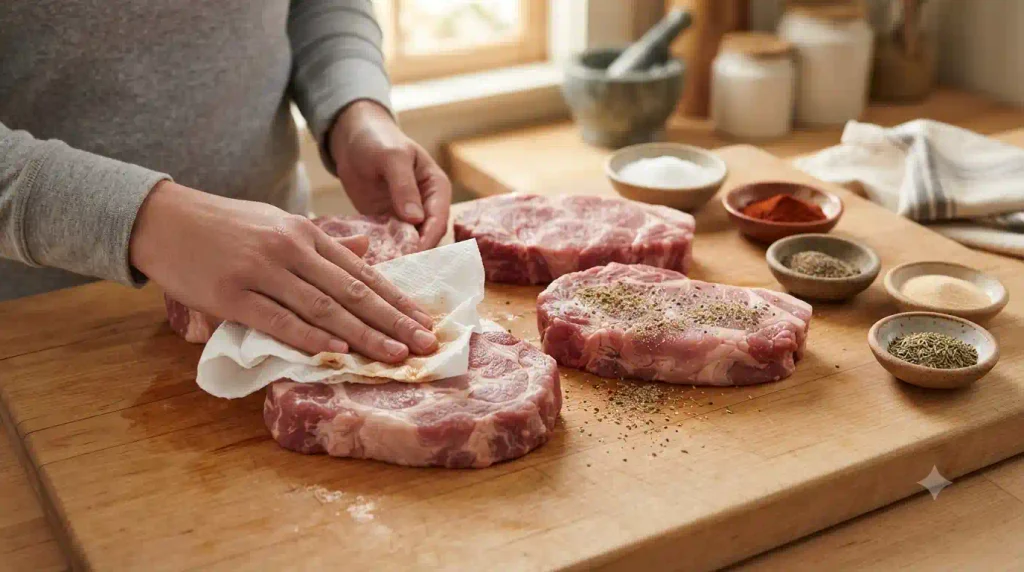
Remove the pork steaks from their packaging and pat them thoroughly dry with paper towels. Moisture on the surface creates steam, and steam works against the deep golden crust we’re after.
In a small bowl, combine:
- 1 teaspoon kosher salt
- 1 teaspoon smoked paprika
- ¾ teaspoon black pepper
- ½ teaspoon garlic powder
- ½ teaspoon onion powder
- ½ teaspoon dried thyme
Season both sides of each steak evenly. Gently press the seasoning onto the meat rather than rubbing it aggressively.
If you have an extra 15–20 minutes, let the seasoned steaks sit in the refrigerator while you prepare your sides. Otherwise, you can cook them straight away.
Step 2: Heat the Skillet

Place a large cast-iron or heavy-bottomed skillet over medium-high heat.
Give it about 2–3 minutes to heat properly, then add 1 tablespoon olive oil.
The oil should shimmer but shouldn’t be smoking heavily.
Place the pork steaks into the skillet, leaving a little room between each piece. If your skillet is small, cook them in two batches. Crowding the pan traps steam and makes proper browning difficult.
Be careful when placing the meat into hot oil, as it may splatter.
Step 3: Sear Until Deeply Golden

Leave the pork steaks undisturbed for approximately 3–4 minutes.
This is where patience pays off. Constantly lifting the steaks to check underneath interrupts browning.
Once the first side has developed a deep golden-brown crust, flip each steak using tongs.
Sear the second side for another 3 minutes.
If the pork sticks when you first try to turn it, give it another 30 seconds. Properly browned meat will often release from a well-heated skillet more easily.
Step 4: Make the Garlic Herb Butter

Reduce the heat to medium-low.
Add:
- 3 tablespoons unsalted butter
- 4 minced garlic cloves
- 2 rosemary sprigs
- 2 thyme sprigs
As the butter melts, gently swirl the skillet.
Cook for around 30–60 seconds, just until the garlic smells fragrant.
Don’t let the garlic turn dark brown. Burnt garlic can make the entire butter sauce taste bitter.
Tilt the pan slightly so the melted butter collects along one side. Using a large spoon, scoop up the aromatic butter and pour it repeatedly over the pork steaks.
Baste each steak several times.
Step 5: Finish Cooking Until Juicy and Tender

Continue cooking over medium-low heat, flipping the pork occasionally and spooning garlic butter over the top.
Depending on thickness, this can take approximately 6–10 additional minutes.
The safest and most reliable method is to check the thickest portion with an instant-read thermometer.
For whole cuts of pork, the USDA recommends cooking to a minimum internal temperature of 145°F (63°C), followed by at least a 3-minute rest.
Remove the steaks from the skillet once they’ve reached a safe temperature rather than continuing to cook them “just to be sure.” Overcooking is one of the biggest reasons pork steaks become dry.
Step 6: Rest, Finish and Serve
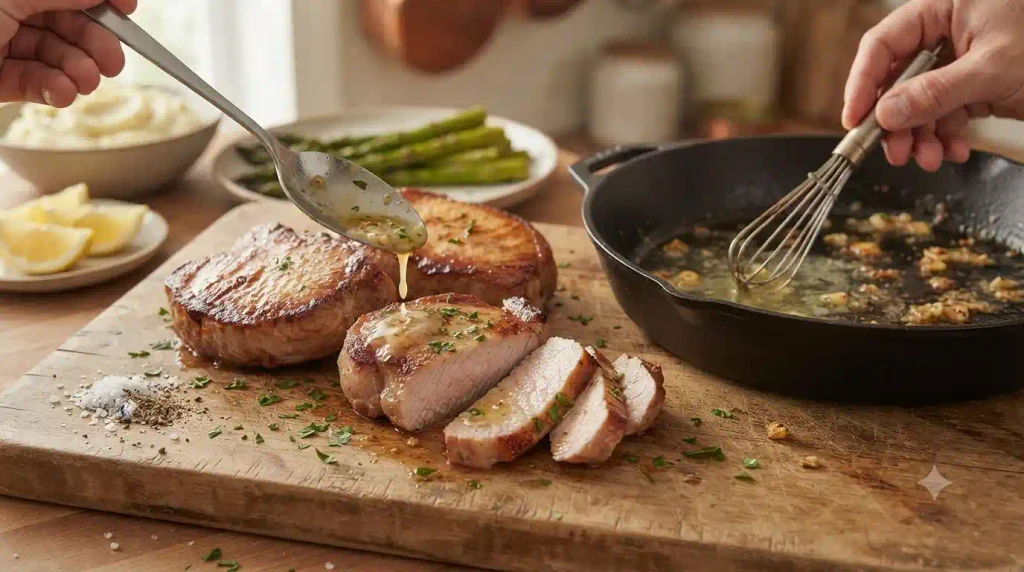
Transfer the pork steaks to a clean serving plate or cutting board.
Let them rest for at least 5 minutes.
While they rest, remove the herb stems from the skillet and stir 1 tablespoon fresh lemon juice into the remaining garlic butter.
Taste the sauce and adjust the seasoning if needed.
Spoon that warm garlic butter over the rested pork steaks and finish with fresh chopped parsley.
Serve immediately with your favorite sides.
And yes, those browned buttery bits left in the skillet are worth spooning over mashed potatoes.
Health Benefits
Pork steak is certainly a rich meal, but it also provides several valuable nutrients.
High-quality protein: Pork supplies complete protein containing all nine essential amino acids. Protein helps support muscle maintenance, tissue repair, and normal body functions.
B vitamins: Pork is particularly known for supplying thiamin (vitamin B1), along with other B vitamins involved in normal energy metabolism.
Minerals: Pork can provide useful amounts of minerals such as selenium, zinc, and phosphorus.
Garlic: Fresh garlic contains sulfur-containing compounds and adds considerable flavor without needing sugary sauces.
Herbs: Rosemary, thyme, and parsley provide flavor and small amounts of beneficial plant compounds while helping you build complexity without relying entirely on additional salt.
For a lighter plate, serve one pork steak with plenty of roasted or steamed vegetables and use a smaller amount of the pan butter.
Nutrition Information (Per Serving)
Approximate nutrition for one serving, based on four servings and excluding optional side dishes:
| Nutrient | Approximate Amount |
|---|---|
| Calories | 480 kcal |
| Protein | 39 g |
| Fat | 35 g |
| Carbohydrates | 2 g |
Note: Nutritional values are estimates. Actual numbers will vary with the size and fat content of the pork steaks, brands used, and how much garlic butter remains in the pan.
Pro Tips & Variations
Chef Tips for Juicier Pork Steak
- Dry the meat first. A dry surface develops a much better crust.
- Use thick steaks when possible. Steaks around ¾–1 inch thick are easier to sear without immediately overcooking the center.
- Preheat your skillet. Putting cold meat into a lukewarm pan encourages steaming rather than browning.
- Don’t crowd the skillet. Work in batches when necessary.
- Turn the heat down before adding butter. Butter and minced garlic can burn quickly over high heat.
- Use a thermometer. It takes the guesswork out of cooking pork safely.
- Rest before slicing. Cutting immediately lets more flavorful juices escape onto the plate.
- Don’t throw away the pan butter. Spoon a modest amount over the steaks or vegetables just before serving.
Garlic Parmesan Pork Steak
After cooking, sprinkle each steak with 1–2 tablespoons freshly grated Parmesan. Let it melt into the warm garlic butter before serving.
Spicy Garlic Butter Pork Steak
Add ¼–½ teaspoon crushed red pepper flakes to the butter for a gentle kick.
Cajun Pork Steak
Replace the paprika, garlic powder, onion powder, and dried thyme with approximately 2 teaspoons Cajun seasoning. Check the seasoning’s sodium level before adding extra salt.
Dijon Garlic Butter
Stir 1 teaspoon Dijon mustard into the pan sauce along with the lemon juice. Its acidity and mild heat work beautifully with rich pork.
Dairy-Free Version
Replace the butter with a plant-based butter suitable for sautéing. Olive oil also works, although you won’t get quite the same creamy richness.
No Fresh Herbs?
Use about ½ teaspoon dried rosemary and ½ teaspoon dried thyme. Dried herbs are more concentrated, so don’t substitute them one-for-one with fresh herbs.
Pork Chop Variation
You can use this same garlic butter technique for thick pork chops. Cooking time will vary depending on whether they’re boneless or bone-in, so rely on internal temperature rather than the clock.
How Much Does It Cost to Make?
Prices vary significantly by store, region, season, and whether the pork is on sale, but this is an affordable way to turn a few basic ingredients into a satisfying dinner.
Estimated U.S. Cost
| Ingredient | Estimated Cost Used |
|---|---|
| 4 pork shoulder steaks | $7.00–$10.00 |
| Butter | $0.60 |
| Fresh garlic | $0.30 |
| Olive oil | $0.20 |
| Seasonings | $0.40 |
| Fresh herbs | $1.00–$2.00 |
| Lemon & parsley | $0.75–$1.25 |
| Estimated Total | $10.25–$14.75 |
| Estimated Cost Per Serving | $2.55–$3.70 |
If rosemary and thyme are already growing in your garden—or sitting in your fridge from another recipe—the cost drops even further.
The optional side dishes aren’t included in this estimate.
Frequently Asked Questions
How do you cook pork steak so it isn’t tough?
Avoid aggressive high heat for the entire cooking process. Start with higher heat to create the crust, then reduce the temperature and finish more gently with butter.
Thickness also matters. Very thin pork steaks can overcook quickly.
Most importantly, use an instant-read thermometer instead of cooking solely by time or appearance.
What temperature should pork steak be cooked to?
Whole pork steaks should reach a safe minimum internal temperature of 145°F (63°C) and rest for at least 3 minutes.
Insert the thermometer into the thickest portion of the meat and avoid touching the bone, if present, because that can affect the reading.
Can I cook pork steak in the oven?
Yes.
Sear the seasoned pork steaks in an oven-safe skillet for about 2–3 minutes per side, add the garlic butter ingredients, and transfer the skillet to a 375°F (190°C) oven.
Cook until the thickest portion reaches a safe internal temperature. The exact cooking time depends heavily on steak thickness.
Remember that the skillet handle will become extremely hot in the oven—use a dry oven mitt when handling it.
Can I make garlic butter pork steak ahead of time?
You can season the raw pork several hours ahead and keep it covered in the refrigerator until you’re ready to cook.
For the best texture, however, I recommend cooking the steaks shortly before serving.
Refrigerate cooked leftovers promptly in an airtight container and use within 3–4 days. Reheat gently rather than blasting them over high heat, which can dry the meat out.
Final Thoughts
A juicy pork steak doesn’t require a complicated marinade or an ingredient list that sends you all over the supermarket. Good seasoning, a properly heated skillet, garlic, herbs, and butter can do most of the heavy lifting.
The key is controlling the heat: sear first for flavor, finish gently for tenderness, check the internal temperature, and give the pork time to rest.
Serve these garlic butter pork steaks with creamy mashed potatoes for pure comfort food, or add roasted vegetables and a fresh salad for a more balanced dinner. Either way, save some of that garlicky pan butter for the final spoonful—it may end up being everyone’s favorite part.