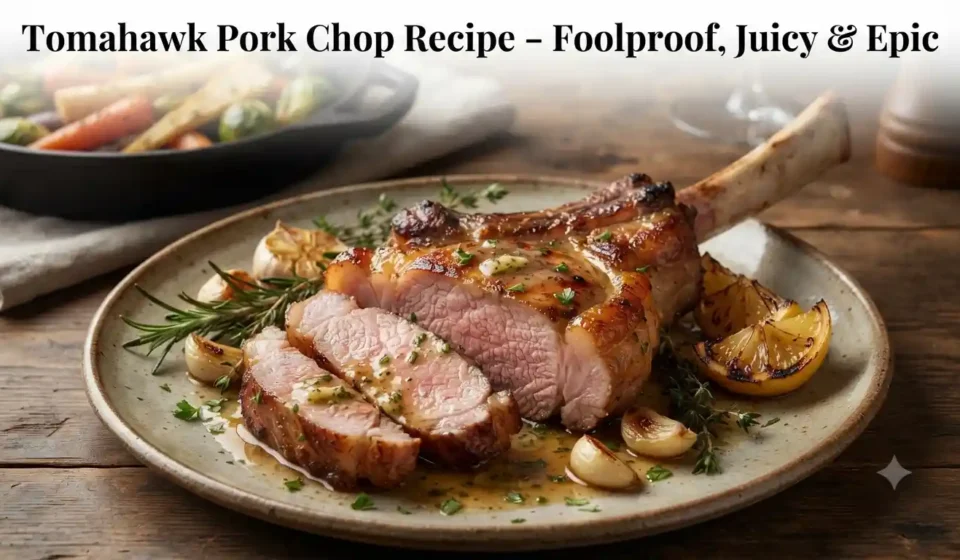

There’s something deeply satisfying about putting a thick, beautifully seared pork chop on the dinner table. When the craving hits for something juicy, savory, and a little steakhouse-worthy, a tomahawk pork chop is hard to beat. That long bone looks impressive, but cooking it at home is much easier than it seems.
The real trick is controlling the heat. A tomahawk chop is thick, so blasting it in a hot pan from start to finish can leave you with a dark crust and an undercooked center. This recipe uses a hard sear followed by gentle oven cooking, giving you golden edges, tender meat, and plenty of buttery garlic-herb flavor.
Tomahawk Pork Chop Recipe – Foolproof, Juicy & Epic
This recipe combines a cast-iron sear with an oven finish, which is one of my favorite ways to handle an extra-thick bone-in pork chop. The skillet builds that gorgeous crust, while the oven brings the center up to temperature without scorching the outside.
The garlic, rosemary, thyme, and butter keep the seasoning classic and steakhouse-inspired without hiding the natural flavor of the pork.
Prep & Cook Time
| Details | Time / Amount |
|---|---|
| Prep Time | 15 minutes |
| Cook Time | 20–25 minutes |
| Resting Time | 8–10 minutes |
| Total Time | About 45–50 minutes |
| Servings | 2 generous servings |
Important: Cooking time can vary because tomahawk pork chops differ considerably in thickness. Use temperature—not the clock alone—to determine when your pork is ready.
What Equipment Do You Need?
You don’t need restaurant equipment to get a steakhouse-style result.
- Large cast-iron or oven-safe skillet
- Tongs
- Instant-read meat thermometer
- Measuring spoons
- Small bowl
- Cutting board
- Sharp knife
- Paper towels
- Oven mitts
Kitchen note: Once a skillet has been in the oven, its handle stays dangerously hot for quite a while. Keep an oven mitt nearby so you don’t accidentally grab it bare-handed.
Ingredients
For 2 generous servings, you’ll need:
- 1 large tomahawk pork chop, about 1½–2 inches thick and roughly 1½–2 pounds
- 1½ teaspoons kosher salt
- ¾ teaspoon freshly ground black pepper
- 1 teaspoon garlic powder
- ½ teaspoon smoked paprika
- 1 tablespoon avocado oil or another high-heat cooking oil
- 2 tablespoons unsalted butter
- 3 garlic cloves, lightly crushed
- 2 fresh rosemary sprigs
- 3–4 fresh thyme sprigs
- 1 teaspoon Dijon mustard
- 1 teaspoon fresh lemon juice
Optional for Serving
- Flaky sea salt
- Freshly ground black pepper
- Lemon wedges
- Chopped fresh parsley
Why Each Ingredient Matters
A short ingredient list works because every ingredient has a specific job.
| Ingredient | Why It Matters |
|---|---|
| Tomahawk pork chop | Thick, bone-in pork stays succulent while developing an impressive crust. |
| Kosher salt | Seasons the meat throughout and helps create a flavorful exterior. |
| Black pepper | Adds gentle heat and savory complexity. |
| Garlic powder | Gives even garlic flavor without burning as quickly as fresh minced garlic. |
| Smoked paprika | Adds color and a subtle smoky note. |
| Avocado oil | Its high smoke point makes it ideal for a very hot skillet. |
| Butter | Adds richness and helps carry the herb and garlic flavors over the pork. |
| Fresh garlic | Perfumes the butter during basting without overwhelming the meat. |
| Rosemary & thyme | Their earthy aromas pair naturally with pork and browned butter. |
| Dijon mustard | Adds acidity and savory sharpness that balances the richness. |
| Lemon juice | Brightens the finished dish and keeps it from tasting heavy. |
One small detail makes a surprisingly big difference: drying the pork before seasoning. Surface moisture turns to steam in the skillet. A dry chop browns faster and develops a much better crust.
Step-by-Step Instructions
Step 1: Prep and Season the Pork
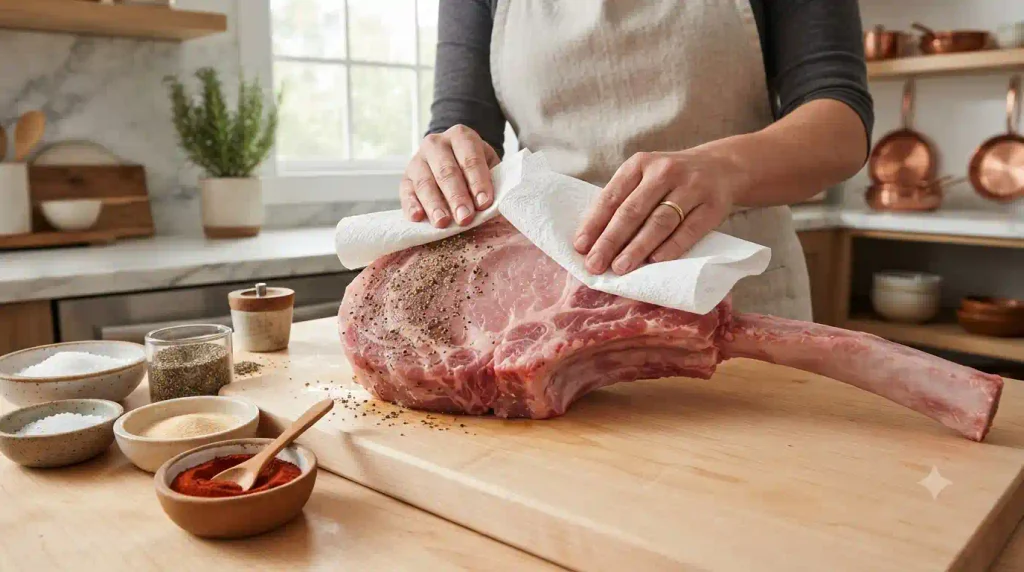
Take the pork chop out of the refrigerator while you organize the remaining ingredients.
Preheat your oven to 375°F (190°C).
Pat every surface of the chop thoroughly dry with paper towels. Don’t skip the edges around the fat cap.
Mix together:
- 1½ teaspoons kosher salt
- ¾ teaspoon black pepper
- 1 teaspoon garlic powder
- ½ teaspoon smoked paprika
Season the pork generously on both sides and around the edges.
If you have extra time, season the chop and refrigerate it uncovered for several hours or overnight. This acts like a simple dry brine and can improve both seasoning and browning.
Always wash your hands and clean any surfaces or utensils that have touched raw pork before handling other foods.
Step 2: Get the Skillet Properly Hot
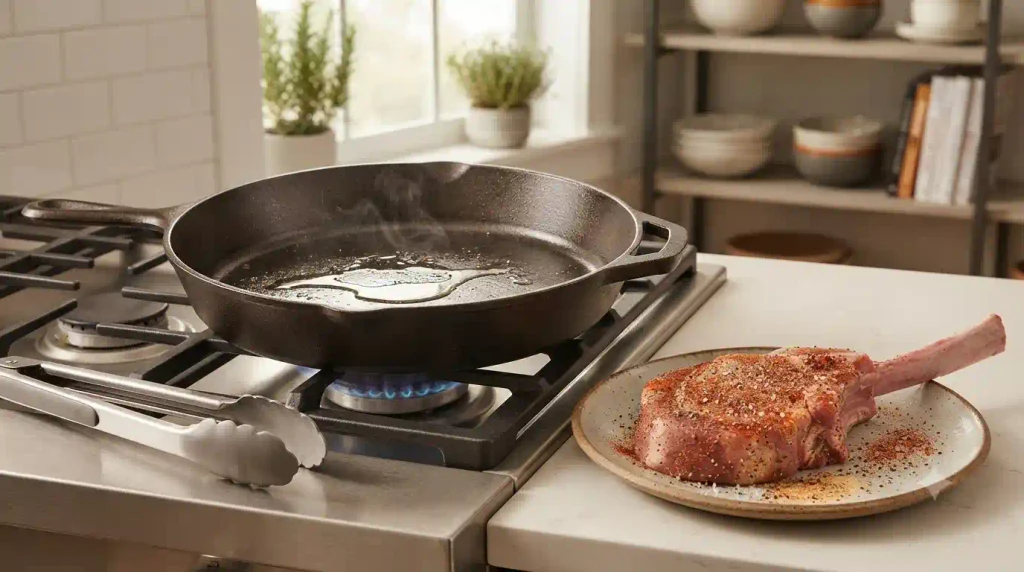
Place a large cast-iron or oven-safe skillet over medium-high to high heat.
Let it preheat for approximately 3–4 minutes.
Add 1 tablespoon avocado oil and swirl it around the pan.
The oil should shimmer, but you don’t want it sitting there smoking aggressively.
A common home-kitchen mistake is adding the chop before the pan gets hot. I’ve done it when rushing dinner, and the result is always the same: pale pork that sticks instead of developing that deeply browned crust.
Step 3: Sear Until Deeply Golden
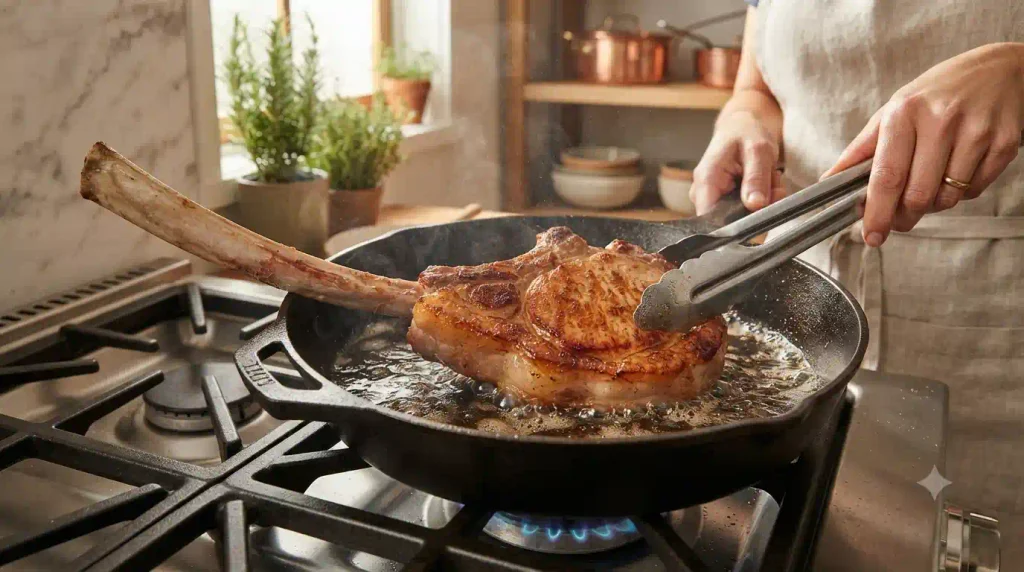
Carefully lay the seasoned pork chop into the hot skillet, positioning it away from you to reduce the chance of hot oil splashing toward your hands.
Leave it alone for approximately 2–3 minutes.
Don’t keep lifting it to check underneath. Good browning needs uninterrupted contact with the skillet.
Flip the chop with tongs and sear the second side for another 2–3 minutes.
Then hold the pork upright with your tongs and sear the fatty edge for approximately 30–60 seconds.
You’re looking for a rich golden-brown crust rather than a black or burned surface.
Step 4: Butter-Baste with Garlic and Herbs
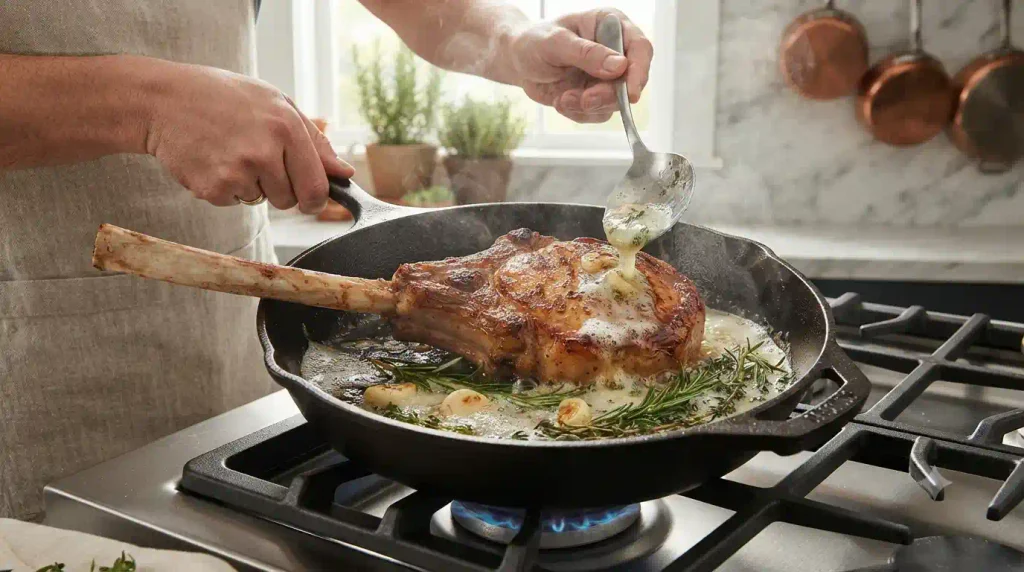
Reduce the burner to medium-low.
Add:
- 2 tablespoons butter
- 3 crushed garlic cloves
- 2 rosemary sprigs
- 3–4 thyme sprigs
Once the butter melts and becomes foamy, carefully tilt the skillet slightly.
Use a spoon to scoop up the aromatic butter and pour it repeatedly over the pork for about 45–60 seconds.
The kitchen should smell incredible at this point.
Watch the garlic closely. If it turns very dark, remove it before it becomes bitter.
Step 5: Finish Gently in the Oven
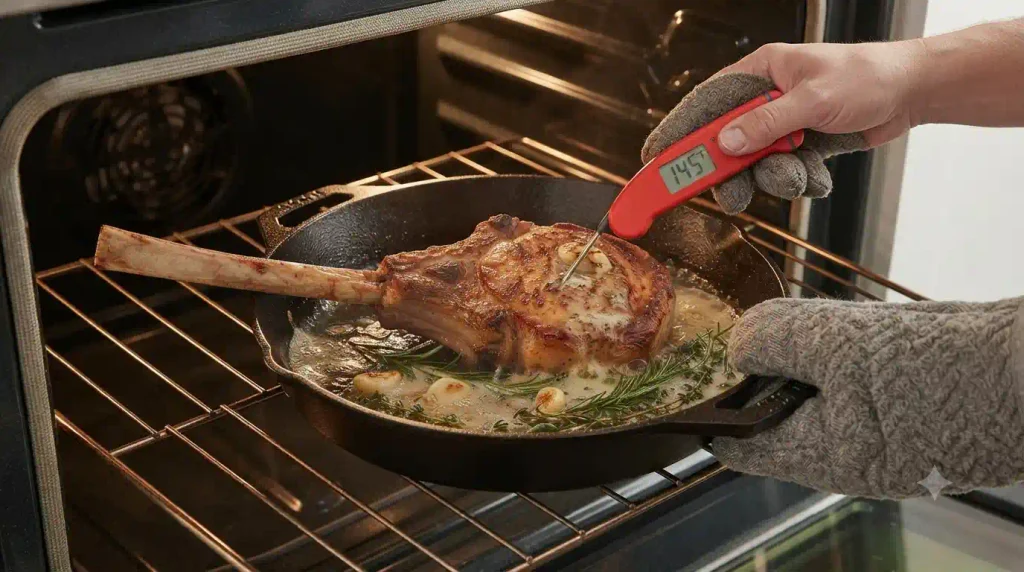
Transfer the entire oven-safe skillet to your preheated 375°F (190°C) oven.
Roast until the thickest part of the pork approaches the safe finished temperature. Depending on thickness, this can take roughly 8–15 minutes after searing.
Start checking early with an instant-read thermometer.
For whole cuts of pork, USDA guidance recommends cooking to 145°F (63°C) followed by at least a 3-minute rest. Insert the thermometer into the thickest part of the meat without touching the bone.
Thickness matters more than the suggested cooking time, so trust your thermometer.
Step 6: Rest, Finish and Slice
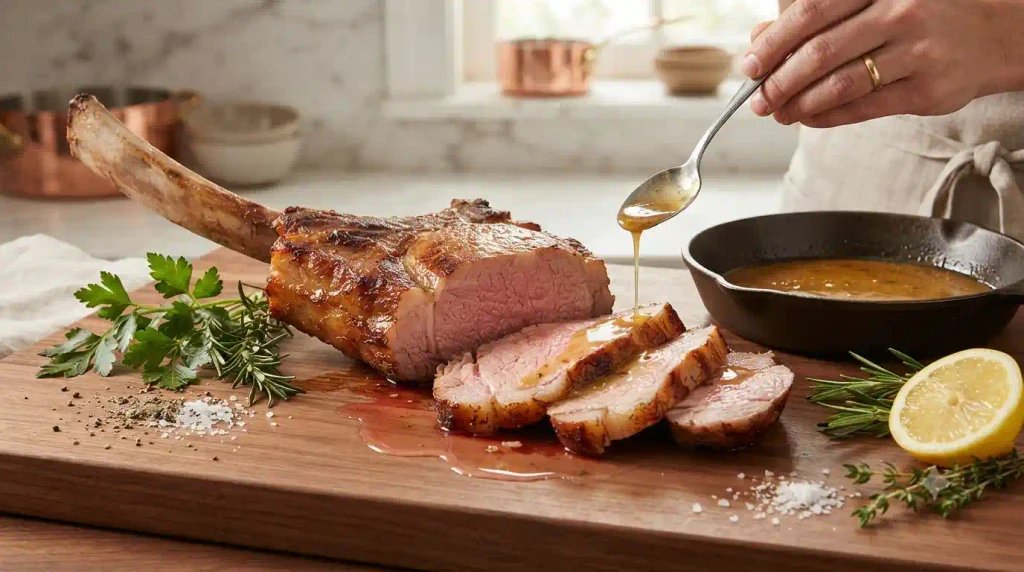
Carefully transfer the pork chop to a clean cutting board.
Rest it for 8–10 minutes before slicing. Resting gives the juices time to redistribute through the meat instead of flooding your cutting board.
While it rests, stir 1 teaspoon Dijon mustard and 1 teaspoon lemon juice into the warm pan juices.
Slice the meat away from the bone and then cut it across the grain into thick slices.
Spoon a little of the buttery pan sauce over the top.
Finish with flaky salt, parsley, black pepper, or a squeeze of fresh lemon if desired.
Serve immediately.
Health Benefits
Tomahawk pork chops make a protein-rich main course. While they’re certainly indulgent when finished with butter, they also provide useful nutrients.
High in Protein
Pork is a source of complete protein, supplying the essential amino acids your body needs. Protein helps support muscle maintenance and also contributes to satiety.
Provides B Vitamins
Pork naturally supplies several B vitamins, particularly thiamin (vitamin B1), which plays an important role in normal energy metabolism.
Contains Important Minerals
Pork can contribute minerals including:
- Selenium
- Zinc
- Phosphorus
- Iron
Easy to Pair with Vegetables
Because the chop itself is rich and savory, lighter sides work especially well.
Try serving it with:
- Roasted Brussels sprouts
- Green beans
- Broccoli
- Asparagus
- Cabbage slaw
- Garden salad
- Roasted carrots
For a balanced plate, pair a sensible portion of pork with plenty of vegetables and your preferred potato, whole grain, or other carbohydrate.
Nutrition Information (Per Serving)
Approximate nutrition will vary depending on the exact size and fat content of the chop and how much butter and pan sauce is consumed.
| Nutrient | Approximate Amount |
|---|---|
| Calories | 650 kcal |
| Protein | 65 g |
| Fat | 42 g |
| Carbohydrates | 2 g |
Nutrition note: Tomahawk chops vary significantly in weight and edible fat, so these numbers should be treated as estimates rather than clinical nutrition data.
Pro Tips & Variations
1. Buy a Thick Chop
This technique shines with pork chops around 1½–2 inches thick. Thin chops cook so quickly that the oven-finishing step may not be necessary.
2. Dry the Surface Thoroughly
If your pork looks wet when it hits the skillet, you’re making browning harder.
Pat it dry right before seasoning.
3. Use a Thermometer
This is the biggest secret to reliably juicy pork.
The bone, thickness, starting temperature, skillet, and oven can all affect cooking time. A thermometer removes most of the guesswork.
4. Don’t Cut It Immediately
That gorgeous chop is tempting when it comes out of the oven, but give it 8–10 minutes before slicing.
5. Try a Garlic-Herb Variation
Add extra thyme, parsley, or sage to the butter.
Sage is particularly good with pork.
6. Make It Smokier
Increase the smoked paprika slightly or add a small pinch of chipotle powder.
Keep it subtle—you still want to taste the pork.
7. Add a Touch of Sweetness
For a sweet-savory finish, stir 1 teaspoon pure maple syrup or honey into the pan sauce.
It pairs beautifully with Dijon.
8. Make It Dairy-Free
Replace the butter with a good-quality dairy-free butter suitable for cooking or use additional olive oil.
9. No Cast-Iron Skillet?
A heavy stainless-steel oven-safe skillet works well too.
If your frying pan isn’t oven-safe, sear the pork first and carefully transfer it to a preheated baking dish or sheet pan for the oven stage.
10. Don’t Crowd the Pan
If you’re preparing multiple chops, cook them in batches.
Crowding lowers the pan temperature and creates steam, which works against the crisp, browned exterior you’re trying to build.
How Much Does It Cost to Make?
Tomahawk pork chops are more expensive than everyday pork chops, but making one at home can still cost considerably less than ordering a similar presentation at a steakhouse.
Here’s a rough US grocery-store estimate:
| Ingredient | Estimated Cost |
|---|---|
| Large tomahawk pork chop | $12–$18 |
| Butter | $0.40 |
| Garlic | $0.25 |
| Rosemary & thyme | $1.00–$1.50 |
| Dijon mustard | $0.10 |
| Lemon | $0.40 |
| Oil & dry seasonings | $0.50–$0.75 |
| Estimated Total | $14.65–$21.40 |
| Approximate Cost Per Serving | $7.30–$10.70 |
Prices vary widely by region, butcher, chop size, and whether the pork is conventional, heritage-breed, organic, or specialty-raised.
Buying fresh herbs specifically for one recipe can also increase your upfront grocery bill, so use any leftovers in roasted vegetables, chicken, soups, or potatoes.
Frequently Asked Questions
What is a tomahawk pork chop?
A tomahawk pork chop is an extra-thick, bone-in pork chop with a long section of rib bone left attached. The extended bone creates the dramatic “tomahawk” appearance.
Despite looking restaurant-fancy, it can be cooked much like another thick bone-in pork chop.
How do you keep a thick pork chop juicy?
Avoid cooking solely by time.
Sear the exterior quickly for color and flavor, then finish the thick chop more gently in the oven. Most importantly, check the internal temperature with an instant-read thermometer.
Resting the meat before slicing also helps retain those flavorful juices.
What temperature should a tomahawk pork chop be cooked to?
Whole cuts of pork should reach 145°F (63°C) internally and rest for at least 3 minutes, according to USDA food-safety guidance.
Check the temperature in the thickest portion without allowing the thermometer probe to touch the bone.
Can I grill a tomahawk pork chop instead?
Absolutely.
Because the chop is thick, a two-zone grill setup works particularly well. Sear it over direct heat to develop color, then move it to the cooler side and cook more gently until it reaches the appropriate internal temperature.
You can brush it with garlic-herb butter near the end, but be careful because dripping butter can cause flare-ups.
Final Thoughts
A tomahawk pork chop may look like something reserved for a steakhouse menu, but the technique is surprisingly manageable at home. Dry the meat, season it well, build a proper sear, finish it gently, check the internal temperature, and give it time to rest.
Don’t stress if your chop needs a few minutes more or less than the recipe suggests. Thick cuts have personalities of their own, and that’s exactly why your thermometer is more useful than a timer.
Serve it straight from the cutting board with those buttery pan juices and a couple of simple sides. You’ll have a dramatic dinner that tastes every bit as good as it looks.