

There’s something deeply satisfying about a pot of gumbo bubbling away while the kitchen slowly fills with the smell of toasted roux, smoky sausage, herbs, and spices. It’s the kind of craving that sends you to the stove looking for something hearty, comforting, and worth waiting for.
This chicken sausage gumbo is built for exactly that mood. A dark, nutty roux creates the backbone, while tender chicken, smoky sausage, vegetables, and Cajun seasoning develop layers of flavor during a long, gentle simmer. Serve it over fluffy rice and you’ve got a cozy, crowd-friendly dinner that tastes even better the next day.
Prep & Cook Time
| Detail | Time / Amount |
|---|---|
| Prep Time | 25 minutes |
| Cook Time | 3 hours 15 minutes |
| Total Time | 3 hours 40 minutes |
| Servings | 8 |
| Difficulty | Moderate |
The gumbo doesn’t literally need to cook from morning until night. About 3 hours of slow simmering gives it that rich, all-day flavor without turning the chicken dry or the vegetables to mush.
What Equipment Do You Need?
You don’t need specialty Louisiana cookware. A few dependable kitchen basics will do the job:
- Large Dutch oven or heavy-bottomed pot
- Large wooden spoon or heatproof spatula
- Sharp chef’s knife
- Cutting board
- Measuring cups and spoons
- Whisk
- Kitchen tongs
- Ladle
- Small bowl or plate for browned meat
- Rice cooker or saucepan, if serving with rice
A heavy pot is especially helpful because it distributes heat evenly while you make the roux. Thin cookware can create hot spots and make the flour burn.
Ingredients
For the Gumbo
- 1½ lb (680 g) boneless, skinless chicken thighs, cut into bite-size pieces
- 12 oz (340 g) smoked sausage or andouille sausage, sliced
- ½ cup (120 ml) neutral vegetable oil
- ½ cup (65 g) all-purpose flour
- 1 large yellow onion, diced
- 1 green bell pepper, diced
- 2 celery stalks, diced
- 4 garlic cloves, minced
- 6 cups (1.4 litres) low-sodium chicken stock
- 1 can (14.5 oz/411 g) diced tomatoes, drained, optional
- 1 cup sliced okra, fresh or frozen
- 2 tsp Cajun seasoning
- 1 tsp smoked paprika
- 1 tsp dried thyme
- ½ tsp dried oregano
- ¼–½ tsp cayenne pepper, to taste
- 2 bay leaves
- 1 tsp Worcestershire sauce
- ½ tsp freshly ground black pepper
- ½ tsp kosher salt, plus more as needed
- 2 green onions, thinly sliced
- 2 tbsp chopped fresh parsley
For Serving
- 4 cups cooked long-grain white rice
- Sliced green onions
- Chopped parsley
- Hot sauce, optional
Salt tip: Andouille, stock, Cajun seasoning, and Worcestershire can all contain plenty of sodium. Start cautiously with added salt and adjust near the end.
Why Each Ingredient Matters
| Ingredient | Why It Matters |
|---|---|
| Chicken thighs | Stay tender during the long simmer and provide more flavor than very lean chicken breast. |
| Smoked sausage | Adds smoky, savoury depth and releases seasoned fat into the gumbo. |
| Flour + oil | Cook together to form the dark roux that gives gumbo much of its signature body and toasted flavor. |
| Onion | Adds sweetness and savoury depth as it softens. |
| Bell pepper | Provides fresh vegetal sweetness and forms part of the classic Cajun “holy trinity.” |
| Celery | Adds an earthy, aromatic backbone and completes the trinity. |
| Garlic | Strengthens the savoury character without needing extra salt. |
| Chicken stock | Creates a richer base than water. Low-sodium stock gives you better control over seasoning. |
| Okra | Adds traditional character and naturally helps give the broth body. |
| Cajun seasoning | Brings several spices together and supplies the familiar Louisiana-inspired flavor profile. |
| Smoked paprika | Reinforces the sausage’s smoky character while adding warmth. |
| Thyme & oregano | Add herbal complexity that balances the heavier meat and roux. |
| Bay leaves | Slowly perfume the broth during the long simmer. |
| Worcestershire sauce | Adds concentrated savoury and tangy notes. |
| Rice | Gives the intensely flavored gumbo a mild, fluffy base and turns it into a complete meal. |
The roux is the real workhorse. As flour cooks in fat, it gradually develops roasted, nutty flavors. A darker roux delivers deeper flavor, although its thickening power decreases as it darkens.
Step-by-Step Instructions
Step 1: Brown the Chicken and Sausage
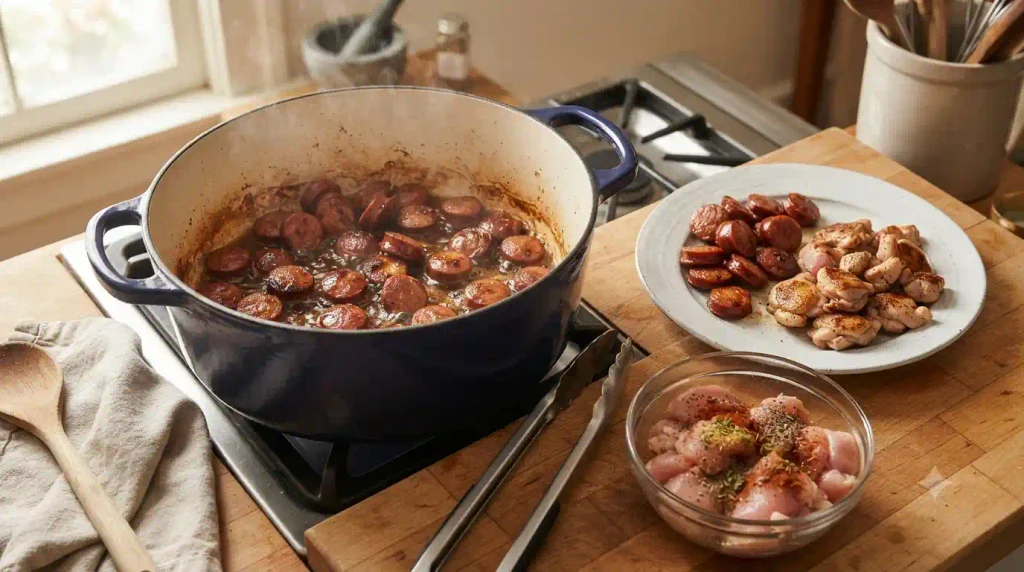
Pat the chicken thighs dry with paper towels. Season lightly with black pepper and a small amount of Cajun seasoning.
Heat your Dutch oven over medium-high heat. Add the sausage slices and cook for 4–5 minutes, turning occasionally, until browned around the edges.
Transfer the sausage to a plate.
Add the chicken to the same pot in batches. Brown for approximately 3–4 minutes per side. You’re building flavor rather than trying to cook the chicken completely at this stage.
Transfer it to the plate with the sausage.
Chef’s tip: Don’t crowd the pot. Crowded meat steams instead of browning, and those browned bits on the bottom are valuable flavor.
Step 2: Make the Dark Roux
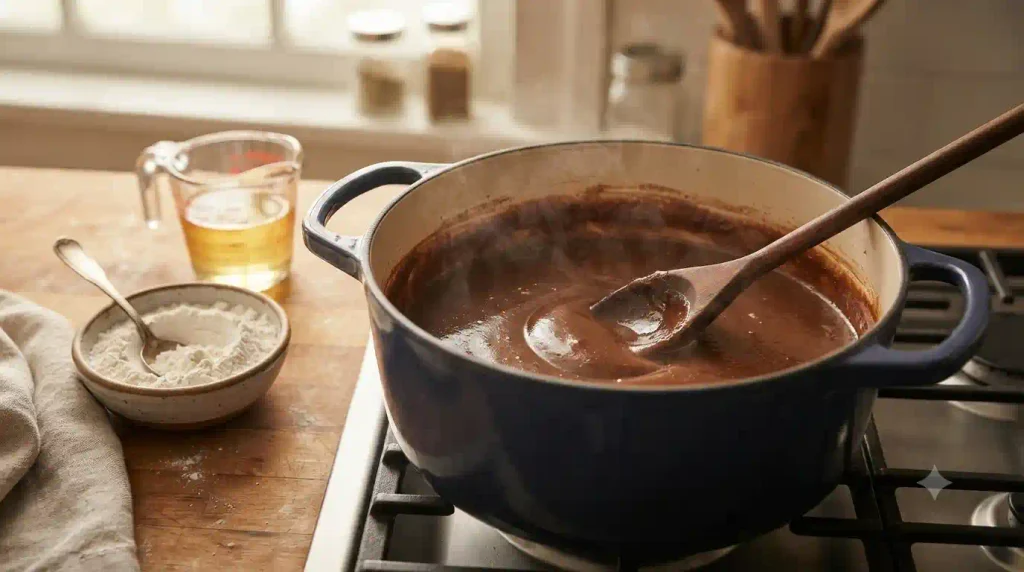
Reduce the heat to medium-low.
Add enough vegetable oil to the pot to measure roughly ½ cup total, then whisk in ½ cup flour.
Cook while stirring almost continuously for approximately 20–30 minutes.
The roux will gradually change from pale cream to blonde, then peanut-butter brown and eventually a deeper chocolate brown.
Be patient.
If you smell distinctly burnt flour or see black specks, unfortunately, it’s safest for the flavor to start the roux again. Burnt roux can make the entire pot bitter.
Safety note: Roux gets extremely hot and sticky. Avoid splashing it onto your skin, and keep children away from the stove while you’re stirring.
Step 3: Build the Aromatic Base
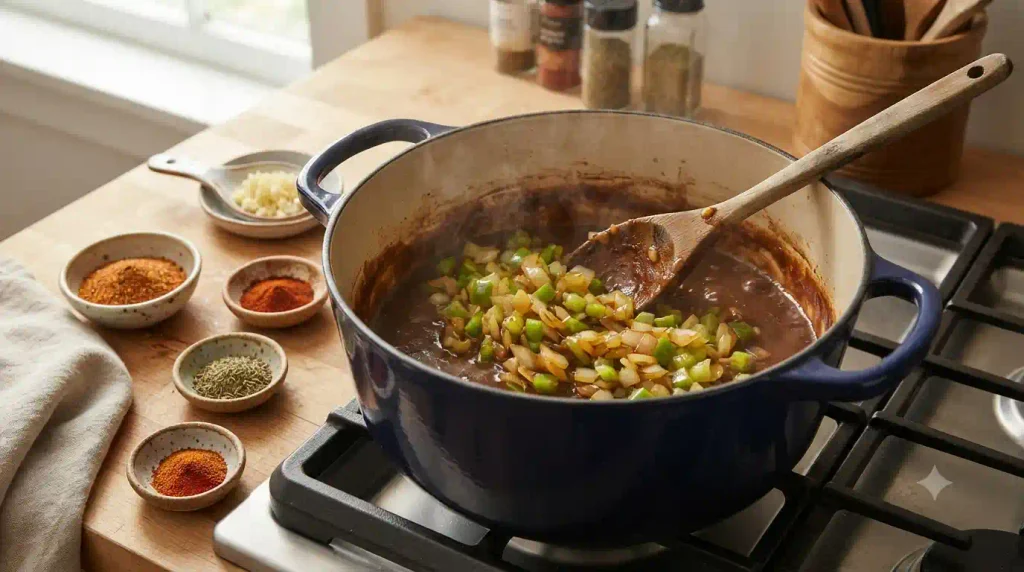
Once the roux reaches a deep brown color, immediately add:
- Onion
- Bell pepper
- Celery
Stir carefully. The vegetables will sizzle aggressively at first.
Cook for 5–7 minutes, stirring frequently, until they begin to soften.
Add the minced garlic and cook for another 30–60 seconds.
Stir in the Cajun seasoning, smoked paprika, thyme, oregano, and cayenne.
Cooking the spices briefly in the warm roux helps release their aromatic compounds and creates a fuller flavor.
Step 4: Add the Stock and Build the Gumbo
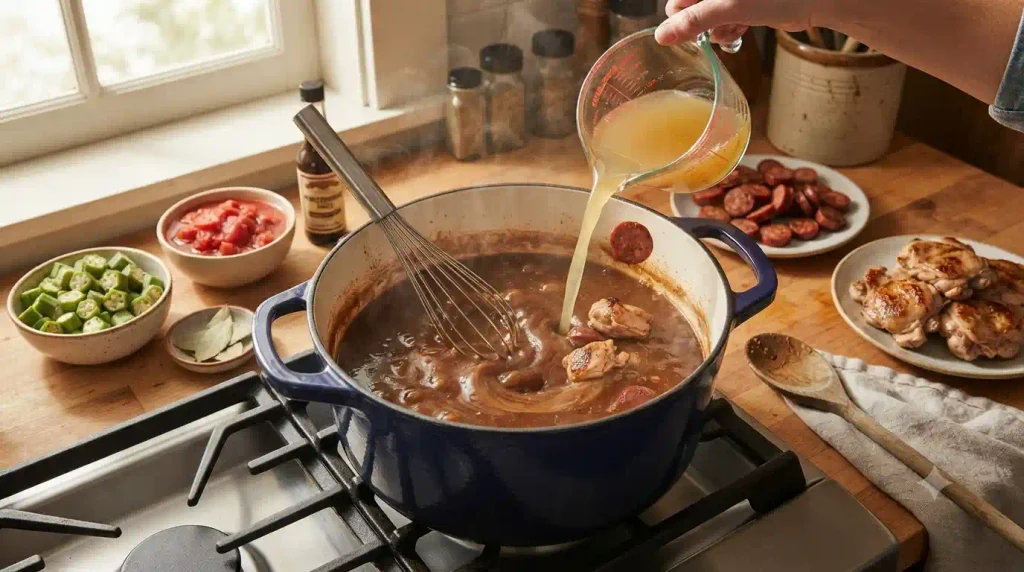
Slowly pour in approximately 1 cup chicken stock while whisking.
Don’t panic if everything initially looks thick or slightly uneven. Keep whisking and it will loosen.
Gradually add the remaining stock.
Stir in the tomatoes, if using, followed by:
- Okra
- Bay leaves
- Worcestershire sauce
- Browned sausage
- Browned chicken
Bring the mixture just to a gentle boil.
Immediately reduce the heat to low.
Step 5: Let It Simmer Low and Slow
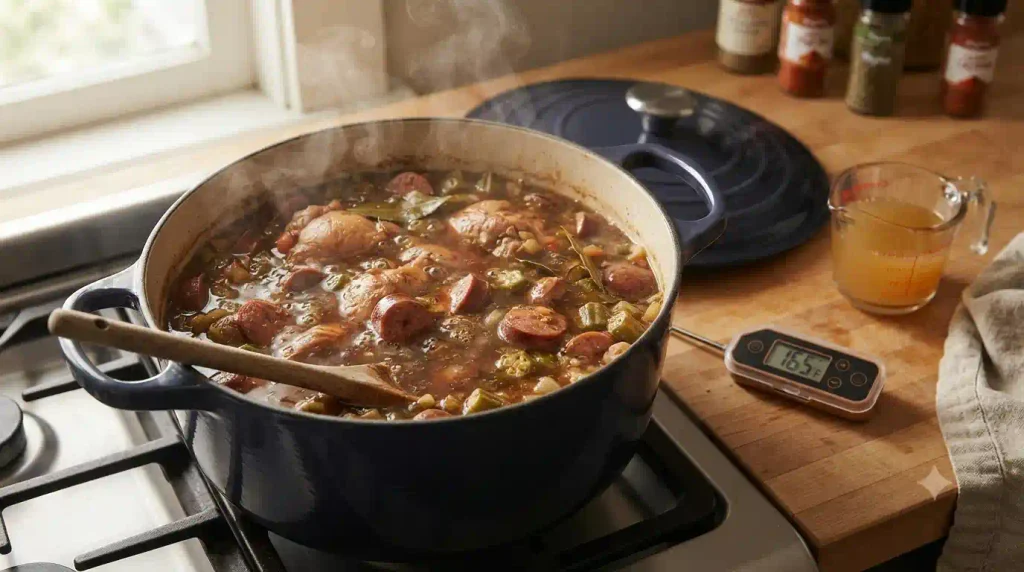
Partially cover the pot and maintain a gentle simmer for about 2½–3 hours.
Stir every 20–30 minutes, making sure your spoon reaches the bottom so nothing catches.
If the gumbo becomes thicker than you like, add a splash of warm chicken stock or water.
The finished broth should be rich and velvety rather than gluey.
For food safety, chicken should reach a safe internal temperature of 165°F (74°C). With this long simmer it should easily reach that point, but a thermometer is the most reliable check.
During the final 20–30 minutes, taste the broth. Adjust the salt, pepper, Cajun seasoning, or cayenne as needed.
Remove and discard the bay leaves.
Step 6: Finish and Serve
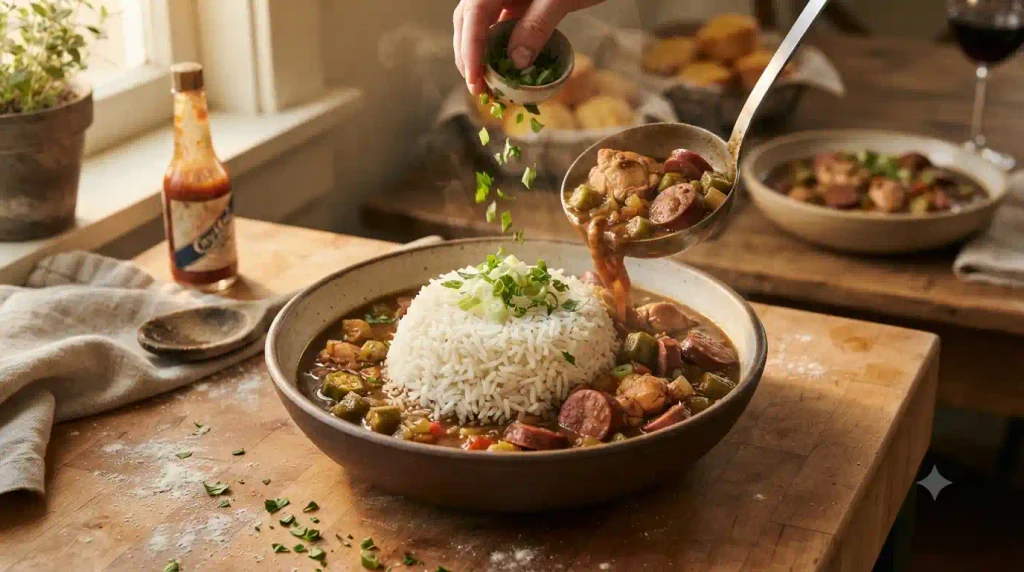
Turn off the heat and stir in the chopped parsley and most of the green onions.
Let the gumbo rest for 10–15 minutes before serving. This brief rest allows the flavors to settle and the broth to thicken slightly.
Spoon approximately ½ cup cooked rice into each bowl and ladle the hot gumbo around or over it.
Finish with green onions, parsley, and hot sauce if you like extra heat.
That first spoonful should give you smoky sausage, tender chicken, vegetables, rice, and that deeply savoury roux all at once.
Health Benefits
Gumbo is comfort food, but it can still provide meaningful nutrition when made thoughtfully.
Chicken thighs provide protein, which supports muscle maintenance and helps make the meal satisfying. Using skinless thighs reduces some of the saturated fat while retaining the tenderness needed for slow cooking.
Bell pepper, onion, celery, okra, garlic, and tomatoes bring more than flavor. They contribute vitamins, minerals, fibre, and a variety of plant compounds.
Okra is particularly useful because it provides dietary fibre while naturally contributing to gumbo’s texture.
Using low-sodium chicken stock is an easy way to control sodium, especially because smoked sausage and Cajun seasoning can already be salty.
For a lighter bowl, increase the vegetables slightly, choose a leaner smoked chicken sausage, and serve a smaller portion of rice.
Nutrition Information (Per Serving)
Approximate values will vary according to the sausage, stock, oil absorbed, rice portion, and specific brands used.
| Nutrient | Approximate Amount |
|---|---|
| Calories | 570 kcal |
| Protein | 35 g |
| Fat | 31 g |
| Carbohydrates | 39 g |
| Servings | 8 |
These figures should be treated as estimates rather than clinical nutrition data.
Pro Tips & Variations
- Never rush the roux. Medium-low heat takes longer, but it gives home cooks much better control.
- Use chicken thighs for long cooking. They remain noticeably juicier than breast meat after an extended simmer.
- Brown your sausage properly. Those caramelized edges make a surprisingly big difference.
- Don’t over-salt early. The gumbo concentrates as it simmers.
- Control the heat yourself. Cajun seasoning blends vary wildly. Start with less cayenne and add more after simmering.
- For extra vegetables: Add additional okra, celery, or bell pepper.
- For a leaner gumbo: Substitute smoked chicken or turkey sausage.
- For deeper flavor: Make the gumbo a day ahead. After safe refrigeration, the flavors often taste even more integrated the following day.
- For thicker gumbo: Simmer uncovered toward the end rather than dumping in additional flour.
- For thinner gumbo: Stir in warm stock a little at a time.
- Don’t skip the resting time. Ten minutes off the heat genuinely improves the final consistency.
Storing Leftovers
Cool leftovers promptly and refrigerate them in shallow, covered containers. As a practical food-safety rule, don’t leave cooked gumbo sitting at room temperature for more than about 2 hours.
Keep rice separately when possible. It prevents the rice from absorbing all that beautiful broth overnight.
How Much Does It Cost to Make?
Prices vary considerably by supermarket, location, and brand, but here’s a practical US grocery estimate.
| Ingredient Group | Estimated Cost |
|---|---|
| Chicken thighs | $5–$7 |
| Smoked/andouille sausage | $4–$6 |
| Vegetables & herbs | $5–$7 |
| Chicken stock | $2–$4 |
| Flour & oil | $1–$2 |
| Seasonings & Worcestershire | $1–$2 |
| Rice | $1–$2 |
| Estimated Total | $19–$30 |
| Approx. Cost Per Serving | $2.40–$3.75 |
Buying chicken thighs, rice, onions, and celery in larger packs can lower the actual per-serving cost because you’ll have ingredients left for another meal.
Frequently Asked Questions
Can I make chicken and sausage gumbo ahead of time?
Absolutely. Gumbo is one of those dishes that often tastes even better the next day because its spices, meat, aromatics, and roux have more time to mingle.
Cool it promptly, refrigerate it in a covered container, and reheat until steaming hot throughout before serving.
How dark should roux be for chicken and sausage gumbo?
Aim for roughly the color of milk chocolate to dark chocolate.
A lighter roux provides more thickening power, while a darker roux contributes deeper roasted flavor. For this rich gumbo, a deep brown roux gives an excellent balance.
Don’t judge by cooking time alone. Your pan, burner, oil, and heat level can change how quickly the flour browns.
Can I make gumbo without okra?
Yes.
Okra contributes flavor, texture, and thickening, but the gumbo can still be delicious without it. Simply leave it out and allow the roux and gentle reduction to create the desired consistency.
What is the best sausage for chicken gumbo?
Andouille sausage is an excellent choice because its smoky, garlicky character stands up well to the dark roux and Cajun spices.
If andouille isn’t available, use another good-quality smoked sausage. Smoked chicken or turkey sausage also works when you want a somewhat lighter option.
Final Thoughts
A great chicken and sausage gumbo isn’t about racing to dinner. It’s about letting simple ingredients build flavor one stage at a time.
Give the roux your attention, brown the meat properly, keep the simmer gentle, and taste before making your final seasoning adjustments. Your kitchen may look a little messy by the time the pot is ready, but that’s part of making proper comfort food.
Pile some warm rice into a bowl, ladle that rich gumbo over it, and enjoy the kind of dinner that feels like it really did simmer all day.