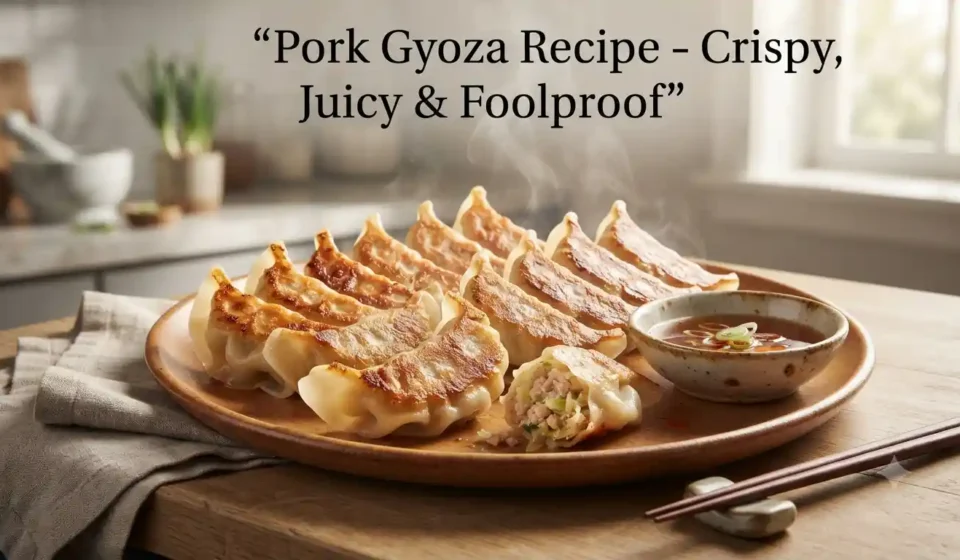

There’s something deeply satisfying about hearing homemade gyoza sizzle in a hot pan. That golden, crispy bottom followed by a tender wrapper and juicy pork filling is exactly the kind of comfort food craving that sends me straight to the kitchen. Better still, you don’t need restaurant-level skills to make them beautifully at home.
This pork gyoza recipe keeps things practical: simple supermarket ingredients, an easy folding method, and the classic pan-fry-and-steam technique. The filling is savory, gingery, and moist without being greasy. Your first few folds may look slightly wonky—mine often do—but once they hit the pan, nobody cares about perfect pleats.
Prep & Cook Time
| Detail | Time / Amount |
|---|---|
| Prep Time | 30 minutes |
| Cook Time | 15 minutes |
| Total Time | 45 minutes |
| Servings | 4 |
| Yield | About 28–30 gyoza |
The exact cooking time depends on the size of your skillet and how many batches you need to cook.
What Equipment Do You Need?
You don’t need specialist dumpling equipment. A few everyday kitchen tools will do the job:
- Large mixing bowl for the pork filling
- Cutting board
- Sharp chef’s knife
- Measuring spoons
- Small bowl of water for sealing the wrappers
- Large nonstick or well-seasoned skillet with a lid
- Spatula or tongs
- Serving plate
- Instant-read food thermometer, recommended for checking the pork
A skillet with a well-fitting lid is particularly useful because trapping steam is what cooks the wrappers and filling while keeping the bottoms crisp.
Ingredients
For the Pork Gyoza
- 1 lb (450 g) ground pork
- 2 cups (140 g) finely shredded green cabbage
- 3 green onions, finely sliced
- 2 garlic cloves, finely minced
- 1 tablespoon fresh ginger, finely grated
- 1½ tablespoons soy sauce
- 2 teaspoons toasted sesame oil
- 1 teaspoon rice vinegar
- ½ teaspoon granulated sugar
- ¼ teaspoon ground white pepper
- 28–30 round gyoza wrappers
- 1½ tablespoons neutral cooking oil, divided as needed
- ½ cup (120 ml) water, divided between batches
For the Quick Dipping Sauce
- 3 tablespoons soy sauce
- 2 tablespoons rice vinegar
- 1 teaspoon toasted sesame oil
- ½ teaspoon chili oil, optional
- 1 teaspoon finely sliced green onion, optional
Why Each Ingredient Matters
A great gyoza filling isn’t simply ground pork wrapped in dough. Each ingredient has a job.
| Ingredient | Why It Matters |
|---|---|
| Ground pork | Provides a rich, juicy base. Pork with some fat produces a more succulent filling than very lean meat. |
| Cabbage | Adds sweetness, freshness, and texture while balancing the richness of the pork. |
| Green onions | Bring a mild onion flavor without overpowering the filling. |
| Fresh ginger | Adds warmth and freshness that cuts through the pork’s richness. |
| Garlic | Gives the filling savory depth. |
| Soy sauce | Supplies saltiness and umami throughout the filling. |
| Sesame oil | Adds the unmistakable toasted aroma associated with many Asian dumpling fillings. |
| Rice vinegar | Provides acidity, keeping the filling from tasting too heavy. |
| Sugar | A small amount rounds out salty and acidic flavors rather than making the filling sweet. |
| White pepper | Adds gentle heat and an earthy background note. |
| Gyoza wrappers | Thin wrappers become tender from steaming while developing crisp bottoms during frying. |
| Cooking oil | Creates direct contact between the wrappers and hot pan for that golden crust. |
| Water | Produces steam so the filling and upper portions of the wrappers cook without burning the bottoms. |
Step-by-Step Instructions
Step 1: Prepare the Pork Filling
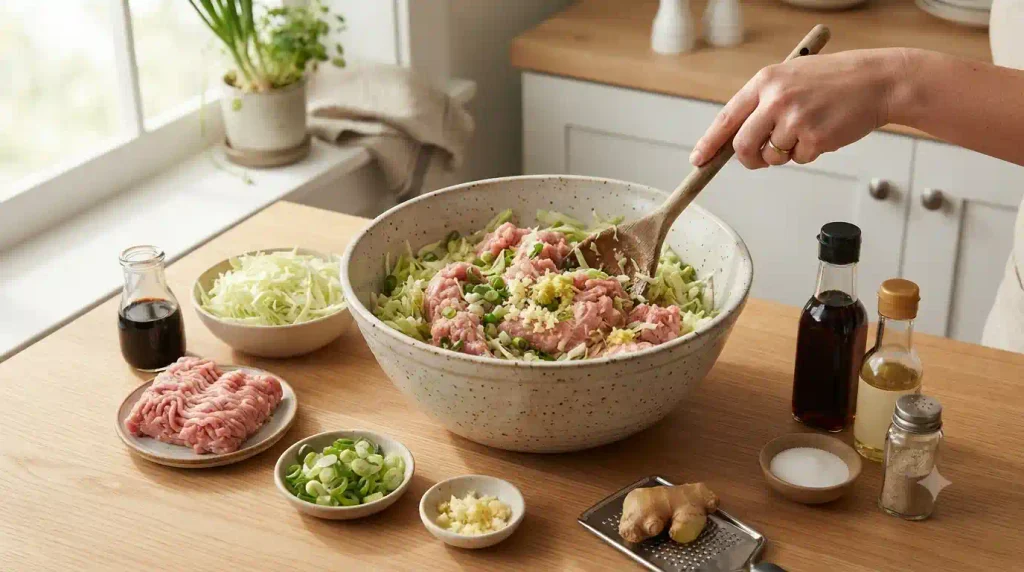
Place the ground pork, cabbage, green onions, garlic, ginger, soy sauce, sesame oil, rice vinegar, sugar, and white pepper in a large bowl.
Mix everything firmly in one direction for about 1–2 minutes. You can use clean hands, chopsticks, or a sturdy spoon.
The mixture should start looking slightly sticky rather than loose and crumbly. This helps the filling hold together and gives cooked gyoza a pleasantly juicy, cohesive center.
Because you’re handling raw pork, wash your hands, utensils, cutting board, and any contaminated surfaces thoroughly afterward.
Step 2: Fill and Fold the Gyoza
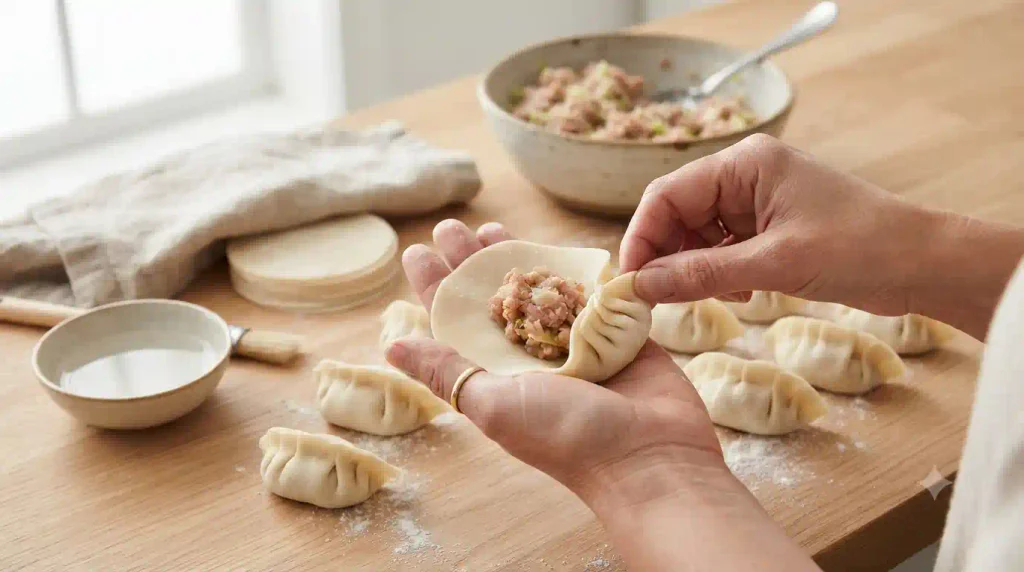
Keep the wrappers covered with a slightly damp kitchen towel while working because they can dry out surprisingly quickly.
Place one wrapper in your palm and spoon approximately 2 teaspoons of pork filling into the center.
Dip your fingertip into water and lightly moisten the edge of the wrapper.
Fold the wrapper in half over the filling. Press one corner together, then make 3–5 small pleats along one side while pressing them firmly against the flat opposite edge.
Don’t overfill the wrappers. That extra teaspoon of pork is tempting, but an overstuffed gyoza is much more likely to split while cooking.
No time for pleating? Simply fold each wrapper into a half-moon and press the edges together firmly. It will taste just as good.
Step 3: Pan-Fry the Bottoms
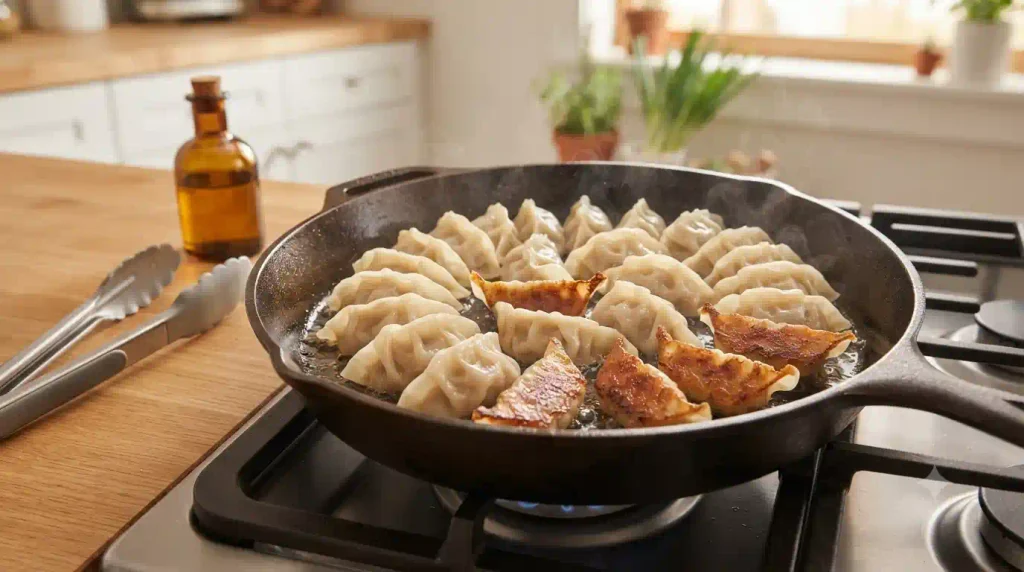
Heat a large nonstick or well-seasoned skillet over medium-high heat.
Add approximately 2 teaspoons of neutral oil and swirl to coat the surface.
Arrange the gyoza in the skillet flat-side down, leaving a little room between them. Work in batches rather than crowding the pan.
Cook without moving them for approximately 2–3 minutes, or until the bottoms are golden.
Resist the urge to constantly lift them. Leaving them alone is how you develop that crisp crust.
Step 4: Add Water and Steam
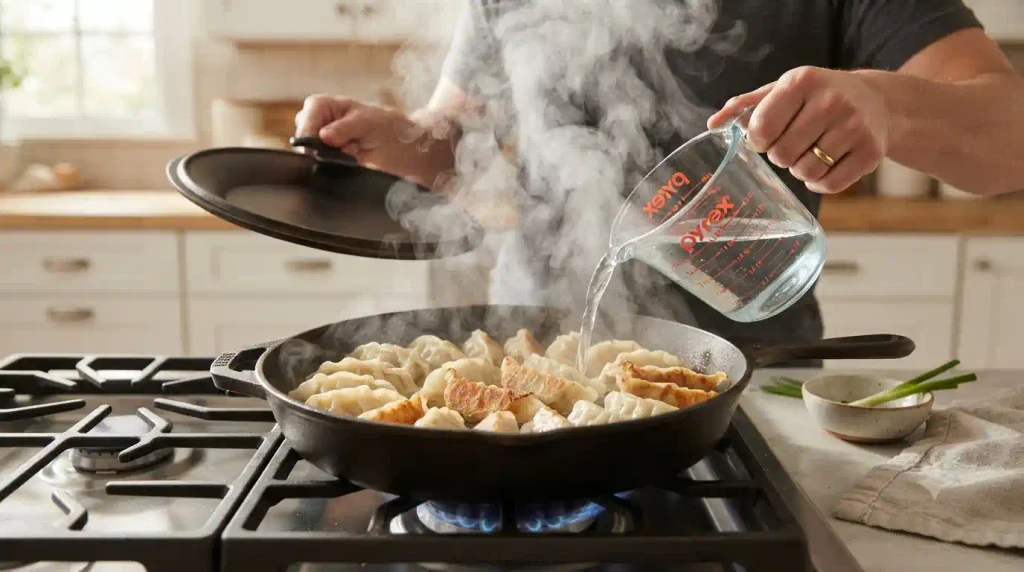
Carefully pour approximately ¼ cup (60 ml) water into the hot skillet and immediately cover it with the lid.
Be careful—the water can spit when it hits the hot oil.
Reduce the heat to medium and steam the gyoza for approximately 4–5 minutes, or until most of the water has evaporated and the pork is cooked.
For food safety, ground pork should reach an internal temperature of 160°F (71°C).
Step 5: Re-Crisp the Gyoza
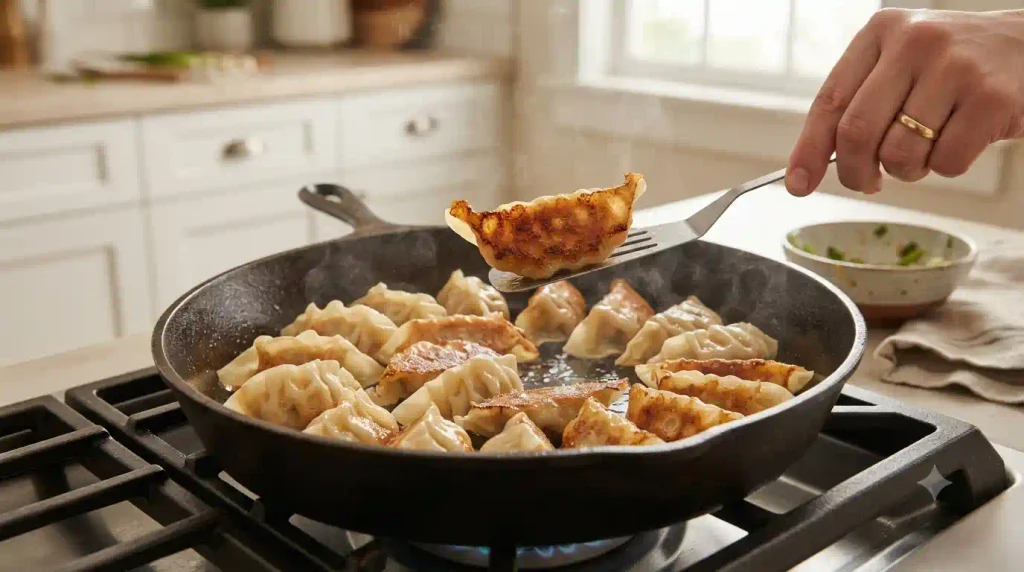
Remove the lid once the water has almost completely evaporated.
Allow the gyoza to cook uncovered for another 1–2 minutes.
This final frying period is important. Steaming softens the bottom slightly, and cooking uncovered drives away excess moisture and restores that gorgeous crunch.
Lift one carefully with a spatula. The underside should be deeply golden and crisp, while the upper wrapper should look tender and slightly translucent.
Repeat the frying and steaming process with the remaining gyoza.
Step 6: Mix the Dipping Sauce and Serve
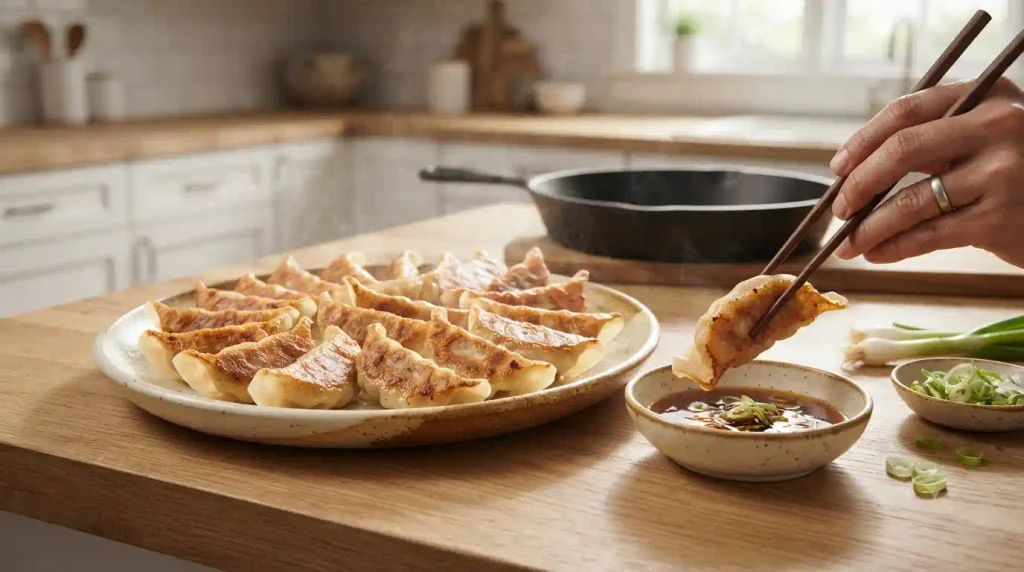
Combine the soy sauce, rice vinegar, sesame oil, chili oil, and green onion in a small bowl.
Transfer the hot gyoza to a serving plate with their crispy sides facing up.
Serve immediately with the dipping sauce.
Gyoza are at their absolute best straight from the skillet. If they sit too long, trapped steam gradually softens that beautiful crispy crust.
Health Benefits
Pork gyoza can absolutely fit into a balanced diet, particularly when they’re pan-fried rather than deep-fried.
Pork provides protein, which helps support muscle maintenance and contributes to a satisfying meal. It also supplies nutrients such as thiamine, vitamin B12, zinc, and selenium.
Cabbage adds vegetables without making the filling heavy. It’s naturally low in calories and provides vitamin C, vitamin K, fiber, and beneficial plant compounds.
Ginger and garlic contribute plenty of flavor, meaning you don’t need an overly complicated sauce or large quantities of added fat to make these dumplings satisfying.
The biggest nutritional consideration is sodium, primarily from soy sauce and the dipping sauce. Using reduced-sodium soy sauce or dipping each gyoza lightly rather than soaking it can reduce your overall sodium intake.
For a balanced meal, serve your gyoza with steamed or stir-fried vegetables, cucumber salad, edamame, or a light broth-based soup.
Nutrition Information (Per Serving)
Approximate values based on 4 servings, including a moderate amount of dipping sauce:
| Nutrient | Approximate Amount |
|---|---|
| Calories | 430 kcal |
| Protein | 25 g |
| Fat | 21 g |
| Carbohydrates | 37 g |
Note: Nutrition values are estimates. Exact numbers vary depending on the pork’s fat percentage, wrapper brand, cooking oil absorbed, and amount of dipping sauce consumed.
Pro Tips & Variations
Chef Tips for Foolproof Gyoza
- Don’t overfill them. Around 2 teaspoons of filling is enough for most standard wrappers.
- Keep wrappers covered. Dry wrappers crack and become difficult to seal.
- Seal every edge firmly. Even a tiny opening can allow juices to escape.
- Mix the filling until sticky. This improves its texture and helps retain moisture.
- Don’t crowd your skillet. Gyoza need direct contact with the pan to develop crisp bottoms.
- Use a lid that fits. Escaping steam can leave the filling undercooked before the bottoms become too dark.
- Let the water evaporate. Removing the lid too early leaves gummy wrappers; leaving excess water in the pan prevents re-crisping.
- Serve immediately. The longer cooked gyoza sit, the softer their bottoms become.
Pork and Shrimp Gyoza
Replace 4 oz (115 g) of the pork with finely chopped raw shrimp. It creates a slightly lighter filling with a subtle seafood sweetness.
Spicy Pork Gyoza
Add 1–2 teaspoons chili crisp or a little finely chopped fresh chili to the pork mixture.
Remember that chili crisp can contain additional salt, so slightly reduce the soy sauce if necessary.
Mushroom Pork Gyoza
Finely chop ½ cup shiitake mushrooms and mix them into the filling. Mushrooms boost savory flavor and add another layer of texture.
Extra-Veggie Gyoza
Add finely chopped carrots, napa cabbage, mushrooms, or chives. Avoid adding large quantities of watery vegetables unless you squeeze out excess moisture first.
Chicken or Turkey Gyoza
Ground chicken or turkey can replace the pork.
Because they’re usually leaner, adding another ½–1 teaspoon sesame oil can help prevent a dry filling.
Always cook poultry filling to 165°F (74°C).
Crispy Gyoza Skirt
For a delicate restaurant-style crispy lattice, mix:
- ¼ cup water
- 1 teaspoon all-purpose flour
- ½ teaspoon cornstarch
Pour it around the partially browned gyoza before covering and steaming. Once uncovered, continue cooking until the liquid evaporates and a thin, golden lattice forms.
How Much Does It Cost to Make?
Prices vary by supermarket and location, but homemade gyoza are generally much cheaper than ordering several restaurant portions.
Estimated US Cost
| Ingredient | Estimated Cost |
|---|---|
| Ground pork | $4.00–$5.50 |
| Gyoza wrappers | $2.50–$4.00 |
| Cabbage | $0.75–$1.00 |
| Green onions | $0.50–$0.75 |
| Garlic & ginger | $0.50–$0.75 |
| Soy sauce, vinegar & sesame oil | $1.00–$1.50 |
| Cooking oil & seasonings | $0.30–$0.50 |
| Estimated Total | $9.55–$14.00 |
That works out to roughly $2.40–$3.50 per serving for four servings.
Pantry staples such as soy sauce, vinegar, sesame oil, and cooking oil are costed only according to the amount used, so your actual supermarket checkout total will naturally be higher if you’re buying full bottles for the first time.
Frequently Asked Questions
Can I make pork gyoza ahead of time?
Yes. Assemble the uncooked gyoza and place them in a single layer on a parchment-lined tray. Cover and refrigerate them for a few hours before cooking.
For longer storage, freezing is the better choice.
Can you freeze homemade pork gyoza?
Absolutely, and this is one of my favorite reasons to make a double batch.
Arrange uncooked gyoza on a parchment-lined tray without letting them touch. Freeze until solid, then transfer them to an airtight freezer bag or container.
They can be cooked straight from frozen. Don’t thaw them first, as thawed wrappers can become sticky and fragile. Add a few extra minutes to the covered steaming stage and make sure the pork reaches 160°F (71°C) internally.
Why aren’t my gyoza crispy?
Usually, there’s too much moisture left in the skillet.
After steaming, remove the lid and let all remaining water evaporate. Give the dumplings another minute or two of direct contact with the lightly oiled pan.
A crowded skillet can also trap moisture and prevent proper browning.
What’s the difference between gyoza and potstickers?
They’re closely related dumplings. Japanese gyoza were influenced by Chinese jiaozi and are commonly made with relatively thin wrappers and finely textured fillings. They’re often pan-fried, steamed, and then crisped again.
In everyday cooking, however, you’ll see considerable overlap between what recipes and restaurants call gyoza and potstickers.
Final Thoughts
Homemade pork gyoza look impressive, but they’re wonderfully forgiving once you understand the basic technique: fill, seal, fry, steam, and crisp.
Don’t get hung up on picture-perfect pleats. A firmly sealed dumpling with a juicy center and crunchy golden bottom beats a beautiful but leaking one every time. After you’ve folded the first few, you’ll quickly find your rhythm.
Make a batch for dinner, freeze some for later, and don’t be surprised if homemade gyoza become one of those recipes everyone starts requesting.
Crispy underneath, tender on top, and juicy in the middle—that’s the gyoza worth making.