

There’s something deeply satisfying about turning a humble cut of meat into a rich, slow-cooked meal that fills the kitchen with an irresistible savory aroma. Pork feet are perfect for those days when you’re craving serious comfort food: tender meat, silky skin, and a glossy sauce that practically begs to be spooned over rice. The secret isn’t complicated technique—it’s patience.
I’ve found that pork feet taste best when they’re cleaned and blanched first, then given plenty of time to gently simmer. As the collagen slowly breaks down, the cooking liquid becomes naturally thick and luxurious. Add garlic, ginger, soy, and a touch of sweetness, and you get what I call liquid gold sauce.
Pork Feet Recipe – Tender, Sticky & Liquid Gold Sauce
This recipe makes fall-apart tender pork feet coated in a deeply savory, slightly sweet, garlicky sauce. The long simmer extracts gelatin from the pork, giving the finished sauce its signature sticky, glossy texture without needing flour or cornstarch.
Prep & Cook Time
| Detail | Time / Amount |
|---|---|
| Prep Time | 25 minutes |
| Cook Time | 2 hours 45 minutes |
| Total Time | 3 hours 10 minutes |
| Servings | 4 |
| Difficulty | Easy–Moderate |
Chef’s note: Pork feet vary considerably in size. Treat the cooking time as a guide and use tenderness—not the clock—as your final test.
What Equipment Do You Need?
You don’t need specialized equipment for this recipe.
- Large heavy-bottomed pot or Dutch oven with lid
- Large bowl
- Colander
- Tongs
- Sharp knife
- Cutting board
- Measuring cups and spoons
- Wooden spoon
- Small ladle or spoon for removing excess fat
A Dutch oven is particularly useful because its heavy base maintains a steady, gentle simmer.
Ingredients
For the Pork Feet
- 3 pounds (1.36 kg) pork feet, cleaned and cut into manageable pieces
- Water, as needed for blanching
For the Liquid Gold Sauce
- 1 tablespoon neutral cooking oil
- 1 medium yellow onion, sliced
- 6 garlic cloves, lightly crushed and chopped
- 1½ tablespoons fresh ginger, sliced
- ½ cup (120 ml) low-sodium soy sauce
- 2 tablespoons dark soy sauce
- 3 tablespoons brown sugar
- 3 tablespoons apple cider vinegar
- 2 cups (480 ml) low-sodium chicken stock
- 1 cup (240 ml) water, plus more if needed
- 2 whole star anise
- 1 small cinnamon stick
- 2 bay leaves
- ½ teaspoon freshly ground black pepper
- ¼ teaspoon red pepper flakes, optional
- 2 green onions, sliced, for serving
Important: Some packaged pork feet are already cut, while others may need to be cut by the butcher. Because the bones are very hard, ask your butcher to cut whole pork feet rather than trying to chop through them with a standard kitchen knife.
Why Each Ingredient Matters
| Ingredient | What It Does |
|---|---|
| Pork feet | Naturally rich in collagen, which converts into gelatin during slow cooking and creates the silky sauce. |
| Soy sauce | Provides saltiness, umami, and the main savory backbone. |
| Dark soy sauce | Adds deeper color and a richer appearance without requiring excessive regular soy sauce. |
| Brown sugar | Balances the salty soy and acidic vinegar while helping create a glossy finish. |
| Apple cider vinegar | Cuts through the richness and prevents the sauce from tasting overly heavy. |
| Garlic | Adds deep savory flavor during the long simmer. |
| Fresh ginger | Adds warmth and freshness that works particularly well with rich pork. |
| Onion | Slowly releases natural sweetness into the braising liquid. |
| Star anise | Provides subtle licorice-like warmth and complexity. |
| Cinnamon | Adds background warmth rather than obvious sweetness. |
| Chicken stock | Gives the braising liquid more depth than water alone. |
| Black pepper | Adds gentle heat and balances the sweetness. |
The real star, though, is collagen. During slow, moist cooking, collagen softens and contributes gelatin to the braising liquid. That’s why the sauce becomes almost sticky when properly reduced.
If leftovers turn jelly-like in the refrigerator, don’t panic. That’s actually a sign that plenty of gelatin made it into the sauce. It will liquefy again when reheated.
Step-by-Step Instructions
Step 1: Clean and Blanch the Pork Feet
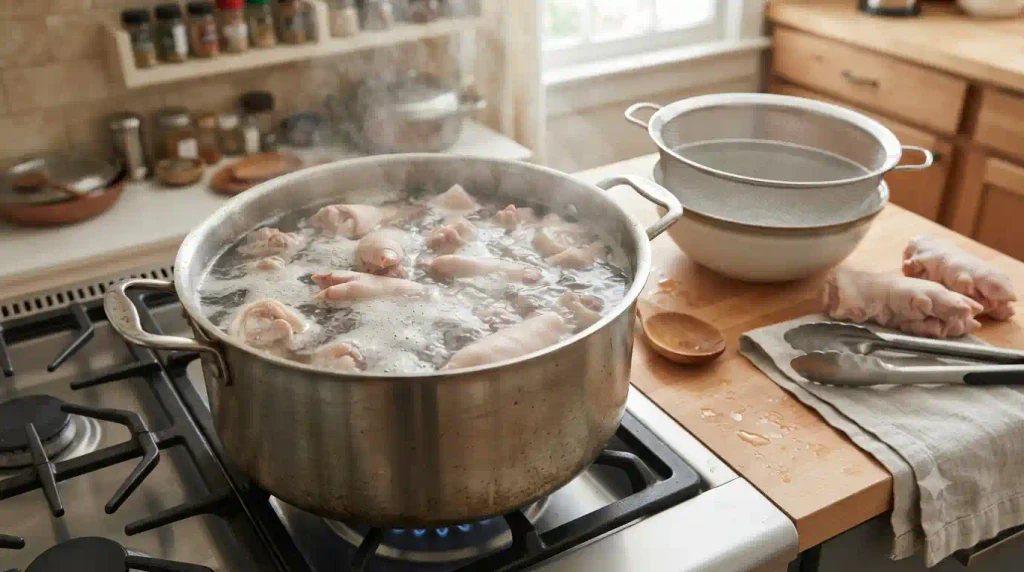
Inspect 3 pounds of pork feet and remove any visible debris. Rinse them under cold running water.
Place the pork feet in a large pot and cover them completely with fresh water. Bring the water to a rolling boil.
Boil for 5–7 minutes. You’ll probably see grayish foam and impurities rise to the surface. That’s completely normal.
Drain everything into a colander. Rinse the pork feet under cool running water and rinse out the pot as well.
This extra step takes only a few minutes but gives you a noticeably cleaner-tasting finished sauce.
Food safety tip: Treat raw pork just like any other raw meat. Wash your hands thoroughly afterward and clean any cutting boards, utensils, sinks, and surfaces that have come into contact with it.
Step 2: Build the Aromatic Base
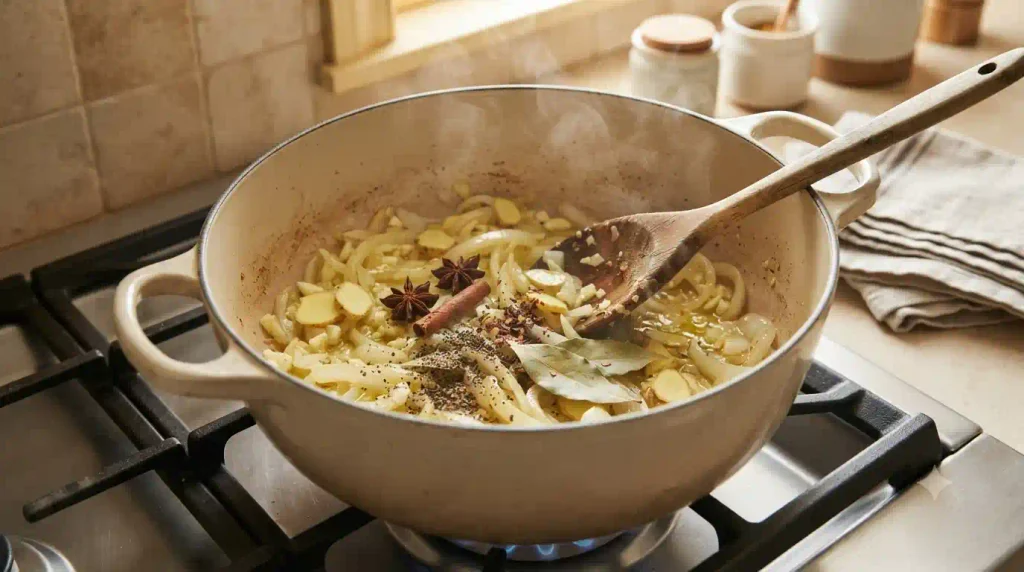
Return the clean pot to medium heat and add 1 tablespoon cooking oil.
Add:
- Sliced onion
- Garlic
- Ginger
Cook for about 3–4 minutes, stirring frequently.
You want the onion to begin softening and the garlic and ginger to become fragrant. Don’t let the garlic burn. If those little garlic pieces start browning too quickly, lower the heat.
Add the star anise, cinnamon stick, bay leaves, black pepper, and optional red pepper flakes.
Cook for another 30 seconds.
Your kitchen should smell very good at this point.
Step 3: Make the Braising Sauce
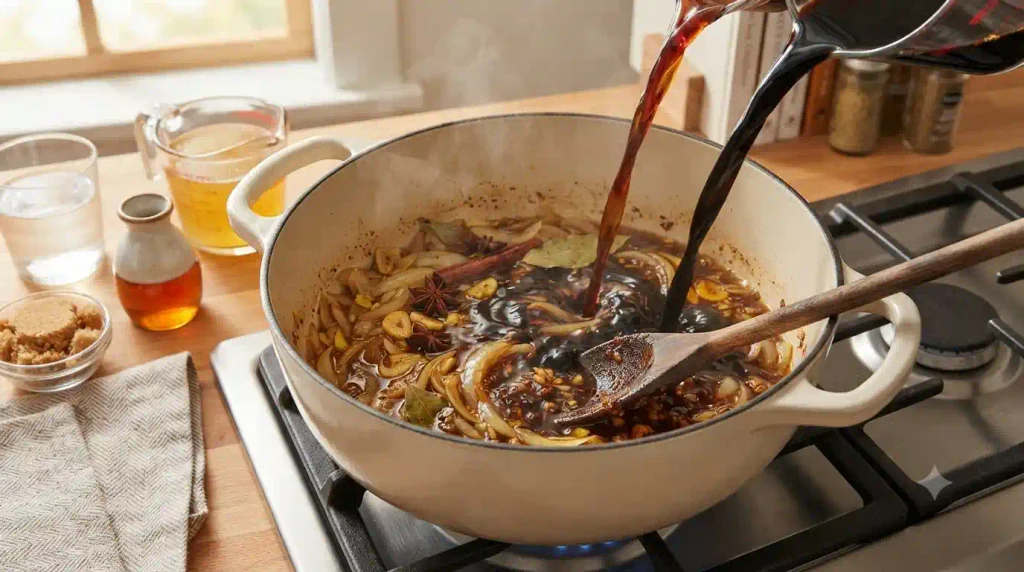
Pour in:
- ½ cup low-sodium soy sauce
- 2 tablespoons dark soy sauce
- 3 tablespoons brown sugar
- 3 tablespoons apple cider vinegar
- 2 cups chicken stock
- 1 cup water
Stir thoroughly, scraping the bottom of the pot to loosen any flavorful browned bits.
Bring the mixture to a gentle boil.
Taste the liquid carefully. It should taste stronger and slightly saltier than you ultimately want because it will season a substantial amount of pork.
Avoid adding extra salt now. The sauce will become more concentrated later.
Step 4: Slowly Braise Until Tender
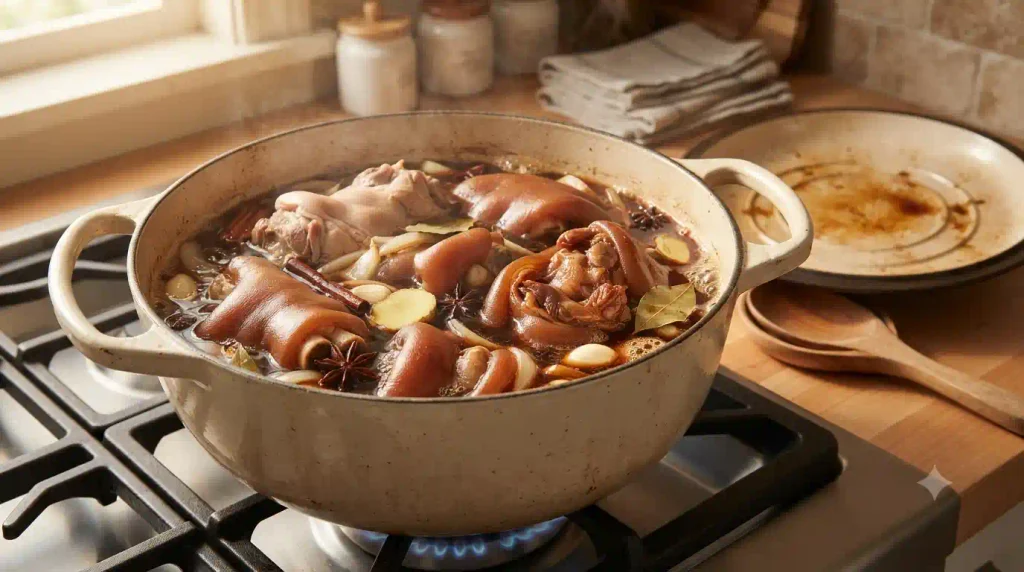
Return the blanched pork feet to the pot.
The liquid should mostly cover the pieces. Add a little additional water if necessary.
Bring everything back to a gentle simmer, then reduce the heat to low and cover the pot.
Cook for approximately 2 to 2½ hours, turning the pieces occasionally.
Keep the cooking gentle. A violent boil can break the skin apart before the connective tissue has had enough time to soften.
Start checking around the 2-hour mark.
They’re ready for the next stage when the meat and skin are extremely tender and the connective tissue feels soft rather than rubbery. Depending on their size, some pork feet may require closer to 3 hours.
Step 5: Reduce the Sauce Into Liquid Gold
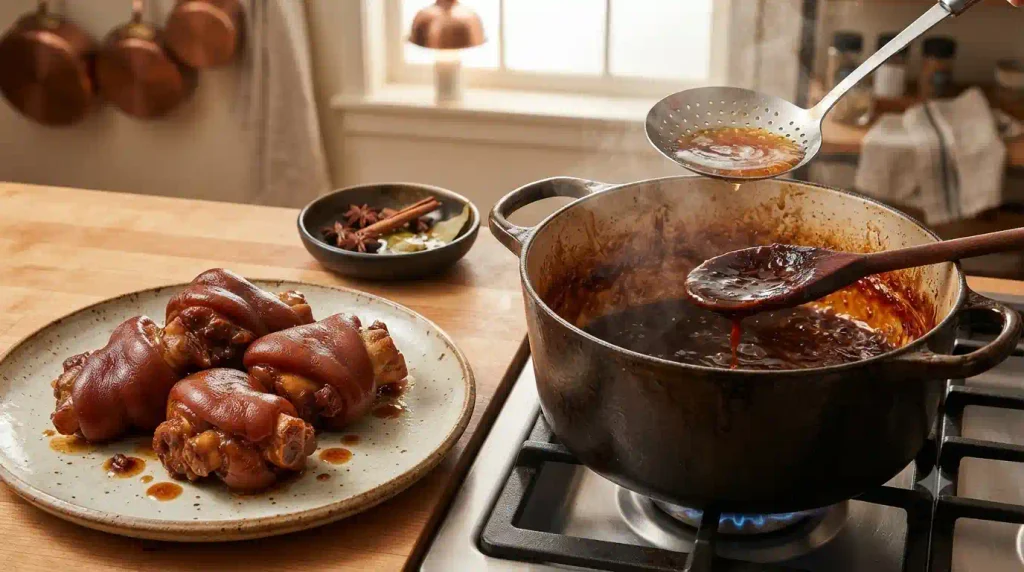
Once the pork feet are tender, carefully transfer them to a plate using tongs.
Remove and discard the:
- Cinnamon stick
- Star anise
- Bay leaves
If you see a heavy layer of fat floating on the surface, skim some off with a spoon. Don’t remove every drop—a little fat carries flavor.
Turn the heat up to medium or medium-high and simmer the uncovered sauce for approximately 10–20 minutes.
Watch it closely toward the end.
As water evaporates, the natural gelatin, soy sauce, sugar, and aromatics become concentrated. The sauce should turn darker, glossier, and noticeably thicker.
Run a wooden spoon through it. When the sauce lightly coats the spoon instead of immediately running off like water, you’re close.
Step 6: Glaze and Serve
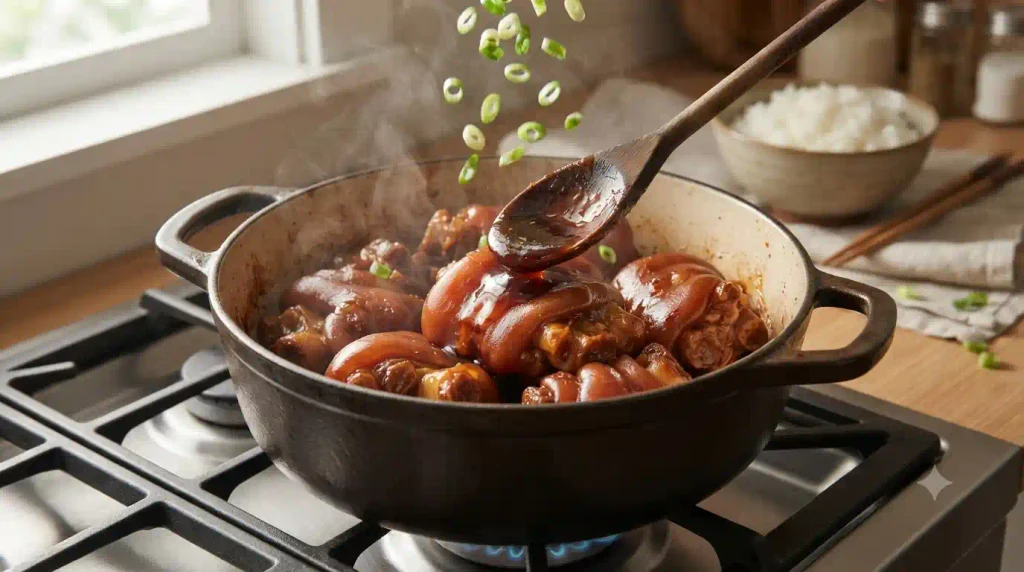
Return the tender pork feet to the reduced sauce.
Gently turn each piece until thoroughly coated.
Simmer for another 3–5 minutes, spooning that glossy sauce over the pork.
Don’t stir aggressively—the pork feet should be extremely tender now and can easily fall apart.
Remove from the heat and let everything rest for about 5 minutes.
Scatter sliced green onions over the top and serve hot.
I especially like these with steamed white rice, because the rice catches every drop of the rich braising sauce. Mashed potatoes, creamy polenta, or steamed greens are excellent choices too.
Health Benefits
Pork feet are certainly rich food, so portion size matters, but they also provide useful nutrients.
Protein: Pork contributes protein, which the body uses for maintaining and repairing tissues.
Collagen-rich connective tissue: Pork feet contain abundant connective tissue that becomes gelatinous after prolonged cooking.
Iron and zinc: Pork naturally supplies minerals including iron and zinc, which have important roles in normal body function.
B vitamins: Pork provides several B vitamins involved in normal energy metabolism.
That doesn’t make pork feet an everyday “health food.” The dish can contain significant sodium and fat, particularly when made with generous amounts of soy sauce.
Using low-sodium soy sauce and stock, skimming excess fat, and pairing the pork with vegetables can make the overall meal more balanced.
Nutrition Information (Per Serving)
The following values are estimates because pork feet differ significantly in their ratio of bone, skin, fat, and edible meat.
| Nutrient | Approximate Amount |
|---|---|
| Calories | 600 kcal |
| Protein | 38 g |
| Fat | 39 g |
| Carbohydrates | 22 g |
Note: Actual nutrition will vary according to the pork feet, brands of sauces and stock, amount of rendered fat discarded, and how much braising sauce is eaten. Rice or other side dishes are not included.
Pro Tips & Variations
1. Don’t skip blanching.
It’s tempting to throw everything straight into the pot, but blanching removes surface impurities and helps produce a cleaner sauce.
2. Gentle cooking wins.
Pork feet need time. Keep them at a gentle simmer rather than aggressively boiling them.
3. Don’t judge tenderness too early.
If the skin still feels tough or rubbery after two hours, the recipe hasn’t failed—it simply needs longer.
4. Reduce only after the pork is tender.
Reducing the sauce too early can make it overly salty before the pork has finished cooking.
5. Want extra heat?
Add 1–2 sliced fresh chilies, additional red pepper flakes, or a spoonful of chili crisp when serving.
6. Prefer a sweeter glaze?
Add another 1 tablespoon brown sugar or honey during the final reduction.
7. Want more acidity?
Add a small splash of rice vinegar or apple cider vinegar immediately before serving.
8. Make it in advance.
This is one of those dishes that can taste even better the next day. The sauce becomes extremely gelatinous when chilled; that’s normal.
For leftovers, refrigerate promptly in a covered container and reheat thoroughly before serving. Because home refrigerators and handling conditions vary, discard anything showing signs of spoilage rather than tasting it to check.
How Much Does It Cost to Make?
Pork feet are often one of the more economical pork cuts, although prices vary considerably between supermarkets, butcher shops, regions, and countries.
Estimated U.S. Cost
| Ingredient | Approx. Cost |
|---|---|
| 3 lb pork feet | $6–$10 |
| Onion, garlic & ginger | $2–$3 |
| Soy sauces | $1–$2 |
| Stock | $1–$2 |
| Sugar & vinegar | $0.50–$1 |
| Spices & seasonings | $1–$2 |
| Green onions | $0.50–$1 |
| Estimated Total | $12–$21 |
| Approx. Cost Per Serving | $3–$5.25 |
Pantry staples are calculated according to the quantity actually used rather than the price of purchasing every full bottle or package.
In the UK, Asian supermarkets, international grocers, and local butchers can also be good places to look for pork trotters.
Frequently Asked Questions
How long does it take for pork feet to become tender?
Plan on approximately 2½–3 hours of gentle stovetop cooking after blanching. Very large pieces may take longer. Instead of relying exclusively on time, check the texture. Properly cooked pork feet should be exceptionally tender rather than chewy or rubbery.
Do you have to boil pork feet before cooking them?
You don’t technically need to precook them completely, but I strongly recommend blanching them for 5–7 minutes before braising. It helps remove surface impurities and creates a cleaner-tasting cooking liquid. Drain that first water, rinse the pork, clean the pot, and then begin the actual braise.
Why is my pork feet sauce sticky?
That’s exactly what you’re looking for. Pork feet contain plenty of collagen-rich connective tissue. Long, moist cooking releases gelatin into the braising liquid. When that liquid is reduced, it develops the rich, sticky texture that makes this sauce so good.
It can become almost jelly-like after refrigeration. Once reheated, it melts back into sauce.
What should I serve with pork feet?
Steamed rice is my first choice because it absorbs the concentrated sauce beautifully. Other good options include mashed potatoes, polenta, noodles, collard greens, cabbage, bok choy, or other steamed vegetables.
Something fresh or slightly acidic on the side is particularly helpful because it balances the richness of the pork.
Final Thoughts
Pork feet don’t need fancy ingredients or restaurant equipment to become something special. What they need is proper cleaning, low heat, good seasoning, and enough time.
Don’t rush the braise. Give that collagen time to soften, then reduce the cooking liquid until it turns glossy and clings to every tender piece. That final pan of sticky, savory liquid gold sauce is worth waiting for.
Serve it steaming hot over rice, put plenty of napkins on the table, and don’t worry about eating this one too neatly. Some of the best comfort food is supposed to be a little messy.