

There’s something deeply satisfying about making ramen at home, especially when the craving hits for a steaming bowl with tender pork belly and a creamy, savory broth. The kitchen may get a little messy, and you’ll probably use more than one pot, but that first spoonful of rich broth makes the effort worth it. This is comfort food built for slow weekends and hungry evenings.
This pork belly ramen brings together melt-in-your-mouth meat, springy noodles, jammy eggs, and a rich, milky-looking broth without requiring restaurant equipment. The broth develops its body from pork stock, aromatics, miso, and a touch of milk, while a quick soy glaze gives the pork belly a salty-sweet finish.
Prep & Cook Time
| Details | Time / Amount |
|---|---|
| Prep Time | 25 minutes |
| Cook Time | 1 hour 20 minutes |
| Total Time | 1 hour 45 minutes |
| Servings | 4 bowls |
Chef’s note: Traditional tonkotsu broth can take 8–12 hours or longer. This home-friendly version uses quality pork or chicken stock, miso, aromatics, and milk to create a creamy, satisfying broth in a fraction of the time.
What Equipment Do You Need?
You don’t need specialized ramen equipment. A normal home kitchen setup works perfectly.
- Large heavy-bottomed pot or Dutch oven
- Medium saucepan
- Large skillet
- Sharp chef’s knife
- Cutting board
- Tongs
- Measuring cups and spoons
- Fine-mesh strainer
- Ladle
- Mixing bowl
- Four deep serving bowls
A heavy pot is particularly useful because it distributes heat evenly and helps prevent the rich broth from catching on the bottom.
Ingredients
For the Pork Belly
- 1 lb (450 g) skinless pork belly
- 2 tablespoons soy sauce
- 1 tablespoon mirin
- 1 tablespoon brown sugar
- 1 teaspoon sesame oil
- 1 garlic clove, finely minced
- 1 teaspoon fresh ginger, grated
- ½ cup (120 ml) water
For the Rich Broth
- 6 cups (1.4 litres) unsalted pork or chicken stock
- 1 cup (240 ml) whole milk
- 2 tablespoons white or yellow miso paste
- 2 tablespoons soy sauce
- 1 tablespoon sesame oil
- 4 garlic cloves, lightly crushed
- 1-inch piece fresh ginger, sliced
- 4 green onions, white and green parts separated
- 1 small yellow onion, roughly chopped
- 1 teaspoon rice vinegar
- ½ teaspoon white pepper
- Salt, only if needed
For the Ramen Bowls
- 12 oz (340 g) fresh or dried ramen noodles
- 4 large eggs
- 1 cup (100 g) bean sprouts
- 1 cup (70 g) sliced shiitake mushrooms
- 2 baby bok choy, halved
- 2 sheets nori, cut in half
- 2 green onions, thinly sliced
- 2 teaspoons toasted sesame seeds
- Chilli oil, optional
Why Each Ingredient Matters
| Ingredient | Why It Matters |
|---|---|
| Pork belly | Its layers of fat and meat become tender during cooking and give ramen its luxurious richness. |
| Stock | Provides the savoury backbone of the broth. Unsalted stock gives you better control over seasoning. |
| Whole milk | Adds body and creates the creamy, pale appearance without requiring an all-day bone broth. |
| Miso paste | Adds fermented umami and gives the broth much greater depth. |
| Soy sauce | Supplies saltiness, colour, and glutamate-rich savouriness. |
| Mirin | Its mild sweetness balances the salty pork glaze. |
| Ginger | Cuts through some of the richness with fresh, warming flavour. |
| Garlic | Builds a deep aromatic base that makes the broth taste slow-cooked. |
| Sesame oil | Adds a nutty aroma. A little goes a long way. |
| Rice vinegar | A small amount of acidity keeps the rich broth from tasting heavy. |
| Eggs | Add protein, richness, and the classic jammy ramen-egg experience. |
| Mushrooms | Naturally contain savoury compounds that reinforce the broth’s umami character. |
| Bok choy & sprouts | Bring freshness, texture, colour, and vegetables to an otherwise rich bowl. |
| Ramen noodles | Their springy texture is designed to hold onto broth while staying pleasantly chewy. |
One important detail is balance. Rich ramen needs salt, fat, umami, and a little acidity. If any one of those dominates, the bowl can quickly become heavy.
Step-by-Step Instructions
Step 1: Cook the Pork Belly
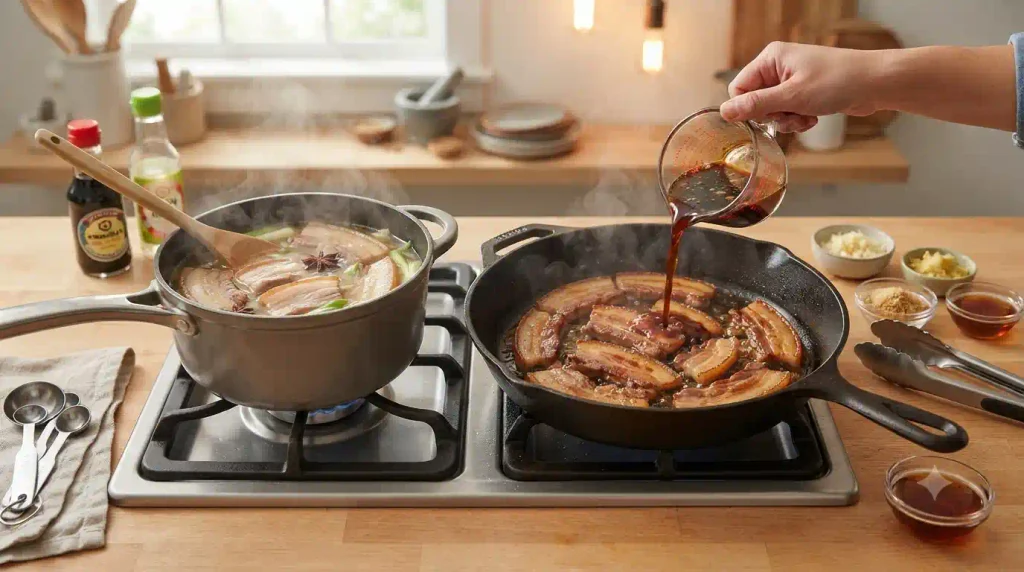
Cut the pork belly into 2 or 3 large pieces. Place them in a saucepan and add enough water to cover.
Bring the water to a gentle boil, then reduce the heat and simmer for 40–45 minutes.
Remove the pork and let it cool slightly before cutting it into slices about ¼ inch (6 mm) thick.
Heat a skillet over medium heat. Add the sliced pork belly and cook for 2–3 minutes per side, allowing the edges to turn golden.
Mix the soy sauce, mirin, brown sugar, sesame oil, garlic, ginger, and ½ cup water. Pour the mixture into the skillet.
Simmer for 5–8 minutes, turning the pork occasionally, until the liquid becomes glossy and lightly coats each slice.
Keep the heat moderate. A sugar-heavy glaze can burn surprisingly quickly once the water evaporates.
Step 2: Build the Aromatic Broth
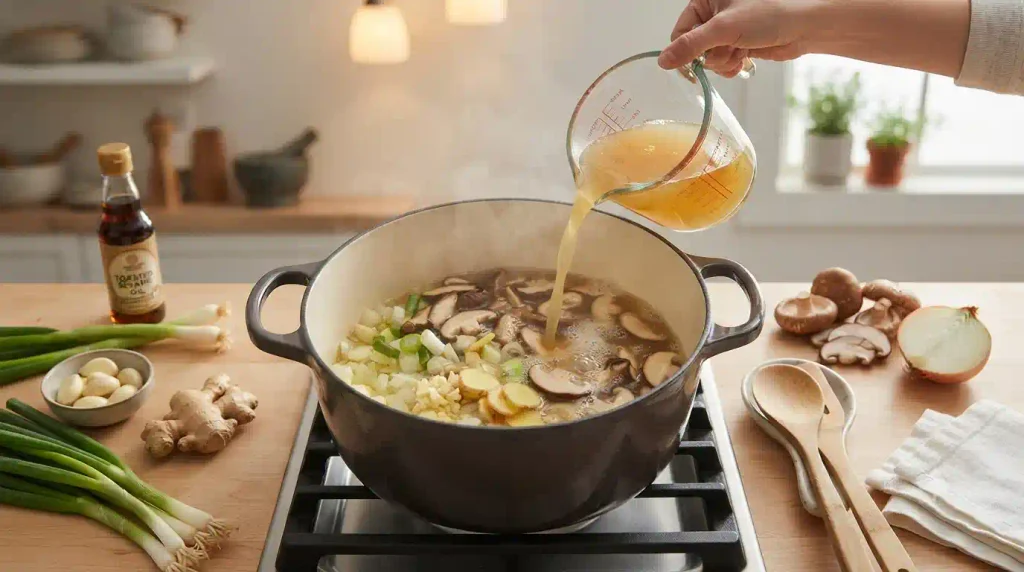
Heat 1 tablespoon sesame oil in a large heavy-bottomed pot over medium heat.
Add the chopped onion, crushed garlic, sliced ginger, and white portions of the green onions.
Cook for 4–5 minutes, stirring occasionally. You want the vegetables softened and fragrant rather than deeply browned.
Add the sliced shiitake mushrooms and cook for another 2 minutes.
Pour in the stock and stir well, scraping any flavourful bits from the bottom of the pot.
Bring the mixture to a gentle simmer.
Lower the heat and simmer uncovered for 20 minutes.
The kitchen should smell noticeably garlicky and savoury at this point—that is exactly what you want.
Step 3: Make the Broth Rich and Creamy
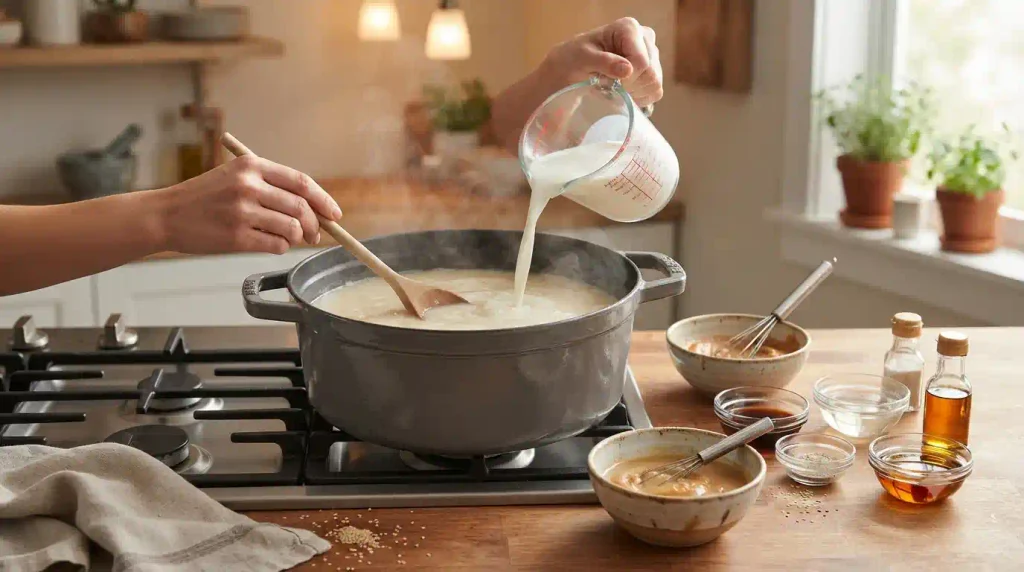
Place the miso paste in a small bowl.
Take about ½ cup of warm broth from the pot and whisk it into the miso until completely smooth.
Pour the mixture back into the pot.
Add the soy sauce, rice vinegar, white pepper, and remaining sesame oil.
Reduce the heat to low and slowly stir in the whole milk.
Let the broth warm gently for 5–7 minutes.
Do not aggressively boil the broth after adding the milk. High heat can cause dairy to separate and may dull some of the delicate miso flavour.
Taste before adding salt. Between the miso and soy sauce, you may not need any.
If your broth looks slightly thinner than restaurant tonkotsu, don’t worry. It should still taste rich and coat the noodles lightly rather than feeling like cream sauce.
Step 4: Prepare the Eggs and Vegetables
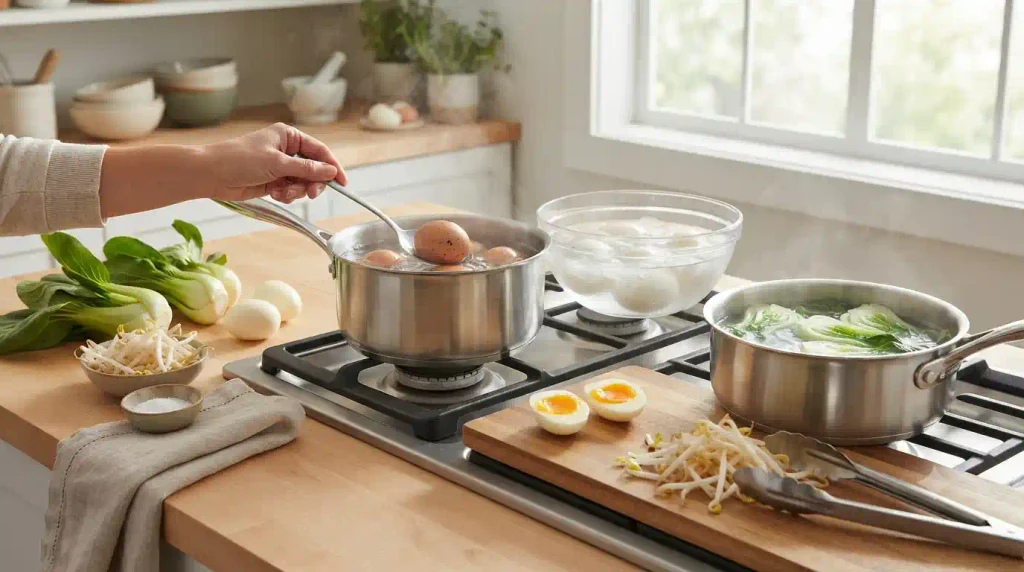
While the broth cooks, bring a saucepan of water to a boil.
Carefully lower the eggs into the water with a spoon and cook for 6½–7 minutes for jammy centres.
Transfer the eggs immediately into a bowl of ice water.
Leave them for at least 5 minutes, then peel carefully and slice them in half.
Bring another pot of water to a boil.
Blanch the bok choy for 1–2 minutes, then remove it with tongs.
Blanch the bean sprouts for about 30 seconds if you prefer them slightly softened.
Keep everything nearby because ramen assembly moves quickly once the noodles are cooked.
Step 5: Cook the Ramen Noodles
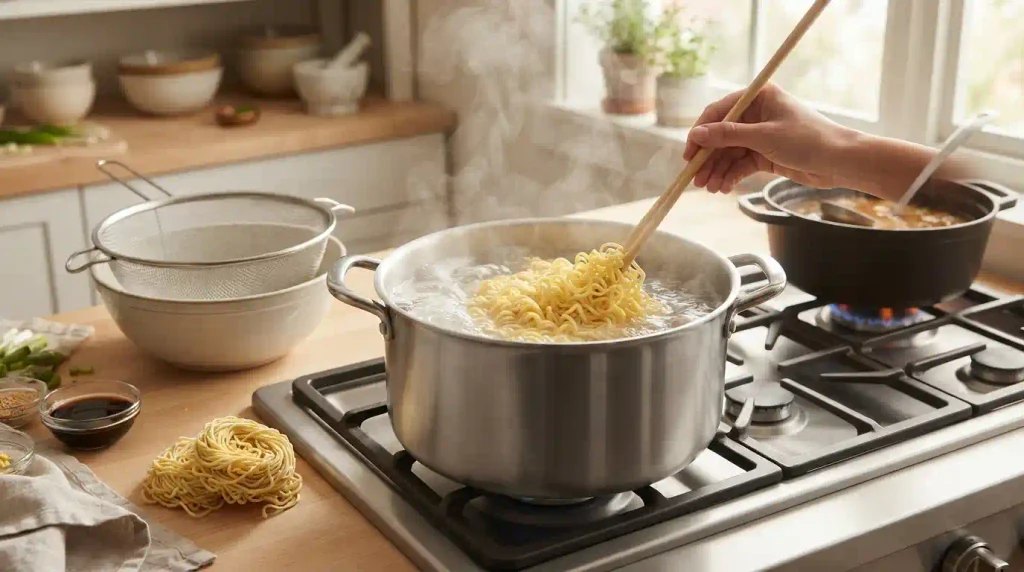
Bring a large pot of fresh water to a rolling boil.
Add the ramen noodles and cook according to the package directions. Fresh noodles often need only 2–3 minutes, while dried noodles can take longer.
Stir gently during the first minute so the strands don’t stick together.
Drain immediately.
Do not rinse the noodles unless the package specifically tells you to. Their surface starch helps the broth cling to them.
Also, don’t cook ramen noodles directly in your finished broth. They release starch into the liquid and can make your carefully balanced broth muddy and overly thick.
Step 6: Assemble and Serve

Divide the hot noodles among four deep bowls.
Ladle the creamy broth generously over each portion.
Arrange the glazed pork belly over the noodles.
Add:
- Half a jammy egg
- Bok choy
- Bean sprouts
- Shiitake mushrooms
- Sliced green onions
- Half a sheet of nori
- Toasted sesame seeds
Finish with a few drops of chilli oil if you like some heat.
Serve immediately.
Ramen waits for nobody. Once those noodles hit hot broth, they continue absorbing liquid and gradually soften, so get everyone to the table before you start assembling the bowls.
Health Benefits
Pork belly ramen is certainly a rich comfort-food meal, but it can still provide valuable nutrients when served as part of a balanced diet.
Protein: Pork, eggs, noodles, and miso contribute protein, which supports muscle maintenance and normal tissue repair.
B vitamins: Pork is naturally rich in several B vitamins, including thiamine, which plays an important role in energy metabolism.
Vegetables: Bok choy, mushrooms, sprouts, onions, garlic, and green onions add micronutrients and plant compounds to the bowl.
Eggs: Eggs provide high-quality protein along with nutrients such as choline.
Fermented miso: Miso provides strong flavour, allowing a relatively small amount to transform a large pot of broth.
The main nutritional consideration is sodium and saturated fat. Soy sauce, miso, stock, and pork belly can make ramen high in both.
For a lighter bowl, choose low-sodium stock and soy sauce, reduce the pork belly portion, and increase the bok choy and mushrooms.
Nutrition Information (Per Serving)
Approximate values will vary according to the brands of noodles, stock, pork belly, and toppings you use.
| Nutrient | Approximate Amount |
|---|---|
| Calories | 780 kcal |
| Protein | 32 g |
| Fat | 44 g |
| Carbohydrates | 64 g |
These figures should be treated as estimates rather than clinical nutritional calculations.
Pro Tips & Variations
Chef Tips for Better Ramen
1. Don’t rush the pork belly.
The initial simmer helps soften its connective tissue. Browning afterward gives you the caramelized edges that make each bite more interesting.
2. Use unsalted or low-sodium stock.
Miso and soy sauce already contain plenty of salt. Starting with salty stock makes the finished broth difficult to control.
3. Dissolve miso separately.
Dropping a spoonful straight into the pot often leaves stubborn little clumps.
4. Keep dairy at a gentle simmer.
Once milk enters the broth, avoid a hard boil.
5. Cook noodles last.
Everything else should be ready before the noodles touch the water.
6. Warm your ramen bowls.
Fill each bowl with hot water for a minute, then empty and dry it before assembly. Your ramen stays hot noticeably longer.
Easy Variations
Spicy Pork Belly Ramen:
Add 1–2 teaspoons chilli crisp or chilli oil to each finished bowl.
Extra-Garlic Ramen:
Slowly sauté another 2 minced garlic cloves until golden and use them as a topping.
Corn Ramen:
Add ½ cup sweet corn. Its sweetness works particularly well with miso.
Creamier Broth:
Replace ½ cup of the milk with evaporated milk for extra body.
Lighter Version:
Use lean pork loin or chicken thigh instead of pork belly and increase the vegetables.
No Pork Stock?
Good-quality chicken stock works extremely well. Avoid heavily herb-seasoned Western-style stock because rosemary or thyme can clash with traditional ramen flavours.
How Much Does It Cost to Make?
Prices vary significantly by location and supermarket, but this is a reasonable estimate for a US home kitchen.
| Ingredient Group | Estimated Cost |
|---|---|
| Pork belly | $6.00–$8.00 |
| Ramen noodles | $3.00–$4.00 |
| Stock & milk | $3.00–$4.00 |
| Eggs | $1.00–$2.00 |
| Vegetables & mushrooms | $4.00–$6.00 |
| Miso, soy sauce & seasonings used | $2.00–$3.00 |
| Estimated Total | $19.00–$27.00 |
| Approx. Cost Per Serving | $4.75–$6.75 |
The initial grocery bill may be slightly higher if you’re buying full bottles of soy sauce, mirin, sesame oil, and a tub of miso. The good news is you’ll use only a small portion of each, leaving plenty for future meals.
Frequently Asked Questions
Can I make pork belly ramen broth ahead of time?
Yes. In fact, this is one of the easiest ways to make homemade ramen less stressful.
Prepare the broth and pork belly in advance and refrigerate them separately in airtight containers. Use them within 3–4 days, provided they have been cooled and stored safely.
Reheat the broth gently until steaming hot. Cook fresh noodles immediately before serving rather than storing cooked noodles in the broth.
How do restaurants make ramen broth look milky?
Traditional tonkotsu ramen gets its characteristic opaque appearance from pork bones cooked at a strong boil for many hours. Fat, collagen, proteins, and water become emulsified, producing that distinctive creamy-looking broth.
This home recipe takes a practical shortcut with stock, miso, and whole milk. It isn’t traditional tonkotsu, but it delivers a rich texture without keeping a stockpot bubbling all day.
What is the best cut of pork for ramen?
Pork belly is one of the best choices because its combination of meat and fat stays tender and succulent.
Traditional chashu is often rolled and braised before slicing. This recipe uses a simpler home-cook method: simmer, slice, sear, and glaze.
Pork shoulder is another excellent option if you’d like something slightly leaner.
Why isn’t my ramen broth creamy?
First, make sure you’ve thoroughly dissolved the miso into warm broth.
Whole milk also works better here than skim milk because its additional fat contributes more body.
Most importantly, remember that this quick broth won’t become as thick and opaque as authentic tonkotsu. Traditional tonkotsu relies on hours of vigorous bone boiling to create an emulsion.
Final Thoughts
A bowl of homemade ramen doesn’t need to be a two-day cooking project. With tender glazed pork belly, jammy eggs, vegetables, springy noodles, and a savoury, creamy broth, you can build a seriously satisfying bowl with ingredients available at an ordinary supermarket.
The trick is getting the small things right: season gradually, don’t overcook your noodles, keep the creamy broth at a gentle heat, and assemble everything while it’s piping hot.
And don’t stress about making every bowl look restaurant-perfect. Ramen is meant to be eaten hot, not photographed for twenty minutes. Pile on the pork, grab your chopsticks and a spoon, and enjoy the bowl you made yourself.