

There’s something deeply satisfying about turning a beautiful piece of crab into dinner, especially when you’re craving something rich and restaurant-worthy without a heavy fried coating. These crab cakes are all about letting sweet, delicate lump crab meat take center stage rather than burying it under breadcrumbs.
With roughly 90% crab meat in the mix, every bite stays tender, juicy, and unmistakably crab-forward. There are no fried breadcrumbs here, and only a small amount of binder is used to keep the cakes together. A quick chill makes shaping easier, while gentle pan-searing creates those irresistible golden edges without sacrificing the soft, chunky center.
Prep & Cook Time
| Detail | Time / Amount |
|---|---|
| Prep Time | 15 minutes |
| Chill Time | 30 minutes |
| Cook Time | 10–12 minutes |
| Total Time | About 55 minutes |
| Servings | 4 |
| Yield | 8 medium crab cakes |
What Equipment Do You Need?
You don’t need restaurant equipment to make excellent crab cakes. A few everyday kitchen tools will do the job:
- Large mixing bowl
- Small mixing bowl
- Fork or small whisk
- Measuring cups and spoons
- Rubber spatula
- Baking sheet or large plate
- Parchment paper
- Large nonstick or well-seasoned skillet
- Thin, flexible spatula
- Instant-read thermometer, optional but useful
A flexible spatula is especially helpful because these crab cakes contain lots of crab and relatively little binder, making them more delicate than breadcrumb-heavy versions.
Ingredients
- 1 lb (454 g) jumbo lump or lump crab meat, drained and carefully picked over for shell
- 1 large egg
- 3 tablespoons mayonnaise
- 1 teaspoon Dijon mustard
- 1 teaspoon Worcestershire sauce
- 1 teaspoon fresh lemon juice
- 1 teaspoon Old Bay seasoning
- 1 tablespoon finely chopped fresh parsley
- 1 tablespoon finely sliced chives
- 2 tablespoons finely crushed plain crackers, such as saltines, for minimal binding
- 1/4 teaspoon freshly ground black pepper
- 1/8 teaspoon cayenne pepper, optional
- 2 tablespoons neutral oil, for cooking
- 1 tablespoon unsalted butter
- Lemon wedges, for serving
- Fresh parsley or chives, optional garnish
Chef’s note: Check the crab carefully with clean fingers before mixing. Tiny shell fragments have a habit of hiding between those beautiful lumps.
Why Each Ingredient Matters
Lump crab meat: This is the star, not just another ingredient. Using a full pound and keeping the filler minimal produces a sweet, succulent interior with distinct pieces of crab rather than a uniform seafood patty.
Egg: Egg proteins set during cooking and help hold the delicate cakes together. One egg is plenty; adding too much can make the mixture feel dense or eggy.
Mayonnaise: Mayo adds moisture and richness while also helping bind the crab. Because crab meat is naturally lean, this small amount keeps the finished cakes succulent.
Dijon mustard: Dijon brings acidity and gentle sharpness that cuts through the richness without overwhelming the crab.
Worcestershire sauce: A teaspoon provides savory depth and umami. Keep it restrained so the seafood still dominates.
Lemon juice: Fresh acidity brightens the crab’s natural sweetness. Bottled juice works in a pinch, but fresh lemon tastes noticeably cleaner here.
Old Bay: This classic seafood seasoning contributes salt, celery seed, paprika, and warming spices. Because it already contains salt, taste before adding extra salt.
Crushed crackers: Two tablespoons provide just enough starch to absorb excess moisture and improve structure. They aren’t intended to bulk out the crab cakes.
Fresh herbs: Parsley and chives add freshness and a subtle onion note without competing with the seafood.
Butter and oil: Oil handles skillet heat well, while butter provides flavor and encourages beautifully browned surfaces.
Step-by-Step Instructions
Step 1: Prepare the Crab Meat
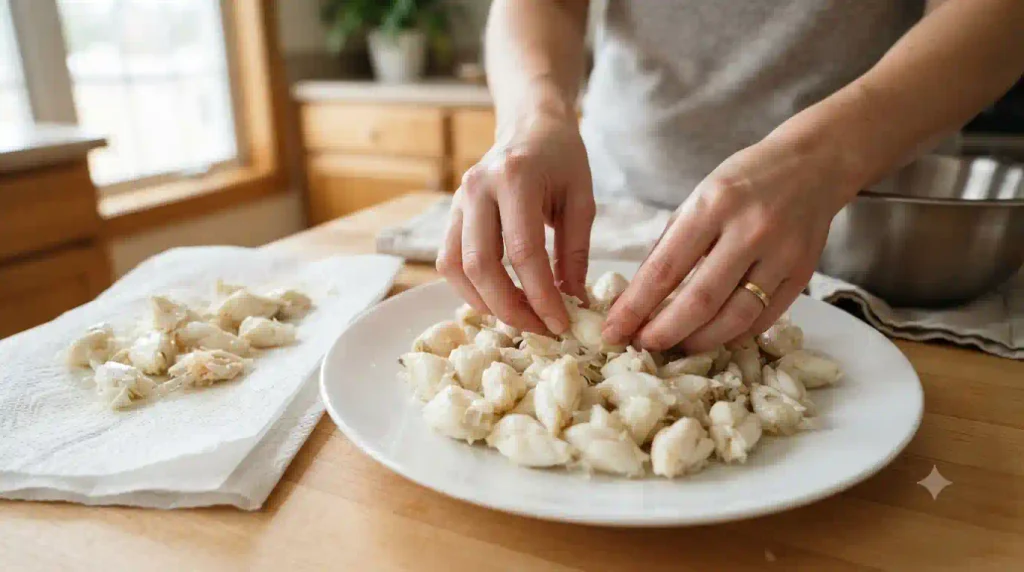
Drain the 1 pound of crab meat thoroughly. Excess liquid is one of the biggest reasons homemade crab cakes fall apart.
Spread the crab loosely on a plate and gently run your fingers through it to check for bits of shell or cartilage. Try not to shred those gorgeous lumps while doing this.
Pat away obvious surface moisture with paper towels if necessary. Don’t squeeze the crab dry—you want it moist, just not watery.
Keep it refrigerated while preparing the binder. Seafood should not sit unnecessarily at room temperature.
Step 2: Make the Flavorful Binder
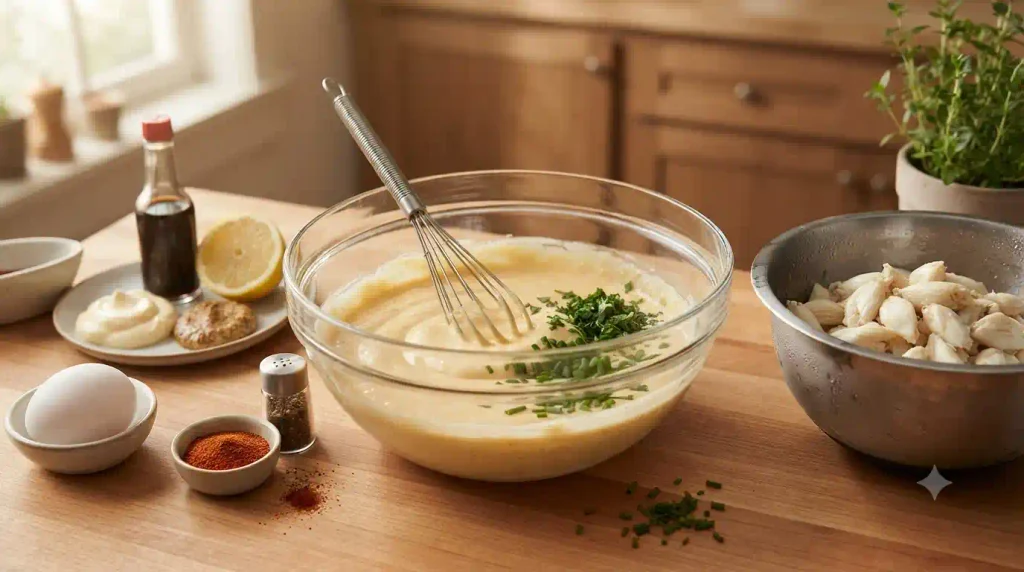
In a large mixing bowl, whisk together:
- Egg
- Mayonnaise
- Dijon mustard
- Worcestershire sauce
- Lemon juice
- Old Bay
- Black pepper
- Cayenne, if using
Whisk just until smooth.
Stir in the parsley and chives.
This is where you want all your seasonings evenly distributed. Mixing them before adding the crab means you won’t need to aggressively stir the delicate meat later.
Step 3: Fold in the Crab and Crackers
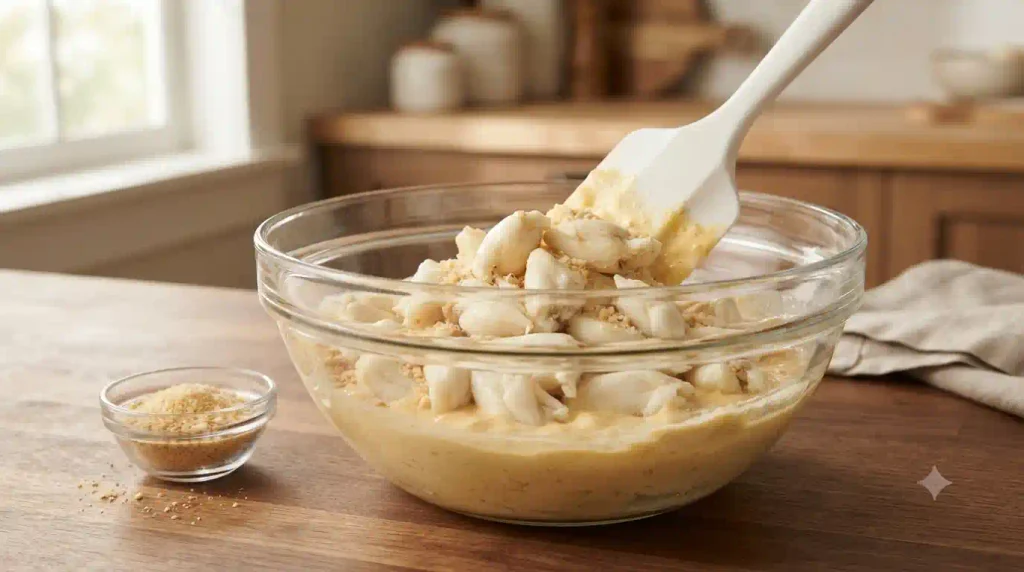
Add the crab meat and 2 tablespoons crushed crackers to the wet mixture.
Using a rubber spatula, gently fold everything together.
Think fold, don’t stir.
Stop as soon as the mixture holds together when lightly pressed. Seeing large pieces of crab is a good thing.
If the mixture feels unusually wet, give the cracker crumbs a couple of minutes to absorb moisture before deciding it needs anything else.
Avoid automatically adding more crumbs. Too much filler defeats the purpose of a high-crab cake.
Step 4: Shape and Chill the Crab Cakes
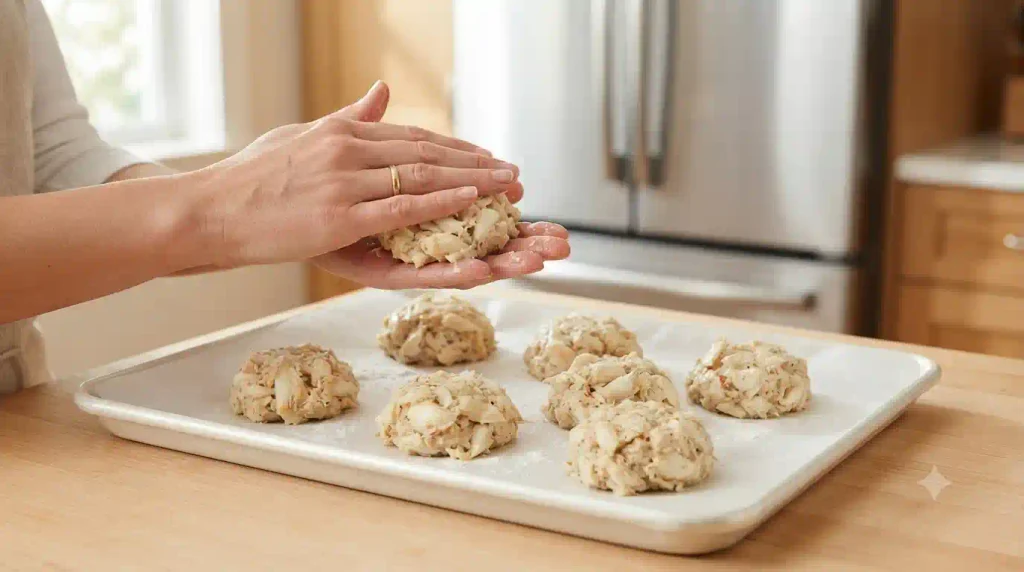
Line a plate or small baking sheet with parchment paper.
Divide the mixture into 8 portions and gently shape each one into a thick cake, roughly 2 1/2 to 3 inches wide.
Don’t compact them like hamburger patties. Light pressure is enough.
Place the formed cakes in the refrigerator for at least 30 minutes.
This step makes a surprisingly big difference. Chilling firms the fat and binder and allows the crumbs to hydrate, helping delicate, crab-heavy cakes survive the trip into the skillet.
If one looks slightly imperfect around the edges, leave it alone. Rustic crab cakes usually cook better than cakes that have been repeatedly handled and compressed.
Step 5: Pan-Sear Until Golden
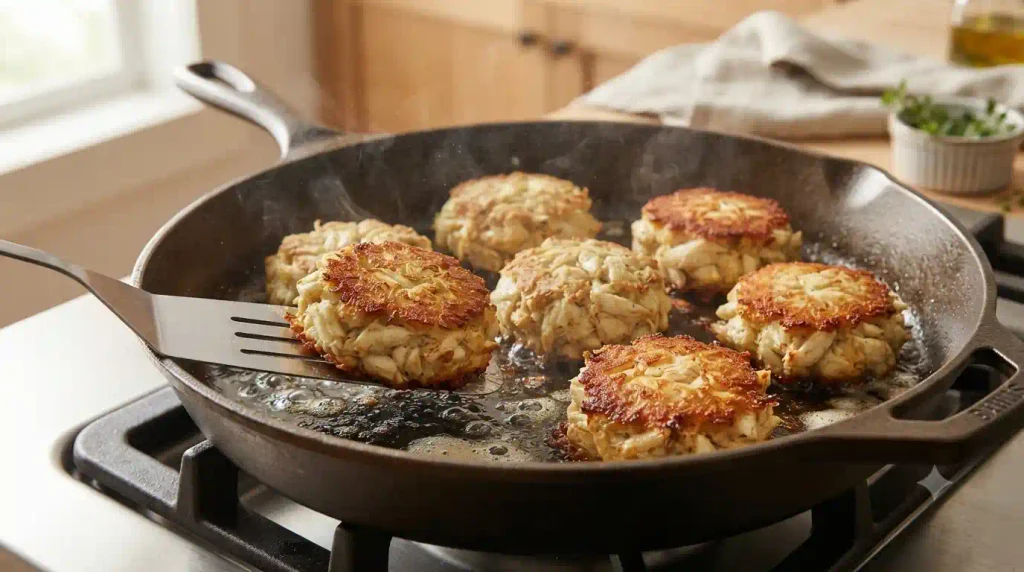
Heat a large nonstick or well-seasoned skillet over medium heat.
Add the oil and butter. Once the butter is melted and gently sizzling, carefully place the chilled crab cakes in the pan. Don’t crowd them; cook in two batches if needed.
Cook for approximately 4–5 minutes on the first side without moving them around.
Once the bottoms are deeply golden and the cakes release easily, carefully flip them using a thin spatula.
Cook the second side for another 3–5 minutes, lowering the heat slightly if the exterior is browning too quickly.
Step 6: Check, Rest, and Serve
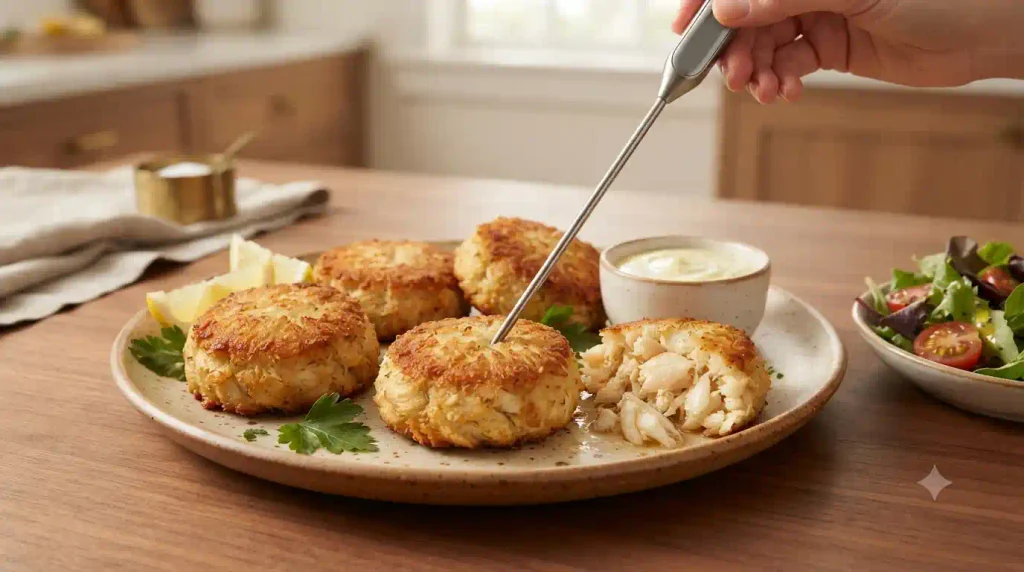
Because this recipe contains egg and seafood, cook the crab cakes thoroughly. For food safety, the center should reach 165°F (74°C) when checked with an instant-read thermometer.
Transfer them carefully to a serving plate and let them rest for 2–3 minutes.
Serve warm with fresh lemon wedges.
They’re excellent with a simple green salad, roasted vegetables, coleslaw, corn, or a light lemony sauce. I usually keep the sauce on the side—the crab has worked hard enough to be the star of the plate.
Health Benefits
Crab cakes sometimes get treated as purely indulgent restaurant food, but a crab-forward version can provide plenty of useful nutrition.
High-quality protein: Crab is naturally protein-rich. Protein contributes to muscle maintenance and also helps make meals more satisfying.
Vitamin B12: Crab can be a good source of vitamin B12, an essential nutrient involved in normal red blood cell formation and nervous-system function.
Minerals: Crab provides minerals including selenium, zinc, and phosphorus.
Less filler: Keeping crackers to just two tablespoons means the recipe contains substantially more seafood relative to starch than many heavily breaded crab cakes.
Controlled cooking fat: Pan-searing requires relatively little cooking fat compared with deep-frying.
Keep in mind that Old Bay, Worcestershire sauce, crackers, and packaged crab can all contribute sodium. Anyone monitoring sodium intake can choose lower-sodium products where available and avoid adding extra salt.
Nutrition Information (Per Serving)
Approximate nutrition for 2 crab cakes, assuming the recipe makes four servings:
| Nutrient | Approximate Amount |
|---|---|
| Calories | 290 kcal |
| Protein | 25 g |
| Fat | 19 g |
| Carbohydrates | 4 g |
Nutrition values are estimates. Actual numbers will vary depending on the crab, mayonnaise, crackers, cooking fat absorbed, and specific brands used.
Pro Tips & Variations
1. Don’t break up your expensive crab.
Large lumps are what create that restaurant-style texture. Fold gently and stop as soon as everything is combined.
2. Drain the crab properly.
Watery crab makes loose cakes. Drain first, then lightly blot if necessary.
3. Don’t skip chilling.
With very little filler, refrigeration is your insurance policy against cakes breaking in the skillet. Thirty minutes is good; an hour is even better.
4. Flip only once if possible.
Repeated flipping invites disaster. Wait until a proper crust develops before touching the cakes.
5. Make them gluten-free.
Replace the crackers with about 2 tablespoons finely crushed gluten-free crackers. Choose certified gluten-free versions of sauces and seasonings where required.
6. Add a little heat.
Increase the cayenne or add a few drops of hot sauce to the binder.
7. Try fresh herbs.
Dill, tarragon, or finely chopped green onion can replace the chives. Keep quantities modest so they complement rather than hide the crab.
8. Bake instead of pan-frying.
For an alternative preparation, lightly brush the chilled cakes with oil or melted butter and bake at 425°F (220°C) until browned and cooked through to 165°F (74°C). Exact timing depends on their thickness and your oven.
9. Don’t keep adding filler.
A freshly mixed crab mixture may feel softer than expected. Chill it first. Adding handfuls of crackers until it feels like burger meat will give you firm cakes—but they’ll taste much less like crab.
How Much Does It Cost to Make?
Crab is the major expense, and prices can vary dramatically by location, season, crab species, and whether you’re buying fresh, refrigerated, or pasteurized meat.
Here’s a realistic rough estimate for a US home kitchen:
| Ingredient | Estimated Cost Used |
|---|---|
| 1 lb lump crab meat | $25–$40 |
| Egg | $0.30 |
| Mayonnaise | $0.40 |
| Dijon & Worcestershire | $0.30 |
| Lemon | $0.50 |
| Old Bay & spices | $0.30 |
| Crackers | $0.20 |
| Fresh herbs | $1.00–$2.00 |
| Butter & oil | $0.75 |
| Estimated Total | $28.75–$44.75 |
| Approx. Cost Per Serving | $7.20–$11.20 |
These figures are only estimates, and premium jumbo lump crab can push the total higher. UK pricing will also vary significantly depending on whether you use fresh British crab, imported crab, or pasteurised crab meat.
The best place to save money isn’t by adding more breadcrumbs. Look for good-quality lump crab on promotion and freeze it according to the package directions if appropriate.
Frequently Asked Questions
Why do my crab cakes fall apart when I cook them?
The most common causes are excess moisture, insufficient chilling, aggressive flipping, or too little binder.
Drain the crab thoroughly and chill the shaped cakes for at least 30 minutes. Once they’re in the skillet, leave them alone until the bottom has developed a proper crust. That crust provides additional structure for flipping.
Can you make crab cakes without breadcrumbs?
Yes. Crab cakes don’t need traditional breadcrumbs.
This recipe uses only a small amount of crushed crackers as a binder rather than creating a breadcrumb coating. Gluten-free crackers can also work.
If you want absolutely no bread or cracker product, another binder such as a small amount of suitable gluten-free starch may be tested, although the final texture and firmness will differ.
Can I prepare crab cakes ahead of time?
Yes. You can shape the crab cakes, cover them well, and refrigerate them before cooking.
For best quality and food safety, keep the crab properly refrigerated and follow the storage guidance on the crab packaging, especially if the meat was previously opened or thawed.
You can then cook the chilled cakes directly from the refrigerator.
Is jumbo lump crab meat better for crab cakes?
Jumbo lump gives crab cakes impressive large pieces and a luxurious texture, but regular lump crab is also excellent and is often less expensive.
For this recipe, either works well. What matters most is choosing crab with good flavor, draining it thoroughly, and handling it gently.
Final Thoughts
When you’re paying for good lump crab, it deserves to taste like crab. That’s the whole idea behind these crab cakes: plenty of sweet meat, just enough binder to hold everything together, and a golden exterior that adds texture without hiding what’s inside.
The two small habits that make the biggest difference are gentle mixing and proper chilling. Don’t worry if your cakes aren’t perfectly shaped—the slightly rustic ones coming out of a real home kitchen can be every bit as delicious. Add a squeeze of fresh lemon, bring them to the table while they’re warm, and let that lump crab do the talking.