

There’s something deeply satisfying about a big pot simmering on the stove, especially when you’re craving something warm, bold, and comforting. Red pork pozole is one of those meals that fills the kitchen with an incredible chile-and-garlic aroma long before dinner is ready. But homemade pozole can sometimes turn out grainy or gritty when the chile sauce isn’t prepared properly.
This version keeps the broth smooth, rich, and beautifully red while staying practical for a home kitchen. Tender pork, plump hominy, toasted dried chiles, and a carefully strained sauce create a velvety broth without complicated techniques. Add crunchy cabbage, radishes, lime, and your favorite toppings, and every bowl feels special.
Velvety Red Pork Pozole Recipe Without Gritty Broth
This red pork pozole combines fork-tender pork shoulder, hominy, dried Mexican chiles, garlic, and warm spices in a silky red broth. The secret to avoiding gritty broth is simple: soften the chiles thoroughly, blend them with enough liquid, then strain the chile puree through a fine-mesh sieve before it reaches the soup pot.
The result is a deeply flavored broth that feels smooth on the palate while still delivering the rustic comfort that makes pozole such a satisfying meal.
Prep & Cook Time
| Detail | Time / Amount |
|---|---|
| Prep Time | 25 minutes |
| Cook Time | 2 hours |
| Total Time | 2 hours 25 minutes |
| Servings | 8 generous bowls |
| Difficulty | Moderate |
What Equipment Do You Need?
You don’t need specialty restaurant equipment to make excellent pozole. A few everyday kitchen tools will do the job.
- Large Dutch oven or heavy-bottomed stockpot
- Medium saucepan
- High-powered blender
- Fine-mesh sieve
- Tongs
- Sharp chef’s knife
- Cutting board
- Wooden spoon
- Measuring cups and spoons
- Ladle
- Large bowl
A fine-mesh sieve is particularly important here. Even a good blender can leave tiny pieces of chile skin behind, and those particles are often responsible for a gritty broth.
Ingredients
For the Pork and Broth
- 3 pounds (1.36 kg) boneless pork shoulder, cut into 1½-inch chunks
- 1 tablespoon neutral oil, such as avocado or canola oil
- 2 teaspoons kosher salt, divided, plus more to taste
- ½ teaspoon freshly ground black pepper
- 1 medium white onion, peeled and quartered
- 5 garlic cloves, peeled
- 2 bay leaves
- 8 cups low-sodium chicken stock or water
- 2 cans (25 ounces each) white hominy, drained and rinsed
- 1 teaspoon dried Mexican oregano
- ½ teaspoon ground cumin
For the Smooth Red Chile Sauce
- 4 dried guajillo chiles
- 3 dried ancho chiles
- 2 dried árbol chiles, optional for extra heat
- 2 garlic cloves
- ¼ medium white onion
- 2 cups hot broth, taken from the cooking pot
- ½ teaspoon kosher salt
For Serving
- 3 cups finely shredded green cabbage
- 6 radishes, thinly sliced
- ½ white onion, finely diced
- ½ cup chopped fresh cilantro
- 2 limes, cut into wedges
- 1 avocado, sliced, optional
- 8 tostadas or warm corn tortillas
- Extra Mexican oregano, for sprinkling
Why Each Ingredient Matters
Pork shoulder: This cut contains enough connective tissue and marbling to become tender during slow simmering. As collagen breaks down, it adds body to the broth without needing flour or another thickener.
Hominy: Hominy is corn treated through nixtamalization. It has a distinctive chewy, tender texture and mild corn flavor that makes pozole instantly recognizable.
Guajillo chiles: These dried red chiles bring color and a mildly fruity, earthy chile flavor without overwhelming heat.
Ancho chiles: Anchos add deeper, slightly sweet and smoky notes. Pairing ancho with guajillo produces a more rounded sauce than relying on one chile alone.
Árbol chiles: These are much hotter than guajillos or anchos. They’re optional, so you can control the heat without sacrificing the red chile character.
Garlic and onion: Both create the savory aromatic backbone of the broth and chile puree.
Mexican oregano: Mexican oregano has an earthy, citrusy character that works especially well with dried chiles and pork. Rub it between your palms before adding it to release its aroma.
Cumin: A small amount contributes warmth without dominating the chile flavor.
Chicken stock: Low-sodium stock gives the broth a savory head start while allowing you to control the final seasoning.
Fresh garnishes: Cabbage, radish, cilantro, onion, and lime aren’t merely decorative. They provide crunch, freshness, acidity, and contrast against the rich pork broth.
The fine-mesh straining step: This is the key to the promised velvety texture. Dried chile skins and stubborn seeds can survive blending. Straining removes those particles before they enter the finished broth.
Step-by-Step Instructions
Step 1: Brown and Start the Pork
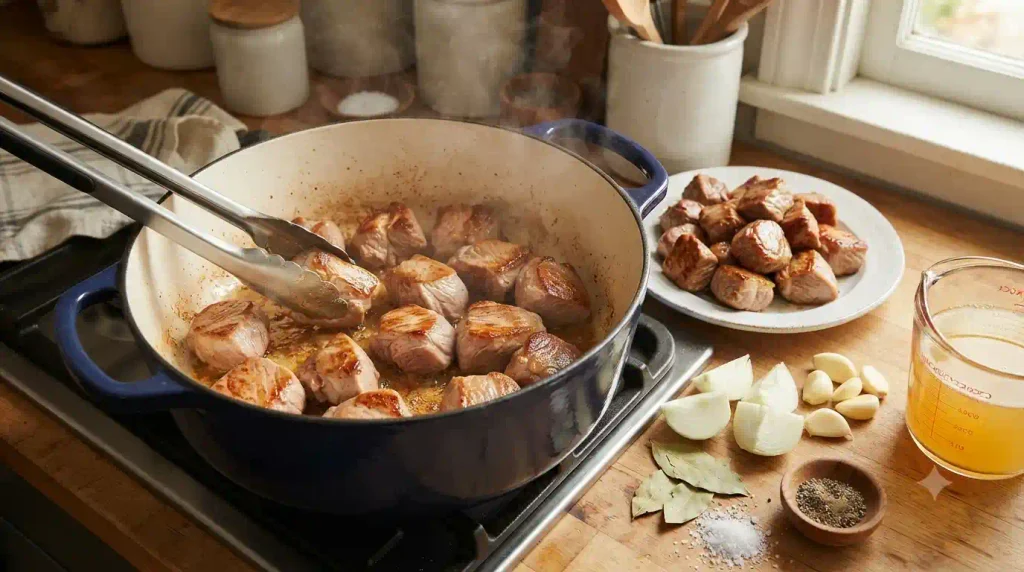
Pat the pork pieces dry with paper towels. Season them with 1 teaspoon salt and the black pepper.
Heat the oil in a large Dutch oven over medium-high heat. Working in batches, brown the pork for about 2–3 minutes per side. Avoid crowding the pot. Too much pork at once traps steam and prevents good browning.
Transfer each browned batch to a plate.
Return all the pork to the pot. Add the quartered onion, 5 garlic cloves, bay leaves, and chicken stock. The pork should be mostly covered; add a little water if necessary.
Bring the liquid just to a boil, then immediately lower it to a gentle simmer. Partially cover and cook for about 60 minutes.
A gentle simmer is important. A violently boiling pot can make the broth cloudy and may toughen the meat before it has time to become tender.
Step 2: Prepare the Dried Chiles
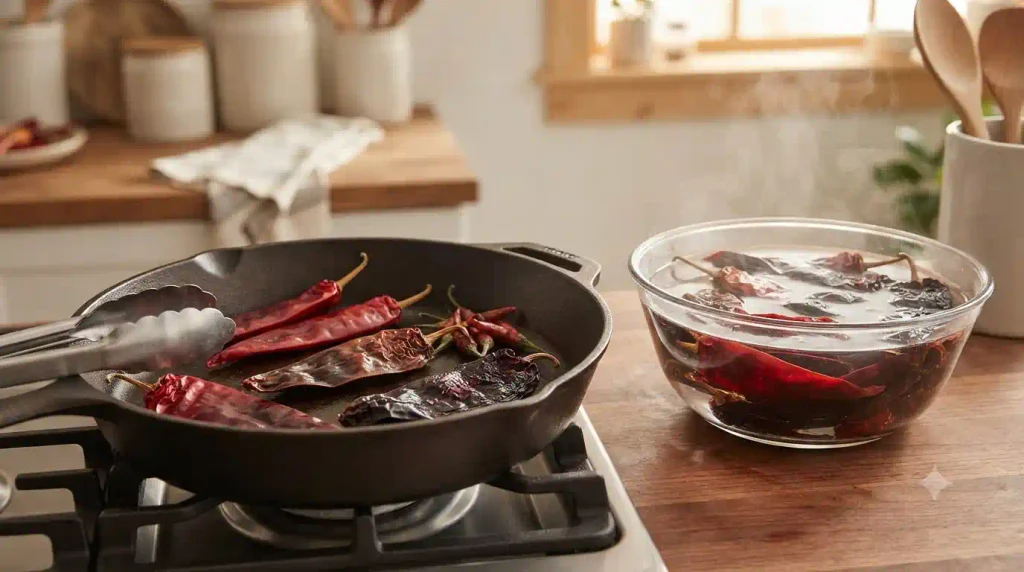
While the pork simmers, wipe the dried chiles clean. Remove the stems, open the chiles, and shake out the seeds.
Heat a dry skillet over medium-low heat. Toast the guajillo, ancho, and optional árbol chiles for roughly 10–15 seconds per side, just until fragrant.
Do not let them burn. Burnt dried chiles can turn bitter surprisingly quickly.
Transfer the toasted chiles to a saucepan or heatproof bowl and cover them with very hot water. Let them soak for 20–25 minutes, until completely soft and flexible.
This thorough soaking matters. Partially hydrated chile skins are much harder to puree smoothly.
Step 3: Blend and Strain the Red Sauce
Drain the softened chiles and discard their soaking water.
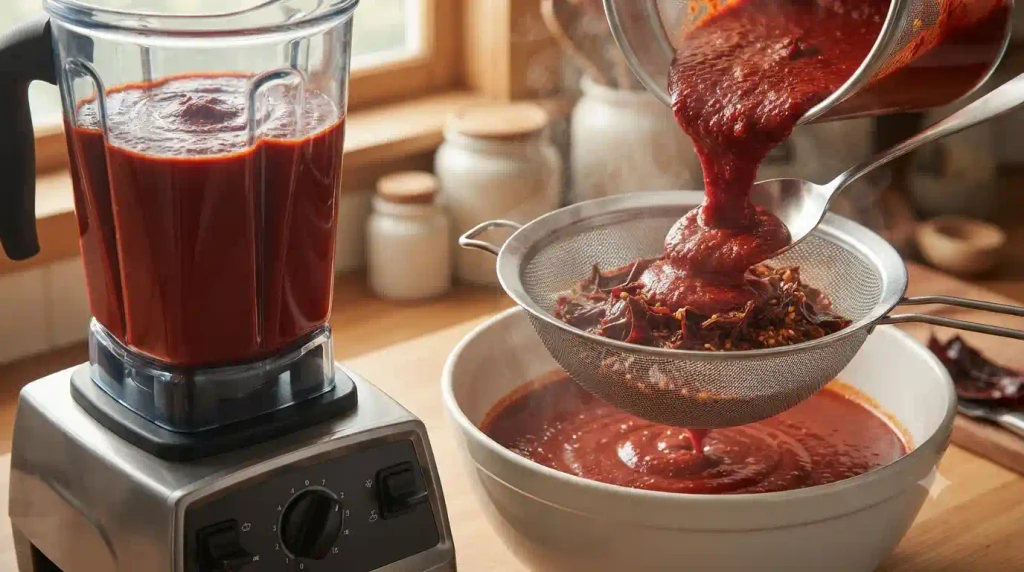
Place the chiles in a blender with 2 garlic cloves, ¼ onion, ½ teaspoon salt, and 2 cups hot broth from the pork pot.
Secure the blender lid carefully. When blending hot liquid, never overfill the blender and allow steam to escape according to your blender manufacturer’s instructions.
Blend on high for 1–2 full minutes. The sauce should look remarkably smooth.
Now pour the puree through a fine-mesh sieve positioned over a bowl. Use the back of a spoon to gently press the liquid through.
Discard the dry chile skins, seeds, and fibrous material remaining in the sieve.
Don’t skip this step. This is what separates a pleasantly rustic broth from one that feels gritty on your tongue.
Step 4: Build the Red Pozole Broth
Remove the cooked onion quarters and bay leaves from the pork pot.
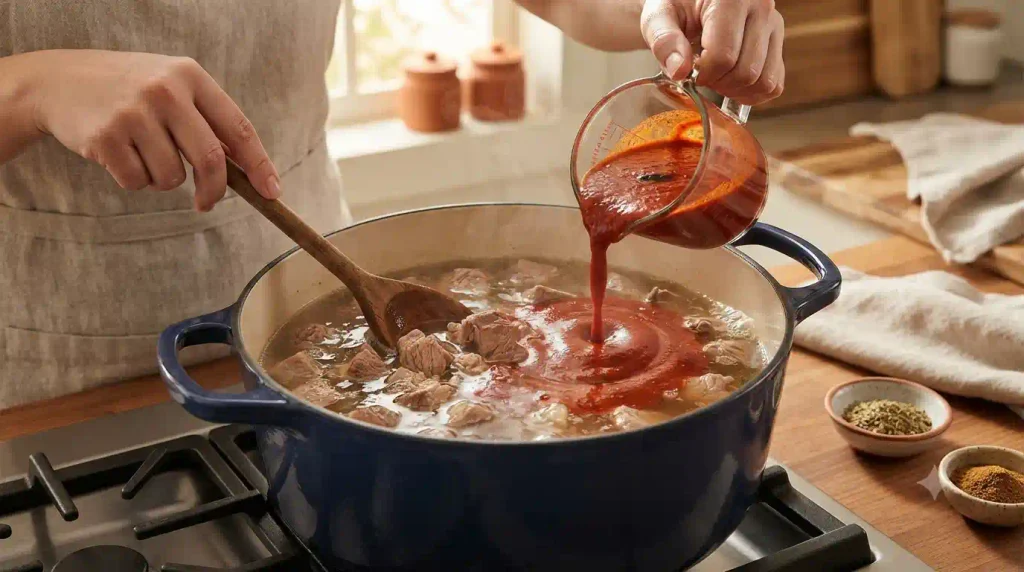
Pour the strained red chile sauce into the broth. Add the Mexican oregano, cumin, and remaining ½ teaspoon salt.
Stir thoroughly and return the pot to a gentle simmer.
Cook uncovered for about 20 minutes. This gives the chile puree time to lose its raw edge and meld with the pork broth.
Taste carefully. If the broth tastes flat, add a small pinch of salt at a time. If it feels too concentrated, add ½–1 cup water or stock.
Step 5: Add the Hominy and Finish Cooking
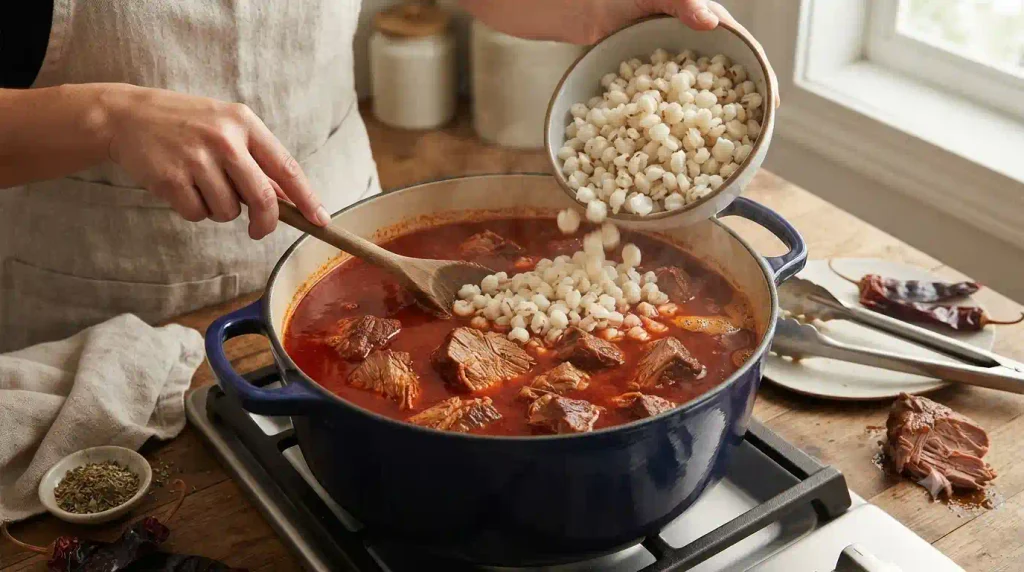
Drain and thoroughly rinse the hominy before adding it to the pot.
Stir in the hominy and simmer everything together for another 25–35 minutes, or until the pork easily separates when pressed with a fork.
Keep the heat gentle rather than boiling aggressively.
Before serving, check the pork for doneness. For food safety, whole cuts of pork are considered safe at a minimum internal temperature of 145°F (63°C) followed by a 3-minute rest, but pork shoulder used in pozole is normally cooked considerably longer so its connective tissue becomes tender.
Taste the broth one final time and adjust the salt if necessary.
Step 6: Garnish and Serve
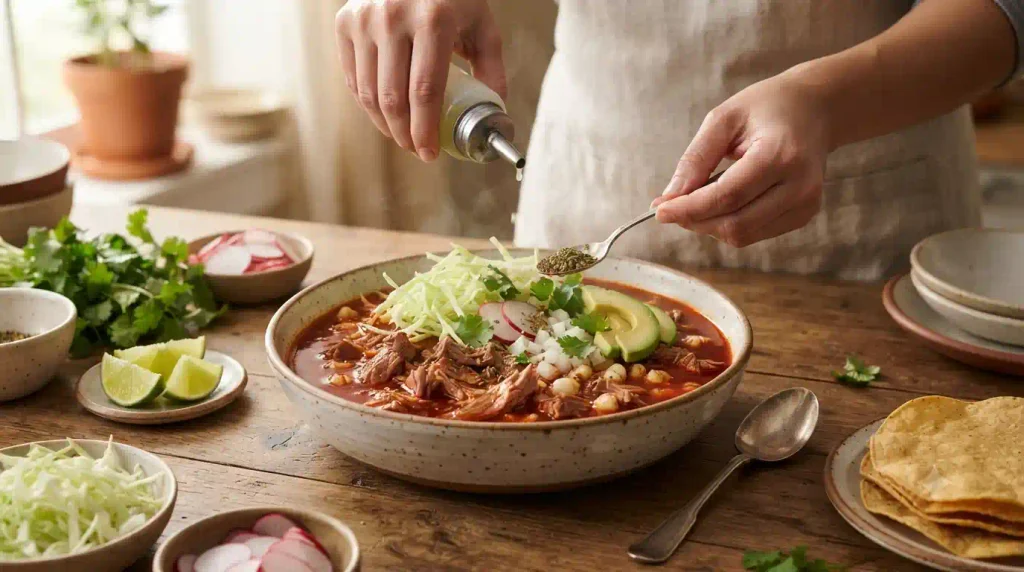
Ladle the steaming pozole into wide bowls, making sure every serving receives plenty of pork, hominy, and red broth.
Set out the toppings and let everyone finish their own bowl with:
- Shredded cabbage
- Thinly sliced radishes
- Diced white onion
- Fresh cilantro
- Avocado
- Mexican oregano
- Fresh lime juice
I like to squeeze the lime over the bowl at the very end. That little hit of acidity wakes up the slow-cooked chile broth immediately.
Serve with crunchy tostadas or warm corn tortillas.
Health Benefits
Pozole is hearty comfort food, but it also contains several nutritionally useful ingredients.
Protein: Pork shoulder supplies substantial protein, which supports muscle maintenance and helps make the meal filling.
Iron and vitamin B12: Pork provides several B vitamins as well as minerals including iron and zinc.
Carbohydrates: Hominy supplies carbohydrates that provide energy, along with some dietary fiber.
Vitamin C and plant compounds: Cabbage, radishes, fresh lime, and chiles contribute vitamins and naturally occurring plant compounds.
Balanced toppings: Using plenty of cabbage, radish, cilantro, and lime adds volume, texture, and freshness without needing heavy toppings.
Pork shoulder can contain significant fat, so portion size matters if you’re monitoring saturated fat or total calories. You can also refrigerate the finished pozole and remove hardened fat from the surface before reheating.
Nutrition Information (Per Serving)
The following values are estimates for one of eight servings and will vary with the exact pork, stock, hominy brands, portion sizes, and toppings used.
| Nutrient | Approximate Amount |
|---|---|
| Calories | 470 kcal |
| Protein | 34 g |
| Fat | 23 g |
| Carbohydrates | 32 g |
Optional avocado, tostadas, tortillas, and other garnishes will increase the final calorie and macronutrient totals.
Pro Tips & Variations
- Soak the chiles until truly soft. If they still feel leathery, give them another 5–10 minutes in hot water.
- Blend longer than you think. A quick 20-second blend isn’t enough for dried chile skins. Give the sauce a solid 1–2 minutes.
- Always strain the chile puree. For an especially silky broth, use a fine-mesh sieve rather than a standard colander.
- Don’t use the chile soaking water automatically. It can sometimes carry bitter flavors. Fresh pork broth gives you better control.
- Keep the soup at a gentle simmer. Hard boiling can cloud the broth and rapidly reduce the liquid.
- Make it milder: Leave out the árbol chiles. Guajillo and ancho provide plenty of flavor without aggressive heat.
- Make it hotter: Add another árbol chile or serve chile flakes or hot sauce separately.
- Use bone-in pork: Bone-in shoulder or pork neck can create an even richer broth. Remove the bones carefully before serving.
- Reduce excess fat: Make the pozole a day ahead, refrigerate it, then lift off some of the solidified fat before reheating.
- Don’t rush the pork: If it’s still chewy at the suggested time, it probably needs longer. Pork shoulder becomes tender through extended cooking.
- Make it ahead: Pozole often tastes even more cohesive the next day after the chile, pork, garlic, and oregano have had time to mingle.
How to Store Leftover Pozole
Cool leftovers promptly and transfer them to airtight containers. Refrigerate within 2 hours of cooking and use within 3–4 days.
Reheat leftovers until they are thoroughly steaming hot. The broth may thicken slightly in the refrigerator, so add a splash of stock or water while reheating if needed.
For the best texture, keep fresh cabbage, radishes, cilantro, avocado, and lime separate from the soup until serving.
How Much Does It Cost to Make?
Prices vary considerably by location, store, season, and brand, but this is a reasonable rough U.S. grocery estimate for planning purposes.
| Ingredient Group | Estimated Cost |
|---|---|
| 3 lb pork shoulder | $10–$14 |
| Hominy | $4–$6 |
| Dried chiles | $3–$5 |
| Stock | $3–$5 |
| Onion, garlic & seasonings | $2–$3 |
| Fresh garnishes & limes | $5–$7 |
| Estimated Total | $27–$40 |
| Approx. Cost Per Serving | $3.40–$5.00 |
Buying dried chiles and spices in larger packages can lower the effective cost because you’ll have plenty left for future meals. Using water or homemade stock instead of packaged stock can also trim the total.
Frequently Asked Questions
Why does my pozole broth taste gritty?
The most common culprit is tiny pieces of dried chile skin or seeds left in the chile puree. Soak your dried chiles until completely soft, blend them thoroughly with enough liquid, and pass the puree through a fine-mesh sieve before adding it to the soup.
If you already have gritty pozole, carefully strain some or all of the broth through a fine sieve and return the pork and hominy to the strained liquid.
What is the difference between pozole rojo and pozole blanco?
Pozole blanco relies primarily on the flavor of the meat, hominy, aromatics, and broth. Pozole rojo gets its characteristic red color and deeper chile flavor from a dried red chile sauce, commonly made with chiles such as guajillo and ancho.
Recipes vary considerably by region and household, so there isn’t one universal formula.
Can I make red pork pozole ahead of time?
Yes. In fact, it’s an excellent make-ahead meal.
Prepare the soup, cool it promptly, and refrigerate it in an airtight container. The flavors often taste even more integrated the following day. Reheat the amount you need and prepare the fresh toppings just before serving.
Can I freeze pork pozole?
Yes. The pork, hominy, and broth freeze well.
Allow the pozole to cool, portion it into freezer-safe containers, leave a little room for expansion, and freeze. For best quality, aim to use it within about 2–3 months.
Thaw frozen pozole safely in the refrigerator before reheating. Add fresh cabbage, radishes, cilantro, avocado, and lime only after the soup has been reheated.
Final Thoughts
A memorable red pork pozole doesn’t need an endless ingredient list. The real difference comes from treating a few important ingredients properly.
Give the pork enough time to become tender, soften the dried chiles completely, blend the sauce thoroughly, and strain that chile puree before it reaches your soup. That small extra step is the secret to the smooth, velvety red broth we’re after.
Then comes the fun part: pile your bowl with crisp cabbage and radishes, scatter over some onion and cilantro, and finish with a generous squeeze of lime. Serve it while it’s piping hot, put the toppings in the middle of the table, and let everyone build the bowl they want.