

There’s something deeply satisfying about pulling a bubbling casserole from the oven, especially when you’re craving sushi but don’t feel like carefully rolling individual pieces. This crab sushi bake brings those familiar creamy, savory, slightly spicy sushi flavors into one warm, scoopable dish. The golden top, tender seasoned rice, and rich crab filling make it especially hard to resist straight from the oven.
I love this recipe for busy evenings because it looks impressive without demanding restaurant-level skills. You simply layer seasoned sushi rice with a creamy crab mixture, bake until hot, then finish it with fresh toppings. Serve it with crisp nori sheets and everyone can build their own perfect bite.
Prep & Cook Time
| Details | Time / Amount |
|---|---|
| Prep Time | 20 minutes |
| Cook Time | 20 minutes |
| Total Time | 40 minutes |
| Servings | 8 |
| Oven Temperature | 400°F / 200°C |
The timing assumes your rice is already cooked. If you’re starting with uncooked rice, allow roughly 20–25 extra minutes, depending on your rice cooker or stovetop method.
What Equipment Do You Need?
You don’t need any specialist sushi equipment for this recipe. A few everyday kitchen tools will do the job:
- 8 × 8-inch baking dish or similar 2-quart casserole dish
- Medium mixing bowl
- Rice cooker or medium saucepan with lid
- Measuring cups and spoons
- Silicone spatula or wooden spoon
- Fork
- Small bowl for seasoning the rice
- Sharp knife and cutting board
- Oven mitts
- Serving spoon
Chef’s note: A ceramic or glass baking dish works beautifully because you can easily see those distinct rice and crab layers when serving.
Ingredients
For the Sushi Rice
- 3 cups cooked short-grain sushi rice, warm
- 3 tablespoons rice vinegar
- 1 tablespoon granulated sugar
- 1 teaspoon fine sea salt
- 2 tablespoons furikake, divided
For the Creamy Crab Filling
- 12 oz (340 g) imitation crab meat, shredded or finely chopped
- 4 oz (115 g) cream cheese, softened
- ⅓ cup Japanese mayonnaise, such as Kewpie
- 2 tablespoons sriracha
- 1 teaspoon soy sauce
- 1 teaspoon toasted sesame oil
- 2 green onions, thinly sliced
For the Topping
- 2 tablespoons Japanese mayonnaise
- 1 tablespoon sriracha, or to taste
- ½ medium avocado, diced or thinly sliced
- 1 teaspoon toasted sesame seeds
- 1 green onion, thinly sliced
- Nori sheets, cut into small rectangles, for serving
Optional extras: diced cucumber, masago, tobiko, pickled ginger, extra furikake, or a drizzle of unagi sauce.
Why Each Ingredient Matters
A good sushi bake isn’t just about throwing seafood and mayonnaise over rice. Each ingredient has a job.
| Ingredient | Why It Matters |
|---|---|
| Sushi rice | Short-grain rice contains enough starch to become pleasantly sticky, helping each scoop hold together. |
| Rice vinegar | Adds the signature mild acidity associated with seasoned sushi rice and cuts through the rich topping. |
| Sugar | Softens the sharpness of the vinegar and creates the familiar sweet-savory sushi rice balance. |
| Furikake | Adds seaweed, sesame, saltiness, and umami between the layers. |
| Imitation crab | Provides mild sweetness and a tender texture while keeping the recipe affordable and accessible. |
| Cream cheese | Gives the filling body and helps create that rich, creamy baked texture. |
| Japanese mayonnaise | Adds richness and gentle tang. Kewpie is particularly creamy because it is traditionally made primarily with egg yolks. |
| Sriracha | Cuts through the creamy ingredients with acidity, garlic flavor, and moderate heat. |
| Soy sauce | Supplies saltiness and savory umami, so a small amount goes a long way. |
| Sesame oil | Adds a nutty, toasted aroma. Use it sparingly because its flavor is concentrated. |
| Green onions | Bring freshness and mild onion flavor to an otherwise rich filling. |
| Avocado | Adds cool, buttery contrast once the hot casserole leaves the oven. |
| Nori | Provides the unmistakable roasted-seaweed flavor and turns each scoop into a handheld sushi-style bite. |
Step-by-Step Instructions
Step 1: Season the Sushi Rice
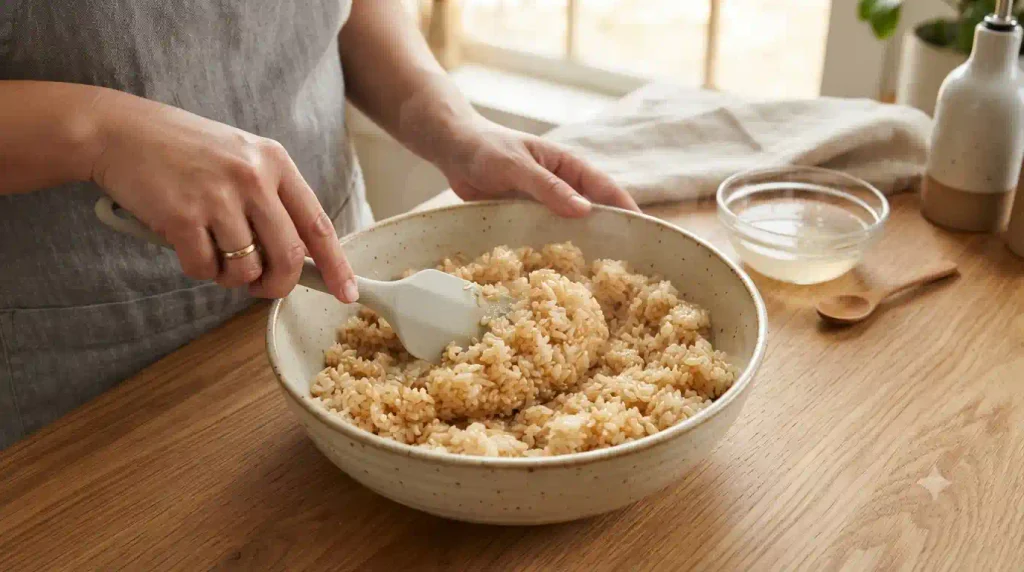
Preheat your oven to 400°F (200°C).
Place 3 cups warm cooked sushi rice in a wide bowl. In a small bowl, stir together the rice vinegar, sugar, and salt until the sugar has mostly dissolved.
Drizzle this mixture evenly over the warm rice. Fold gently with a spatula rather than vigorously stirring.
You want the grains seasoned without turning them into paste. Don’t worry if the rice feels especially sticky—that stickiness helps create a sturdy base for the casserole.
Let it cool for about 5 minutes while you prepare the crab.
Step 2: Make the Creamy Crab Mixture
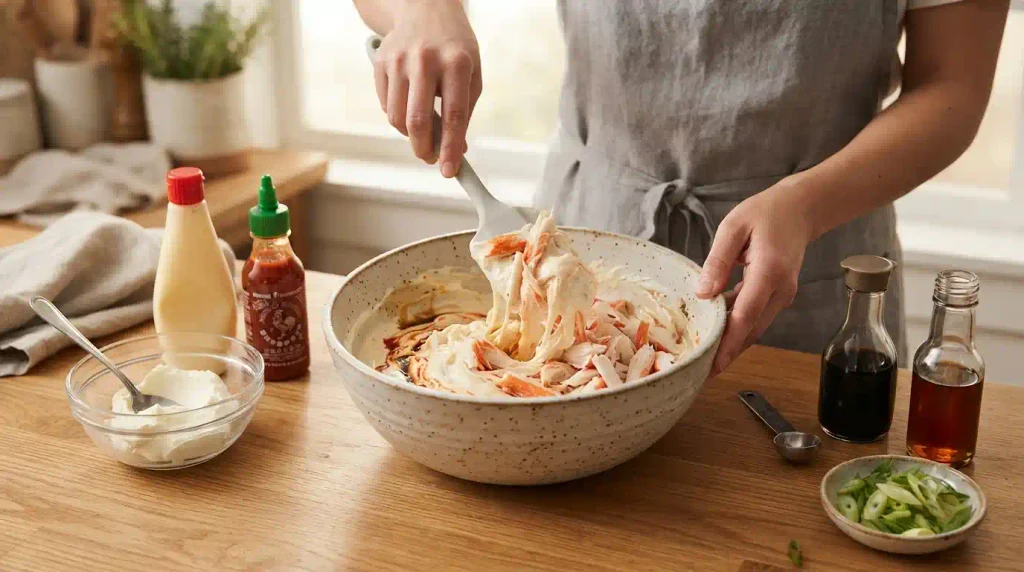
Shred the imitation crab using clean fingers or two forks. You can also chop it with a knife if you prefer smaller pieces.
Add it to a mixing bowl with:
- 4 oz softened cream cheese
- ⅓ cup Japanese mayonnaise
- 2 tablespoons sriracha
- 1 teaspoon soy sauce
- 1 teaspoon toasted sesame oil
- 2 sliced green onions
Fold everything together until the crab is evenly coated.
The mixture should be creamy enough to spread but still have visible pieces of crab. Avoid aggressively mashing it into a completely smooth paste.
Taste before adding extra soy sauce. Furikake and soy sauce already provide plenty of saltiness.
Step 3: Build the Rice Layer
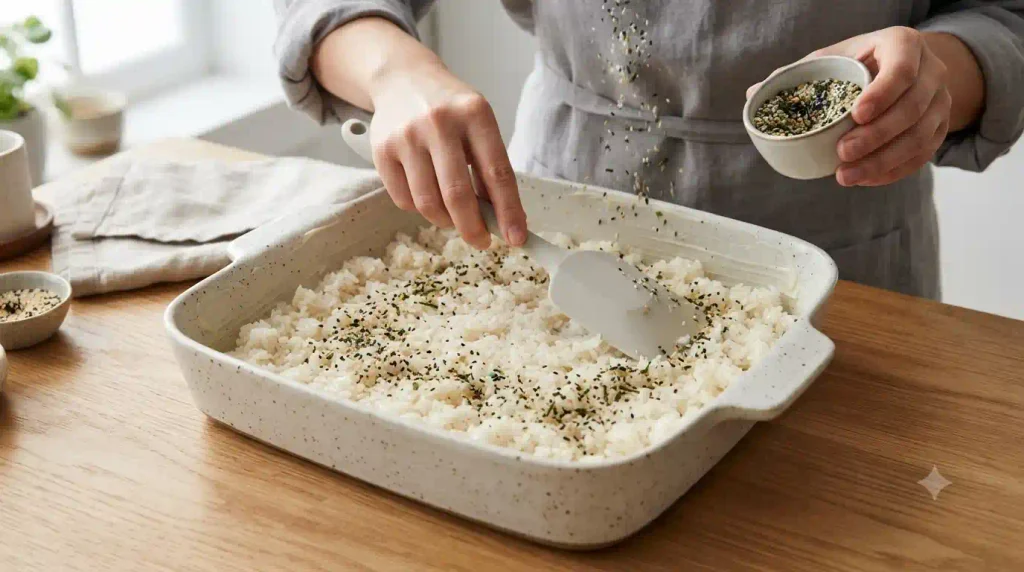
Lightly grease your 8 × 8-inch baking dish.
Transfer the seasoned rice into the dish and spread it evenly from corner to corner.
Using a damp spatula or the back of a spoon, gently press the rice into an even layer.
Don’t pack it down as firmly as you would a cereal bar. Compressing it too much can make the finished rice layer heavy and dense.
Sprinkle approximately 1 tablespoon furikake evenly over the rice.
That little layer between the rice and crab makes a surprisingly big difference in flavor.
Step 4: Add the Crab Topping
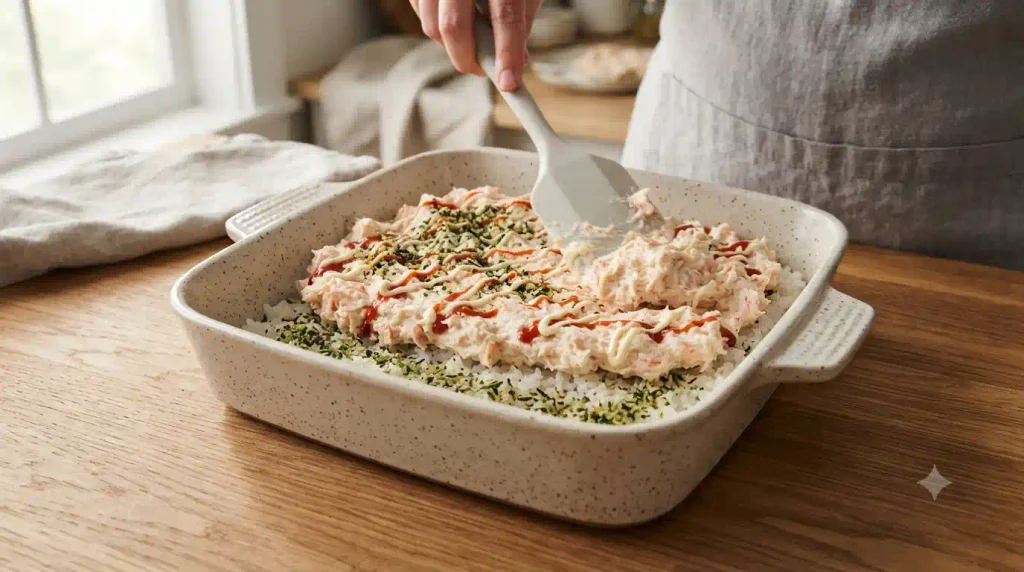
Spoon the creamy crab mixture over the seasoned rice.
Spread it gently into an even layer, making sure the corners get some love too—those crispy edge portions often disappear first in my kitchen.
Sprinkle the remaining 1 tablespoon furikake across the top.
Drizzle with 2 tablespoons Japanese mayonnaise and approximately 1 tablespoon sriracha. Adjust the sriracha according to how spicy you want your bake.
Step 5: Bake Until Hot and Bubbly
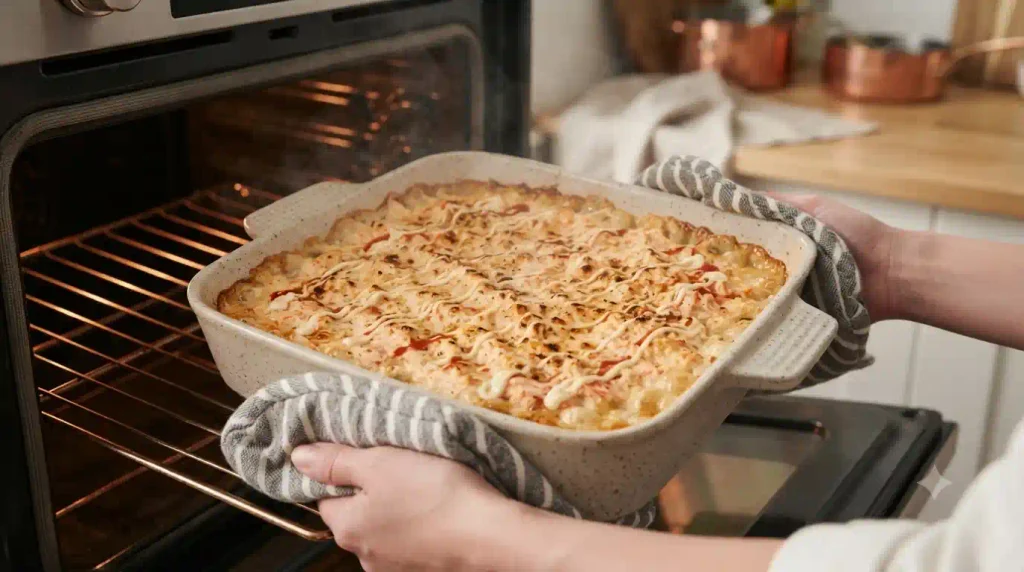
Place the baking dish on the center rack of your preheated oven.
Bake for 15–20 minutes, or until the crab layer is thoroughly heated and you can see gentle bubbling around the edges.
For a lightly browned surface, switch the oven to broil for the final 1–2 minutes.
Stay beside the oven while broiling. Mayonnaise-based toppings can brown very quickly, and there’s a frustratingly short distance between beautifully golden and burnt.
Carefully remove the dish using oven mitts and allow it to rest for about 5 minutes.
Step 6: Garnish and Serve
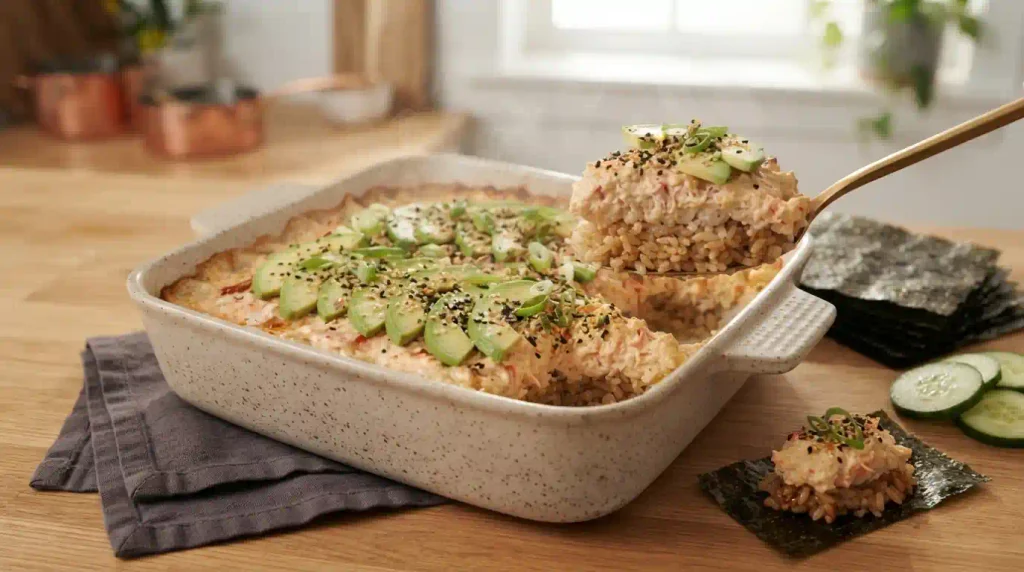
Add the avocado, sesame seeds, sliced green onion, and any additional furikake you like.
Serve while the sushi bake is still warm.
My favorite way to eat it is to spoon a small portion onto a crisp rectangle of nori and eat it immediately. The contrast between warm creamy crab, sticky rice, cool avocado, and crisp seaweed is exactly what makes this dish so satisfying.
For extra freshness, serve sliced cucumber alongside it.
Health Benefits
Sushi bake is definitely comfort food, but several ingredients still provide useful nutrients.
Crab or imitation crab provides protein. Protein supports muscle maintenance and helps make a meal more satisfying.
Avocado contributes unsaturated fats and fibre. Its creamy texture also means you can add richness without relying entirely on mayonnaise or cream cheese.
Sesame seeds provide minerals and healthy fats. Even a small sprinkle contributes flavor, so you don’t need much.
Nori provides micronutrients. Seaweed naturally contains several minerals, though iodine levels can vary considerably between products.
Green onions add freshness with very few calories. They’re an easy way to introduce more plant-based ingredients without changing the character of the dish.
One nutritional point worth remembering is sodium. Soy sauce, furikake, imitation crab, and mayonnaise can all contain significant amounts. Choose reduced-sodium soy sauce or use slightly less furikake if sodium is something you’re watching.
Nutrition Information (Per Serving)
The following values are approximate because brands of imitation crab, mayonnaise, furikake, and cream cheese vary.
| Nutrient | Approximate Amount |
|---|---|
| Calories | 370 kcal |
| Protein | 11 g |
| Fat | 19 g |
| Carbohydrates | 39 g |
Serving size: Approximately ⅛ of the prepared sushi bake.
Nutrition estimates don’t include additional nori, sauces, or optional toppings.
Pro Tips & Variations
1. Don’t use long-grain rice if you can avoid it
Jasmine and basmati rice taste great, but they don’t provide the same sticky texture as Japanese short-grain rice. Sushi rice is worth buying for this recipe.
2. Season rice while it’s warm
Warm rice absorbs the vinegar mixture more evenly. Just remember to fold rather than mash.
3. Keep the crab slightly chunky
Some texture makes the finished bake much more interesting. Shredding the crab too finely can make the topping feel pasty.
4. Make it less spicy
Reduce the sriracha in the crab mixture to 1 teaspoon to 1 tablespoon and skip the spicy drizzle.
5. Turn up the heat
Add extra sriracha, a small spoonful of chili crisp, or thinly sliced fresh jalapeño after baking.
6. Try real crab
You can replace imitation crab with an equal amount of cooked lump crab meat. Drain it well and gently check for any shell fragments before mixing.
7. Make a salmon version
Swap some or all of the crab for fully cooked, flaked salmon.
Avoid placing raw salmon into a recipe designed around already-cooked crab unless you adjust the cooking process to ensure the fish reaches a safe internal temperature.
8. Add cucumber after baking
Cucumber provides fantastic crunch, but baking it releases water. Add finely diced cucumber after the casserole comes out of the oven.
9. Don’t bake the avocado
Avocado tastes fresher and keeps its attractive color when added immediately before serving.
10. Add a crunchy finish
Try crushed tempura flakes or crispy fried onions immediately before serving. Don’t add them too early or they’ll soften.
11. Broil strategically
One or two minutes under the broiler creates those restaurant-style browned spots. Watch constantly because the surface can burn quickly.
12. Make individual portions
Divide the mixture among oven-safe ramekins and bake smaller individual sushi cups. They’re especially convenient for parties.
How Much Does It Cost to Make?
Prices vary by supermarket and location, but this recipe is considerably more budget-friendly than buying several restaurant sushi rolls.
Here’s a rough estimate based on typical U.S. grocery prices:
| Ingredient | Estimated Cost Used |
|---|---|
| Sushi rice | $1.25 |
| Imitation crab | $4.00 |
| Cream cheese | $1.25 |
| Japanese mayonnaise | $1.25 |
| Avocado | $1.00 |
| Furikake | $0.75 |
| Nori | $1.25 |
| Sriracha & soy sauce | $0.50 |
| Green onions & sesame seeds | $0.75 |
| Estimated Total | $12.00 |
For 8 servings, that works out to roughly $1.50 per serving, before optional toppings.
Using real lump crab will increase the price significantly, while buying rice, nori, and sauces in larger packages can reduce the cost per batch.
Frequently Asked Questions
Can I make crab sushi bake ahead of time?
Yes. You can assemble the seasoned rice and crab layers ahead of time, cover the dish tightly, and refrigerate it.
For best texture, add avocado, sesame seeds, green onions, and other fresh garnishes after baking.
If you’re baking the casserole directly from the refrigerator, it may need several additional minutes to become thoroughly hot in the center.
What is the best rice for sushi bake?
Japanese short-grain sushi rice is the best choice.
Its naturally sticky texture allows the base to stay together when you scoop it onto nori. Medium-grain rice can work in a pinch, but long-grain varieties won’t give you quite the same result.
Can I use real crab instead of imitation crab?
Absolutely.
Use cooked lump crab, claw meat, or another fully cooked crab meat. Drain excess liquid before combining it with the creamy ingredients.
Real crab produces a more delicate seafood flavor, while imitation crab is sweeter, inexpensive, and easy to find.
How do I store and reheat leftover sushi bake?
Let leftovers cool promptly, then transfer them to an airtight container and refrigerate. For food safety and best quality, refrigerate perishable leftovers within 2 hours of serving.
Reheat individual portions in the microwave until steaming hot throughout, or place the casserole in a 350°F (175°C) oven until thoroughly heated.
Store avocado and fresh cucumber separately whenever possible because their texture deteriorates during reheating.
Final Thoughts
This Crab Sushi Bake Recipe – Hot, Bubbly & Flavorful delivers the flavors people love about creamy sushi rolls without requiring you to master rolling, slicing, or shaping sushi.
The key is keeping the layers balanced: properly seasoned sticky rice, creamy but textured crab, plenty of umami, and something fresh and crunchy on top. Don’t skip the nori either—it transforms a simple scoop of casserole into a genuinely fun sushi-style bite.
And remember, home cooking doesn’t have to look perfect. A slightly uneven drizzle or messy first scoop won’t change how good it tastes. Bring the bubbling dish to the table, pass around the nori, and let everyone build their own bites.