

There’s something deeply satisfying about turning a few simple ingredients into a hot, comforting meal, especially when a craving hits and you want something better than plain scrambled eggs. This crab omelette is one of those recipes I make when I want breakfast to feel a little special without creating a mountain of dishes. It’s soft, savory, and packed with sweet crab in every bite.
The secret is keeping the eggs fluffy while using enough crab that the filling actually tastes generous. A little butter adds richness, scallions bring freshness, and gentle heat keeps the eggs tender instead of rubbery. It works beautifully for breakfast, brunch, or a quick protein-rich dinner.
Prep & Cook Time
| Details | Time / Amount |
|---|---|
| Prep Time | 10 minutes |
| Cook Time | 8 minutes |
| Total Time | 18 minutes |
| Servings | 2 |
This recipe makes one large omelette for two people, or you can divide the mixture and cook two smaller omelettes.
What Equipment Do You Need?
You don’t need any specialist equipment for this recipe. A good nonstick skillet makes the biggest difference.
- 10-inch nonstick skillet
- Medium mixing bowl
- Whisk or fork
- Silicone or flexible spatula
- Measuring spoons
- Cutting board
- Sharp knife
- Small bowl for checking the crab meat
Ingredients
- 4 large eggs
- 5 oz (140 g) cooked lump crab meat, drained and picked over
- 1 tablespoon whole milk
- 1 tablespoon unsalted butter, divided
- 2 scallions, thinly sliced
- 1 teaspoon soy sauce
- 1/4 teaspoon fine sea salt, or to taste
- 1/8 teaspoon ground white pepper
- 1 teaspoon fresh lemon juice
- 1 tablespoon chopped fresh parsley or chives
- 1 teaspoon neutral cooking oil, if needed for the skillet
Optional for Serving
- Lemon wedges
- Extra sliced scallions
- Chopped fresh herbs
- Hot sauce or chili crisp
Why Each Ingredient Matters
| Ingredient | Why It Matters |
|---|---|
| Eggs | Create the tender structure of the omelette and provide plenty of protein. |
| Crab meat | Gives the omelette its sweet, delicate seafood flavor and meaty filling. Lump crab provides particularly satisfying pieces. |
| Whole milk | A small amount loosens the egg mixture and helps create a softer texture. Too much can make the omelette watery. |
| Butter | Adds richness while helping the eggs cook without sticking. |
| Scallions | Their mild onion flavor cuts through the richness without overpowering the crab. |
| Soy sauce | Adds a small boost of savory umami. A teaspoon is enough—you don’t want to hide the crab’s natural sweetness. |
| White pepper | Provides gentle warmth without dominating the seafood. Black pepper works too. |
| Lemon juice | Acidity brightens the crab and balances the richness of the eggs and butter. |
| Fresh herbs | Add color, freshness, and a clean finish. |
The biggest rule here is don’t overload the eggs with liquid. Crab can already contain some moisture, particularly packaged crab meat. Drain it thoroughly before it goes anywhere near your skillet.
Step-by-Step Instructions
Step 1: Prepare the Crab Filling
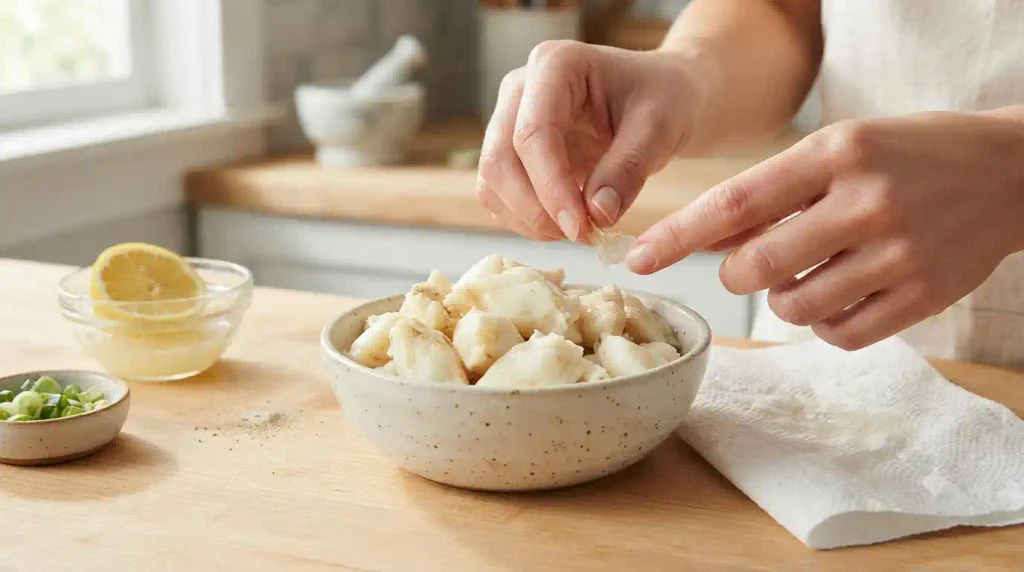
Place the 5 oz (140 g) cooked crab meat in a small bowl and gently pick through it with clean fingers or a fork.
Check carefully for any small pieces of shell or cartilage.
Pat the crab lightly with a paper towel if it seems wet. Add the lemon juice, half of the sliced scallions, and a small pinch of white pepper. Toss very gently.
Try not to shred those beautiful pieces of lump crab. Bigger pieces give you the meat-packed center we’re after.
Food safety note: Use properly refrigerated, fully cooked crab meat and keep it chilled until you’re ready to cook. Discard crab that has been left at room temperature for more than two hours.
Step 2: Whisk the Eggs

Crack 4 large eggs into a medium bowl.
Add:
- 1 tablespoon whole milk
- 1 teaspoon soy sauce
- 1/4 teaspoon sea salt
- Remaining white pepper
Whisk vigorously for about 30–45 seconds, until the yolks and whites are completely combined and the mixture looks slightly frothy.
Those tiny air bubbles help give the omelette a lighter texture.
You don’t need an electric mixer. A fork or ordinary whisk does the job perfectly well.
Step 3: Warm the Crab
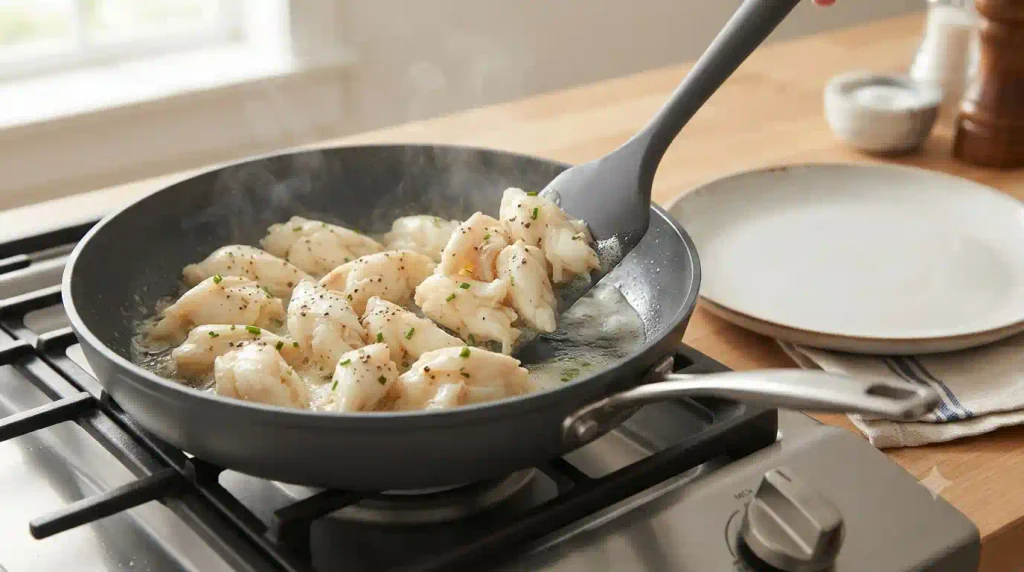
Place your nonstick skillet over medium-low heat and add about 1/2 tablespoon butter.
Once the butter has melted and begins to foam gently, add the seasoned crab.
Cook for only 30–60 seconds, gently turning it with your spatula.
The goal isn’t to fry the crab. You’re simply warming it so you don’t put refrigerator-cold filling into delicate eggs.
Transfer the warmed crab to a clean plate.
Step 4: Cook the Eggs Gently
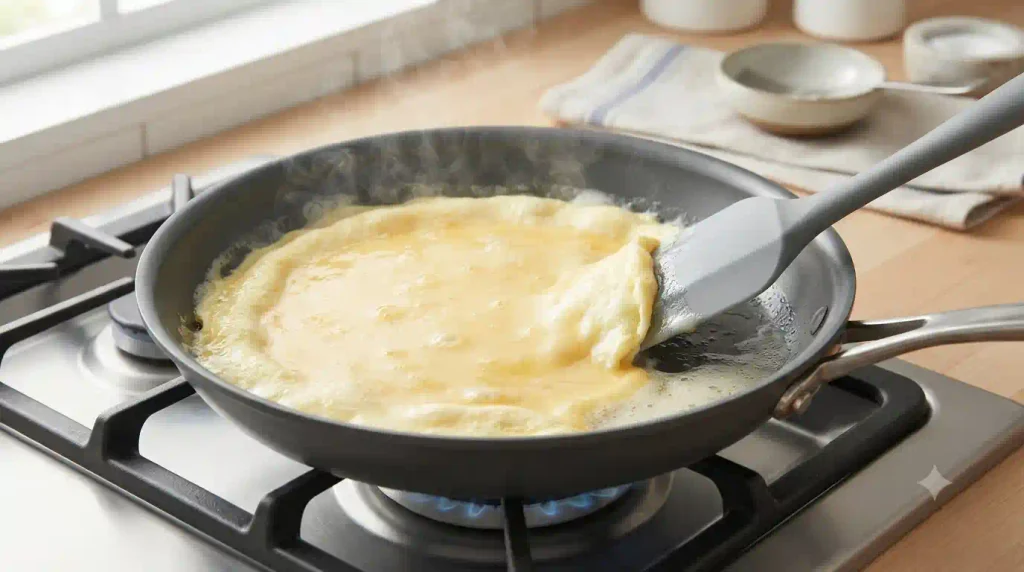
Return the skillet to medium-low heat and add the remaining 1/2 tablespoon butter. Add the teaspoon of neutral oil if your pan tends to stick.
Pour in the whisked eggs.
Allow them to sit untouched for about 15–20 seconds. Once you see the outer edges beginning to set, use your spatula to gently pull the cooked egg toward the center.
Tilt the skillet so uncooked egg flows into the empty spaces.
Repeat several times.
Don’t crank up the heat to save a minute. That’s usually how a fluffy omelette becomes brown and rubbery.
When the surface is mostly set but still looks slightly glossy, stop stirring.
Step 5: Add the Crab Filling
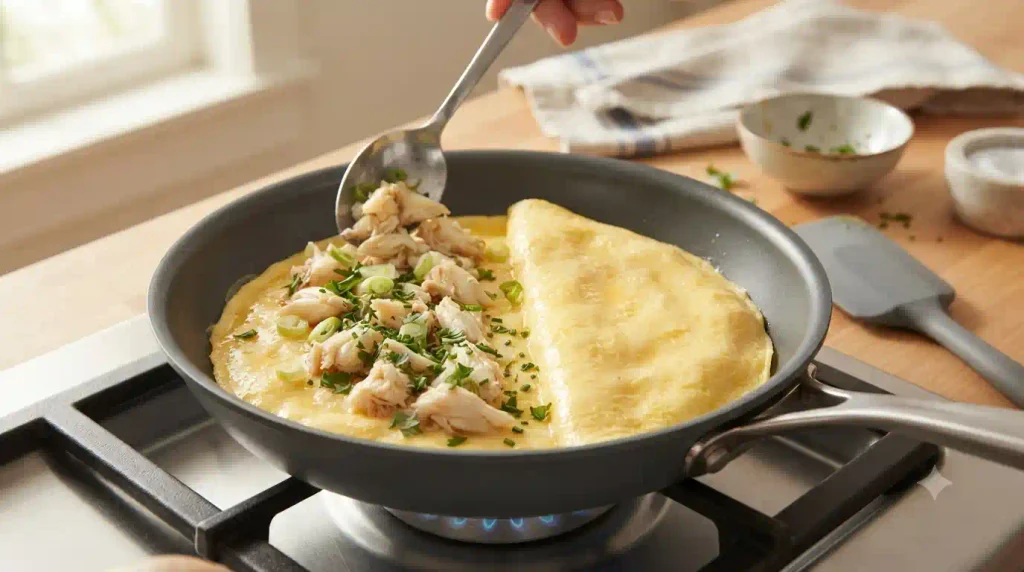
Spread the warmed crab over one half of the omelette, leaving a small border around the edge.
Scatter the remaining scallions and chopped parsley or chives over the crab.
Let everything cook for another 30–60 seconds over low heat.
The eggs should be cooked through but still soft and tender. If the bottom is browning rapidly before the top has set, your pan is too hot.
Use your spatula to loosen the edges.
Step 6: Fold and Serve

Carefully fold the unfilled half of the omelette over the crab.
Cook for another 20–30 seconds, then gently slide the omelette onto a warm serving plate.
Don’t worry if the fold isn’t restaurant-perfect. Mine occasionally develops a little crack where an ambitious piece of crab tries to escape, and it still tastes fantastic.
Finish with fresh herbs and scallions.
Serve immediately with lemon wedges, and add hot sauce or chili crisp if you enjoy some heat.
Health Benefits
This crab omelette isn’t just satisfying—it also provides several valuable nutrients.
High-quality protein: Both eggs and crab provide complete protein containing essential amino acids. Protein supports muscle maintenance, tissue repair, and satiety.
Vitamin B12: Crab is naturally rich in vitamin B12, an important nutrient involved in healthy red blood cell formation and normal nervous-system function.
Selenium: Eggs and crab provide selenium, an essential mineral that plays roles in thyroid function and antioxidant defense.
Choline: Eggs are an excellent dietary source of choline, which contributes to normal cell and nervous-system function.
Lower in carbohydrates: The basic recipe contains relatively few carbohydrates, making it easy to pair with toast, potatoes, fruit, or vegetables depending on your needs.
Keep in mind that soy sauce and some packaged crab products can contribute significant sodium. If you’re watching your sodium intake, choose reduced-sodium soy sauce and check the crab packaging.
Nutrition Information (Per Serving)
Approximate values for 1/2 of the recipe:
| Nutrient | Amount |
|---|---|
| Calories | ~300 kcal |
| Protein | ~30 g |
| Fat | ~19 g |
| Carbohydrates | ~3 g |
Note: Nutrition values are estimates. Actual numbers will vary depending on the type of crab, egg size, butter, soy sauce, and optional toppings used.
Pro Tips & Variations
Chef Tips for a Fluffy Crab Omelette
- Drain the crab thoroughly. Excess water can make the omelette wet instead of fluffy.
- Use medium-low heat. Eggs are delicate proteins. High heat makes them contract quickly, which can create a tougher texture.
- Don’t overcook the eggs. Remove the omelette when it’s just cooked through and still tender.
- Warm the crab briefly. Long cooking can dry out already-cooked crab.
- Use lump crab when possible. Large pieces create a much more satisfying filling.
- Have everything ready before cooking. Omelettes move quickly once the eggs hit the skillet.
- Use a flexible spatula. It makes folding and transferring the omelette much easier.
Cheesy Crab Omelette
Add 1/4 cup shredded Gruyère, cheddar, Monterey Jack, or mozzarella over the crab before folding.
Choose a mild cheese if you want the crab to remain the star.
Spicy Crab Omelette
Add 1/4 teaspoon red pepper flakes, a finely chopped fresh chili, or a drizzle of chili crisp.
Herb and Crab Omelette
Fresh chives, parsley, dill, or cilantro all work. Dill is particularly good if you’re serving the omelette with lemon.
Vegetable Crab Omelette
Add a small amount of finely chopped:
- Bell pepper
- Spinach
- Mushrooms
- Asparagus
Cook watery vegetables before adding them. Raw mushrooms or spinach can release moisture directly into your omelette.
Dairy-Free Version
Replace butter with olive oil or another neutral cooking oil and either omit the milk or use a small amount of unsweetened dairy-free milk.
No Soy Sauce?
Simply leave it out and season with an additional small pinch of salt.
How Much Does It Cost to Make?
Crab is the main expense, so the total depends heavily on the variety and whether you’re using fresh, refrigerated, canned, or pasteurized crab.
Here is a rough U.S. home-kitchen estimate:
| Ingredient | Estimated Cost |
|---|---|
| 4 large eggs | $1.25–$2.00 |
| 5 oz lump crab meat | $6.00–$10.00 |
| Butter and milk | $0.40–$0.60 |
| Scallions | $0.30–$0.50 |
| Lemon | $0.25–$0.50 |
| Herbs and seasonings | $0.30–$0.60 |
| Estimated Total | $8.50–$14.20 |
| Approx. Cost Per Serving | $4.25–$7.10 |
Prices vary considerably by location and crab variety.
For a more budget-friendly version, use good-quality canned crab meat. Just drain it extremely well before cooking.
Frequently Asked Questions
Can I use canned crab meat for a crab omelette?
Yes. Canned crab works well and can make this recipe considerably more affordable.
Drain it thoroughly, then gently press away excess moisture with paper towels. Check for shell fragments before adding it to your omelette.
Avoid aggressively squeezing the crab because you’ll lose both texture and flavor.
How do you keep a crab omelette fluffy?
Use medium-low heat, whisk the eggs until slightly frothy, and avoid overcooking.
A common mistake is turning the heat up because the eggs appear to be cooking slowly. Give them time.
Egg proteins continue cooking from residual heat even after the omelette leaves the skillet, so taking it off the heat promptly helps keep it tender.
What cheese goes best with a crab omelette?
Mild cheeses tend to work best because crab has a delicate flavor.
Good choices include:
- Gruyère
- Monterey Jack
- Mild cheddar
- Mozzarella
- Swiss cheese
Use cheese sparingly. Around 1/4 cup for this recipe is plenty.
Can I make a crab omelette with leftover crab?
Yes, provided the crab was properly cooked, promptly refrigerated, and safely stored.
Keep cooked crab refrigerated at 40°F (4°C) or below and follow the storage guidance for the specific product you’re using. If the crab smells unpleasant, has an unusual texture, or you’re unsure how long it has been sitting out, don’t use it.
Final Thoughts
A good crab omelette doesn’t need a complicated ingredient list. The magic comes from sweet pieces of crab, gently cooked eggs, fresh scallions, butter, and just enough seasoning to bring everything together.
Keep your skillet at moderate heat, drain the crab well, and don’t chase a perfectly shaped restaurant omelette. A slightly messy fold filled with juicy chunks of crab is exactly the kind of breakfast worth making again.
Serve it hot with lemon, toast, crispy potatoes, or a simple green salad, and you’ve got an easy meal that feels far more luxurious than the effort involved.