

There’s something deeply satisfying about making sausage in your own kitchen. Maybe it’s the smell of garlic and smoky spices hitting the hot skillet, or simply knowing exactly what went into every bite. If you love the bold, peppery flavor of Cajun-style andouille but want to skip the pork, this homemade chicken version hits the spot.
The biggest challenge with chicken sausage is keeping it juicy. Chicken is naturally leaner than traditional pork andouille, so the right balance of fat, moisture, seasoning, and cooking temperature matters. This recipe uses simple grocery-store ingredients and a few chef-tested tricks to produce smoky, tender sausage with beautifully browned edges.
Chicken Andouille Sausage Recipe That’s Juicy & Pork-Free
This homemade chicken andouille sausage packs plenty of smoky Cajun flavor without relying on pork. You don’t need sausage casings or special equipment, either. Shape the seasoned chicken into patties or small sausage-shaped links and cook them right in a skillet.
It works beautifully with jambalaya, gumbo, red beans and rice, pasta, breakfast dishes, or a simple plate of roasted vegetables.
Prep & Cook Time
| Details | Time / Amount |
|---|---|
| Prep Time | 15 minutes |
| Chilling Time | 20 minutes |
| Cook Time | 12–15 minutes |
| Total Time | About 50 minutes |
| Servings | 6 |
| Yield | About 12 small sausages |
What Equipment Do You Need?
You don’t need a sausage stuffer for this recipe. Keep things simple with:
- Large mixing bowl
- Measuring spoons and cups
- Cutting board
- Sharp knife
- Garlic press or fine grater
- Large skillet, preferably cast iron or heavy-bottomed
- Tongs or spatula
- Instant-read meat thermometer
- Baking parchment or a clean plate for shaped sausages
Chef’s note: A meat thermometer is particularly useful here. Ground chicken can go from juicy to dry quickly, so cooking by temperature instead of guesswork makes a noticeable difference.
Ingredients
For approximately 12 small sausages:
- 1½ lb (680 g) ground chicken, preferably 90–93% lean
- 2 tablespoons olive oil
- 3 garlic cloves, finely minced
- 2 teaspoons smoked paprika
- 1 teaspoon sweet paprika
- 1 teaspoon dried thyme
- 1 teaspoon dried oregano
- 1 teaspoon onion powder
- ¾ teaspoon freshly ground black pepper
- ½ teaspoon cayenne pepper, or less for milder sausage
- ½ teaspoon crushed red pepper flakes
- 1¼ teaspoons kosher salt
- 1 teaspoon brown sugar
- 1 teaspoon Dijon mustard
- 1 tablespoon Worcestershire sauce
- 1 tablespoon cold water
- 1 teaspoon olive oil, for cooking
Important: Some Worcestershire sauces contain anchovies. If that matters for your diet, choose an appropriate alternative and check the label.
Why Each Ingredient Matters
Homemade sausage is more than ground meat mixed with random seasonings. Each ingredient has a job.
| Ingredient | Why It’s Used |
|---|---|
| Ground chicken | Creates a lighter, pork-free base while still providing plenty of protein. |
| Olive oil | Adds much-needed fat so lean chicken stays moist instead of becoming rubbery. |
| Smoked paprika | Provides deep smoky character associated with andouille-style sausage. |
| Sweet paprika | Builds pepper flavor and gives the sausage a richer reddish color. |
| Garlic | Adds the savory punch expected from Cajun-inspired sausage. |
| Thyme & oregano | Bring earthy herbal notes that balance the stronger spices. |
| Cayenne | Supplies clean, lingering heat. |
| Red pepper flakes | Add another layer of peppery heat and texture. |
| Black pepper | Gives the sausage its sharp, savory backbone. |
| Salt | Seasons the chicken and helps the meat mixture bind together. |
| Brown sugar | A small amount rounds out the smoke and heat without making the sausage sweet. |
| Dijon mustard | Adds acidity and subtle sharpness. |
| Worcestershire sauce | Brings savory umami and complexity. |
| Cold water | Adds moisture and helps distribute the seasonings evenly. |
The olive oil is especially important. Traditional andouille gets plenty of richness from pork fat. Lean ground chicken doesn’t have that luxury, so adding a measured amount of fat gives you a much more succulent result.
Step-by-Step Instructions
Step 1: Build the Andouille Seasoning
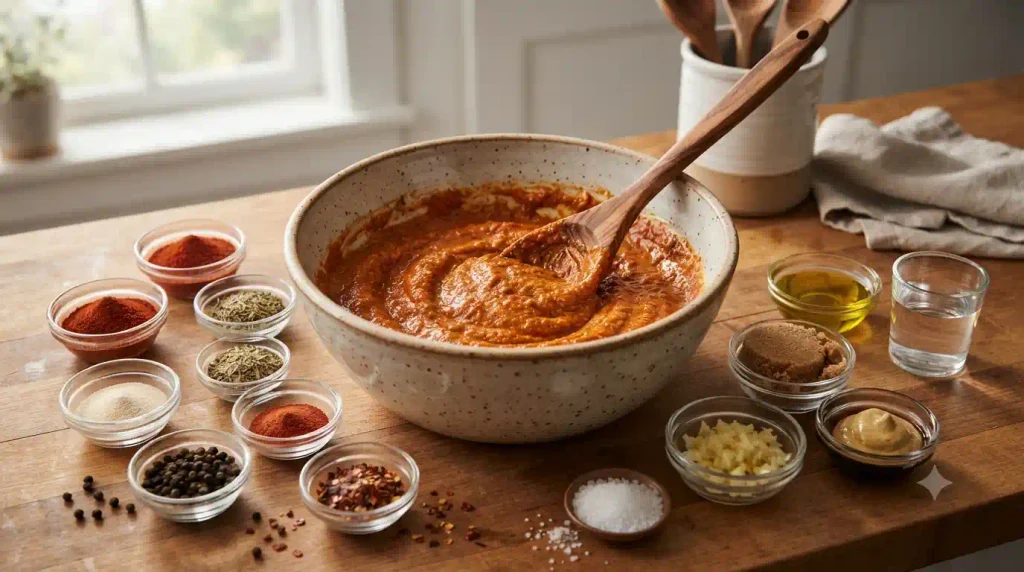
Add the smoked paprika, sweet paprika, thyme, oregano, onion powder, black pepper, cayenne, red pepper flakes, kosher salt, and brown sugar to a large mixing bowl.
Stir the spices together before adding the chicken. This tiny step prevents pockets of cayenne or salt from ending up in one sausage.
Add the minced garlic, Dijon mustard, Worcestershire sauce, olive oil, and cold water. Stir until you have a thick, fragrant seasoning paste.
Step 2: Mix in the Chicken
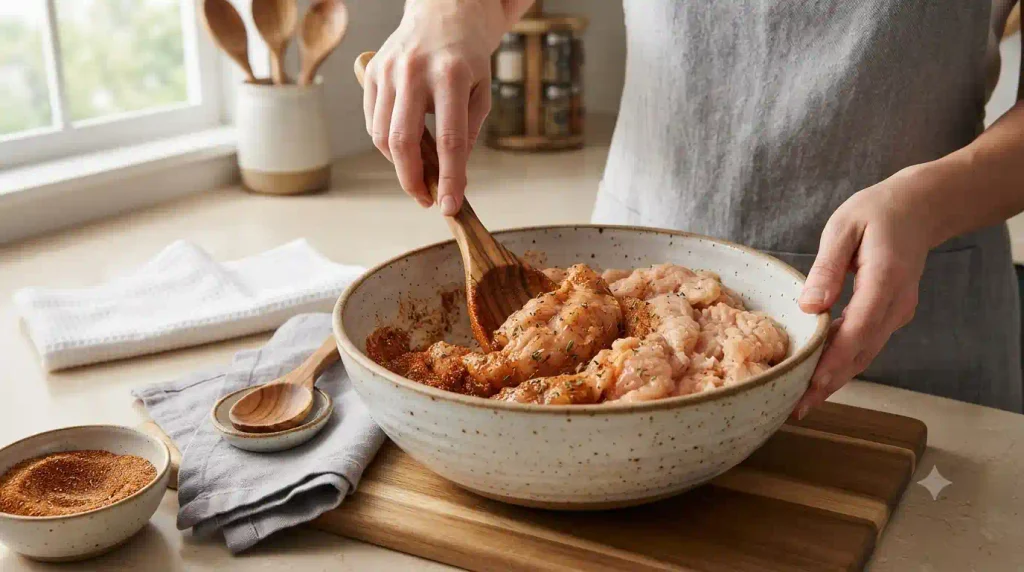
Add the 1½ pounds of ground chicken to the seasoning mixture.
Using clean hands or a sturdy spoon, gently fold everything together until the seasonings are evenly distributed.
Don’t aggressively knead the mixture. Ground chicken becomes dense when it’s overworked. Mix only until you no longer see obvious streaks of unseasoned meat.
The mixture may feel slightly sticky. That’s completely normal.
Food safety note: Ground poultry should be treated carefully. Wash your hands, utensils, cutting board, and any surfaces that contact raw chicken with hot, soapy water before using them for other foods.
Step 3: Chill and Shape the Sausages
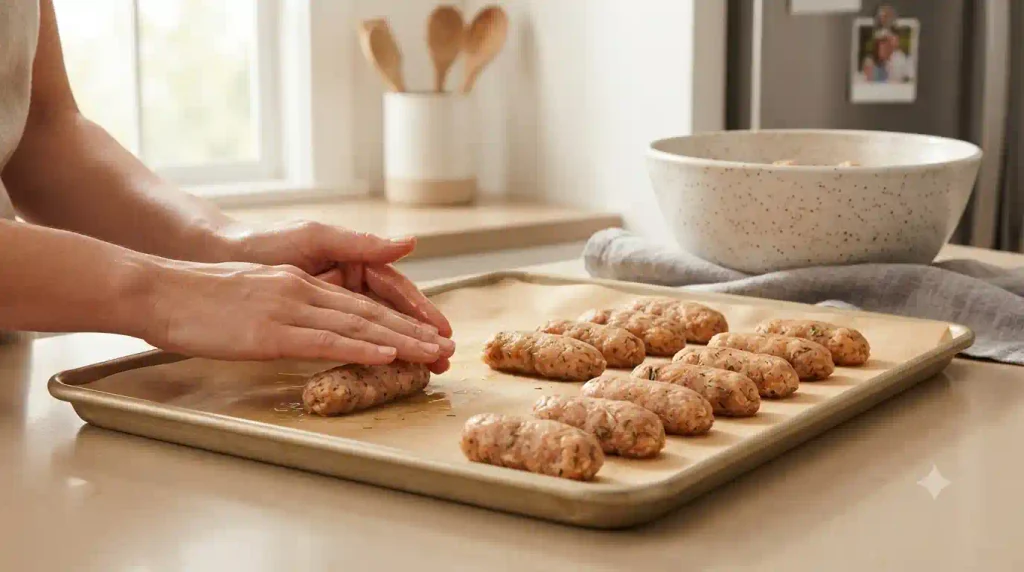
Cover the bowl and refrigerate the chicken mixture for about 20 minutes.
Chilling makes the soft chicken mixture much easier to shape and also gives the seasonings a little time to mingle.
Divide it into approximately 12 equal portions.
With slightly damp or lightly oiled hands, shape each portion into a short sausage approximately 3–4 inches long.
Don’t worry about making them perfectly uniform. Homemade sausage is supposed to look homemade.
You can also form the mixture into patties if that’s easier. The flavor will be exactly the same.
Step 4: Brown the First Side
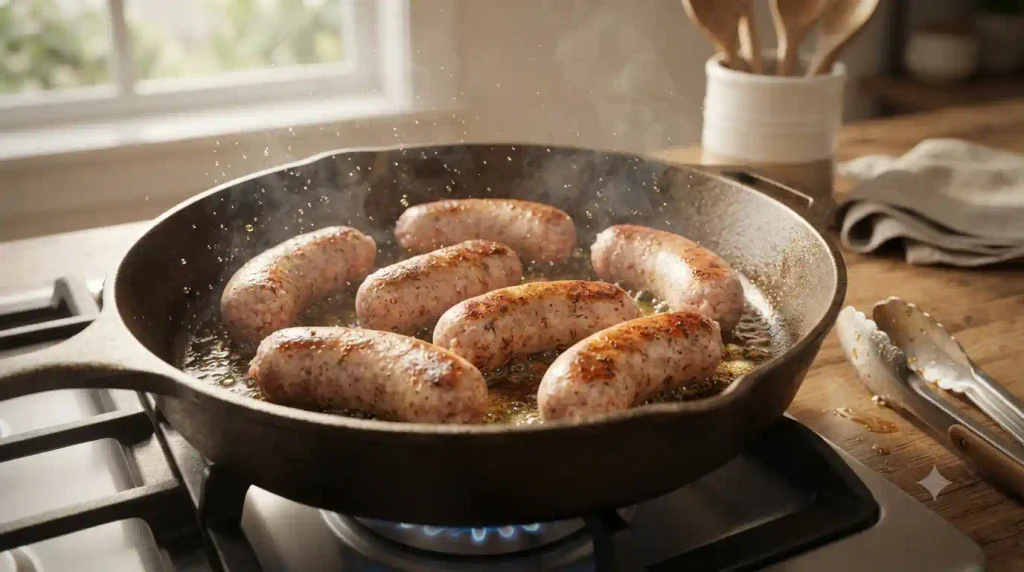
Place a large skillet over medium heat and add about 1 teaspoon olive oil.
Once the pan is hot, arrange the sausages in a single layer. Leave a little space between each one rather than crowding the skillet.
Cook for approximately 4–5 minutes without constantly moving them.
You’re looking for a deep golden-brown crust. That browning creates flavor through the Maillard reaction—the same reason a well-seared steak tastes richer than steamed meat.
If they’re getting dark too quickly, reduce the heat slightly.
Step 5: Turn and Finish Cooking
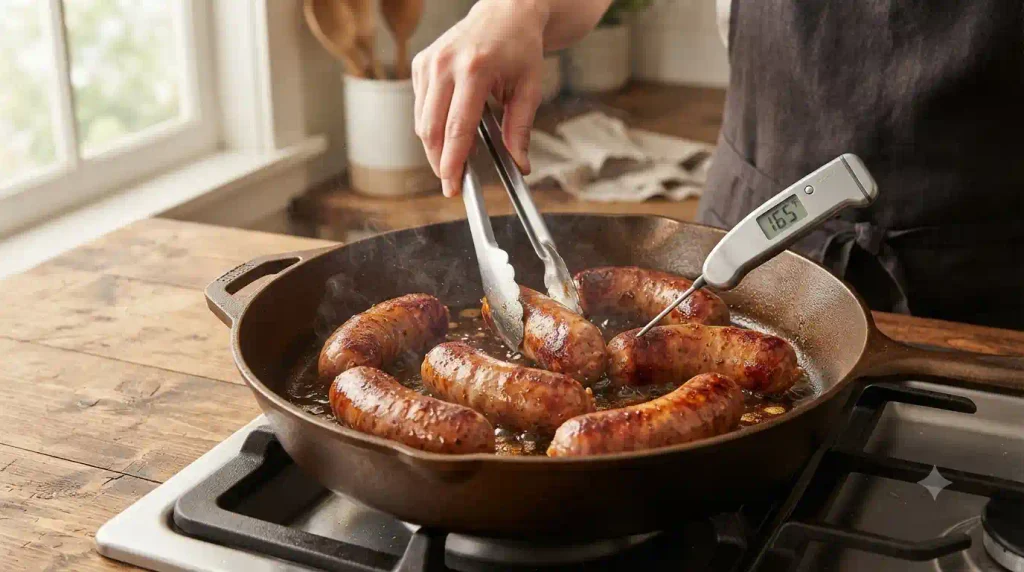
Carefully turn the sausages.
Cook the second side for another 4–5 minutes, then rotate them as needed to brown the remaining surfaces.
Depending on their thickness, they may need another 2–4 minutes over medium-low heat.
Check the center of the thickest sausage with an instant-read thermometer.
Ground chicken should reach 165°F (74°C) internally for safe consumption.
Avoid cooking far beyond that temperature. That’s one of the easiest ways to turn otherwise juicy chicken sausage dry.
Step 6: Rest and Serve
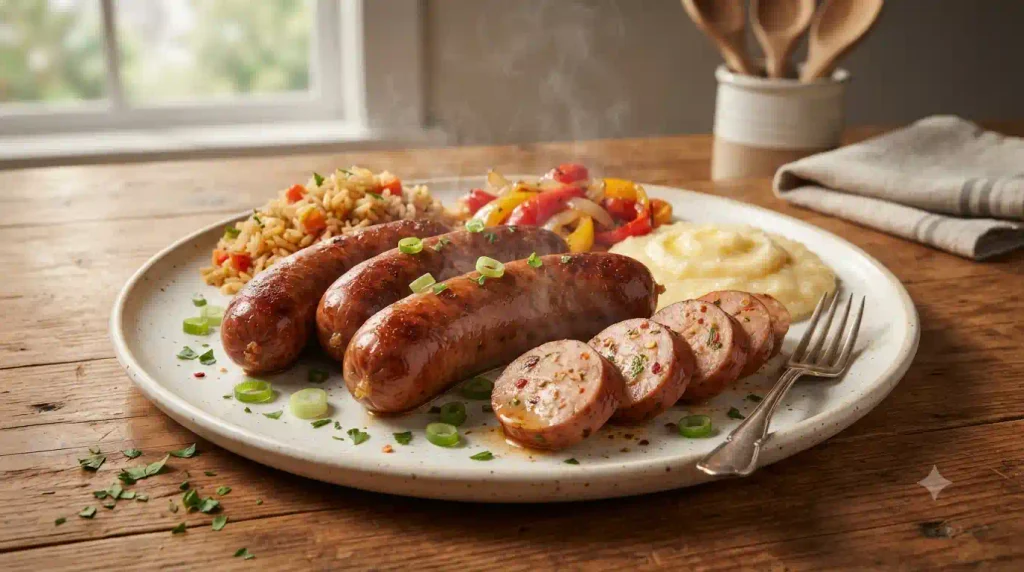
Transfer the cooked sausages to a clean plate and allow them to rest for about 3–5 minutes.
Don’t cut into one immediately just because it smells incredible. A short rest allows the hot juices inside the meat to settle instead of running onto your cutting board.
Serve the sausages whole, slice them into rounds, or crumble them into another dish.
They’re especially good with:
- Jambalaya
- Gumbo
- Red beans and rice
- Dirty rice
- Cajun pasta
- Scrambled eggs
- Roasted potatoes
- Grilled peppers and onions
- Creamy grits
- Sandwiches
Health Benefits
Chicken andouille can fit comfortably into a balanced diet, especially when you make it yourself and control the ingredients.
High in Protein
Chicken is naturally rich in high-quality protein. Protein supports muscle maintenance and repair and also helps make meals more satisfying.
Lower in Saturated Fat Than Many Traditional Sausages
Traditional andouille is generally made with pork and can contain considerable amounts of fat. Using relatively lean ground chicken can reduce the overall fat and saturated-fat content, although the exact difference depends on the products and recipes being compared.
You Control the Sodium
Commercial sausages can contain substantial amounts of sodium because salt contributes to flavor, preservation, and texture.
Homemade sausage gives you more control. If you’re limiting sodium, you can reduce the added salt slightly and choose a lower-sodium Worcestershire sauce.
Garlic and Herbs Add Flavor Without Extra Calories
Garlic, oregano, thyme, paprika, and pepper provide intense flavor without needing heavy sauces or lots of added sugar.
Easy to Pair With Vegetables
Try serving these sausages with roasted peppers, leafy greens, beans, tomatoes, or a big vegetable-packed rice bowl for a more balanced meal.
Nutrition Information (Per Serving)
Approximate values for 1 of 6 servings, before optional sides:
| Nutrient | Approximate Amount |
|---|---|
| Calories | 240 kcal |
| Protein | 25 g |
| Fat | 14 g |
| Carbohydrates | 3 g |
Nutrition note: These figures are estimates. Actual nutrition varies considerably depending on the fat percentage of your ground chicken and the exact brands and quantities used.
Pro Tips & Variations
1. Don’t Choose Extra-Lean Chicken
It sounds healthier, but extremely lean ground chicken can produce disappointing sausage.
Ground chicken around 90–93% lean gives you a better balance between tenderness and protein.
If extra-lean chicken is all you have, don’t skip the olive oil.
2. Keep Everything Cold
Professional sausage makers pay close attention to temperature.
Cold meat holds onto fat better during mixing. If your kitchen is warm or the chicken has been sitting out, refrigerate it before mixing.
3. Cook a Tiny Test Patty
This is one of my favorite sausage-making tricks.
Before shaping the entire batch, cook a teaspoon-sized piece of the mixture in your skillet. Taste it.
Need more pepper? Add it.
Want more smoke? Add another pinch of smoked paprika.
Not spicy enough? Increase the cayenne.
You can fix the seasoning before you’ve cooked all 12 sausages.
Never taste the raw chicken mixture.
4. Make It Milder
Reduce the cayenne to ¼ teaspoon and omit the crushed red pepper.
You’ll still get plenty of smoky Cajun-inspired flavor without much heat.
5. Make It Extra Spicy
Increase cayenne to ¾–1 teaspoon, depending on your heat tolerance.
A little extra freshly ground black pepper also works beautifully.
6. Add Natural Smoke Flavor
If you want a stronger smoked-sausage character, add a very small amount of liquid smoke.
Start with ¼ teaspoon. It’s powerful, and adding too much can quickly overwhelm the other seasonings.
7. Turn It Into Breakfast Sausage
Leave out the cayenne and red pepper flakes, reduce the smoked paprika slightly, and add a pinch of rubbed sage.
Form into patties and serve alongside eggs or breakfast potatoes.
8. Meal-Prep It
Cook a batch on Sunday and use sliced sausage throughout the week in rice bowls, pasta, eggs, soups, and vegetable skillets.
Cool cooked sausage promptly and refrigerate it in an airtight container. For best quality, use refrigerated leftovers within 3–4 days.
9. Freeze for Later
Let cooked sausages cool, then freeze them in a freezer-safe container or bag.
For convenient portions, freeze them separately first and then transfer them to a freezer bag. That way you can grab one or two without thawing the whole batch.
10. Don’t Chase Perfect Sausage Shapes
Ground chicken is soft and sticky.
If shaping neat links becomes frustrating, make patties. Your skillet doesn’t care, and neither will anyone eating them.
How Much Does It Cost to Make?
Prices vary by supermarket, brand, season, and location, but here’s a reasonable estimate for a US home kitchen.
| Ingredient | Estimated Cost Used |
|---|---|
| Ground chicken | $6.00–$8.00 |
| Garlic | $0.25 |
| Olive oil | $0.40 |
| Paprika & smoked paprika | $0.50 |
| Herbs and spices | $0.60 |
| Worcestershire sauce | $0.15 |
| Dijon mustard | $0.10 |
| Remaining ingredients | $0.25 |
| Estimated Total | $8.25–$10.25 |
For six servings, that works out to approximately $1.40–$1.70 per serving, before sides.
Buying spices specifically for this recipe will obviously make your first batch cost more. Once those pantry ingredients are on hand, future batches become considerably cheaper.
Frequently Asked Questions
Can chicken sausage really taste like andouille?
Yes, although it won’t be identical to traditional smoked pork andouille.
The combination of smoked paprika, garlic, thyme, cayenne, oregano, and black pepper creates the smoky, spicy profile people associate with andouille. Chicken provides a milder base, so those seasonings come through clearly.
For even more smoky flavor, add a tiny amount of liquid smoke.
How do you keep homemade chicken sausage from drying out?
Start with ground chicken that contains some fat, add a small amount of olive oil and moisture, and don’t overcook it.
The most reliable method is using a thermometer. Cook ground chicken sausage until its center reaches 165°F (74°C), then remove it from the heat.
Also avoid pressing down on the sausages with your spatula while they cook. You’re squeezing out the juices you worked so hard to keep.
Can I make chicken andouille sausage ahead of time?
Yes.
You can prepare the seasoned mixture ahead, keep it properly refrigerated, and cook it later. For longer storage, freezing cooked sausages is an easy meal-prep option.
Cooked chicken sausage is particularly handy because you can slice it directly into quick rice dishes, soups, pasta, and breakfast skillets.
What can I use chicken andouille sausage in?
Almost anything that needs smoky, spicy sausage.
Try it in gumbo, jambalaya, red beans and rice, Cajun pasta, soups, breakfast skillets, rice bowls, stuffed peppers, sandwiches, or sheet-pan dinners.
If you’re replacing traditional andouille in another recipe, you can generally use the chicken version in a similar quantity.
Final Thoughts
Making chicken andouille sausage at home sounds like a weekend cooking project, but it really doesn’t need to be complicated. No sausage stuffer, casings, or specialty equipment are required.
The secret is simple: season boldly, add enough moisture and fat, keep the chicken cold, don’t overmix, and cook only until it safely reaches 165°F (74°C).
Once you’ve made your first batch, play with it. Increase the smoke, tame the cayenne, turn the mixture into patties, or slice the finished sausages straight into a bubbling pot of jambalaya.
And if your first batch comes out slightly crooked and uneven? That’s the good part. They look homemade because they are—and when the skillet smells like smoky garlic and paprika, nobody at the table is going to complain.