

There’s something especially satisfying about cooking pork gyros at home. That craving for juicy, savory meat with crispy golden edges, cool tzatziki, fresh vegetables, and warm pita can hit hard—and thankfully, you don’t need a restaurant-style rotisserie to make it happen. A hot skillet and a simple Greek-inspired marinade do most of the work.
This recipe is built for a real home kitchen: straightforward ingredients, minimal equipment, and plenty of flavor. The pork marinates in olive oil, lemon, garlic, oregano, and spices before being cooked quickly over high heat. Add creamy tzatziki and crunchy toppings, and you’ve got a satisfying dinner that feels like a takeaway treat.
Pork Gyros Recipe – Crispy, Authentic & Easy
These homemade pork gyros combine tender marinated pork with deeply browned, slightly crispy edges and classic Mediterranean-style toppings. The key is thinly slicing the meat, giving the marinade enough time to work, and resisting the urge to overcrowd your pan.
Prep & Cook Time
| Details | Time / Amount |
|---|---|
| Prep Time | 20 minutes |
| Marinating Time | 1–4 hours |
| Cook Time | 15 minutes |
| Total Active Time | 35 minutes |
| Total Time Including Minimum Marinating | 1 hour 35 minutes |
| Servings | 4 |
Note: For the deepest flavor, marinate the pork for around 4 hours. If dinner needs to happen quickly, even 1 hour makes a noticeable difference.
What Equipment Do You Need?
You don’t need a vertical rotisserie to make delicious pork gyros at home. Keep things simple with:
- Large mixing bowl
- Sharp chef’s knife
- Cutting board
- Measuring spoons
- Citrus juicer or small bowl
- Tongs
- Large cast-iron skillet or heavy frying pan
- Small bowl for preparing toppings
- Meat thermometer
A cast-iron skillet is particularly useful because it holds heat well, helping create those browned, slightly charred edges that make gyro meat so irresistible.
Ingredients
For the Pork
- 1½ lb (680 g) pork shoulder, boneless
- 3 tablespoons extra-virgin olive oil
- 3 tablespoons fresh lemon juice
- 4 garlic cloves, finely minced
- 2 teaspoons dried oregano
- 1 teaspoon smoked paprika
- 1 teaspoon ground cumin
- 1 teaspoon kosher salt
- ½ teaspoon freshly ground black pepper
- ½ teaspoon onion powder
- ¼ teaspoon dried thyme
For Serving
- 4 large pita breads
- ¾ cup tzatziki sauce
- 1 medium tomato, thinly sliced
- ½ small red onion, very thinly sliced
- 1 cup shredded romaine lettuce, optional
- ¼ cup crumbled feta cheese, optional
- 1 tablespoon chopped fresh parsley
- 1 lemon, cut into wedges
Why Each Ingredient Matters
Understanding what the ingredients actually do makes it much easier to cook confidently rather than simply following instructions.
| Ingredient | Why It Matters |
|---|---|
| Pork shoulder | Contains enough fat and connective tissue to stay juicy while developing crisp edges. |
| Olive oil | Carries the herbs and spices across the meat and encourages browning. |
| Lemon juice | Adds brightness and acidity that balances the richness of pork. |
| Garlic | Creates the punchy savory backbone associated with Greek-style marinades. |
| Oregano | Provides the unmistakable earthy Mediterranean aroma. |
| Smoked paprika | Adds color, mild sweetness, and subtle smoky character. |
| Cumin | Brings warm, earthy depth without overwhelming the oregano. |
| Thyme | Adds another subtle herbal layer. |
| Salt | Seasons the meat throughout and helps its natural flavor stand out. |
| Tzatziki | Its creamy, cool acidity contrasts beautifully with hot, browned pork. |
| Tomato & onion | Add freshness, moisture, crunch, and acidity. |
| Pita | Holds the filling while soaking up some of those delicious pork juices and tzatziki. |
Chef’s note: Lemon is useful here, but more isn’t necessarily better. Excess acid or an excessively long acidic marinade can affect the pork’s surface texture.
Step-by-Step Instructions
Step 1: Slice the Pork
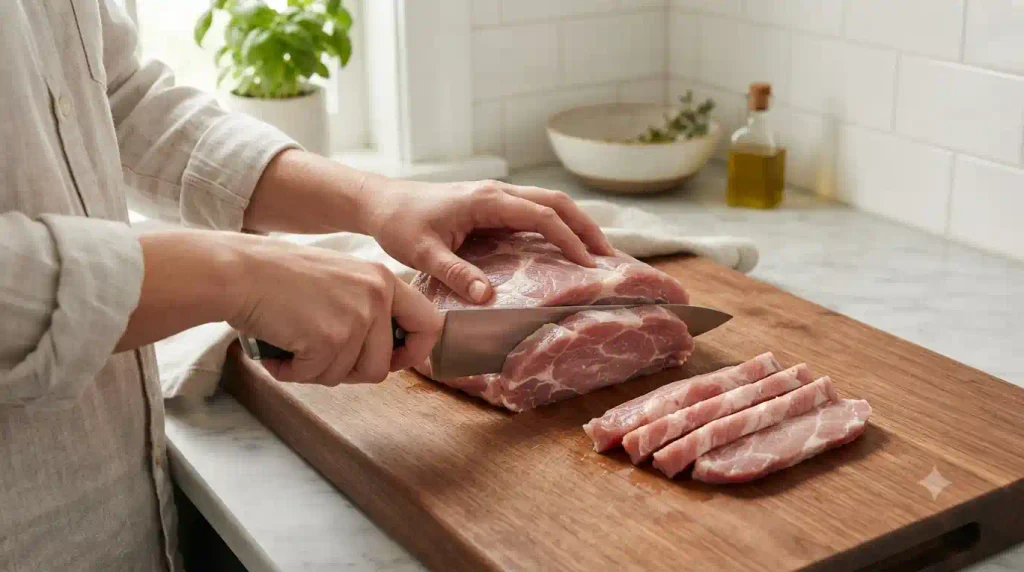
Place the pork shoulder on a clean cutting board and trim away any unusually large pieces of hard exterior fat. Leave some of the softer marbling because that fat contributes flavor and keeps the pork succulent.
Using a sharp knife, slice the pork against the grain into strips about ¼ inch (6 mm) thick.
Having trouble getting thin slices? Put the pork in the freezer for 20–30 minutes first. Slightly firm meat is much easier to slice neatly.
After handling raw pork, wash your hands thoroughly with soap and hot water and clean any utensils or surfaces that came into contact with it.
Step 2: Make the Gyro Marinade
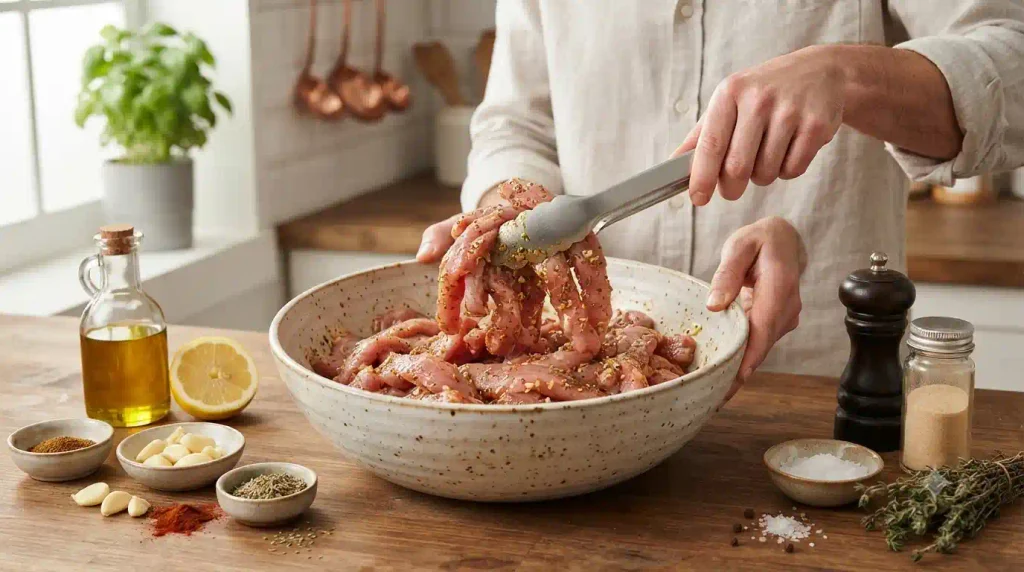
In a large bowl, combine:
- Olive oil
- Lemon juice
- Minced garlic
- Oregano
- Smoked paprika
- Cumin
- Salt
- Black pepper
- Onion powder
- Thyme
Whisk until everything is evenly combined.
Add the sliced pork and toss thoroughly with clean tongs until every strip has a light coating of marinade.
Cover the bowl and refrigerate for at least 1 hour or up to about 4 hours.
Keep the pork refrigerated while it marinates rather than leaving raw meat on the kitchen counter.
Step 3: Prepare the Toppings and Pita
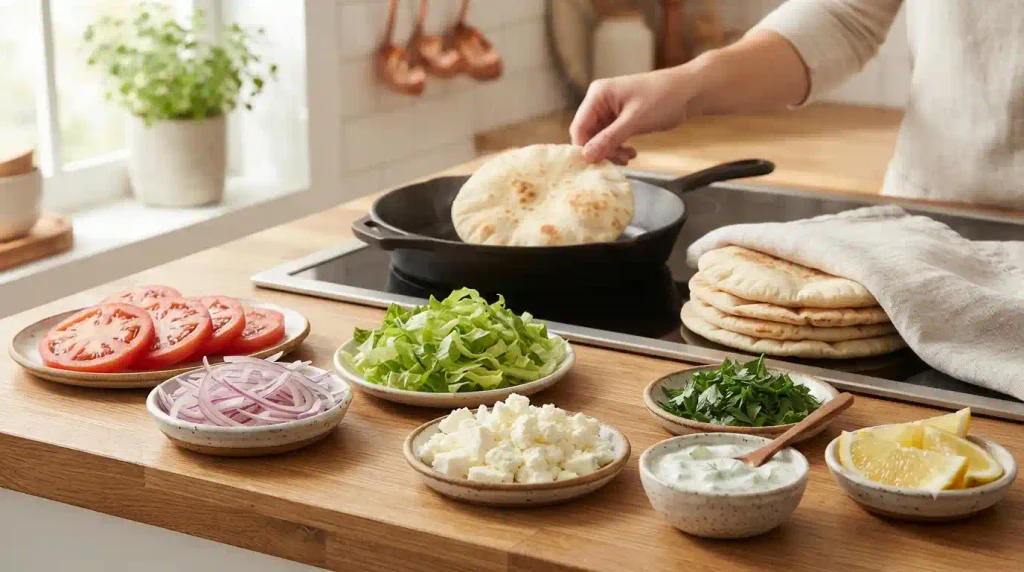
While the pork marinates, prepare your toppings.
Thinly slice the tomato and red onion. Shred the lettuce if using it, crumble the feta, chop the parsley, and cut your lemon into wedges.
Keep the tzatziki refrigerated until serving.
Warm the pita briefly in a dry skillet over medium heat for roughly 20–30 seconds per side, or until soft and flexible. Cover the warmed pita with a clean kitchen towel so it doesn’t dry out.
Getting the toppings ready before cooking matters because the pork cooks quickly. You don’t want beautifully browned meat sitting around while you frantically chop an onion.
Step 4: Sear the Pork
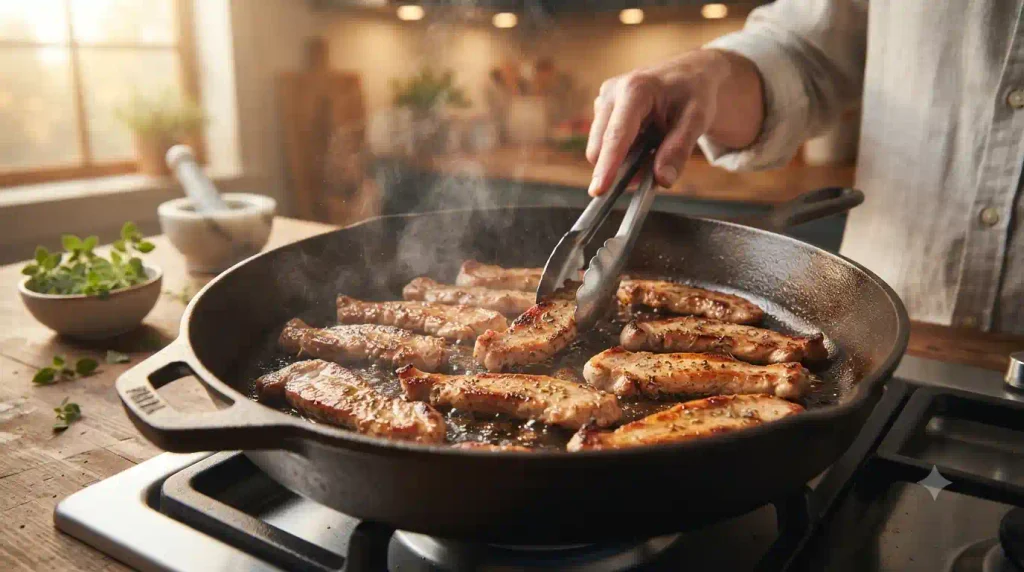
Remove the pork from the refrigerator shortly before cooking.
Heat a large cast-iron skillet or heavy frying pan over medium-high to high heat until properly hot.
Shake excess marinade from the pork and arrange the strips in a single layer.
Cook in batches if necessary.
Let the pork cook undisturbed for around 2 minutes before turning it. Continue cooking and tossing occasionally until the pieces are browned, lightly charred in places, and cooked through.
Depending on thickness, each batch generally takes around 5–7 minutes.
For food safety, cook whole-cut pork to at least 145°F (63°C) internally and allow a 3-minute rest, following USDA guidance.
Step 5: Create Those Crispy Edges
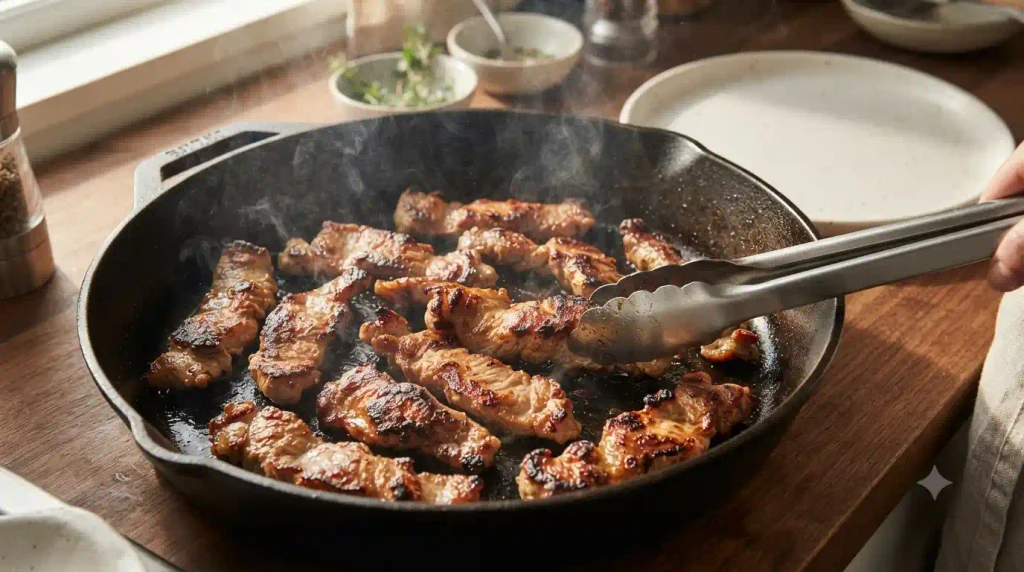
Once the pork is cooked through, give it another 30–60 seconds against the hot skillet where needed to deepen the browning.
This small detail makes a huge difference.
You’re looking for juicy meat with irregular caramelized edges—not dry pork that has been fried into submission.
If the skillet becomes watery, you probably added too much pork at once. Remove some meat and allow the pan to heat back up. Crowding creates steam; space creates browning.
Transfer the finished pork to a plate and let it rest for about 3 minutes.
Step 6: Assemble and Serve
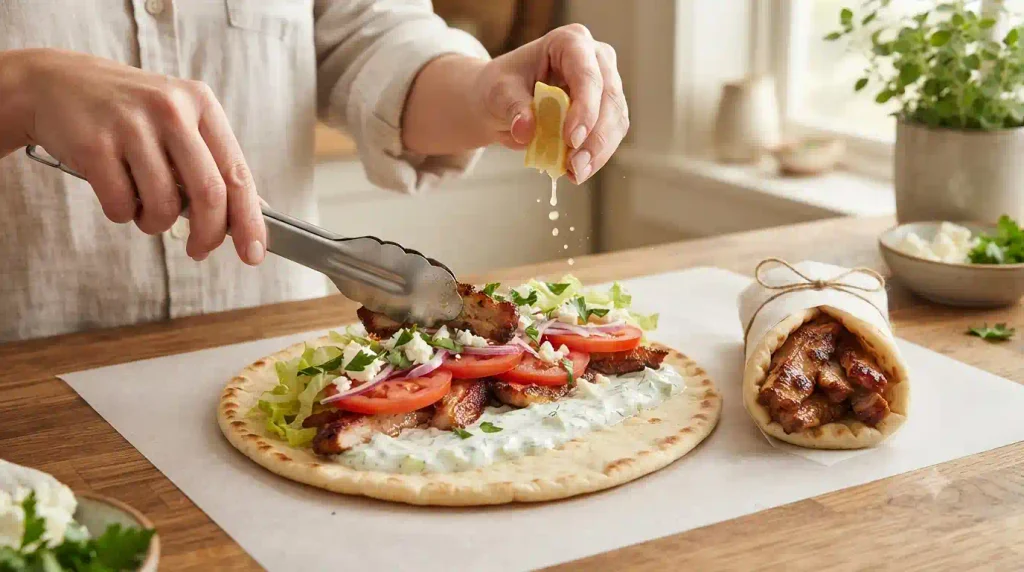
Place a warm pita on a plate or piece of parchment.
Spread roughly 2–3 tablespoons tzatziki through the center.
Top with a generous portion of crispy pork followed by:
- Tomato
- Red onion
- Lettuce, if desired
- Crumbled feta
- Fresh parsley
Finish with a squeeze of fresh lemon.
Fold the pita around the filling and serve immediately while the pork is still warm and the vegetables are crisp.
And yes, some tzatziki will probably escape down the side. That’s part of eating a properly loaded gyro at home.
Health Benefits
Pork gyros can be a satisfying part of a balanced meal, especially when portions and toppings are considered.
High-quality protein: Pork provides complete protein containing essential amino acids. Protein supports muscle maintenance and helps make meals more satisfying.
B vitamins: Pork naturally supplies several B vitamins, including thiamin, which contributes to normal energy metabolism.
Minerals: Pork provides nutrients such as selenium, zinc, and phosphorus.
Unsaturated fats: Extra-virgin olive oil contributes primarily unsaturated fats and is a classic component of Mediterranean-style cooking.
Fresh vegetables: Tomato, onion, lettuce, parsley, and lemon bring additional vitamins, plant compounds, flavor, and texture without requiring heavy sauces.
Greek yogurt-based tzatziki: When made with Greek yogurt, tzatziki can contribute additional protein and calcium.
For a lighter gyro, use a smaller amount of tzatziki, load up on vegetables, and choose a whole-grain pita if available.
Nutrition Information (Per Serving)
The following values are estimates because pita size, pork trimming, tzatziki brands, and optional toppings can change the final numbers considerably.
| Nutrient | Approximate Amount |
|---|---|
| Calories | 620 kcal |
| Protein | 39 g |
| Fat | 34 g |
| Carbohydrates | 42 g |
Serving assumption: One pita with approximately one-quarter of the pork mixture, vegetables, and tzatziki.
Pro Tips & Variations
1. Choose Pork Shoulder for Better Flavor
Pork loin works, but pork shoulder is more forgiving. Its extra marbling helps the thin pieces stay juicy while you develop those important crispy edges.
2. Slice Against the Grain
Look closely at the direction of the muscle fibers and cut across them. This shortens those fibers and gives you a more tender bite.
3. Don’t Crowd Your Skillet
This is probably the biggest mistake when making skillet gyros.
If your skillet looks packed, cook the pork in two or three batches. A crowded pan traps moisture and steams the meat.
4. Get the Pan Hot First
Adding pork to a lukewarm skillet makes browning much harder. Preheat the pan before the first batch hits it.
5. Make It Spicier
Add:
- ¼–½ teaspoon cayenne pepper, or
- ½ teaspoon crushed red pepper flakes
to the marinade.
6. Try Chicken Instead
Boneless, skinless chicken thighs work beautifully with the same general flavor profile. Cooking time and safe internal temperature will differ; chicken should reach 165°F (74°C).
7. Make a Gyro Bowl
Skip the pita and serve your pork over:
- Rice
- Couscous
- Quinoa
- Chopped romaine
- Roasted potatoes
Add tzatziki, tomatoes, cucumber, onions, and feta on top.
8. Add Greek-Style Fries
For a more indulgent takeaway-style dinner, tuck a handful of hot fries inside each pita before serving.
9. Warm the Pita
Cold pita can crack when folded. Even 30 seconds in a skillet makes it softer, warmer, and much better at holding the filling.
10. Don’t Skip the Lemon at the End
A little fresh lemon squeezed over the finished pork cuts through its richness and wakes up the garlic, oregano, and cumin.
How Much Does It Cost to Make?
Prices vary significantly by location, season, store, and brand, but homemade gyros are often reasonably budget-friendly compared with ordering four restaurant meals.
Approximate U.S. Grocery Cost
| Ingredient | Estimated Cost Used |
|---|---|
| Pork shoulder | $6.00–$8.00 |
| Pita bread | $2.00–$3.00 |
| Tzatziki | $2.00–$3.00 |
| Tomato & red onion | $1.50–$2.00 |
| Lemon | $0.50–$1.00 |
| Garlic & herbs | $0.75–$1.25 |
| Olive oil & spices | $1.00–$1.50 |
| Optional feta/lettuce | $1.50–$2.50 |
| Estimated Total | $15.25–$22.25 |
| Approximate Cost Per Serving | $3.80–$5.55 |
If olive oil, garlic, oregano, cumin, and paprika are already in your pantry, your actual shopping bill may be noticeably lower.
Frequently Asked Questions
What cut of pork is best for gyros?
Boneless pork shoulder is an excellent option for homemade gyros. It has enough intramuscular fat to remain juicy during high-heat cooking and develops flavorful browned edges.
Pork loin can also work if you prefer a leaner option, but watch it closely because it dries out more easily.
How do I make pork gyros crispy without a rotisserie?
Use a very hot cast-iron skillet and cook thinly sliced pork in small batches.
The important part is giving the pork direct contact with the skillet. Don’t constantly stir it. Let one side sit against the hot surface long enough to brown before turning.
How long should pork marinate for gyros?
For this recipe, 1–4 hours works well.
An hour provides noticeable flavor, while several hours gives the garlic, herbs, spices, oil, and lemon more time to coat and season the meat.
Because the marinade contains lemon juice, there is little benefit to leaving thinly sliced pork in it excessively long.
Can I make pork gyros ahead of time?
Yes.
You can slice and marinate the pork earlier in the day and refrigerate it until you’re ready to cook.
Cooked pork can also be refrigerated in a covered container. Reheat it in a hot skillet rather than relying on the microwave when possible. The skillet helps restore some of those crispy edges.
Keep leftovers refrigerated promptly and use safe food-storage practices.
Final Thoughts
Homemade pork gyros prove that you don’t need complicated equipment to create seriously satisfying Mediterranean-inspired food in your own kitchen. Thin pork, a punchy marinade, a properly heated skillet, and enough room for the meat to brown are the details that make this recipe work.
Serve the crispy pork straight from the pan with warm pita, cool tzatziki, crunchy onion, ripe tomato, and plenty of lemon. Once you’ve made gyros this way, they’re easy to customize for weeknight dinners, casual gatherings, or meal-prep bowls.
Most importantly, don’t chase perfection. A little extra char here, an overloaded pita there, and tzatziki dripping onto the plate are exactly what good home cooking looks like.