

There is something deeply satisfying about cooking a dish that asks you to slow down. When a craving hits for something rich, savory, and comforting, duck confit is the kind of recipe that makes the kitchen smell incredible while you patiently let time do the work. It may sound fancy, but the technique is surprisingly straightforward for a home cook.
The magic comes from gently cooking duck legs in their own rendered fat until the meat becomes wonderfully tender and the skin is ready to turn crisp and golden. It is not a last-minute dinner, but much of the process is hands-off. Put on some music, clear a little counter space, and let this classic French method work its magic.
Prep & Cook Time
| Time | Details |
|---|---|
| Prep time | 20 minutes |
| Curing time | 12–24 hours |
| Cook time | 3–3½ hours |
| Crisping time | 10–15 minutes |
| Total time | About 16–28 hours, including curing |
| Servings | 4 |
Chef’s note: The long total time includes the salt cure. The actual hands-on work is quite short.
What Equipment Do You Need?
- Large shallow baking dish or Dutch oven
- Small bowl for the seasoning mixture
- Paper towels
- Measuring spoons
- Tongs
- Fine-mesh strainer
- Fine sieve or cheesecloth
- Heavy skillet or oven-safe frying pan
- Instant-read thermometer, optional but useful
- Storage container or jar for leftover duck fat
Ingredients
- 4 duck legs, about 8–10 ounces each
- 2 tablespoons kosher salt
- 1 teaspoon freshly ground black pepper
- 6 garlic cloves, lightly crushed
- 6 fresh thyme sprigs
- 2 fresh rosemary sprigs
- 2 bay leaves
- 1 teaspoon crushed black peppercorns
- 4–5 cups rendered duck fat, or enough to completely cover the duck legs
- 1 teaspoon sugar, optional, for a slightly rounder cure
For crisping:
- 1 tablespoon reserved duck fat
- Flaky sea salt, to taste
- Fresh thyme, optional, for serving
Important: Duck fat needs to be sufficient to keep the legs mostly or completely submerged during cooking. The exact amount depends on the size and shape of your cooking vessel.
Why Each Ingredient Matters
- Duck legs: Unlike duck breast, duck legs contain more connective tissue and fat. Long, gentle cooking breaks down that connective tissue and gives the meat its famously tender texture.
- Kosher salt: Salt seasons the meat and draws out some moisture during curing. This concentrates flavor and helps create the classic confit texture.
- Garlic: Adds savory depth without overpowering the duck.
- Thyme and rosemary: These sturdy herbs hold up beautifully during long cooking and add a warm, earthy aroma.
- Bay leaves: Bring a subtle herbal note that makes the duck taste more rounded.
- Black pepper: Adds gentle heat and balances the richness.
- Duck fat: This is the heart of confit. Cooking the legs slowly while surrounded by fat creates incredibly tender meat without frying it.
- Sugar: Completely optional, but a small amount can soften the sharp edges of the salt cure and add subtle balance.
Step-by-Step Instructions
Step 1: Season and Cure the Duck

Pat the duck legs thoroughly dry with paper towels. Moisture on the surface will dilute the seasoning and make the final texture less ideal.
In a small bowl, combine the kosher salt, black pepper, crushed garlic, thyme, rosemary, bay leaves, crushed peppercorns, and optional sugar.
Rub the seasoning mixture generously over every duck leg. Place the legs in a covered dish or food-safe container and refrigerate for 12–24 hours.
If your refrigerator tends to collect moisture, place the duck on a rack over a tray so air can circulate around it.
Step 2: Remove Excess Cure
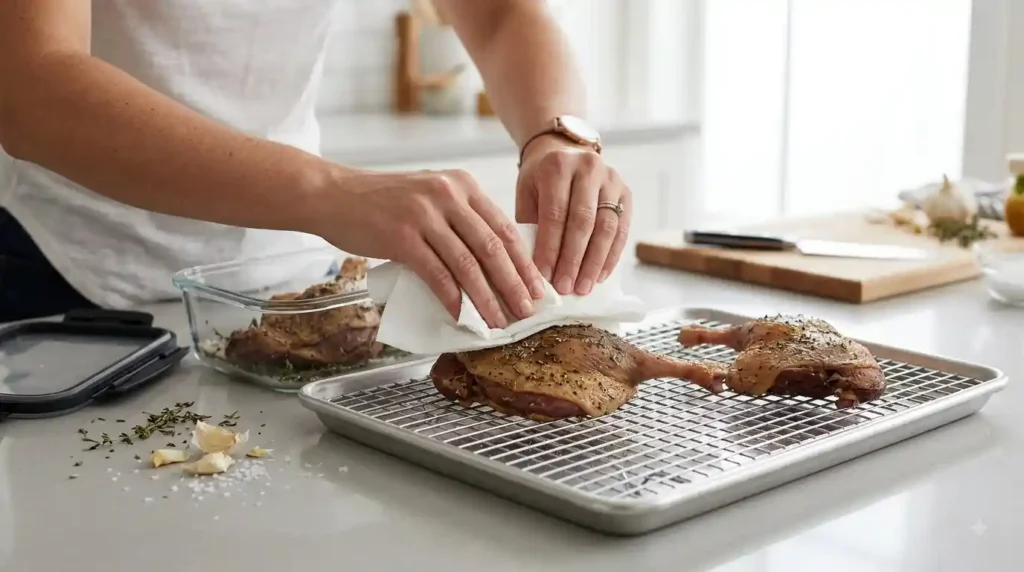
When you are ready to cook, take the duck from the refrigerator and gently wipe away the excess salt and herbs.
You do not need to wash the duck under running water. If you do, pat it extremely dry afterward.
Let the duck sit at room temperature for about 20–30 minutes while you prepare the cooking vessel.
Step 3: Add the Duck Fat

Preheat your oven to 250°F (120°C).
Arrange the duck legs snugly in a Dutch oven or deep oven-safe baking dish, skin side up.
Warm the duck fat gently until it becomes liquid, then pour it over the duck legs. The legs should be completely or mostly submerged.
Add a few fresh thyme sprigs and a bay leaf if desired.
Cover the dish with a lid or tightly with foil.
Step 4: Slow-Cook Until Tender
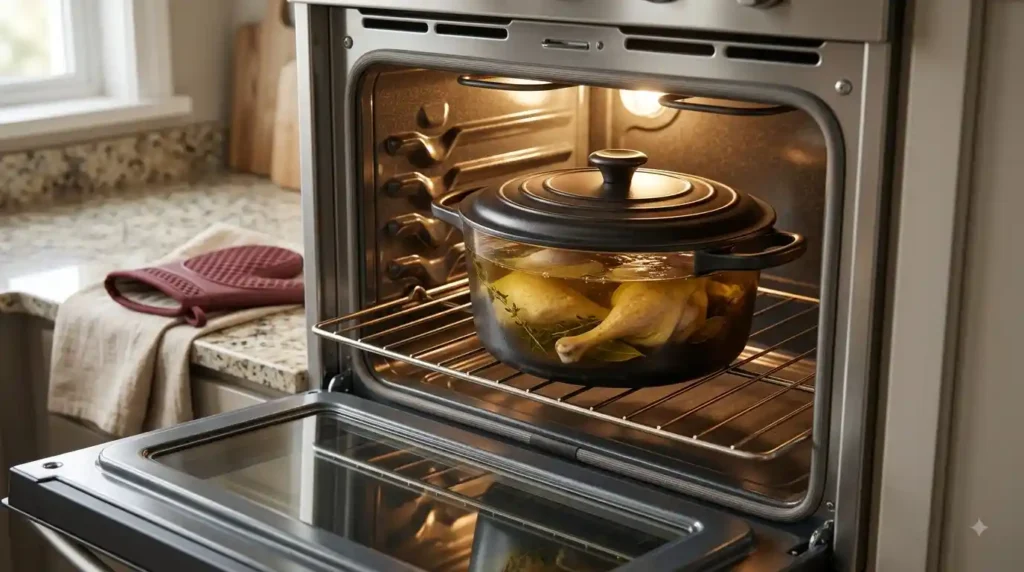
Place the covered dish in the oven and cook for approximately 3–3½ hours.
The duck should become extremely tender. A fork should slide easily into the meat, and the meat should begin pulling away from the bone.
Do not let the fat aggressively bubble like a deep fryer. Confit is a gentle cooking method, so low and slow is exactly what you want.
Food safety: Use clean utensils when handling cooked duck, and refrigerate leftovers promptly. Keep the cooking temperature controlled and avoid leaving cooked duck at room temperature for extended periods.
Step 5: Drain and Rest the Duck

Carefully remove the duck legs from the hot fat using tongs. They will be very tender, so support the legs gently to prevent them from falling apart.
Place them skin side up on a rack over a baking sheet and allow excess fat to drain.
Let them rest for about 10–15 minutes.
Strain the remaining duck fat through a fine sieve or cheesecloth and refrigerate it in a clean container. Properly strained duck fat can be extremely useful for roasting potatoes and other savory dishes.
Step 6: Crisp the Skin and Serve

Heat a heavy skillet over medium-low to medium heat and add about 1 tablespoon of reserved duck fat.
Place the duck legs skin side down. Cook gently until the skin becomes deeply golden, crisp, and beautifully rendered, usually 5–8 minutes.
You can also crisp the legs under a hot broiler, watching them closely because the skin can go from golden to burned quickly.
Serve immediately with roasted potatoes, sautéed greens, lentils, or a crisp salad.
Finish with a little flaky sea salt and fresh thyme if desired.
Health Benefits
Duck confit is undeniably a rich dish, but it also provides useful nutrients.
- High-quality protein: Duck provides complete protein that supports muscle maintenance and normal body functions.
- Iron: Duck contains iron, an important mineral involved in oxygen transport.
- Vitamin B12: Duck provides vitamin B12, which supports healthy red blood cells and normal nervous-system function.
- Zinc: This mineral contributes to immune function and wound healing.
- Selenium: Duck provides selenium, a trace mineral involved in antioxidant defense and thyroid function.
- Herbs and garlic: Garlic and fresh herbs contribute small amounts of plant compounds and antioxidants.
Because confit is cooked in a generous amount of fat, it is best enjoyed as a rich main course rather than an everyday lean-protein dish. Pairing it with vegetables or a bright salad makes the meal feel more balanced.
Nutrition Information (Per Serving)
Approximate values for one duck leg with a portion of the cooking fat absorbed. Actual nutrition varies with duck size, skin, and how much fat is retained.
| Nutrient | Approximate amount |
|---|---|
| Calories | 620 kcal |
| Protein | 36 g |
| Fat | 51 g |
| Carbohydrates | 2 g |
Pro Tips & Variations
For the Best Duck Confit
- Dry the duck well. Excess moisture makes it harder to achieve beautifully crisp skin.
- Don’t rush the cure. A full overnight cure gives the meat deeper flavor.
- Keep the oven gentle. Confit should cook slowly rather than boil aggressively in the fat.
- Use a snug cooking vessel. A smaller dish means you need less duck fat to cover the legs.
- Crisp only at the end. Long cooking creates tender meat; the final skillet or broiler step creates the irresistible skin.
- Save the duck fat. Strain it carefully and refrigerate it. It is fantastic for crispy roasted potatoes.
- Watch the salt. Because the duck is cured first, taste your side dishes before adding extra salt.
Easy Variations
Garlic & Orange: Add a few strips of orange zest during the confit for a subtle citrus aroma.
French Herb: Use thyme, bay leaf, parsley stems, and a small amount of rosemary for a classic herb profile.
Spiced Duck: Add a pinch of coriander seed and a small piece of cinnamon stick for a warmer flavor.
Crispy Duck Salad: Shred leftover duck over bitter greens with a sharp mustard vinaigrette. The acidity cuts beautifully through the richness.
How Much Does It Cost to Make?
Prices vary by location and where you purchase the duck, but here is a reasonable U.S. estimate for four servings.
| Ingredient | Estimated Cost |
|---|---|
| 4 duck legs | $18–$26 |
| Duck fat | $8–$12 |
| Fresh herbs | $3–$5 |
| Garlic | $1 |
| Salt, pepper & seasonings | $1–$2 |
| Estimated total | $31–$46 |
| Approx. per serving | $7.75–$11.50 |
Buying duck legs in larger packages or purchasing rendered duck fat when it is on sale can bring the cost down.
And remember: the duck fat is reusable, which makes the overall value better if you use it for several meals.
Frequently Asked Questions
Is duck confit difficult to make at home?
Not really. The technique sounds intimidating because it is associated with traditional French cooking, but the actual process is simple: cure the duck, cover it with fat, cook it slowly, then crisp the skin. The biggest requirement is patience.
How long should duck legs be cured for confit?
For home cooking, 12–24 hours is a good range. A shorter cure gives a milder result, while a longer cure produces more pronounced seasoning. Be careful not to leave the duck heavily salted for too long.
Can I make duck confit without duck fat?
Traditional confit uses duck fat, and it gives the most authentic flavor and texture. While other cooking fats can technically be used, they will change the character of the dish. If possible, use rendered duck fat for the best result.
How do I reheat leftover duck confit?
For the best texture, warm the duck gently and then crisp the skin in a skillet over medium-low heat. Avoid microwaving if crispy skin matters to you. The meat is already cooked, so the goal is simply to warm it through and re-crisp the exterior.
Final Thoughts
Duck confit is proof that impressive food does not have to involve complicated techniques. Give the duck time, keep the cooking temperature gentle, and save the final few minutes for getting that skin perfectly crisp.
The first time you pull apart a tender duck leg and hear that little crackle from the golden skin, you will understand why this classic has stayed beloved for generations. Serve it with something fresh and bright, pour yourself a favorite drink, and enjoy the kind of homemade meal that feels genuinely special.