

There’s something special about bringing a big pot of snow crab legs to the table. The sweet, briny aroma instantly feels like a seafood restaurant dinner, yet this is one of those meals that’s surprisingly easy to make at home. When I’m craving tender crab dipped in warm butter, boiling is the method I reach for because it’s quick, reliable, and wonderfully unfussy.
The real goal isn’t simply heating the crab—it’s keeping that delicate meat juicy so it releases cleanly from the shell. Since most store-bought snow crab legs are already cooked, they need only a short simmer. With seasoned water, lemon, garlic, and careful timing, you’ll get succulent crab without rubbery, overcooked meat.
Prep & Cook Time
This recipe moves quickly, which makes it perfect for a weekend seafood feast or an easy special-occasion dinner.
| Recipe Detail | Time / Amount |
|---|---|
| Prep Time | 10 minutes |
| Cook Time | 5–6 minutes |
| Total Time | About 16 minutes |
| Servings | 4 |
| Serving Size | About 1 lb snow crab leg clusters |
Important: Most frozen snow crab legs sold in supermarkets are fully cooked before freezing. You’re reheating them rather than cooking raw crab from scratch.
What Equipment Do You Need?
You don’t need specialty seafood equipment to make great boiled snow crab legs. A few everyday kitchen tools will do the job.
- Large stockpot: Use one roomy enough to hold the crab without packing it tightly.
- Long kitchen tongs: Essential for safely lowering and removing hot crab clusters.
- Colander: Helpful for draining the crab.
- Crab crackers or seafood scissors: Makes thicker shell sections easier to open.
- Small saucepan: For melting the butter.
- Small serving bowls: Perfect for individual portions of melted butter.
- Sharp knife: For cutting the lemon.
- Measuring spoons: For the seasoning and salt.
- Large serving platter: Crab legs are much easier to serve on a wide platter than piled into a bowl.
Keep a few extra napkins nearby, too. Snow crab is delicious, but nobody has ever accused a crab-leg dinner of being tidy.
Ingredients
For the snow crab legs:
- 4 lb frozen cooked snow crab leg clusters, thawed if possible
- 6 quarts water, or enough to comfortably cover the crab
- 2 tablespoons kosher salt
- 2 tablespoons seafood seasoning, such as Old Bay-style seasoning
- 1 large lemon, halved
- 4 garlic cloves, lightly crushed
- 2 bay leaves
For serving:
- 4 tablespoons (¼ cup) unsalted butter, melted
- 1 lemon, cut into wedges
- 1 tablespoon chopped fresh parsley, optional
A Quick Note About Salt
Snow crab naturally contains sodium, and commercially cooked crab can already taste fairly salty. Taste and adjust accordingly. You can reduce the added salt to 1 tablespoon if you’re sensitive to salt or if your seafood seasoning contains plenty of sodium.
Why Each Ingredient Matters
Good crab doesn’t need a complicated ingredient list. The trick is using a few ingredients that support its natural sweetness instead of covering it up.
| Ingredient | Why It Matters |
|---|---|
| Snow crab legs | Naturally sweet, delicate, and slightly briny. Because most are precooked, gentle reheating keeps the meat tender. |
| Kosher salt | Lightly seasons the cooking liquid and complements the crab’s natural ocean flavor. |
| Seafood seasoning | Adds savory spices, mild heat, and aromatic depth to the cooking liquid. |
| Lemon | Its acidity and fresh citrus aroma balance the richness of crab and butter. |
| Garlic | Gives the cooking liquid a warm savory aroma without overwhelming the seafood. |
| Bay leaves | Add subtle herbal depth to the seasoned water. |
| Unsalted butter | Adds richness while letting you control the total amount of salt. |
| Parsley | Gives the finished dish a fresh herbal note and a little color. |
There’s an important bit of cooking science here: crab meat contains delicate proteins that tighten when heated. Give already-cooked snow crab too much heat for too long and those proteins contract, squeezing out moisture. That’s when juicy crab turns dry or rubbery.
Short reheating is the secret.
Step-by-Step Instructions
Step 1: Thaw and Prepare the Crab
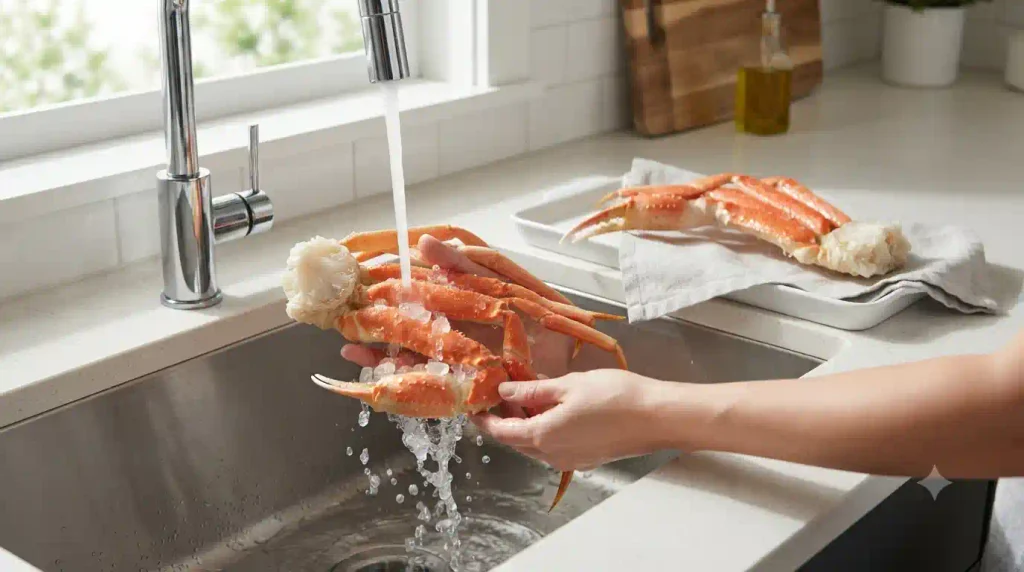
If you have time, thaw the frozen snow crab legs overnight in the refrigerator. This gives you the most even reheating and makes the cooking time easier to control.
For a faster option, place the sealed crab or crab clusters under cold running water until mostly thawed.
Avoid leaving frozen seafood sitting on the kitchen counter for extended periods. Refrigerator or cold-water thawing is the safer approach.
Give the clusters a quick rinse under cool water to remove any loose ice crystals.
Step 2: Prepare the Seasoned Cooking Water

Fill a large stockpot with approximately 6 quarts of water, leaving enough room at the top so the water won’t spill over when you add the crab.
Add:
- 2 tablespoons kosher salt
- 2 tablespoons seafood seasoning
- 1 lemon, halved
- 4 lightly crushed garlic cloves
- 2 bay leaves
Squeeze the lemon halves over the pot before dropping them into the water.
Bring the mixture to a strong boil over high heat.
Your kitchen should start smelling bright, garlicky, and a little like a coastal seafood boil.
Step 3: Add the Snow Crab Legs

Once the water is boiling, carefully lower the crab clusters into the pot using long kitchen tongs.
Don’t drop them in. Boiling water can splash surprisingly far, and the bulky clusters displace quite a bit of water.
If your stockpot isn’t large enough to comfortably hold all 4 pounds, cook the crab in two batches rather than cramming everything together.
Allow the water to return to a gentle boil.
Step 4: Boil Just Until Heated Through
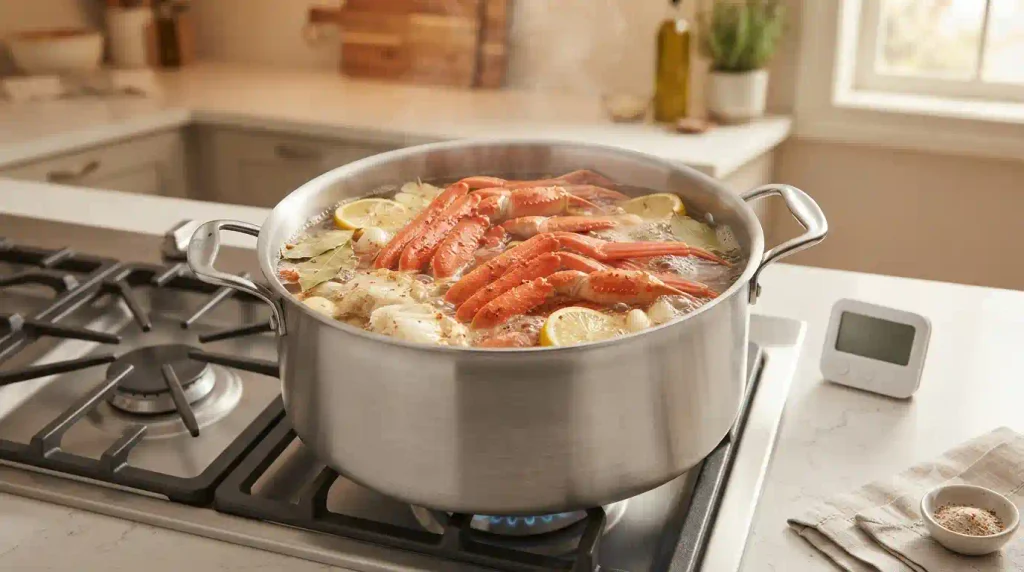
For thawed, precooked snow crab legs, boil for approximately 4–5 minutes.
If you’re starting with frozen precooked crab legs, they may need around 6–8 minutes, depending on the size of the clusters and how heavily frozen they are.
You’re looking for crab that is steaming hot throughout, not crab that has been aggressively boiling for 15 minutes.
That’s the mistake that often turns beautiful snow crab into dry, stubborn meat.
If your package states that the crab is raw rather than precooked, follow its cooking directions and cook seafood to a safe internal temperature of 145°F (63°C).
Step 5: Drain and Rest Briefly

Use long tongs to carefully transfer the hot crab clusters to a colander or large platter.
Let them drain for 1–2 minutes.
Don’t rinse the cooked crab with cold water. You want to preserve both the temperature and the flavor you’ve just built.
Meanwhile, melt 4 tablespoons unsalted butter in a small saucepan over low heat or carefully in the microwave.
For extra flavor, squeeze a small amount of fresh lemon juice into the butter.
Step 6: Crack, Serve, and Enjoy
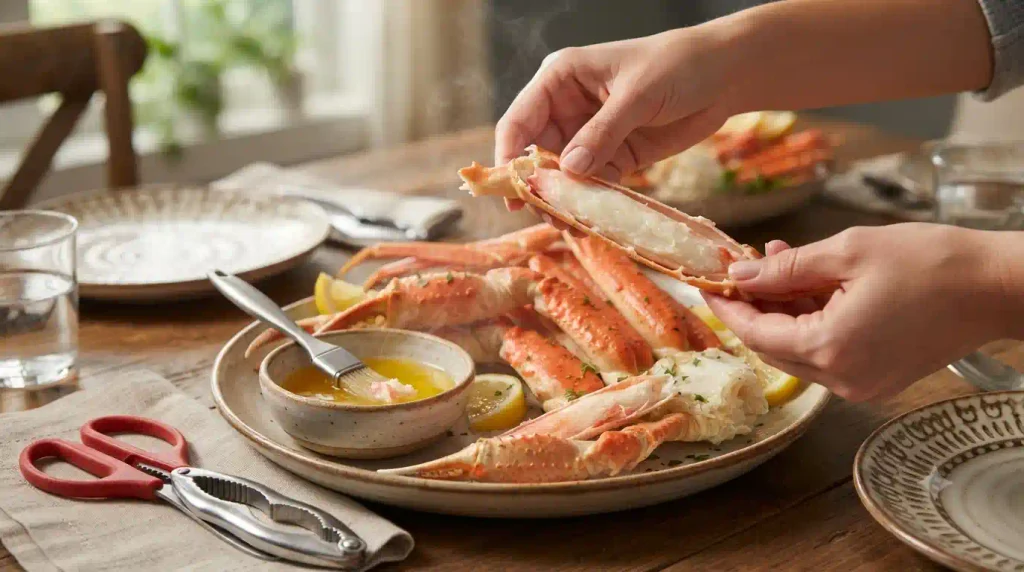
Transfer the crab legs to a large serving platter and sprinkle with fresh parsley, if using.
Serve immediately with:
- Melted butter
- Fresh lemon wedges
- Crab crackers or seafood scissors
- Plenty of napkins
To remove the meat, separate a leg at the joint and gently bend the shell until it cracks. Pull the sections apart slowly.
When the crab has been heated properly, you can often pull out a beautiful piece of meat with surprisingly little effort. If a stubborn section refuses to cooperate, seafood scissors are much easier than crushing the entire shell into tiny pieces.
Dip that warm, sweet crab into melted butter, add a squeeze of lemon, and enjoy it while it’s hot.
Health Benefits
Snow crab isn’t only a special-occasion food. The crab meat itself can be a nutrient-dense source of lean protein.
High-quality protein: Crab provides complete protein, supplying essential amino acids that the body needs for maintaining and repairing tissues.
Relatively lean seafood: Plain snow crab meat is naturally low in fat compared with many richer meat-based entrées. The melted butter contributes most of the added fat in this recipe.
Vitamin B12: Shellfish can be a useful dietary source of vitamin B12, an essential nutrient involved in normal red blood cell formation and nervous-system function.
Minerals: Crab provides minerals including selenium, zinc, and phosphorus.
Seafood variety: Adding different types of seafood to your diet can help diversify your sources of protein and micronutrients.
There is one nutritional consideration worth remembering: snow crab can contain a substantial amount of sodium, especially after commercial processing. Using unsalted butter and controlling the salt in your cooking water helps keep additional sodium in check.
People with a shellfish allergy should not eat crab. If you’re preparing food for guests, always check for seafood allergies before serving.
Nutrition Information (Per Serving)
The following values are approximate and assume the recipe makes 4 servings, with each person eating crab meat from roughly 1 pound of crab-leg clusters plus about 1 tablespoon of melted butter.
| Nutrient | Approximate Amount |
|---|---|
| Calories | 240 kcal |
| Protein | 28 g |
| Fat | 13 g |
| Carbohydrates | 2 g |
Actual nutrition will vary significantly according to the amount of edible meat in each cluster, the brand of crab, how much butter is consumed, and the seasoning used.
If you’re watching calories or saturated fat, serve lemon as the primary dip and use a smaller amount of butter on the side.
Pro Tips & Variations
1. Don’t overcook precooked snow crab.
This is my biggest tip. Most supermarket snow crab has already been cooked. Long boiling doesn’t make the meat more tender—it can make it dry and rubbery.
2. Thaw it first when possible.
Refrigerator-thawed clusters heat more evenly, so the outside isn’t sitting in boiling water while you’re waiting for an icy center to warm.
3. Don’t overcrowd your pot.
Crowding dramatically lowers the water temperature. Cook in batches if necessary.
4. Use unsalted butter.
Crab and seafood seasoning already bring plenty of saltiness. Unsalted butter gives you better control.
5. Add lemon at the table.
A final squeeze of fresh lemon gives you a much brighter citrus flavor than relying solely on lemon in the cooking water.
6. Make garlic butter.
Melt the butter with 1 finely minced garlic clove over low heat for a minute or two. Don’t brown the garlic unless you specifically want that toasted flavor.
7. Try Cajun-style crab legs.
Replace or supplement the seafood seasoning with a salt-conscious Cajun seasoning. Add cayenne only if you enjoy extra heat.
8. Add fresh herbs.
Parsley is classic, but fresh dill also works beautifully with crab and lemon.
9. Steam instead of boil.
For an even less waterlogged result, place the crab over simmering seasoned water and steam until thoroughly heated. Steaming is particularly useful when you’re working with precooked crab.
10. Serve the crab immediately.
Snow crab is at its best piping hot. Have the butter, lemon, crackers, plates, and sides ready before the crab leaves the pot.
What to Serve With Snow Crab Legs
Turn the crab into a full seafood dinner with:
- Corn on the cob
- Roasted baby potatoes
- Garlic bread
- Coleslaw
- Green salad
- Roasted asparagus
- Steamed green beans
- Rice
- Lemon wedges
- Garlic butter
For a seafood-boil-style meal, boiled potatoes and corn are especially good because they happily soak up the seasoned butter left on the plate.
How Much Does It Cost to Make?
Snow crab prices can fluctuate significantly according to season, location, retailer, promotions, and whether you’re purchasing fresh or frozen clusters.
For a typical U.S. grocery shop, here’s a reasonable planning estimate rather than a guaranteed price:
| Ingredient | Estimated Cost |
|---|---|
| 4 lb snow crab leg clusters | $40–$60 |
| Lemons | $1–$2 |
| Butter | $1–$2 |
| Garlic | $0.50–$1 |
| Seafood seasoning | $0.50–$1 |
| Bay leaves & parsley | $1–$2 |
| Estimated Total | $44–$68 |
| Approximate Cost Per Serving | $11–$17 |
The crab accounts for almost the entire cost, so buying frozen snow crab during supermarket seafood promotions can make a noticeable difference.
If you already have butter, garlic, seasoning, and bay leaves in the kitchen, your only substantial purchase may be the crab itself.
Frequently Asked Questions
1. How long should you boil snow crab legs?
If your snow crab legs are already cooked and thawed, approximately 4–5 minutes in boiling water is usually enough to heat them thoroughly.
Frozen precooked clusters can take closer to 6–8 minutes.
Check the package because products can differ. Remember that you’re usually reheating precooked crab rather than cooking raw crab.
2. How do you cook snow crab legs so the meat slides out?
Avoid overcooking them.
Snow crab meat contains proteins that tighten under prolonged heat. When precooked crab sits in boiling water too long, it can lose moisture and cling more stubbornly to the shell.
Thaw the clusters first, reheat them briefly, drain well, and crack the leg near its joints. Gently pulling the shell apart rather than crushing it gives you a better chance of removing long, intact pieces of meat.
The meat won’t literally fall out of every shell—crab anatomy sometimes has other plans—but proper heating makes the job considerably easier.
3. Do you need to thaw frozen snow crab legs before boiling?
Not necessarily, but thawing is recommended.
Thawed crab heats more evenly and requires less time in boiling water. For best results, thaw frozen snow crab overnight in the refrigerator.
If you’re short on time, use cold running water. Avoid thawing seafood for long periods at room temperature.
You can also heat crab directly from frozen; simply allow a little additional cooking time.
4. How can you tell when snow crab legs are done?
With commercially precooked snow crab, you’re looking for crab that is hot and steaming throughout rather than waiting for a dramatic visual change.
The shell may become brighter as it heats, but color isn’t the most reliable indicator because the crab was already cooked before freezing.
Follow the package directions whenever available. If you’re cooking genuinely raw crab, rather than reheating precooked clusters, seafood should reach 145°F (63°C) internally.
Final Thoughts
Perfect snow crab legs don’t require restaurant equipment or a complicated cooking technique. In fact, the biggest secret is knowing when to stop cooking.
Start with good-quality crab, season the water simply, and give precooked clusters only enough heat to become steaming hot. That short cooking time helps preserve the naturally sweet flavor and juicy texture you’re after.
And don’t stress about making dinner look perfectly polished. Crab shells will end up everywhere, butter will probably find its way onto the table, and someone will inevitably wrestle with a stubborn leg. That’s part of the fun.
Pile the hot crab onto a platter, pass around the lemon and melted butter, and enjoy it together. Once you see how easy boiled snow crab legs are at home, you may find yourself skipping the seafood restaurant more often.