

That weeknight craving for something creamy, cozy, and satisfying can hit hard—usually right when you have zero interest in washing a pile of dishes. That’s where this sausage orzo earns its place in the dinner rotation. It has the comfort of a creamy pasta dish, savory sausage in every bite, and a sauce that comes together right in the same pan.
I make one-pan meals like this when the kitchen is already a little messy and dinner needs to be uncomplicated. The orzo cooks directly in the broth, so there’s no draining or separate pasta pot. Better yet, those released starches naturally thicken the sauce, giving you a rich, silky finish with very little effort.
Prep & Cook Time
This recipe is designed for busy weeknights and should be on the table in about half an hour.
| Details | Time / Amount |
|---|---|
| Prep Time | 10 minutes |
| Cook Time | 25 minutes |
| Total Time | 35 minutes |
| Servings | 4 |
| Difficulty | Easy |
What Equipment Do You Need?
One of the best things about this recipe is the short cleanup list.
- Large deep skillet or sauté pan with a lid
- Wooden spoon or silicone spatula
- Sharp kitchen knife
- Cutting board
- Measuring cups and spoons
- Cheese grater, if using freshly grated Parmesan
A 12-inch skillet works particularly well. Choose something deep enough to hold the broth comfortably once the orzo goes in.
Ingredients
For 4 generous servings, you’ll need:
- 1 tablespoon olive oil
- 1 lb (450 g) Italian sausage, mild or spicy, casings removed if necessary
- 1 small yellow onion, finely diced
- 3 garlic cloves, minced
- 1 cup (about 200 g) dry orzo
- 2 cups (480 ml) low-sodium chicken broth
- ½ cup (120 ml) heavy cream
- ½ teaspoon Italian seasoning
- ¼ teaspoon red pepper flakes, optional
- ½ teaspoon freshly ground black pepper
- ¼ teaspoon salt, plus more to taste
- 2 packed cups (about 60 g) baby spinach
- ½ cup (about 45–50 g) freshly grated Parmesan cheese
- 1 tablespoon fresh parsley, chopped, optional
- 1 teaspoon fresh lemon juice, optional but recommended
Why Each Ingredient Matters
A simple ingredient list can produce a surprisingly complex sauce when each component has a job to do.
| Ingredient | Why It Matters |
|---|---|
| Italian sausage | Supplies savory fat, seasoning, and plenty of flavor without requiring a complicated spice blend. |
| Orzo | This rice-shaped pasta releases starch as it cooks, naturally helping the sauce become creamy. |
| Chicken broth | Gives the pasta far more flavor than cooking it in plain water. |
| Heavy cream | Adds richness and softens the salty, savory flavors of the sausage and Parmesan. |
| Parmesan | Adds umami, saltiness, and extra body to the finished sauce. |
| Onion | Builds a subtly sweet, savory foundation. |
| Garlic | Adds aromatic depth, especially when briefly cooked in the sausage drippings. |
| Spinach | Adds freshness, color, and nutrients while balancing the richness. |
| Italian seasoning | Gives the sauce familiar herb notes without needing several separate dried herbs. |
| Lemon juice | A tiny splash of acidity brightens a rich cream sauce so it doesn’t taste overly heavy. |
The real trick is the orzo starch. Unlike pasta that’s boiled and drained, the starch stays in the skillet. That’s why you can create a creamy sauce without making a separate roux or using a strainer.
Step-by-Step Instructions
Step 1: Brown the Sausage
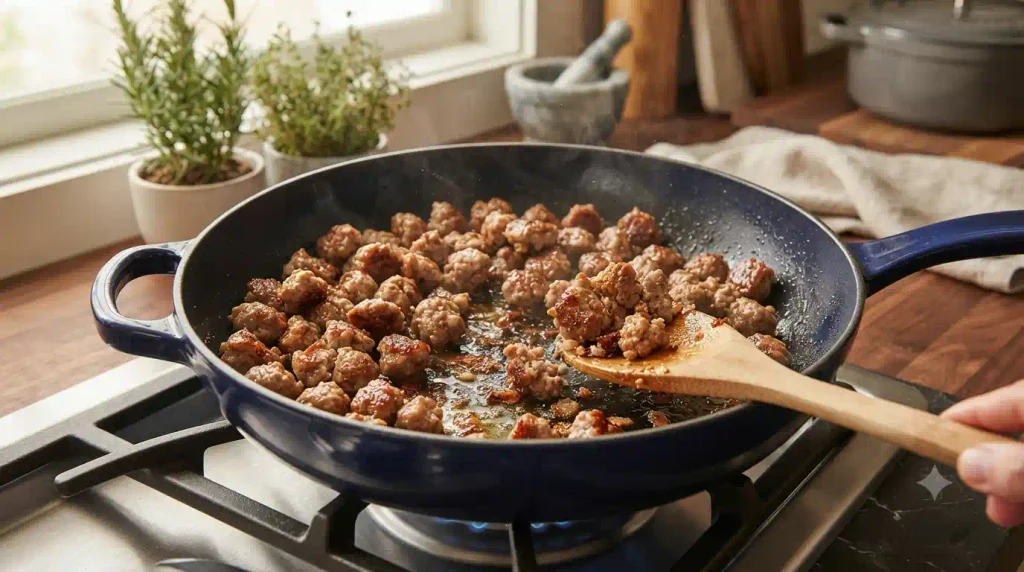
Heat 1 tablespoon olive oil in a large deep skillet over medium-high heat.
Add the sausage and break it into bite-size crumbles with a wooden spoon. Cook for about 5–7 minutes, stirring occasionally, until browned and fully cooked.
You want a little browning on the bottom of the pan. Those browned bits contain loads of flavor and will loosen once the broth is added.
If the sausage releases an excessive amount of grease, carefully spoon some out. Leave roughly a tablespoon behind for flavor.
For food safety, ground pork sausage should reach an internal temperature of 160°F (71°C).
Step 2: Build the Aromatic Base
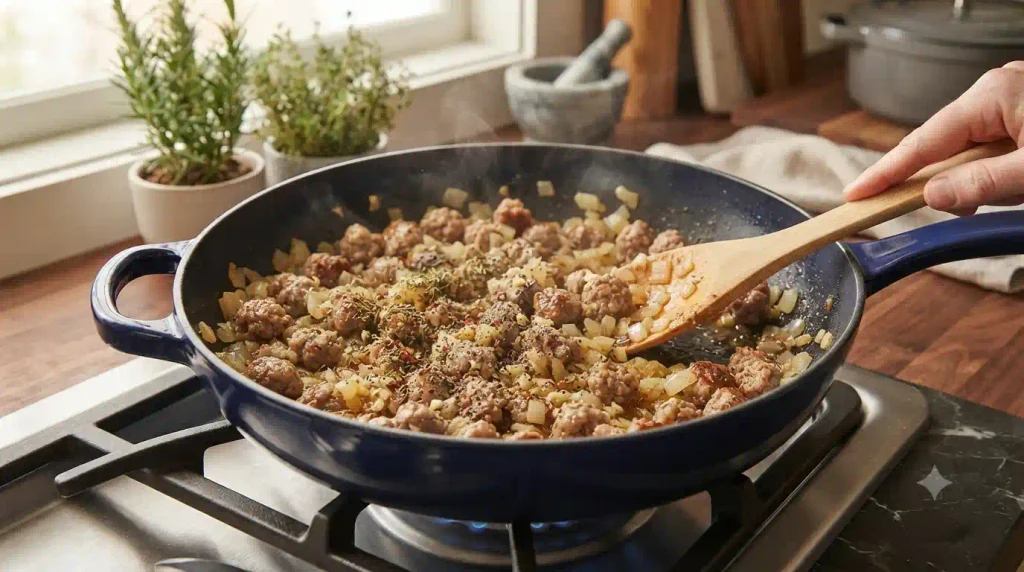
Reduce the heat to medium.
Add the diced onion directly to the sausage and cook for 2–3 minutes, until it begins to soften.
Stir in the garlic, Italian seasoning, red pepper flakes, black pepper, and salt. Cook for only 30–60 seconds.
Keep an eye on the garlic. Burned garlic can turn an otherwise beautiful cream sauce bitter surprisingly quickly.
Step 3: Toast the Orzo
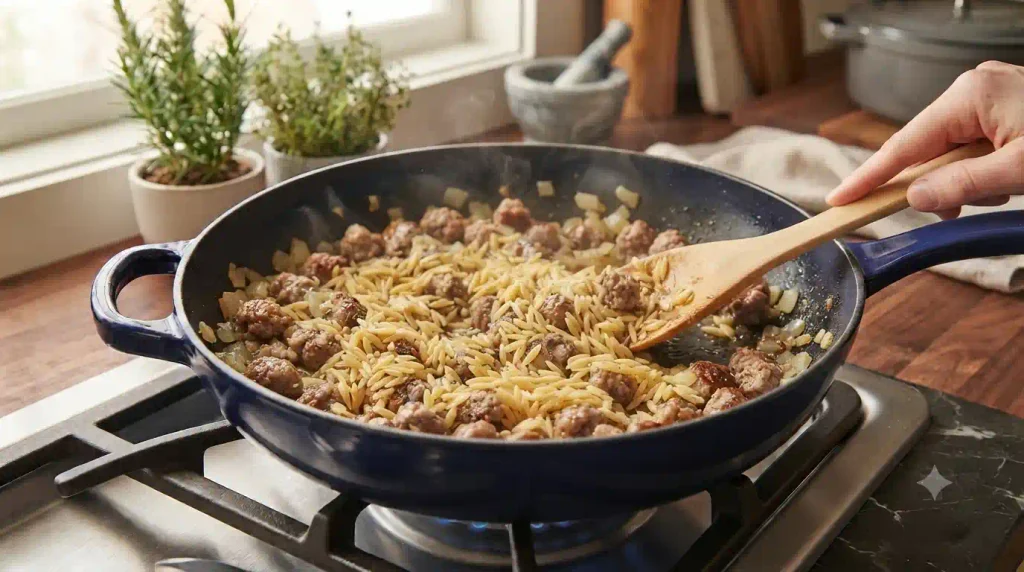
Add 1 cup dry orzo directly to the skillet.
Stir continuously for about 1 minute, allowing the pasta to become coated in the sausage drippings and seasonings.
This quick toast gives the orzo a slightly nuttier flavor. Don’t worry about cooking it through at this point—it still needs the broth.
Step 4: Simmer the Orzo
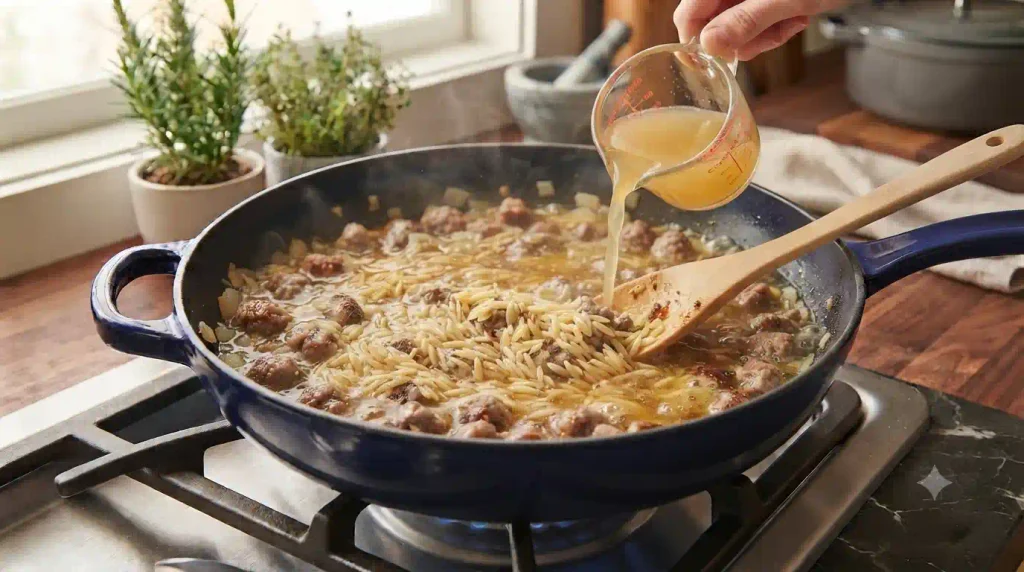
Pour in 2 cups chicken broth and scrape your spoon across the bottom of the skillet to release those flavorful browned bits.
Bring everything to a gentle simmer.
Reduce the heat to medium-low and cook for approximately 9–12 minutes, stirring every couple of minutes so the orzo doesn’t stick to the bottom.
Keep the simmer gentle rather than aggressively boiling it.
If the liquid disappears before the pasta is tender, add another ¼ cup broth or hot water and continue cooking.
Orzo brands can absorb liquid differently, so trust the texture rather than the clock.
Step 5: Make It Creamy
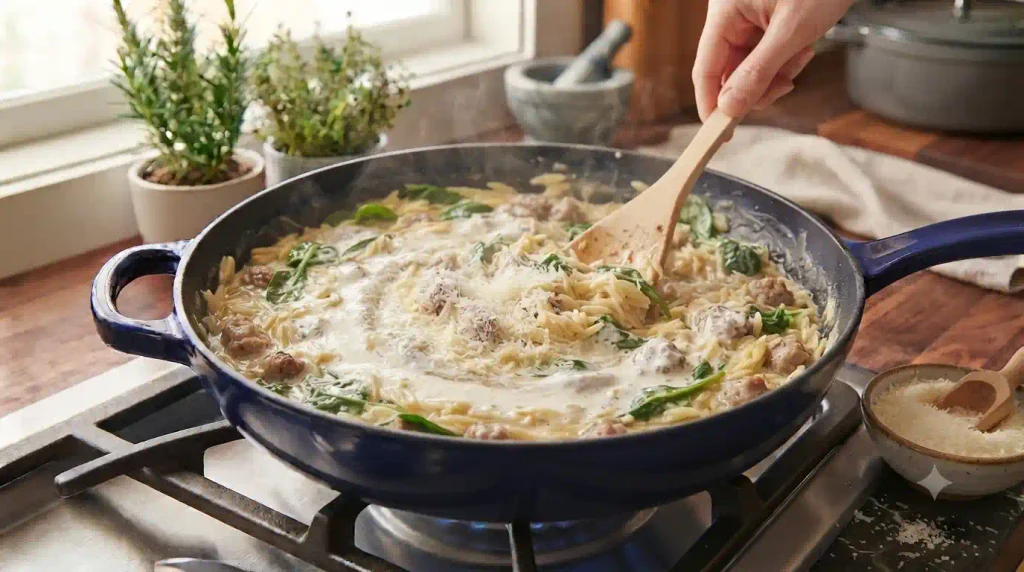
Once the orzo is tender but still has a slight bite, reduce the heat to low.
Stir in:
- ½ cup heavy cream
- 2 cups baby spinach
Cook for another 1–2 minutes, just until the spinach wilts.
Remove the skillet from the heat before stirring in ½ cup Parmesan. This helps the cheese melt smoothly instead of becoming grainy or clumping.
The sauce may look slightly loose right now. That’s exactly what you want. It thickens noticeably as the orzo sits.
Step 6: Rest, Season, and Serve
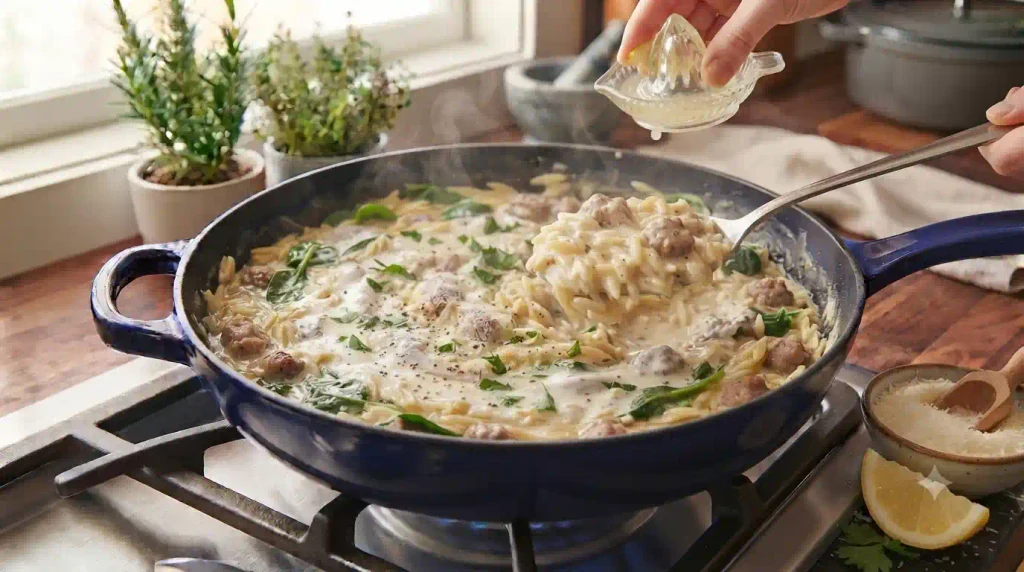
Let the skillet rest for 2–3 minutes.
Taste before adding additional salt because both sausage and Parmesan can already be fairly salty.
For a brighter finish, stir in 1 teaspoon fresh lemon juice. Sprinkle with chopped parsley and a little extra Parmesan if you like.
Serve while warm and creamy.
If your orzo becomes thicker than you’d like while sitting, stir in a splash of warm broth, milk, or cream. It loosens right back up.
Health Benefits
This is comfort food first, but it can still provide several useful nutrients.
Protein: Sausage and Parmesan provide a substantial amount of protein, which contributes to muscle maintenance and helps make the meal satisfying.
Iron and B vitamins: Meat provides iron and several B vitamins involved in normal energy metabolism.
Spinach: Baby spinach contributes folate, vitamin K, carotenoids, and other micronutrients without dramatically changing the flavor of the dish.
Calcium: Parmesan and cream contribute calcium, which is important for normal bone and muscle function.
For a lighter version, use lean chicken or turkey sausage, replace part of the heavy cream with milk, and increase the spinach or add vegetables such as zucchini, peas, or mushrooms.
Keep in mind that sausage and Parmesan can contain considerable sodium and saturated fat. Choosing lower-sodium broth and controlling the added salt makes the recipe easier to balance.
Nutrition Information (Per Serving)
The following values are estimates for one-quarter of the recipe. Exact nutrition varies considerably with the sausage, broth, cream, and Parmesan brands used.
| Nutrient | Approximate Amount |
|---|---|
| Calories | 650 kcal |
| Protein | 29 g |
| Fat | 43 g |
| Carbohydrates | 41 g |
For precise dietary tracking, calculate the recipe using the nutrition labels from your specific ingredients.
Pro Tips & Variations
- Don’t rinse the orzo. Its surface starch helps create that wonderfully creamy consistency.
- Stir regularly, but not constantly. Orzo can settle onto the skillet and stick, especially as the liquid reduces.
- Use freshly grated Parmesan. Pre-shredded cheese often contains anti-caking ingredients and may not melt as smoothly.
- Watch the heat after adding cream. A gentle temperature keeps the sauce smooth.
- Don’t overcook the orzo. Stop when it’s tender with a slight bite because it continues absorbing liquid while resting.
- Try spicy sausage. Hot Italian sausage gives the whole dish extra personality without requiring much additional seasoning.
- Use chicken or turkey sausage. It’s an easy way to reduce some of the richness while keeping plenty of savory flavor.
- Add mushrooms. Brown sliced mushrooms after cooking the sausage for an earthy variation.
- Make it tomato-creamy. Add 1–2 tablespoons tomato paste with the aromatics and cook briefly before adding the orzo.
- Add more vegetables. Peas, chopped kale, zucchini, broccoli florets, or roasted red peppers can all work.
- No heavy cream? Half-and-half works, although the final sauce won’t be quite as rich.
- Want extra heat? Increase the red pepper flakes or finish each serving with cracked black pepper.
One important kitchen lesson: don’t judge the sauce immediately after turning off the heat. Orzo is an enthusiastic little sponge. Give it two minutes and a sauce that looked loose in the pan can become beautifully creamy.
How Much Does It Cost to Make?
Prices vary by location, supermarket, and brand, but here’s a reasonable rough estimate using typical U.S. grocery prices.
| Ingredient | Estimated Cost |
|---|---|
| Italian sausage | $4.50 |
| Orzo | $1.00 |
| Chicken broth | $1.25 |
| Heavy cream | $1.25 |
| Parmesan | $1.75 |
| Baby spinach | $1.50 |
| Onion + garlic | $0.80 |
| Oil + seasonings + lemon | $0.70 |
| Estimated Total | $12.75 |
| Approx. Cost Per Serving | $3.20 |
Using store-brand broth, pasta, and cheese or buying sausage on sale can bring the total down further. You’ll also have leftovers of several ingredients for other meals.
Frequently Asked Questions
Can you cook orzo directly in the sauce without boiling it first?
Yes. In fact, that’s one of the best parts of this recipe. The dry orzo cooks directly in the chicken broth. As it cooks, starch enters the surrounding liquid and helps produce a creamy sauce.
Just stir the pan regularly because orzo is more likely to stick as the broth reduces.
Why is my sausage orzo too thick?
Orzo continues absorbing liquid even after you remove it from the heat. If your sauce becomes too thick, stir in 2–4 tablespoons of warm chicken broth, milk, or cream until it reaches your preferred consistency.
The same trick works when reheating leftovers.
Can I make creamy sausage orzo ahead of time?
Yes, although it’s at its creamiest immediately after cooking.
Cool leftovers promptly and refrigerate them in an airtight container. For best quality, use within 3–4 days. When reheating, add a splash of broth or milk and heat until thoroughly hot.
Don’t leave cooked sausage or creamy pasta sitting at room temperature for extended periods.
Can I freeze creamy sausage orzo?
You can, but freezing isn’t my first choice for this particular dish. Cream sauces can separate slightly after thawing, while cooked orzo may become softer.
For the best texture, enjoy it fresh or refrigerated. If you do freeze it, cool it promptly, store it securely, thaw it safely in the refrigerator, and gently reheat it with a splash of fresh liquid.
Final Thoughts
Creamy sausage orzo is exactly the kind of dinner worth keeping in your back pocket: hearty enough for a chilly evening, quick enough for a weeknight, and simple enough that you aren’t staring at a sink full of cookware afterward.
The biggest secret is not doing too much. Let the sausage brown, give the orzo time to absorb that flavorful broth, and add the Parmesan off the heat. Serve it straight from the skillet with a salad or some crusty bread, and you’ve got a comforting homemade dinner without boiling or draining a separate pot of pasta.