

There’s something deeply satisfying about walking into the kitchen and knowing dinner has been slowly cooking while you got on with your day. When I’m craving rich, old-fashioned comfort food without standing over the stove for hours, pork neck bones are one of those humble cuts I come back to. They’re inexpensive, packed with flavor, and practically made for slow cooking.
This slow cooker method turns a budget-friendly cut into tender, juicy pork surrounded by a savory onion-and-garlic gravy. The long, gentle cooking time gives the connective tissue time to soften, so the meat pulls away from the bones with very little effort. Serve it over rice, mashed potatoes, or creamy grits and you’ve got a hearty dinner that tastes like it simmered all day—because it did.
Prep & Cook Time
This is a true set-it-and-forget-it comfort food recipe. Most of the work happens during the first 15 minutes.
| Recipe Detail | Time / Amount |
|---|---|
| Prep Time | 15 minutes |
| Cook Time on LOW | 7–8 hours |
| Cook Time on HIGH | 4–5 hours |
| Total Time | About 7 hours 15 minutes |
| Servings | 6 servings |
| Best Cooking Method | LOW for maximum tenderness |
Chef’s note: If your schedule allows it, use the LOW setting. Pork neck bones contain plenty of connective tissue, and slow, gentle heat gives it more time to break down into gelatin, creating noticeably softer meat and a richer cooking liquid.
What Equipment Do You Need?
You don’t need any specialty equipment for this recipe.
- 6-quart slow cooker
- Large cutting board
- Sharp knife
- Measuring cups and spoons
- Small mixing bowl
- Tongs
- Large spoon or ladle
- Paper towels
- Fine-mesh strainer, optional for smoother gravy
- Instant-read meat thermometer
A 6-quart slow cooker gives the pork enough room to cook evenly without packing the bones too tightly.
Ingredients
For approximately 6 servings, you’ll need:
- 4 pounds pork neck bones
- 1 large yellow onion, sliced
- 4 garlic cloves, minced
- 2 cups low-sodium chicken broth
- 1 tablespoon Worcestershire sauce
- 1 tablespoon apple cider vinegar
- 1 tablespoon olive oil
- 2 teaspoons smoked paprika
- 1½ teaspoons kosher salt, or to taste
- 1 teaspoon freshly ground black pepper
- 1 teaspoon garlic powder
- 1 teaspoon onion powder
- 1 teaspoon dried thyme
- ½ teaspoon cayenne pepper, optional
- 2 bay leaves
- 2 tablespoons cornstarch
- 2 tablespoons cold water
- 2 tablespoons chopped fresh parsley, optional for serving
Important: Pork neck bones vary in size and meatiness. Look for packages with a good amount of meat attached rather than mostly exposed bone.
Why Each Ingredient Matters
There’s more happening here than simply putting pork and broth into a slow cooker. Each ingredient helps balance the richness of this cut.
| Ingredient | Why It Matters |
|---|---|
| Pork neck bones | Rich in connective tissue that softens during slow cooking, giving the dish its tender texture and full-bodied broth. |
| Yellow onion | Becomes sweet and soft during cooking while building the savory base. |
| Garlic | Adds aromatic depth and balances the richness of the pork. |
| Chicken broth | Provides moisture and creates the foundation for the gravy. |
| Worcestershire sauce | Adds concentrated savory, slightly tangy umami flavor. |
| Apple cider vinegar | A little acidity cuts through the richness without making the dish taste sour. |
| Smoked paprika | Adds warm color and a subtle smoky character. |
| Garlic & onion powder | Reinforce the fresh aromatics and season the meat evenly. |
| Thyme | Gives the broth a gentle earthy, herbal flavor. |
| Cayenne | Adds background warmth; leave it out for a completely mild dish. |
| Bay leaves | Slowly perfume the cooking liquid with subtle herbal notes. |
| Cornstarch | Thickens the flavorful cooking juices into an easy gravy. |
The combination of fat, gelatin, savory seasonings, and a touch of acidity is what keeps the finished dish rich without tasting flat or overly heavy.
Step-by-Step Instructions
Step 1: Clean, Dry, and Season the Pork
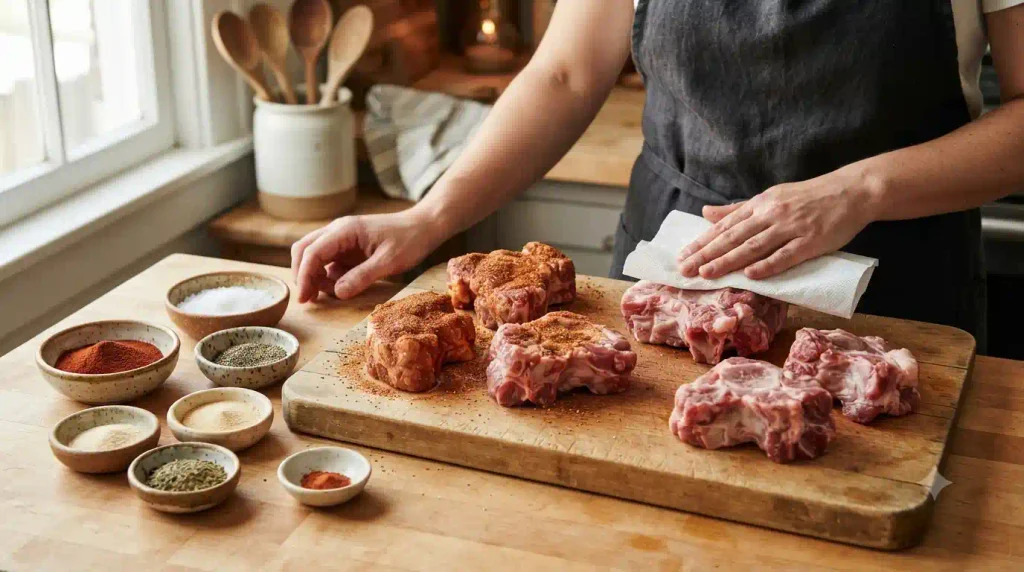
Remove the pork neck bones from their packaging and inspect them carefully. Pat them thoroughly dry with paper towels.
Place the pork in a large bowl or on a clean tray. Sprinkle it evenly with:
- Smoked paprika
- Salt
- Black pepper
- Garlic powder
- Onion powder
- Dried thyme
- Cayenne, if using
Rub the seasoning over all sides of the meat.
Food safety tip: Raw pork can spread bacteria to nearby surfaces. Wash your hands with soap after handling it, and thoroughly clean the cutting board, utensils, countertop, and anything else that touched the raw meat. There is no need to rinse raw pork under the tap.
Step 2: Build the Flavor Base

Add the sliced onion to the bottom of your slow cooker, followed by the minced garlic.
Arrange the seasoned pork neck bones over the onions.
Pour in the chicken broth, Worcestershire sauce, apple cider vinegar, and olive oil. Add the bay leaves.
You don’t need enough liquid to completely submerge the pork. The meat and onions will release additional juices as they cook.
Try to arrange the neck bones in an even layer where possible. A little overlapping is perfectly fine—my slow cooker rarely looks picture-perfect at this stage.
Step 3: Slow Cook Until Tender
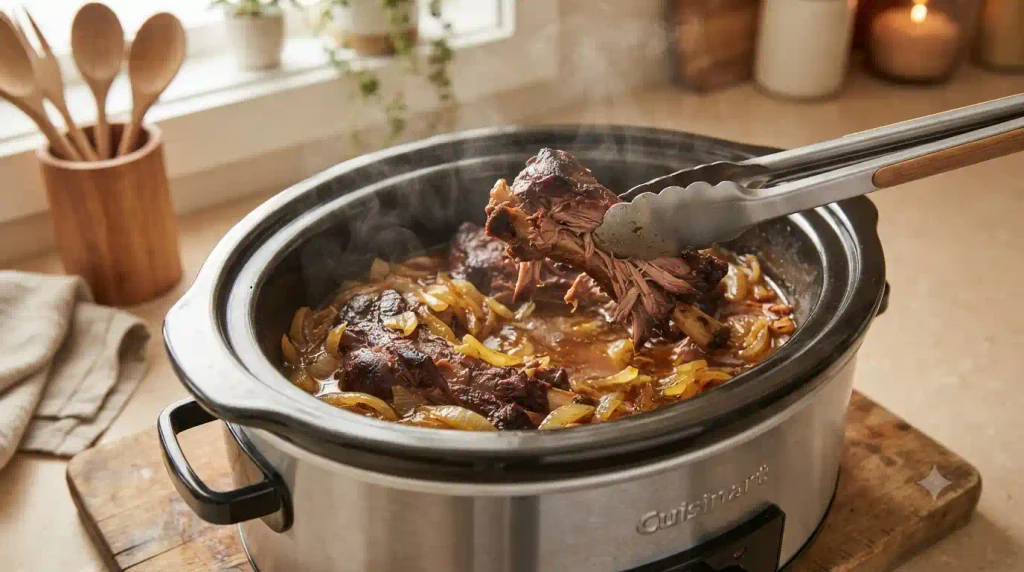
Cover the slow cooker securely.
Cook:
On LOW: 7–8 hours
OR
On HIGH: 4–5 hours
Avoid repeatedly lifting the lid. Every peek releases heat and can extend the cooking time.
The pork is ready when the meat is extremely tender and pulls away from the bones easily with a fork or tongs.
For food safety, pork should reach a safe internal temperature; however, neck bones benefit from cooking well beyond the point of basic doneness because the additional cooking time is what softens their connective tissue.
Important: Because neck bones contain many small and irregular bones, check the meat carefully while serving, particularly if serving children or older adults.
Step 4: Remove the Pork Carefully
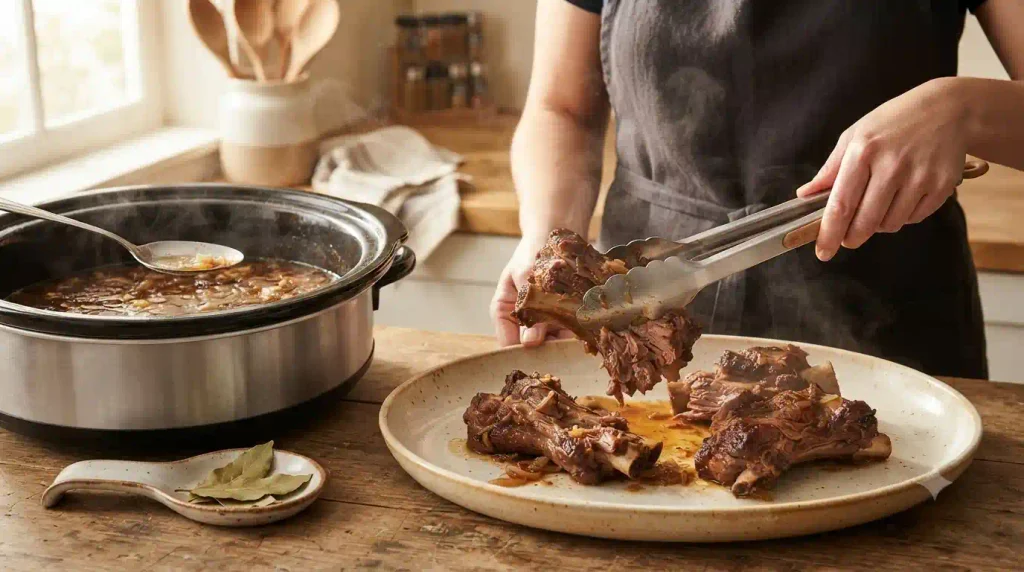
Once tender, turn off the slow cooker and remove the neck bones with tongs.
Transfer them to a large serving dish and loosely cover them to keep warm.
Remove and discard the bay leaves.
At this point, you’ll notice the cooking liquid looks much richer than the broth you started with. That body comes partly from gelatin released as the connective tissue slowly cooks.
If there is more fat on the surface than you prefer, skim some away with a spoon. Don’t remove every drop—a little fat carries a lot of the flavor.
Step 5: Make the Easy Gravy

In a small bowl, whisk together:
- 2 tablespoons cornstarch
- 2 tablespoons cold water
Mix until completely smooth.
With the slow cooker set to HIGH, gradually stir the cornstarch slurry into the hot cooking liquid.
Cover and cook for approximately 10–15 minutes, or until the gravy reaches your preferred thickness.
Don’t pour dry cornstarch straight into the slow cooker. It tends to form stubborn little lumps that are much harder to fix afterward.
Taste the gravy before adding additional salt. Pork and broth can already contain a fair amount of sodium.
Step 6: Finish and Serve
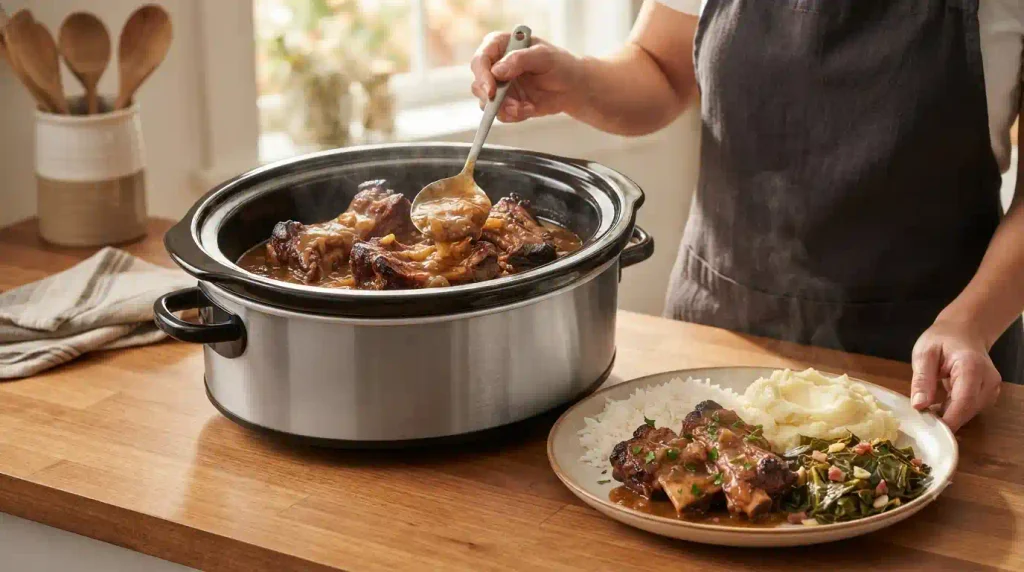
Return the pork neck bones to the slow cooker and gently coat them with the warm gravy, or arrange them on a platter and spoon the gravy over the top.
Sprinkle with fresh parsley if desired.
Serve immediately with your favorite comfort-food sides.
Great choices include:
- Steamed white rice
- Brown rice
- Mashed potatoes
- Creamy grits
- Collard greens
- Green beans
- Cabbage
- Cornbread
- Roasted vegetables
Keep an empty side plate on the table for the bones. It’s a small detail, but it makes this wonderfully messy dinner much easier to enjoy.
Health Benefits
Pork neck bones are certainly rich comfort food, but they can still contribute useful nutrients to a balanced meal.
High-quality protein: Pork provides complete protein containing the essential amino acids your body needs for maintaining and repairing muscle and other tissues.
B vitamins: Pork naturally provides several B vitamins, including thiamine (vitamin B1), which plays an important role in normal energy metabolism.
Minerals: Pork can contribute minerals such as selenium, zinc, and phosphorus.
Satisfying meal: Protein and fat make this a filling main dish. Pairing a moderate serving with vegetables and a sensible portion of rice or potatoes creates a more balanced plate.
Homemade sodium control: Using low-sodium broth allows you to control the seasoning more easily than many ready-made sauces.
Keep in mind that neck bones can be relatively fatty depending on the cut. If you’re watching your saturated fat intake, skim excess fat from the cooking liquid and serve the pork alongside plenty of vegetables.
Nutrition Information (Per Serving)
The following figures are approximate because pork neck bones vary considerably in the ratio of meat, bone, and fat.
| Nutrient | Approximate Amount |
|---|---|
| Calories | 430 kcal |
| Protein | 34 g |
| Fat | 29 g |
| Carbohydrates | 8 g |
Serving estimate: Based on approximately 6 servings and does not include rice, potatoes, cornbread, or other side dishes.
For medically necessary nutrition tracking, calculate the values using the exact brand and weight of ingredients you use.
Pro Tips & Variations
Choose meaty neck bones. Packages can vary dramatically. Look through the wrapping and choose pieces with plenty of visible meat.
Cook them LOW and slow when possible. HIGH works when you’re short on time, but LOW generally gives connective tissue more time to soften gradually.
Don’t judge tenderness by time alone. One package might become tender after 7 hours while another needs closer to 8.5 hours. If the meat still feels tough, it usually needs more cooking—not less.
For deeper flavor, brown the pork first. Heat a little oil in a heavy skillet and sear the seasoned neck bones for a few minutes per side before transferring them to the slow cooker. Browning creates extra roasted flavor through the Maillard reaction.
Make it Southern-style. Add extra black pepper and serve with collard greens, cornbread, and rice.
Make it spicier. Increase the cayenne or add crushed red pepper flakes.
Add vegetables. Chunky carrots or celery can go into the slow cooker during the final few hours. Potatoes can also be added, although very long cooking can make them extremely soft.
Prefer a thinner broth? Skip the cornstarch slurry entirely and serve the pork with its natural cooking juices.
Want thicker gravy? Add a little more slurry, but do it gradually. Gravy continues to thicken as it heats.
Let leftovers cool promptly. Refrigerate cooked pork in shallow, covered containers within two hours and use within a few days, or freeze for longer storage.
How Much Does It Cost to Make?
Pork neck bones are often one of the more affordable pork cuts, although prices vary significantly by store and region.
Here’s a rough U.S. grocery estimate:
| Ingredient | Estimated Cost |
|---|---|
| 4 lb pork neck bones | $8.00–$12.00 |
| Onion | $0.75 |
| Garlic | $0.40 |
| Chicken broth | $1.50–$2.00 |
| Worcestershire sauce | $0.30 |
| Apple cider vinegar | $0.15 |
| Seasonings | $0.75–$1.25 |
| Cornstarch | $0.10 |
| Parsley | $0.50 |
| Estimated Total | $12.45–$17.45 |
| Approx. Cost Per Serving | $2.08–$2.91 |
Staples you already have—such as salt, pepper, oil, cornstarch, and dried spices—can bring the actual shopping cost down.
Adding inexpensive sides such as rice, cabbage, or homemade cornbread can turn the recipe into a satisfying family dinner without pushing the budget too far.
Frequently Asked Questions
How long do pork neck bones take in a slow cooker?
Pork neck bones generally need about 7–8 hours on LOW or 4–5 hours on HIGH. Exact cooking time depends on their size, how much meat is attached, your slow cooker, and how tightly it is filled.
For the best texture, don’t stop simply because the pork is cooked through. Neck bones contain connective tissue that needs prolonged cooking to become truly tender.
Do you need to brown pork neck bones before slow cooking?
No. You can put seasoned neck bones directly into the slow cooker and still get a delicious meal.
Browning is an optional flavor upgrade. Searing creates a deeper roasted taste and better color, so it’s worth doing when you have an extra 10–15 minutes. On a busy weekday, I happily skip it and let the slow cooker handle dinner.
Why are my pork neck bones still tough?
They probably need more time.
Cuts containing lots of connective tissue can actually feel tough partway through cooking. As they continue cooking gently, collagen breaks down and the meat becomes softer.
If the pork is safe but still chewy, cover the slow cooker and continue cooking until a fork slides into the meat easily and it begins pulling away from the bone.
Can you make slow cooker pork neck bones ahead of time?
Yes. In fact, they make excellent leftovers.
Cool the pork and gravy promptly and refrigerate them in airtight containers. When chilled, some fat will solidify on top of the gravy, making it particularly easy to remove if desired.
Reheat the pork thoroughly until steaming hot throughout. Add a splash of broth or water if the gravy becomes too thick in the refrigerator.
Final Thoughts
Slow cooker pork neck bones prove that an inexpensive cut of meat can become an incredibly comforting dinner with a little seasoning and plenty of patience. The slow cooker does the hard work, transforming the pork into tender meat while onions, garlic, herbs, and cooking juices create a rich gravy underneath.
For the best results, cook on LOW, give the pork enough time to become genuinely tender, and season the gravy only after tasting it. Spoon everything over hot rice or mashed potatoes, add a green vegetable on the side, and don’t worry about keeping dinner too tidy. Pork neck bones are meant to be a little messy—and that’s part of what makes them so satisfying.