

There’s something deeply satisfying about opening the fridge, spotting a container of leftover crab meat, and realizing dinner is already halfway done. When you’re craving something warm, creamy, and comforting, that precious crab deserves better than sitting forgotten behind the milk. With a few everyday ingredients, you can turn it into a restaurant-style meal without spending the evening in the kitchen.
This leftover crab meat recipe is rich and creamy without completely hiding the crab’s naturally sweet flavor. Garlic, lemon, Parmesan, and herbs bring everything together in a silky sauce that works beautifully with pasta. It’s quick enough for a weeknight but feels special enough for company.
Leftover Crab Meat Recipe – Creamy, Genius & Delicious
This creamy crab pasta is one of my favorite ways to rescue cooked crab from the fridge. The trick is adding the crab near the end. Since it’s already cooked, it only needs enough heat to warm through. That keeps those delicate pieces tender instead of turning them dry or rubbery.
Prep & Cook Time
| Detail | Time / Amount |
|---|---|
| Prep Time | 10 minutes |
| Cook Time | 20 minutes |
| Total Time | 30 minutes |
| Servings | 4 |
What Equipment Do You Need?
You don’t need any specialist equipment for this recipe. A basic home-kitchen setup works perfectly.
- Large pot for cooking pasta
- Large skillet or sauté pan
- Colander
- Wooden spoon or silicone spatula
- Measuring cups and spoons
- Sharp knife
- Cutting board
- Fine grater or microplane for Parmesan and lemon zest
- Small bowl for checking the crab meat
Chef’s note: Before cooking, spread the crab meat in a small bowl and gently check it with your fingers for any tiny pieces of shell. Finding one with your fingers is much nicer than finding it with your teeth!
Ingredients
For 4 servings, you’ll need:
- 8 oz (225 g) linguine, spaghetti, or fettuccine
- 8 oz (225 g) cooked leftover crab meat
- 1 tablespoon unsalted butter
- 1 tablespoon olive oil
- 3 garlic cloves, finely minced
- 1 small shallot, finely chopped
- 3/4 cup (180 ml) heavy cream
- 1/3 cup (30 g) finely grated Parmesan cheese
- 1 teaspoon finely grated lemon zest
- 1 1/2 tablespoons fresh lemon juice
- 1/4 teaspoon red pepper flakes, optional
- 1/4 teaspoon freshly ground black pepper
- 1/4 teaspoon salt, plus more for the pasta water
- 2 tablespoons chopped fresh parsley
- 1/3–1/2 cup reserved pasta water, as needed
- Lemon wedges, for serving
Why Each Ingredient Matters
A short ingredient list can produce impressive flavor when every ingredient has a job.
| Ingredient | Why It Matters |
|---|---|
| Crab meat | Provides delicate sweetness, protein, and the signature seafood flavor. |
| Heavy cream | Creates the smooth, luxurious base of the sauce. |
| Parmesan | Adds savory umami and helps thicken the sauce. |
| Butter | Adds richness and gives the sauce a silky finish. |
| Olive oil | Helps sauté the aromatics while balancing the richness of the butter. |
| Garlic | Adds aromatic depth without overpowering the crab. |
| Shallot | Gives the sauce mild onion sweetness. |
| Lemon juice & zest | Acidity cuts through the cream and makes the crab taste fresher and brighter. |
| Red pepper flakes | Provide gentle background heat. |
| Parsley | Adds freshness and a clean herbal finish. |
| Pasta water | Its starch helps loosen the sauce while allowing it to cling to the pasta. |
One important detail is the lemon. Cream, butter, Parmesan, and crab are all rich ingredients. A little acidity stops the finished dish from tasting heavy.
Step-by-Step Instructions
Step 1: Prepare the Crab and Ingredients
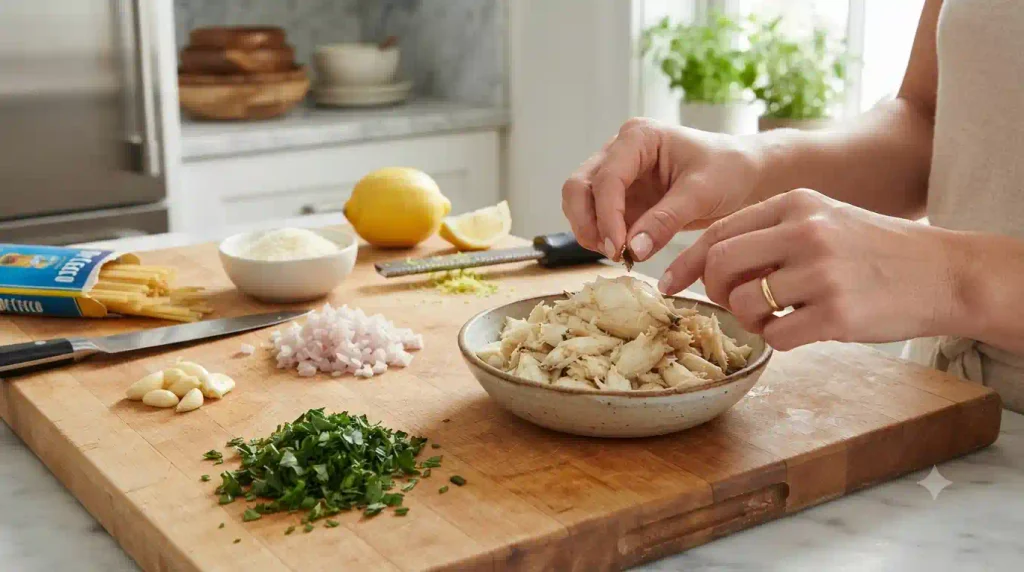
Remove the cooked crab meat from the refrigerator and gently pick through it for shell fragments.
Don’t aggressively shred the crab. Keeping some larger pieces gives the finished pasta a much better texture.
Mince the garlic, finely chop the shallot and parsley, grate the Parmesan, and zest the lemon before you begin cooking. Once the sauce starts, everything moves fairly quickly.
Food safety note: Keep leftover crab refrigerated until you’re ready to use it. Cooked seafood is highly perishable, so don’t leave it sitting at room temperature while you slowly prep everything else.
Step 2: Cook the Pasta
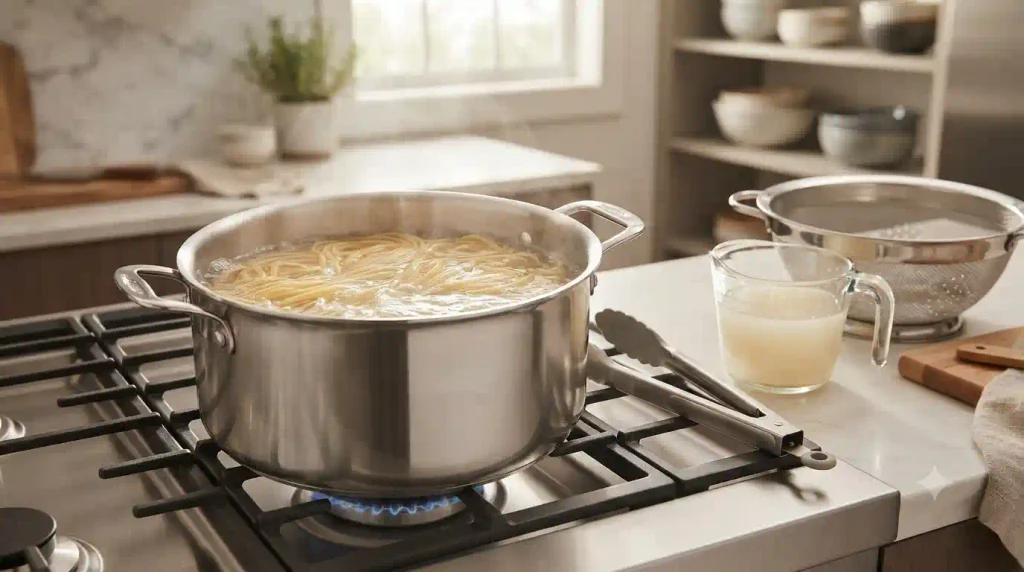
Bring a large pot of generously salted water to a boil.
Add 8 ounces of pasta and cook according to the package directions until al dente. The pasta should still have a slight bite because it will cook for another minute in the sauce.
Before draining, carefully scoop out about 1/2 cup of pasta water.
Drain the pasta, but don’t rinse it. Rinsing removes the surface starch that helps creamy sauce cling to every strand.
Step 3: Build the Flavor Base

While the pasta cooks, place a large skillet over medium-low heat.
Add:
- 1 tablespoon butter
- 1 tablespoon olive oil
- Chopped shallot
Cook for about 2–3 minutes, stirring occasionally, until the shallot becomes soft and translucent.
Add the minced garlic and optional red pepper flakes. Cook for another 30–60 seconds.
Don’t let the garlic turn dark brown. Burnt garlic can make an otherwise delicate crab sauce taste bitter.
Step 4: Make the Creamy Sauce
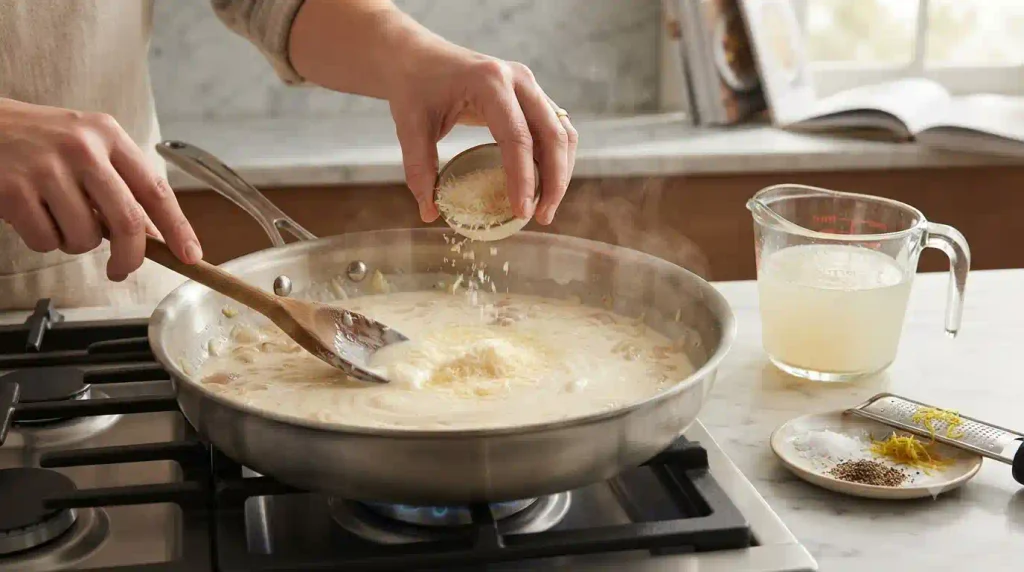
Reduce the heat to low and pour in 3/4 cup heavy cream.
Stir gently and allow the cream to reach a very light simmer for approximately 2–3 minutes. Avoid a hard boil.
Add the Parmesan gradually while stirring continuously.
Once the cheese has melted, add the lemon zest, black pepper, and a small pinch of salt.
The sauce should look smooth and slightly thickened. If it seems too thick, stir in 1–2 tablespoons of reserved pasta water.
Taste before adding additional salt. Both crab and Parmesan can already contain plenty of sodium.
Step 5: Add the Crab and Pasta
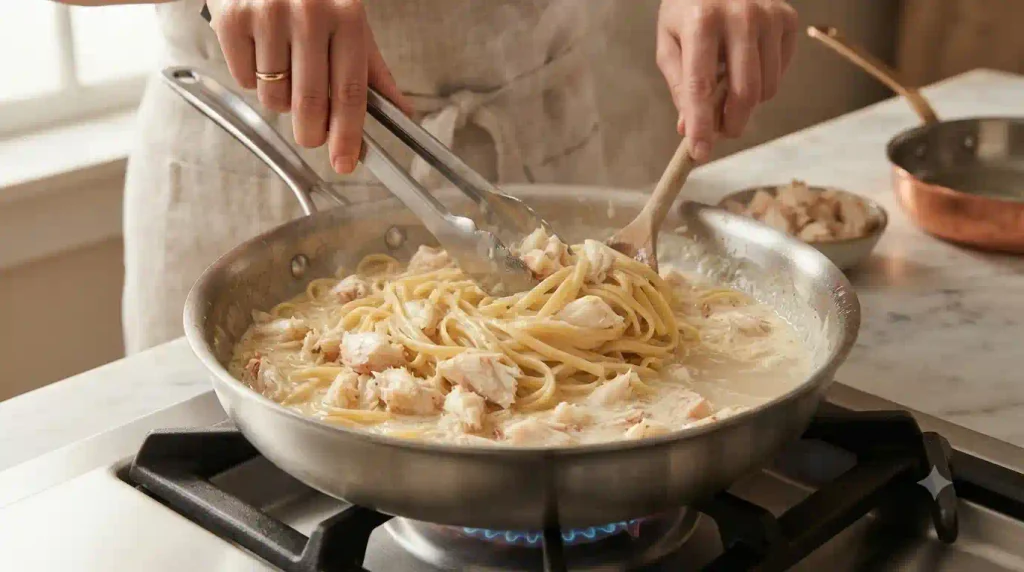
Add the drained pasta directly to the skillet and gently toss until every strand is coated in the creamy sauce.
Now fold in the cooked crab meat.
Keep the heat on low and cook for approximately 2 minutes, just until the crab is thoroughly heated.
This is where restraint matters. The crab has already been cooked once. Long, aggressive cooking can make delicate crab meat dry and stringy.
Add more pasta water, 1 tablespoon at a time, until the sauce becomes glossy and lightly coats the pasta.
Step 6: Finish With Lemon and Herbs
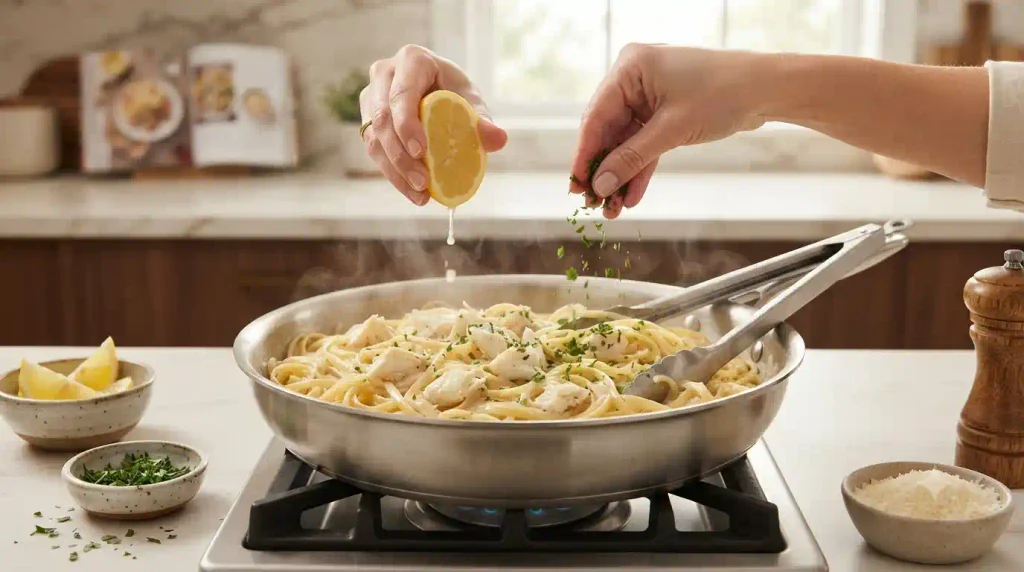
Remove the skillet from the heat.
Stir in:
- 1 1/2 tablespoons fresh lemon juice
- 2 tablespoons chopped parsley
Taste and adjust the seasoning.
If the sauce has tightened while sitting, add another splash of warm pasta water and toss again.
Serve immediately with lemon wedges and, if you like, a light sprinkle of Parmesan or freshly cracked black pepper.
The sauce will naturally thicken as it cools, so this is one of those dishes worth getting onto the table while everyone is ready to eat.
Health Benefits
Crab isn’t just delicious—it can also contribute valuable nutrients to a balanced diet.
High-Quality Protein
Crab provides complete protein containing essential amino acids. Protein supports muscle maintenance, tissue repair, and normal body function.
Vitamin B12
Shellfish such as crab can be a particularly useful source of vitamin B12, which contributes to healthy red blood cell formation and normal nervous-system function.
Important Minerals
Crab can provide minerals including selenium and zinc. Selenium plays a role in antioxidant defenses, while zinc supports normal immune function.
Portion-Friendly Comfort Food
Cream and Parmesan make this a rich dish, but pairing a moderate portion with vegetables or a large green salad can create a more balanced meal.
For a lighter variation, reduce the cream and use additional pasta water to create the sauce.
Allergy reminder: Crab is a crustacean shellfish and can cause serious allergic reactions. Don’t serve this dish to someone with a shellfish allergy.
Nutrition Information (Per Serving)
The following values are estimates and will vary depending on the specific pasta, crab, cream, cheese, and portion sizes used.
| Nutrient | Approximate Amount |
|---|---|
| Calories | 490 kcal |
| Protein | 25 g |
| Fat | 23 g |
| Carbohydrates | 46 g |
If precise nutritional information is important for dietary or medical reasons, calculate the recipe using the exact brands and quantities you use at home.
Pro Tips & Variations
1. Don’t Overcook Leftover Crab
This is the biggest rule.
Your crab is already cooked, so you’re reheating rather than cooking it. Fold it into the pasta near the end and heat only until warmed through.
2. Save More Pasta Water Than You Think You’ll Need
Cream sauces often look perfect in the pan and then become noticeably thicker after sitting for two minutes.
Starchy pasta water is the easiest fix. Add a tablespoon or two and toss until the sauce becomes silky again.
3. Make It Lighter
Replace part of the heavy cream with pasta water. You can also use half-and-half, although the sauce may be slightly thinner.
4. Add Vegetables
This recipe works beautifully with:
- Baby spinach
- Peas
- Asparagus
- Mushrooms
- Cherry tomatoes
- Broccoli
- Zucchini
Add quick-cooking vegetables during the final few minutes.
5. Give It More Heat
Double the red pepper flakes or add a tiny pinch of cayenne.
You want enough spice to wake up the cream sauce without drowning out the delicate crab flavor.
6. Try Fresh Herbs
Parsley is simple and reliable, but fresh chives, dill, or a small amount of tarragon also pair beautifully with crab.
7. Turn It Into a Creamy Crab Toast
Skip the pasta and make the creamy crab mixture slightly thicker. Spoon it over toasted sourdough or crusty bread for an easy lunch.
8. Make It Extra Luxurious
For a special dinner, finish the sauce with another small knob of cold butter after removing the skillet from the heat. Stir until melted for an especially glossy finish.
How Much Does It Cost to Make?
Using leftover crab makes this meal considerably more economical because the most expensive ingredient has already been purchased for another meal.
Here’s a rough U.S. grocery-cost estimate:
| Ingredient | Estimated Cost Used |
|---|---|
| Leftover crab meat | $6.00–$10.00 |
| Pasta | $1.00 |
| Heavy cream | $1.50 |
| Parmesan | $1.50 |
| Butter & olive oil | $0.60 |
| Garlic & shallot | $0.80 |
| Lemon | $0.60 |
| Parsley & seasonings | $0.75 |
| Estimated Total | $12.75–$16.75 |
| Approx. Cost Per Serving | $3.20–$4.20 |
Prices vary considerably by location, season, crab variety, and whether you’re counting the crab as an already-paid-for leftover.
If the crab would otherwise have gone to waste, the practical additional cost of turning it into dinner is much lower.
Frequently Asked Questions
What can I make with leftover crab meat?
Leftover crab meat is extremely versatile. You can use it in creamy pasta, crab cakes, omelets, seafood chowder, stuffed mushrooms, quesadillas, salads, dips, sandwiches, fried rice, or crab toast.
For delicate lump crab, recipes with minimal cooking are particularly useful because they preserve its texture.
How long is leftover cooked crab good in the fridge?
Cooked crab is highly perishable and should be refrigerated promptly in a covered container. As a general food-safety rule, cooked leftovers should typically be used within 3–4 days when continuously refrigerated at 40°F (4°C) or below.
If the crab has an unusual odor, texture, or appearance—or you’re uncertain how it was stored—the safest choice is to discard it. Don’t taste questionable seafood to determine whether it’s safe.
Can I use canned crab meat for this recipe?
Yes.
Drain canned crab thoroughly before adding it. Gently check for shell fragments and taste before seasoning the sauce because some canned crab can be fairly salty.
Refrigerated pasteurized crab meat can also work well.
Can I reheat creamy crab pasta?
Yes, although gentle reheating gives the best results.
Place leftovers in a skillet over low heat and add a small splash of milk, cream, or water. Stir gently until heated through.
Avoid repeatedly reheating seafood, and don’t blast creamy crab pasta over very high heat. High temperatures can split the sauce and make the crab tough.
Final Thoughts
A container of leftover crab doesn’t have to become another forgotten fridge casualty. With pasta, cream, garlic, Parmesan, and a squeeze of lemon, you can turn it into a comforting dinner in about 30 minutes.
The real secret is simple: treat the crab gently. Build your sauce first, add the cooked crab near the end, and let its naturally sweet flavor remain the star.
Serve the pasta while it’s hot and silky, preferably with a crisp green salad or roasted vegetables. And don’t be surprised if everyone assumes you planned this meal from scratch—there’s no need to tell them dinner started with leftovers.