

There is something irresistible about bringing home a tray of crab and turning it into a buttery seafood feast. The sweet smell, sizzling garlic, and glossy sauce make an ordinary evening feel like a restaurant dinner. Better still, you can prepare everything in your own kitchen without complicated techniques or hard-to-find ingredients.
This Sam’s Club crab recipe is designed for cooked king crab legs or snow crab clusters commonly sold chilled or frozen. The garlic butter coats every shell and slips into the tender meat inside. A little lemon balances the richness, while Old Bay seasoning adds gentle warmth. It is messy, buttery, and absolutely worth keeping extra napkins nearby.
Prep & Cook Time
| Recipe detail | Amount |
|---|---|
| Prep time | 10 minutes |
| Cook time | 15 minutes |
| Total time | 25 minutes |
| Servings | 4 servings |
| Cooking method | Oven-baked and butter-basted |
Recipe note: This is a homemade restaurant-style preparation for crab purchased from Sam’s Club. It is not an official Sam’s Club recipe.
What Equipment Do You Need?
You only need a few everyday kitchen tools:
- Large rimmed baking sheet or roasting pan
- Aluminum foil
- Small saucepan
- Sharp kitchen shears
- Pastry brush or large spoon
- Measuring spoons
- Citrus juicer or handheld lemon squeezer
- Crab crackers and seafood picks
- Instant-read food thermometer, optional
- Small bowls for serving melted butter
Ingredients
For the crab
- 3 pounds (1.36 kg) cooked king crab legs or snow crab clusters, thawed if frozen
- 2 tablespoons water
- 1 medium lemon, cut into wedges
- 2 tablespoons chopped fresh parsley, for serving
For the restaurant-style garlic butter
- ¾ cup (170 g) unsalted butter
- 5 large garlic cloves, finely minced
- 1 tablespoon fresh lemon juice
- 1 teaspoon Old Bay seasoning
- ½ teaspoon smoked paprika
- ¼ teaspoon freshly ground black pepper
- ⅛ teaspoon cayenne pepper, optional
- ¼ teaspoon fine sea salt, or to taste
Why Each Ingredient Matters
| Ingredient | Why it is used |
|---|---|
| Cooked crab legs | Crab has naturally sweet, delicate meat. Pre-cooked legs only need to be heated gently, not cooked from scratch. |
| Unsalted butter | Butter carries the garlic and spices while giving the crab its rich restaurant-style finish. Unsalted butter lets you control the seasoning. |
| Fresh garlic | Gently cooking garlic in butter softens its sharpness and creates a warm, savoury aroma. |
| Lemon juice | Acidity cuts through the butter and makes the sweet crab flavour taste brighter. |
| Old Bay seasoning | This classic seafood blend adds celery salt, paprika, and warming spices without overpowering the crab. |
| Smoked paprika | Paprika adds colour and a mild smoky note to the butter sauce. |
| Black pepper | It brings gentle warmth and balances the sweetness of the meat. |
| Cayenne pepper | A small amount gives the sauce a subtle kick. It can be omitted for a mild version. |
| Water | Water creates steam beneath the foil, helping the crab heat evenly without drying out. |
| Fresh parsley | Parsley adds colour and a clean herbal finish to the rich sauce. |
| Sea salt | Salt sharpens the other flavours, but it should be used carefully because crab and Old Bay may already be salty. |
Step-by-Step Instructions
Step 1: Thaw and Prepare the Crab
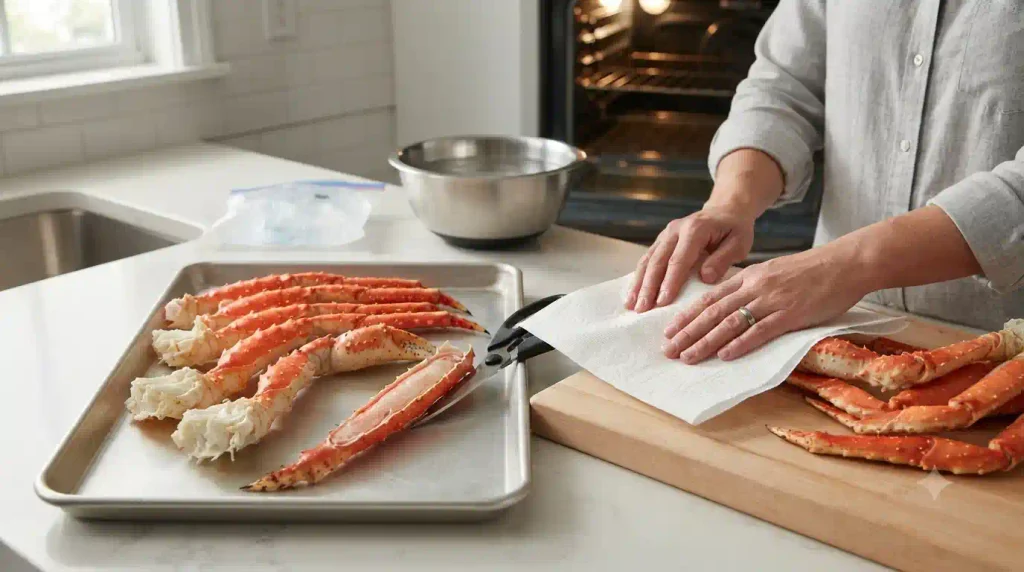
If the crab is frozen, thaw it safely in the refrigerator overnight. For a quicker method, keep it in a sealed bag and submerge it in cold water for 30–45 minutes, changing the water every 15 minutes.
Never thaw seafood on the counter, as the surface can enter an unsafe temperature range before the centre defrosts.
Preheat the oven to 400°F (200°C). Pat the crab shells dry with paper towels. Use kitchen shears to make one long slit along the softer side of each large leg section. Do not completely remove the shell. This opening allows the garlic butter to reach the meat while keeping the legs easy to handle.
Step 2: Make the Garlic Butter
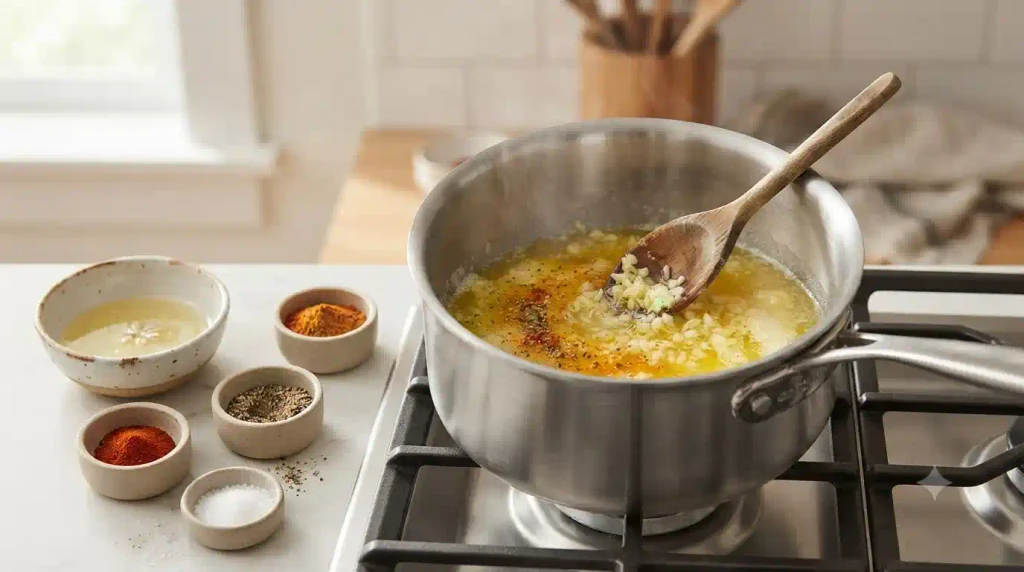
Melt the unsalted butter in a small saucepan over low heat. Add the minced garlic and cook for 60–90 seconds, stirring frequently.
The garlic should smell fragrant but should not turn dark brown. Burnt garlic becomes bitter quickly, so keep the heat gentle—even if dinner guests are already hovering around the kitchen.
Remove the saucepan from the heat. Stir in:
- Lemon juice
- Old Bay seasoning
- Smoked paprika
- Black pepper
- Cayenne, if using
- Sea salt
Taste the butter before adding extra salt.
Step 3: Arrange and Season the Crab
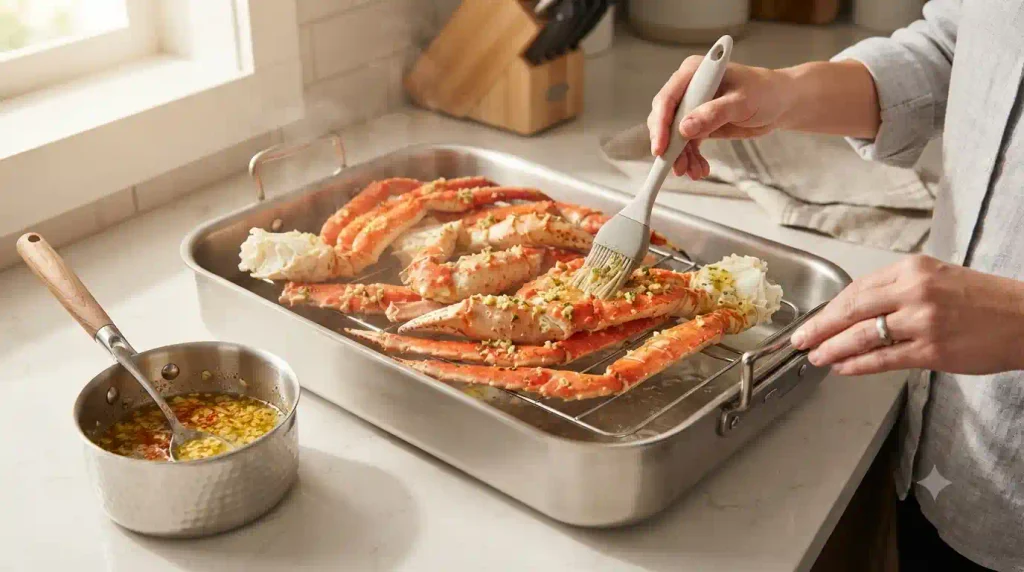
Place the crab legs in a single layer in a large rimmed baking sheet or roasting pan. Slight overlap is fine, but avoid packing them into a tight pile.
Pour 2 tablespoons of water into the bottom of the pan. Brush or spoon approximately two-thirds of the garlic butter over the crab. Work some of the butter through the openings you cut in the shells.
Turn the clusters once so the seasoned butter coats both sides.
Step 4: Cover and Bake
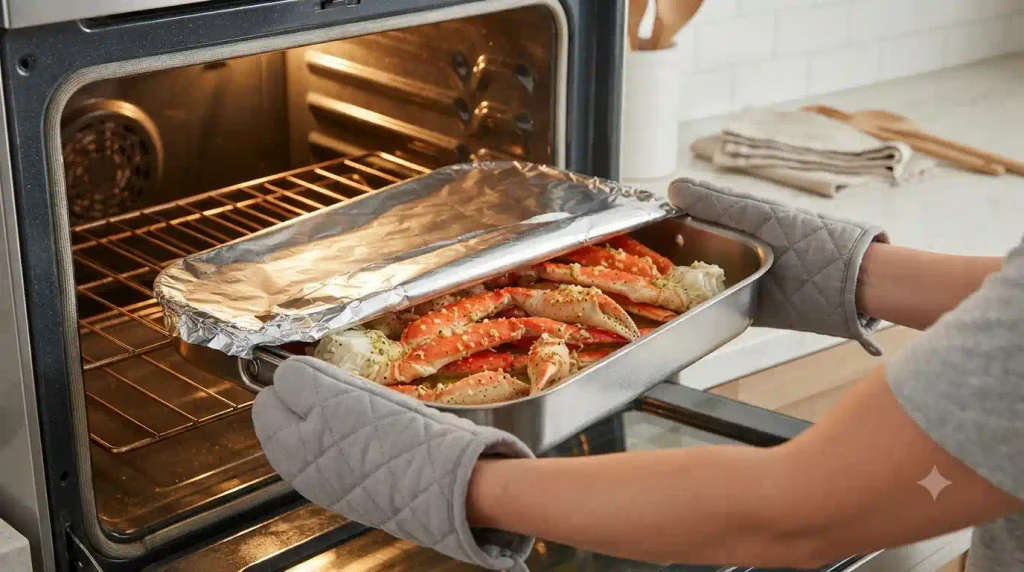
Cover the pan tightly with aluminum foil. The foil traps steam, which warms the meat without pulling out too much moisture.
Bake the thawed crab for 12–15 minutes. Very thick king crab legs may need up to 18 minutes, while smaller snow crab clusters may be ready in about 10–12 minutes.
The crab sold in frozen or chilled packages is usually already cooked. You are reheating it, so avoid leaving it in the oven longer than necessary. Overheated crab becomes dry and rubbery.
Step 5: Baste and Check the Crab
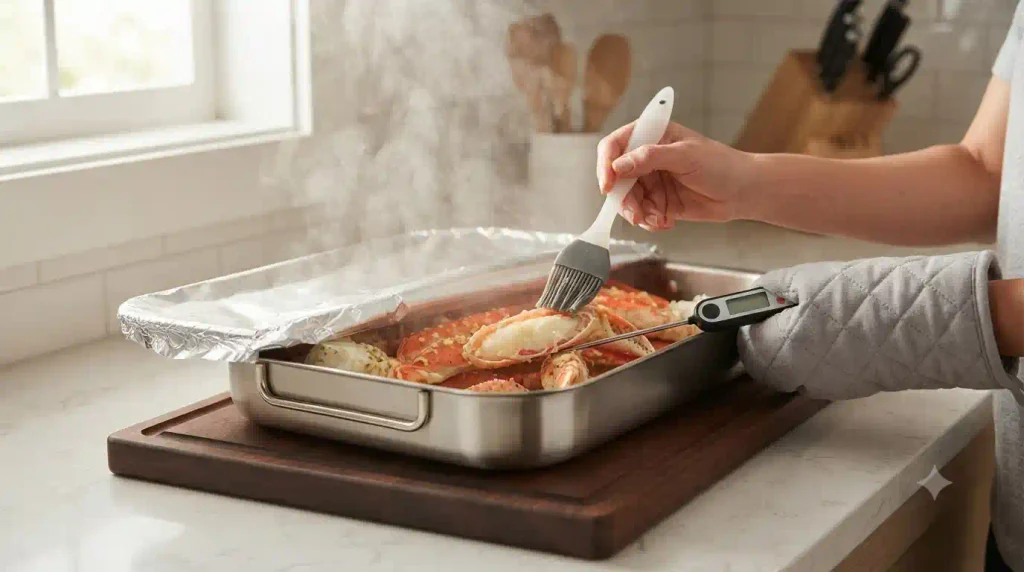
Carefully remove the foil, keeping your face and hands away from the escaping steam. The metal pan, shells, and trapped liquid will be extremely hot.
Brush the crab with some of the remaining garlic butter. The meat should be steaming and opaque. If you use a food thermometer, previously cooked crab should be reheated to approximately 165°F (74°C) for food-safety assurance.
If the centre is still cool, cover the pan and bake for another 2–3 minutes.
Step 6: Garnish and Serve
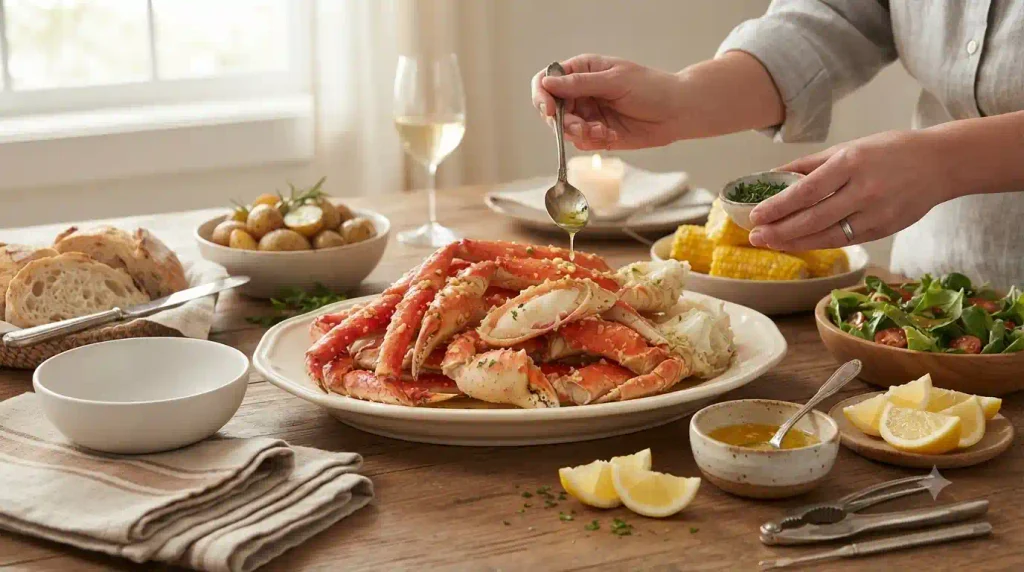
Transfer the hot crab to a large serving platter. Spoon a little more garlic butter over the shells and sprinkle with chopped parsley.
Serve immediately with:
- Lemon wedges
- Remaining warm garlic butter
- Crab crackers and seafood picks
- Crusty bread
- Roasted potatoes
- Corn on the cob
- Green salad or steamed vegetables
Cracking crab at the table can get gloriously messy. Put out a bowl for discarded shells, plenty of napkins, and a warm damp towel for each guest.
Health Benefits
Crab can be part of a nutrient-rich meal, especially when served with vegetables and sensible portions of butter.
- High-quality protein: Crab provides complete protein that supports muscle maintenance and recovery.
- Vitamin B12: This vitamin helps support healthy nerve function and red blood cell production.
- Selenium: Crab contains selenium, an antioxidant mineral involved in thyroid and immune function.
- Zinc: Zinc supports normal immune function and tissue repair.
- Omega-3 fats: Crab provides beneficial marine fats, although amounts vary by species.
- Relatively low in carbohydrates: Plain crab meat contains almost no carbohydrates.
Garlic also supplies antioxidant plant compounds. Lemon contributes vitamin C and bright flavour without adding much sugar.
Butter makes this dish rich in saturated fat and calories, so use the dipping sauce according to your dietary needs. Crab can also be naturally high in sodium and cholesterol. Anyone following a medically restricted diet should check the package information and consult an appropriate healthcare professional.
Allergy warning: Crab is a crustacean shellfish and can cause severe allergic reactions. Do not serve it to anyone with a known shellfish allergy, and prevent cross-contact with other foods and utensils.
Nutrition Information (Per Serving)
The following values are estimates based on four servings and assume that most, but not all, of the garlic butter is consumed.
| Nutrient | Estimated amount |
|---|---|
| Calories | 520 kcal |
| Protein | 35 g |
| Total fat | 40 g |
| Carbohydrates | 4 g |
Actual nutrition will vary based on the crab species, edible meat yield, brand, added sodium, and amount of butter left in the serving dish. Refer to the crab package for the most accurate product-specific information.
Pro Tips & Variations
Chef tips for the best crab
- Check whether the crab is pre-cooked. Most frozen crab legs are cooked before freezing. Cooking them again for too long ruins their delicate texture.
- Thaw before baking. Thawed legs heat more evenly and are easier to split with kitchen shears.
- Cut the shells before seasoning. A small opening gives the butter access to the meat without causing it to fall apart.
- Use low heat for the butter. High heat can burn the garlic and separate the sauce.
- Season cautiously. Packaged crab and seafood seasoning can both contain plenty of sodium.
- Serve it immediately. Crab meat cools quickly once removed from its shell.
- Warm the serving platter. Rinse a heat-safe platter with hot water, dry it thoroughly, and then add the crab.
- Save the shells for stock. Clean, unseasoned shells can add seafood flavour to homemade stock, but refrigerate or freeze them promptly.
Easy variations
- Cajun crab: Add 1 teaspoon Cajun seasoning and an extra pinch of cayenne.
- Herb butter crab: Stir in fresh dill, chives, or thyme with the parsley.
- Honey garlic crab: Add 1–2 teaspoons honey for a lightly sweet glaze.
- Dairy-free version: Replace butter with a good-quality plant-based butter or olive oil.
- Lower-fat version: Make half the butter sauce and increase the lemon juice slightly.
- Extra-lemony crab: Add 1 teaspoon finely grated lemon zest to the finished butter.
- Grilled version: Wrap seasoned crab legs in heavy-duty foil and grill over medium heat for 8–10 minutes, turning once.
- Air-fryer version: Cook smaller clusters at 370°F (188°C) for approximately 5–7 minutes, working in batches.
How Much Does It Cost to Make?
Crab prices can change considerably by location, season, species, and package size. King crab is usually much more expensive than snow crab.
| Item | Estimated US cost |
|---|---|
| 3 pounds cooked snow crab clusters | $36–$60 |
| Butter | $2–$3 |
| Garlic | $0.50–$1 |
| Lemon | $0.75–$1.25 |
| Seasonings and parsley | $1.50–$3 |
| Estimated total | $41–$68 |
| Estimated cost per serving | $10–$17 |
Using king crab may raise the total to approximately $90–$150 or more, depending on local pricing. In the UK, the same recipe may cost roughly £35–£75, with imported king crab costing considerably more.
To save money, choose snow crab clusters, buy during a seafood promotion, and serve the crab with filling sides such as roasted potatoes, bread, corn, or salad. Always check the current package price rather than relying on a fixed estimate.
Frequently Asked Questions
Is Sam’s Club crab already cooked?
Most frozen king crab legs and snow crab clusters sold by warehouse clubs are already cooked and then frozen. The shell may appear bright red or orange, which is another sign that the crab was cooked before packaging. Check the label carefully. This recipe is written for fully cooked crab that only needs reheating.
Do I need to thaw frozen crab legs before baking?
Thawing is strongly recommended because it helps the crab heat evenly. Place the sealed package in the refrigerator overnight. If you must cook from frozen, add a few extra minutes and check the thickest section carefully. Avoid excessive cooking, as the outer meat may dry out before the centre becomes hot.
How do I know when reheated crab legs are ready?
The crab is ready when the meat is steaming, opaque, and hot all the way through. The shells should feel hot, and the butter inside the cut sections should be bubbling gently. For additional food-safety assurance, reheat previously cooked crab to around 165°F (74°C).
How should I store and reheat leftovers?
Remove the crab meat from the shells if practical, then refrigerate it in an airtight container within two hours of serving. Use it within 3–4 days. Reheat gently with a spoonful of water or butter until steaming hot. Do not repeatedly cool and reheat the same portion. Leftover meat is also excellent in crab cakes, pasta, omelettes, or seafood salad.
Final Thoughts
Restaurant-style crab does not require restaurant-level equipment. Good crab, fresh garlic, real butter, and careful reheating do most of the work. Keep the heat gentle, watch the cooking time, and let the natural sweetness of the meat shine.
Serve it straight from the oven with lemon, warm bread, and plenty of napkins. Even if the table gets a little messy, that is part of the fun. Once you taste the buttery crab tucked inside those seasoned shells, this simple seafood dinner may become your favourite celebration meal at home.