

There’s something deeply comforting about a pot of pork menudo simmering on the stove. The rich tomato sauce, tender pork, potatoes, carrots, and savory seasoning make the kitchen smell incredible long before dinner is ready. It’s the kind of meal that turns an ordinary evening into something worth sitting down for. If you love hearty home cooking but have ever ended up with menudo that tastes thin or watery, don’t worry. A few simple cooking techniques make a big difference.
This pork menudo recipe focuses on building flavor in layers and reducing the sauce until it clings beautifully to every piece of pork and vegetable. It’s cozy, filling, family-friendly, and practical enough for a weeknight while still feeling special enough for a weekend meal.
Prep & Cook Time
| Details | Time |
|---|---|
| Prep Time | 20 minutes |
| Cook Time | 1 hour 10 minutes |
| Total Time | 1 hour 30 minutes |
| Servings | 6 |
| Difficulty | Easy to Moderate |
Tip: The cooking time can vary slightly depending on the size and cut of the pork. Pork should be tender before serving, not simply cooked through.
What Equipment Do You Need?
You only need a few basic kitchen tools:
- Large heavy-bottomed pot or Dutch oven
- Cutting board
- Sharp chef’s knife
- Wooden spoon or heatproof spatula
- Measuring spoons and cups
- Small mixing bowl
- Ladle
- Tongs
A heavy-bottomed pot is especially helpful because it distributes heat evenly and reduces the chance of the tomato sauce scorching as it thickens.
Ingredients
For the Pork Menudo
- 2 lb (900 g) pork shoulder or pork butt, cut into 1-inch cubes
- 2 tbsp neutral cooking oil, divided
- 1 medium yellow onion, finely chopped
- 5 cloves garlic, minced
- 1 cup tomato sauce
- 2 tbsp tomato paste
- 1 tbsp soy sauce
- 1 tbsp fish sauce, optional but highly recommended
- 1½ cups chicken or pork broth
- 2 tbsp apple cider vinegar
- 1 bay leaf
- 1 tsp smoked paprika
- ½ tsp ground black pepper
- 1 tsp salt, plus more to taste
- 1 tsp sugar, optional
- 2 medium potatoes, peeled and cut into 1-inch cubes
- 2 medium carrots, peeled and sliced
- ½ cup frozen green peas
- ½ cup raisins, optional
- 1 red bell pepper, diced
For Serving
- Steamed white rice
- Chopped fresh parsley or green onions
- Lemon or calamansi wedges, optional
Ingredient note: Traditional menudo can include pork liver, but this version keeps the recipe approachable by focusing on tender pork and a rich, tomato-based sauce. If you enjoy liver, you can add 8 oz (225 g) pork liver, cut into small pieces, during the final 10–15 minutes of cooking.
Why Each Ingredient Matters
- Pork shoulder: This cut contains enough fat and connective tissue to become tender and flavorful during slow simmering. Very lean pork can become dry.
- Onion and garlic: These form the savory aromatic base. Cooking them until softened brings out their natural sweetness.
- Tomato sauce: Provides acidity, color, and the familiar rich tomato flavor.
- Tomato paste: This is one of the secrets to a thick, never-watery sauce. It contains concentrated tomato solids that deepen flavor and body.
- Soy sauce: Adds savory umami and helps season the pork throughout the sauce.
- Fish sauce: A small amount adds depth without making the finished dish taste strongly fishy.
- Broth: Gives the sauce enough liquid to simmer the pork without relying on plain water.
- Vinegar: Adds brightness and balances the richness of the pork and tomato sauce.
- Potatoes: They make the dish hearty and absorb some of the flavorful sauce.
- Carrots: Add natural sweetness, color, and texture.
- Green peas: Provide freshness and a pleasant contrast to the rich sauce.
- Bell pepper: Adds sweetness and a mild peppery aroma.
- Raisins: Optional, but their subtle sweetness is a classic contrast to the savory tomato sauce.
- Bay leaf and paprika: Add warmth and background flavor without overpowering the dish.
Step-by-Step Instructions
Step 1: Brown the Pork
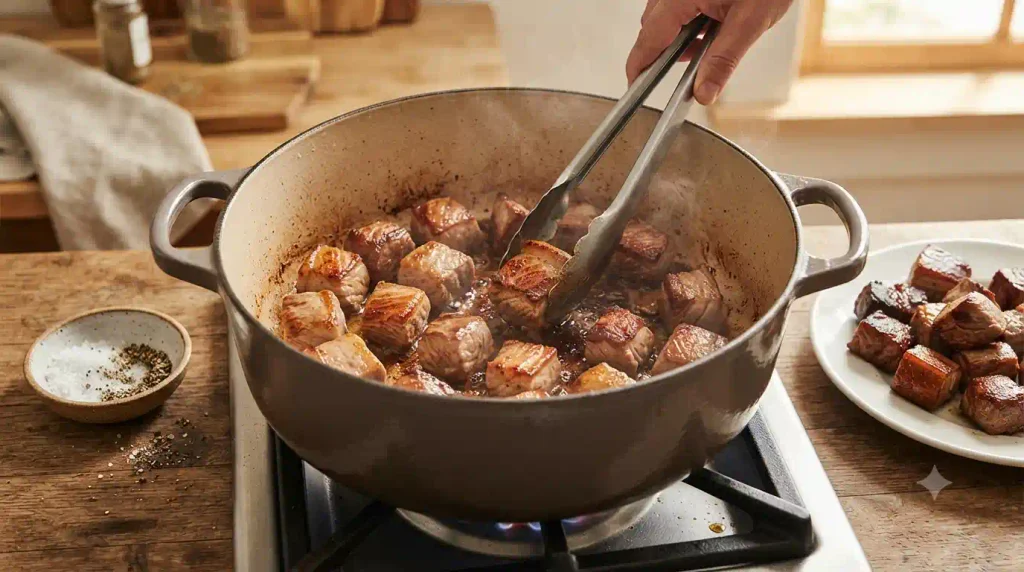
Pat the pork cubes dry with paper towels and season them lightly with salt and black pepper.
Heat 1 tablespoon of oil in a large heavy-bottomed pot over medium-high heat. Add the pork in a single layer, working in batches if necessary.
Brown the pork for about 2–3 minutes per side until several surfaces develop a deep golden-brown crust.
Don’t rush this part. If the pot is crowded, the pork will release moisture and steam instead of browning.
Transfer the browned pork to a plate.
Step 2: Build the Aromatic Tomato Base
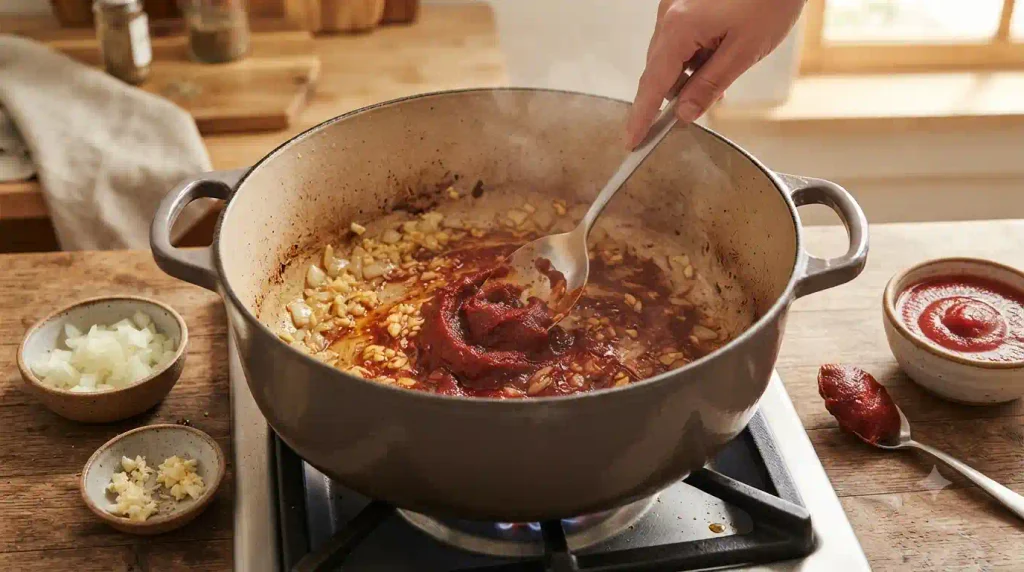
Reduce the heat to medium and add the remaining 1 tablespoon oil if the pot looks dry.
Add the chopped onion and cook for 3–4 minutes, stirring occasionally, until softened.
Add the minced garlic and cook for another 30–60 seconds.
Stir in the tomato paste and cook for about 1 minute. This quick cooking step helps remove its raw taste and gives the finished sauce a deeper flavor.
Step 3: Simmer the Pork
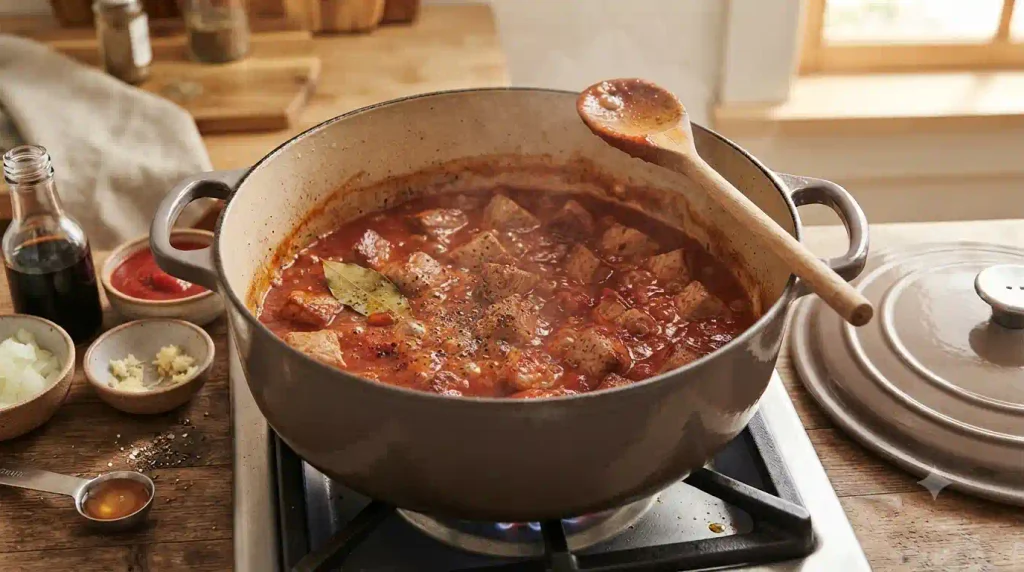
Return the browned pork and any accumulated juices to the pot.
Add the tomato sauce, broth, soy sauce, fish sauce, vinegar, bay leaf, smoked paprika, remaining salt, black pepper, and optional sugar.
Stir well and bring the mixture to a gentle boil.
Reduce the heat to low, cover partially, and simmer for about 40–45 minutes, stirring occasionally.
The goal is a gentle simmer, not a violent boil. Keep the heat low enough that the pork slowly becomes tender.
Step 4: Add the Potatoes and Carrots
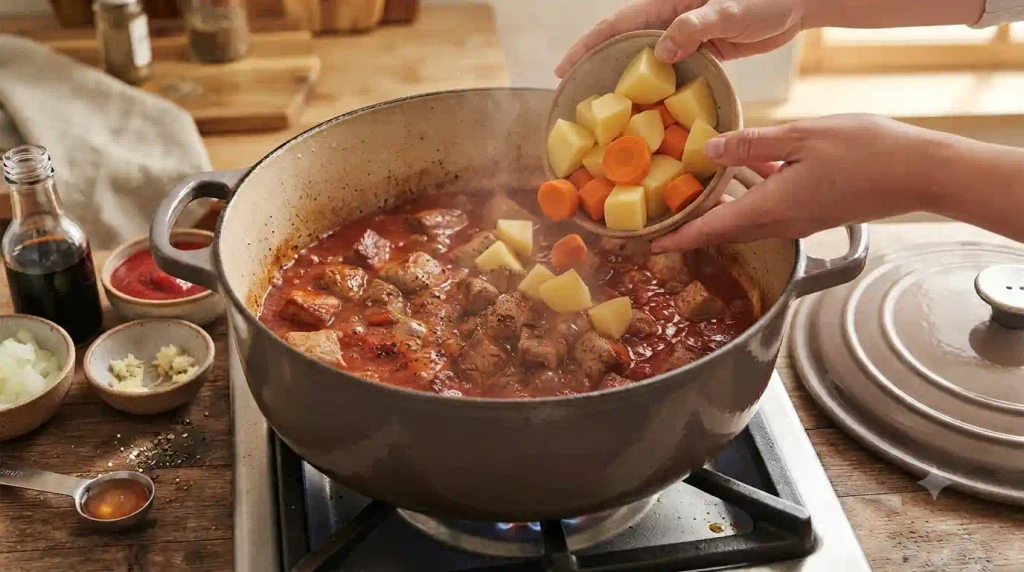
Add the diced potatoes and sliced carrots.
Continue simmering uncovered for 15–20 minutes, or until the vegetables are tender but still hold their shape.
Keep an eye on the liquid level. If the sauce seems too thin, leave the pot uncovered and allow it to reduce naturally.
Food safety tip: Pork should be thoroughly cooked, and the safest way to judge doneness is with a food thermometer. For tender braised pork, cooking beyond the minimum safe temperature until the connective tissue breaks down gives you the best texture.
Step 5: Thicken and Finish the Sauce
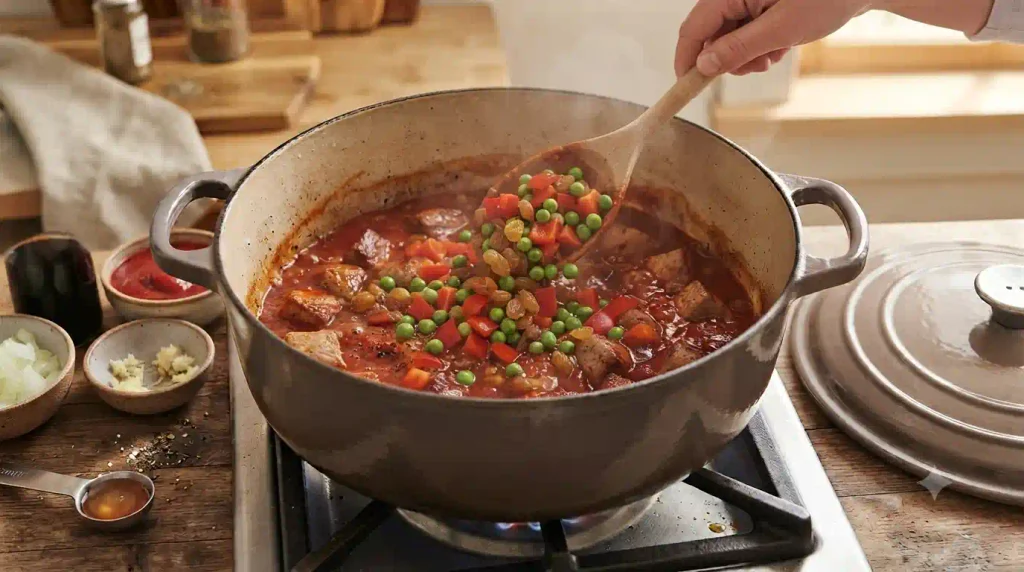
Add the diced red bell pepper, green peas, and optional raisins.
Simmer uncovered for another 5–8 minutes.
Taste the sauce and adjust the seasoning. Add a little more soy sauce or salt if needed. If the flavor feels too rich, a small squeeze of lemon or calamansi can brighten it.
For a thick, glossy menudo, don’t add extra water unless absolutely necessary. Let excess liquid evaporate naturally.
The sauce should be thick enough to coat the back of a spoon rather than pooling like soup.
Step 6: Rest and Serve
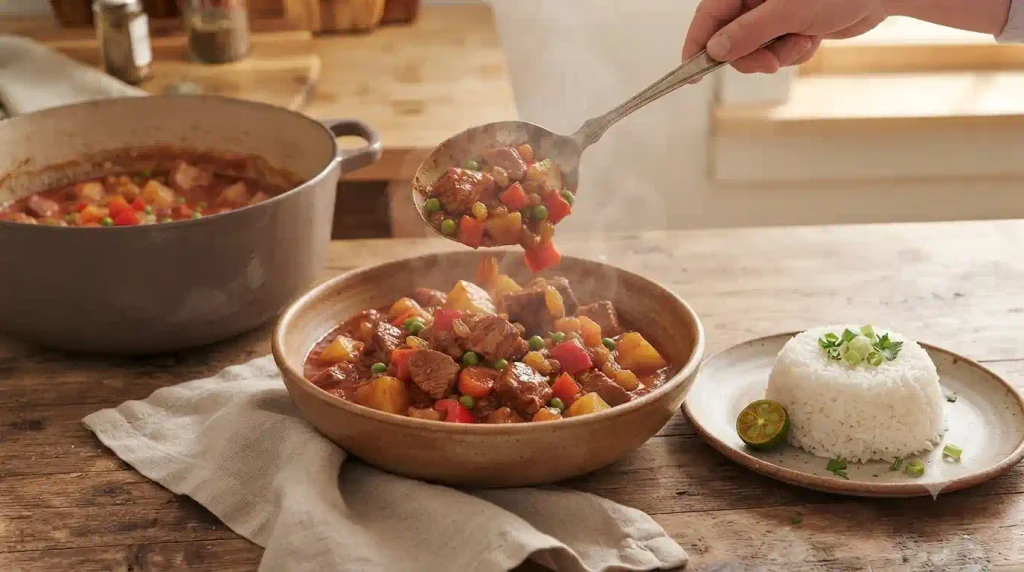
Turn off the heat and remove the bay leaf.
Let the menudo rest for 5–10 minutes before serving. This short rest allows the sauce to settle and gives the pork time to absorb even more flavor.
Spoon the rich pork menudo over hot steamed rice and garnish with chopped parsley or green onions. Serve with lemon or calamansi wedges if you like a brighter finish.
If you’re making this for a family meal, keep extra rice nearby. The sauce has a habit of disappearing quickly.
Health Benefits
Pork menudo is a hearty dish, but it can still provide useful nutrients when balanced with vegetables and sensible portions.
- Pork provides protein, which supports muscle maintenance and helps keep you satisfied.
- Carrots provide beta-carotene, which the body can convert into vitamin A.
- Green peas contribute fiber, plant protein, and several vitamins and minerals.
- Tomatoes provide antioxidants, including lycopene.
- Bell peppers add vitamin C and colorful plant compounds.
- Potatoes provide carbohydrates and potassium, making the meal satisfying and energy-rich.
For a lighter plate, serve a smaller portion of menudo with plenty of vegetables and a moderate serving of rice.
Nutrition Information (Per Serving)
Approximate values for 1 of 6 servings, excluding rice and optional liver:
| Nutrient | Amount |
|---|---|
| Calories | ~480 kcal |
| Protein | ~38 g |
| Fat | ~25 g |
| Carbohydrates | ~27 g |
Nutrition will vary depending on the exact pork cut, amount of oil used, and portion size.
Pro Tips & Variations
How to Keep Pork Menudo From Getting Watery
1. Brown the pork properly.
Don’t skip the browning step. It adds flavor and gives the finished dish a richer character.
2. Cook the tomato paste.
A minute of cooking helps concentrate its flavor and gives the sauce more body.
3. Don’t drown the pot in liquid.
The pork will release some moisture as it cooks. Start with the recommended broth and add more only if necessary.
4. Finish uncovered.
This is especially important if your sauce looks thin. Simmering uncovered lets excess moisture evaporate.
5. Don’t overcook the vegetables.
Adding potatoes and carrots later keeps them from becoming mushy while the pork tenderizes.
Easy Variations
- Add pork liver: Use about 8 oz (225 g), cut into small pieces, and add during the final 10–15 minutes.
- Make it spicier: Add sliced jalapeño, red pepper flakes, or a small amount of chili powder.
- Use fresh tomatoes: Replace part of the tomato sauce with peeled, finely chopped ripe tomatoes, but allow extra simmering time to reduce the liquid.
- Make it lighter: Trim excess fat from the pork shoulder and reduce the oil slightly.
- Add more vegetables: Green beans, peas, or additional bell peppers work well.
- Use chicken: Boneless chicken thighs can be substituted, but reduce the cooking time because chicken becomes tender much faster than pork.
How Much Does It Cost to Make?
Prices vary by location and grocery store, but this recipe is relatively budget-friendly for a family meal.
| Ingredient Group | Estimated Cost |
|---|---|
| Pork shoulder, 2 lb | $9–$12 |
| Vegetables | $3–$4 |
| Tomato sauce & paste | $2 |
| Broth & seasonings | $1–$2 |
| Peas, raisins & extras | $2 |
| Estimated Total | $17–$22 |
| Approx. Cost Per Serving | $2.83–$3.67 |
Serving it with rice stretches the meal further, making it a practical option when you’re feeding several people.
Frequently Asked Questions
What makes pork menudo thick instead of watery?
The key is controlling the liquid. Use tomato paste, avoid adding unnecessary water, and finish cooking the menudo uncovered so excess moisture can evaporate. Browning the pork and allowing the tomato base to cook properly also gives the sauce better body and flavor.
Can I make pork menudo ahead of time?
Absolutely. Menudo often tastes even better the next day because the pork and sauce have more time to meld. Cool leftovers promptly, refrigerate them in a covered container, and reheat thoroughly before serving.
What cut of pork is best for menudo?
Pork shoulder or pork butt is an excellent choice because it contains enough fat and connective tissue to stay juicy during slow cooking. Pork loin can be used, but it is leaner and easier to overcook.
Why is my pork menudo still tough?
If the pork is cooked through but remains chewy, it usually needs more time rather than more heat. Keep it at a gentle simmer and continue cooking until the connective tissue softens. Very high heat can make the outside cook quickly while the meat remains tough.
Final Thoughts
A great pork menudo doesn’t need complicated ingredients or restaurant-style equipment. The real secret is patience: brown the pork well, build a concentrated tomato base, simmer gently, and let the sauce reduce until it becomes rich and clingy.
Once you’ve made it this way, watery menudo is much easier to avoid. Serve it with fluffy rice, gather everyone around the table, and enjoy the kind of comforting homemade meal that makes a regular night feel a little more special.