

If you love the moment when a simple pot of rice starts filling the kitchen with buttery, garlicky aromas, this crab rice is going to earn a regular spot on your dinner table. It is the kind of meal that feels special without requiring a complicated shopping list or hours at the stove. Sweet crab meat, fluffy rice, fresh aromatics, and a savory sauce come together in one comforting dish.
The best part? You can make it on a busy weeknight, yet it tastes like something you would happily order at a cozy seafood restaurant. I love serving it straight from the skillet while the rice is still steaming. Just keep an eye on the garlic as it cooks—it can go from beautifully golden to bitter surprisingly fast.
Prep & Cook Time
| Details | Time |
|---|---|
| Prep Time | 15 minutes |
| Cook Time | 25 minutes |
| Total Time | 40 minutes |
| Servings | 4 |
Difficulty: Easy
Best for: Weeknight dinner, seafood lovers, meal prep
What Equipment Do You Need?
- Large skillet or sauté pan with a lid
- Medium saucepan or rice cooker
- Cutting board
- Sharp chef’s knife
- Measuring cups and spoons
- Wooden spoon or spatula
- Small mixing bowl
- Fine-mesh strainer
Ingredients
For the Crab Rice
- 2 cups cooked long-grain white rice, preferably chilled or day-old
- 12 oz (340 g) lump crab meat, picked over for shells
- 2 tbsp unsalted butter
- 1 tbsp olive oil
- 4 cloves garlic, finely minced
- 1 small yellow onion, finely diced
- 1/2 red bell pepper, finely diced
- 2 green onions, sliced
- 1 tbsp low-sodium soy sauce
- 1 tbsp oyster sauce
- 1 tsp toasted sesame oil
- 1 tsp fresh lemon juice
- 1/2 tsp smoked paprika
- 1/4 tsp black pepper
- 1/4 tsp red pepper flakes, optional
- 1/4 cup fresh parsley, chopped
- 1 tbsp fresh cilantro, chopped, optional
- Salt, to taste
For Serving
- Lemon wedges
- Extra sliced green onions
- Fresh parsley or cilantro
- A little chili crisp or hot sauce, optional
Crab tip: If using fresh crab meat, make sure it smells clean and pleasantly briny, not strongly fishy. Refrigerate crab promptly and keep it cold until you’re ready to cook.
Why Each Ingredient Matters
- Crab meat: The star of the dish. Lump crab provides sweet, delicate seafood flavor without needing heavy seasoning.
- Rice: Long-grain rice stays fluffy and keeps the finished dish from becoming mushy.
- Butter: Adds richness and helps carry the garlic and crab flavors throughout the rice.
- Olive oil: Raises the fat mixture’s cooking tolerance and adds a subtle fruity note.
- Garlic: Gives the rice its savory backbone. Fresh garlic makes a noticeable difference here.
- Onion: Adds natural sweetness and depth as it softens.
- Red bell pepper: Brings mild sweetness, color, and a little texture.
- Soy sauce: Adds salt and umami. Low-sodium soy sauce gives you better control over the final seasoning.
- Oyster sauce: Adds concentrated savory flavor and a slightly sweet finish.
- Sesame oil: A small amount gives the rice a warm, nutty aroma. Don’t overdo it.
- Lemon juice: Brightens the rich butter and seafood flavors.
- Smoked paprika: Adds gentle warmth and a subtle smoky note.
- Green onions and herbs: Freshness helps balance the richness of the crab and butter.
Step-by-Step Instructions
Step 1: Prepare the Crab and Rice
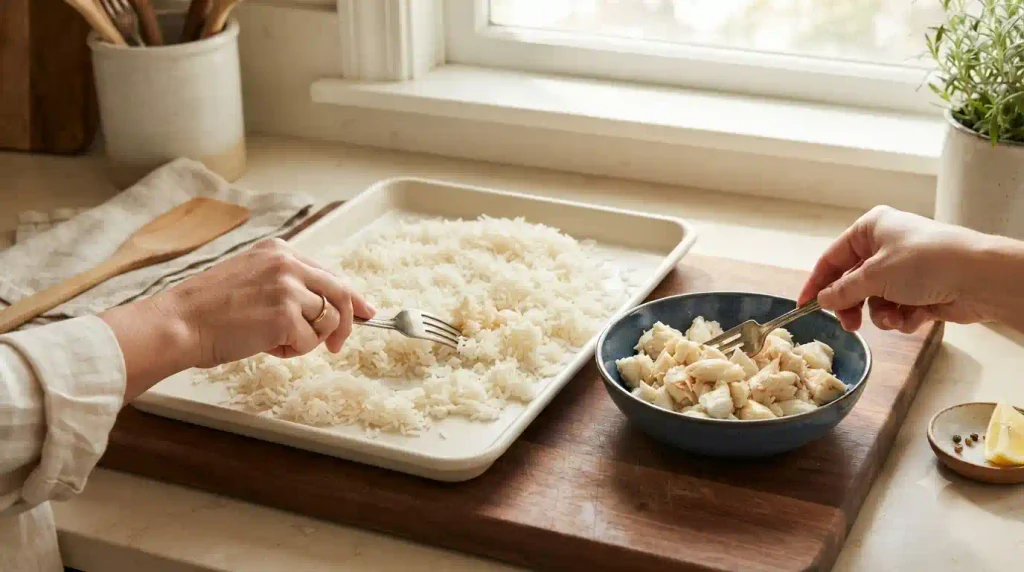
If you’re using leftover rice, break up any large clumps with your fingers or a fork. Cold, day-old rice is ideal because it contains less surface moisture and is much less likely to turn sticky in the pan.
Pick through the crab meat carefully for any remaining shell pieces. Set the crab aside.
If you’re cooking rice from scratch, cook it according to the package directions, then spread it on a plate or baking sheet to cool before using.
Step 2: Sauté the Aromatics
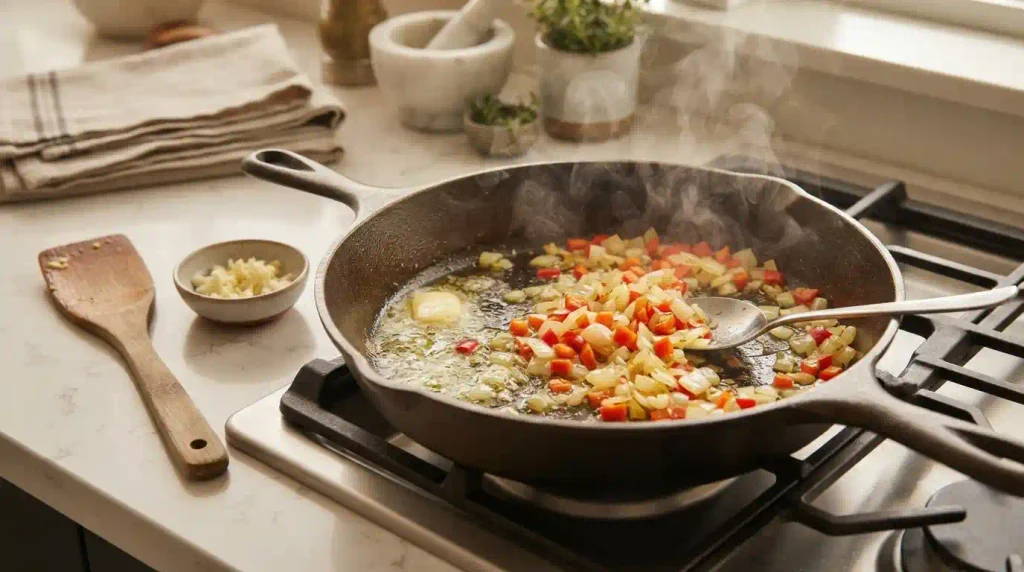
Place a large skillet over medium heat. Add the olive oil and butter.
Once the butter melts, add the diced onion and red bell pepper. Cook for about 3–4 minutes, stirring occasionally, until the vegetables begin to soften.
Add the minced garlic and cook for another 30–45 seconds.
Don’t walk away here. Garlic cooks quickly, and burnt garlic will make the whole dish taste bitter.
Step 3: Add the Rice and Seasonings

Add the cooked rice to the skillet. Use a wooden spoon or spatula to gently break apart the grains.
Stir in:
- 1 tbsp soy sauce
- 1 tbsp oyster sauce
- 1/2 tsp smoked paprika
- 1/4 tsp black pepper
- 1/4 tsp red pepper flakes, if using
Toss everything together and cook for about 3–5 minutes, stirring frequently, until the rice is hot and evenly coated.
Taste before adding salt because both soy sauce and oyster sauce already contain sodium.
Step 4: Fold in the Crab
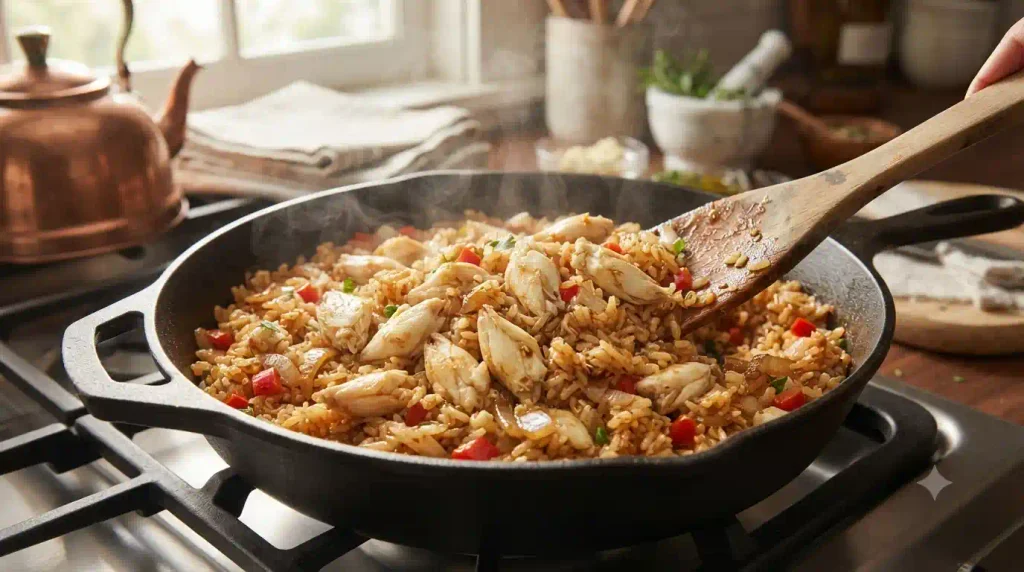
Reduce the heat to low-medium and gently fold in the crab meat.
Cook for about 2–3 minutes, just until the crab is heated through.
Don’t aggressively stir the crab. Lump crab is delicate, and keeping some larger pieces intact makes every bite feel much more generous.
Step 5: Finish With Fresh Flavor

Turn off the heat and drizzle the sesame oil and fresh lemon juice over the rice.
Add the sliced green onions, parsley, and cilantro if using.
Gently toss everything together.
Taste and adjust the seasoning. Add a small pinch of salt, another squeeze of lemon, or a little hot sauce if needed.
Step 6: Serve Hot

Spoon the crab rice into warm bowls and garnish with extra green onions and fresh herbs.
Serve immediately with lemon wedges on the side.
For an extra kick, add a small spoonful of chili crisp or your favorite hot sauce.
Food safety note: Seafood should be handled carefully and kept refrigerated until cooking. Don’t leave cooked crab rice sitting at room temperature for extended periods. Refrigerate leftovers promptly in shallow containers.
Health Benefits
This recipe can be a nutritious way to enjoy seafood as part of a balanced diet.
- Crab provides protein while remaining relatively lean.
- Crab contains vitamin B12, an important nutrient involved in normal red blood cell formation and nervous-system function.
- Crab also provides selenium and zinc, minerals that support normal body functions.
- Bell pepper adds vitamin C and antioxidant compounds.
- Garlic and onions contribute plant compounds and flavor without requiring large amounts of added salt.
- Using olive oil and moderate butter gives you rich flavor without making the dish excessively heavy.
For a more balanced meal, serve the rice with steamed broccoli, green beans, asparagus, or a crisp cucumber salad.
Nutrition Information (Per Serving)
Estimated values based on the ingredients listed and divided into 4 servings. Actual nutrition will vary depending on the crab, rice, and sauces used.
| Nutrient | Per Serving |
|---|---|
| Calories | ~500 kcal |
| Protein | ~28 g |
| Fat | ~17 g |
| Carbs | ~58 g |
Pro Tips & Variations
Chef Tips for Better Crab Rice
- Use cold rice when possible. It fries and separates better than freshly cooked, steaming rice.
- Don’t drown the rice in sauce. Too much soy or oyster sauce can overpower the sweet crab.
- Add crab near the end. This keeps the meat tender and prevents it from becoming dry.
- Use lump crab meat if you want noticeable pieces of crab in every serving.
- Taste before salting. Soy sauce and oyster sauce can add plenty of salt.
- Keep the heat moderate. Very high heat can burn the garlic and dry out the crab.
- Finish with lemon. That small acidic hit makes the entire dish taste brighter.
Easy Variations
Spicy Crab Rice:
Add extra red pepper flakes, chili crisp, or a drizzle of sriracha.
Ginger Crab Rice:
Add 1 tsp freshly grated ginger with the garlic.
Vegetable Crab Rice:
Stir in peas, corn, shredded carrots, mushrooms, or spinach.
Coconut Crab Rice:
Replace part of the cooking water used for the rice with unsweetened coconut milk for a lightly tropical version.
Brown Rice Version:
Use cooked brown rice for more fiber and a nuttier flavor. The texture will be slightly chewier.
Egg Fried Crab Rice:
For a heartier meal, scramble 2 eggs in the skillet before adding the rice.
How Much Does It Cost to Make?
Prices vary significantly by location and the type of crab you purchase, but here’s a reasonable estimate for four servings in the U.S.
| Ingredient | Estimated Cost |
|---|---|
| Lump crab meat | $12–$18 |
| Rice | $1–$2 |
| Vegetables & aromatics | $2–$3 |
| Butter & olive oil | $1–$2 |
| Sauces & seasonings | $1–$2 |
| Lemon & fresh herbs | $1–$2 |
| Estimated Total | $18–$29 |
| Approx. Per Serving | $4.50–$7.25 |
The biggest variable is the crab. Fresh lump crab can cost considerably more than canned or pasteurized crab meat.
Frequently Asked Questions
Can I use canned crab meat for crab rice?
Yes. Canned crab can work well for this recipe, especially for an affordable weeknight dinner. Drain it thoroughly and gently pick through it for any shell fragments before adding it to the rice.
What kind of rice is best for crab rice?
Long-grain white rice is an excellent choice because the grains tend to stay separate. Jasmine rice also works beautifully if you enjoy its fragrant aroma. Day-old refrigerated rice is particularly good for a fried-rice-style preparation.
Can I make crab rice ahead of time?
Yes, but crab rice is best served fresh. If you have leftovers, refrigerate them promptly in a shallow airtight container and reheat thoroughly before eating. Avoid repeatedly cooling and reheating the same batch.
What can I serve with crab rice?
Keep the sides fresh and simple. Steamed broccoli, roasted asparagus, cucumber salad, green beans, or a light Asian-inspired slaw all work well. A squeeze of lemon just before serving is also excellent.
Final Thoughts
This crab rice is proof that a satisfying seafood dinner doesn’t need to be complicated. With fluffy rice, sweet crab, buttery garlic, savory seasonings, and a bright squeeze of lemon, you get plenty of flavor from a surprisingly simple skillet.
If you’re cooking this on a busy night, don’t stress about making it perfect. Keep the crab chunky, watch the garlic, taste as you go, and let the fresh lemon do its magic at the end. That’s when this humble rice dish turns seriously addictive.