

There are nights when you want something cozy, filling, and a little more exciting than the usual weeknight dinner. That is when a steaming bowl of homemade pork ramen really hits the spot. The rich broth, tender pork, springy noodles, and fresh toppings make the kitchen smell incredible before you even sit down to eat.
The best part? You do not need a restaurant kitchen or a long list of specialty ingredients. This easy pork ramen recipe comes together with everyday supermarket finds and a few simple techniques. I love making it on busy evenings because it feels special without creating a mountain of dishes. Grab your biggest pot, get those toppings ready, and prepare for some serious slurping.
Prep & Cook Time
| Detail | Time |
|---|---|
| Prep Time | 15 minutes |
| Cook Time | 30 minutes |
| Total Time | 45 minutes |
| Servings | 4 |
Difficulty: Easy to moderate
This recipe is designed for a satisfying homemade ramen night without the hours normally associated with traditional ramen broth.
What Equipment Do You Need?
You only need a few basic kitchen tools:
- Large heavy-bottomed pot or Dutch oven
- Large skillet or frying pan
- Medium saucepan for eggs
- Cutting board
- Sharp chef’s knife
- Tongs
- Wooden spoon or spatula
- Ladle
- Measuring cups and spoons
- Four large serving bowls
Ingredients
For the Pork
- 1 lb pork tenderloin, trimmed
- 1 tablespoon neutral oil, such as avocado or vegetable oil
- 1 tablespoon low-sodium soy sauce
- 1 teaspoon toasted sesame oil
- 1 teaspoon grated fresh ginger
- 1 garlic clove, finely grated
- ¼ teaspoon black pepper
For the Ramen Broth
- 6 cups low-sodium chicken broth
- 3 tablespoons white or yellow miso paste
- 3 tablespoons low-sodium soy sauce
- 1 tablespoon rice vinegar
- 1 tablespoon toasted sesame oil
- 1 tablespoon honey or brown sugar
- 1 tablespoon grated fresh ginger
- 3 garlic cloves, minced
- 1 teaspoon chili crisp or chili oil, optional
- 4 oz shiitake mushrooms, thinly sliced
For the Noodles & Toppings
- 4 portions fresh or dried ramen noodles, about 12 oz total
- 4 large eggs
- 2 cups baby bok choy, halved
- 3 green onions, thinly sliced
- ½ cup corn, fresh or frozen
- ½ cup bean sprouts, optional
- 1 sheet nori, cut into strips, optional
- 1 tablespoon toasted sesame seeds
- Extra chili crisp, for serving, optional
Why Each Ingredient Matters
Pork tenderloin: This lean cut cooks quickly and stays tender when you avoid overcooking it. It also absorbs the savory soy-ginger seasoning beautifully.
Miso paste: Miso gives the broth its deep, fermented umami flavor. It is one of the easiest ways to make a quick broth taste like it has been simmering much longer.
Soy sauce: Adds salt and savory depth. Using low-sodium soy sauce gives you more control over the final seasoning.
Ginger and garlic: These aromatics provide warmth, freshness, and that unmistakable ramen-shop aroma.
Sesame oil: A small amount adds a nutty fragrance. Do not overdo it because its flavor is strong.
Rice vinegar: Just a splash brightens the rich broth and keeps the bowl from tasting heavy.
Mushrooms: Shiitakes add another layer of natural umami and a pleasant meaty texture.
Bok choy: It brings color, freshness, and a mild crunch that balances the rich broth and pork.
Eggs: Jammy eggs make ramen feel complete. The creamy yolk also blends beautifully into the broth.
Ramen noodles: Their springy texture holds onto the broth better than many ordinary noodles, giving you that classic slurp-worthy bite.
Step-by-Step Instructions
Step 1: Season and Sear the Pork
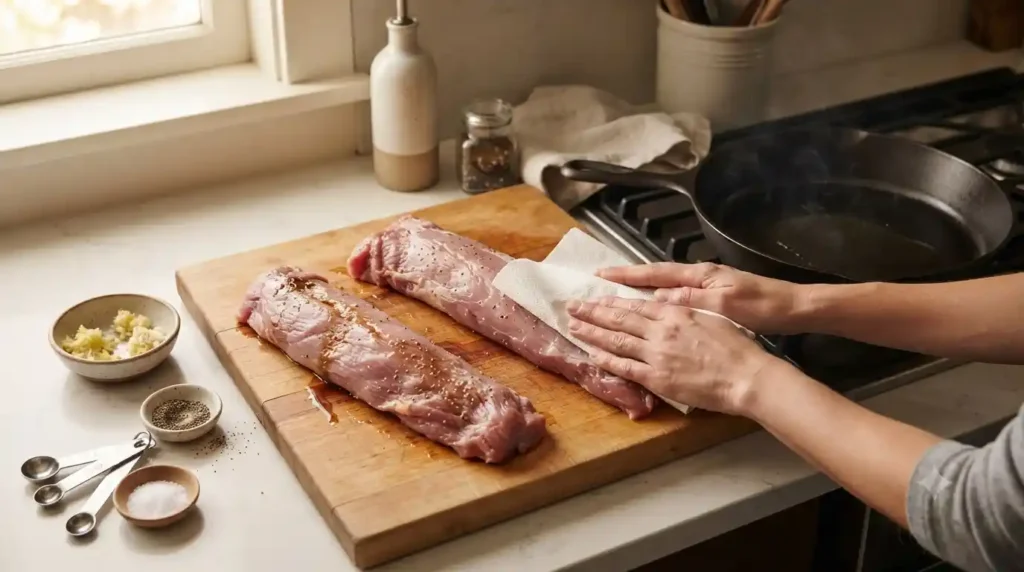
Pat the pork tenderloin dry with paper towels. Rub it with soy sauce, sesame oil, ginger, garlic, and black pepper.
Heat 1 tablespoon oil in a large skillet over medium-high heat. Once the oil is hot, add the pork and sear for about 2–3 minutes per side, turning until nicely browned all around.
Transfer the pork to a plate and let it rest.
Do not worry if the center is not fully cooked yet. It will finish cooking gently while resting or can be returned briefly to the pan later. For food safety, use an instant-read thermometer and cook pork tenderloin to at least 145°F, followed by a 3-minute rest.
Step 2: Build the Flavorful Broth

Place a large pot over medium heat. Add the sliced shiitake mushrooms and cook for about 2 minutes.
Add the garlic and ginger and cook for another 30 seconds, stirring constantly so the garlic does not burn.
Pour in the chicken broth. Stir in the soy sauce, rice vinegar, honey, and chili crisp if using.
Bring the broth to a gentle simmer. Avoid a hard boil because aggressive boiling can make the broth taste harsh and can cook the mushrooms too quickly.
Step 3: Add the Miso

Reduce the heat to low.
Place the miso paste in a small bowl and ladle in about ½ cup of hot broth. Whisk until the miso is smooth, then pour the mixture back into the pot.
Stir in the sesame oil.
Keep the broth gently warm for about 5 minutes. Avoid vigorously boiling the broth after adding the miso. Gentle heat helps preserve its delicate flavor.
Taste the broth. If it needs more salt, add a small splash of soy sauce. If it tastes too rich, add another teaspoon of rice vinegar.
Step 4: Cook the Eggs and Vegetables

Bring a separate saucepan of water to a gentle boil. Carefully lower in the eggs and cook for about 7 minutes for jammy centers or 9 minutes for firmer yolks.
Transfer the eggs immediately to an ice bath. Once cool enough to handle, peel them and slice them in half.
Meanwhile, add the baby bok choy to the simmering ramen broth for about 2 minutes, just until tender-crisp.
Add the corn during the final minute of cooking.
Step 5: Cook the Ramen Noodles
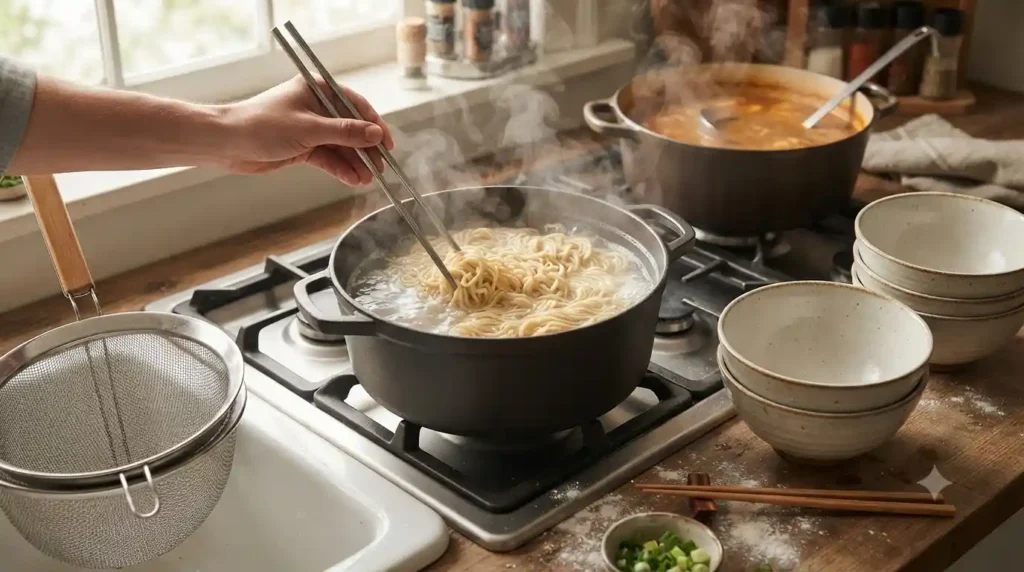
Cook the ramen noodles according to the package directions, but stop just before they become overly soft.
This usually takes only a few minutes.
Drain the noodles well. Do not leave them sitting in hot water, or they will continue cooking and become mushy.
Divide the noodles among four large bowls.
Step 6: Assemble and Serve

Slice the rested pork into thin pieces.
Ladle the hot broth, mushrooms, bok choy, and corn over the noodles. Arrange the sliced pork and halved eggs on top.
Finish each bowl with sliced green onions, sesame seeds, bean sprouts, nori, and a little extra chili crisp if you like heat.
Serve immediately while the broth is piping hot.
Chef’s tip: Ramen waits for nobody. Once the noodles are in the broth, serve right away so they stay springy instead of soaking up all the liquid.
Health Benefits
This homemade pork ramen can be a more balanced meal than many instant ramen options because you control the ingredients, sodium, protein, and vegetables.
- Pork provides protein, which helps support muscle maintenance and keeps the meal satisfying.
- Bok choy contributes vitamins and minerals, including vitamin C and vitamin K.
- Mushrooms provide useful micronutrients and natural umami, allowing you to build flavor without relying entirely on salt.
- Eggs add protein and several important nutrients, including choline and vitamin B12.
- Ginger and garlic provide flavorful plant compounds while adding very few calories.
- Miso contributes fermented flavor, making a small amount go a long way.
For a lighter bowl, use extra vegetables and slightly less noodles. For a higher-protein dinner, add another small portion of pork or an additional egg.
Nutrition Information (Per Serving)
Estimated nutrition based on the ingredients listed and divided into 4 servings. Actual values will vary by brands and portion sizes.
| Nutrient | Approximate Amount |
|---|---|
| Calories | 620 kcal |
| Protein | 43 g |
| Fat | 22 g |
| Carbohydrates | 62 g |
| Fiber | 5 g |
| Sodium | 1,650 mg |
Note: Sodium can vary significantly depending on the broth, miso, soy sauce, noodles, and toppings you use. For a lower-sodium bowl, choose reduced-sodium broth and soy sauce and use less miso.
Pro Tips & Variations
For Better Pork
Pat the pork completely dry before seasoning. Moisture on the surface prevents proper browning.
Let the cooked pork rest before slicing. Cutting immediately can release more juices onto your cutting board instead of keeping them inside the meat.
For Richer Broth
Add 1 tablespoon tahini or smooth peanut butter to the broth for a creamy, nutty variation. Whisk it in gradually so it dissolves smoothly.
You can also add a small splash of coconut milk for a softer, creamy ramen style.
For Spicy Pork Ramen
Add extra chili crisp, chili oil, or a pinch of crushed red pepper flakes.
For deeper heat, stir 1 teaspoon gochujang into the broth.
Easy Pork Swap
If you do not have pork tenderloin, use:
- Thinly sliced pork loin
- Boneless pork chops
- Leftover cooked pulled pork
- Ground pork
Ground pork is especially convenient. Brown it thoroughly before adding the broth ingredients.
Make It Vegetarian
Replace the pork with tofu and use vegetable broth instead of chicken broth.
Add More Vegetables
This recipe is very forgiving. Try:
- Spinach
- Shredded carrots
- Napa cabbage
- Edamame
- Snow peas
- Corn
- Extra mushrooms
Make It Gluten-Free
Use certified gluten-free ramen noodles and replace regular soy sauce with gluten-free tamari. Always check labels on packaged ingredients if you need to avoid gluten strictly.
Do Not Overcook the Noodles
This is probably the easiest mistake to make. Ramen noodles continue softening in the hot broth. Slightly undercooked noodles are better than noodles that have gone soft before the bowl reaches the table.
How Much Does It Cost to Make?
Prices vary by location and brand, but this recipe is reasonably budget-friendly for a restaurant-style meal at home.
| Ingredient Group | Estimated Cost |
|---|---|
| Pork tenderloin | $6–8 |
| Ramen noodles | $2–4 |
| Broth & miso | $3–4 |
| Mushrooms & vegetables | $4–5 |
| Eggs | $1–2 |
| Aromatics & seasonings | $2–3 |
| Estimated Total | $18–26 |
| Approx. Cost Per Serving | $4.50–$6.50 |
The actual cost will depend on your supermarket and whether you already have pantry staples such as soy sauce, sesame oil, rice vinegar, garlic, and ginger.
Frequently Asked Questions
Can I use leftover pork for ramen?
Absolutely. Leftover roasted or grilled pork works very well. Slice it thinly and add it to the finished bowl just long enough to warm through. This is a great way to turn yesterday’s dinner into something completely different.
What is the best pork to use for ramen?
Pork tenderloin is an excellent choice for a quick homemade ramen because it is lean, tender, and cooks quickly. Thinly sliced pork shoulder or pork belly will give you a richer, fattier bowl if that is what you prefer.
How do I make pork ramen broth taste richer?
Miso, mushrooms, garlic, ginger, soy sauce, and sesame oil create a lot of flavor quickly. For an even richer broth, simmer it a little longer before adding the noodles, or add a small spoonful of chili crisp or tahini.
Can I make pork ramen ahead of time?
Yes, but store the broth, pork, noodles, eggs, and toppings separately. Cooked noodles become soft when stored in broth. When ready to eat, reheat the broth and pork, cook fresh noodles, and assemble the bowls just before serving.
Final Thoughts
A good bowl of ramen does not have to begin with a restaurant reservation or a complicated stock that simmers all day. With tender pork, a deeply savory miso broth, springy noodles, and a handful of fresh toppings, you can create a comforting dinner right in your own kitchen.
Once you make this easy pork ramen recipe, feel free to make it your own. Add more vegetables, turn up the heat, swap the protein, or pile on your favorite toppings. The best homemade ramen is the bowl that makes everyone at the table reach for one more slurp.