

Warm, comforting, and packed with sweet crab meat, a good crab stew is the kind of meal that makes an ordinary evening feel special. There is something deeply satisfying about cooking a pot of seafood stew at home—the onions soften, garlic fills the kitchen with that irresistible aroma, and the broth slowly comes together into something rich and savory. When you’re craving a cozy meal without spending hours at the stove, this recipe is a wonderful choice.
This crab stew keeps things simple while building plenty of flavor. Tender crab meat is gently simmered with tomatoes, vegetables, herbs, and a flavorful broth, then finished with fresh parsley and a little lemon. Serve it with crusty bread, rice, or crackers for soaking up every last spoonful. And don’t worry if your kitchen gets a little messy along the way—that’s often a sign you’re making something worth eating.
Prep & Cook Time
| Details | Time |
|---|---|
| Prep Time | 15 minutes |
| Cook Time | 30 minutes |
| Total Time | 45 minutes |
| Servings | 4 |
Recipe type: Seafood stew
Cuisine: American-inspired
Difficulty: Easy
Best served: Hot, with crusty bread or rice
What Equipment Do You Need?
You don’t need fancy equipment for this recipe. A sturdy pot and a wooden spoon will do most of the work.
- Large heavy-bottomed pot or Dutch oven
- Cutting board
- Sharp chef’s knife
- Measuring cups and spoons
- Wooden spoon or heat-safe spatula
- Ladle
- Small bowl for mixing seasonings
- Citrus juicer, optional
Ingredients
For the Crab Stew
- 1 ½ pounds cooked lump crab meat, picked over for shells
- 2 tablespoons olive oil
- 1 medium yellow onion, finely diced
- 1 medium red bell pepper, diced
- 2 celery stalks, diced
- 4 cloves garlic, minced
- 1 can (14.5 ounces) diced tomatoes, preferably fire-roasted
- 2 tablespoons tomato paste
- 3 cups seafood stock or low-sodium chicken stock
- 1 cup water
- 1 teaspoon smoked paprika
- ½ teaspoon Old Bay seasoning
- ½ teaspoon dried thyme
- ¼ teaspoon cayenne pepper, optional
- 1 bay leaf
- ½ teaspoon salt, plus more to taste
- ¼ teaspoon freshly ground black pepper
- 1 tablespoon Worcestershire sauce
- 1 teaspoon hot sauce, optional
- 1 tablespoon fresh lemon juice
- 2 tablespoons fresh parsley, chopped
- 2 tablespoons green onions, thinly sliced
Optional Serving Ideas
- Crusty French or sourdough bread
- Cooked white or brown rice
- Oyster crackers
- Cornbread
- Lemon wedges
- Extra hot sauce
Important: Use refrigerated or properly thawed crab meat and keep seafood cold until you’re ready to cook. Check carefully for small pieces of shell before adding the crab to the pot.
Why Each Ingredient Matters
- Crab meat: The star of the dish. Lump crab provides sweet, delicate seafood flavor and a tender texture. Because it is already cooked, it only needs gentle heating at the end.
- Onion: Adds natural sweetness and a savory base as it softens.
- Bell pepper: Brings mild sweetness, color, and a little freshness.
- Celery: Adds earthy flavor and helps create a classic stew base.
- Garlic: Gives the broth a deeper savory aroma.
- Diced tomatoes: Provide acidity and body, balancing the sweetness of the crab.
- Tomato paste: Concentrates tomato flavor and gives the broth a richer texture.
- Seafood stock: Builds a deeper seafood character without overpowering the crab.
- Smoked paprika: Adds gentle smokiness and warmth.
- Old Bay seasoning: Brings classic American seafood seasoning with celery, paprika, and aromatic spices.
- Thyme: Adds an earthy herbal note that works beautifully with seafood.
- Cayenne and hot sauce: Give the stew optional heat. Add gradually because you can always increase the spice.
- Worcestershire sauce: Adds savory depth and a subtle tang.
- Lemon juice: Brightens the finished stew and keeps the rich broth from tasting heavy.
- Parsley and green onions: Add fresh flavor and a little color right before serving.
Step-by-Step Instructions
Step 1: Prepare the Crab and Vegetables
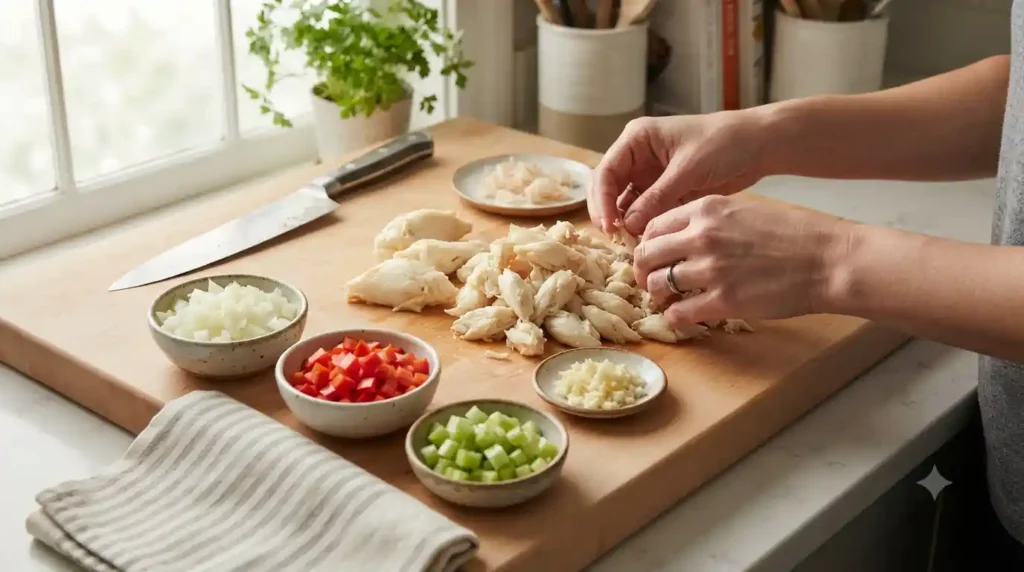
If you’re using refrigerated cooked crab meat, remove it from the refrigerator while you prepare the vegetables, but don’t leave seafood sitting at room temperature for an extended period.
Pick through the crab carefully with clean fingers and remove any pieces of shell or cartilage. Don’t break up all the lumps—you want some nice chunks of crab in every bowl.
Dice the onion, bell pepper, and celery into small, fairly even pieces. Mince the garlic.
Step 2: Build the Vegetable Base
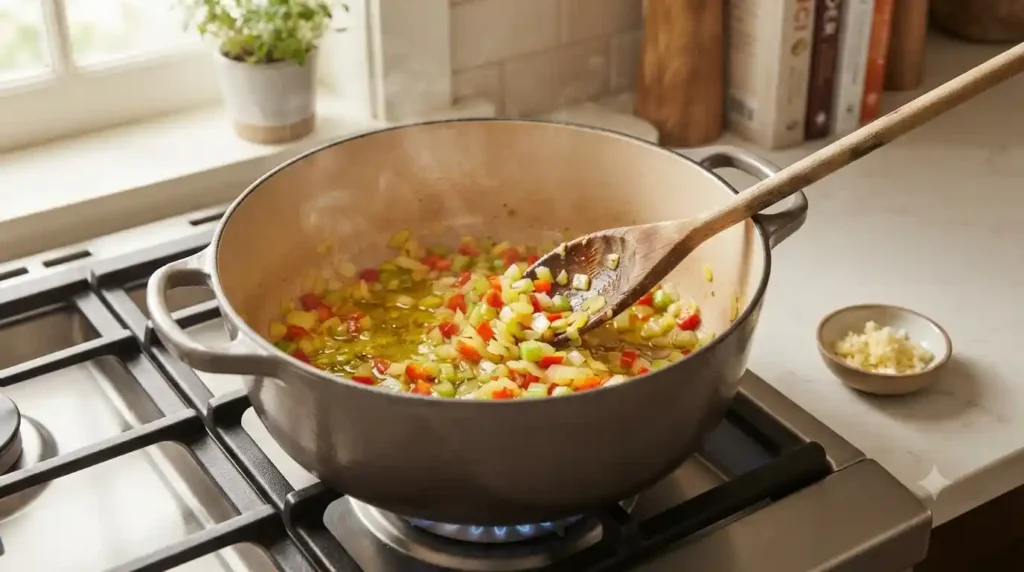
Place a large heavy-bottomed pot over medium heat and add the olive oil.
Add the diced onion, bell pepper, and celery. Cook for about 6–8 minutes, stirring occasionally, until the vegetables soften.
Add the minced garlic and cook for another 30–60 seconds. Keep an eye on it here. Garlic can go from fragrant to bitter surprisingly quickly.
Step 3: Develop the Tomato and Spice Flavor

Add the tomato paste, smoked paprika, Old Bay seasoning, dried thyme, black pepper, and cayenne if using.
Stir everything together and cook for about 1–2 minutes.
This short cooking step matters. Heating tomato paste and dry spices in the oil helps deepen their flavor instead of leaving the finished stew tasting flat.
Add the diced tomatoes and Worcestershire sauce. Stir well, scraping any flavorful bits from the bottom of the pot.
Step 4: Simmer the Stew

Pour in the seafood stock and water. Add the bay leaf and salt.
Bring the mixture to a gentle boil, then reduce the heat to medium-low.
Let the stew simmer uncovered for about 15 minutes, stirring occasionally.
You want a gentle simmer rather than a hard boil. A bubbling, aggressive pot can make the vegetables overly soft and may reduce the broth too quickly.
Taste the broth after it has simmered. Adjust the salt, pepper, or cayenne as needed.
Step 5: Add the Crab Gently

Reduce the heat to low and gently fold in the crab meat.
Cook for approximately 3–5 minutes, just until the crab is heated through.
Don’t boil the crab for a long time. Since the crab meat is already cooked, prolonged cooking can make it tough and dry while also breaking apart the beautiful lumps.
Remove the bay leaf.
Step 6: Finish and Serve

Turn off the heat and stir in the fresh lemon juice.
Taste one final time. If the stew needs more brightness, add another small squeeze of lemon. If you like more heat, add a few drops of hot sauce.
Ladle the hot crab stew into bowls and garnish with fresh parsley and sliced green onions.
Serve immediately with crusty bread, rice, cornbread, or oyster crackers.
For food safety, refrigerate leftovers promptly in shallow containers and use them within 3–4 days. Reheat gently until thoroughly hot rather than repeatedly reheating the entire pot.
Health Benefits
Crab stew can be a satisfying meal with several nutritional advantages.
- Crab provides protein: Crab meat is naturally rich in high-quality protein, which helps support muscle maintenance and keeps the meal filling.
- Crab contains important minerals: Crab provides nutrients such as selenium, zinc, copper, and phosphorus.
- Vegetables add antioxidants: Tomatoes and bell peppers contribute vitamin C and other beneficial plant compounds.
- Tomatoes provide lycopene: Cooked tomatoes are a useful source of lycopene, a carotenoid associated with antioxidant activity.
- Olive oil provides unsaturated fat: Using olive oil instead of a large amount of butter keeps the base relatively light while adding flavor.
- Lemon adds vitamin C: Fresh lemon juice provides a small boost of vitamin C while adding brightness without extra salt.
Keep in mind that the exact nutrition depends on the crab, stock, seasonings, and serving size you use.
Nutrition Information (Per Serving)
Approximate values based on 4 servings and without bread or rice.
| Nutrient | Amount |
|---|---|
| Calories | 285 kcal |
| Protein | 30 g |
| Fat | 10 g |
| Carbohydrates | 20 g |
These numbers are estimates, not medical or dietary advice. If you’re following a specific diet, check the nutrition labels of your crab meat and stock for the most accurate calculation.
Pro Tips & Variations
Chef Tips for Better Crab Stew
1. Use good-quality crab meat.
Lump crab works particularly well because it gives you noticeable pieces throughout the stew. Avoid aggressively shredding it before adding it to the pot.
2. Don’t overcook the crab.
This is probably the most important tip. The crab is already cooked, so think of the final few minutes as a gentle warming step.
3. Taste before adding more salt.
Old Bay, seafood stock, Worcestershire sauce, and crab can all contribute salt. Let the broth develop before deciding it needs more.
4. Give the vegetables enough time.
Those first few minutes of cooking create the foundation of the stew. If the onion and celery are still crunchy, the final dish won’t have the same rounded flavor.
5. Add lemon at the end.
Acid loses some of its fresh character during prolonged cooking. A final squeeze of lemon makes the whole pot taste brighter.
6. Don’t let the stew boil aggressively.
A gentle simmer is your friend. It keeps the vegetables tender and protects the delicate crab meat.
Easy Variations
Make it creamy:
For a richer version, stir in ½ cup of heavy cream during the final 2–3 minutes. Don’t boil after adding the cream.
Make it spicy:
Increase the cayenne or add extra hot sauce. A pinch of crushed red pepper also works.
Add potatoes:
For a heartier stew, add 1 ½ cups diced potatoes when you add the stock. Simmer until fork-tender before adding the crab.
Add corn:
Stir in 1 cup of corn during the final 5–7 minutes for natural sweetness and extra texture.
Use shrimp:
Add peeled, deveined shrimp during the final 5–7 minutes and cook until opaque and fully cooked.
Make it gluten-free:
Use gluten-free Worcestershire sauce and confirm that your seafood stock and Old Bay-style seasoning are suitable for your dietary needs.
Make it lighter:
Skip the cream and serve the stew with steamed vegetables or a simple green salad rather than bread or rice.
How Much Does It Cost to Make?
The cost will vary depending on where you live and whether you’re using fresh, refrigerated, or frozen crab. Crab is the main expense, so buying it when it’s on sale can make a noticeable difference.
| Ingredient | Estimated Cost |
|---|---|
| 1 ½ lb lump crab meat | $20–$28 |
| Vegetables | $3–$4 |
| Tomatoes & tomato paste | $2–$3 |
| Seafood stock | $2–$4 |
| Herbs & seasonings | $1–$2 |
| Olive oil, lemon & garnishes | $2–$3 |
| Estimated Total | $30–$44 |
| Approx. Cost Per Serving | $7.50–$11 |
Budget tip: If fresh lump crab is expensive, a good-quality pasteurized refrigerated crab meat can be a practical alternative. You can also stretch the stew with potatoes, corn, or extra vegetables while keeping the crab as the star.
Frequently Asked Questions
Can I use canned crab meat for crab stew?
Yes. Canned crab meat can work well, especially for a budget-friendly version. Drain it thoroughly and check for shell pieces before adding it. Because canned crab can be softer and more delicate, fold it into the stew gently during the final few minutes.
How do you thicken crab stew?
This recipe creates a naturally flavorful broth from tomatoes and tomato paste. For a thicker stew, simmer it uncovered for a few additional minutes before adding the crab. You can also mash some cooked potatoes into the broth or stir in a small cornstarch slurry if you prefer a noticeably thicker consistency.
Can I make crab stew ahead of time?
Yes, but for the best texture, prepare the broth and vegetables ahead of time and refrigerate them. When you’re ready to eat, bring the base to a gentle simmer and add the crab during the final few minutes. This keeps the crab tender instead of overcooked.
What goes well with crab stew?
Crusty bread is one of the easiest choices because it soaks up the flavorful broth. Rice, cornbread, oyster crackers, roasted vegetables, or a simple green salad also pair beautifully with crab stew. A lemon wedge on the side is always a good idea.
Final Thoughts
A great crab stew doesn’t need complicated techniques or a long ingredient list. The secret is building flavor patiently with the vegetables and tomato base, keeping the broth at a gentle simmer, and treating the crab gently at the very end.
Whether you’re making this for a relaxed family dinner, a chilly weekend meal, or simply because you’re craving something warm and satisfying, this pot delivers. Grab some crusty bread, squeeze a little lemon over your bowl, and enjoy every comforting spoonful. Good food doesn’t have to be complicated—it just needs a little care.