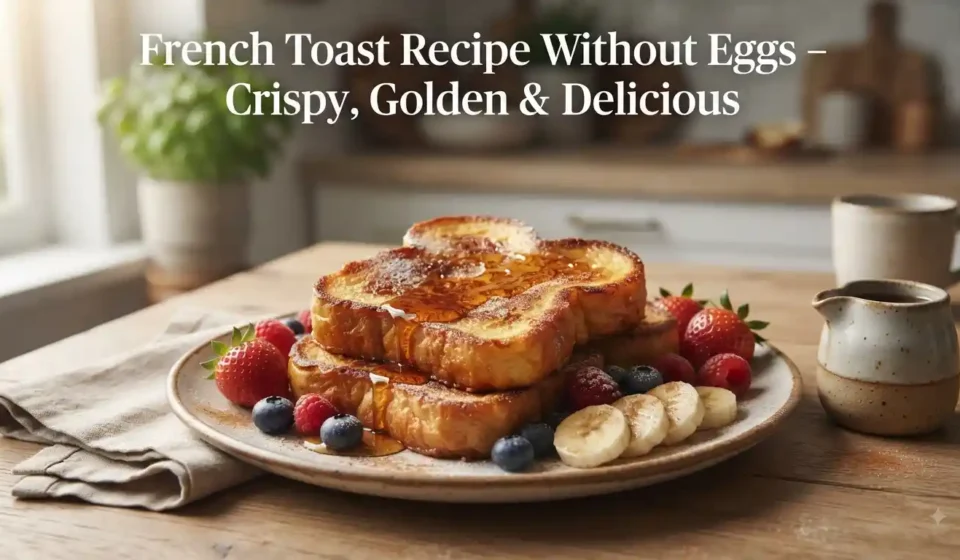

There are mornings when you want something warm, golden, and comforting, but the egg carton is empty. That is exactly when this French Toast Recipe Without Eggs comes to the rescue. It uses simple pantry staples to create slices that are crisp around the edges, soft in the center, and full of cozy cinnamon-vanilla flavor. You do not need a complicated egg substitute or special equipment. Just whisk, dip, and cook.
The little trick is in the batter. Milk provides richness, while flour and cornstarch help it cling to the bread and create that lightly crisp coating. I love making this on lazy weekends, especially when I have slightly stale bread sitting on the counter. Add maple syrup and fresh berries, and suddenly a very ordinary morning feels like a treat.
Prep & Cook Time
| Details | Time |
|---|---|
| Prep Time | 5 minutes |
| Cook Time | 12 minutes |
| Total Time | 17 minutes |
| Servings | 4 |
| Yield | 8 slices |
This recipe makes 8 slices of eggless French toast, enough for about 4 servings when served with fruit and a little maple syrup.
What Equipment Do You Need?
You only need a few basic kitchen tools:
- 1 medium mixing bowl
- Whisk or fork
- Shallow dish for dipping
- Large nonstick skillet or griddle
- Spatula
- Measuring cups and spoons
- Wire rack or plate for serving
A nonstick skillet makes the cooking especially easy because the bread can brown without sticking.
Ingredients
- 8 slices thick-cut bread, preferably day-old or slightly stale
- 1 cup whole milk
- 2 tablespoons all-purpose flour
- 1 tablespoon cornstarch
- 1 tablespoon granulated sugar
- 1 teaspoon vanilla extract
- 1 teaspoon ground cinnamon
- ¼ teaspoon salt
- 2 tablespoons unsalted butter, for cooking
- 1 tablespoon neutral cooking oil, for cooking
For Serving
- Maple syrup, to taste
- Fresh berries or sliced bananas
- Powdered sugar, optional
- A small pinch of cinnamon, optional
Bread tip: Brioche, challah, Texas toast, or thick-sliced white bread works beautifully. Slightly stale bread is actually better because it absorbs the batter without falling apart.
Why Each Ingredient Matters
Milk:
Milk gives the French toast its creamy texture and helps soften the bread. Whole milk provides the richest result, but 2% milk also works well.
All-purpose flour:
Because there are no eggs to help the coating set, a small amount of flour gives the batter body and helps it cling to the bread.
Cornstarch:
This is the secret to a lighter, crispier exterior. Cornstarch reduces the heaviness of the flour and helps create those delicious browned edges.
Sugar:
A little sugar adds sweetness and encourages caramelization as the slices cook.
Vanilla:
Vanilla gives the toast that familiar bakery-style aroma and makes the cinnamon flavor taste warmer.
Cinnamon:
It brings classic French toast flavor without overpowering the recipe.
Salt:
Just a pinch balances the sweetness and keeps the flavor from tasting flat.
Butter and oil:
Butter provides rich flavor, while a little oil helps prevent the butter from browning too quickly in the skillet.
Step-by-Step Instructions
Step 1: Make the Eggless Batter
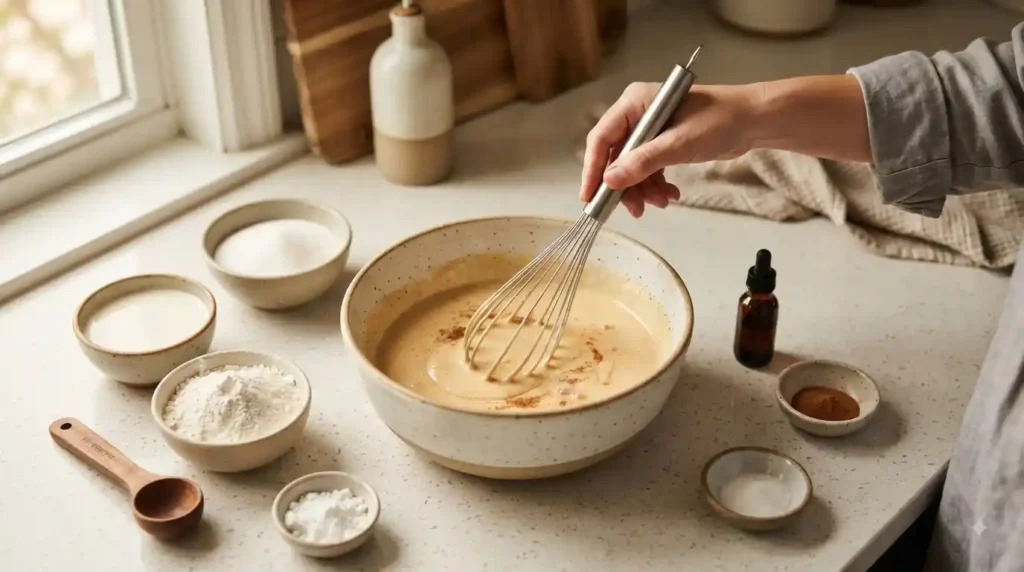
Add the milk, flour, cornstarch, sugar, vanilla, cinnamon, and salt to a medium bowl.
Whisk thoroughly until the mixture is mostly smooth. A few tiny lumps are not a problem. Let the batter sit for 1–2 minutes, then whisk again.
The batter should be creamy and pourable, not extremely thick. If it looks too thick, add 1–2 tablespoons of milk.
Step 2: Prepare the Bread
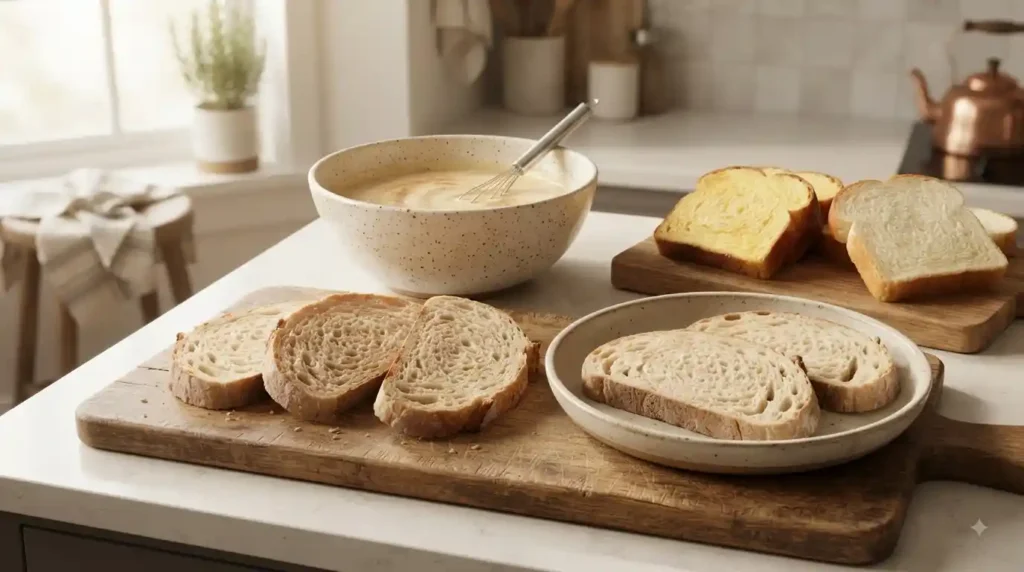
Place the bread slices in a shallow dish or on a plate.
If your bread is fresh and very soft, leave it uncovered for a few minutes while you prepare the skillet. Slightly dry bread absorbs the batter much better.
Avoid using very thin, delicate bread because it can become soggy or tear during dipping.
Step 3: Heat the Skillet
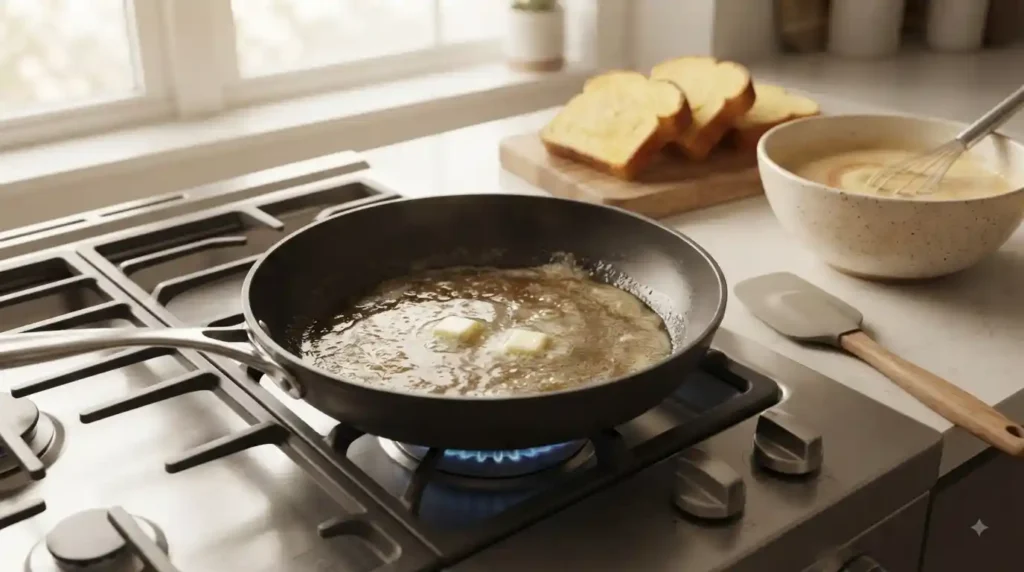
Place a large nonstick skillet over medium heat.
Add the butter and oil. Allow the butter to melt completely and coat the pan.
You want the pan hot enough to brown the bread, but not smoking. If the butter starts turning dark immediately, lower the heat.
Step 4: Dip the Bread
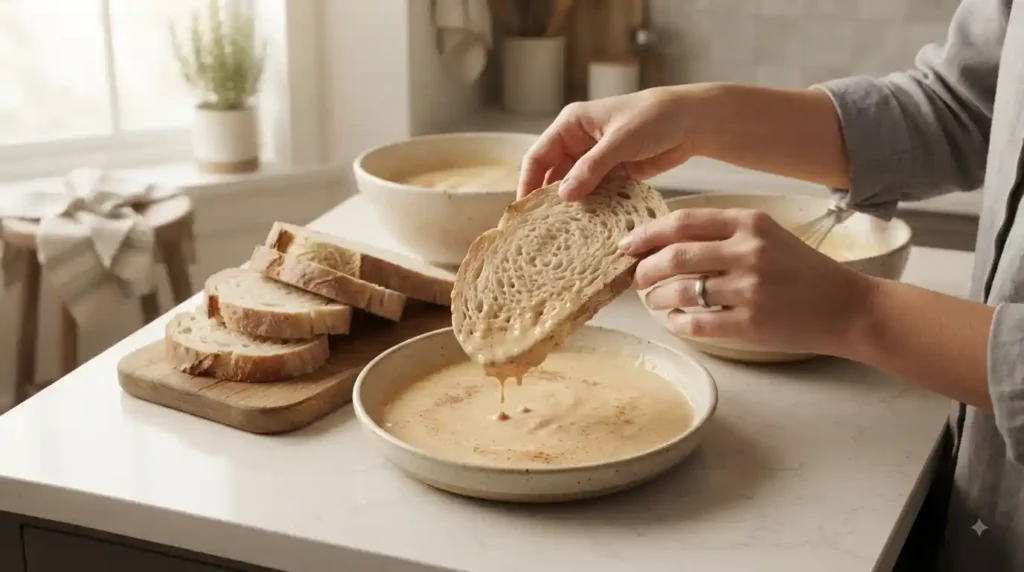
Dip one slice of bread into the batter.
Coat both sides, but do not leave the bread soaking for a long time. About 5–10 seconds per side is usually enough for thick bread.
Let the excess batter drip back into the dish before transferring the bread to the skillet.
Repeat with the remaining slices, working in batches if necessary.
Step 5: Cook Until Golden
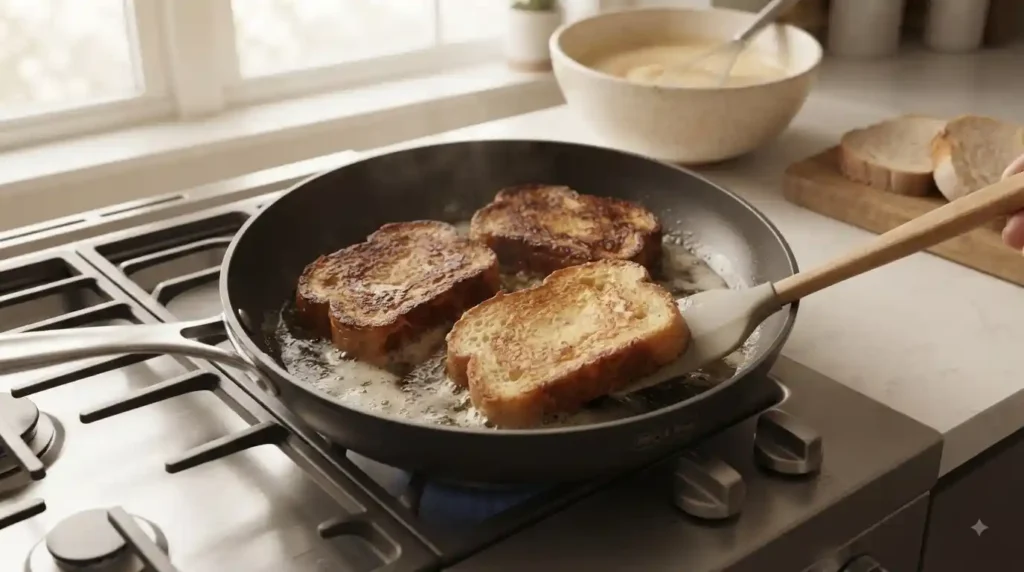
Place the coated bread into the hot skillet.
Cook for approximately 2–3 minutes on the first side, or until golden brown and crisp around the edges.
Carefully flip with a spatula and cook the other side for another 2–3 minutes.
If the bread is browning too quickly while the center remains soft, reduce the heat to medium-low.
Transfer the finished slices to a plate or wire rack and repeat with the remaining bread.
Step 6: Serve Warm
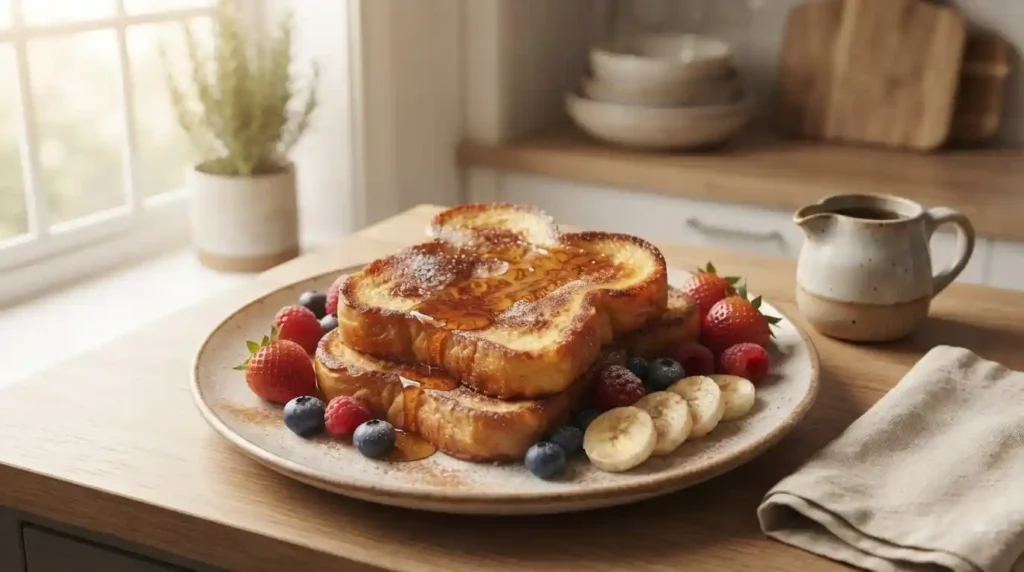
Serve the eggless French toast immediately while the edges are crisp and the centers are warm.
Top with maple syrup, fresh berries, sliced banana, powdered sugar, or a little extra cinnamon.
For a weekend brunch, you can also add yogurt and fruit on the side.
Food safety note: Keep dairy ingredients refrigerated until you are ready to use them, and don’t leave prepared French toast sitting at room temperature for extended periods.
Health Benefits
This recipe can be a satisfying breakfast while still offering several useful nutrients.
- Milk provides protein and calcium, which support bones and normal muscle function.
- Bread provides carbohydrates, the body’s main readily available source of energy.
- Cinnamon adds flavor without requiring lots of added sugar.
- Fresh berries provide vitamin C, fiber, and antioxidant compounds when used as a topping.
- Bananas contribute potassium and carbohydrates, making them a filling breakfast topping.
- Using a modest amount of butter and oil keeps the recipe rich without requiring a large amount of added fat.
For a more balanced breakfast, serve two slices with Greek yogurt and fresh fruit rather than relying only on syrup.
Nutrition Information (Per Serving)
Approximate nutrition for 2 slices, before optional toppings such as syrup or fruit:
| Nutrient | Amount |
|---|---|
| Calories | 310 kcal |
| Protein | 9 g |
| Fat | 13 g |
| Carbs | 39 g |
Nutrition will vary depending on the type of bread, milk, and cooking fat used.
Pro Tips & Variations
For Crispier French Toast
Use slightly stale bread and avoid oversoaking it. The drier surface gives you a much better contrast between crisp edges and a soft middle.
Don’t Overcrowd the Pan
Cook in batches if necessary. When too many slices are packed into the skillet, the temperature drops and the bread can steam instead of becoming golden.
Watch the Heat
Medium heat is your friend. High heat can brown the outside before the inside has properly warmed through.
Make It Dairy-Free
Swap the whole milk for unsweetened oat milk, almond milk, or soy milk. Use a plant-based butter or a little neutral oil for cooking.
Make It Vegan
Use plant-based milk and vegan butter or oil. Check that your bread is egg-free and dairy-free if you need the entire recipe to be vegan.
Add More Flavor
Try adding:
- ¼ teaspoon nutmeg
- A pinch of cardamom
- ½ teaspoon orange zest
- A tiny splash of almond extract
- Pumpkin pie spice for a fall-inspired version
Make It Less Sweet
Reduce the sugar in the batter to 1–2 teaspoons and let your toppings provide most of the sweetness.
For Extra-Rich French Toast
Use brioche or challah with whole milk. These breads produce a wonderfully soft, buttery center.
How Much Does It Cost to Make?
The exact price depends on where you shop and the brand of ingredients, but this is a very budget-friendly breakfast.
| Ingredient | Estimated Cost |
|---|---|
| 8 slices bread | $1.50 |
| 1 cup milk | $0.35 |
| Flour & cornstarch | $0.15 |
| Sugar & spices | $0.15 |
| Vanilla | $0.30 |
| Butter & oil | $0.40 |
| Estimated total | $2.85 |
That works out to roughly $0.71 per serving before optional toppings.
Using leftover bread makes this recipe even more economical. It is also a great way to avoid wasting a loaf that is no longer at its freshest.
Frequently Asked Questions
Can you make French toast without eggs?
Yes. You can make delicious French toast without eggs by using a milk-based batter thickened with a little flour and cornstarch. The cornstarch helps the coating brown and become lightly crisp, while the flour helps the batter adhere to the bread.
What can I use instead of eggs in French toast?
For this recipe, milk, flour, and cornstarch replace the binding and coating qualities normally provided by eggs. You can also experiment with mashed banana, ground flaxseed, or other egg-free approaches, although they will change the flavor and texture.
Why is my eggless French toast soggy?
The most common causes are fresh, very soft bread, oversoaking, or cooking at too low a temperature. Use slightly stale thick-cut bread, dip it briefly, and cook over medium heat until both sides are golden.
What is the best bread for eggless French toast?
Brioche, challah, Texas toast, and thick-cut white bread are excellent choices. Slightly stale bread is ideal because it absorbs enough batter while still holding its shape.
Final Thoughts
You really do not need eggs to make French toast that feels special. With a handful of everyday ingredients and the right cooking technique, you can get golden edges, a tender center, and plenty of cozy cinnamon-vanilla flavor.
The biggest secret is simple: use thick, slightly stale bread, don’t oversoak it, and keep your skillet at a steady medium heat. Once you’ve made it once, you’ll see why this egg-free version deserves a regular spot in your breakfast rotation. Pour on a little maple syrup, add some fresh fruit, and enjoy it while it’s warm.