

There’s something wonderfully comforting about a pork loin roasting in the oven. The kitchen starts smelling like garlic, herbs, and savory roasted meat, and suddenly everyone seems to wander in asking, “When will dinner be ready?” If you love a proper home-cooked meal but worry about pork turning tough or dry, this recipe is designed to take the guesswork out of it.
This pork loin is seasoned simply, roasted until beautifully browned, and rested before slicing so the juices stay where they belong—in the meat. It’s easy enough for a weeknight dinner but special enough for Sunday supper or a holiday table. Serve it with roasted potatoes, green beans, carrots, or a crisp salad for a meal that feels hearty without being complicated.
Prep & Cook Time
| Detail | Time |
|---|---|
| Prep Time | 15 minutes |
| Cook Time | 50–65 minutes |
| Resting Time | 10–15 minutes |
| Total Time | About 1 hour 20 minutes |
| Servings | 6 |
Recipe note: Cooking time depends on the thickness of your pork loin. A meat thermometer is the most reliable way to know when it is done.
What Equipment Do You Need?
You only need a few everyday kitchen tools:
- Large roasting pan or oven-safe skillet
- Small mixing bowl
- Measuring spoons
- Chef’s knife
- Cutting board
- Tongs
- Pastry brush or spoon for spreading oil
- Instant-read meat thermometer
- Aluminum foil
Ingredients
- 2 lb (900 g) boneless pork loin roast
- 2 tablespoons olive oil
- 4 garlic cloves, finely minced
- 1 tablespoon fresh rosemary, finely chopped, or 1 teaspoon dried rosemary
- 1 tablespoon fresh thyme leaves, or 1 teaspoon dried thyme
- 1 teaspoon smoked paprika
- 1 teaspoon kosher salt
- ½ teaspoon freshly ground black pepper
- 1 tablespoon Dijon mustard
- 1 tablespoon fresh lemon juice
- ½ cup (120 ml) chicken stock, for the roasting pan
- 1 tablespoon unsalted butter, optional, for finishing
Why Each Ingredient Matters
Pork loin: This lean cut has plenty of flavor but can dry out if overcooked. Gentle roasting and proper temperature control are key.
Olive oil: Helps the seasoning stick to the pork and encourages a beautifully browned exterior.
Garlic: Adds savory depth and becomes slightly sweet and mellow as it roasts.
Rosemary and thyme: These classic herbs complement pork without overpowering its natural flavor.
Smoked paprika: Gives the crust a warm color and subtle smoky character.
Dijon mustard: Adds tangy flavor and helps create a flavorful coating around the roast.
Lemon juice: A little acidity brightens the rich pork and balances the herbs and mustard.
Chicken stock: Adds moisture to the roasting environment and gives you flavorful juices for spooning over the sliced pork.
Butter: Optional, but a small amount whisked into the pan juices makes a richer finishing sauce.
Step-by-Step Instructions
Step 1: Bring the Pork to Room Temperature
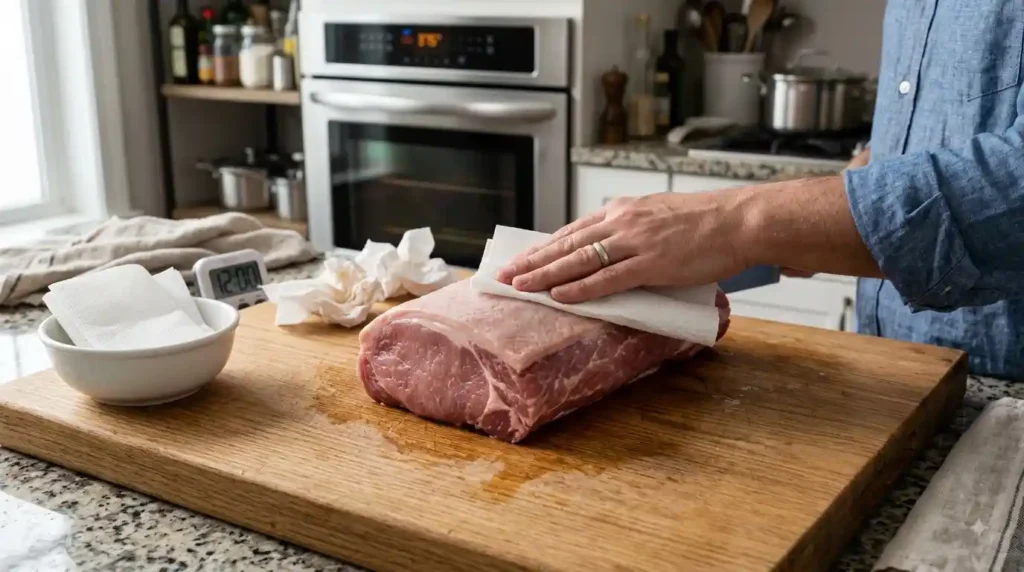
Remove the pork loin from the refrigerator about 20–30 minutes before cooking. Pat it thoroughly dry with paper towels.
Preheat your oven to 425°F (220°C).
Drying the surface is important because excess moisture can prevent the seasoning from sticking and can interfere with browning. Don’t leave raw pork sitting out for an extended period; you simply want to take the refrigerator chill off while you prepare the rest of the recipe.
Step 2: Make the Herb-Garlic Rub
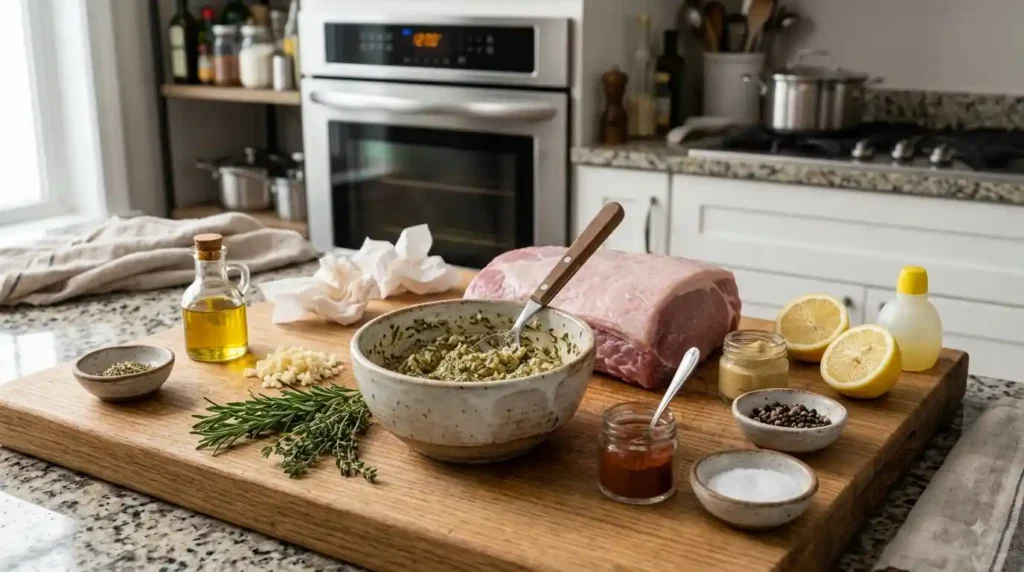
In a small bowl, combine:
- Olive oil
- Minced garlic
- Rosemary
- Thyme
- Smoked paprika
- Salt
- Black pepper
- Dijon mustard
- Lemon juice
Mix until you have a thick, fragrant paste.
Rub the mixture generously over every surface of the pork loin. Don’t be shy about getting the seasoning into any small creases in the meat.
Step 3: Start With High Heat
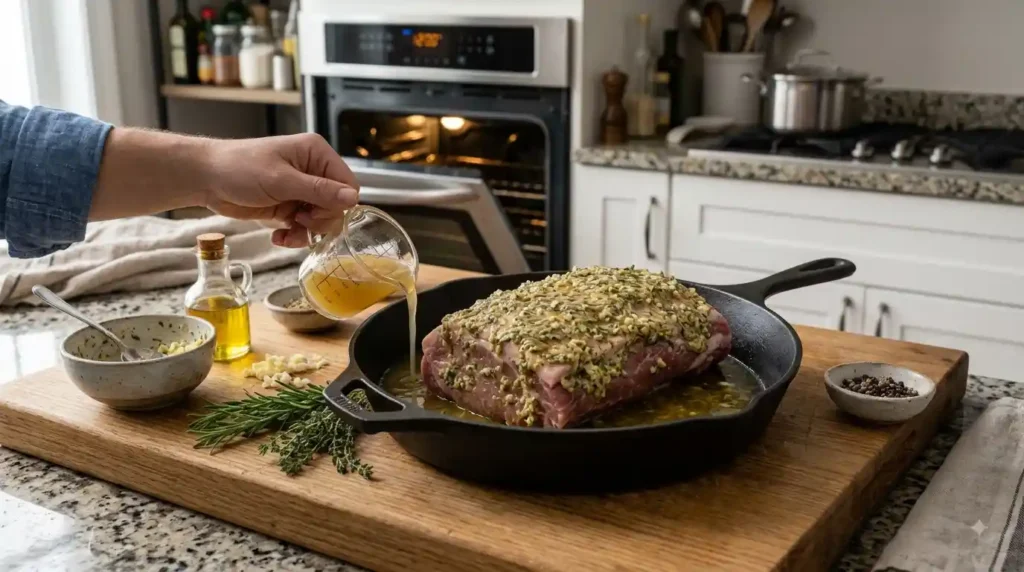
Place the seasoned pork loin in a roasting pan or oven-safe skillet. Pour the ½ cup chicken stock into the bottom of the pan, keeping it around—not directly over—the pork.
Roast uncovered at 425°F (220°C) for 15 minutes.
That initial blast of heat helps develop a flavorful browned exterior. If your roast is especially thick, don’t worry if the center is still very undercooked at this point. That’s exactly what we want.
Step 4: Lower the Oven Temperature and Continue Roasting
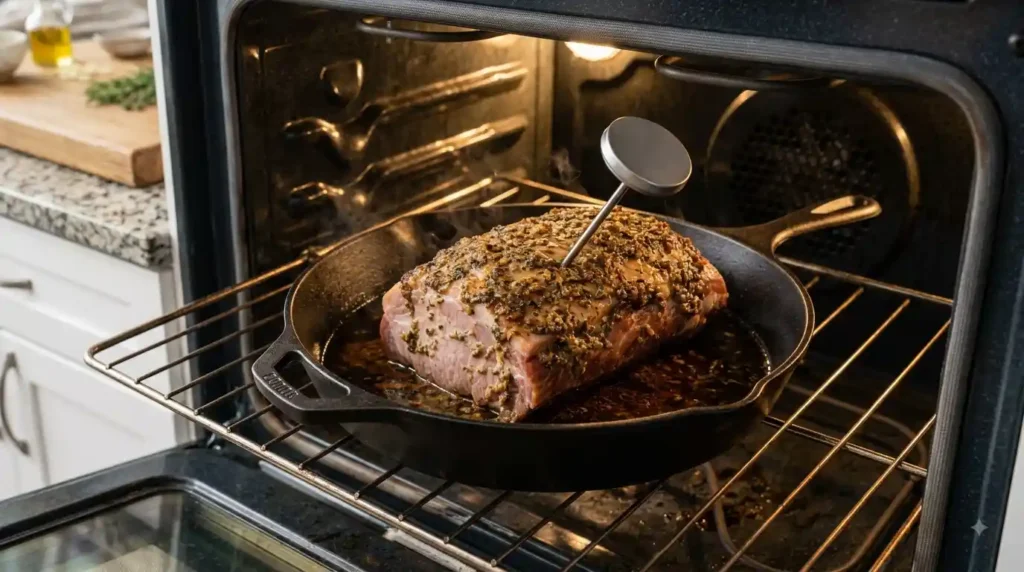
Reduce the oven temperature to 350°F (175°C) without removing the pork for long.
Continue roasting for approximately 35–50 minutes, depending on the size and shape of your pork loin.
Start checking the internal temperature early. Insert an instant-read thermometer into the thickest part of the meat, avoiding contact with the pan.
For food safety, cook pork to a minimum internal temperature of 145°F (63°C), followed by at least a 3-minute rest. For this recipe, resting for 10–15 minutes gives you an even juicier result.
Important: Don’t rely only on cooking time. Pork loins vary considerably in thickness, and a thermometer is much more dependable.
Step 5: Rest Before Slicing
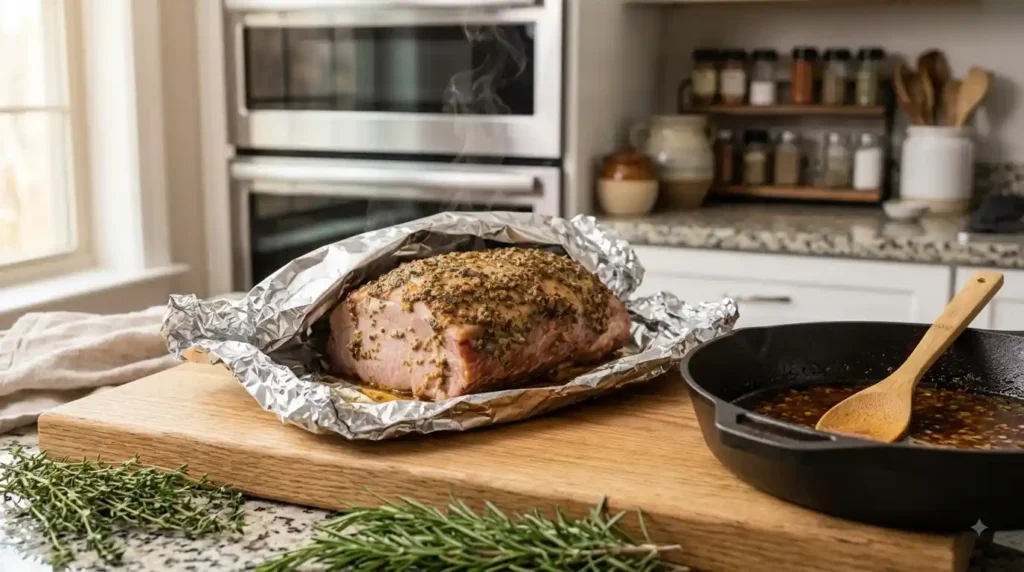
Transfer the cooked pork to a clean cutting board and loosely tent it with foil.
Let it rest for 10–15 minutes.
This step is easy to skip when everyone is hungry, but please don’t. Resting gives the juices time to redistribute through the meat. If you slice immediately, more of those juices can run onto the cutting board instead of staying in each tender slice.
While the pork rests, you can make a quick pan sauce from the flavorful juices left in the roasting pan.
Step 6: Slice and Serve
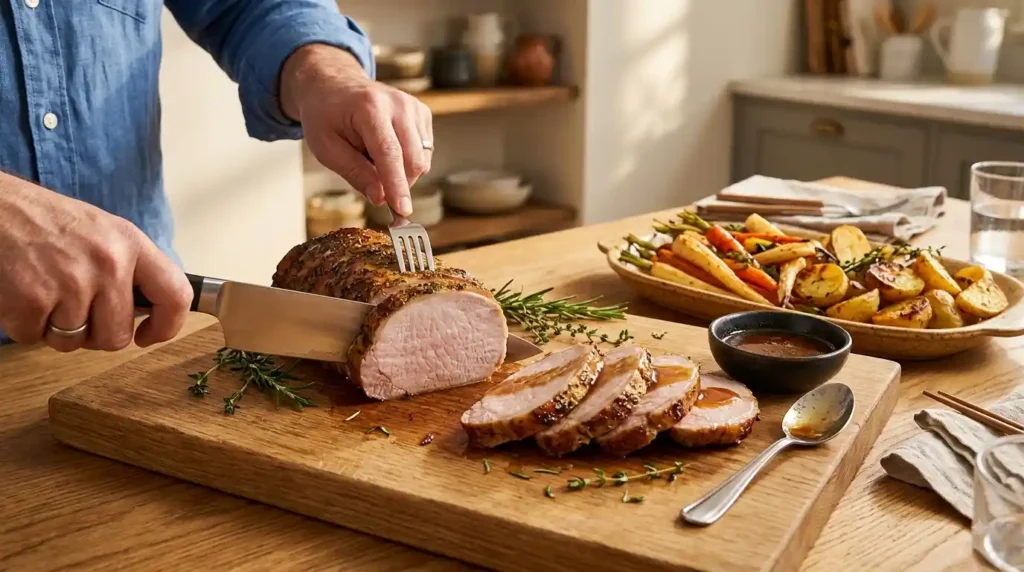
Remove the foil and slice the pork loin against the grain into thin, even pieces.
If desired, stir 1 tablespoon butter into the warm pan juices and spoon them over the pork.
Serve immediately with your favorite sides.
Chef’s tip: If the pork looks slightly pink in the center but has reached the safe internal temperature, that does not automatically mean it is undercooked. Temperature is a much better indicator of doneness than color.
Health Benefits
Pork loin can be a nutritious choice when served as part of a balanced meal.
- High in protein: Pork provides complete protein containing all essential amino acids needed for maintaining muscle and body tissues.
- Naturally rich in B vitamins: Pork supplies nutrients such as thiamine, niacin, vitamin B6, and vitamin B12.
- Provides selenium: Selenium supports normal antioxidant and immune functions.
- Garlic and herbs: Garlic, rosemary, and thyme contribute small amounts of plant compounds and antioxidants.
- Balanced meal potential: Pairing lean pork with vegetables and whole grains can create a filling meal with protein, fiber, vitamins, and minerals.
The exact nutritional value will vary depending on the specific pork cut, trimming, portion size, and amount of oil used.
Nutrition Information (Per Serving)
Approximate values based on 6 servings:
| Nutrient | Amount |
|---|---|
| Calories | ~330 kcal |
| Protein | ~43 g |
| Fat | ~14 g |
| Carbs | ~3 g |
These figures are estimates and can change with different brands, trimming, serving sizes, and substitutions.
Pro Tips & Variations
For the Juiciest Pork Loin
- Use a thermometer: This is the single best defense against dry pork.
- Don’t overcook it: Lean pork loses moisture quickly once it goes beyond its ideal temperature.
- Dry the surface first: A dry exterior browns much better.
- Rest the roast: Give it 10–15 minutes before slicing.
- Slice against the grain: This makes each bite feel more tender.
- Don’t constantly open the oven: Every peek releases heat and can extend the cooking time.
Easy Variations
Honey Garlic Pork: Replace the lemon juice with 1 tablespoon honey for a slightly sweeter glaze.
Italian-Style Pork: Skip the smoked paprika and use dried oregano, basil, and parsley.
Spicy Pork Loin: Add ½ teaspoon crushed red pepper flakes or a pinch of cayenne.
Maple Dijon: Mix 1 tablespoon pure maple syrup with the Dijon mustard for a sweet-savory crust.
Citrus Herb: Replace the lemon juice with orange juice and add a little orange zest.
Dairy-Free: Simply leave out the optional butter.
How Much Does It Cost to Make?
Prices vary by location and supermarket, but this recipe is reasonably budget-friendly for a family dinner.
| Ingredient | Estimated Cost |
|---|---|
| 2 lb pork loin | $12–$18 |
| Olive oil, garlic & herbs | $1.50–$2.50 |
| Dijon mustard & lemon | $1–$2 |
| Paprika & seasonings | $0.50–$1 |
| Chicken stock | $0.50–$1 |
| Estimated Total | $15.50–$24.50 |
That works out to roughly $2.60–$4.10 per serving, before adding side dishes.
In the UK, a similar meal would typically cost around £13–£20, depending on the pork price and whether you use fresh herbs.
Frequently Asked Questions
How do you keep pork loin from drying out?
The biggest trick is not overcooking it. Use an instant-read thermometer rather than relying only on the recipe’s cooking time. Cooking to the safe minimum temperature and allowing the roast to rest before slicing helps preserve its moisture.
What temperature should pork loin be cooked to?
Pork loin should reach a minimum internal temperature of 145°F (63°C), followed by at least a 3-minute rest. For the juiciest results, remove it from the oven as it approaches the target temperature rather than continuing to cook it far beyond that point.
Should I cover pork loin when baking?
You generally don’t need to cover it during roasting. Leaving it uncovered allows the herb and garlic coating to brown nicely. If the outside is becoming too dark before the center is ready, you can loosely tent it with foil.
Is pork loin the same as pork tenderloin?
No. Pork loin and pork tenderloin are different cuts. Pork loin is wider and thicker, while tenderloin is long, narrow, and cooks much faster. They should not be substituted using the same cooking time.
Final Thoughts
A juicy pork loin doesn’t require complicated techniques or a long ingredient list. Keep the seasoning flavorful, watch the internal temperature, and give the meat enough time to rest. Those three simple habits can make a huge difference.
Once you’ve made this recipe a few times, you’ll find yourself reaching for it whenever you want an easy dinner that feels a little special. Add some roasted vegetables and potatoes, spoon the pan juices over everything, and enjoy a warm, satisfying meal made right in your own kitchen.