

There is something wonderfully comforting about cooking a hot breakfast when everyone is still waking up. The smell of buttery toast, warm cinnamon, and vanilla can turn an ordinary morning into something special. If you have ever craved thick, fluffy French toast but ended up with flat, soggy slices, you are definitely not alone. The good news is that a few simple techniques make a huge difference.
This fluffy French toast recipe gives you golden, crisp edges and a soft, custardy center without turning the bread into a wet sponge. It is the kind of breakfast that feels like a diner treat but is easy enough for a lazy weekend morning at home. Serve it with maple syrup, fresh berries, powdered sugar, or a little butter, and watch those slices disappear.
Prep & Cook Time
| Details | Time |
|---|---|
| Prep time | 10 minutes |
| Cook time | 15 minutes |
| Total time | 25 minutes |
| Servings | 4 |
| Yield | 8 French toast slices |
Difficulty: Easy
This recipe makes 8 medium-to-thick slices, with 2 slices per serving.
What Equipment Do You Need?
You do not need any fancy equipment for great French toast. A few basic kitchen tools are enough:
- Large mixing bowl
- Whisk
- Shallow baking dish or wide bowl for dipping
- Large nonstick skillet or griddle
- Spatula
- Measuring cups and spoons
- Small bowl for melted butter
- Wire rack or plate for the cooked toast
Chef’s note: A wide, shallow dish is much easier than a deep bowl because it lets you coat each slice evenly without soaking it for too long.
Ingredients
- 8 slices thick-cut brioche, challah, or Texas toast, preferably 1-inch thick
- 4 large eggs
- 1 cup whole milk
- 2 tablespoons heavy cream
- 2 tablespoons granulated sugar
- 1 teaspoon pure vanilla extract
- 1 teaspoon ground cinnamon
- ¼ teaspoon ground nutmeg
- ¼ teaspoon fine salt
- 2 tablespoons unsalted butter, plus more as needed for cooking
For serving
- Pure maple syrup
- Fresh berries
- Powdered sugar
- Butter
- Whipped cream, optional
Best bread choice: Slightly stale, thick bread works beautifully. Fresh bread can absorb too much custard and become floppy before it reaches the skillet.
Why Each Ingredient Matters
Thick-cut bread: This is the foundation of fluffy French toast. Thick slices give the custard room to soak in while keeping enough structure to stay upright in the pan.
Eggs: Eggs create the rich, custardy texture and help the outside develop a beautiful golden-brown finish.
Whole milk: Milk adds moisture without making the custard excessively heavy.
Heavy cream: Just two tablespoons make the center richer and more luxurious without making the mixture too dense.
Sugar: A small amount sweetens the custard and encourages better browning in the skillet.
Vanilla: Vanilla gives the French toast that classic bakery-style aroma.
Cinnamon and nutmeg: These warm spices add depth. Nutmeg is especially useful here because a tiny amount gives the custard a subtle diner-style flavor.
Salt: Don’t skip it. Salt balances the sweetness and makes the vanilla and spices taste brighter.
Butter: Butter provides flavor and helps create those crisp, golden edges. Keep an eye on the pan because butter can brown quickly.
Step-by-Step Instructions
Step 1: Make the Custard
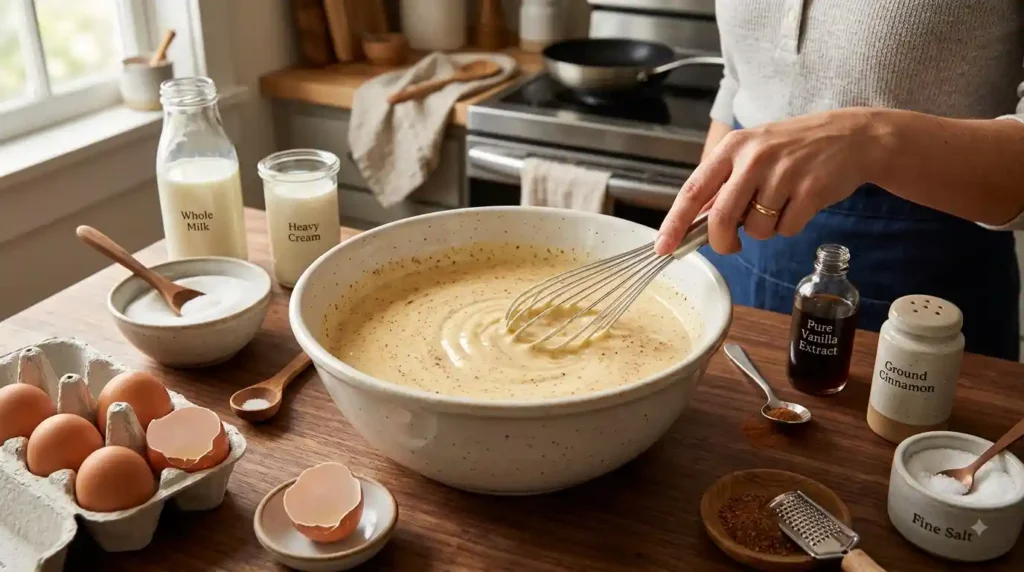
Crack the 4 eggs into a large mixing bowl. Add the whole milk, heavy cream, sugar, vanilla, cinnamon, nutmeg, and salt.
Whisk until the eggs are fully broken up and the mixture looks smooth.
Do not rush this step. You want the spices distributed throughout the custard rather than sitting in little clumps at the bottom.
Step 2: Heat the Skillet
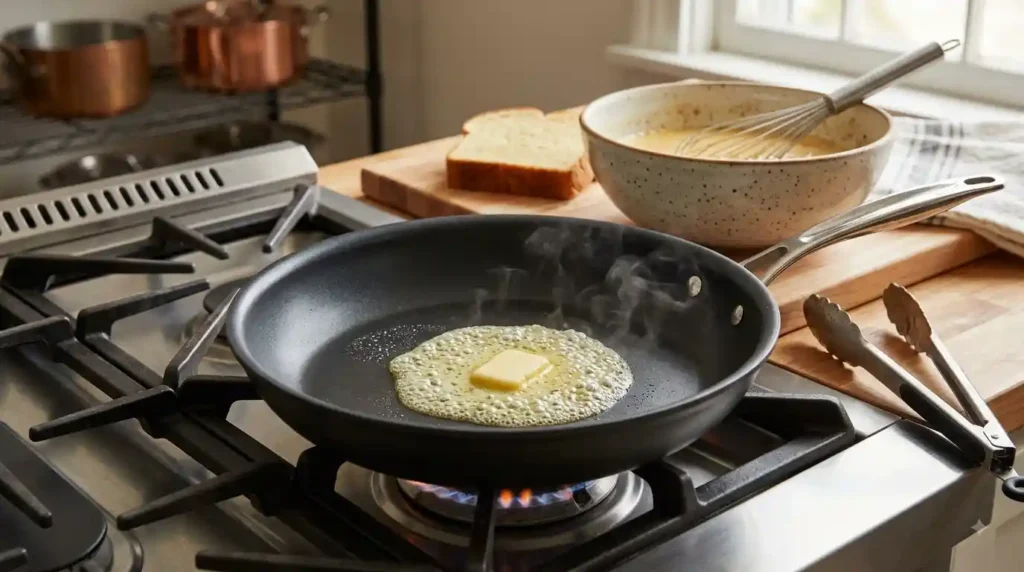
Place a large nonstick skillet or griddle over medium heat.
Add about 1 tablespoon of butter and let it melt. The butter should foam gently but should not smoke.
If your pan gets too hot, the outside of the French toast can burn before the center is properly warmed and cooked.
Step 3: Dip the Bread Properly
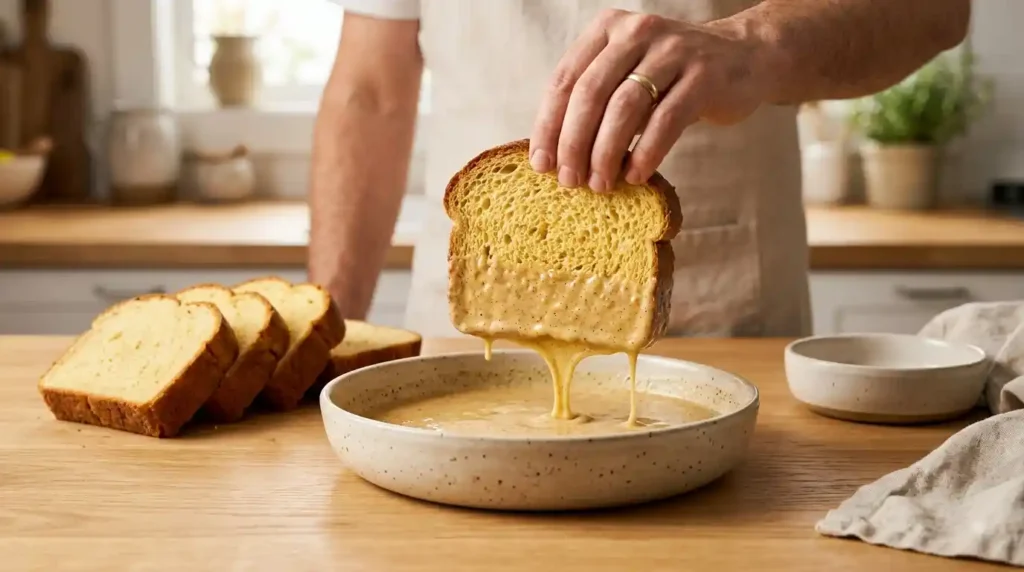
Pour the custard into a shallow dish.
Place one slice of bread into the mixture and let it soak for about 10–15 seconds per side. Thick, slightly stale bread can handle this amount of soaking without falling apart.
Lift the bread and allow excess custard to drip back into the dish.
Do not leave the bread sitting in the custard. This is one of the biggest causes of soggy, flat French toast.
Repeat with the remaining slices as you cook them in batches.
Step 4: Cook Until Golden
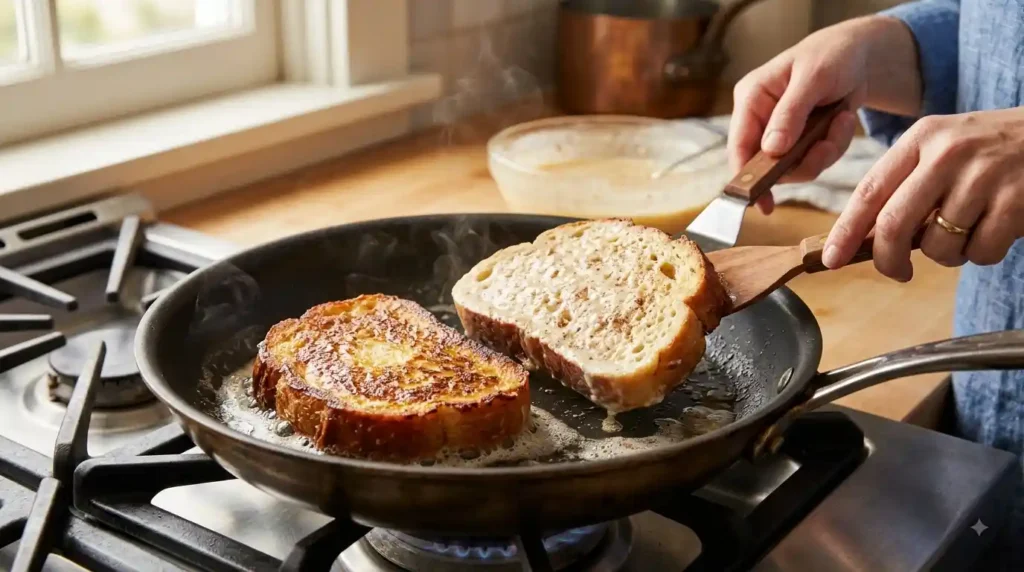
Place the soaked bread into the hot, buttered skillet.
Cook for approximately 3–4 minutes on the first side, or until deeply golden brown.
Flip carefully with a spatula and cook the second side for another 2–3 minutes.
If the bread is browning too quickly, reduce the heat to medium-low. The center needs time to cook through without scorching the outside.
Step 5: Finish the Remaining Slices
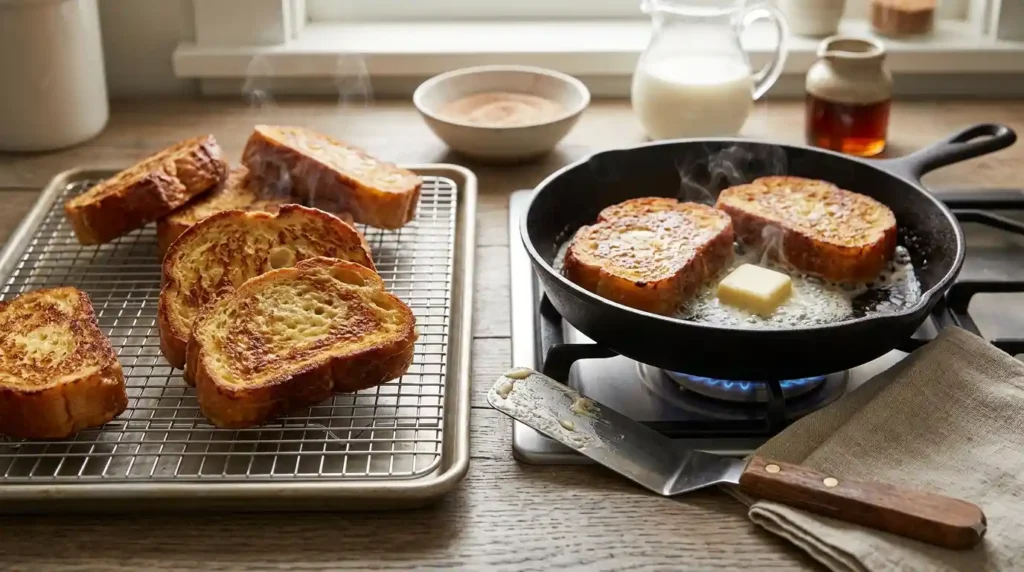
Add another small amount of butter to the skillet as needed and continue cooking the remaining French toast.
Avoid overcrowding the pan. Too many slices at once can lower the pan temperature and prevent proper browning.
Place finished slices on a wire rack rather than stacking them immediately. This helps keep the bottoms from becoming steamed and soft.
Because the recipe contains eggs, make sure the center is fully cooked and no longer wet or raw.
Step 6: Serve Warm
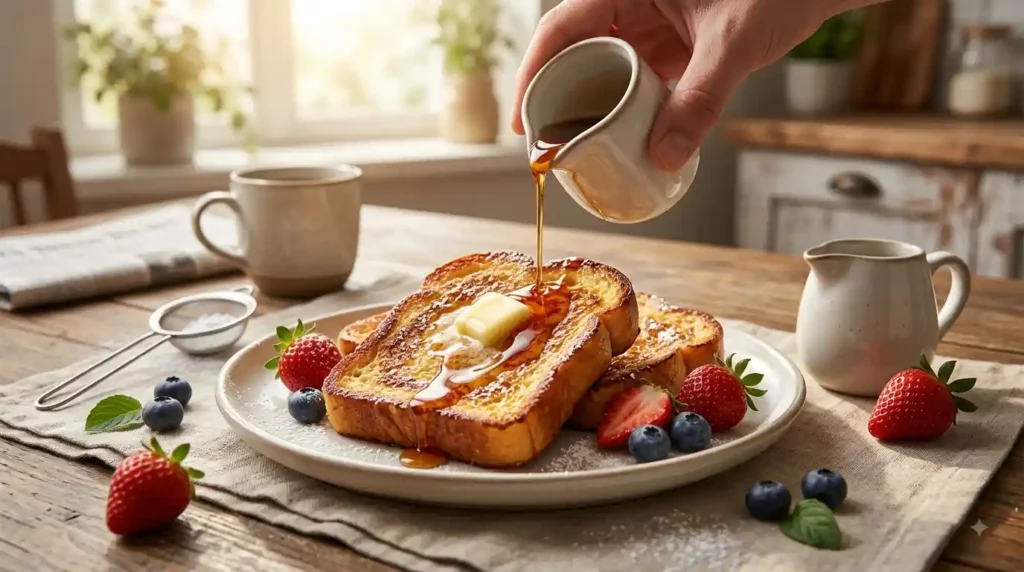
Transfer the golden French toast to plates while it is still warm.
Top with maple syrup, fresh berries, powdered sugar, and a small pat of butter.
For a special weekend breakfast, add whipped cream and sliced strawberries.
Serve immediately for the best contrast between crisp edges and a soft, fluffy center.
Health Benefits
French toast is a comfort-food breakfast, but it can still provide useful nutrients when portions and toppings are balanced.
- Eggs provide protein, along with nutrients such as choline and vitamin B12.
- Milk contributes calcium and protein to the recipe.
- Eggs and dairy provide several essential vitamins and minerals, including vitamin A and riboflavin.
- Fresh berries add fiber and vitamin C without requiring much added sugar.
- Choosing whole-grain bread can increase fiber and make the meal more filling.
- Using a moderate amount of maple syrup keeps added sugar easier to control.
For a more balanced breakfast, serve two slices with berries and Greek yogurt instead of piling on a large amount of syrup.
Nutrition Information (Per Serving)
Approximate values for 2 slices of French toast, before optional toppings:
| Nutrient | Amount |
|---|---|
| Calories | 390 |
| Protein | 14 g |
| Fat | 18 g |
| Carbohydrates | 42 g |
Nutrition will vary depending on the bread, milk, butter, and toppings you use.
Adding maple syrup, whipped cream, powdered sugar, or extra butter will increase the calorie and sugar content.
Pro Tips & Variations
For the Fluffiest French Toast
1. Use thick bread.
Aim for slices around 1 inch thick. Thin sandwich bread is much more likely to become flat and fragile.
2. Slightly stale bread is your friend.
Leave bread uncovered for several hours, or use day-old bread. It absorbs custard better without collapsing.
3. Do not oversoak.
A quick dip is usually enough. If the bread feels like a sponge that has been left in water, it has probably soaked too long.
4. Cook over medium heat.
High heat is tempting when you want breakfast quickly, but it can burn the butter and toast before the egg mixture cooks.
5. Don’t press the bread down.
Resist the urge to flatten it with your spatula. Pressing squeezes out moisture and can make the finished toast denser.
6. Keep cooked slices on a rack.
Stacking hot French toast immediately traps steam between the slices, which can soften those beautiful crisp edges.
Easy Variations
Berry French Toast: Add fresh blueberries or strawberries when serving.
Orange-Vanilla French Toast: Add 1 teaspoon finely grated orange zest to the custard.
Maple Cinnamon: Replace half of the granulated sugar with 1 tablespoon maple syrup.
Whole-Grain Version: Use thick-cut whole-grain bread for more fiber and a heartier flavor.
Dairy-Free: Use unsweetened oat milk or almond milk and a dairy-free butter alternative. Use a bread that is also dairy-free.
Extra-Rich Diner Style: Increase the heavy cream to ¼ cup and reduce the milk to ¾ cup.
How Much Does It Cost to Make?
The exact cost depends on where you shop and the brand of bread and dairy products you choose, but this recipe is relatively affordable for a family breakfast.
| Ingredient | Estimated Cost |
|---|---|
| Thick-cut bread | $3.00 |
| Eggs | $1.20 |
| Milk | $0.30 |
| Heavy cream | $0.50 |
| Butter | $0.40 |
| Sugar and spices | $0.35 |
| Vanilla | $0.30 |
| Estimated total | $6.05 |
That works out to roughly $1.50 per serving for four servings, before optional toppings.
Using regular sandwich bread and skipping specialty toppings can bring the cost down even further.
Frequently Asked Questions
Why is my French toast flat instead of fluffy?
Flat French toast is often caused by thin bread, overly wet bread, or cooking at the wrong temperature. Use thick-cut bread, preferably slightly stale, and soak it briefly rather than leaving it submerged.
What is the best bread for fluffy French toast?
Brioche, challah, and thick Texas toast are excellent choices because they are sturdy enough to absorb custard while remaining soft inside. Day-old bread is especially good.
Should French toast be cooked on high or low heat?
Use medium heat, adjusting toward medium-low if the outside is browning too quickly. You want enough heat to create a golden crust while giving the egg custard time to cook through.
How do you keep French toast from getting soggy?
Do not oversoak the bread, avoid overcrowding the skillet, and place cooked slices on a wire rack instead of stacking them. Slightly stale, thick-cut bread also makes a big difference.
Final Thoughts
Great French toast does not require complicated ingredients or restaurant equipment. The real secrets are simple: thick bread, a well-balanced custard, a short soak, and patient cooking over medium heat.
Once you get those details right, you can turn basic pantry ingredients into a breakfast that feels wonderfully indulgent. Add your favorite toppings, pour the coffee, and enjoy those crisp-edged, fluffy slices while they are warm. A little breakfast magic is sometimes exactly what a busy morning needs.